Hardcover. London, Routledge, 1st, 2003, Book: Very Good, Dust Jacket: Very Good, Hardcover in a bright dust jacket, 289 pages. Nicolas Malebranche (1638-1715) is one of the most important philosophers of the seventeenth century after Descartes. A pioneer of rationalism, he was one of the first to champion and to further Cartesian ideas. Andrew Pyle places Malebranche's work in the context of Descartes and other philosophers, and also in its relation to ideas about faith and reason. He examines the entirety of Malebranche's writings, including the famous The Search After Truth, which was admired and criticized by both Leibniz and Locke. Pyle presents an integrated account of Malebranche's central theses, occasionalism and 'vision in God', before exploring and assessing Malebranche's contribution to debates on physics and biology, and his views on the soul, self-knowledge, grace and the freedom of the will. This penetrating and wide-ranging study will be of interest to not only philosophers, but also to historians of science and philosophy, theologians, and students of the Enlightenment or seventeenth century thought.
Hardcover. New Haven CT, Yale University Press, 2007, Book: Very Good, Dust Jacket: Very Good, Hardcover, 208 pages, color plates. Considered to be among the greatest early American modernists, the painter Marsden Hartley (1877-1943) traveled the United States and Europe in his search for a distinctive American aesthetic. His stay in New Mexico resulted in an extraordinary series of landscape paintings--created in New Mexico, New York, and Europe between 1918 and 1924--that show an evolution in style and thinking that is important for understanding both Hartley's oeuvre and American modernism in the postwar years. Marsden Hartley and the West examines this pivotal stage of the painter's career, drawing upon his writings and providing illustrations of rarely seen and previously unpublished works. The author considers Hartley's involvement with the Stieglitz circle and its "soil-and-spirit" philosophy, the Taos art colony, New York Dada, and the impact of historical events such as World War I. Within this setting she analyzes the pastels and oil paintings that suggest Hartley's increasingly ambivalent response to the land. Beginning with optimistic, naturalistic views, the New Mexico works grew progressively darker and more tumultuous, increasingly reflecting a sense of loss brought on by war. The paintings become a site where the landscapes of memory, self, and nation merge, while reflecting broader modernist debates about "American-ness" and a usable past.
Softcover. UK, Cambridge University Press, reprint, 1991, Book: Very Good, Dust Jacket: None, Softcover, 298 pages. Friedrich Nietzsche haunts the modern world. His elusive writings with their characteristic combination of trenchant analysis of the modern predicament and suggestive but ambiguous proposals for dealing with it have fascinated generations of artists, scholars, critics, philosophers, and ordinary readers. Maudemarie Clark's highly original study gives a lucid and penetrating analytical account of all the central topics of Nietzsche's epistemology and metaphysics, including his views on truth and language, his perspectivism, and his doctrines of the will-to-power and the eternal recurrence. CLEAN COPY.
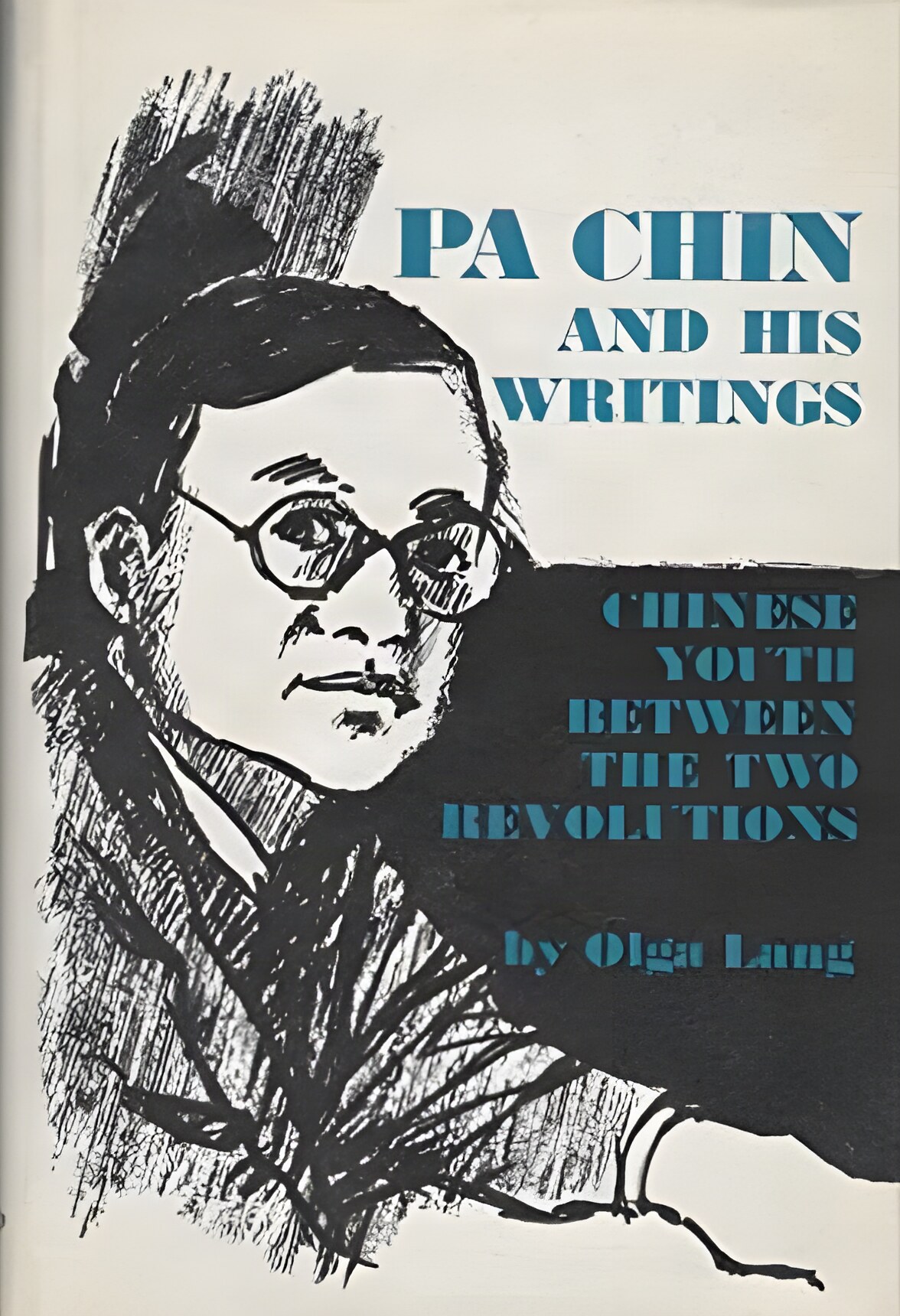
Cambridge, MA, Harvard University Press,, 1st, 1967, Book: Very Good, Dust Jacket: Very Good, Hardcover in a lightly worn dust jacket, 402 pages. "Miss Lang focuses on the content of Pa Chin novels and short stories, which vividly describe the life of Chinese youth. She also pays great attention to the western, particularly Russian and French, influences on his political philosophy."
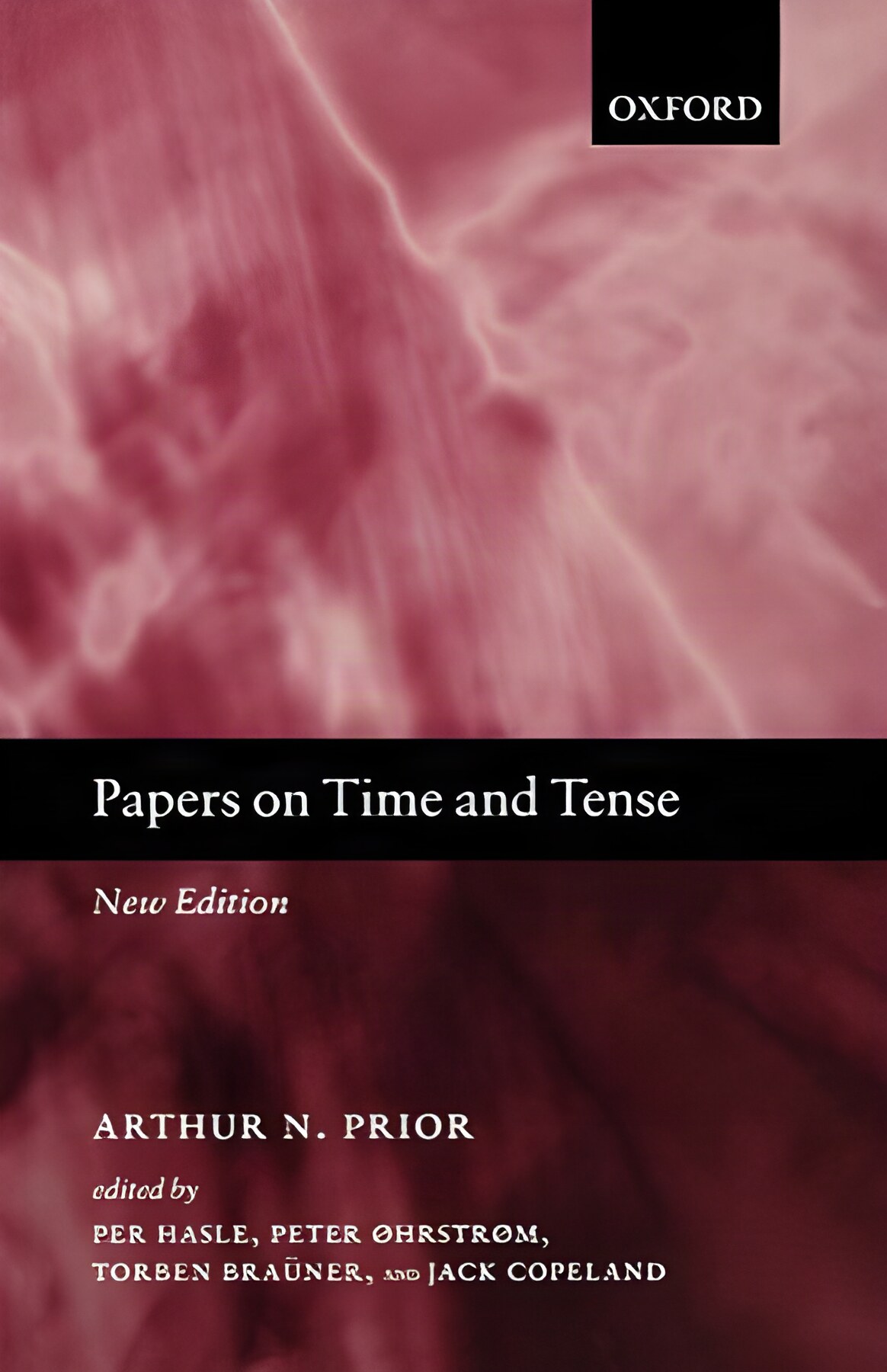
Softcover. UK, Oxford University Press, reprint, 2010, Book: Very Good, Dust Jacket: None, Softcover, 331 pages. This is a revised and expanded edition of a seminal work in the logic and philosophy of time, originally published in 1968. Arthur N. Prior (1914-1969) was the founding father of temporal logic, and his book offers an excellent introduction to the fundamental questions in the field. Several important papers have been added to the original selection, as well as a comprehensive bibliography of Prior's work and an illuminating interview with his widow, Mary Prior. In addition, the Polish logic which made Prior's writings difficult for many readers has been replaced by standard logical notation. This new edition will secure the classic status of the book. Clean, bright copy.
Softcover. Cambridge University Press, reprint, 1992, Book: Very Good, Dust Jacket: None, Softcover, 314 pages. Essays on language, action and interpretation. This is a collection in translation of essays by Paul Ricoeur which presents a comprehensive view of his philosophical hermeneutics, its relation to the views of his predecessors in the tradition and its consequences for the social sciences. The major theme that unites his writings is that of a philosophical anthropology. This anthropology, which Ricoeur came to call an anthropology of the "capable human being," aims to give an account of the fundamental capabilities and vulnerabilities that human beings display in the activities that make up their lives.
Hardcover. Hillsdale NJ, Lawrence Erlbaum, 1st, 1982, Book: Very Good, Dust Jacket: None, Hardcover, green cloth covers with light blue stamping, 422 pages. This highly readable translation of the major works of the 18th- century philosopher Etienne Bonnot, Abbe de Condillac, a disciple of Locke and a contemporary of Rousseau, Voltaire, and Diderot, shows his influence on psychiatric diagnosis as well as on the education of the deaf, the retarded, and the preschool child. Published two hundred years after Condillac's death, this translation contains treatises which were, until now, virtually unavailable in English: A Treatise on Systems, A Treatise of the Sensations, Logic. Name on front fly leaf, light bumps to cover corners.
Hardcover. London, England, Oxford at the Clarendon Press, 1st Edition, 1967, Book: Very Good, Dust Jacket: Fair, 406 pages. Hardcover. Previous owner's name on front flyleaf. Dust jacket price clipped, has some damage to top right corner of front cover, as well as agewear. Navy blue cover boards, gilt title on spine. The years between the two wars saw a rich flowering of work in formal logic in Poland. Yet the writings of Polish logicians of that time have largely remained inaccessible to English-speaking readers.
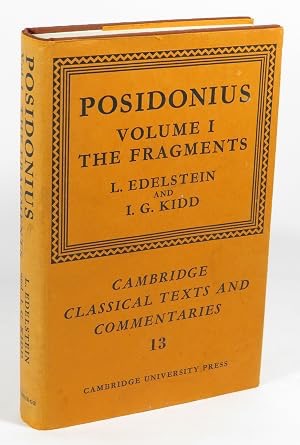
Hardcover. UK, Cambridge University Press , 1st, 1972, Book: Very Good, Dust Jacket: Very Good, Hardcover in a bright orange dust jacket, 336 pages. This book is a commentary on the surviving testimonia and fragments of Posidonius' work collected in Volume I of this edition. Posidonius was one of the most important philosophers and intellectuals writing in the first century BC Graeco-Roman world. The purpose of this commentary is to assess the fragmentary evidence and reports of Posidonius found in the writings of about sixty ancient authors, and to separate what Posidonius himself actually said from the interpretations and distortions of his reporters. Since Posidonius also wrote at length on the sciences and on geography, and composed a large History, Kidd assesses his work against the philosophical, scientific, and historical writings of Posidonius' predecessors and contemporaries. Each fragment is explored through detailed examination of its context, philosophical and scientific content, and its relationship to Posidonius' whole thought and to contemporary ideas. VOLUME 1 ONLY. The fragments are in the original Greek and Latin (mostly Greek). The Introduction is in English. Previous owner's name on front fly leaf, embossed stamp, otherwise a clean copy.
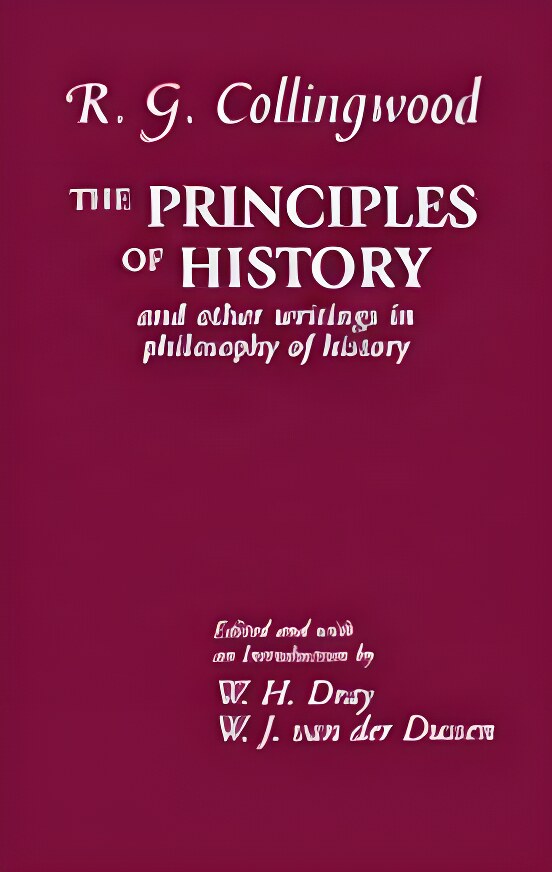
Softcover. UK, Oxford University Press, Revised Ed., 2001, Book: Very Good, Dust Jacket: None, Softcover, 384 pages. Published here for the first time is much of a final and long-anticipated work on the philosophy of history by the great Oxford philosopher and historian R. G. Collingwood (1889-1943). The original text of this uncompleted work has only recently been discovered and is accompanied here by Collingwood's shorter writings on historical knowledge and inquiry. Besides containing entirely new ideas, these incredible writings discuss many of the issues which Collingwood famously raised in The Idea of History and in his Autobiography. This book also includes two conclusions written by Collingwood, which were eventually revised and published as The Idea of Nature. and a lengthy editorial introduction that puts Collingwood's writings in their context and discusses the philosophical questions they initiate. A landmark publication, this work will appeal not only to those studying Collingwood but also to anyone broadly curious about philosophy of history. Clean copy.
Hardcover. Ithaca, Cornell University Press, 1st, 1990, Book: Very Good, Dust Jacket: None, Hardcover, 260 pages. No dust jacket. John Locke's untitled manuscript "Questions concerning the Law of Nature" (1664) was his only work focused on the subject of natural law, a circumstance that is especially surprising since his published writings touch on the subject frequently, if inconclusively. Containing a substantial critical apparatus, this new edition of Locke's manuscript is faithful to Locke's original intentions and to the format he chose for his discourse on the law of nature-a late-Scholastic quaestio disputata, the form through which in 1664 the young Locke debated questions with his students as moral censor of Christ Church. For this volume, Robert Horwitz provides an introduction summarizing the history of the manuscript and analyzing Locke's role in the development of thinking on natural law. Jenny Strauss Clay offers a superb critical edition of the Latin text, for which she has supplemented the Latin text of Manuscript B, written by an amanuensis, with Manuscript A, a first draft in Locke's own hand. Diskin Clay's precise English translation-with the Latin presented on facing pages-is accompanied by annotations identifying Locke's references and allusions and explaining difficulties of translation. In the view of Horwitz, Clay, and Clay, Questions concerning the Law of Nature shows a tension between several opposing conceptions of natural law. In developing this view, the editors break with W. von Leyden, who prepared the first edition of the text and who interpreted Locke's understanding of natural law squarely within a Christian framework. The editors here present a fresh interpretation of Locke as a thinker who posed a series of subtle challenges to traditional natural law doctrine. That Locke was aware of the political danger of this challenge is evident from his refusal to publish the work during his lifetime and from the care he took to conceal these manuscripts among his possessions. Clean, tight copy.
Hardcover. UK, Bristol Thoemmes, reprint, 1990, Book: Very Good, Dust Jacket: None, Hardcover, green cloth, gilt title on spine, 120 pages. Originally published in 1951, this concise book presents an engaging study of the works and influence of the renowned English philosopher Ralph Cudworth (1617-88), the leader of the Cambridge Platonists. A bibliography of writings by and about Cudworth is also included, together with an appendix section on his manuscripts. The text was an early work by Australian philosopher and historian of ideas John Passmore (1914-2004). This book will be of value to anyone with an interest in Cudworth, the Cambridge Platonists and the historical development of philosophy. Light pencil marking in margins, ink name on front fly leaf. Tight copy.
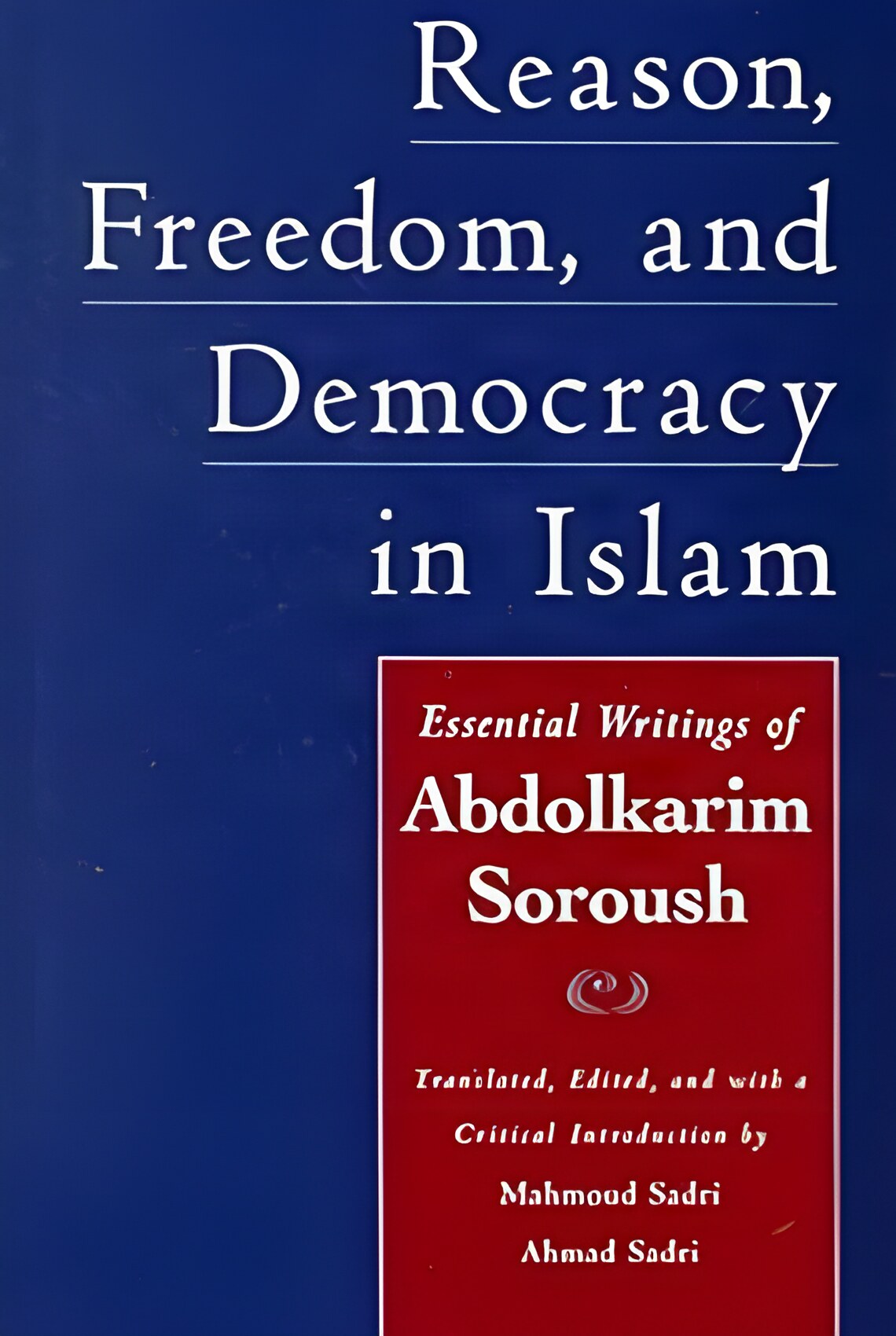
Hardcover. NY, Oxford University Press, 1st, 2000, Book: Very Good, Dust Jacket: Very Good, Hardcover in a bright dust jacket, 236 pages including index. Translation and Introduction by Mahmoud Sadri & Ahmad Sadri. Clean copy.
Hardcover. UK, Cambridge University Press, 1st, 1996, Book: Very Good, Dust Jacket: None, Hardcover, blue cloth with gilt lettering on spine, 518 pages. This volume collects for the first time in a single volume all of Kant's writings on religion and rational theology. These works were written during a period of conflict between Kant and the Prussian authorities over his religious teachings. The historical context and progression of this conflict are charted in the general introduction to the volume and in the translators' introductions to particular texts. All the translations are new with the exception of The Conflict of the Faculties, where the translation has been revised and redited to conform to the guidelines of the Cambridge Edition. Name on front fly leaf, otherwise a clean, bright copy.
Hardcover. Exeter UK, Imprint Academic, 1st, 2006, Book: Very Good, Dust Jacket: Very Good, Hardcover, 179 pages. Light shelf-wear and scratching to dust jacket, else a clean, tight copy. Much of the scholarly attention attracted by Michael Oakeshott's writings has focused upon his philosophical characterisation of the relations that constitute moral association in the modern world. A less noticed, but equally significant, aspect of Oakeshott's moral philosophy is his account of the type of person (or persona) required to enter into and enjoy moral association. Oakeshott's best known characterisation of the persona best suited to moral association occurs in his identification of a 'morality of the individual'. The book argues that Oakeshott's characterisations of religious and poetic experience provide a more detailed account of the type of persona that emerged in response to what it perceived as an invitation to participate in moral association in the modern world.
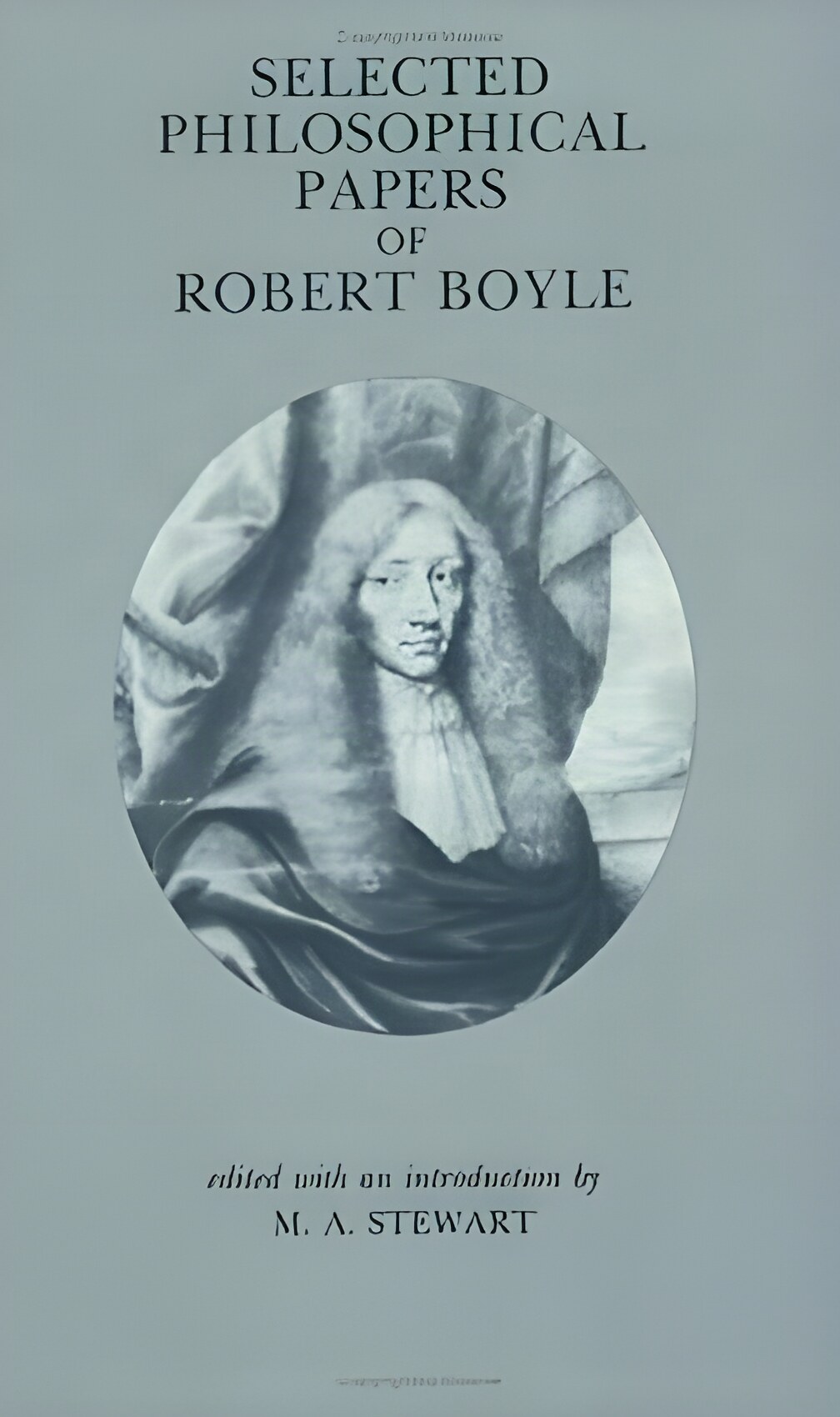
Softcover. Indianapolis, Hackett Publishing, 2nd pr., 1991, Book: Very Good, Dust Jacket: None, Softcover, 256 pages. "The availability of a paperback version of Boyle's philosophical writings selected by M. A. Stewart will be a real service to teachers, students, and scholars with seventeenth-century interests. The editor has shown excellent judgment in bringing together many of the most important works and printing them, for the most part, in unabridged form. The texts have been edited responsibly with emphasis on readability. . . . Of special interest in connection with Locke and with the reception of Descarte's Corpuscularianism, to students of the Scientific Revolution and of the history of mechanical philosophy, and to those interested in the relations among science, philosophy, and religion. In fact, given the imperfections in and unavailability of the eighteenth-century editions of Boyle's works, this collection will benefit a wide variety of seventeenth-century scholars."
Softcover. New York, Aperture, 1st, 2001, Book: Very Good, Dust Jacket: None, Softcover. In original shrink wrap, spotless and tight. Poet, scholar, philosopher, and master of Vajrayana (Tibetan) Buddhism, Dilgo Khyentse Rinpoche led a life of profound dedication to spiritual enlightenment and teaching. During the final fourteen years of his life his personal assistant was Matthieu Ricard. Together they traveled throughout Tibet, Bhutan, India, and Nepal, returning to the places of Khyentse Rinpoche's youth: his birthplace in Eastern Tibet; the monastery of Shechen which he had entered at the age of eleven; and the retreats where he spent years in meditation and study. At every stop on his journey, Khyentse Rinpoche was welcomed with elaborate ceremonies and outpourings of devotion. Ricard's deeply personal photographs of this journey are enhanced by a biographical narrative that is interspersed with extensive passages from the writings and teachings of Khyentse Rinpoche. Together, these images and texts form an inspiring portrait of one of the great spiritual leaders and teachers of our time. Many masters of Tibetan Buddhism studied with Khyentse Rinpoche, including His Holiness the Dalai Lama, who regarded him as his principal instructor in the Nyingma tradition of Tibetan Buddhism.
Hardcover. London, NLB, 1st transl. thus, 1972, Book: Very Good, Dust Jacket: None, Hardcover, light blue cloth stamped in gilt, 257 pages. The articles and essays collected in this book were written during the decade of Lukacs's life when he was most active in politics. The first texts mark his transition from an anti-bourgeois aestheticism to Marxism and the newly founded Hungarian Communist Party. They are followed by material which displays the full range of his activity and thought during the subsequent ten years. Some of these essays were written when Lukacs was deputy commissar of education in the embattled, short-lived Hungarian Soviet Republic. Others include the famous article on parliamentarianism which earned its author the respectful yet severe criticism of Lenin.The volume includes short studies on German revisionism, Bukharin's Marxism, and Karl Wittfogel, and longer pieces on Lassalle and Moses Hess. The collection ends with the theses Luckas wrote, under his cover name "Blum", in opposition to the policies of the Third Period of the Comintern. Clean copy.
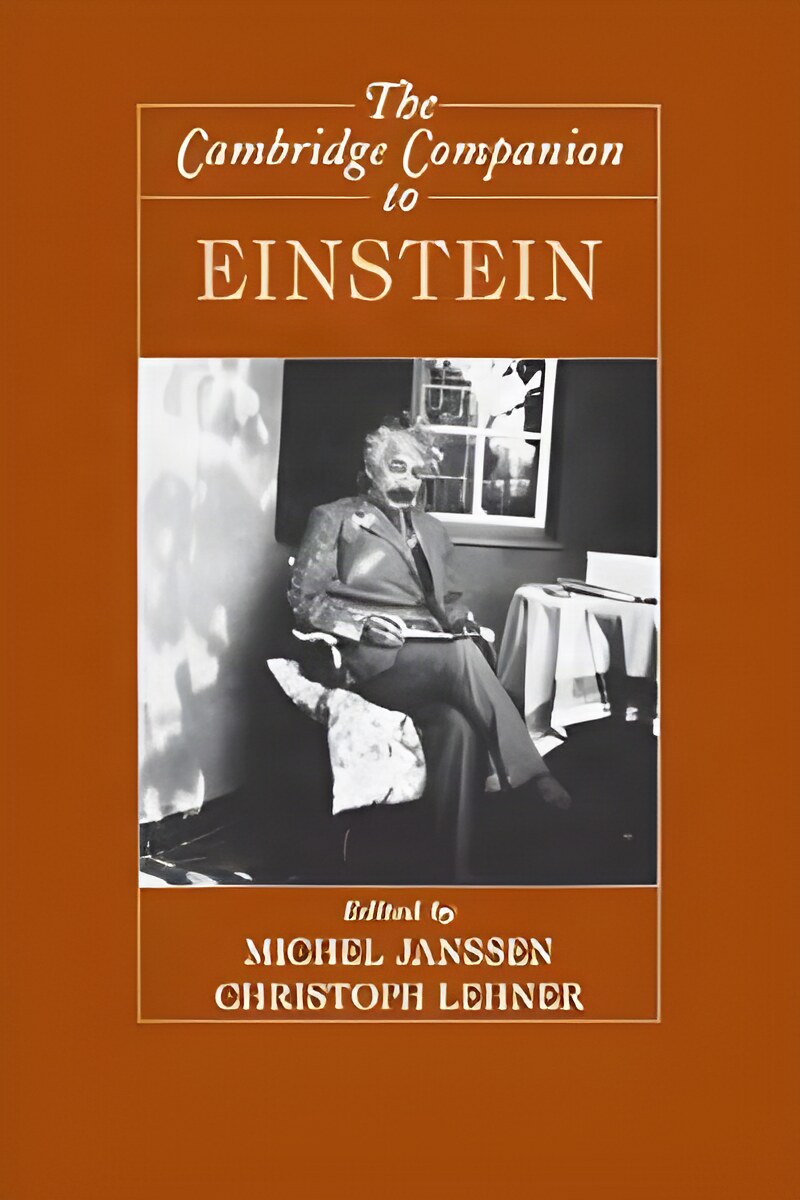
Softcover. UK, Cambridge University Press, 1st pbk, 2014, Book: Very Good, Dust Jacket: None, Softcover, 562 pages with index. This volume is the first systematic presentation of the work of Albert Einstein, comprising fourteen essays by leading historians and philosophers of science that introduce readers to his work. Following an introduction that places Einstein's work in the context of his life and times, the book opens with essays on the papers of Einstein's 'miracle year', 1905, covering Brownian motion, light quanta, and special relativity, as well as his contributions to early quantum theory and the opposition to his light quantum hypothesis. Further essays relate Einstein's path to the general theory of relativity (1915) and the beginnings of two fields it spawned, relativistic cosmology and gravitational waves. Essays on Einstein's later years examine his unified field theory program and his critique of quantum mechanics. The closing essays explore the relation between Einstein's work and twentieth-century philosophy, as well as his political writings. Clean, bright copy.
Hardcover. Duke University Press, 1st, 2003, Book: Very Good, Dust Jacket: None, Hardcover, 440 pages. Black cloth, no dust jacket. The Edge of Surrealism is an essential introduction to the writing of French social theorist Roger Caillois. Caillois was part of the Surrealist avant-garde and in the 1930s founded the College of Sociology with Georges Bataille and Michel Leiris. He spent his life exploring issues raised by this famous group and by Surrealism itself. Though his subjects were diverse, Caillois focused on concerns crucial to modern intellectual life, and his essays offer a unique perspective on many of twentieth-century France's most significant intellectual movements and figures. Including a masterful introductory essay by Claudine Frank situating his work in the context of his life and intellectual milieu, this anthology is the first comprehensive introduction to Caillois's work to appear in any language. These thirty-two essays with commentaries strike a balance between Caillois's political and theoretical writings and between his better known works, such as the popular essays on the praying mantis, myth, and mimicry, and his lesser-known pieces. Presenting several new pieces and drawing on interviews and unpublished correspondence, this book reveals Caillois's consistent effort to reconcile intellectual rigor and imaginative adventure. Perhaps most importantly, The Edge of Surrealism provides an overdue look at how Caillois's intellectual project intersected with the work of Georges Bataille and others including Breton, Bachelard, Benjamin, Lacan, and Levi-Strauss.
Hardcover. Cambridge MA, Harvard University Press , 1st, 1981, Book: Very Good, Dust Jacket: None, Hardcover, blue cloth with gilt lettering and design to spine and front cover. The writings of Richard Hooker are of central interest to those studying English Renaissance thought and literature. In this, the third volume of a much-needed critical edition of the Works of Richard Hooker, are the posthumous books of the Laws of Ecclesiastical Polity. Hooker planned the Laws in eight books, but he died shortly after publication of Book Five. Books Six, Seven, and Eight, which contain his analysis of jurisdiction, episcopacy, and the royal supremacy, are here transcribed from versions that have the most authority. The volume also includes Hooker's autograph notes toward those texts (brought to light by P. G. Stanwood in the course of his research) and the contemporary notes by George Cranmer and Edwin Sandys on a lost draft of Book Six. Mr. Stanwood's introduction lays to rest all doubts about the authenticity of the last three books as we have them, doubts current since publication of Walton's Life of Hooker in 1662.Clean, bright copy.
Hardcover. NY/London, Routledge, 1st, 1993, Book: Very Good, Dust Jacket: Very Good, Hardcover in a bright dust jacket, 283 pages, b&w illustrations. " Richard Schechner explores the nature of ritualised behavior and its relationship to performance and politics. A brilliant and uncontainable examination of cultural expression and communal action, THE FUTURE OF RITUAL asks pertinent questions about art, theatre and the changing meaning of 'culture' in today's intercultural world. It is richly illustrated with over 50 photos of pereformances and public events." Clean copy.
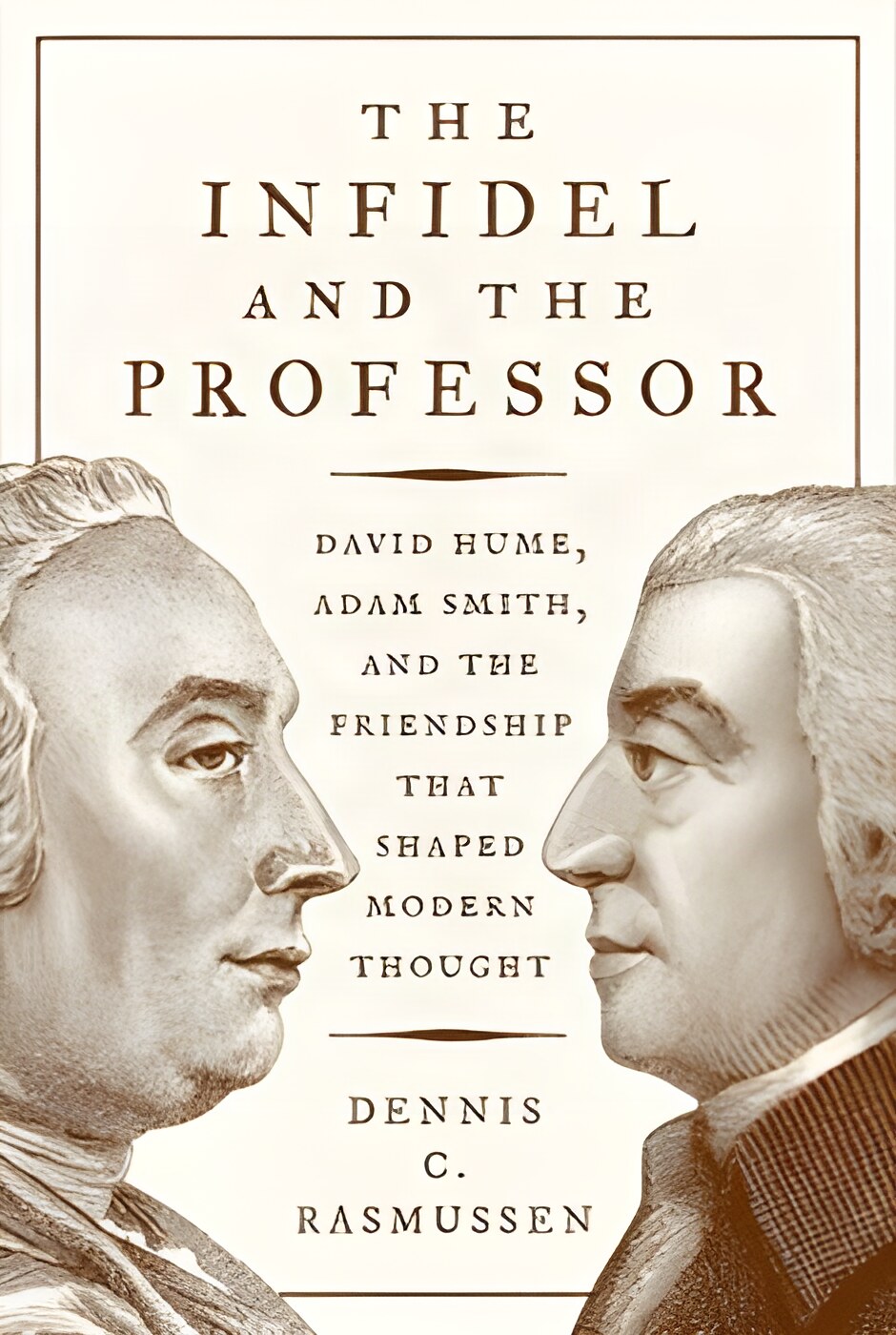
Hardcover. Princeton NJ, Princeton University Press, 3rd pr., 2017, Book: Very Good, Dust Jacket: Very Good, Hardcover in a bright dust jacket, 316 pages. David Hume is widely regarded as the most important philosopher ever to write in English, but during his lifetime he was attacked as "the Great Infidel" for his skeptical religious views and deemed unfit to teach the young. In contrast, Adam Smith was a revered professor of moral philosophy, and is now often hailed as the founding father of capitalism. Remarkably, the two were best friends for most of their adult lives, sharing what Dennis Rasmussen calls the greatest of all philosophical friendships. The Infidel and the Professor is the first book to tell the fascinating story of the friendship of these towering Enlightenment thinkers-and how it influenced their world-changing ideas. The book follows Hume and Smith's relationship from their first meeting in 1749 until Hume's death in 1776. It describes how they commented on each other's writings, supported each other's careers and literary ambitions, and advised each other on personal matters, most notably after Hume's quarrel with Jean-Jacques Rousseau. Clean copy.
Hardcover. Boston, Kluwer Academic Publishers, 1st, 2000, Book: Very Good, Dust Jacket: Very Good, Hardcover in a bright dust jacket, 408 pages. The only biographical account of More by one of his contemporaries. Ward's almost hagiographical tone is testimony to the high regard in which More was held by his admirers. This account testifies to the continuing impact of More's ideas in the enlightenment. This volume prints the only modern edition of Ward's biography printed in 1710 together with the manuscript account of More's writings published here for the first time. Clean copy.

 "Malebrancheby: Pyle, Andrew")
 "Marsden Hartley and the West: The Search for an American Modernism (Georgia O'Keefe Museum)by: Heather Hole and Barbara Buhler Lynes")
 "Nietzsche on Truth and Philosophy by: Maudemarie Clark")
 "Philosophical Writings of Etienne Bonnot, Abbe De Condillac:by: Franklin Philip/ Harlan Lane")
 "Polish Logic 1920-1939: Papers by Ajdukiewicz, Chwistek, Jaskowski, Jordan, Lesniewski, Lukasiewicz, Slupecki, Sobocinski, and Wajsbergby: McCall, Storrs (Editor), Ta")

 "Questions Concerning the Law of Natureby: Locke, John")


 "Religion and Rational Theology (The Cambridge Edition of the Works of Immanuel Kant)by: Immanuel Kant / Allen W. Wood (Translator)")
 "Religious and Poetic Experience in the Thought of Michael Oakeshott (British Idealist Studies, Series 1: Oakeshott)by: Worthington, Glenn")
 "Spirit of Tibet, The: The Life and World of Khyentse Rinpoche, Spiritual Teacherby: Ricard, Matthieu (Author, Photographer)")
 "The Edge of Surrealism: A Roger Caillois Readerby: Roger Caillois; Editor Claudine Frank; Translator Camille Naish")

 "The Future of Ritual: Writings on Culture and Performanceby: Richard Schechner")