Hardcover. London, Routledge & Kegan Paul, reprint, 1965, Book: Very Good, Dust Jacket: Good, Hardcover in a lightly worn dust jacket, 368 pages. Hans Vaihinger (1852-1933) was an important and fascinating figure in German philosophy in the early twentieth century, founding the well-known journal Kantstudien. Yet he was overshadowed by the burgeoning movements of phenomenology and analytical philosophy, as well as hostility towards his work because of his defense of Jewish scholars in a Germany controlled by Nazism. However, it is widely acknowledged today that The Philosophy of 'As If' is a philosophical masterwork. Vaihinger argues that in face of an overwhelmingly complex world, we produce a simpler set of ideas, or idealizations, that help us negotiate it. When cast as fictions, such ideas provide an easier and more useful way to think about certain subjects, from mathematics and physics to law and morality, than would the truth in all its complexity. Even in science, he wrote, we must proceed "as if" a material world exists independently of perceiving subjects; in behavior, we must act "as if" ethical certainty were possible; in religion, we must believe "as if" there were a God. He also explores the role of fictions in the history of philosophy, going back to the ancient Greeks and the work of Leibniz, Adam Smith and Bentham. Name on front fly leaf, otherwise clean.
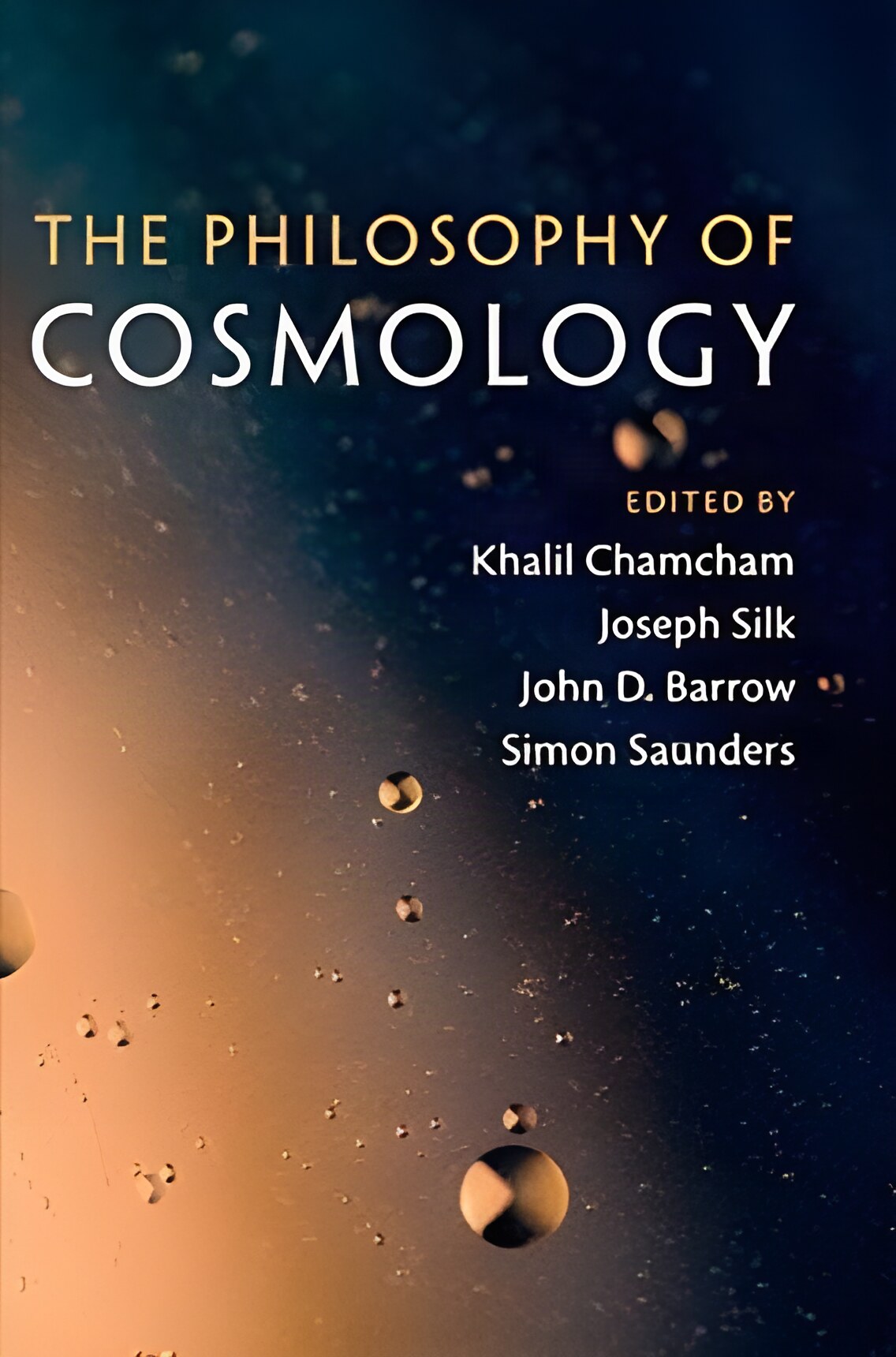
Hardcover. UK, Cambridge University Press, 1st, 2017, Book: Very Good, Dust Jacket: None, Hardcover, pictorial glossy boards, 514 pages. Following a long-term international collaboration between leaders in cosmology and the philosophy of science, this volume addresses foundational questions at the limit of science across these disciplines, questions raised by observational and theoretical progress in modern cosmology. Space missions have mapped the Universe up to its early instants, opening up questions on what came before the Big Bang, the nature of space and time, and the quantum origin of the Universe. As the foundational volume of an emerging academic discipline, experts from relevant fields lay out the fundamental problems of contemporary cosmology and explore the routes toward finding possible solutions. Written for graduates and researchers in physics and philosophy, particular efforts are made to inform academics from other fields, as well as the educated public, who wish to understand our modern vision of the Universe, related philosophical questions, and the significant impacts on scientific methodology. Clean, bright copy.
Hardcover. NY, Garland Publishing, reprint, 1983, Book: Very Good, Dust Jacket: None, Hardcover, beige boards with maroon lettering on the spine, 568 pages. A facsimile reprint of the 1941 edition published in London. Name on front fly leaf, otherwise clean.
Hardcover. La Salle IL, Open Court, reprint, 1971, Book: Very Good, Dust Jacket: None, Hardcover, blue cloth with gilt lettering on spine, 698 pages. Clean copy.
Hardcover. London, Longmans, Green and Co., 3rd Ed., 1929, Book: Good, Dust Jacket: None, Hardcover, maroon cloth with gilt lettering on spine, 270 pages. Spine faded, foxing/spotting to edge of text block. Volume 1 only. Name on front fly leaf. Clean internally.
Hardcover. London, Longmans, Green and Co., 3rd Ed., 1929, Book: Good, Dust Jacket: None, Hardcover, maroon cloth with gilt lettering on spine, 254 pages. Spine faded, foxing/spotting to edge of text block. Volume 2 only. Clean interbally.
Softcover. Toronto, University of Toronto Press, 1st, 2001, Book: Very Good, Dust Jacket: None, Softcover, 334 pages. This revised edition of The Poem of Empedocles (1992) integrates substantial new material from a recently discovered papyrus and published by A. Martin and O. Primavesi. The papyrus contains evidence of over seventy lines or part lines of poetry, of which more than fifty are both new and usable. The integration of this material into the previously known fragments has significant impact on our understanding of Empedocles, one of the most influential philosophers and poets of antiquity. Name on front fly leaf otherwise a clean, tight copy.
Hardcover. Edinburgh University Press, 1st, 2015, Book: Very Good, Dust Jacket: None, Hardcover, pictorial boards, 210 pages. All students of Western political thought encounter Niccolo Machiavelli's work. Nevertheless, his writing continues to puzzle scholars and readers who are uncertain how to deal with the seeming paradoxes they encounter. 'The Political Philosophy of Niccolo Machiavelli' is a clear account of Machiavelli's thought, major theories and central ideas. It critically engages with his work in a new way, one not based on the problematic Cambridge-school approach. Geared towards the specific requirements of students who need to reach a sound understanding of Machiavelli's ideas, it is the ideal companion to the study of this influential and challenging philosopher.
Softcover. Cambridge UK, Cambridge University Press, reprint, 1995, Book: Very Good, Dust Jacket: None, Softcover, 290 pages. This study provides a comprehensive reinterpretation of the meaning of Locke's political thought. John Dunn restores Locke's ideas to their exact context, and so stresses the historical question of what Locke in the Two Treatises of Government was intending to claim. By adopting this approach, he reveals the predominantly theological character of all Locke's thinking about politics and provides a convincing analysis of the development of Locke's thought. In a polemical concluding section, John Dunn argues that liberal and Marxist interpretations of Locke's politics have failed to grasp his meaning. Locke emerges as not merely a contributor to the development of English constitutional thought, or as a reflector of socio-economic change in seventeenth-century England, but as essentially a Calvinist natural theologian. Name on front fly leaf, otherwise clean.
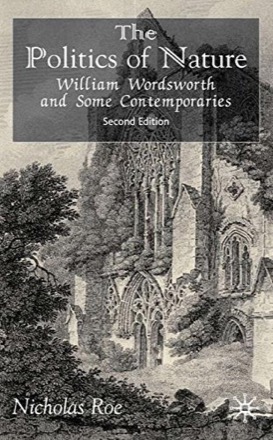
Softcover. NY/London, Palgrave , 2nd Ed., 2002, Book: Very Good, Dust Jacket: None, Softcover, 244 pages. Taking into account recent developments in historical and ecological criticism, and incorporating fresh research into poetry and politics in the 1790s, the second edition of The Politics of Nature enlarges and updates Nicholas Roe's acclaimed study of Romanticism. Hitherto marginal figures are restored to prominence, and there is new material on William Wordsworth's radical years.
Hardcover. London, Edmund Spettigue, 1841, Book: Very Good, Dust Jacket: None, Hardcover, half leather with marbled boards, 460 pages. Ornate gilt design on spine with 4 raised bands. Copy block with marbled edges. A contemporary note on a blank prelim page suggests this copy was a gift from Hawker's daughter. A classic that received its unique name because it was originally published in small penny portions so as to be affordable to the poor. Each morning and evening portion contains between 150 and 600 words; the size of a newspaper article or bulletin. The lessons and thought offered are to-the-point, teaching about a given Bible phrase, psalm, or proverb. Every nugget of spiritual wisdom is prefaced with a Biblical quotation that directly pertains to the author's explanations and instruction. Clean, tight copy.
Hardcover. NY, Alfred A. Knopf, 1st, 2001, Book: Very Good, Dust Jacket: Very Good, Hardcover in a bright, unclipped dust jacket, 355 pages. In this meticulously researched, unflinching, and reasoned study, National Book Award finalist David I. Kertzer presents shocking revelations about the role played by the Vatican in the development of modern anti-Semitism. Working in long-sealed Vatican archives, Kertzer unearths startling evidence to undermine the Church's argument that it played no direct role in the spread of modern anti-Semitism. In doing so, he challenges the Vatican's recent official statement on the subject, We Remember. Kertzer tells an unsettling story that has stirred up controversy around the world and sheds a much-needed light on the past. Newspaper review laid in. Clean copy.
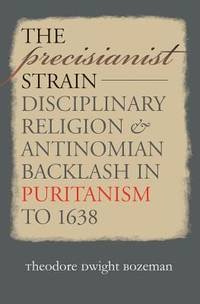
Hardcover. Omohundro Institute/University of North Carolina Press, 1st, 2004, Book: Very Good, Dust Jacket: Very Good, Hardcover in a bright dust jacket, 349 pages. In an examination of transatlantic Puritanism from 1570 to 1638, Theodore Dwight Bozeman analyzes the quest for purity through sanctification. The word "Puritan," he says, accurately depicts a major and often obsessive trait of the English late Reformation. He argues forcefully for the various movements in England and New England termed 'antinomianism' to be seen as sustained protests against and deliberate alternatives to this great and defining Puritan achievement in practical divinity.
Hardcover. Oxford UK, Oxford University Press, reprint, 1950, Book: Very Good, Dust Jacket: None, Hardcover, navy cloth covered boards with gilt titling to spine. Reprint of the revised second edition with commentary and terminal essays. Light pencil marking to ten pages, otherwise clean and tight copy. Volume 2 only of a two volume set.
Hardcover. New Haven CT, Yale University Press, 1st, 2003, Two hardcovers in dust dackets with sunning to spines, 479 and 493 pages. Andrew Marvell (1621-78) is best known today as the author of a handful of exquisite lyrics and provocative political poems. In his own time, however, Marvell was famous for his brilliant prose interventions in the major issues of the Restoration, religious toleration, and what he called "arbitrary" as distinct from parliamentary government. This is the first modern edition of all Marvell's prose pamphlets, complete with introductions and annotation explaining the historical context. Four major scholars of the Restoration era have collaborated to produce this truly Anglo-American edition. From the Rehearsal Transpros'd, a serio-comic best-seller which appeared with tacit permission from Charles II himself, through the documentary Account of the Growth of Popery and Arbitrary Government, Marvell established himself not only as a model of liberal thought for the eighteenth century but also as an irresistible new voice in political polemic, wittier, more literary, and hence more readable than his contemporaries. Name, date on front fly leafs, otherwise clean. DUE TO WEIGHT, DOMESTIC SHIPPING ONLY.
Hardcover. Amherst NY, Prometheus Books, 1st, 2000, Book: Very Good, Dust Jacket: Very Good, Hardcover in a bright dust jacket, 554 pages. More than one hundred years ago Western scholars began to investigate the origins of Islam, using the highest standards of objective historical scholarship of the time. Their aim was to determine what could be known about Muhammad and the rise of early Islam quite apart from the pious and totally unobjective traditions preserved by the Muslim religious community. In some ways this research was inspired by a similar investigation of Christianity made famous by Albert Schweitzer's Quest of the Historical Jesus. Today although much has been learned about early Christianity, little comparable progress has been made in the field of Islamic Studies. Here objective historical research has long been severely handicapped both by the resistance of Muslim societies to Western analysis of their sacred traditions and by the apologetic approaches of many Western scholars, who have compromised their investigations for fear of offending Muslim sensibilities. It is in this context that Ibn Warraq presents this important anthology of the best studies of Muhammad and early Islam ranging from the very beginnings of Islamic Studies in the nineteenth century to contemporary research. Clean copy.
Hardcover. London, Pickering & Chatto, 1st, 1999, Book: Very Good, Dust Jacket: None, Hardcover, black cloth, spine with maroon title block and gilt lettering, 377 pages. Vol. 2 ONLY of a six volume set. Clean, bright copy, no markings.
Hardcover. London, Pickering & Chatto, 1st, 1999, Book: Very Good, Dust Jacket: None, Hardcover, black cloth, spine with maroon title block and gilt lettering, 384 pages. Vol. 3 ONLY of a six volume set. Name and date on front fly leaf, otherwise clean.
Hardcover. London, Pickering & Chatto, 1st, 1999, Book: Very Good, Dust Jacket: None, Hardcover, black cloth, spine with maroon title block and gilt lettering, 448 pages. Vol. 4 ONLY of a six volume set. Clean, bright copy, no markings.
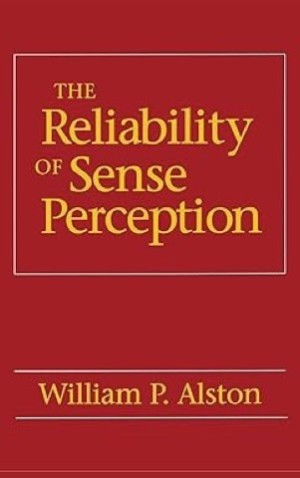
Hardcover. Ithaca NY, Cornell University Press, 1st, 1993, Book: Very Good, Dust Jacket: Good, Hardcover ib a dust jscket with sun-faded spine. Why suppose that sense perception is an accurate source of information about the physical environment? More generally, is it possible to demonstrate that our basic ways of forming beliefs are reliable? In this book, a leading analytic philosopher confronts this classic problem through detailed investigation of sense perception, the source of beliefs in which we place the most confidence. Carefully assessing the available arguments, William P. Alston concludes that it is not possible to show in any noncircular way that sense perception is a reliable source of beliefs. 148 pages. Clean copy.
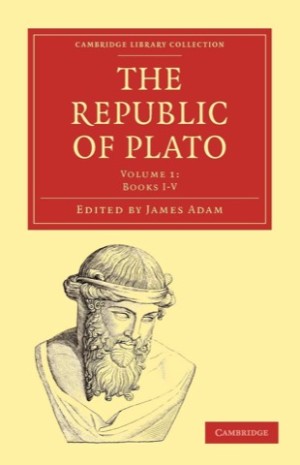
Softcover. Cambridge University Press, reprint, 2007, Book: Very Good, Dust Jacket: None, Two softcover volumes: Vol. 1: Books 1-V, 364 pages. Vol. 2: Books VI-X and Indexes, 531 pages. Previous owner's name, otherwise clean. James Adam (1860-1907) was a Scottish classics scholar who taught at Emmanuel College, Cambridge. A strong defender of the importance of Greek philosophy in a well-rounded education, Adam published a number of Plato's works including Protagoras and Crito. This two-volume critical edition of the Republic (1902) was another major contribution to the field. Though his preface claims 'an editor cannot pretend to have exhausted its significance by means of a commentary,' Adam's depth of knowledge and erudite analysis of the Greek text ensured that his edition remained the standard reference for decades to follow, and it remains a thought-provoking evaluation of one of the great works of Western thought.
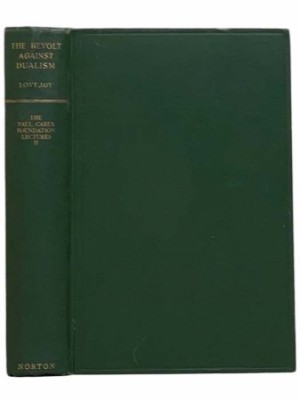
Hardcover. NY, Open Court/ W.W. Norton, 1st, 1930, Book: Very Good, Dust Jacket: None, Hardcover, dark green cloth, gilt lettering on spine, 325 pages. Includes chapters on Bertrand Russell and Alfred North Whitehead. "The Revolt Against Dualism, first published in 1930, belongs to a tradition in philosophical theorizing that Arthur O. Lovejoy called "descriptive epistemology." Lovejoy's principal aim in this book is to clarify the distinction between the quite separate phenomena of the knower and the known, something regularly obvious to common sense, if not always to intellectual understanding. This work is as much an argument about the ineluctable differences between subject and object and between mentality and reality, as it is a subtle polemic against those who would stray far from acknowledging these differences. With a resolve that lasts over three hundred pages, Lovejoy offers candid evaluations of a generation's worth of philosophical discussions that address the problem of epistemological dualism. Name on front fly leaf, pages tanning, otherwise very good, clean copy.
Hardcover. Princeton NJ, Princeton University Press, 1st, 1986, Book: Very Good, Dust Jacket: Very Good, Hardcover in a bright dust jacket, 234 pages. When Leviathan first appeared in 1651, it was recognized as a work of extraordinary scope, uniting metaphysical, theological, and political arguments into a single distinctive outlook. Contending that modern readers do the book an injustice by neglecting its metaphysical and theological themes, David Johnston supports his claim with a detailed examination of the text as a whole and with a reinterpretation of the genesis of the work. Clean copy.
Softcover. Carbondale IL, Southern Illinois University Press, 1st, 1986, Book: Very Good, Dust Jacket: None, Softcover, 408 pages. Makes accessible to modern readers the 17th-century rhetorics of Thomas Hob-bes (1588-1677) and Bernard Lamy (1640-1715) Hobbes' A Briefe of the Art of Rhet-orique, the first English translation of Aristotle's rhetoric, reflects Hobbes' sense of rhetoric as a central instrument of self-defense in an increasingly frac-tious Commonwealth. In its approach to rhetoric, which Hobbes defines as "that Faculty by which wee understand what will serve our turne, concerning any subject, to winne beliefe in the hearer," the Briefe looks forward to Hobbes' great political works De Cive and Leviathan. Published anonymously in France as De l'art de parler, Lamy's rhetoric was translated immediately into English as The Art of Speaking. Lamy's long associa-tion with the Port Royalists made his works especially attractive to English readers because Port Royalists were en-gaged in a vicious quarrel with the Jesuits during the last half of the 17th century. Name at top of front cover and front fly leaf.

 "The Philosophy of 'As If' : A System of the Theoretical, Practical and Religious Fiction of Mankind. by: Hans Vaihinger")
 "The Philosophy Of David Hume: A Critical Study of Its Origins and Central Doctrines by: Norman Kemp Smith")
 "The Philosophy of Plotinus: Volume Iby: William Ralph Inge")


 "The Political Thought of John Locke: An Historical Account of the Argument of the 'Two Treatises of Government'by: Dunn, John/John Locke")


 "The Principles of Logic (Volume 2)by: Bradley, F. H.")


 "The Quest for the Historical Muhammadby: Ibn Warraq (Editor)")
 "The Reception of Locke's Politics Vol 2: Patriarchalism, the Social Contract and Civic Virture 1705- 1760by: Goldie, Mark (Ed.)")
 "The Reception of Locke's Politics Vol 3: The Age of the American Revolution 1760-1780by: Goldie, Mark (Ed.)")
 "The Reception of Locke's Politics Vol 4: Poitical Reform in the Age of The French Revolution 1780-1838by: Goldie, Mark (Ed.)")



![The Rhetorics of Thomas Hobbes and Bernard Lamyby: Harwood, John T. [Editor]](https://www.browsingisarousing.com/shop/images/The-Rhetorics-of-Thomas-Hobbes-and-Bernard-Lamy_by_Harwood-John-T.-Editor386560-440172.jpg "The Rhetorics of Thomas Hobbes and Bernard Lamyby: Harwood, John T. [Editor]")