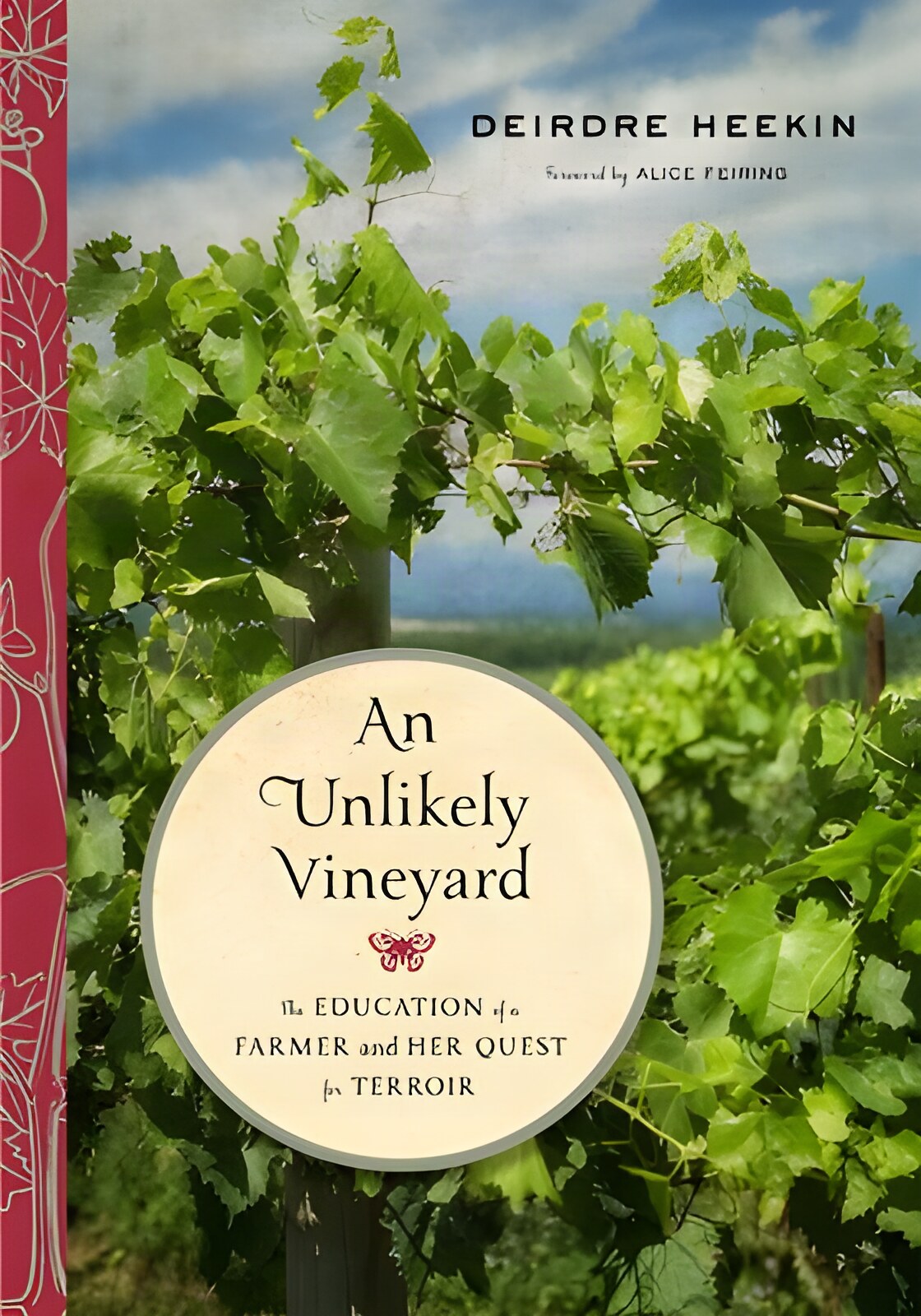
Hardcover. White River Junction VT, Chelsea Green Publishing, 1st, 2014, Book: Very Good, Dust Jacket: Very Good, Hardcover in a bright, unclipped dust jacket. Named one of the Best Wine Books of 2014 by The New York Times, An Unlikely Vineyard tells the evolutionary story of Deirdre Heekin's farm from overgrown fields to a fertile, productive, and beautiful landscape that melds with its natural environment. Is it possible to capture landscape in a bottle? To express its terroir, its essence of place-geology, geography, climate, and soil-as well as the skill of the winegrower? That's what Heekin and her chef/husband, Caleb Barber, set out to accomplish on their tiny, eight-acre hillside farm and vineyard in Vermont. Challenged by cold winters, wet summers, and other factors, Deirdre and Caleb set about to grow not only a vineyard, but an orchard of heirloom apples, pears, and plums, as well as gardens filled with vegetables, herbs, roses, and wildflowers destined for their own table and for the kitchen of their small restaurant. They wanted to create, or rediscover, a sense of place, and to grow food naturally using the philosophy and techniques gleaned from organic gardening, permaculture, and biodynamic farming. Clean copy.
Hardcover. NY, Columbia University Press, 1st, 1960, Hardcover, blue cloth covers with gilt lettering to spine, 249 pages, two b&w plates. Through criticism and analysis of ancient traditions, Kahn reconstructs the pattern of Anaximander's thought using historical methods akin to the reconstructive techniques of comparative linguists. Name on front fly leaf, light pencil marking to a dozen pages. Cloth spine faded.
Softcover. Amsterdam, North - Holland Publishing, 2nd pr., 1957, Book: Very Good, Dust Jacket: Very Good, Thin card covers in a lightly sunned dust jacket, 122 pages. Remarkable work in which the author aimed to collect some of the data available in the state of science of Bochenski's times and to arrange them in a kind of outline, which showed forth some of our indebtedness to Greek Logicians, and allowed the reader to see how their results were reached.
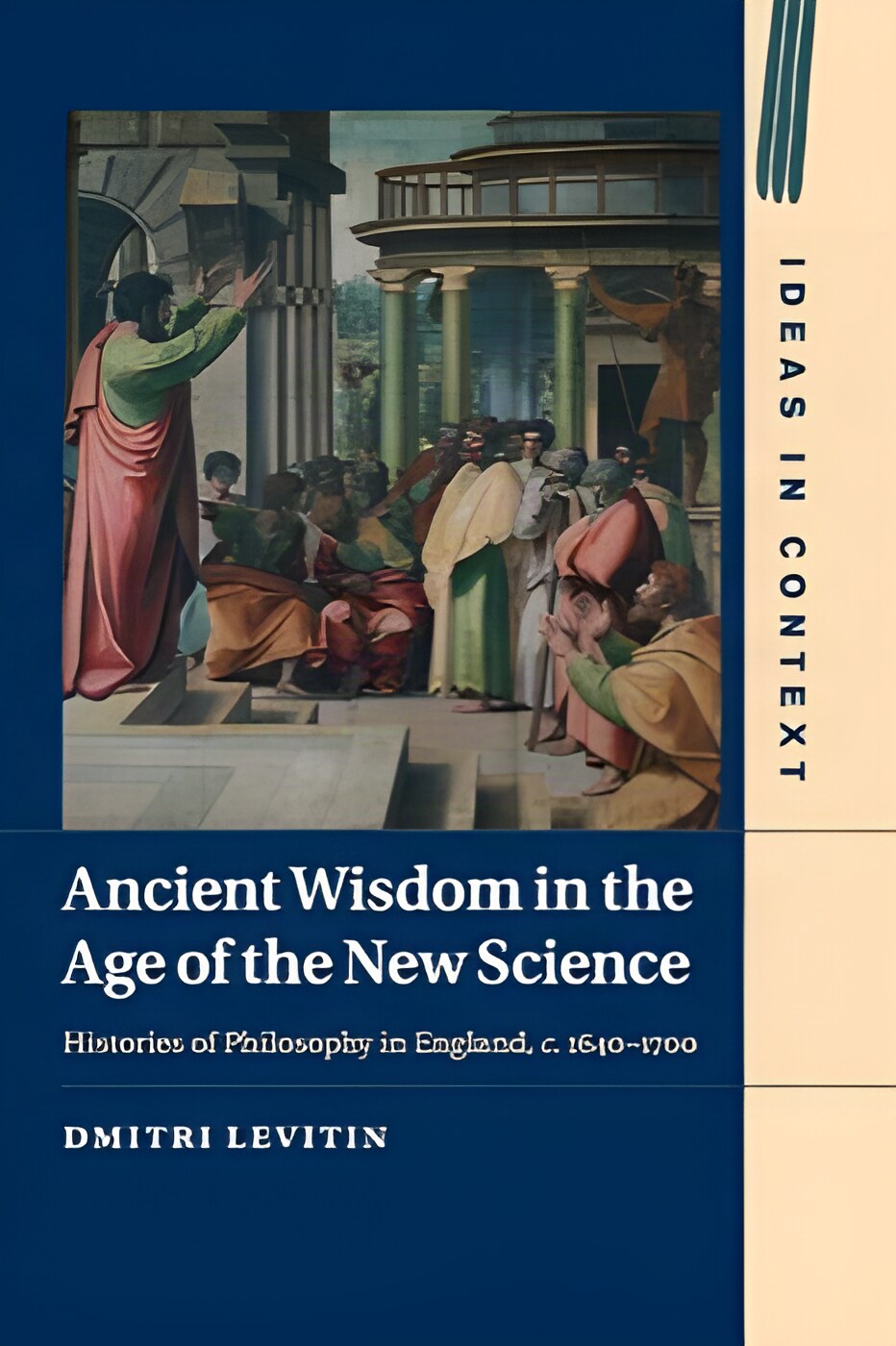
Hardcover. Cambridge UK, Cambridge University Press, 1st, 2015, Book: Very Good, Dust Jacket: Very Good, Hardcover in a bright dust jacket, pages. Seventeenth-century England has long been heralded as the birthplace of a so-called 'new' philosophy. Yet what contemporaries might have understood by 'old' philosophy has been little appreciated. In this book Dmitri Levitin examines English attitudes to ancient philosophy in unprecedented depth, demonstrating the centrality of engagement with the history of philosophy to almost all educated persons, whether scholars, clerics, or philosophers themselves, and aligning English intellectual culture closely to that of continental Europe. Drawing on a vast array of sources, Levitin challenges the assumption that interest in ancient ideas was limited to out-of-date 'ancients' or was in some sense 'pre-enlightened'; indeed, much of the intellectual justification for the new philosophy came from re-writing its history. At the same time, the deep investment of English scholars in pioneering forms of late humanist erudition led them to develop some of the most innovative narratives of ancient philosophy in early modern Europe. Name on front fly leaf, otherwise clean.
Hardcover. MA, University of Massachusetts Press , 1st, 1967, Book: Very Good, Dust Jacket: Good, 268 pages. Previous owner's signature on front fly leaf. Dust jacket with light edgewear and sunning and a small sticker-stain to front cover.
Hardcover. Boston, William White & Co, 3rd, 1862, Book: Very Good, Dust Jacket: None, 344 pages. Black boards with embossed pictorial border, gilt titles to spine. Previous owner's signature to front endpaper, light rubbing to covers, top third of outside of front hinge cracked, mild edgewear, pages crisp and unmarked; overall, a very neat, tight copy.
Softcover. London, Routledge, reprint, 2016, Book: Very Good, Dust Jacket: None, Softcover, 287 pages. St Anselm's archiepiscopal career, 1093-1109, spanned the reigns of two kings: William Rufus and the early years of Henry I. As the second archbishop of Canterbury after the Norman Conquest, Anselm strove to extend the reforms of his teacher and mentor at Bec, and his predecessor at Canterbury, Archbishop Lanfranc. Exploring Anselm's thirty years as Prior and Abbot of the large, rich, Norman monastery of Bec, and teacher in its school, this book notes the wealth of experiences which prepared Anselm for his archiepiscopal career--in particular Bec's missionary attitude toward England. Sally Vaughn examines Anselm's intellectual strengths as a teacher, philosopher and theologian: exploring his highly regarded theological texts, including his popular Prayers and Meditations, and how his statesmanship was influenced as he dealt with conflict with the antagonistic King William Rufus. Clean copy.
Hardcover. Boston, Little Brown & Co., 1st, 1964, Book: Very Good, Dust Jacket: Good, Hardbound, 246 pages. Previous owner's inscription front end paper. Dust jacket with light edgewear and chipping. Protective mylar cover.
Hardcover. Cambridge UK, Cambridge University Press, 1st, 2000, Book: Very Good, Dust Jacket: Very Good, 170 pages, blue cloth covers with gilt lettering on spine. This book considers the relation between language and thought. Robert Wardy explores this huge topic by analyzing linguistic relativism with reference to a Chinese translation of Aristotle's Categories. He addresses some key questions, such as, do the basic structures of language shape the major thought patterns of its native speakers? Could philosophy be guided and constrained by the language in which it is done? And does Aristotle survive rendition into Chinese intact? Wardy's answers will fascinate philosophers, Sinologists, classicists, linguists and anthropologists, and make a major contribution to the scholarly literature.
Hardcover. UK, Clarendon Press, 1st, Book: Very Good, Dust Jacket: Very Good, Hardcover in a bright dust jacket, 303 pages. Aristotle, great Greek philosopher, researcher, reasoner, and writer, born at Stagirus in 384 BCE, was the son of Nicomachus, a physician, and Phaestis. He studied under Plato at Athens and taught there (367 47); subsequently he spent three years at the court of a former pupil, Hermeias, in Asia Minor and at this time married Pythias, one of Hermeias s relations. After some time at Mitylene, in 343 2 he was appointed by King Philip of Macedon to be tutor of his teen-aged son Alexander. After Philip s death in 336, Aristotle became head of his own school (of Peripatetics ), the Lyceum at Athens. Previous owner's name on front fly leaf, otherwise clean, like new.
Hardcover. Chicago, University of Chicago Press , 1st, 1987, Book: Very Good, Dust Jacket: Very Good, Hardcover in a bright dust jacket, 249 pages. A study of "Aristotle's psychology, or philosophy of mind." Name on front fly leaf, otherwise clean, tight copy.
Hardcover. Oxford UK, Clarendon Press, reprint, 2001, Book: Very Good, Dust Jacket: Very Good, Hardcover in a bright dust jacket, 690 pages, folding table. Greek & English text. biblio. index. Name on front fly leaf, otherwise clean. Originally published in 1949.
Hardcover. Cambridge MA, Harvard University Press, 1st, 1970, Book: Very Good, Dust Jacket: Very Good, Hardcover in a lightly worn dust jacket, 478 pages. Name on half-title page, otherwise clean.
Softcover. New Haven CT, Yale University Press, 2nd pr., 1987, Book: Very Good, Dust Jacket: None, Softcover, 450 pages. The rise of atheism in the modern world is a religious phenomenon unprecedented in history, both in the number of its adherents and in the security of its cultural establishment. How did so revolutionary a conviction as this arise? What can theological reflection learn from this massive shift in religious consciousness? In this book, Michael J. Buckley investigates the origins and development of modern atheism and argues convincingly that its impetus lies paradoxically in the very attempts to counter it. Although modern atheism finds its initial exponents in Denis Diderot and Paul d'Holbach in the eighteenth century, their works bring to completion a dialectical process that reaches back to the theologians and philosophers of an earlier period. During the seventeenth century, theologians such as Leonard Lessius and Marin Mersenne determined that in order to defend the existence of god, religious apologetics must become philosophy, surrendering as its primary warrant any intrinsically religious experience or evidence. The most influential philosophers of the period, Rene Descartes and Isaac Newton, and the theologians who followed them accepted this settlement, and the new sciences were enlisted to provide the foundation for religion. Clean, bright copy.
Hardcover. London, England, Messrs. Luzac & Co., 1st Edition, 1954, Book: Very Good, Dust Jacket: None, Two volume set. Hardcovers. Domestic shipping only. Previous owner's name on front flyleaf. Vol. 1: 374 pages; Vol. 2: 217 pages. Black cover boards, gilt title on spine. Volume 2 has fading to spine. Pages unmarked. Spines straight. Binding tight. An important Islamic philosophical treatise in which the author defends the use of Aristotelian philosophy within Islamic thought. DOMESTIC SHIPPING ONLY.
Softcover. UK, Cambridge University Press, 1st pbk, 1995, Book: Very Good, Dust Jacket: None, Softcover, 177 pages. In this edition of Beccaria's On Crimes and Punishments and other writings, Richard Bellamy draws on recent Italian scholarship to show how Beccaria wove together the various political languages of the Enlightenment into a political philosophy that combines republican, contractarian, romantic and liberal as well as utilitarian themes. This edition also includes a number of pieces from Beccaria's writings on political economy and the history of civilization that were not previously available in English. Clean copy.
Hardcover. NY, Arthur A. Levine Books, reprint, 2005, Book: Very Good, Dust Jacket: Very Good, Hardcover in a bright dust jacket, oblong format. 32 pages with gorgeous watercolors by McCully. Mingyi, a desperate woman who does not want to marry the no-good Soong Ling, seeks the help of Master Wu Mei, the "beautiful warrior" who teaches Mingyi the philosophy and techniques of kung fu to defend herself against her suitor. Clean copy.
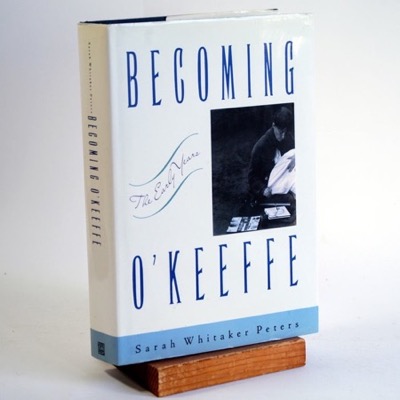
Hardcover. NY, Abbeville Press, 1st, 1991, Hardcover in a bright dust jacket, 397 pages, illustrated in b&w and color. In this thoughtful and thought-provoking art historical study, Peters first traces strands of Art Nouveau and Symbolist theory in the art of Georgia O'Keeffe. She then discusses other influences, from Arthur Dow as teacher to Paul Strand as photographer and friend. But by far the most sustained study in the text is the relationship between O'Keeffe's painting and the photography and philosophy of her husband, Alfred Stieglitz. Peters argues lucidly and always in accessible language for O'Keeffe's emergence as a great and deeply individual artist while illuminating these many influences and illustrating her points with lavish use of excellent reproductions. Clean copy.
Softcover. Baltimore, Johns Hopkins University Press, reprint, 1978, Book: Very Good, Dust Jacket: None, Softcover, 414 pages. A work of literary criticism in which Said differentiates between the concept of "origin" and "beginning", also reflecting reflexively on the role of criticism and of the intellectual within a larger culture. Clean copy.
Hardcover. Oxford University Press, 1st thus, 2010, Book: Very Good, Dust Jacket: Very Good, Hardcover in a bright dust jacket, 426 pages. Behemoth, or The Long Parliament is essential to any reader interested in the historical context of the thought of Thomas Hobbes (1588-1679). In De Cive (1642) and Leviathan (1651), the great political philosopher had developed an analytical framework for discussing sedition, rebellion, and the breakdown of authority. Behemoth, completed around 1668 and not published until after Hobbe's death, represents the systematic application of this framework to the English Civil War. Clean, bright copy.
Softcover. Chicago, University of Chicago Press, 1st pbk., 1993, Book: Very Good, Dust Jacket: None, Softcover, 322 pages, b&w illustrations. In this first modern, critical assessment of the place of mathematics in Berkeley's philosophy and Berkeley's place in the history of mathematics, Douglas M. Jesseph provides a bold reinterpretation of Berkeley's work. Jesseph challenges the prevailing view that Berkeley's mathematical writings are peripheral to his philosophy and argues that mathematics is in fact central to his thought, developing out of his critique of abstraction. Jesseph's argument situates Berkeley's ideas within the larger historical and intellectual context of the Scientific Revolution.
Hardcover. Ithaca NY, Cornell University Press, 1st, 1990, Book: Very Good, Dust Jacket: Very Good, Hardcover in a bright dust jacket, 249 pages. Berkeley's Essay towards a New Theory of Vision (1709), his first substantial publication, revolutionized the theory of vision. His approach provided the framework for subsequent work in the psychology of vision and remains influential to this day. Among philosophers, however, the New Theory has not always been read as a landmark in the history of scientific thought, but instead as a halfway house to Berkeley's later metaphysics. In this book, Margaret Atherton seeks to redress the balance through a commentary on and a reinterpretation of Berkeley's New Theory. Clean copy.
Hardcover. Cambridge MA, Harvard University Press, 1st, 1989, Book: Very Good, Dust Jacket: Very Good, Hardcover, 192 pages. Light sun-fade to dust jacket spine, else a clean, tight copy. Michael Slote challenges the long-dominant conception of individual rationality, which has to a large extent shaped the very way we think about the essential problems and nature of rationality, morality, and the relations between them. He contests the accepted view by appealing to a set of real-life examples, claiming that our intuitive reaction to these examples illustrates a significant and prevalent, if not always dominant, way of thinking. Slote argues that common sense recognizes that one can reach a point where "enough is enough," be satisfied with what one has, and, hence, rationally decline an optimizing alternative. He suggests that, in the light of common sense, optimizing behavior is often irrational.



 "Annotated Catalogue of the Papers of Charles S. Peirceby: Robin, Richard S.")
 "Arcana of Nature; The History of Laws and Creationby: Tuttle, Hudson")

 "Aristos, The: A Self-Portrait in Ideasby: Fowles, John")

 "Aristotle on Coming-to-Be and Passing-Away: De Generatione Et Corruptioneby: Harold H. Joachim")


 "Averroes' Tahafut Al-Tahafut (The Incoherence of the Incoherence) Volume 1 & 2by: Van Den Bergh, Somin")


 "Baccaria: On Crimes and Punishments and Other Writings by: Cesare Beccaria")
 "Bartlous of Sassoferrato: His Position in the History of Medieval Political Thoughtby: Woolf, Cecil N. Sidney")