Hardcover. NY, Oxford University Press, 1st, 2018, Book: Very Good, Dust Jacket: Very Good, Hardcover in a bright dust jacket, 239 pages. The Harvard philosopher Donald C. Williams (1899-1983) was a key figure in the history of analytic philosophy. He played a crucial role in reviving metaphysics at a time when other philosophers ridiculed, criticized, and committed it to the flames. He constructed an explanatorily powerful and parsimonious ontology and cosmology founded on logic, science, and common sense. His most influential articles were on the metaphysics of properties ('The Elements of Being') and the meta-physics of time ('The Sea Fight Tomorrow', 'The Myth of Passage'). His ontology of abstract particulars or tropes and his four-dimensional manifold theory of time remain leading hypotheses in metaphysics. Because of his novel contributions and his defense of metaphysics he made a lasting impact on philosophers of the next generation who in turn believed in the substance of metaphysical inquiry. Name on front fly leaf, light pencil marking to first 30 pages. Otherwise clean, very good.
Softcover. NY, W. W. Norton & Company, 1st US, Book: Very Good, Dust Jacket: None, Softcover, Advance Reading Copy, 408 pages. The seven-foot Dirk Nowitzki is one of the greatest players in basketball history. The Dallas Maverick's legend revolutionized the sport, redefining the role of the big man in the modern game. Dirk moved differently: flexible and fast, confident and in control. He thought differently, too. On the court, his shots were masterful-none more venerated than his signature one-legged flamingo fadeaway, a move that lives on in the repertoire of today's most skilled NBA players. How did this lanky kid from the German suburbs become an all-time top ten scorer and NBA champion? How can a superstar stay so humble? Award-winning novelist and sportswriter Thomas Pletzinger spent over seven years traveling with Nowitzki. He witnessed Dirk's summer workouts, involving fingertip pushups and the study of the physics, and spent days discussing literature and philosophy with Holger Geschwindner, Dirk's enigmatic mentor and coach. Watching Nowitzki in empty gyms and in packed arenas with 30,000 fans, Pletzinger began to understand how Dirk and Holger's philosophical insights on performance, creativity, and freedom enabled his success and longevity. This proof edition lacks the photo section. Clean copy.
Softcover. Cambridge UK, Cambridge University Press, 1st pbk., 2002, Book: Very Good, Dust Jacket: None, Softcover, 359 pages. In this major reevaluation of Isaac Newton's intellectual life, Betty Jo Teeter Dobbs shows how his pioneering work in mathematics, physics, and cosmology was intertwined with his study of alchemy. Professor Dobbs argues that to Newton those several intellectual pursuits were all ways of approaching Truth, and that Newton's primary goal was not the study of nature for its own sake but rather an attempt to establish a unified system that would have included both natural and divine principles. She also argues that Newton's methodology was much broader than modern scholars have previously supposed, and she traces the evolution of his thought on the intertwined problems of the microcosmic "vegetable spirit" of alchemy and the "cause" of the cosmic principle of gravitation. Clean, bright copy.
Hardcover. London, Routledge & Kegan Paul, reprint, 1965, Book: Very Good, Dust Jacket: Good, Hardcover in a lightly worn dust jacket, 368 pages. Hans Vaihinger (1852-1933) was an important and fascinating figure in German philosophy in the early twentieth century, founding the well-known journal Kantstudien. Yet he was overshadowed by the burgeoning movements of phenomenology and analytical philosophy, as well as hostility towards his work because of his defense of Jewish scholars in a Germany controlled by Nazism. However, it is widely acknowledged today that The Philosophy of 'As If' is a philosophical masterwork. Vaihinger argues that in face of an overwhelmingly complex world, we produce a simpler set of ideas, or idealizations, that help us negotiate it. When cast as fictions, such ideas provide an easier and more useful way to think about certain subjects, from mathematics and physics to law and morality, than would the truth in all its complexity. Even in science, he wrote, we must proceed "as if" a material world exists independently of perceiving subjects; in behavior, we must act "as if" ethical certainty were possible; in religion, we must believe "as if" there were a God. He also explores the role of fictions in the history of philosophy, going back to the ancient Greeks and the work of Leibniz, Adam Smith and Bentham. Name on front fly leaf, otherwise clean.
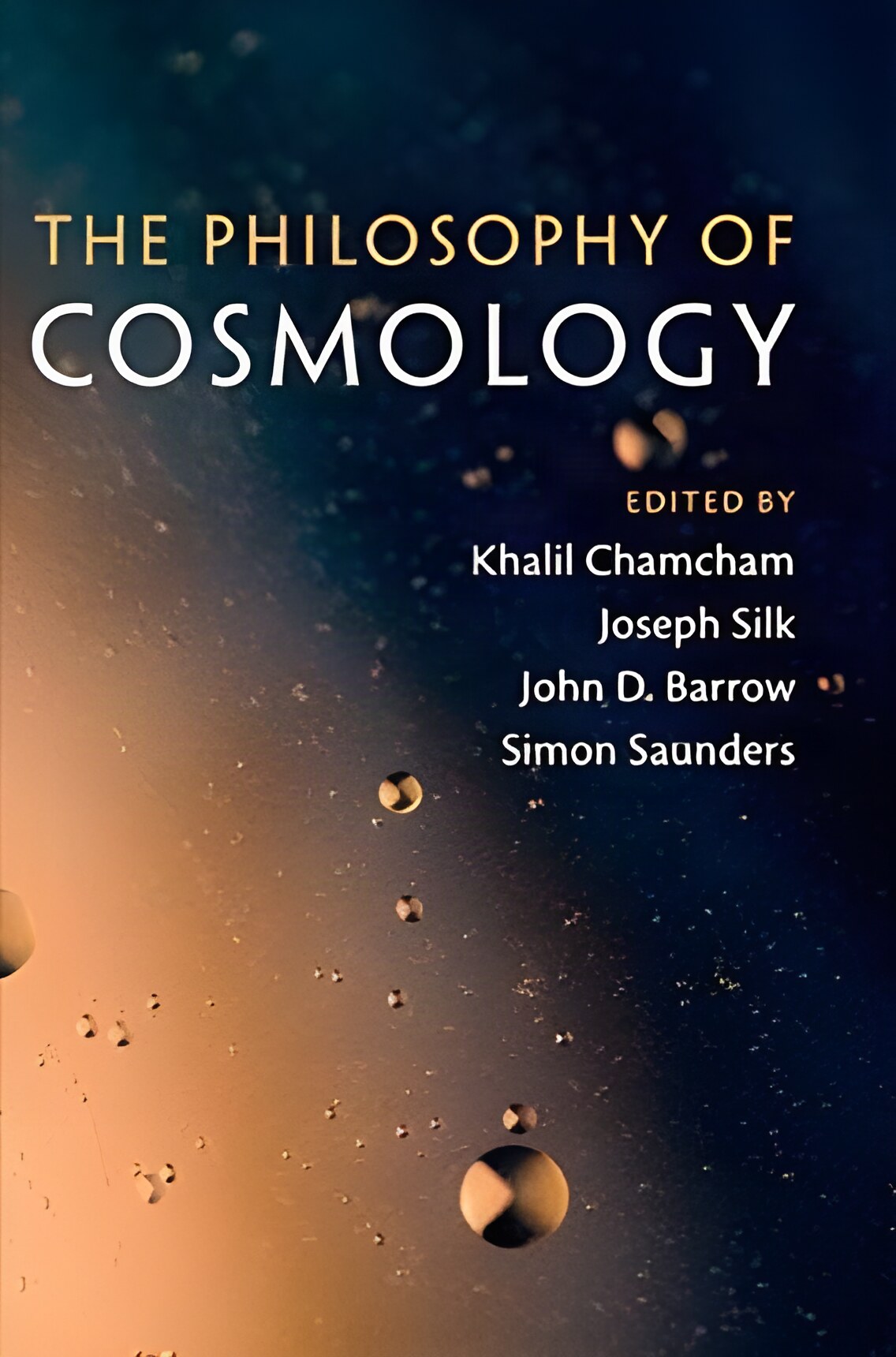
Hardcover. UK, Cambridge University Press, 1st, 2017, Book: Very Good, Dust Jacket: None, Hardcover, pictorial glossy boards, 514 pages. Following a long-term international collaboration between leaders in cosmology and the philosophy of science, this volume addresses foundational questions at the limit of science across these disciplines, questions raised by observational and theoretical progress in modern cosmology. Space missions have mapped the Universe up to its early instants, opening up questions on what came before the Big Bang, the nature of space and time, and the quantum origin of the Universe. As the foundational volume of an emerging academic discipline, experts from relevant fields lay out the fundamental problems of contemporary cosmology and explore the routes toward finding possible solutions. Written for graduates and researchers in physics and philosophy, particular efforts are made to inform academics from other fields, as well as the educated public, who wish to understand our modern vision of the Universe, related philosophical questions, and the significant impacts on scientific methodology. Clean, bright copy.
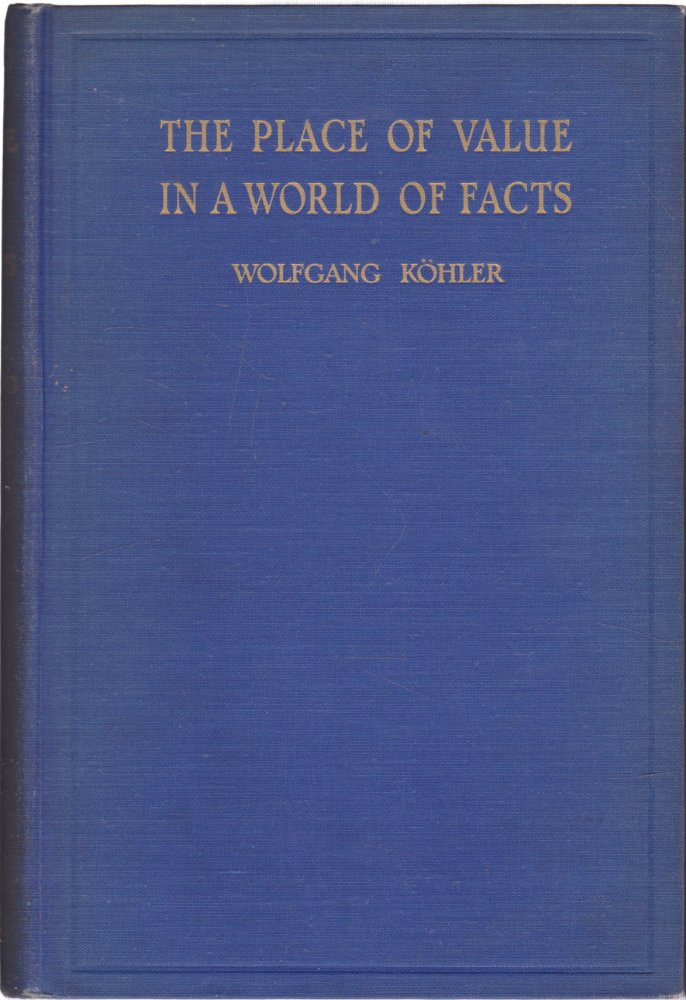
Hardcover. NY, Liveright Publishing, 1st, 1938, Book: Very Good, Dust Jacket: None, Hardcover, blue cloth with gilt lettering, 418 pages. In this important and challenging book, Wolfgang Kohler's subject is value, or what he calls the "requiredness" of an object or activity. Starting with a descriptive account of values as we become aware of them, he finds that, inside certain contexts, parts of such structures do not appear as indifferent facts. They are experienced as belonging there intrinsically or, also, as being out of place in their contexts. Kohler's closely reasoned analysis, drawing on the fields of psychology, biology, and physics, centers around this concept of requiredness. Clean copy. No dust jacket.
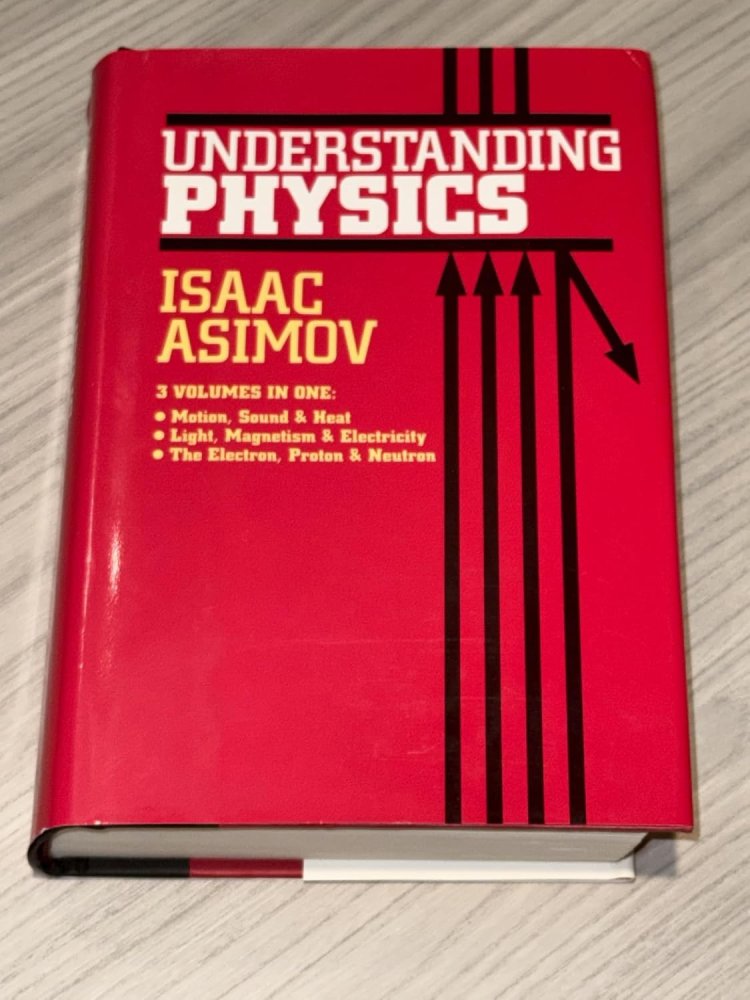
Hardcover. NY, Dorset Press, reprint, 1988, Book: Very Good, Dust Jacket: Very Good, Hardcover in a bright dust jacket. In this reader-friendly, unabridged edition of three of his best-selling books, renowned science writer Isaac Asimov demystifies physics, teaching the fundamentals in a manner easily understood by lay people. Including the complete text of Motion, Sound and Heat, Light, Magnetism and Electricity, and The Electron, Proton and Neutron, this volume will guide you through the evolution of physics from its early Greek beginnings up to the modern theories of the creation of time, space and matter. Each volume relates the tale of the human quest through the ages for answers to the fundamental questions of how the universe works. Told in its historical context, this quest for knowledge is a story of high drama and uncommon valor, when men put their very lives on the line for the sake of scientific truth. Clean copy.
Softcover. Lanham MD, Rowman & Littlefield , 1st, 2003, Book: Very Good, Dust Jacket: None, Softcover, 349 pages. In Vergil's Empire, Eve Adler offers an exciting new interpretation of the political thought of Vergil's Aeneid. Adler argues that in this epic poem, Vergil presents the theoretical foundations of a new political order, one that resolves the conflict between scientific enlightenment and ancestral religion that permeated the ancient world. The work concentrates on Vergil's response to the physics, psychology, and political implications of Lucretius' Epicurean doctrine expressed in De Rerum Natura. Proceeding by a close analysis of the Aeneid, Adler examines Vergil's critique of Carthage as a model of universal enlightenment, his positive doctrine of Rome as a model of universal religion, and his criticism of the heroism of Achilles, Odysseus, and Epicurus in favor of the heroism of Aeneas. Beautifully written and clearly argued, Vergil's Empire will be of great value to all interested in the classical world. Clean copy.

 "The Elements and Patterns of Being: Essays in Metaphysics by: Williams, Donald C. (Editor: Fisher, A. R. J.)")


 "The Philosophy of 'As If' : A System of the Theoretical, Practical and Religious Fiction of Mankind. by: Hans Vaihinger")