Hardcover. Rome, Grafica Internazionale, 1st, 1969, Book: Good, Dust Jacket: None, Hardcover, oblong format, orange cloth covers stamped in brown and white. ITALIAN TEXT. Introduction by Elio Mercuri. Poetic texts by Langston Hughes, Owen Dodson, Sterling A. Brown, James Weldon Johnson. With 32 color plates and 60 black and white illustrations. 8vo, 100 pages, Aligi Sassu created all the plates reproduced here in 1969 for the scenic cantata ''Anch'io sono l'America'' by Mario Nascimbene, inspired by the texts of contemporary black poets. The work is; had its world premiere on 20 June 1969 at the Teatro Sociale in Lecco, interpreted by Helenita Olivares and Therman Bailey. Covers with fading, light soil. Interior clean.
Hardcover. NY, Alfred A. Knopf, 1st, 1929, Book: Good, Dust Jacket: None, Hardcover with paper boards multicolored in vertical stripe patterns, 64 pages. In her lifetime, Wylie garnered notoriety for her unconventional private life and acclaim for her poems and novels. The collection is most renowned for the sonnet sequence "One Person," a deeply moving and technically masterful exploration of love, devotion, and the human spirit.She was considered one of the most distinguished American poets of the 1920s. Though her literary career lasted only eight years, she was recognized as an extremely adept, accomplished author. Wylie's poetry is marked by a lively inventiveness, a subtle treatment of emotion, and a detached sensibility that Louis Untermeyer has described as "a passion frozen at its source." Her last book, published after her untimely death 1n 1928. Covers with mild soil, edgewear.
Hardcover. Princeton NJ, Princeton University Press, 1st, 1995, Book: Very Good, Dust Jacket: Very Good, Hardcover in a bright dust jacket. 327 pages, clean copy. Few diseases have exercised the Western imagination as chronically as hysteria--from the wandering womb of ancient Greek medicine, to the demonically possessed witch of the Renaissance; from the "vaporous" salon women of Enlightenment Paris, through to the celebrated patients of Sigmund Freud, with their extravagant, erotically charged symptoms. In this fascinating and authoritative book, Mark Micale surveys the range of past and present readings of hysteria by intellectual historians; historians of science and medicine; scholars in gender studies, art history, and literature; and psychoanalysts, psychiatrists, clinical psychologists, and neurologists. In so doing, he explores numerous questions raised by this ever-growing body of literature: Why, in recent years, has the history of hysterical disorders carried such resonance for commentators in the sciences and humanities? What can we learn from the textual traditions of hysteria about writing the history of disease in general? What is the broader cultural meaning of the new hysteria studies? In the second half of the book, Micale discusses the many historical "cultures of hysteria." He reconstructs in detail the past usages of the hysteria concept as a powerful, descriptive trope in various nonmedical domains, including poetry, fiction, theater, social thought, political criticism, and the arts. His book is a pioneering attempt to write the historical phenomenology of disease in an age preoccupied with health, and a prescriptive remedy for writing histories of disease in the future.
Hardcover. London, Peter Owen , 1st, 2003, Book: Very Good, Dust Jacket: Very Good, Hardcover in a bright dust jacket, 256 pages. An acclaimed and most unusual biography of Baudelaire, showing him ensnared by his passions for poetry, prostitutes, and drugs. A crucial link between romanticism and modernism, Charles Baudelaire is a pivotal figure in European literature and thought. His influence on modern poetry is immense. In the English language, where his literary reputation is less well known, it is his link with drug culture that gives him contemporary resonance. It is commonly known that Baudelaire used opium. Many writers have described him as being addicted to the drug, but none of his biographers, Frank Hilton argues, has fully understood the effect of opiate addiction on the personality and, in the case of Baudelaire, the extent to which it damaged his life and work. In this original contribution to Baudelaire studies Hilton contends that the drug is at the root of all Baudelaire's problems and in particular--something that constantly tormented him--his chronic inability to apply himself to any prolonged creative work. Unquestionably, there is significantly more to Baudelaire than his opium addiction. But a proper awareness of what it did to the poet helps to illuminate those puzzling aspects of his life and behavior that were not previously understood. Written with the general reader in mind, Baudelaire in Chains will give those who know little or nothing about him a comprehensive picture of his life. To those who know a great deal it will present him in an unexpected light.
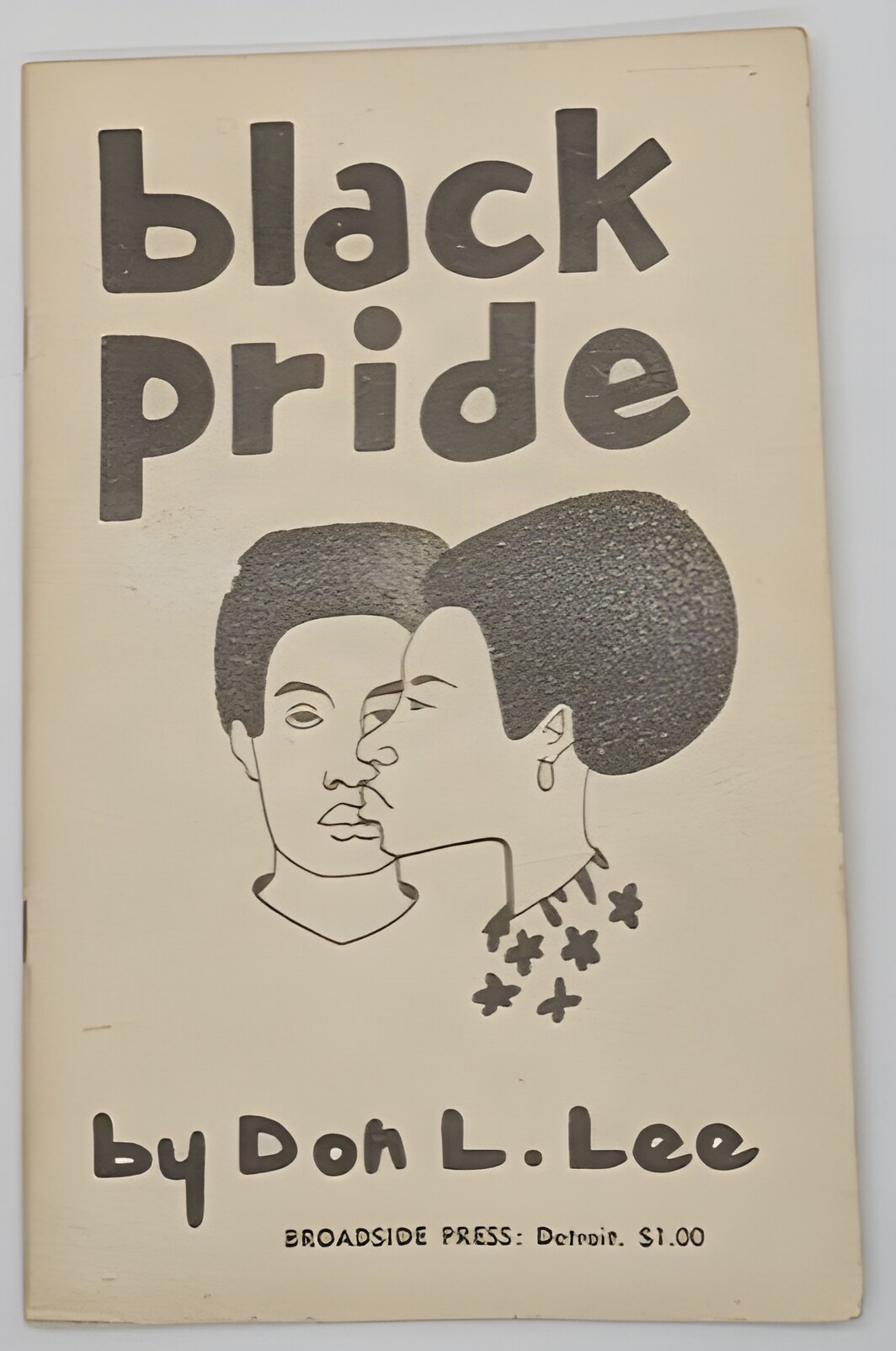
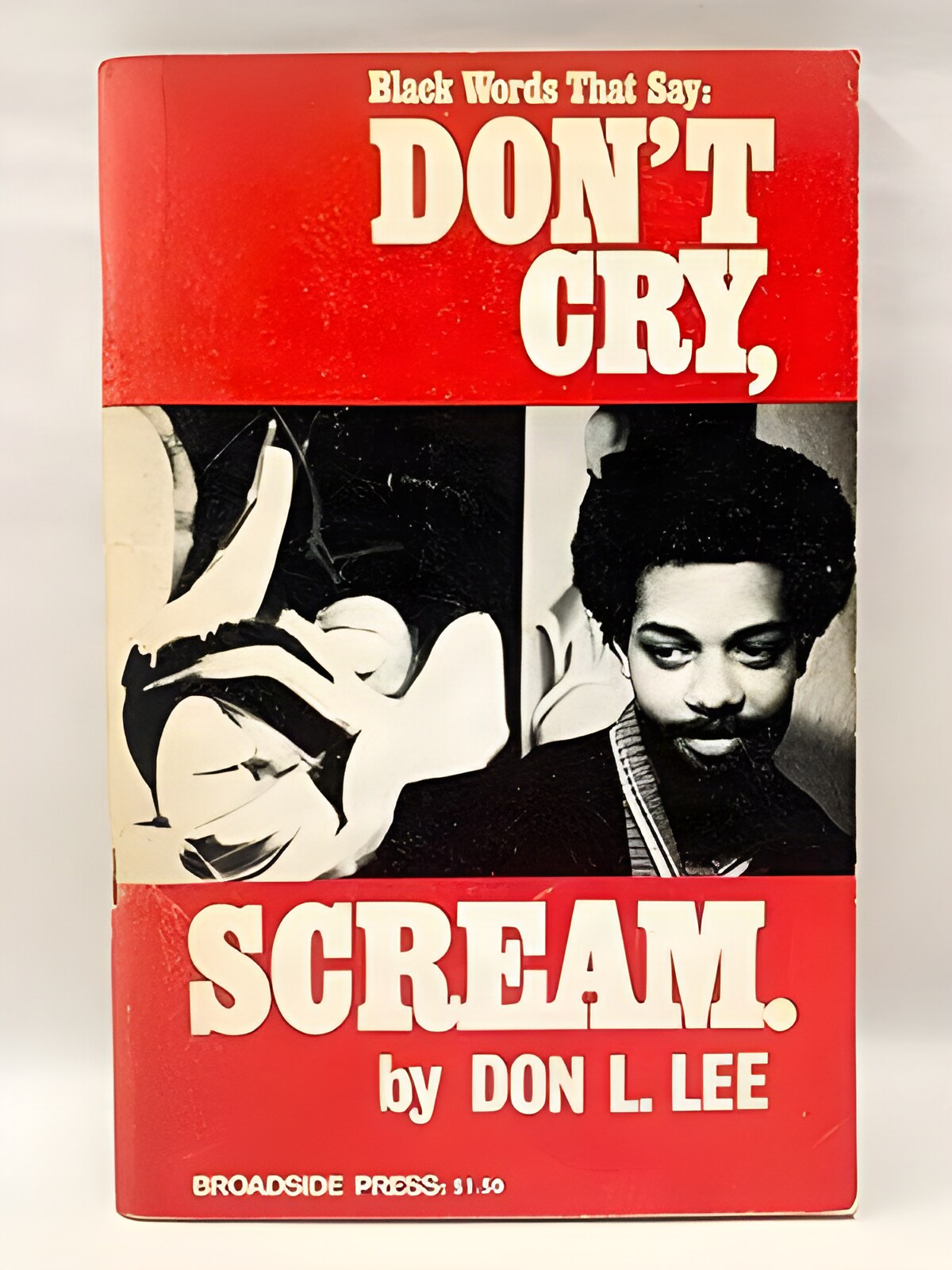
Softcover. Detroit MI, Broadside Press, 2nd pr., 1968, Book: Very Good, Dust Jacket: None, Softcover, stapled wrappers, 34 pages. Introduction by Dudley Randall. A seminal pamphlet from the Black Arts Movement, the work lays out Lee's early reflections on Black identity, self-respect, and cultural affirmation. Haki Madhubuti (He changed his name in 1973) published his first collection of poems, Think Black, in 1967 followed by Black Pride (1968), Don't Cry, Scream (1969), We Walk the Way of the New World (1970) and Book of Life (1973). His works deal with issues of racism, violence, stigmatization, and oppression of black people in America as well as the use of Christianity to persuade them to accept their condition. Previous owner's signature on front fly leaf, otherwise clean.
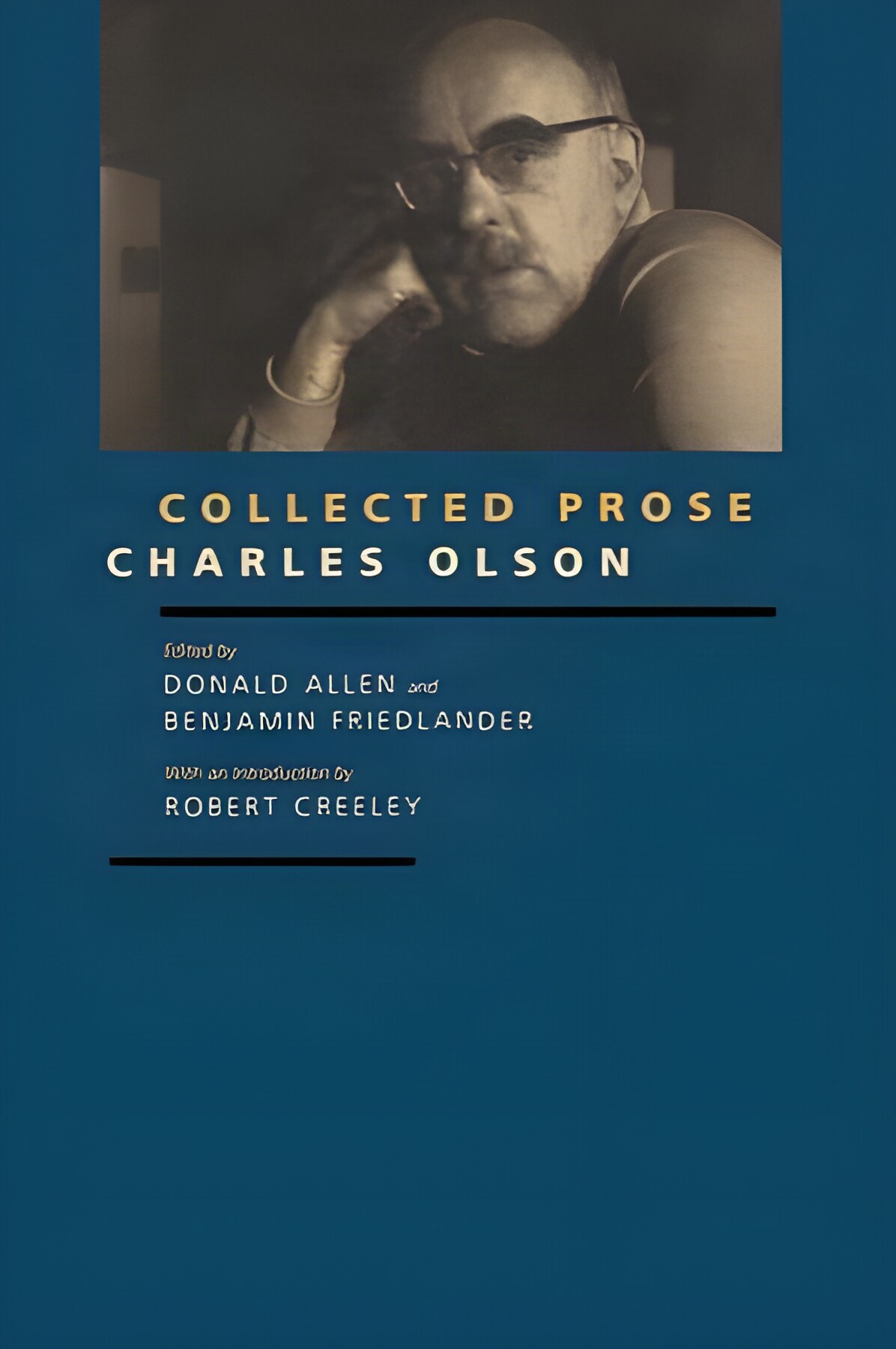
Softcover. Berkeley CA, University of California Press, 1st pbk, 1997, Book: Very Good, Dust Jacket: None, Softcover, 472 pages. The prose writings of Charles Olson (1910-1970) have had a far-reaching and continuing impact on post-World War II American poetics. Olson's theories, which made explicit the principles of his own poetics and those of the Black Mountain poets, were instrumental in defining the sense of the postmodern in poetry and form the basis of most postwar free verse. The Collected Prose brings together in one volume the works published for the most part between 1946 and 1969, many of which are now out of print. A valuable companion to editions of Olson's poetry, the book backgrounds the poetics, preoccupations, and fascinations that underpin his great poems. Included are Call Me Ishmael, a classic of American literary criticism; the influential essays "Projective Verse" and "Human Universe"; and essays, book reviews, and Olson's notes on his studies. In these pieces one can trace the development of his new science of man, called "muthologos," a radical mix of myth and phenomenology that Olson offered in opposition to the mechanistic discourse and rationalizing policy he associated with America's recent wars in Europe and Asia. Clean copy.
Softcover. Bloomington IN, Indiana University Press, 1st, 2003, Book: Very Good, Dust Jacket: None, Softcover, 209 pages. This groundbreaking study explores the Harlem Renaissance as a literary phenomenon fundamentally shaped by same-sex-interested men. Christa Schwarz focuses on Countee Cullen, Langston Hughes, Claude McKay, and Richard Bruce Nugent and explores these writers' sexually dissident or gay literary voices. The portrayals of men-loving men in these writers' works vary significantly. Schwarz locates in the poetry of Cullen, Hughes, and McKay the employment of contemporary gay code words, deriving from the Greek discourse of homosexuality and from Walt Whitman. By contrast, Nugent-the only "out" gay Harlem Renaissance artist-portrayed men-loving men without reference to racial concepts or Whitmanesque codes. Schwarz argues for contemporary readings attuned to the complex relation between race, gender, and sexual orientation in Harlem Renaissance writing. Clean copy.
Hardcover. Naperville IL, Sourcebooks MediaFusion, 1st, 2006, Book: Very Good, Dust Jacket: Very Good, Hardcover in a bright dust jacket. 502 pages, b&w illustrations. For three decades after World War I, Harlem was the site of burgeoning racial and cultural awareness and ambitions among African Americans. In the opening section of this book, Wintz provides the historical context for what became known as the Harlem Renaissance. In separate sections devoted to poetry, music, politics, art, and the phenomenon of the New Negro, contributors profile many of the era's major figures, including Langston Hughes, Zora Neale Hurston, Bessie Smith, Ethel Waters, Josephine Baker, W. E. B. DuBois, Paul Robeson, A. Phillip Randolph, and Marcus Garvey. The essays place the Harlem Renaissance in the broader context of an awakening of black culture throughout the U.S. The book contains references to the accompanying CD, which offers 60 minutes of music, poetry, interviews, performances, and speeches, giving voice to the vibrant life of Harlem. Photographs, drawings, book covers, and posters add to the richness of this collection. A fabulous resource on the Harlem Renaissance.
Softcover. Evanston, IL, Northwestern University Press, reprint, 2001, Book: Very Good, Dust Jacket: None, 355 pages. Softcover with light edgewear to paper wrappers. In this groundbreaking volume, Krzysztof Ziarek rethinks modern experience by bringing together philosophical critiques of modernity and avant-garde poetry. Ziarek explores, through selective readings of avant-garde poetry, the key aspects of the radical critique of experience: technology, everydayness, event, and sexual difference. To that extent, The Historicity of Experience is less a book about the avant-garde than a critique of experience through the avant-garde. Ziarek reads the avant-garde in dialogue with the work of some of the major critics of modernity (Martin Heidegger, Walter Benjamin, Jean-Francois Lyotard, and Luce Irigaray) to show how avant-garde experiments bear critically on the issue of modern experience and its technological organization. The four poets Ziarek considers--Gertrude Stein, Velimir Khlebnikov, Miron Biaoszewski, and Susan Howe--demonstrate the broad reach of and variety of forms taken by the avant-garde revision of experience and aesthetics.
Hardcover. New York, George Braziller, 1st, 1989, Book: Very Good, Dust Jacket: Very Good, 222 pages. Hardcover with dust jacket. Light edgewear to dust jacket and heavy fading on rear. Internally clean. Color illustrations by Hokusai.
Softcover. Albany NY, State University of New York Press, reprint, 1987, Book: Very Good, Dust Jacket: None, Softcover, 157 pages. Introduction: Sharpe, Eric, Translation from the Swedish by Birgitta Sharpe. Here are the early Sufis: their ascetic practices, their attitudes toward women and marriage, toward food and drink and toward music and poetry. First published in 1947. Clean copy.
Softcover. Cambridge UK, Cambridge University Press, 1st, 1990, Book: Very Good, Dust Jacket: None, Softcover, 217 pages. Emotions have long been a central concern in philosophy, psychological and sociological studies. When anthropologists began to study emotion, they challenged many assumptions shared by Western academics and lay persons by exposing the cultural variability of emotional meanings. In this collection of original essays by anthropologists concerned with the relationship of language and emotion, it is argued that the key focus to the study of emotion might be the politics of social life rather than the psychology of the individual. Through close studies of talk about emotion and emotional discourses in social contexts from poetry and song to therapeutic narratives, scholars who have worked in India, Fiji, the United States, Egypt, Senegal and the Solomon Islands show how emotion is tied to politics of everyday interaction. Their arguments and cross-cultural findings will intrigue and provoke anyone who has thought about the relationship between emotion, language and social life. The book will be of special interest to those who find the boundaries between cultural, psychological and linguistic anthropology, sociology, cross-cultural psychiatry, and social psychology too confining. Clean, bright copy.
Hardcover. New York, Dodd Mead , reprint , 1902, Book: Good, Dust Jacket: None, Hardcover. 227 pages. Green cloth covers with gold lettering and decoration by Margaret Armstrong. Rubbing to spine, corners. Top edge gilt. Frontispiece portrait of the author. First published in 1899, this is a 1902 printing. Clean.
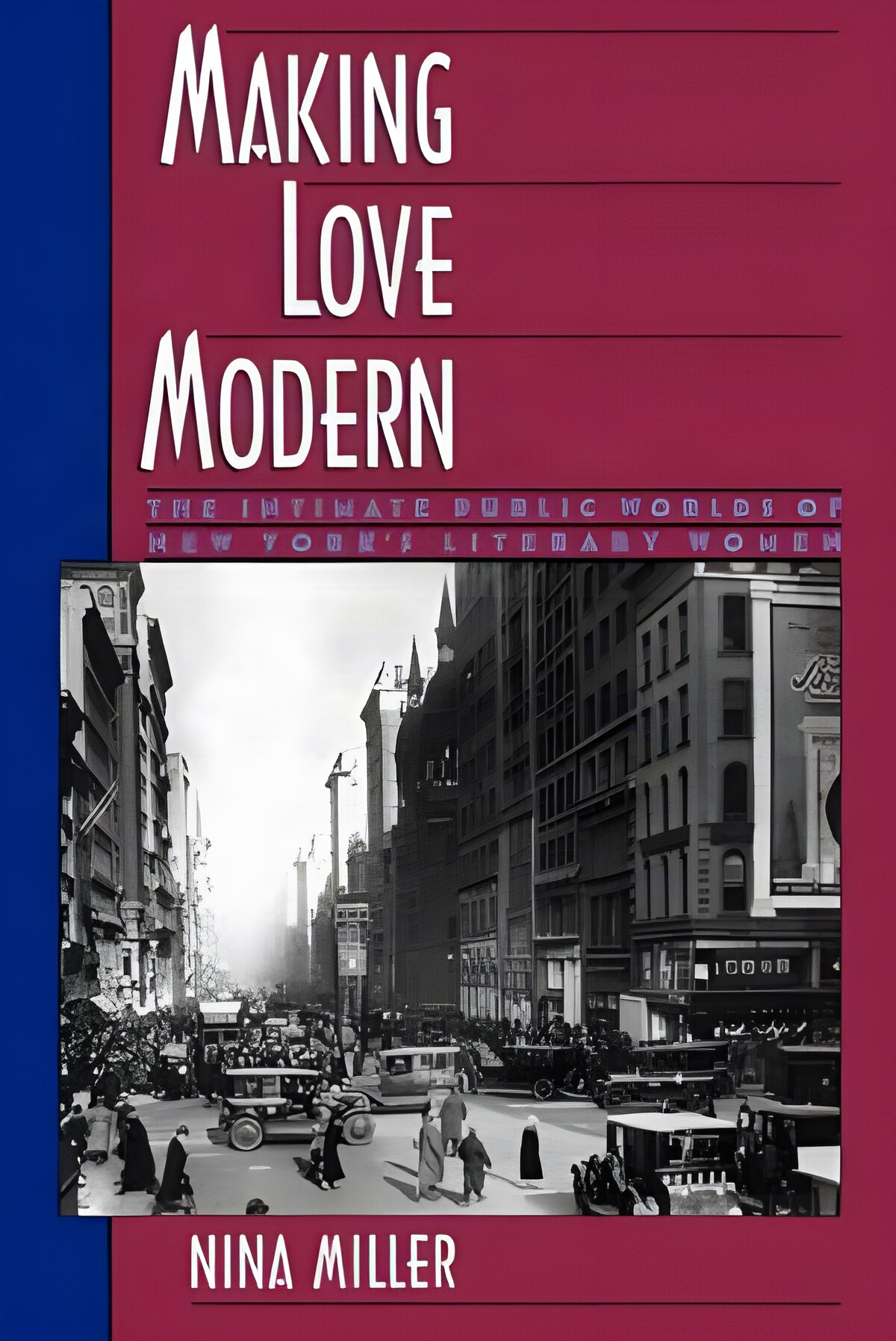
Softcover. NY, Oxford University Press, reprint, 1999, Book: Good, Dust Jacket: None, Softcover, 292 pages. In the teens and twenties, New York was home to a rich variety of literary subcultures. Within these intermingled worlds, gender lines and other boundaries were crossed in ways that were hardly imaginable in previous decades. Among the bohemians of Greenwich Village, the sophisticates of the Algonquin Round Table, and the literati of the Harlem Renaissance, certain women found fresh, powerful voices through which to speak and write. Enda St. Vincent Millay and Dorothy Parker are now best remembered for their colorful lives; Genevieve Taggard, Gwendolyn Bennett, and Helene Johnson are hardly remembered at all. Yet each made a serious literary contribution to the meaning of modern femininity, relationship, and selfhood. Making Love Modern uncovers the deep historical sensitivity and interest in these women's love poetry. Light shelf wear. Clean copy.
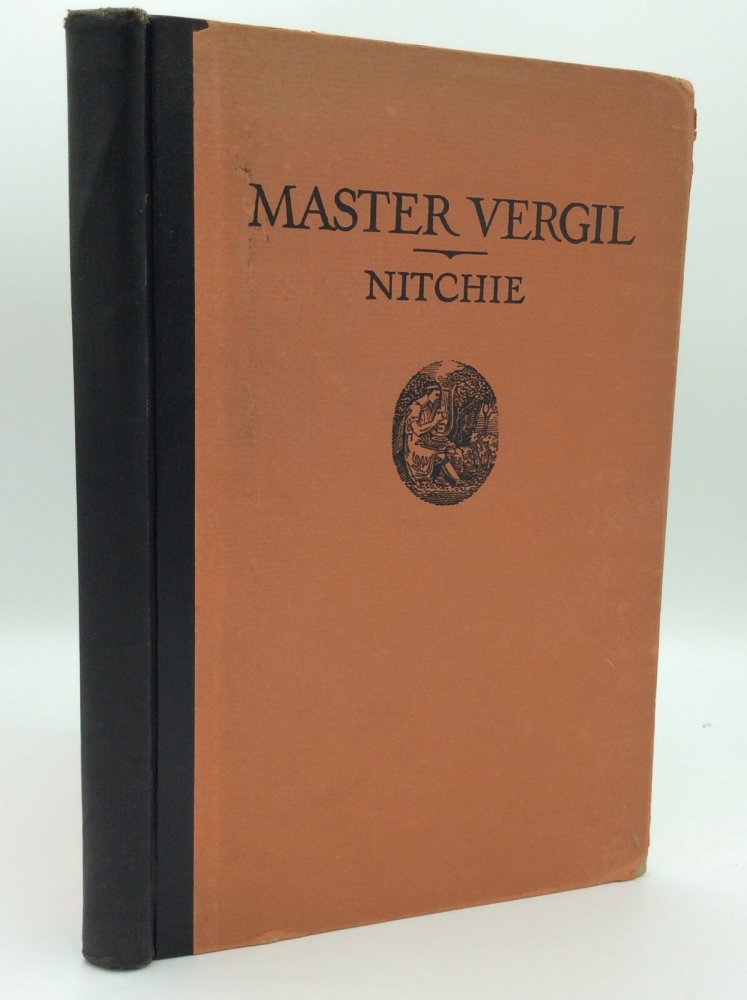
Hardcover. Boston, D.C. Heath and Company, 1st, 1930, Book: Very Good, Dust Jacket: None, Hardcover, orange boards with black cloth spine, 115 pages. A comprehensive scholarly examination of the enduring legacy and profound influence of the Roman poet Vergil. Mild edgewear to boards, light name on inside front cover, otherwise clean.
Hardcover. Gloucester, MA, Peter Smith, Reprint, 1959, Book: Very Good, Dust Jacket: None, 321 pages. Hardcover with no dust jacket. Green cloth covered boards with light wear to edges & black titles to spine. Faint soil to top edge. Otherwise clean inside and out. Tight copy.
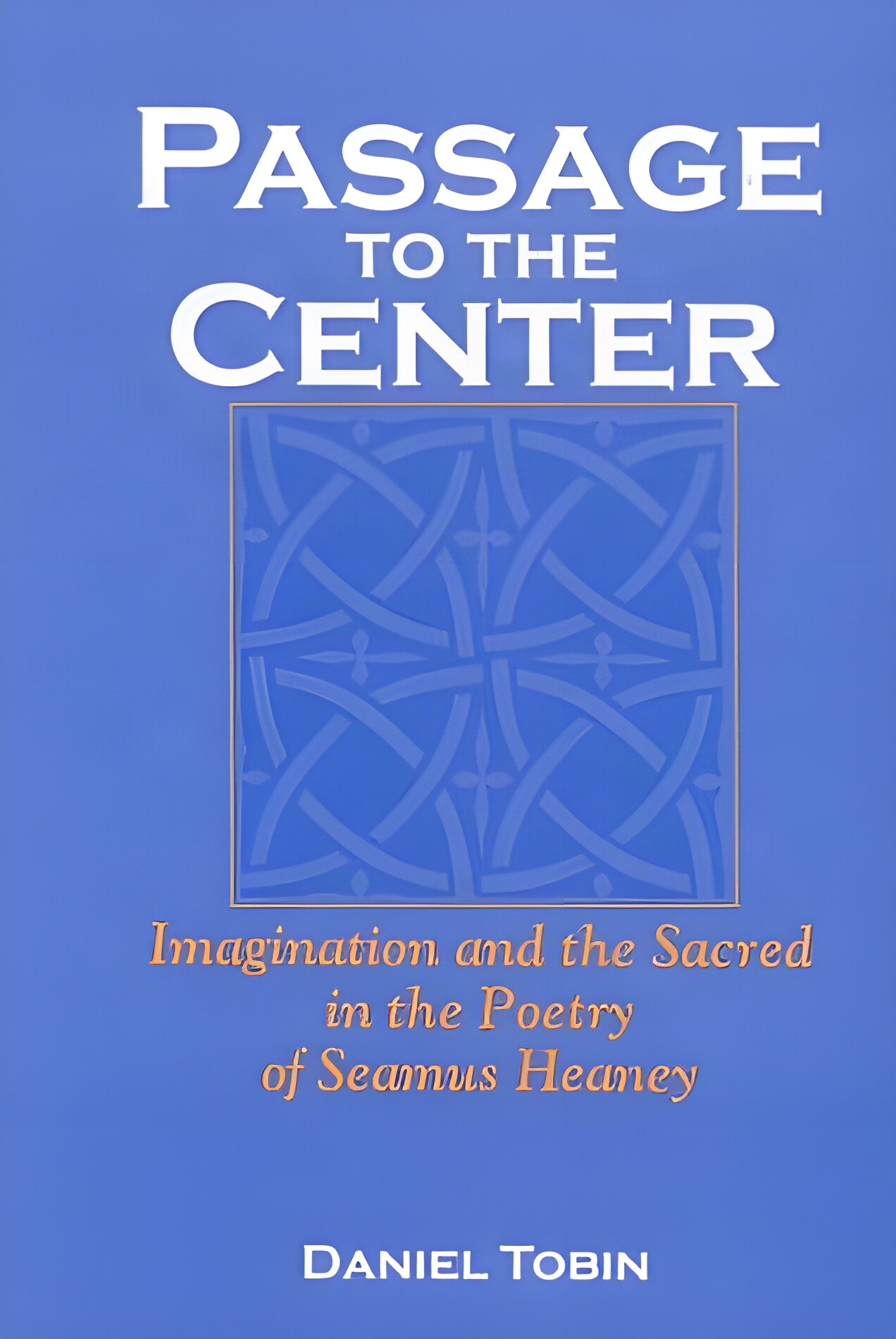
Hardcover. University Press of Kentucky, 1st, 1999, Book: Very Good, Dust Jacket: Very Good, Hardcover in a bright dust jacket, 338 pages. Nobel Laureate Seamus Heaney, author of nine collections of poetry and three volumes of influential essays, is regarded by many as the greatest Irish poet since Yeats. Passage to the Center is the most comprehensive critical treatment to date on Heaney's poetry and the first to study Heaney's entire body of work (including his recent volumes. It is also the first to examine the poems from the perspective of religion, one of Heaney's guiding preoccupations. According to Tobin, the growth of Heaney's poetry may be charted through the recurrent figure of "the center," a key image in the relationship that evolved over time between the poet and his inherited place, an evolution that involved the continual re-evaluation and re-vision of imaginative boundaries. In a way that previous studies have not, Tobin's work examines Heaney's poetry in the context of modernist and postmodernist concerns about the desacralizing of civilization and provides a challenging engagement with the work of a living master. Clean copy.
Hardcover. Syracuse University Press , 1st, 1991, Book: Very Good, Dust Jacket: Very Good, Hardcover, 493 pages. Remainder line and foxing to top edge, light edgewear to dust jacket, else a clean, tight copy.
Hardcover. NY, Arrow Editions, 1st, 1937, Book: Very Good, Dust Jacket: Good, 146 pages. Hardcover. Previous owners bookplate on inside front cover. Light foxing to edges. Dust jacket with darkening, chipping along edges. Jacket now protected with clear plastic cover.
Hardcover. NY, Henry Holt, 1st, 1995, Book: Very Good, Dust Jacket: Very Good, Hardcover in a bright dust jacket, 524 pages. Robert Graves was astonishingly prolific and worked in many genres. He wrote lyric poetry, scholarly studies of mythology, drama, criticism, and journalism, he translated from Latin, and is probably best known for his potboilers "I, Claudius" and "Claudius the God," works that he considered purely commercial and took little interest in. And, as Miranda Seymour makes clear, he was as odd a duck as ever walked. His life was defined by the women to whom he devoted himself. "Abased himself" would perhaps be the better term. The first and most influential was the American Laura Riding, a second-rate poet who fancied herself some sort of prophetess who would save the world from war and turned Graves into her adoring puppy. Later in life Graves devoted himself to a series of young women, each of whom he claimed embodied "the goddess" in whose service he thought he dwelled. Seymour (a novelist herself) writes beautifully, and with the cooperation of key members of the Graves family she has produced what will surely be the definitive biography of Graves for years to come.
Hardcover. London, Faber & Faber, 1st, 2008, Hardcover, 524 pages, b&w illustrations. SIGNED BY BOTH HEANEY & O'DRISCOLL on title page. Widely regarded as the finest poet of his generation, Seamus Heaney is the subject of numerous critical studies; but no book-length portrait has appeared until now. Through his own lively and eloquent reminiscences, Stepping Stones retraces the poet's steps from his early works, through to his receipt of the 1995 Nobel Prize for Literature and his post-Nobel life. It is supplemented with a large number of photographs, many from the Heaney family album and published here for the first time.
Hardcover. Carbondale IL, Southern Illinois University Press, 1st, 1995, Book: Very Good, Dust Jacket: Very Good, Hardcover in a bright dust jacket, 267 pages. In this original contribution to Elizabeth Bishop studies, Marilyn May Lombardi uses previously unpublished materials (letters, diaries, notebooks, and unfinished poems) to shed new light on the poet's published work. She explores the ways Bishop's lesbianism, alcoholism, allergic illnesses, and fear of mental instability affected her poetry--the ways she translated her bodily experiences into poetic form. Clean copy.

 "Anch'io sono l'America (I Am America too)by: Aligi Sassu")



 "Approaching Hysteriaby: Micale, Mark S.")
 "Baudelaire in Chains: A Portrait of the Artist as a Drug Addictby: Hilton, Frank")
 "Gay Voices of the Harlem Renaissance by: Schwarz, A.B. Christa")
 "Harlem Speaks: A Living History of the Harlem Renaissance (with CD)by: Cary D. Wintz")
 "Historicity of Experience: Modernity, the Avant-Garde, and the Event, Theby: Ziarek, Krzysztof")
 "Hokusai: One Hundred Poetsby: Morse, Peter")
 "In the Garden of Myrtles: Studies in Early Islamic Mysticism by: Andrae, Tor")
 "Language and the Politics of Emotion (Studies in Emotion and Social Interaction) by: Lutz, Catherine; Abu-Lughod, Lila")
 "Lyrics of the Hearthsideby: Dunbar, Paul Laurence")


 "Medieval Rhetoric and Poetic to 1400 - Interpreted from Representative Worksby: Baldwin, Charles Sears")
 "Patrick Kavanagh: A Critical Study (Irish Studies)by: Quinn, Antoinette")
 "Primitivism and Decadence/ A Study of American Experimental Poetryby: Winters, Yvor")
 "Robert Graves: Life on the Edgeby: Miranda Seymour")
 "Stepping Stones - Interviews with Seamus Heaney (SIGNED COPY)by: O'Driscoll, Dennis; Heaney, Seamus")


 "Survey of Modernist Poetry, Aby: Riding, Laura; Graves, Robert")