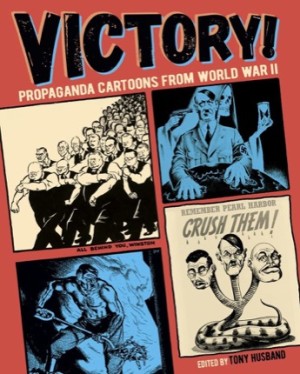
Softcover. London, Sirius, 1st, 2022, Book: Very Good, Dust Jacket: None, Softcover, 192 pages. Award-winning cartoonist Tony Husband tells the story of World War II through a selection of the era's finest political cartoons. Satire is one of the key weapons of war. Forget 'sticks and stones', each country uses cartoons to hit the enemy where it really hurts and to maintain morale on the home front. Each country brought their own unique style and this collection features work from Britain, the USA, Germany, Russia and Japan and features the work of some of World War II's greatest cartoonists including Bill Mauldin, Fougasse, Emett, David Low and Graham Laidler. Clean, bright copy.
Hardcover. London, George Allen & Unwin , 1st, 1926, Book: Very Good, Dust Jacket: None, Hardcover. Very good copy in the original title-blocked black cloth with red lettering. 178 pages including index. The Russian revolutionary's thesis on the economic and political decline of England. Clean copy.
Hardcover. Lawrence KS, University Press of Kansas , 1st, 2011, Book: Very Good, Dust Jacket: Very Good, Hardcover in a bright dust jacket, 386 pages, b&w illustrations. Inept leadership, inefficient campaigning, and enormous losses would seem to spell military disaster. Yet despite these factors, the Soviet Union won its war against Nazi Germany thanks to what Roger Reese calls its military effectiveness: its ability to put troops in the field even after previous forces had been decimated. Reese probes the human dimension of the Red Army in World War II through a close analysis of soldiers' experiences and attitudes concerning mobilization, motivation, and morale. In doing so, he illuminates the Soviets' remarkable ability to recruit and retain soldiers, revealing why so many were willing to fight in the service of a repressive regime--and how that service was crucial to the army's military effectiveness. He examines the various forms of voluntarism and motivations to serve-including the influences of patriotism and Soviet ideology-and shows that many fought simply out of loyalty to the idea of historic Russia and hatred for the invading Germans. He also considers the role of political officers within the ranks, the importance of commanders who could inspire their troops, the bonds of allegiance forged within small units, and persistent fears of Stalin's secret police. Clean copy.
Hardcover. London, Cambridge University Press, 1st, 2010, Book: Very Good, Dust Jacket: Very Good, Hardcover in a bright, unclipped dust jacket. This revisionist study of Allied diplomacy from 1941 to 1946 challenges Americocentric views of the period and highlights Europe's neglected role. Fraser J. Harbutt, drawing on international sources, shows that in planning for the future Churchill, Roosevelt, Stalin, and others self-consciously operated into 1945, not on "East/West" lines but within a "Europe/America" political framework characterized by the plausible prospect of Anglo-Russian collaboration and persisting American detachment. Harbutt then explains the destabilizing transformation around the time of the pivotal Yalta conference of February 1945, when a sudden series of provocative initiatives, manipulations, and miscues interacted with events to produce the breakdown of European solidarity and the Anglo-Soviet nexus, an evolving Anglo-American alignment, and new tensions that led finally to the Cold War. This fresh perspective, stressing structural, geopolitical, and traditional impulses and constraints, raises important new questions about the enduringly controversial transition from World War II to a cold war that no statesman wanted. Clean copy.

 "Where is Britain Going?by: Leon Trotsky with an Introduction by H.N. Brailsford")
 "Why Stalin's Soldiers Fought: the Red Army's Military Effectiveness in World War IIby: Roger R. Reese")
 "Yalta 1945: Europe and America at the Crossroadsby: Fraser J. Harbutt")