Hardcover. NY, Doubleday, 1st, 1994, Book: Very Good, Dust Jacket: Very Good, Hardcover in a bright, unclipped dust jacket with minor edgewear. 1118 pages. This book is the second volume in John Meier's masterful trilogy on the life of Jesus. In it he continues his quest for the answer to the greatest puzzle of modern religious scholarship: Who was Jesus? To answer this Meier imagines the following scenario: "Suppose that a Catholic, a Protestant, a Jew, and an agnostic were locked up in the bowels of the Harvard Divinity School library... and not allowed to emerge until they had hammered out a consensus document on who Jesus of Nazareth was and what he intended...". A Marginal Jew is what Meier thinks that document would reveal. Volume one concluded with Jesus approaching adulthood. Now, in this volume, Meier focuses on the Jesus of our memory and the development of his ministry. To begin, Meier identifies Jesus's mentor, the one person who had the greatest single influence on him, John the Baptist. All of the Baptist's fiery talk about the end of time had a powerful effect on the young Jesus and the formulation of his key symbol of the coming of the "kingdom of God." And, finally, we are given a full investigation of one of the most striking manifestations of Jesus's message: Jesus's practice of exorcisms, hearings, and other miracles. In all, Meier brings to life the story of a man, Jesus, who by his life and teaching gradually made himself marginal even to the marginal society that was first century Palestine. Clean copy.
Hardcover. New York, Board of Publications of the Reformed Protestant Ditch Church, 3rd Edition, 1857, Book: Good, Dust Jacket: None, 479 pages. Hardcover. B/w illustrations with tissue guards for most. Red cloth cover boards with blindstamped design and gilt title on spine (faded), agewear to covers. Foxing throughout. Tanning to edges and pages from age. Binding good. Spine straight.
Hardcover. NY, Doubleday, reprint, 1972, Book: Very Good, Dust Jacket: Good, Hardcover in a worn, chipped dust jacket, 272 pages. Mr. Wills takes the disarray of the Catholic Church as a model of institutional breakdown, tracing parallel agonies in church and state... He asks whether life can rise again from our institutional ruins, and finds promising signs of this, not only among Catholic "prophets" but Protestant and Jewish ones as well." Name on front leaf, otherwise clean.
Hardcover. New York, Harper and Brothers, 1st, 1869, Book: Very Good, Dust Jacket: None, Hardcover, faded blue pebbled cloth, 456 pages, gilt title on spine. The work of an American Protestant missionary, with much material on missionaries in China. Many b&w engravings, fold-out map.
Softcover. NY, Missionary Education Movement of the United States and Canada, 1st, 1923, Book: Good, Dust Jacket: None, Softcover, gray wrappers with purple titles. With front endpaper map of "All Protestant Mission Stations in Japan, Korea, and Formosa". 248 pages, b&w plates. Details early Christian Japanese collaboration on social challenges and reforms. Related newspaper clippings laid in. Covers worn interior clean.
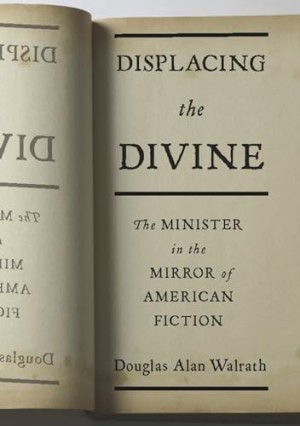
Hardcover. NY, Columbia University Press, 1st, 2010, Book: Very Good, Dust Jacket: Very Good, Hardcover in a bright dust jacket, 379 pages. As religious leaders, ministers are often assumed to embody the faith of the institution they represent. As cultural symbols, they reflect subtle changes in society and belief-specifically people's perception of God and the evolving role of the church. For more than forty years, Douglas Alan Walrath has tracked changing patterns of belief and church participation in American society, and his research has revealed a particularly fascinating trend: portrayals of ministers in American fiction mirror changing perceptions of the Protestant church and a Protestant God. From the novels of Harriet Beecher Stowe, who portrays ministers as faithful Calvinists, to the works of Herman Melville, who challenges Calvinism to its very core, Walrath considers a variety of fictional ministers, including Garrison Keillor's Lake Woebegon Lutherans and Gail Godwin's women clergy. He identifies a range of types: religious misfits, harsh Puritans, incorrigible scoundrels, secular businessmen, perpetrators of oppression, victims of belief, prudent believers, phony preachers, reactionaries, and social activists. He concludes with the modern legacy of nineteenth- and early-twentieth-century images of ministers, which highlights the ongoing challenges that skepticism, secularization, and science have brought to today's religious leaders and fictional counterparts. Clean copy.
Hardcover. Durham UK, Acumen, 1st, 2009, Book: Very Good, Dust Jacket: None, Hardcover in blue cloth, with red title block, gilt lettering, 348 pages. The early modern period in philosophy - encompassing the 16th to the 18th centuries - reflects a time of social and intellectual turmoil. The Protestant Reformation, the Catholic Counter-Reformation, and the birth of the Enlightenment all contributed to the re-evaluation of reason and faith. The revolution in science and in natural philosophy swept away two millennia of Aristotelian certainty in a human-centered universe. Covering some of the most important figures in the history of Western thought - notably Descartes, Locke, Hume and Kant - "Early Modern Philosophy of Religion" charts the philosophical understanding of religion at a time of intellectual and spiritual revolution. "Early Modern Philosophy of Religion" will be of interest to historians and philosophers of religion, while also serving as an indispensable reference for teachers, students and others who would like to learn more about this formative period in the history of ideas. Lacks dust jacket. Clean copy.
Softcover. Torino IT, Claudiana, 1st, 1992, Book: Very Good, Dust Jacket: None, Softcover, laminated wrappers, 526 pages, b&w illustrations. ITALIAN TEXT. Labels inside covers, from university library but like new, never checked out.
Hardcover. Beirut Lebanon, American University of Beirut, 1st, 1994, Book: Very Good, Dust Jacket: Very Good, Hardcover in a dust jacket with light fading to edges, 315 pages. Daniel Bliss was the first President of the Syrian Protestant College (now The American University of Beirut) which opened it's doors in 1866. In the early 1870s land was purchased to construct new buildings under his supervision. These letters were written by Bliss to his wife who returned to Amherst, Massachusetts for health reasons. Written in 1873-74, his descriptions of mid-nineteenth century Beirut are illuminating, filled with interesting everyday details. Clean copy.
Hardcover. Oxford UK, The Voltaire Foundation, 1st, 1991, Book: Very Good, Dust Jacket: None, Hardcover in blue cloth, gilt lettering on spine, 251 pages. As France moved from the seventeenth to the eighteenth century, it found itself in the grip of anglomanie - a fascination with new English ideas in the domains of science and philosophy. Chief among the English thinkers it enthusiastically embraced was John Locke. On his visits to France and in his personal correspondence, Locke interacted with prominent French thinkers, scientists and savants of the day, such as Charles Barbeyrac and Pierre Magnol, and his works engaged in a critical dialogue with those of Descartes. However, Locke has been feted to such an extent that his position in the history of ideas in France is often overlooked. In Locke in France 1688-1734, Ross Hutchison re-examines and re-contextualises the precise nature and extent of Locke's influence in France by exploring how his ideas were incorporated into contemporary French debates and controversies in the transitional period from the seventeenth to the eighteenth century. Hutchison highlights the various channels of dissemination which brought Locke to the attention of the French, including translations of his major works and his personal friendships with French Protestant exiles. Hutchison also presents case studies of interactions in which Lockean ideas played a dominant role in the evolution of French thought, ranging from political theory to the nature of language, theories of education, and the relation between soul and matter. Clean copy, no dust jacket.
Hardcover. Cambridge UK, Cambridge University Press, 1st, 1953, Book: Very Good, Dust Jacket: Good, Hardcover in a worn dust jacket with a chunk gone from rear panel, 309 pages. This book gives a complete account of all that Locke saw, did and heard during his four years in France. The entries vary from laconic jottings to detailed accounts - full of colour and wit - of life in Paris and the provinces. Locke's variety of interests presents a vivid and thorough account of France at that time. He observed and recorded the absolutism of Louis XIV and the poverty of the peasants, the growing persecution of the Protestants and the external manifestations of Catholicism, recent developments in science and technology - even agricultural methods and the system of taxes. So that this is a book for the general reader as well as for the student of Locke, the social historian and the historian of science. Three b&w plates including a map of his travels. Name on front fly leaf, rubber withdrawn stamp on copyright page, otherwise clean.
Hardcover. NY, HarperCollins, 2nd pr., 1997, Book: Very Good, Dust Jacket: Very Good, Hardcover in a bright dust jacket, 436 pages. A great historian crowns a lifetime of thought and research by answering a question that has haunted us for more than 50 years: How did one of the most industrially and culturally advanced nations in the world embark on and continue along the path leading to one of the most enormous criminal enterprises in history, the extermination of Europe's Jews? Giving considerable emphasis to a wealth of new archival findings, Saul Friedlander restores the voices of Jews who, after the 1933 Nazi accession to power, were engulfed in an increasingly horrifying reality. We hear from the persecutors themselves: the leaders of the Nazi party, the members of the Protestant and Catholic hierarchies, the university elites, and the heads of the business community. Most telling of all, perhaps, are the testimonies of ordinary German citizens, who in the main acquiesced to increasing waves of dismissals, segregation, humiliation, impoverishment, expulsion, and violence. Clean copy.
Softcover. New Haven CT, Yale University Press, reprint, 1998, Book: Very Good, Dust Jacket: None, Softcover, 384 pages, illustrations. Philip II of Spain--ruler of the most extensive empire the world had ever known--has been viewed in a harsh and negative light since his death in 1598. Identified with repression, bigotry, and fanaticism by his enemies, he has been judged more by the political events of his reign than by his person. This book, published four hundred years after Philip's death, is the first full-scale biography of the king. Placing him within the social, cultural, religious, and regional context of his times, it presents a startling new picture of his character and reign. Drawing on Philip's unpublished correspondence and on many other archival sources, Henry Kamen reveals much about Philip the youth, the man, the husband, the father, the frequently troubled Christian, and the king. Kamen finds that Philip was a cosmopolitan prince whose extensive experience of northern Europe broadened his cultural imagination and tastes, whose staunchly conservative ideas were far from being illiberal and fanatical, whose religious attitudes led him to accept a practical coexistence with Protestants and Jews, and whose support for Las Casas and other defenders of the Indians in America helped determine government policy. Shedding completely new light on most aspects of Philip's private life and, in consequence, on his public actions, the book is the definitive portrayal of Philip II. Clean copy.
Softcover. Indianapolis, Liberty Fund, reprint, 2005, Book: Very Good, Dust Jacket: None, Softcover, 639 pages. Christian apologists as early as St. Augustine have appealed to Christ's words in Luke 14:23-'Go out into the highways and hedges and compel them to come in, that my house may be filled'- as a mandate for forcible conversion. In 1685, Protestant philosopher and critic Pierre Bayle wrote a compelling and thorough critique of this belief, contending that all coercion in religious matters is morally untenable as being inconsistent with reason. His Philosophical Commentary establishes the case against this supposed literal interpretation of Luke 14:23, arguing that reason must govern all interpretations of Scripture. According to Bayle, the erroneous conscience has the same rights as the enlightened one, his central tenet being a doctrine of mutual toleration grounded in a theory of the morality of conscience-namely, that all God requires is that people act on what seems to them to be the truth. Clean copy.
Hardcover. Cambridge MA, Harvard University Press, 1st, 1967, Book: Very Good, Dust Jacket: None, Hardcover, brown cloth boards and spine with bright gilt lettering on spine. Maps as endpapers. 333 pages, b&w illustrations. This book covers the first contacts between the United States and the Middle East from the earliest times (1800s) to the mid-nineteenth century. The author describes exotic people and places in the Middle East and how American interests there were far from marginal although centered around the American Protestant missionary activity during that period. Clean copy.
Hardcover. NY, Harper and Brothers, 1st US, Book: Very Good, Dust Jacket: None, Hardcover in green cloth, silver lettering on spine, 435 pages. Appendix, List of English Translations (of books cited), Index of Names, and Index of Subjects. Clean, bright copy, lacks dust jacket.
Hardcover. Berkeley, CA , University of California Press, 1st, 2002, Book: Very Good, Dust Jacket: Very Good, 283 pages. Hardcover with dust jacket. A very clean, unmarked copy with only minor wear to dust jacket edges. A tight copy. Black and white illustrations throughout. This richly detailed study reconceptualizes a striking but enigmatic moment in Rembrandt's art from the 1650s--one of the artist's most prolific and creative periods. Michael Zell identifies a significant theological shift in Rembrandt's use of religious imagery and interprets this shift in light of the unique religious and social conditions of seventeenth-century Amsterdam. Rembrandt's biblical art has generally been regarded as the embodiment of a Protestant aesthetic. By looking closely at the artist's relationship with his patron Rabbi Menasseh ben Israel and the ideas of a group of "philosemitic" Protestants with whom the rabbi was engaged in an apologetic dialogue, Zell deepens and complicates our understanding of Rembrandt's sacred art from this period.
Softcover. Bowie MD, Heritage Books, reprint, 2001, Book: Very Good, Dust Jacket: None, Softcover, 425 pages. A facsimile reprint of the 1904 edition. Volume 1 ONLY. The present-day New York City neighborhood of Harlem was founded in the mid-17th century by Dutch Protestants, whose numbers included Huguenots (or their descendants) who had fled the counter-Reformation in France and the Walloon provinces of Artois, Cambresis, and Hainalt. Riker's Harlem is an extremely detailed historical and genealogical account of Harlem from its establishment by Kuyter and Stuyvesant between 1656 and 1660 to the end of the 17th century. Following several preliminary chapters on the Dutch and French context for the settlement of "New Haerlem," the author treats us to what seem like minute-by-minute accounts of its colonial development, including early efforts to settle the territory that became Harlem, the original land patents and their subsequent rearrangement, Indian wars, displacement of Dutch rule by the British in 1663 (and the brief reoccupation by Dutch forces in 1673), 17th-century village life, migrations to New Jersey, influx of Swedes, difficulties in assimilating English ways, and much, much more.
Softcover. Bowie MD, Heritage Books, reprint, 2001, Book: Very Good, Dust Jacket: None, Softcover, Pages 426-908 . A facsimile reprint of the 1904 edition. Volume 2 ONLY. The present-day New York City neighborhood of Harlem was founded in the mid-17th century by Dutch Protestants, whose numbers included Huguenots (or their descendants) who had fled the counter-Reformation in France and the Walloon provinces of Artois, Cambresis, and Hainalt. Riker's Harlem is an extremely detailed historical and genealogical account of Harlem from its establishment by Kuyter and Stuyvesant between 1656 and 1660 to the end of the 17th century. Following several preliminary chapters on the Dutch and French context for the settlement of "New Haerlem," the author treats us to what seem like minute-by-minute accounts of its colonial development, including early efforts to settle the territory that became Harlem, the original land patents and their subsequent rearrangement, Indian wars, displacement of Dutch rule by the British in 1663 (and the brief reoccupation by Dutch forces in 1673), 17th-century village life, migrations to New Jersey, influx of Swedes, difficulties in assimilating English ways, and much, much more.
Softcover. UK , Cambridge University Press, reprint, 1992, Book: Very Good, Dust Jacket: None, Softcover, 231 pages. Schleiermacher's On Religion: Speeches to its Cultured Despisers is a classic of modern Protestant religious thought that powerfully displays the tensions between the Romantic and Enlightenment accounts of religion. This edition presents the original 1799 text in English for the first time. Richard Crouter's introduction places the work in the milieu of early German Romanticism, Kant criticism, the revival of Spinoza and Plato studies, and theories of literary criticism and of the physical sciences. This fully annotated edition also contains a chronology and notes on further reading. Name on front fly leaf, otherwise clean.

 "A Marginal Jew: Rethinking the Historical Jesus, Vol. 2 - Mentor, Message, and Miraclesby: John P. Meier")
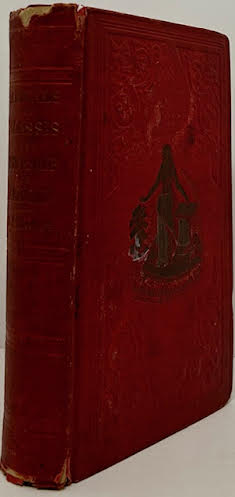


 "China and the Chinese: A general description of the country and its inhabitants; its civilization and form of government; its religious and social institutions; its intercourse with other nations; and its present condition and prospe")
 "Creative Forces in Japanby: Fisher, Galen M.")
 "Early Modern Philosophy of Religion (The History of Western Philosophy of Religion, Volume 3) by: Oppy, G.raham & Trakakis, Nick N. (eds)")
 "From Rousseau to Ritschl being the translation of eleven chapters of Die Protestantische Theologie im 19. Jahrhundertby: Barth, Karl")
 "La Riforma protestante nell'Italia del Cinquecento (Studi storici) (Italian Edition) by: Salvatore Caponetto")
 "Letters from a New Campusby: Daniel Bliss (")



 "No Surrender: The Protestants - Photographs of Northern Irelandby: Kashi, Ed")


 "Picture History of the Reformation and Protestantism by: Haverstick, John")
 "Pioneers East; The Early American Experience in the Middle East by: David H. Finnie")
 "Protestant Thought: From Rousseau to Ritschl. Being the translation of eleven chapters of Die Protestantische Theologie im 19. Jahrhundertby: Barth, Karl")
 "Reframing Rembrandt: Jews and the Christian Image in Seventeenth-Century Amsterdamby: Zell, Michael")


 "Schleiermacher: On Religion: Speeches to its Cultured Despisers by: Friedrich Schleiermacher and Richard Crouter")
 "Scriptural Ecclesiastical and Historical View of Slavery from the Days of the Patriarch Abraham to the Nineteenth Century Addressed to The Right Rev. Alonzo Potter by:")

