Hardcover. Cambridge MA, Harvard University Press, 1st, 1970, Book: Very Good, Dust Jacket: Very Good, Hardcover in a lightly worn dust jacket, 478 pages. Name on half-title page, otherwise clean.
Softcover. New Haven CT, Yale University Press, 2nd pr., 1987, Book: Very Good, Dust Jacket: None, Softcover, 450 pages. The rise of atheism in the modern world is a religious phenomenon unprecedented in history, both in the number of its adherents and in the security of its cultural establishment. How did so revolutionary a conviction as this arise? What can theological reflection learn from this massive shift in religious consciousness? In this book, Michael J. Buckley investigates the origins and development of modern atheism and argues convincingly that its impetus lies paradoxically in the very attempts to counter it. Although modern atheism finds its initial exponents in Denis Diderot and Paul d'Holbach in the eighteenth century, their works bring to completion a dialectical process that reaches back to the theologians and philosophers of an earlier period. During the seventeenth century, theologians such as Leonard Lessius and Marin Mersenne determined that in order to defend the existence of god, religious apologetics must become philosophy, surrendering as its primary warrant any intrinsically religious experience or evidence. The most influential philosophers of the period, Rene Descartes and Isaac Newton, and the theologians who followed them accepted this settlement, and the new sciences were enlisted to provide the foundation for religion. Clean, bright copy.
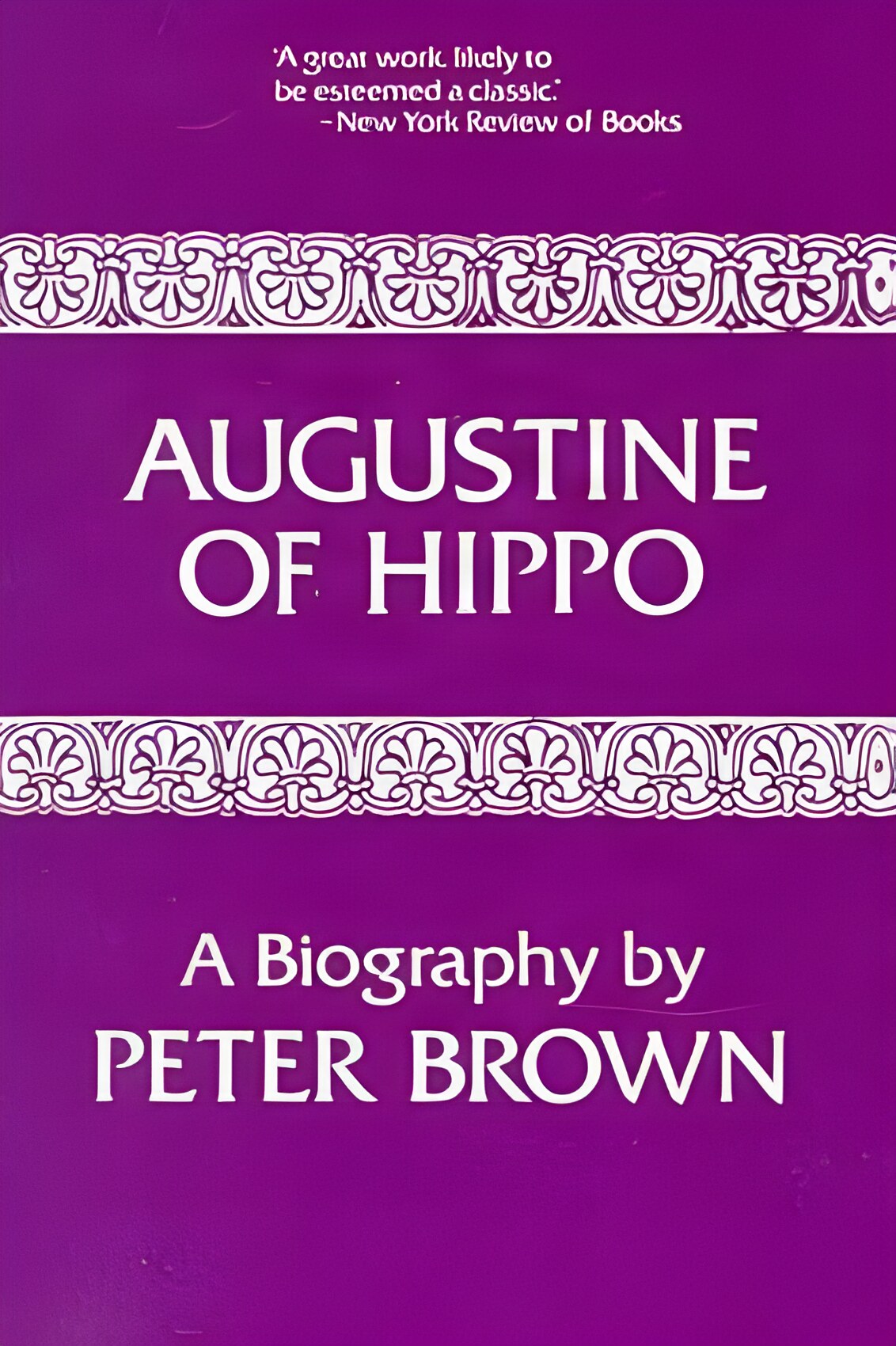
Softcover. Berkeley CA, University of California Press, 1st pbk., 1969, Book: Very Good, Dust Jacket: None, Softcover, 463 pages. This classic biography has established itself as the standard account of Saint Augustine's life and teaching. The remarkable discovery recently of a considerable number of letters and sermons by Augustine has thrown fresh light on the first and last decades of his experience as a bishop. These circumstantial texts have led Peter Brown to reconsider some of his judgments on Augustine, both as the author of the Confessions and as the elderly bishop preaching and writing in the last years of Roman rule in North Africa. Clean copy.
Hardcover. London, England, Messrs. Luzac & Co., 1st Edition, 1954, Book: Very Good, Dust Jacket: None, Two volume set. Hardcovers. Domestic shipping only. Previous owner's name on front flyleaf. Vol. 1: 374 pages; Vol. 2: 217 pages. Black cover boards, gilt title on spine. Volume 2 has fading to spine. Pages unmarked. Spines straight. Binding tight. An important Islamic philosophical treatise in which the author defends the use of Aristotelian philosophy within Islamic thought. DOMESTIC SHIPPING ONLY.
Hardcover. Boston, Bulfinch/Little, Brown and Co, 1st, 1999, Book: Very Good, Dust Jacket: Very Good, Gold covers, blue cloth spine sith gilt titles, color illustrated dust jacket, gorgeous full page color illustrations. Mild rubbing to dust jacket; a beautiful clean, tight copy in excellent condition.
Hardcover. NY, Doubleday, reprint, 1972, Book: Very Good, Dust Jacket: Good, Hardcover in a worn, chipped dust jacket, 272 pages. Mr. Wills takes the disarray of the Catholic Church as a model of institutional breakdown, tracing parallel agonies in church and state... He asks whether life can rise again from our institutional ruins, and finds promising signs of this, not only among Catholic "prophets" but Protestant and Jewish ones as well." Name on front leaf, otherwise clean.
Hardcover. Oxford University Press, 1st thus, 2010, Book: Very Good, Dust Jacket: Very Good, Hardcover in a bright dust jacket, 426 pages. Behemoth, or The Long Parliament is essential to any reader interested in the historical context of the thought of Thomas Hobbes (1588-1679). In De Cive (1642) and Leviathan (1651), the great political philosopher had developed an analytical framework for discussing sedition, rebellion, and the breakdown of authority. Behemoth, completed around 1668 and not published until after Hobbe's death, represents the systematic application of this framework to the English Civil War. Clean, bright copy.
Hardcover. NY, Oxford University Press, 1st, 1983, Book: Very Good, Dust Jacket: Very Good, Hardcover, 288 pages. Traces the history of bells and their use by different civilizations, examines their connection with Christian churches, and discusses the use of bells to make music, mark time, and signal events
Hardcover. Ithaca NY, Cornell University Press, 1st, 1990, Book: Very Good, Dust Jacket: Very Good, Hardcover in a bright dust jacket, 249 pages. Berkeley's Essay towards a New Theory of Vision (1709), his first substantial publication, revolutionized the theory of vision. His approach provided the framework for subsequent work in the psychology of vision and remains influential to this day. Among philosophers, however, the New Theory has not always been read as a landmark in the history of scientific thought, but instead as a halfway house to Berkeley's later metaphysics. In this book, Margaret Atherton seeks to redress the balance through a commentary on and a reinterpretation of Berkeley's New Theory. Clean copy.
Hardcover. Cambridge MA, Harvard University Press, 1st, 1989, Book: Very Good, Dust Jacket: Very Good, Hardcover, 192 pages. Light sun-fade to dust jacket spine, else a clean, tight copy. Michael Slote challenges the long-dominant conception of individual rationality, which has to a large extent shaped the very way we think about the essential problems and nature of rationality, morality, and the relations between them. He contests the accepted view by appealing to a set of real-life examples, claiming that our intuitive reaction to these examples illustrates a significant and prevalent, if not always dominant, way of thinking. Slote argues that common sense recognizes that one can reach a point where "enough is enough," be satisfied with what one has, and, hence, rationally decline an optimizing alternative. He suggests that, in the light of common sense, optimizing behavior is often irrational.
Hardcover. New York, Cassell, 1st, 1880, Book: Fair, Dust Jacket: None, Unpaginated, 100 b&w illustrations by Dore. Brown cloth covers w/ faded gilt lettering and design. Rubbing, chipping to corners. Hinges and binding cracked. Foxing to end papers. Previous owner's signature on front fly leaf. Else pages clean and crisp
Softcover. Boston, United Church Press, 1st, 1964, Book: Very Good, Dust Jacket: None, Softcover, stapled pictorial wraps, 48 pages. Notable for being one of Trina Schart Hyman's earliest picture books. Only date is 1964. Color illustrations on every page by Hyman. A tale emphasizing the religion in Christmas. Super clean condition.
Hardcover. Chicago, University of Chicago Press, 1st, 1955, Book: Very Good, Dust Jacket: Very Good, Hardcover in a lightly soiled. unclipped dust jacket. 325 pages including index. The author explores Sunday's career as the product and expression of his era. A lively account of the famous revivalist's life and the inner workings of mass revivalism. Name stamp on front fly leaf otherwise clean.
Hardcover. NY, Macmillan Company, 1st, 1936, Book: Very Good, Dust Jacket: None, Hardcover, gray cloth with gilt lettering on spine faded, 271 pages. The book covers the life and work of Bishop Butler and the impact his philosophy had on the Age of Reason. Name, date on front fly leaf, otherwise a clean, tight copy.
Hardcover. New York, Thomas Whittaker, 1st, 1886, Book: Very Good, Dust Jacket: None, 225 pages, blue cloth covers with gilt lettering on spine. Clean, bright copy.
Hardcover. Black Dog Publishing, 1st, 2006, Book: Very Good, Dust Jacket: Very Good, Hardcover, 189 pages. Blasphemy: Art that Offends is a prescient examination of the perpetually troubled, often explosive relationship between religion, politics and art. This book draws on a rich wealth of visual material, tracing both the history of blasphemy as a concept and re-positioning the term in the twenty-first century. Questions of censorship and freedom of expression are today extremely volatile, a fact evinced by the recent international backlash against the Danish newspaper Islamic caricatures and the murder of the Dutch filmmaker Theo Van Gogh following the release of his notorious Submission. Blasphemy: Art that Offends provides a vital vantage point from which to view the complicated, compelling interrelations between religion, politics and the visual arts.
Hardcover. Oxford UK, Clarendon Press, 1st, 1981, Book: Very Good, Dust Jacket: Very Good, Hardcover in a bright dust jacket, 313 pages. The Consolations of Philosophy by Boethius, whose English translators include King Alfred, Geoffrey Chaucer, and Queen Elizabeth I, ranks among the most remarkable books to be written by a prisoner awaiting the execution of a tyrannical death sentence. Its interpretation is bound up with his other writings on mathematics and music, on Aristotelian and propositional logic, and on central themes of Christian dogma. Chadwick begins by tracing the career of Boethius, a Roman rising to high office under the Gothic King Theoderic the Great, and suggests that his death may be seen as a cruel by-product of Byzantine ambitions to restore Roman imperial rule after its elimination in the West in AD 476. Subsequent chapters examine in detail his educational programme in the liberal arts designed to avert a threatened collapse of culture and his ambition to translate into Latin everything he could find on Plato and Aristotle. Name on front fly leaf, otherwise bright and clean.
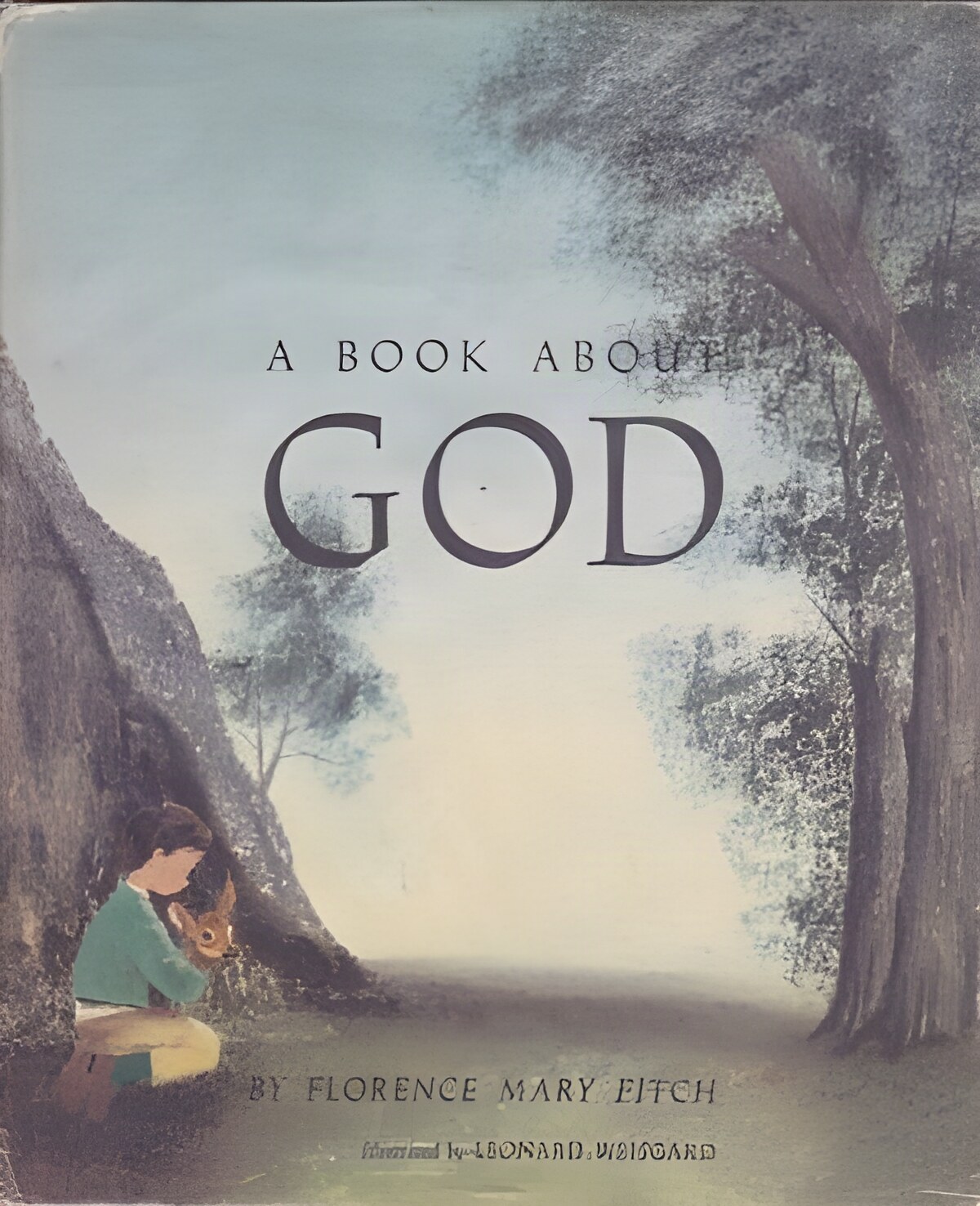
Hardcover. New York , Lothrop Lee and Shepard, 5th pr., 1960, Book: Good, Dust Jacket: Good, Hardcover in a worn dust jacket. 24 pages, illustrated in color by Leonard Weisgard. Blue cloth covers with white stamping, dust jacket edgeworn, flap price of $2.75
Hardcover. Oxford, Thomas Baskett and Robert Baskett, 1st, 1743, Book: Good, Dust Jacket: None, Unpaginated in parts. Leather binding shows heavy wear to edges, especially corners. Gilt decoration on spine and stamped embellishment on front. Heavy foxing on pages. Gutter cracked in center. Black and white illustrations.
Hardcover. Cambridge, England, Cambridge University, 1st Edition, 1777, Book: Good, Dust Jacket: None, Nonpaginated. Hardcover. Cover boards bound in polished calf (agewear--see image), gilt bands on spine. Front cover boards and front flyleaf still attached but coming loose from binding,Binding tight otherwise. Spine straight. Previous owner's inscription on front flyleaf and dated signatures (178? and 1792) on title page (see image). Some light pencil on top of title page (see image). Tanning throughout from age. Beautiful old volume, a collector's dream.
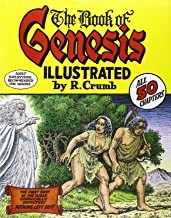
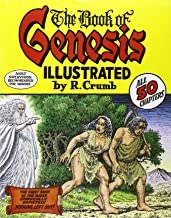
Hardcover. New York , W.W. Norton & Co., 1st, 2009, Book: Very Good, Dust Jacket: Very Good, Hardcover, 224 pages, b&w art throughout by Crumb. Envisioning the first book of the bible like no one before him, R. Crumb, the legendary illustrator, reveals here the story of Genesis in a profoundly honest and deeply moving way. Originally thinking that we would do a take off of Adam and Eve, Crumb became so fascinated by the Bible's language, "a text so great and so strange that it lends itself readily to graphic depictions," that he decided instead to do a literal interpretation using the text word for word in a version primarily assembled from the translations of Robert Alter and the King James bible. As Crumb writes in his introduction, "the stories of these people, the Hebrews, were something more than just stories. They were the foundation, the source, in writing of religious and political power, handed down by God himself." Crumb's Book of Genesis, the culmination of 5 years of painstaking work, is a tapestry of masterly detail and storytelling which celebrates the astonishing diversity of the one of our greatest artistic geniuses.
Hardcover. New York , W.W. Norton & Co., 1st, 2009, Book: Very Good, Dust Jacket: Very Good, Hardcover, 224 pages, b&w art throughout by Crumb. Envisioning the first book of the bible like no one before him, R. Crumb, the legendary illustrator, reveals here the story of Genesis in a profoundly honest and deeply moving way. Originally thinking that we would do a take off of Adam and Eve, Crumb became so fascinated by the Bible's language, "a text so great and so strange that it lends itself readily to graphic depictions," that he decided instead to do a literal interpretation using the text word for word in a version primarily assembled from the translations of Robert Alter and the King James bible. As Crumb writes in his introduction, "the stories of these people, the Hebrews, were something more than just stories. They were the foundation, the source, in writing of religious and political power, handed down by God himself." Crumb's Book of Genesis, the culmination of 5 years of painstaking work, is a tapestry of masterly detail and storytelling which celebrates the astonishing diversity of the one of our greatest artistic geniuses.
Hardcover. New York , Abaris Books, Inc., 1st, 1974, Book: Very Good, Dust Jacket: None, 344 pages. Oversized red decorated cloth cover, gilt lettering, minor wear to corners. This copy does not have original slipcase. Light foxing on top and fore edge, but inside is bright and clean, with many colored illustrations throughout. Contains a history of the Prayer Book and a synopsis of the life of Emperor Maximilian I.

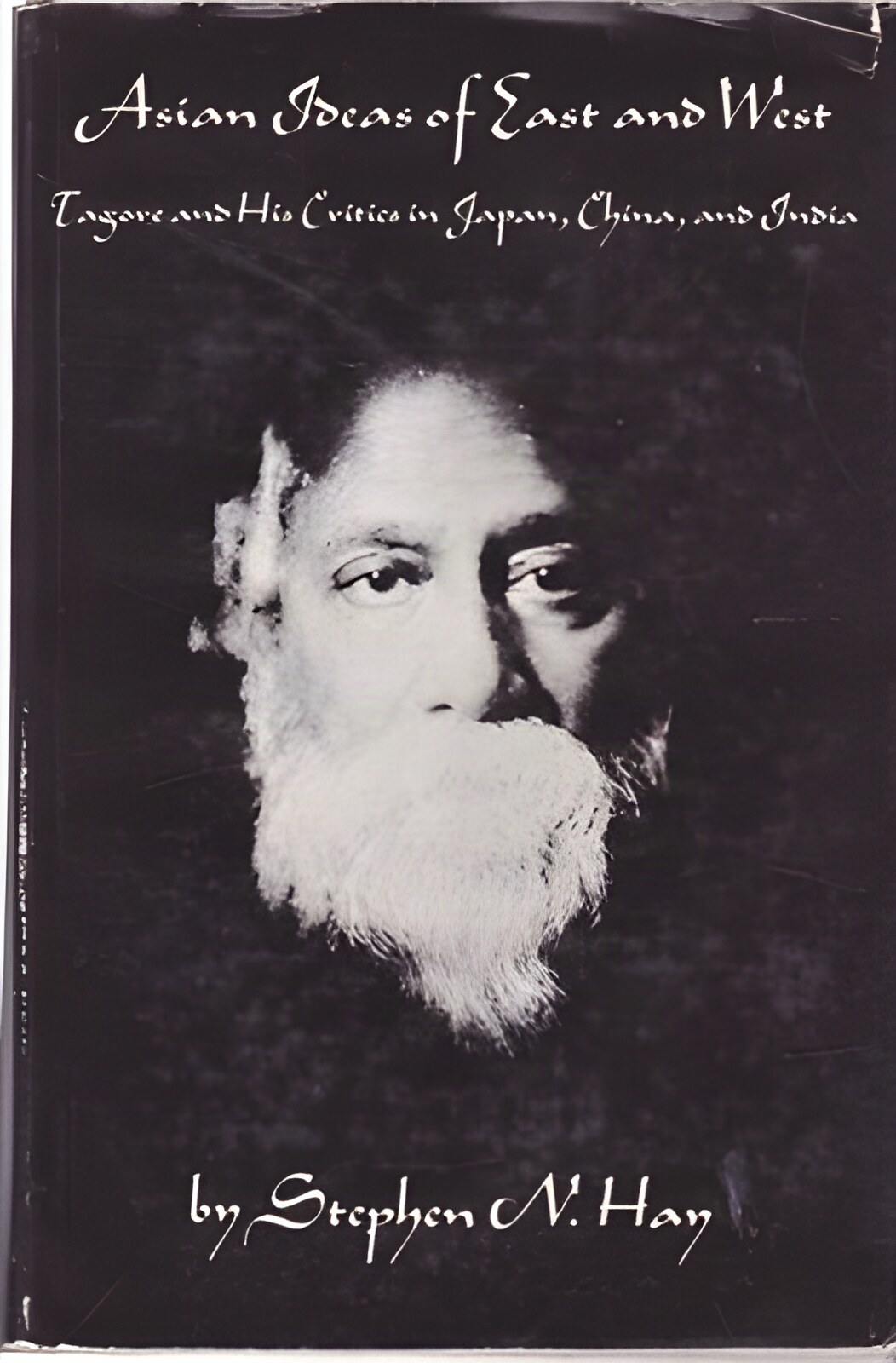

 "Atheist, The : Madalyn Murray O'Hairby: Le Beau, Bryan F.")
 "Averroes' Tahafut Al-Tahafut (The Incoherence of the Incoherence) Volume 1 & 2by: Van Den Bergh, Somin")


 "Bible Gallery, Theby: Chambers, Talbot W. and Gustave Dore")

 "Billy Sunday Was His Real Nameby: William G. McLoughlin, Jr.")
 "Bishop Butler and the Age of Reason: A Study in the History of Thoughtby: Mossner, Ernest Campbell")
 "Bishops in the Tower, The: A Record of the Stirring Events Affecting the Church and Nonconformists from the Restoration to the Revolutionby: Luckock, Herbert Mortimer")
 "Blasphemy: Art That Offendsby: Plate, S. Brent")
 "Boethius: The Consolations of Music, Logic, Theology, and Philosophy by: Chadwick, Henry")

 "Book of Common Prayer, The: and Administration of the Sacraments, and Other Rites and Ceremonies of the Church, According to the Use of the Church of England; Together with the Psalter or Psalms of David, Pointed as they are to be su")