Hardcover. NY, Farrar, Sraus and Giroux, 1st, 1965, Book: Very Good, Dust Jacket: Very Good, Hardcover in a lightly worn dust jacket, 650 pages, b&w illustrations. A rare study of the Nabataeans, whose kingdom included that archaeological wonder of the world:, Petra. Name on front fly leaf, dj spine with fading.
Hardcover. UK/Tokyo, Thoemmes /Kinokuniya Co. Ltd, reprint, 1991, Book: Very Good, Dust Jacket: None, Hardcover, gilt lettered blue cloth, 239 pages. Facsimile reprint of the 1828 edition. Name on front fly leaf, otherwise clean, bright copy.
Hardcover. Leiden/NY, E.J. Brill, 1st, 1996, Book: Very Good, Dust Jacket: Very Good, Hardcover in a bright dust jacket, 376 pages. This volume consists of 21 papers delivered at an international Spinoza conference on Disguised and Overt Spinozism around 1700, held at the Erasmus University (Rotterdam) in October 1994. In these papers, scholars from Italy, France, Germany, Great Britain, the Netherlands and the United States examine the impact of Spinoza's philosophy on the European Republic of Letters, one generation after the death, in 1677, of the greatest philosopher in the history of the Netherlands. Clean copy.
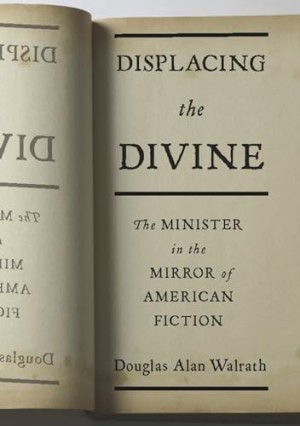
Hardcover. NY, Columbia University Press, 1st, 2010, Book: Very Good, Dust Jacket: Very Good, Hardcover in a bright dust jacket, 379 pages. As religious leaders, ministers are often assumed to embody the faith of the institution they represent. As cultural symbols, they reflect subtle changes in society and belief-specifically people's perception of God and the evolving role of the church. For more than forty years, Douglas Alan Walrath has tracked changing patterns of belief and church participation in American society, and his research has revealed a particularly fascinating trend: portrayals of ministers in American fiction mirror changing perceptions of the Protestant church and a Protestant God. From the novels of Harriet Beecher Stowe, who portrays ministers as faithful Calvinists, to the works of Herman Melville, who challenges Calvinism to its very core, Walrath considers a variety of fictional ministers, including Garrison Keillor's Lake Woebegon Lutherans and Gail Godwin's women clergy. He identifies a range of types: religious misfits, harsh Puritans, incorrigible scoundrels, secular businessmen, perpetrators of oppression, victims of belief, prudent believers, phony preachers, reactionaries, and social activists. He concludes with the modern legacy of nineteenth- and early-twentieth-century images of ministers, which highlights the ongoing challenges that skepticism, secularization, and science have brought to today's religious leaders and fictional counterparts. Clean copy.
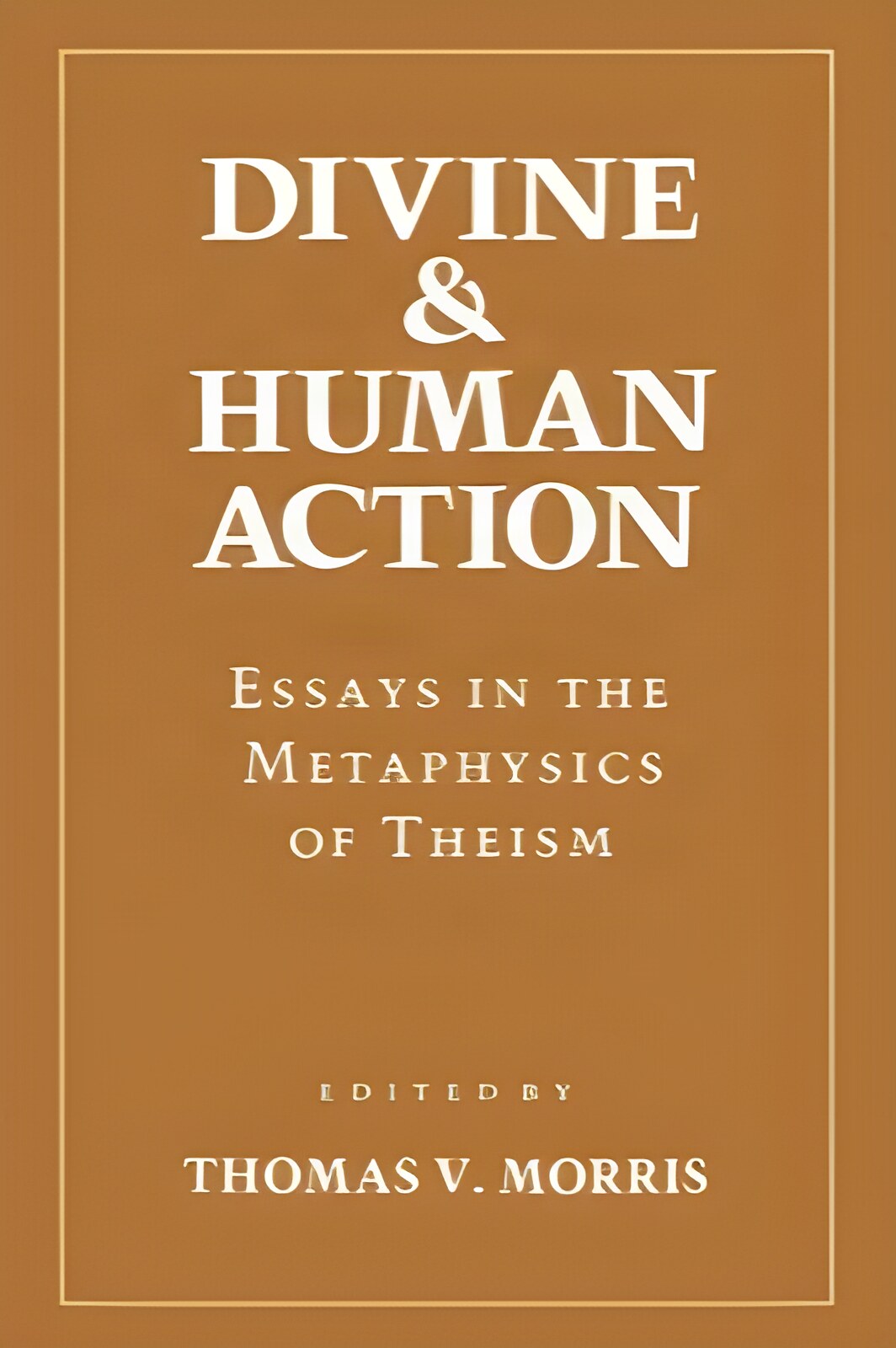
Ithaca NY, Cornell University Press, 1st, 1988, Book: Very Good, Dust Jacket: None, Softcover, 366 pages. Previous owner's signature on front end paper. Markings in pencil to a handful pages. Else a clean, tight copy. Twelve original essays advance the understanding of theistic metaphysics and it's capacity to illuminate a variety of fundamental issues.
Hardcover. NY, Macmillan, reprint, 1929, Book: Very Good, Dust Jacket: None, Hardcover, blue cloth with gilt letterng on spine and front cover, 242 pages. Does Civilization Need Religion? sets out from the fact that religion's inability to make its ethical and social resources available for the solution of the moral problems of modern civilization is one, and the neglected one, of the two chief causes responsible for its debilitated condition. It is convinced that if Christian idealists are to make religion socially effective they will be forced to detach themselves from the dominant secular desires of the nations as well as from the greed of economic groups. It aims to show that though neither the orthodox nor the modern wing of the Christian Church seems capable of initiating a genuine revival which will evolve a morality capable of challenging and maintaining itself against the dominant desires of modern civilization's needs, there are resources in the Christian religion which make it the inevitable basis of any spiritual regeneration of Western civilization. Does Civilization Need Religion? maintains that the task of redeeming Western society rests in a peculiar sense upon Christianity, which has reduced the eternal conflict between self-assertion and self-denial to the paradox of self-assertion through self-denial and made the Cross the symbol of life's highest achievement. It is persuaded that the idea of a potent but yet suffering divine ideal which is defeated by the world but gains its victory in the defeat must continue to remain basic in any morally creative worldview. Names on front fly leaf otherwise a clean copy.
Hardcover. New York, Aperture, 1st, 1998, Book: Very Good, Dust Jacket: Very Good, Hardcover in a bright, unclipped dust jacket. 96 pages, color photographs, Like new in publisher's shrinkwrap. Doors of the Kingdom is a unique collection of photographs depicting the ancient and disappearing craft of doormaking in Arabia. The Islamic concept of hurma, or sanctity of a place of dwelling or worship, is recurrent throughout Arabic poetry and literature. The door (bab), preserver of sanctity, becomes symbolic of the boundary between public and private space, and between the profane and the sacred. In 1995, Haajar Gouverneur traveled throughout the Arabian Peninsula photographing each region's distinctive doorways and the remaining artisans who make them. The doors of Arabia, painstakingly hand-carved from the wood of the Al-Athel trees, last in their exquisite variety for hundreds of years. This ancient craft, passed down from generation to generation in the central and northern regions of Saudi Arabia, is now nearly extinct. Modern materials, technology, and changing priorities threaten the continuity of the sacred and artisanal tradition of doormaking.
Hardcover. London, Penguin Books, 1st, 1965, Book: Very Good, Dust Jacket: Good, Hardcover in an edgeworn dust jacket. 390 pages, 192 bw plates at rear plus line diagrams and maps. No slipcase.
Hardcover. Cambridge, MA, Belknap Press of Harvard University Press, 1st Edition, 1961, Book: Very Good, Dust Jacket: None, 154 pages. Hardcover. Navy blue cloth cover boards, title on spine in white and small gilt design on front cover board. Previous owner's name on front flyleaf. Light pencil marks (erasable) throughout. Binding tight. Spine straight. This small book, the last work of a world-renowned scholar, has established itself as a classic. It provides a superb overview of the vast historical process by which Christianity was Hellenized and Hellenic civilization became Christianized.
Hardcover. Cambridge MA, Harvard University Press, 1st, 1969, Book: Very Good, Dust Jacket: Very Good, Hardcover in a bright dust jacket, 556 pages. Clean copy.
Hardcover. Oxford UK, Oxford University Press, 1st, 2016, Book: Very Good, Dust Jacket: Very Good, Hardcover in a bright dust jacket, 382 pages. This study addresses the need for a more current understanding of Cartesian philosophy by considering the different constructions of Descartes's thought that emerged in the Calvinist United Provinces (Netherlands) and Catholic France, the two main centers for early modern Cartesianism, during the period dating from the last decades of his life to the century or so following his death in 1650. It turns out that we must speak not of a single early modern Cartesianism rigidly defined in terms of Descartes's own authorial intentions, but rather of a loose collection of early modern Cartesianisms that involve a range of different positions on various sets of issues. Though more or less rooted in Descartes's somewhat open-ended views, these Cartesianisms evolved in different ways over time in response to different intellectual and social pressures. Chapters of this study are devoted to: the early modern Catholic and Calvinist condemnations of Descartes and the incompatible Cartesian responses to these; conflicting attitudes among early modern Cartesians toward ancient thought and modernity; competing early modern attempts to combine Descartes's views with those of Augustine; the different occasionalist accounts of causation within early modern Cartesianism; and the impact of various forms of early modern Cartesianism on both Dutch medicine and French physics. Name on front fly leaf, otherwise clean.
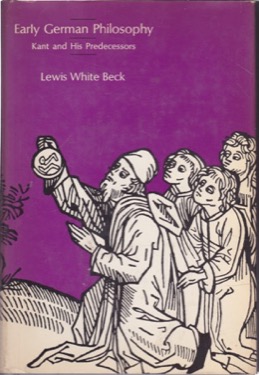
Hardcover. Durham UK, Acumen, 1st, 2009, Book: Very Good, Dust Jacket: None, Hardcover in blue cloth, with red title block, gilt lettering, 348 pages. The early modern period in philosophy - encompassing the 16th to the 18th centuries - reflects a time of social and intellectual turmoil. The Protestant Reformation, the Catholic Counter-Reformation, and the birth of the Enlightenment all contributed to the re-evaluation of reason and faith. The revolution in science and in natural philosophy swept away two millennia of Aristotelian certainty in a human-centered universe. Covering some of the most important figures in the history of Western thought - notably Descartes, Locke, Hume and Kant - "Early Modern Philosophy of Religion" charts the philosophical understanding of religion at a time of intellectual and spiritual revolution. "Early Modern Philosophy of Religion" will be of interest to historians and philosophers of religion, while also serving as an indispensable reference for teachers, students and others who would like to learn more about this formative period in the history of ideas. Lacks dust jacket. Clean copy.
Hardcover. Salem MA, Cushing and Carlton, 1st US, 1795, Book: Very Good, Dust Jacket: None, 144 pages, 2 parts bound in one volume, bound in leather. Front cover hinge partially cracked, loose. Light pencil writing on last blank page, otherwise clean, tight copy.
Hardcover. Stanford CA, Stanford University Press, 1st, 1964, Book: Very Good, Dust Jacket: Very Good, Hardcover in a bright dust jacket, 194 pages. Based upon the 1961 Arensberg Lectures, given at Stanford University, this collection of essays offers a genuinely unified interpretation of Italian Renaissance thought by describing and evaluating the philosophies of eight pivotal figures: 1). Francesco Petrarch. 2). Lorenzo Valla. 3). Marsilio Ficino. 4). Giovanni Pico della Mirandola. 5). Pietro Pomponazzi. 6). Bernardino Telesio. 7). Francesco Patrizi. 8). Giordano Bruno. With appendix: The medieval antecedents of Renaisssance Humanism, notes, bibliographical survey and index. Name on front fly leaf, otherwise clean.
Hardcover. Cincinnati OH, Review Printing Co., 1st, 1885, Book: Very Good, Dust Jacket: None, Hardcover, brown cloth with black stamping, 174 pages. B&w frontispiece engraving of Sabin with tissue guard. Green floral pattern on endpapers. First blank page INSCRIBED BY THE AUTHOR, DATED 1890.
Hardcover. NY, Oxford University Press, 1st, 1994, Book: Very Good, Dust Jacket: Very Good, Hardcover in a bright, unclipped dust jacket. Pais turns his attention to the great physicist's life outside of science, with an informal, almost kalaidoscopic portrait of Einstein--his personal life and his public persona ("my mythical namesake who has made my life so burdensome"), his scientific contributions, and his thoughts on religion, philosophy, and politics, on Israel and Zionism, on the rise of Nazism and McCarthyism, and on much more. Pais offers a candid look at Einstein's troubled personal life--his two failed marriages, his first child Lieserl, who was born out of wedlock (and of whom all trace has vanished), his estranged son Hans Albert, also a scientist, who felt his father had abandoned the family, and his son Eduard, who gradually descended into madness. Of course, any book on Einstein must touch upon science, and Pais includes several illuminating chapters, one of which offers general readers an accessible explanation of relativity, and another traces the long road to Einstein's Nobel Prize (after being nominated almost every year from 1909 to 1920, he finally won in 1921--not for relativity, but for his work on the photoelectric effect). On the lighter side, Pais includes samples from Einstein's "curiosity file," in which he kept crank letters, marriage proposals, hate mail (one began "You are the prince of idiocy, the count of imbecility, the duke of cretinism, the baron of morons"), and the like. But the heart of the book is the final section, where Pais traces Einstein's life as seen through the media. Here we not only meet Einstein the living legend--receiving the keys to New York City from flamboyant Mayor Jimmy Walker, attending the Hollywood premier of City Lights with Charlie Chaplin--but also witness his extensive involvement in the issues of his day.
Hardcover. New York, Farrar Straus Giroux, 1st, 1970, Book: Very Good, Dust Jacket: Very Good, Color illustrated by Antonio Frasconi. Dust jacket shows some minor wear. Hardbound. Translated from the Yiddish by the author and Elizabeth Shub. The winner of the 1970 National Book Award for children's literature retells a Hebrew legend with vivid simplicity and an internationally respected artist interprets it with a sincerity and fresh vision reminiscent of medieval art.
Hardcover. Bristol UK, Thoemmes Press, reprint, 1997, Book: Very Good, Dust Jacket: None, Hardcover, blue cloth with gilt lettering on spine, 403 pages plus a 27 page addenda. A facsimile printing of the 1671 edition. Some 100 illustrations to text showing physical or geometrical calculations. Henry More (1614-1687), was an influential Jesuit, Neoplatonist, and philosopher. This work on metaphysics profoundly influenced the development of Newton's thought, "It seems undeniable that Newton read and was influenced by More's views on space and time, as presented in the Enchiridion metaphysicum. Like More, Newton also believed that for something to exist it must exist in space, and he identified the immensity of infinite space with the extension of God the similarities between their views of space and time, and their relationship to God, guarantees More's place in the history of science." Name on front fly leaf, otherwise clean and bright.
Softcover. Oxford UK, Cambridge University Press, 2nd Ed., 2000, Book: Very Good, Dust Jacket: None, Softcover, 580 pages. INSCRIBED BY AUTHOR on inside front cover. This classic work of recent historiography broke the hold of the "old guard" on this key period of English history. It has now been extensively rewritten, and in its updated form reinforces its arguments with new evidence and addresses some of the historical preoccupations of the past fifteen years.
Hardcover. Bristol UK, Thoemmes Press, reprint, 1997, Book: Very Good, Dust Jacket: None, Hardcover, blue cloth with gilt lettering on spine, 319 pages. A facsimile reprint of the 1656 edition. One of 9 volumes in More's collected works. Name, light pencil marking to front fly leaf otherwise a clean, bright copy.
Paris, Honore Champion, 1st thus, Book: Very Good, Dust Jacket: None, Hardcover, pale blue boards stamped in black and blue, 1086 pages. Translated to French by Pierre Coste, edited by Georges Moyal. Name on front fly leaf, otherwise clean.
Hardcover. London, Burns, Oates & Washbourne, 1st, 1923, Book: Very Good, Dust Jacket: None, 194 pages. Dark blue cloth covers, gilt titles to spine, titles and border blind stamped to front. Light rubbing and edgewear, spine slightly faded, previous owner's short ink inscription to front endpaper, pencil underlining and markings to some page margins, pencil notations to rear endpaper; otherwise a clean, tight copy.


 "DISCOURSES: Translated from Nicole s Essays, by . with Important Variations from the Original French. 1. On the Existence of a God. 2. On the Weakness of Man. 3. On the Way of Preserving Peaceby:")
 "Disguised and Overt Spinozism around 1700: Papers presented at the international colloquium held at Rotterdam 5-8 October 1994by: Bunge, Wiep van & Wim Klever (Ed.)")


 "Early Christian & Byzantine Architectureby: Krautheimer, Richard")
 "Early Christianity and Greek Paideiaby: Jaeger, Werner")

 "Early Modern Philosophy of Religion (The History of Western Philosophy of Religion, Volume 3) by: Oppy, G.raham & Trakakis, Nick N. (eds)")
 "Economy of Human Life, The: Translated from An Indian Manuscript written by A Braminby: N/A")
 "Eighty-Three Years a Servant or The Life of Rev. Alvah Sabin (SIGNED COPY)by: Hobart, Alvah S.")


 "Enchiridion Metaphysicumby: Henry More")

 "English Society, 1660-1832: Religion, Ideology and Politics During the Ancien Regime (INSCRIBED COPY)by: Clark, J. C. D.")
 "Enthusiasmus Triumphatus: Or, A Discourse of the Nature, Causes, Kinds, and Cure, of Enthusiasmeby: Henry More/ G.A.J. Rogers (Intro.)")

 "Essay on the Economic Effects of the Reformation, Anby: O'Brien, George")