Hardcover. Princeton, Princeton University Press, 1st, 1972, Book: Very Good, Dust Jacket: None, Hardcover, 226 pages of text followed by section of corresponding black & white photographic illustrations. Hardcover. Clean, tight copy. No dust jacket.
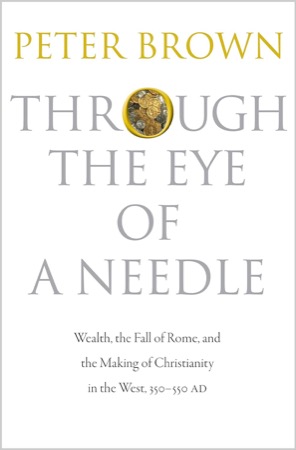
Hardcover. Princeton NJ, Princeton University Press, 1st, 2012, Book: Very Good, Dust Jacket: Very Good, Hardcover in a bright dust jacket, 759 pages, b&w illustrations. A sweeping intellectual history of the role of wealth in the church in the last days of the Roman Empire Jesus taught his followers that it is easier for a camel to go through the eye of a needle than for a rich man to enter heaven. Yet by the fall of Rome, the church was becoming rich beyond measure. Through the Eye of a Needle is a sweeping intellectual and social history of the vexing problem of wealth in Christianity in the waning days of the Roman Empire, written by the world's foremost scholar of late antiquity. Peter Brown examines the rise of the church through the lens of money and the challenges it posed to an institution that espoused the virtue of poverty and called avarice the root of all evil. Drawing on the writings of major Christian thinkers such as Augustine, Ambrose, and Jerome, Brown examines the controversies and changing attitudes toward money caused by the influx of new wealth into church coffers, and describes the spectacular acts of divestment by rich donors and their growing influence in an empire beset with crisis. He shows how the use of wealth for the care of the poor competed with older forms of philanthropy deeply rooted in the Roman world, and sheds light on the ordinary people who gave away their money in hopes of treasure in heaven. Clean copy.
Hardcover. NY, Oxford University Press, 1st, 2008, Book: Very Good, Dust Jacket: Very Good, Hardcover in a bright dust jacket, 323 pages. Although Buddhism is often depicted as a religion of meditators and philosophers, some of the earliest writings extant in India offer a very different portrait of the Buddhist practitioner. In Indian Buddhist narratives from the early centuries of the Common Era, most lay religious practice consists not of reading, praying, or meditating, but of visually engaging with certain kinds of objects. These visual practices, moreover, are represented as the primary means of cultivating faith, a necessary precondition for proceeding along the Buddhist spiritual path. In Thus Have I Seen: Visualizing Faith in Early Indian Buddhism, Andy Rotman examines these visual practices and how they function as a kind of skeleton key for opening up Buddhist conceptualizations about the world and the ways it should be navigated. Clean copy.
Hardcover. Oxford UK, Clarendon Press, 1st, 1957, Book: Very Good, Dust Jacket: None, Hardcover, blue cloth with gilt lettering on spine, 148 pages, paper with light tanning. The relationship between formal logic and general philosophy is discussed under headings such as A Re-examination of Our Tense-Logical Postulates, Modal Logic in the Style of Frege, and Intentional Logic and Indeterminism. The relationship between formal logic and general philosophy is discussed under headings such as A Re-examination of Our Tense-Logical Postulates, Modal Logic in the Style of Frege, and Intentional Logic and Indeterminism. Name on front fly leaf, otherwise clean.
Hardcover. Santa Fe, NM, Twin Palms Publishers, 1st, 1997, Book: Very Good, Dust Jacket: None, 96 pages. Hardcover with no dust jacket. Very clean. like new copy in publisher's shrink-wrap. 78 full-page, black and white photographs. Limited to 3000 copies. Tight copy. A look at the black experience in late-20th-century America with powerful documentary images that will remain with the viewer long after the books are closed. Mauskopf presents a quiet collection of images made in one part of the South, the most isolated black communities of the Mississippi Delta, where time seems to have stopped in midcentury. The photographs are full of love, joy, and religious faith and are richly reproduced here as sheet-fed gravures. Mauskopf portrays the poorest Americans, who are nonetheless rich in family, church, and community bonds. He documents the unifying and dominant role of religion as well as the joys and sustenance provided by music, dance, romance, family life, and the land itself. These images capture a sense of place so powerfully that captions aren't necessary, though a brief and poetic essay by novelist Kenan nicely complements the photographs.
Hardcover. Oxford UK, Oxford University Press, 1st, 2016, Book: Very Good, Dust Jacket: Very Good, Hardcover in a bright dust jacket, 175 pages. Despite recent advances in Locke scholarship, philosophers and political theorists have paid little attention to the relations among his three greatest works: An Essay Concerning Human Understanding, Two Treatises of Government, and Epistola de Tolerantia. As a result our picture of Locke's thought is a curiously fragmented one. Toleration and Understanding in Locke argues that these works are unified by a concern to promote the cause of religious toleration. Making extensive use of Locke's neglected replies to Proast, Nicholas Jolley shows how Locke draws on his epistemological principles to criticize religious persecution - for Locke, since revelation is an object of belief, not knowledge, coercion by the state in religious matters is not morally justified. In this volume Jolley also seeks to show how the Two Treatises of Government and the letters for toleration adopt the same contractualist approach to political theory; Locke argues for toleration from the function of the state where this is determined by the decisions of rational contracting parties. Throughout, attention is paid to demonstrating the range of Locke's arguments for toleration and to defending them, where possible, against recent criticisms. The book includes an account of the development of Locke's views about religious toleration from the beginning to the end of his career; it also includes discussions of his individualism about knowledge and belief, his critique of religious enthusiasm, his commitment to the minimal creed, and his teachings about natural law. Locke emerges as a rather systematic thinker whose arguments are highly relevant to modern debates about religious toleration. Light pencil marking to some pages.
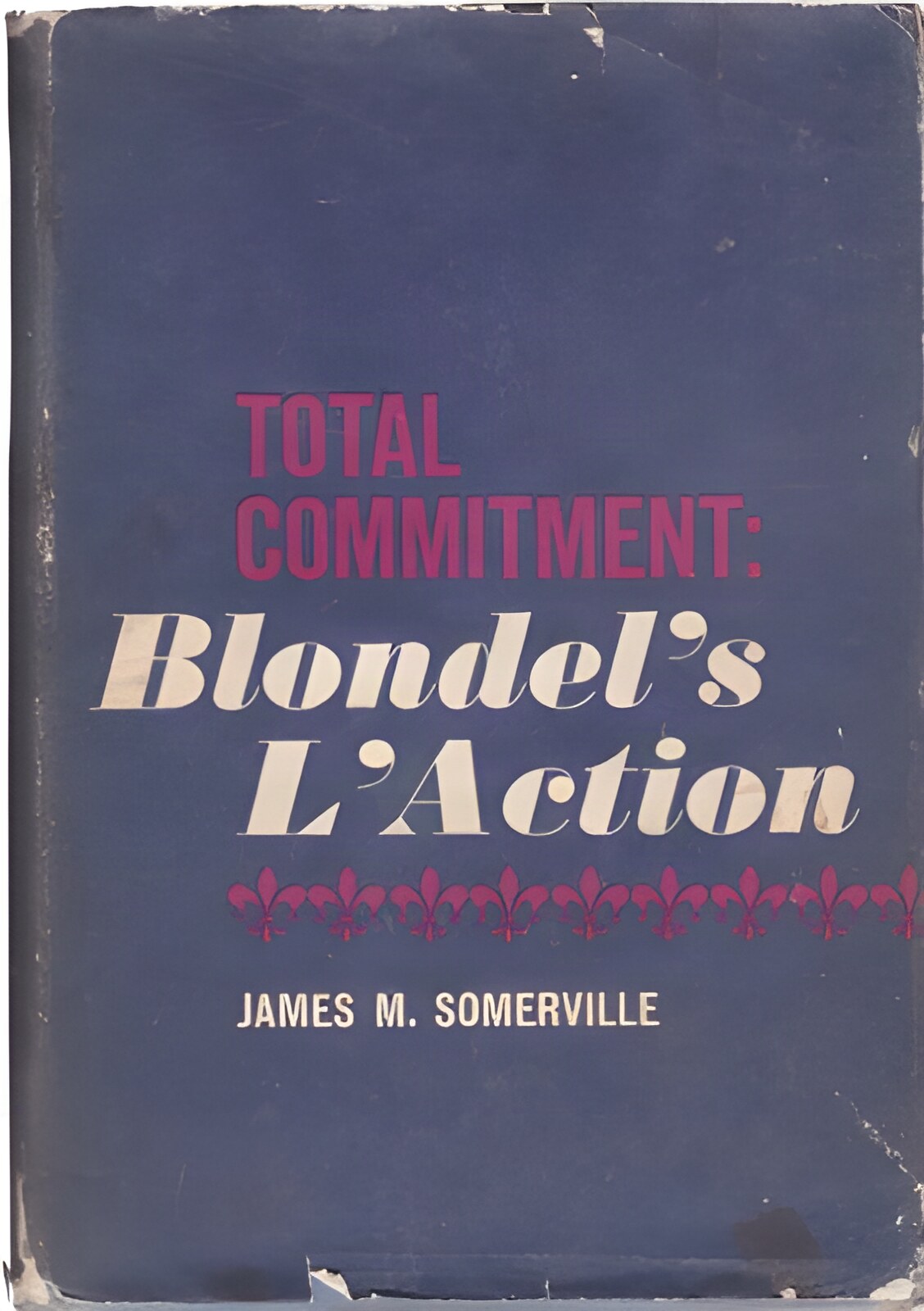
Hardcover. Washington DC, Corpus Books, 1st, 1968, Book: Good, Dust Jacket: Fair, Hardcover in a worn, chipped dust jacket, Light blue cloth covers with dark blue lettering to spine. 390 pages. Maurice Blondel was a phenomenologist long before the term was used to describe an identifiable movement. His monumental work, L'Action (1893). set the stage for an intellectual revolution that is still in progress. It remains a classic effort to demonstrate the integral unity of science, metaphysics, and the moral life in the light of man's religious aspirations. Name on front fly leaf, otherwise clean.
Hardcover. London, Routledge & Kegan Paul, reprint, 1969, Book: Very Good, Dust Jacket: Good, Hardcover in a lightly worn and chipped dust jacket, 166 pages. (German and English Translation): The German text with the translation by D. F. Pears & B. F. McGuinness, and with the Introduction by Bertrand Russell. Clean copy.
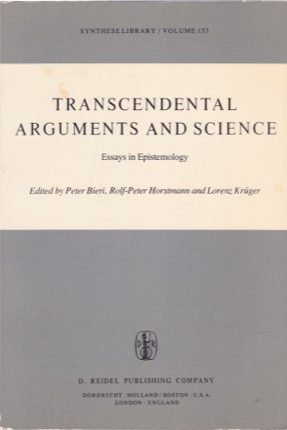
Softcover. Boston, Reidel Publishing, 1st, 1979, Book: Very Good, Dust Jacket: None, Softcover, 314 pages. The goal of the present volume is to discuss the notion of a 'conceptual framework' or 'conceptual scheme', which has been dominating much work in the analysis and justification of knowledge in recent years. More specifi- cally, this volume is designed to clarify the contrast between two competing approaches in the area of problems indicated by this notion: On the one hand, we have the conviction, underlying much present-day work in the philosophy of science, that the best we can hope for in the justifi- cation of empirical knowledge is to reconstruct the conceptual means actually employed by science, and to develop suitable models for analyzing conceptual change involved in the progress of science. This view involves the assumption that we should stop taking foundational questions of epistemology seriously and discard once and for all the quest for uncontrovertible truth. The result- ing program of justifying epistemic claims by subsequently describing patterns of inferentially connected concepts as they are at work in actual science is closely connected with the idea of naturalizing epistemology, with concep- tual relativism, and with a pragmatic interpretation of knowledge. On the other hand, recent epistemology tends to claim that no subsequent reconstruction of actually employed conceptual frameworks is sufficient for providing epistemic justification for our beliefs about the world. This second claim tries to resist the naturalistic and pragmatic approach to epistemology and insists on taking the epistemological sceptic seriously. Name on front fly leaf, otherwise clean.
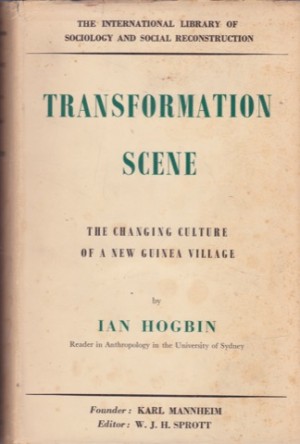
Hardcover. London, Routledge and Kegan Paul, 1st, 1951, Book: Very Good, Dust Jacket: Good, Hardcover in a worn dust jacket. Summary of the effects of German, Japanese and Australian occupation and the subsequent cultural adjustments to change. Based on years of field and background research. Very detailed records of religion, work, trade, councils and courts, community dynamics. Illustrated by 2 maps, 16 pages of plates, 326 pages including index. Owner's signature on inside front cover, otherwise clean.
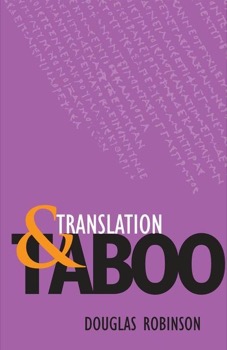
Softcover. DeKalb IL, Northern Illinois University Press, 1st pbk, 1996, Book: Very Good, Dust Jacket: None, Softcover, 232 pages. From the time of the first written sacred texts in the West, taboo has proscribed the act and art of translation. So argues the author of this book, exploring the age-old prohibition of translation of sacred texts. Clean copy.
Hardcover. Paterson NJ, St. Anthony Guild Press, 1st, 1956, Book: Very Good, Dust Jacket: None, Hardcover in light tan cloth stamped in brown, 113 pages. Illustrated in 2-colors by Robert Bradbury. A tale of an orphaned American Indian girl who was worthy of sainthood in the eyes of her admirers. Remnants of color dust jacket and related article laid in. Clean copy.
Hardcover. New York, John Wiley & Sons, reprint, 1888, Book: Very Good, Dust Jacket: None, Hardcover, 452 pages. Blue cloth covers with gilt titles and black embossed illustration, b&w tissue-protected frontispiece of Ruskin's portrait, brown decorated endpapers, top edge gilt. Slight edgewear and rubbing to covers, previous owner's inscription on blank preview page, a few brown markings to right edge of page block, pages crisp and otherwise unmarked, stiff binding; overall, a very clean, tight copy.
Hardcover. Boston, Benjamin H. Greene, 1st, 1837, Book: Good, Scarce. 168 pages. Dark brown cloth covers w/ gilt lettering. Light edge wear, soiling to covers. Foxing to edges, end papers and pages. Pages slightly warped. Else in good condition.
Softcover. University of Chicago Press, reprint, 1965, Book: Very Good, Dust Jacket: None, Softcover, 555 pages. Traces the political fortunes of the Puritans from 1524, the year in which William Tyndale left London for Germany, to the Stuart Settlement at the beginning of the seventeenth century. The author then examines the social, cultural, and intellectual aspects of Puritanism which, he believes, represented a more genuine idealism than any rival religious movement during the Tudor period. Remainder mark to bottom edge, otherwise a clean copy.
Hardcover. Bristol UK, Thoemmes Press, reprint, 1997, Book: Very Good, Dust Jacket: None, Hardcover, blue cloth with gilt lettering on spine, 195 plus 276 pages. A facsimile reprint of the 1682 edition. One of 9 volumes in More's collected works. Name on front fly leaf otherwise a clean, bright copy.
Hardcover. NY, Garland Publishing, reprint, 1978, Book: Very Good, Dust Jacket: None, Hardcover, orange cloth with black lettering on spine, 195+ 276 pages. Facsimile of the original 1682 edition. From the 'British Philosophers and Theologians of the 17th and 18th Century' series, edited by Rene Wellek. Name on front fly leaf otherwise clean.
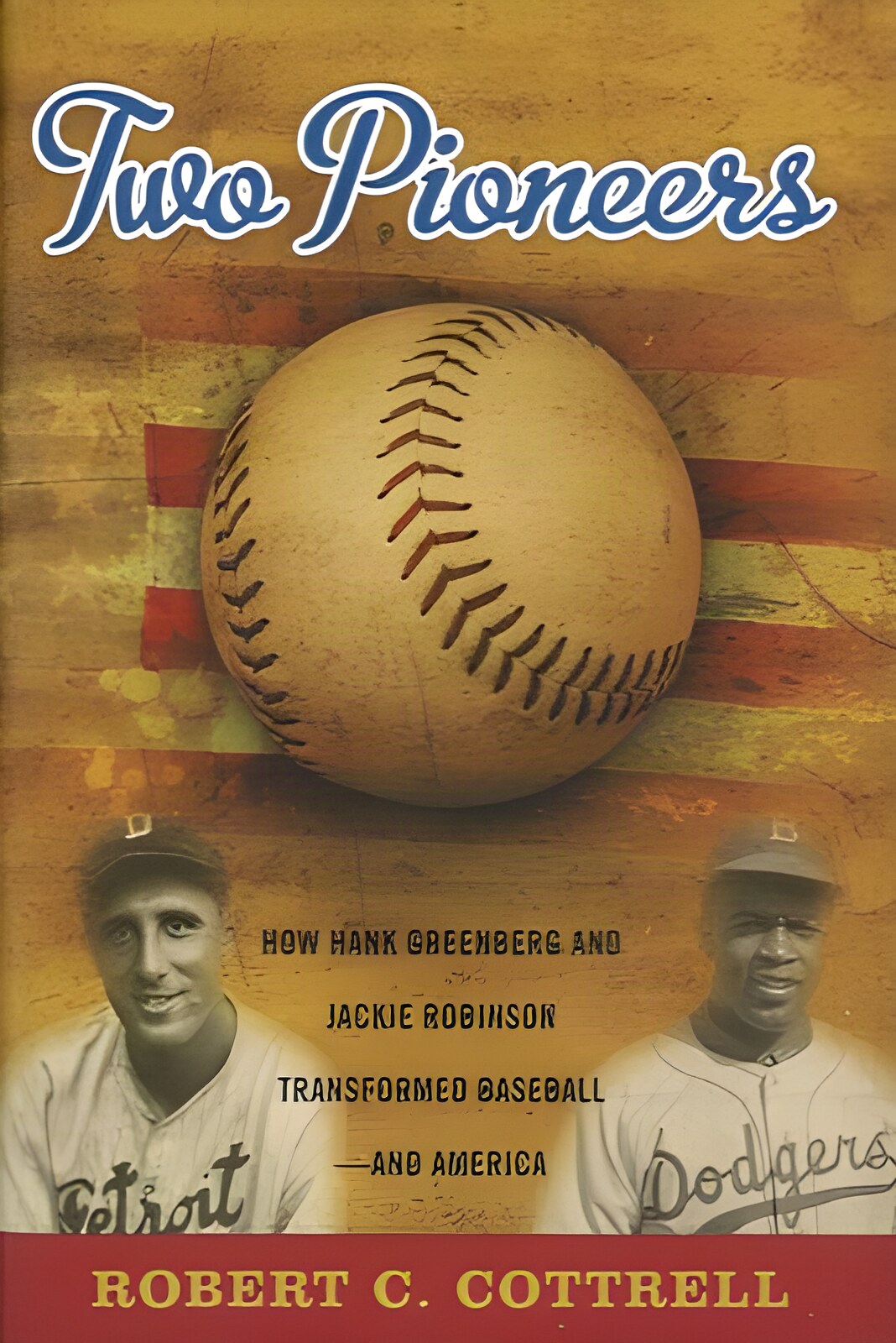
Hardcover. Washington DC, Potomac Books, 1st, 2012, Book: Very Good, Dust Jacket: Very Good, Hardcover in a bright dust jacket, 270 pages, b&w illustrations. As the first great Jewish player in the major leagues and the first African American to play major-league baseball during the twentieth century, respectively, Hank Greenberg and Jackie Robinson are forever linked because of the barriers they encountered, the discrimination they endured, the athletic gifts they exhibited, and especially the courage and dignity they displayed. Both suffered ridicule and abuse as they participated in the national pastime. Nevertheless, each excelled. Greenberg became one of the preeminent sluggers of the 1930s and 1940s who took a break from baseball to serve in the war. Robinson, from the mid-1940s into the following decade, helped bring back speed and a thinking man's approach to the game, both of which had largely been discarded for a generation. Two Pioneers presents these remarkable players' experiences while competing in a nation that was deeply divided on social issues such as anti-Semitism and racism. Both men earned nearly as much attention off the field as they did on it. Greenberg called into question the idea of a "master race" as Adolf Hitler rose to power and gained supporters all over the world. Likewise, Robinson contested racial notions regarding the supposed inferiority of people of African ancestry, even though segregationists proved determined to maintain social barriers separating blacks and whites. It is only fitting that when Robinson finally crossed baseball's color line, Greenberg was one of the first players to welcome him publicly. Robert Cottrell's well-researched work shows how two baseball superstars became important figures in the civil rights crusade to ensure that all Americans, no matter their religion or race, are given equal opportunity. Clean, bright copy.
Softcover. Nara, Nara National Museum, 1st, 2002, Book: Very Good, Dust Jacket: None, 375 pages. Softcover. Exhibition catalog. Full color photographs. Primary language of catalog is Japanese - Foreword and Exhibition Checklist in English. Light wear. Clean, tight copy.
Hardcover. San Diego, Harcourt Brace Jovanovich, 1st, 1989, Book: Very Good, Dust Jacket: Very Good, Hardcover, 244 pages. Illustrated with over 100 archival photos of religion on the American frontier. Three quarter brown paper over boards with rust cloth around spine and gilt text on spine; no defects. Illustrated dust jacket with maroon and black text on upper and mint green and maroon text on spine; no chips, tears or edge wear; no price clipped. Interior pages clean, remainder line on top edge, otherwise clean. Binding is tight.
Softcover. Chicago, University of Chicago Press, reprint, 2008, Book: Very Good, Dust Jacket: None, Softcover, 370 pages. Democrat and Republican. Meat Eaters and Vegetarians. Black and White. As human beings we sort ourselves into groups. And once we identify ourselves as a member of a particular group--say, Red Sox fans--we tend to feel more comfortable with others of our own kind, rather than, say, Yankees fans. Yet we all belong to multiple groups at the same time--one might be a woman, a mother, an American, a violinist. How do we decide which identities matter and why they matter so much? And what makes us willing to die for, or to kill for, a religion, a nation, or a race? In this award-winning book, David Berreby describes how twenty-first-century science is addressing these age-old questions. Ably linking neuroscience, social psychology, anthropology, and other fields, Us and Them investigates humanity's "tribal mind" and how this alters our thoughts, affects our health, and is manipulated for good and ill. From the medical effects of stress to the rhetoric of politics, our perceptions of group identity affect every part of our lives. Science, Berreby argues, shows how this part of human nature is both unexpectedly important and surprisingly misunderstood. Clean copy.
Hardcover. Salt Lake City, Utah Historical Society, 1st, 1976, Book: Very Good, Dust Jacket: None, 418 pages. Brown cloth cover, slightly oversized, gilt lettering, very little wear. Inside is bright and clean, with b&w photographs throughout. A nice copy.
Hardcover. Salt Lake City, Utah Historical Society, 1st, 1978, Book: Very Good, Dust Jacket: None, 435 pages. Brown cloth cover, slightly oversized, gilt lettering, very little wear. Inside is bright and clean, with b&w photographs throughout. A nice copy.







 "Toleration and Understanding in Locke by: Jolley, Nicholas")

 "True and the Beautiful, Theby: Ruskin, John")
 "True Believer's Defence Against Charges Preferred by Trinitarians, for Not Believing in the Divinity of Christ, the Deity of Christ, the Trinity, etc., Theby: Morgrid")

 "TWO CHOICE AND USEFUL TREATISES ; The One LUX ORIENTALIS ; or An Enquiry into the Opinion of the Eastern Sages Concerning the Praeexistence of Souls. Being a Key to Unlock the Grand Mysteries of Providence. In Relation to Mans Sin an")
![Two Choice and Useful Treatises. [British Philosophers and Theologians of the 17th and 18th Centuries] by: Joseph Glanvill](javascript:largeIMTop('https://www.browsingisarousing.com/shop/images/Two-Choice-and-Useful-Treatises.-British-Philosophers-and-Theologians-of-the-17th-and-18th-Centuries386834-440941.jpg','https://www.browsingisarousing.com/shop/images/Two-Choice-and-Useful-Treatises.-British-Philosophers-and-Theologians-of-the-17th-and-18th-Centuries386834-440941.jpg',0,'386834',0,'') "Two Choice and Useful Treatises. [British Philosophers and Theologians of the 17th and 18th Centuries] by: Joseph Glanvill")

 "Under God's Spell: Frontier Evangelists 1772-1915by: Luchetti, Cathy")



 "Utah Historical Quarterly: Volume 44.by: Smith (ed), Melvin T.")
 "Utah Historical Quarterly: Volume 46.by: Smith (ed), Melvin T.")