Hardcover. NY, Pegasus Books, 1st, 2023, Book: Very Good, Dust Jacket: Very Good, Hardcover in a bright, unclipped dust jacket. Chronicling two-hundred years of glamour, intrigue, and hedonism, this rich and vivid history of the French Riviera features a vast cast of characters, from Pablo Picasso and Coco Chanel to Andre Matisse and James Baldwin. In 1835, Lord Brougham founded Cannes, introducing bathing and the manicured lawn to the wilds of the Mediterranean coast. Today, much of that shore has become a concrete mass from which escape is an exclusive dream. In the 185 years between, the stretch of seaboard from the red mountains of the Esterel to the Italian border hosted a cultural phenomenon well in excess of its tiny size. A mere handful of towns and resorts created by foreign visitors - notably English, Russian and American - attracted the talented, rich and famous as well as those who wanted to be. For nearly two centuries of creativity, luxury, excess, scandal, war and corruption, the dark and sparkling world of the Riviera was a temptation for everybody who was anybody. Clean copy.
Hardcover. NY, Norton, 1st US, 1985, Book: Very Good, Dust Jacket: Very Good, Hardcover in a bright dust jacket, 192 pages. The photos are breathtaking not necessarily for their quality - many are washed out and most of the subject matter is routine day to day military stuff - but for their rarity. While the Germans seem to have been at least as far advanced in the use of color photography as the Americans, there is still a paucity of color photography in the public record. That is being addressed by the various nations who took large amounts of color film in an official capacity, including the US, UK, Germany and Canada. The book's captions are adequate to the task, and there are good historical sections, as well as an introduction by Max Hastings as well as commentary by an actual German war correspondent. The strength of the book is in its ability to bring the participants of the subject campaign - the German invasion of Russia up to and including Stalingrad - to life. The use of a large format allows one to note small details of the photos, and relate to the subject matter on a personal level. Despite the lack of "action" shots, there is much to see in facial expressions, uniform details, and especially geography as the Russian steppe is shown in summer and winter, as well as the famous Russian mud (Rasputitsa) about which so much has been written.
Hardcover. NY , Norton, 1st, 1979, Book: Very Good, Dust Jacket: Very Good, Hardcover in an unclipped dust jacket with fading to spine, 253 pages. This series of sketches captures Stalin with irony, humor and pathos. The author calls his fictionalized version of Stalin "artistic documentation" in the spirit of reality based on research, personal experience and conversations with others. Yuri Krotkov, a Soviet Georgian, as was Stalin, was a prominent dramatist and screenwriter in the Soviet Union before his defection. As a member of the Russian intelligentsia, he was in the confidence of top-ranking Soviet and party officials in Moscow. Review slip laid in. Foxing to top edge otherwise clean copy.
Softcover. Princeton NJ, Princeton University Press, 3rd pr., 2008, Book: Very Good, Dust Jacket: None, Softcover in pictorial wraps, 375 pages, maps. A decade after the Soviet Union and the People's Republic of China established their formidable alliance in 1950, escalating public disagreements between them broke the international communist movement apart. In The Sino-Soviet Split, Lorenz Luthi tells the story of this rupture, which became one of the defining events of the Cold War. Identifying the primary role of disputes over Marxist-Leninist ideology, Luthi traces their devastating impact in sowing conflict between the two nations in the areas of economic development, party relations, and foreign policy. The source of this estrangement was Mao Zedong's ideological radicalization at a time when Soviet leaders, mainly Nikita Khrushchev, became committed to more pragmatic domestic and foreign policies. Using a wide array of archival and documentary sources from three continents, Luthi presents a richly detailed account of Sino-Soviet political relations in the 1950s and 1960s. He explores how Sino-Soviet relations were linked to Chinese domestic politics and to Mao's struggles with internal political rivals. Furthermore, Luthi argues, the Sino-Soviet split had far-reaching consequences for the socialist camp and its connections to the nonaligned movement, the global Cold War, and the Vietnam War. Clean copy.
Hardcover. London, George Allen & Unwin Ltd, 2nd Ed., 1955, Book: Very Good, Dust Jacket: Good, Hardcover in a worn, chipped dust jacket. 664 pages with index. Volume 2 ONLY. Masaryk was the president of Czechoslovakia after World War I. Long a student of Russia this book was first published in 1913. Clean copy.
Hardcover. NY, Random House, 1st, 1985, Book: Very Good, Dust Jacket: Very Good, Hardcover in a bright dust jacket, 487 pages, b&w illustrations. Napoleon's colorful but disastrous Russian campaign has been strangely neglected by American publishers. Bridging the gap between popular and scholarly history, historian Cate has written a thoroughly detailed and researched account that should also appeal to the lay reader. His writing is deliberately paced but dramatic and does far more justice to the extremely complex political and military situation of 1812 than Philippe de Segur's Napoleon's Russian Campaign (1965), the only other work available in the United States. Clean copy.
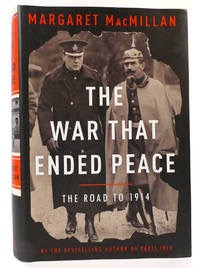
Hardcover. NY, Random House, 1st, 2013, Book: Very Good, Dust Jacket: Very Good, Hardcover in a bright, lightly worn dust jacket. 739 pages, index, b&w illustrations. The War That Ended Peace brings vividly to life the military leaders, politicians, diplomats, bankers, and the extended, interrelated family of crowned headsacross Europe who failed to stop the descent into war: in Germany, the mercurial Kaiser Wilhelm II and the chief of the German general staff, Von Moltke the Younger; in Austria-Hungary, Emperor Franz Joseph, a man who tried, through sheer hard work, to stave off the coming chaos in his empire; in Russia, Tsar Nicholas II and his wife; in Britain, King Edward VII, Prime Minister Herbert Asquith, and British admiral Jacky Fisher, the fierce advocate of naval reform who entered into the arms race with Germany that pushed the continent toward confrontation on land and sea. Clean copy.
Hardcover. New York, Simon and Schuster, 1st US, 2016, Book: Very Good, Dust Jacket: None, Hardcover, 367 pages, a graphic novel illustrated in color by Igort. Color illustrated boards, no dust jacket issued. After spending two years in Ukraine and Russia, collecting the stories of the survivors and witnesses to Soviet rule, masterful Italian graphic novelist Igort was compelled to illuminate two shadowy moments in recent history: the Ukraine famine and the assassination of a Russian journalist. Now he brings those stories to new life with in-depth reporting and deep compassion. In The Russian Notebooks, Igort investigates the murder of award-winning journalist and human rights activist Anna Politkoyskaya. Anna spoke out frequently against the Second Chechen War, criticizing Vladimir Putin. For her work, she was detained, poisoned, and ultimately murdered. Igort follows in her tracks, detailing Anna's assassination and the stories of abuse, murder, abduction, and torture that Russia was so desperate to censor. In The Ukrainian Notebooks, Igort reaches further back in history and illustrates the events of the 1932 Holodomor. Little known outside of the Ukraine, the Holodomor was a government-sanctioned famine, a peacetime atrocity during Stalin's rule that killed anywhere from 1.8 to twelve million ethnic Ukrainians. Told through interviews with the people who lived through it, Igort paints a harrowing picture of hunger and cruelty under Soviet rule.
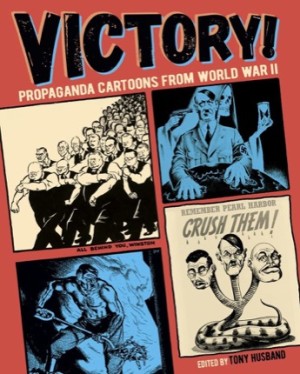
Softcover. London, Sirius, 1st, 2022, Book: Very Good, Dust Jacket: None, Softcover, 192 pages. Award-winning cartoonist Tony Husband tells the story of World War II through a selection of the era's finest political cartoons. Satire is one of the key weapons of war. Forget 'sticks and stones', each country uses cartoons to hit the enemy where it really hurts and to maintain morale on the home front. Each country brought their own unique style and this collection features work from Britain, the USA, Germany, Russia and Japan and features the work of some of World War II's greatest cartoonists including Bill Mauldin, Fougasse, Emett, David Low and Graham Laidler. Clean, bright copy.
Softcover. Santa Monica CA, Rand Corporation, 1st, 1958, Book: Very Good, Dust Jacket: None, Softcover, 265 pages. Ivory paper wraps with toning. Light toning to pages throughout. Clean, unmarked copy. This is a first printing of this important study for the U.S. Air Force by the Rand Corporation, dated August 11, 1958, Rand Report R-326.
Hardcover. NY, Thames and Huson, 1st, 2007, Book: Very Good, Dust Jacket: Very Good, Hardcover, 256 pages. Published to accompany an exhibition at London's Imperial War Museum, this book features more than 250 superb full-color illustrations of hard-hitting propaganda and groundbreaking graphic art. It encompasses iconic images such as Alfred Leete's "Your Country Needs You" as well as additional material drawn from the world of advertising and documentary photographs of posters in situ. Through posters, the author examines the social, political, ethnic, and cultural aspirations of America, Britain, Ireland, Germany, France, the Netherlands, Belgium, Russia, Austria, Hungary, and the Czech Republic. Covering topics as diverse as advertising in World War I, the Bolshevik Revolution, the Spanish Civil War, Germany and Occupied Europe in World War II, anti-nuclear campaigns, and Vietnam, the book is comprehensive and highly analytical, yet accessible. 300 illustrations, 250 in color.
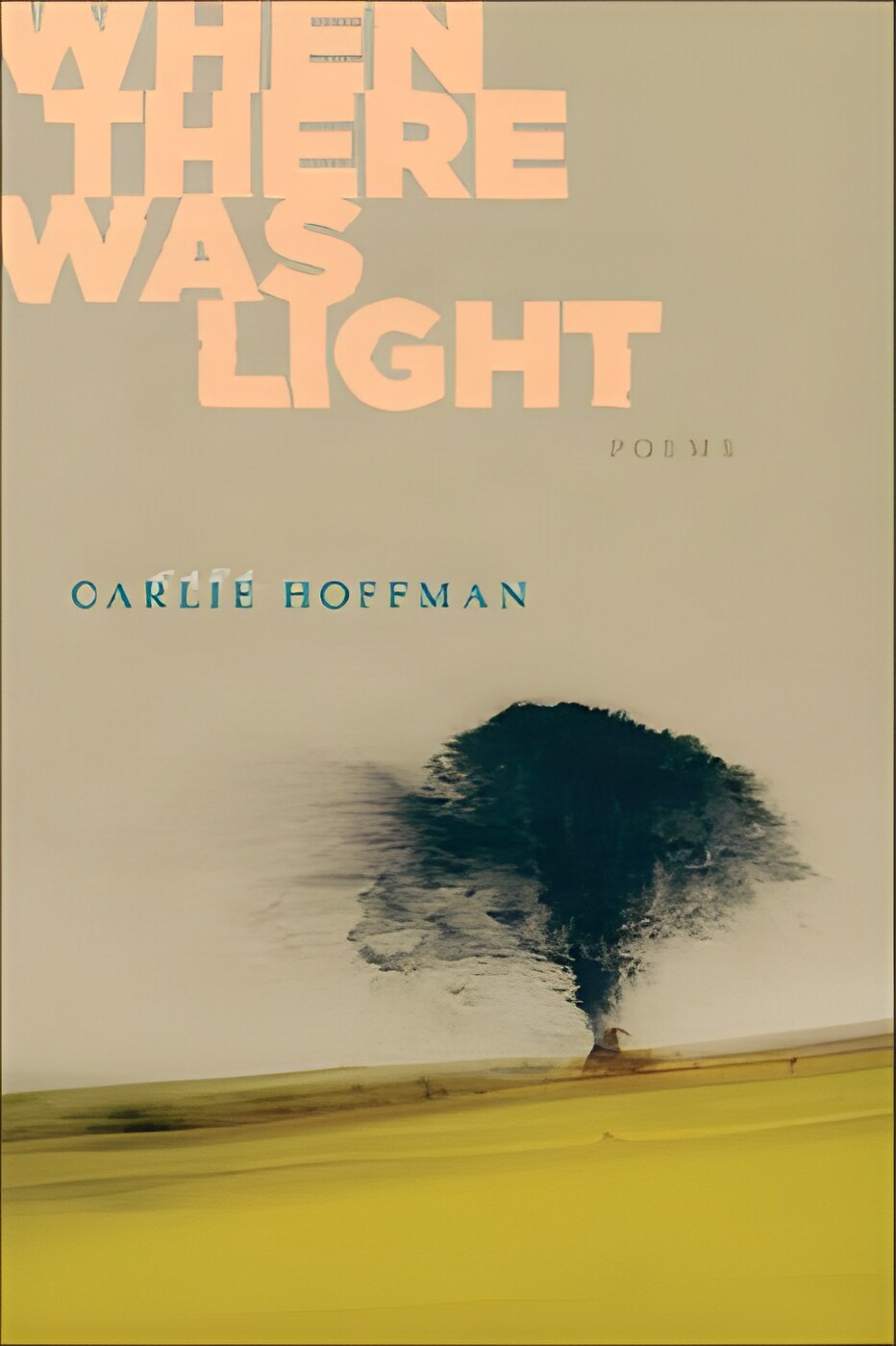
Softcover. NY, Four Way Books, 1st, 2023, Book: Very Good, Dust Jacket: None, Softcover, 66 pages. These poems map out a topography where global movements of diaspora and war live alongside personal reckonings: a house's foreclosure, parents' divorce, the indelible night spent drunk with a best friend "[lying] down inside a chronic row of corn." Here, her father's voice "is the stray dog barking / at the snow, believing the little strawberries grow wilder / against a field." In these pages, she points to Russia and Poland and Germany, saying, "It was / another time. My people / another time. The synagogues burn decades / of new snow." The brilliance of this collection illuminates the relationship between memory and language; "another time" means different, back then, gone and lost to us, and it means over and over, always, again. With this linguistic dexterity and lyrical tenderness, Hoffman's work bridges private and public histories, reminding us of the years cloaked in shadows and the years when there was light. Clean, bright copy.
Hardcover. Lawrence KS, University Press of Kansas , 1st, 2011, Book: Very Good, Dust Jacket: Very Good, Hardcover in a bright dust jacket, 386 pages, b&w illustrations. Inept leadership, inefficient campaigning, and enormous losses would seem to spell military disaster. Yet despite these factors, the Soviet Union won its war against Nazi Germany thanks to what Roger Reese calls its military effectiveness: its ability to put troops in the field even after previous forces had been decimated. Reese probes the human dimension of the Red Army in World War II through a close analysis of soldiers' experiences and attitudes concerning mobilization, motivation, and morale. In doing so, he illuminates the Soviets' remarkable ability to recruit and retain soldiers, revealing why so many were willing to fight in the service of a repressive regime--and how that service was crucial to the army's military effectiveness. He examines the various forms of voluntarism and motivations to serve-including the influences of patriotism and Soviet ideology-and shows that many fought simply out of loyalty to the idea of historic Russia and hatred for the invading Germans. He also considers the role of political officers within the ranks, the importance of commanders who could inspire their troops, the bonds of allegiance forged within small units, and persistent fears of Stalin's secret police. Clean copy.
Hardcover. London, Cambridge University Press, 1st, 2010, Book: Very Good, Dust Jacket: Very Good, Hardcover in a bright, unclipped dust jacket. This revisionist study of Allied diplomacy from 1941 to 1946 challenges Americocentric views of the period and highlights Europe's neglected role. Fraser J. Harbutt, drawing on international sources, shows that in planning for the future Churchill, Roosevelt, Stalin, and others self-consciously operated into 1945, not on "East/West" lines but within a "Europe/America" political framework characterized by the plausible prospect of Anglo-Russian collaboration and persisting American detachment. Harbutt then explains the destabilizing transformation around the time of the pivotal Yalta conference of February 1945, when a sudden series of provocative initiatives, manipulations, and miscues interacted with events to produce the breakdown of European solidarity and the Anglo-Soviet nexus, an evolving Anglo-American alignment, and new tensions that led finally to the Cold War. This fresh perspective, stressing structural, geopolitical, and traditional impulses and constraints, raises important new questions about the enduringly controversial transition from World War II to a cold war that no statesman wanted. Clean copy.

 "The Onslaught: The German Drive to Stalingrad : Documented in 150 Unpublished Colour Photographs by: Heinrich Von Einsiedel")

 "Ukrainian and Russian Notebooks, The: Life and Death under Soviet Ruleby: Igort (Igor Tuvert)")
 "War and the Soviet Union: Nuclear Weapons and the Revolution in Soviet Military and Political Thinking by: H.S. Dinerstein")
 "War Posters: Weapons of Mass Communicationby: James Aulich")
 "Why Stalin's Soldiers Fought: the Red Army's Military Effectiveness in World War IIby: Roger R. Reese")
 "Yalta 1945: Europe and America at the Crossroadsby: Fraser J. Harbutt")