Hardcover. NY, Four Winds Press, 1st, 1986, Book: Very Good, Dust Jacket: Very Good, 32 pages. hardcover with dust jacket. Illust. in color by Stanley. Dust jacket with chip, light soil to rear. Tight copy.
Hardcover. Manchester UK, Manchester University Press, 1st, 1985, Book: Very Good, Dust Jacket: Very Good, Hardcover in a bright, unclipped dust jacket. 312 pages. Clean, tight copy.
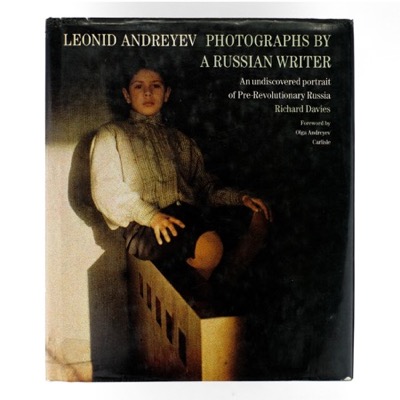
Hardcover. London, Thames and Hudson, 1st, 1989, Book: Very Good, Dust Jacket: Very Good, Hardcover in a bright dust jacket, green cloth, gilt lettering, 144 pages. Discovered in Paris in 1987, these 80 color and 30 b&w photographs, taken about 1910-14, are artistic studies of the expressionist Russian writer, his family and friends, his home, and the countryside around St. Petersburg. Includes a biographical essay and a review of the Lumiere autochrome photographic process. Mild wear to top of dj spine, otherwise a clean, tight copy.
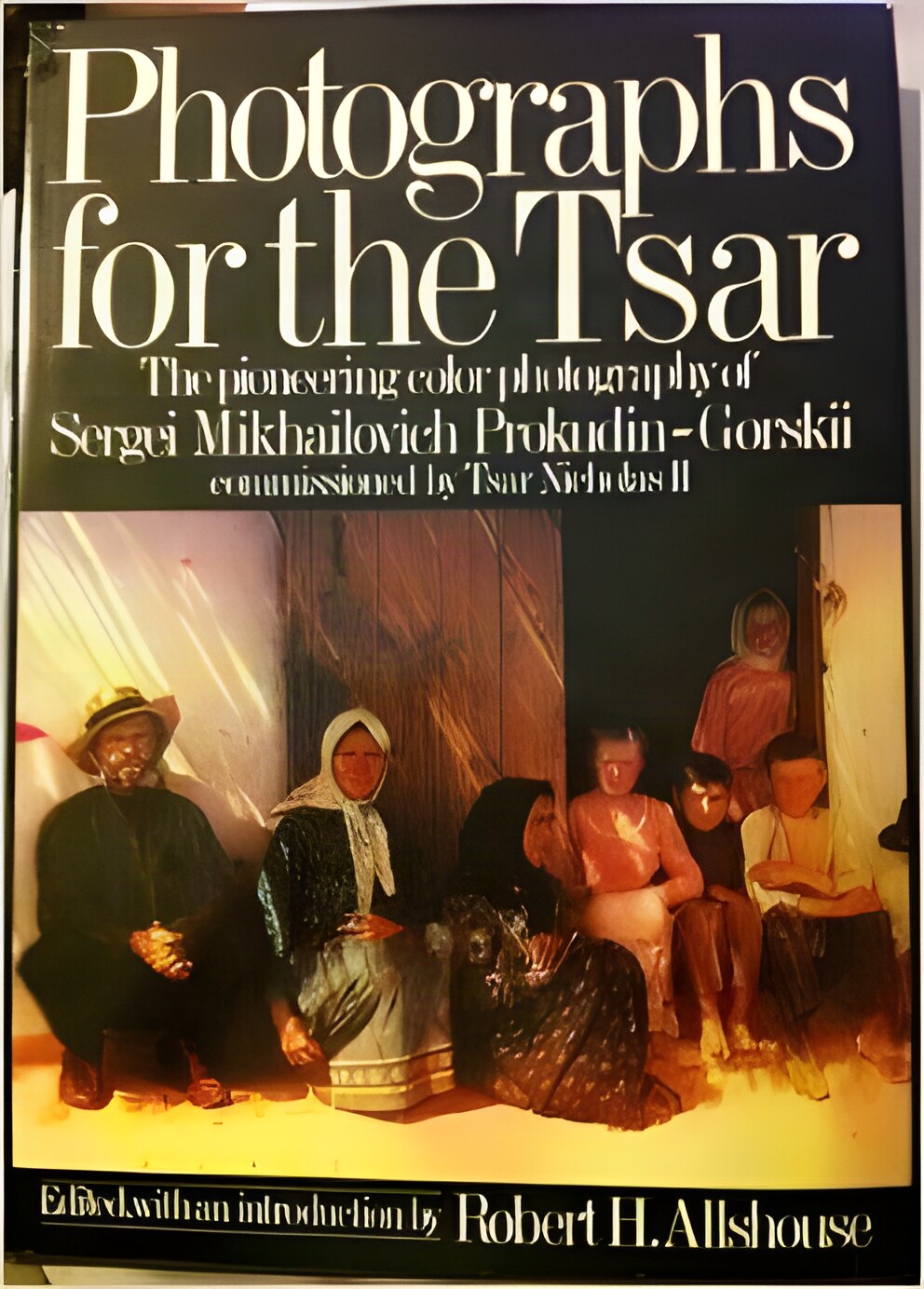
Hardcover. Dial Press, 1st, 1980, Book: Very Good, Dust Jacket: Very Good, 216 pages. Hardcover. Color photographs. Clean, unmarked copy in excellent condition with minor wear to dust jacket. Sergei Prokudin-Gorskii was a chemist and photographer commissioned by Tzar Nicholas II to photograph as much of the Russian Empre as possible in color. Prokudin-Gorskii used three color separations for his photos and as a result some pictures are astoundingly sharp and brilliantly colored, and some the colors are out of register slightly. That's irrelevant, because the photos are spectacular and show the Russian Empire from end to end on the eve of its collapse.
Hardcover. Moscow, Sovetskaya Rossia Publishers, 1st, 1988, Book: Very Good, Dust Jacket: None, Hardcover, laminated illustrated boards with marbled design, black spine and silver lettering. Includes numerous color and b/w illustrations, 254 pages. TEXT IN RUSSIAN & ENGLISH. Light edgewear to covers, clean copy.
Hardcover. NY, William Edwin Rudge, 1st, 1930, Book: Good, Dust Jacket: None, Hardcover, red cloth, 46 pages + 51 b&w plates (color frontispiece). Russian artist and diplomatic secretary Paul or Pavel Svinin (1787-1839) toured the northeastern United States in the early 1800s. Here are excerpts of his notes, details about the time and his trip, and 51 BW reproductions of landscapes he rendered along the way. Most of the paintings show scenes from Pennsylvania, New York, New Jersey, Virginia and Maryland. Of interest to both cultural and art historians. With an introduction by R.T.H. Halsey. One of 1000 copies. Ex-lib with stamping, residue to endpapers, gilt lettering on spine faded, otherwise clean.
Hardcover. New York, McGraw-Hill, 2nd, 1986, Book: Very Good, Dust Jacket: Very Good, 298 pages. Hardcover with dust jacket. Clean, unmarked copy with only minor wear to dust jacket. Black and white pictures throughout. ames Oberg (Red Star in Orbit, Mission to Mars, etc.) is a spaceflight engineer at Houston Mission Control; Alcestis Oberg is the author of Spacefarers of the 80s and 90s. Here they offer an engrossing and vivid account of what life is like in an earth-orbiting spacecraft. Because relatively few American space-travelers have published tales of their experiences, the Obergs lean heavily on the diaries and memoirspublished in Russia and little known hereof pioneering Soviet astronauts, notably veterans of long-term Salyut missions like Ryumin and Berezovoy. Here is the human side of life in orbit. Few readers can fail to be grippedand occasionally amusedby revelations of the immediate problems (how astronauts contend with toilets, hygiene, sleeping), their technical perils (e.g., air contamination) and the psychological hazards they face, from crewmate incompatibility to depression and homesickness for Earth. Photos.
Hardcover. Washington D.C., Smithsonian Institution Press , reprint, Book: Very Good, Dust Jacket: Very Good, 171 pages. Hardcover with dust jacket. Extensive b&w photographs throughout. Silver gilt titles on spine. Clean, unmarked copy with only minor wear to dust jacket. In September 1939, the German invasion of Poland propelled the world into war. By the spring of 1946, Poland was beginning to recover from five years of cataclysmic destruction. Liberated from the occupation of the Third Reich, the nation celebrated a peace already overshadowed by the emerging Cold War.John Vachon was in Poland to witness this transformation of almost mythic proportions. Assigned to cover United Nations relief efforts, this American photographer documented in images and letters a nation at the crossroads of the postwar East and West. Taken with a keen yet sympathetic eye, Vachon's photographs, most of them never before published, reveal the destitution and unfounded optimism of Poles, many of them returning in boxcars from German labor camps and Siberian exile, ready to reclaim their burned-out cities and farms left fallow by war. Vachon's letters home to his wife provide a rare context for the images. He writes of the luxuries enjoyed by the foreign corps amid Warsaw's rubble, the equal measures of hospitality and anti-Semitism among ordinary Poles, and of the anti-Soviet sentiment in the countryside, where "they love Russian songs, but always apologize when they sing one." In one account of a village fire, he conveys the often conflicting emotions of the photojournalist, documenting scenes of suffering he feels powerless to assuage.
Hardcover. New York, Harry N. Abrams , 1st US , 1990, Book: Fine, Dust Jacket: Fine, Hardcover, 396 pages. Co-written with Natalia Adaskina, translated from Russian by Marian Schwartz. Originally published in French as "Lioubov Popova" by Philippe Sers Editieur, Paris, 1989. 433 illustrations, 130 full-color plates. Blue cloth cover with red lettering on spine. Dust jacket like new. Pristine inside and out.
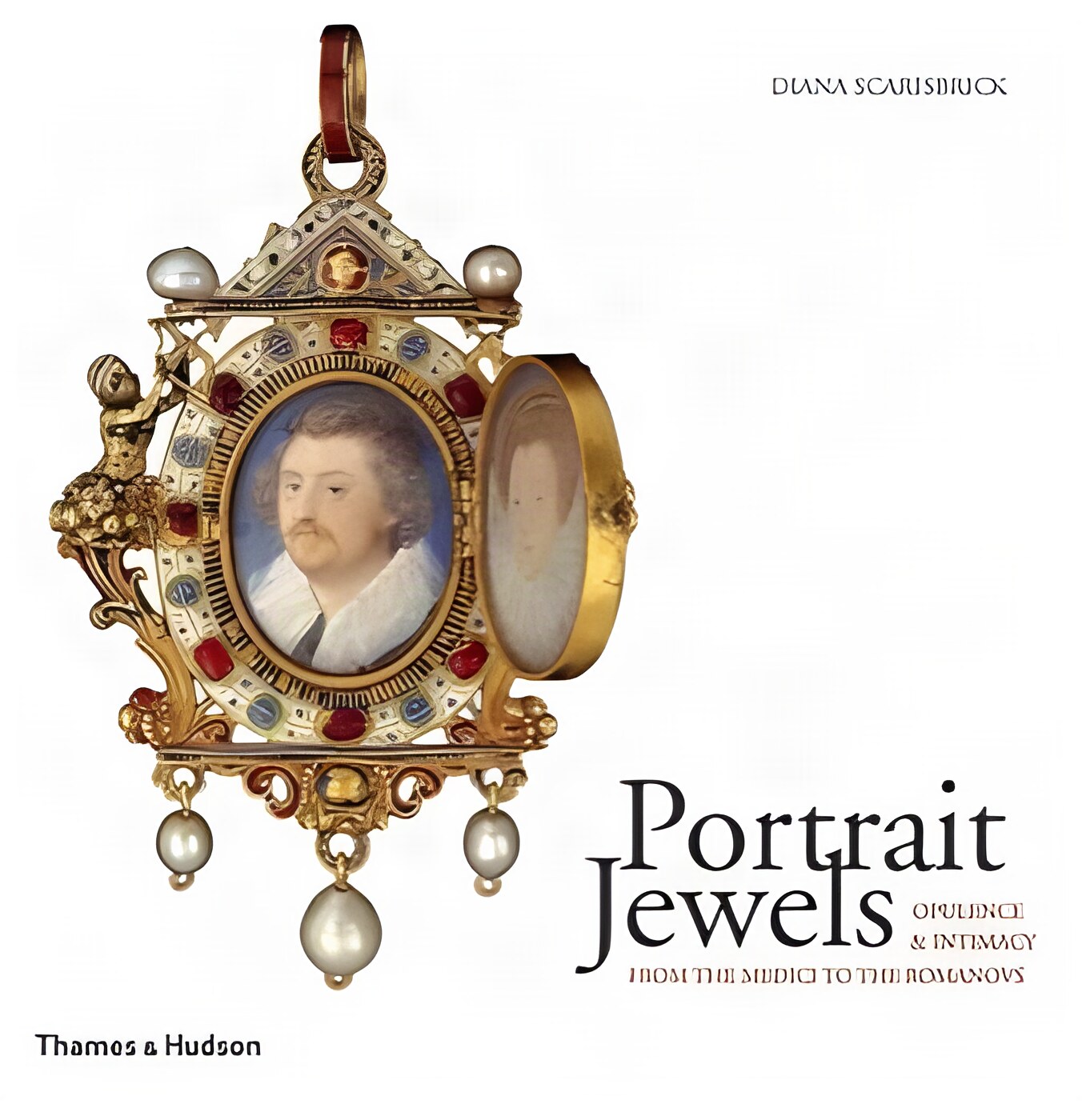
Hardcover. NY, Thames & Hudson, 1st, 2011, Book: Very Good, Dust Jacket: Very Good, Hardcover in a bright dust jacket, 352 pages, color illustrations. While cameo and intaglio portraits, other forms of deluxe jewelry, medals, and miniatures featuring famous personalities have been surveyed, a historian and curator of jewelry and engraved gems, notes that their settings have surprisingly not attracted as much attention. Covering periods from 16th to early 17th centuries Renaissance Europe to the Napoleonic to World War I eras, the author describes the pieces and names their designers in historical and personal contexts. A chapter is devoted to the portrait diamond from the Medici dynasty to the fall of the Romanovs. Clean copy. DOMESTIC SHIPPING ONLY.
Hardcover. New Haven CT, Yale University Press, 1st, 2015, Book: Very Good, Dust Jacket: None, Hardcover, 238 pages. Like new in publisher's shrink-wrap. Covering the period from the Revolution to the beginning of World War II, this book considers Soviet avant-garde photography and film in the context of political history and culture. Three essays trace this generation of artists, their experiments with new media, and their pursuit of a new political order. A wealth of stunning photographs, film stills, and film posters, as well as magazine and book designs, demonstrate that their output encompassed a spectacular range of style, content, and perspective, and an extraordinary sense of the power of the photograph to change the world.
Hardcover. Burlington, VT, Lund Humphries, Reprint, 2008, Book: Very Good, Dust Jacket: None, 208 pages. Hardcover with no dust jacket. Very clean, unmarked copy with only minor edgewear. Color illustrations throughout. Tight copy. Power to the People presents the Israel Museum's major collection of propaganda posters from the early years of the Soviet Union, documenting one of the most interesting chapters in twentieth-century graphic design. Inspired by the traditional vernacular of political cartoons, by the lubok wood-cut technique of Russian folk art, and by the ideas of Futurism, the poster artists employed a new visual language to explain the results of the Revolution to the Soviet people. The Israel Museum's collection of Soviet propaganda posters is the largest museum collection of its kind outside Russia. This book illustrates the entire collection for the first time.
Hardcover. Brewster MA, Paraclete Press, 1st, 2015, Book: Very Good, Dust Jacket: Very Good, Hardcover, 112 pages. This volume marks the first translation of these prayer-poems into English. Originally written in 1899, Rilke wrote them upon returning to Germany from his first trip to Russia. His experience of the East shaped him profoundly. He found himself entranced by Orthodox churches and monasteries, above all by the icons that seemed to him like flames glowing in dark spaces. He intended these poems as icons of sorts, gestures that could illumine a way for seekers in the darkness. As Rilke here writes, "I love the dark hours of my being, for they deepen my senses." Translated by Mark S. Burrows.
Hardcover. Cambridge, Cambridge University Press, 1st UK, 1995, Book: Very Good, Dust Jacket: Very Good, Hardcover in a bright, unclipped dust jacket, 269 pages. Clean, bright copy. This is the first scholarly account by a Western historian of the Time of Troubles, the period of civil war and foreign invasion in early-seventeenth-century Russia. The author focuses on the various pretenders or royal imposters who appeared at this time; she traces their careers and offers explanations for their success. Her analysis of the phenomenon of pretense illuminates popular perceptions of the monarchy in early modern Russia, and demonstrates how social protest could take the form of support for imposters claiming to be the "true tsar".
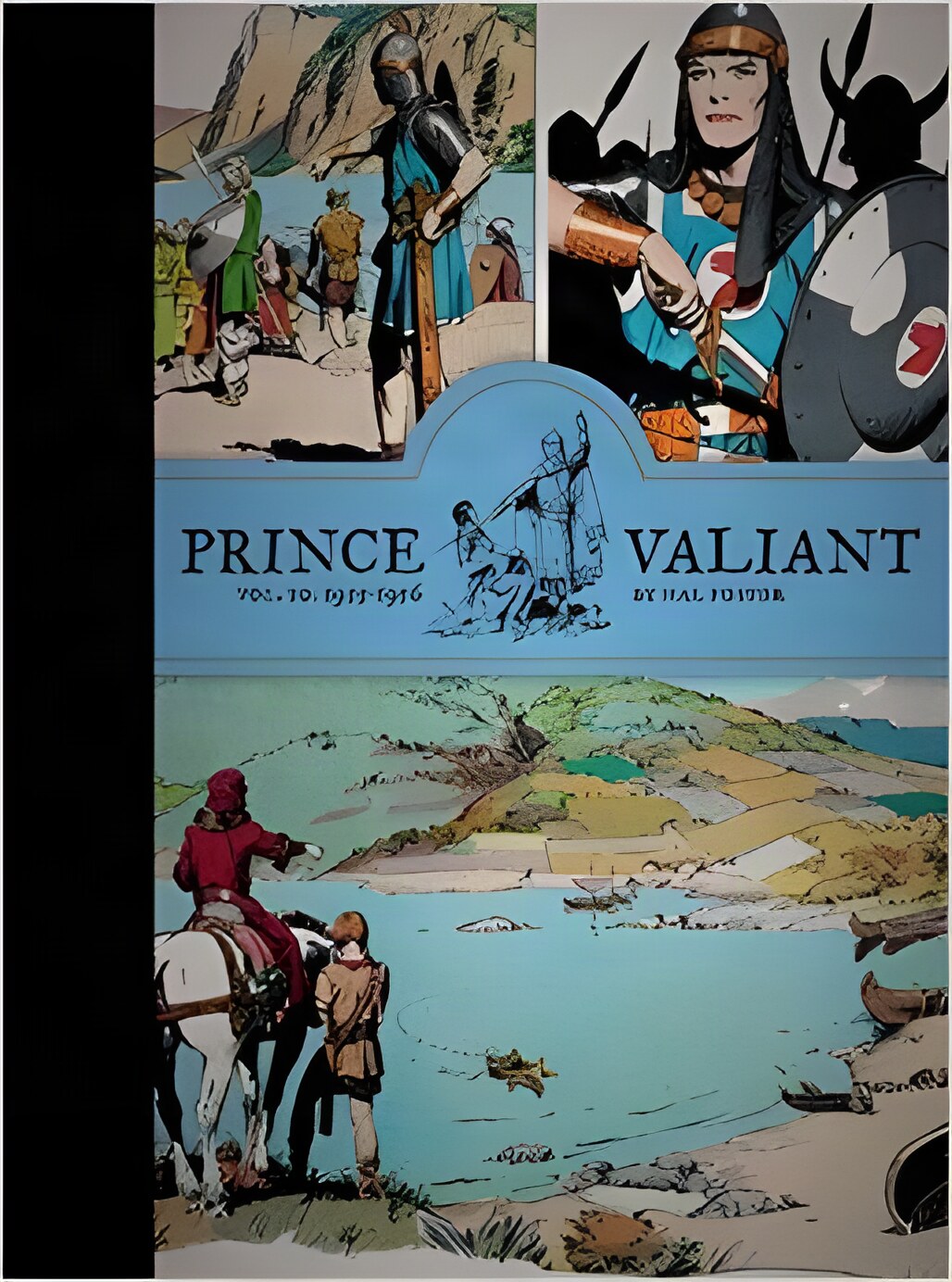
Hardcover. Seattle, Fantagraphics, 1st, 2015, Book: Very Good, Dust Jacket: None, Volume 10. Hardcover, 112 pages. Illustrated throughout in color. Clean, tight copy. This tenth volume finds our band of heroes making their way back to the Kingdom of Thule by way of Constantinople and Eastern Russia. Soon they are attacked by a tribe of barbarians who kidnap Aleta for the great Dragada Khan who wants to make her one of his wives. After nearly being killed in battle, Valiant returns to his homeland only to find the threat of hunger hovers over Thule. As Val explores new ways of feeding the kingdom's growing populace, raiders threaten the lives of his family and friends. The volume ends with Val's return to Camelot, a tournament of champions, and the threat of new treachery in Cornwall. This volume also includes an introduction by legendary comics artist Timothy Truman, and a special gallery containing more of Hal Foster's incredible Mountie paintings annotated by comics historian Brian M. Kane.
Hardcover. Berkeley CA, Counterpoint, 2nd pr., 2014, Book: Very Good, Dust Jacket: Very Good, Hardcover in a bright dustjacket, 161 pages. An unsuccessful writer and an inveterate alcoholic, Boris Alikhanov has recently divorced his wife Tatyana, and he is running out of money. The prospect of a summer job as a tour guide at the Pushkin Hills Preserve offers him hope of regaining some balance in life as his wife makes plans to emigrate to the West with their daughter Masha, but during Alikhanov's stay in the rural estate of Mikhaylovskoye, his life continues to unravel. Populated with unforgettable characters?including Alikhanov's fellow guides Mitrofanov and Pototsky, and the KGB officer Belyaev? Pushkin Hills ranks among Dovlatov's renowned works The Suitcase and The Zone as his most personal and poignant portrayal of the Russian attitude towards life and art.
Softcover. NY, Oxford University Press, reprint, 1992, Book: Very Good, Dust Jacket: None, Softcover in pictorial wraps, 184 pages, coloe illustrations. From before the days of Moses up through the 1960s, slavery was a fact of life in the Middle East. Pagans, Jews, Christians, and Muslims bought and sold at the slave markets for millennia, trading the human plunder of wars and slave raids that reached from the Russian steppes to the African jungles. But if the Middle East was one of the last regions to renounce slavery, how do we account for its--and especially Islam's--image of racial harmony? How did these long years of slavery affect racial relations? In Race and Slavery in the Middle East, Bernard Lewis explores these questions and others, examining the history of slavery in law, social thought, and practice over the last two millennia. Bright, clean copy.
Hardcover. NY, Oxford University Press, 1st, 1998, Book: Very Good, Dust Jacket: Very Good, Hardcover in a bright dust jacket, 234 pages with index. A work of refreshing originality and vivid appeal, Red Arctic tells the story of Stalinist Russia's massive campaign to explore and develop its Northern territories during the 1930s. Author John McCannon recounts the dramatic stories of the polar expeditions--conducted by foot, ship, and plane--that were the pride of Stalinist Russia, in order to expose the reality behind them: chaotic blunders, bureaucratic competition, and the eventual rise of the Gulag as the dominant force in the North. Red Arctic also traces the development of the polar-based popular culture of the decade, making use of memoirs, films, radio broadcasts, children's books, and cultural ephemera ranging from placards to postage stamps to show how Russia's "Arctic Myth" became an integral part of the overall socialist-realist aesthetic that animated Stalinist culture throughout the 1930s. Clean copy.
Hardcover. NY, Dodd Mead, 1st, 1958, Book: Very Good, Dust Jacket: Good, Hardcover in a worn, chipped dust jacket, 84 pages with index. B&w photos. Ex-lib with minimal signs, light reside to rear endpapers. Beryl Grey was the first Western ballerina to dance in Moscow's Bolshoi Theatre and she tells of her experiences on tour. Clean internally.
Hardcover. Lannoo Publishers , 1st, 2010-06-16, Book: Very Good, Dust Jacket: None, Like new in publishers shrink-wrap. 144 pages, color photography of the USSR. Text in Dutch and English.
Hardcover. Princeton, N.J., Kingston Press, Incorporated, The, 1st, 1984, Book: Very Good, Dust Jacket: Very Good, SIGNED BY AUTHOR. 227 pages. Light foxing to top and fore-edge. Minor wear to dust jacket; spine slightly faded. Else a very clean, tight copy.
Hardcover. Princeton NJ, Kingston Press, 1st, 1984, Book: Very Good, Dust Jacket: Very Good, Hardcover, 227 pages, bibliography and index. A scarce scholarly history. Slight sunning to dust jacket spine, otherwise like new, clean and tight.
Softcover. University Press of Maryland, 2000, Softcover, 306 pages. Memoir (translated from the German by Henny Wenkart) of a Jewish woman in 19th-century Russia, with scholarly introduction and analysis. Pauline Wengeroff's memoir tells what it was like to be a Jewish girl and a Jewish woman in 19th-century Russia, as foundations of faith and tradition eroded around her. Clean copy.
Hardcover. Chicago, Art Institute of Chicago, 1st, 2017, Book: Very Good, Hardcover,324 pages. Published on the centenary of the Russian Revolution, this landmark book gathers information from the forefront of current research in early Soviet art, providing a new understanding of where art was presented, who saw it, and how the images incorporated and conveyed Soviet values. More than 350 works are grouped into areas of critical importance for the production, reception, and circulation of early Soviet art: battlegrounds, schools, the press, theaters, homes and storefronts, factories, festivals, and exhibitions. Paintings by El Lissitzky and Liubov Popova are joined by sculptures, costumes and textiles, decorative arts, architectural models, books, magazines, films, and more. Also included are rare and important artifacts, among them a selection of illustrated children's notes by Joseph Stalin's daughter, Svetlana Allilueva, as well as reproductions of key exhibition spaces such as the legendary Obmokhu (Constructivist) exhibition in 1921; Aleksandr Rodchenko's 'Workers' Club in 1925; and a Radio-Orator kiosk for live, projected, and printed propaganda designed by Gustav Klutsis in 1922. Bountifully illustrated, this book offers an unprecedented, cross-disciplinary analysis of two momentous decades of Soviet visual culture.

 "Peter the Greatby: Stanley, Diane")
 "Petrashevtsy, The: - A Study of the Russian Revolutionaries of 1848by: Seddon, J. H.")


 "Picturesque United States of America 1811 1812 1813 being a Memoir on Paul Svinin Russian Diplimatic Officer Artist and Author Containing Copious Excerpts from His Account of His Travels in America with Fifty two Reproductions of Wat")
 "Pioneering Space: Living on the Next Frontierby: Oberg, James E. and Alcestis R.")

 "Popovaby: Sarabianov, Dmitri V. and Natalia Adaskina")
 "Power of Pictures, The: Early Soviet Photography, Early Soviet Filmby: Goodman, Susan Tumarkin")
 "Power to the People: Early Soviet Propaganda Posters in The Israel Museum, Jerusalemby: Ward, Alex")
 "Prayers of a Young Poetby: Rainer Maria Rilke/ Mark S. Burrows (trensl.)")
 "Pretenders and Popular Monarchism in Early Modern Russia - The False Tsars of the Time of Troublesby: Perrie, Maureen")




 "Red Journeyby: Hannes, Nick")

 "Religious Revolt in the XVIIth Century: The Schism of the Russian Churchby: Lupinin, Nickolas")
 "Rememberings: The World of a Russian-Jewish Woman in the Nineteenth Century by: Pauline Wengeroff")
 "Revoliutsiia! Demonstratsiia!: Soviet Art Put to the Testby: Matthew S. Witkovsky, Devin Fore, et al.")