Hardcover. NY, Knopf, 2nd pr., 1968, Book: Very Good, Dust Jacket: Very Good, Hardcover in a price-clipped dust jacket with light fading to the spine, 367 pages. Translated from the Russian by H.C. Stevens. Continuation the story begun in Virgin Soil Upturned (1935) of a collective farm organized under the supervision of the Communist Party in a small Don village. Clean copy.
Hardcover. San Francisco, McSweeney's Publishing, reprint, 2011, Book: Very Good, Dust Jacket: Very Good, Hardcover in a bright dust jacket that unfolds to become a poster. A unique collaboration between two artists- one Russian, one American- joined forces to create this marvelous picture book. In the story, a single mouse runs around shouting "HERE COMES THE CAT!" again and again--in both English and Russian--until everybody he knows is worried sick. Just when the tension can't get any tenser, the cat arrives... with a giant wheel of cheese! A big party breaks out... Originally published in 1989. Clean copy. INSCRIBED BY CO-ARTIST ASCH on the front fly leaf.
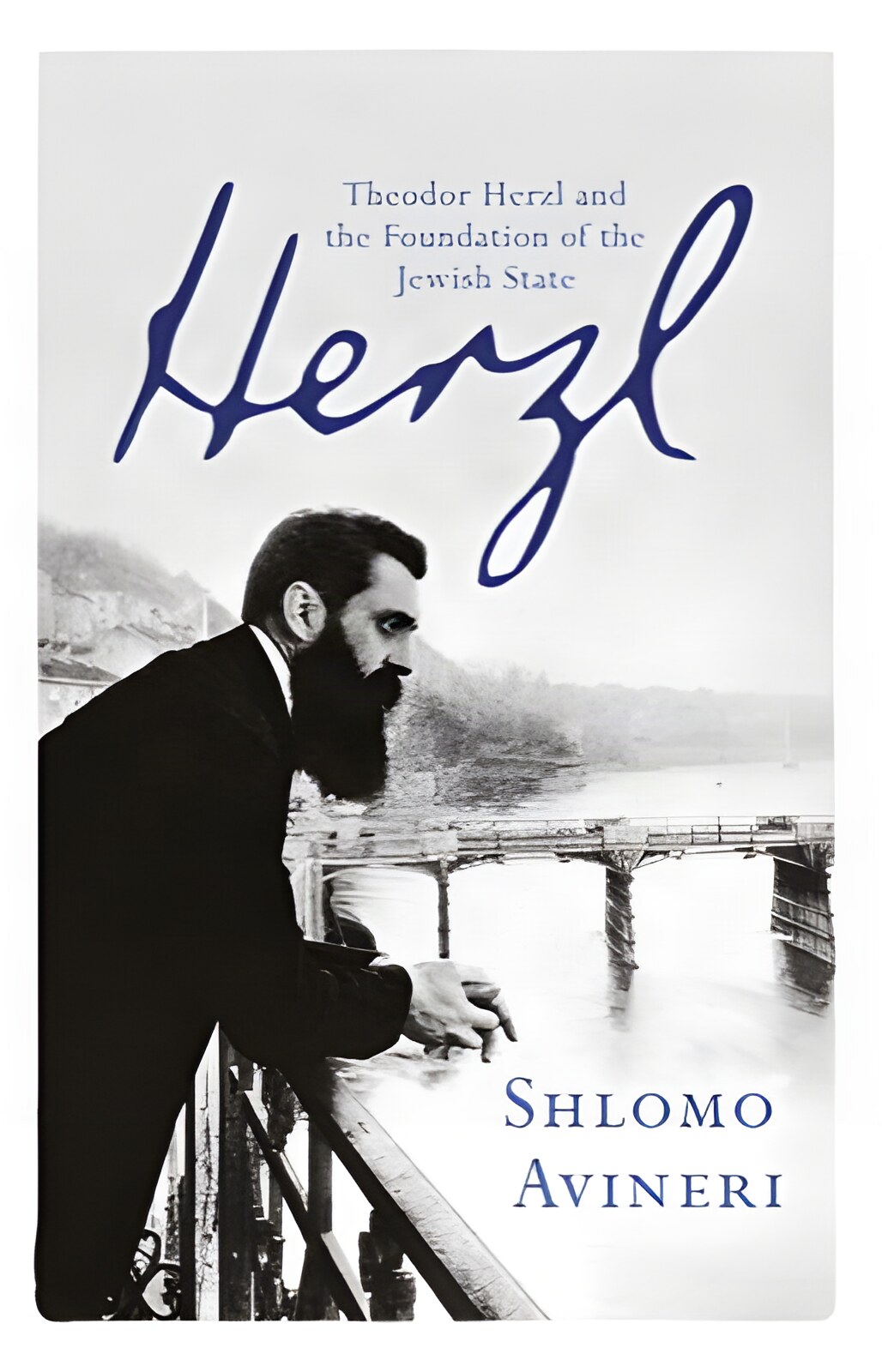
Hardcover. London, Weidenfeld & Nicolson, 1st UK, 2013, Book: Very Good, Dust Jacket: Very Good, Hardcover in a bright, unclipped dust jacket. Drawing extensively on his diaries as well as his published works, this intellectual biographical follows Herzl's transformation from a private person into the founder and leader of a political movement which made the quest for a Jewish state into a player in international politics. Contrary to the conventional view which saw the Dreyfus affair as the trigger for Herzl's loss of belief in the promise of Jewish emancipation, Avineri shows how it was the political crisis of the Austro-Hungarian Habsburg Empire, torn apart by contending national movements, which convinced Herzl of the need for a Jewish polity. In response to the wide resonance for his 1896 The Jewish State, Herzl convened the first Zionist Congress in Basel in 1897, which established the World Zionist Organization with its representative and elected institutions; this in turn became the foundation for Israel's democratic political system. In his efforts to gain international support for a Jewish state, Herzl met with the Ottoman Sultan, the German Emperor Wilhelm II, Pope Pius X, British, Russian and German ministers, as well as an enormous number of other government and public opinion leaders of most European countries. By the time of his early death in 1904 at the age of 44, Herzl succeeded in putting Zionism on the map of world politics, no longer an esoteric idea held by a small group of Jewish intellectuals in Eastern Europe. Clean copy.
Hardcover. New Delhi, Calcutta, 1st, 1977, Book: Very Good, Dust Jacket: Good, Hardcover, 485 pages. Underlining in brown felt tip on pages 129-133. Otherwise clean, tight copy. Dust jacket shows standard wear with sunfaded spine.
Hardcover. London, Jonathan Cape, 1st, 2006, Book: Very Good, Dust Jacket: Very Good, Hardcover, 198 pages, like new in a bright dust jacket. SIGNED BY AMIS on title page. With The House of Meetings, Martin Amis may finally have written the novel his critics thought would never come. By taming his signature (and polarizing) stylistic high-wire act, Amis has crafted a sober tale of love and cynicism against the grim curtain of Stalin's Russia. The book's anonymous narrator--a Red Army veteran and unapologetic war criminal--and his passive, poetic half-brother, Lev, become pinned in a politically dangerous love triangle with the exotic Zoya, though their tactics (and intentions) are as divergent as their personalities. Swept up in the wave of Stalin's paranoid purges, the brothers are sent independently to Norlag, a Siberian internment camp where their respective fates are cast through their contrasting reactions to the depravity of the prison. Zoya and Lev share a night in "The House of Meetings," a room provided for conjugal visits with the prisoners, and the events of that night reverberate through the decades, the details of the liaison remaining concealed until the story's devastating denouement.
Hardcover. Boulder CO, Vernissage Press, 1st, 2005, Book: Very Good, Dust Jacket: Very Good, Hardcover in a bright dust jacket. Color illustrations by Natasha Voronina. This Christmas tale broadens a child's understanding of another culture as it introduces a few words of Russian. It is a story of self-discovery while it introduces readers (parents, as well as children) to some of the lore and language of a far-away country.
Hardcover. NY, Penguin Press, 1st, 2023, Book: Very Good, Dust Jacket: Very Good, Hardcover in a bright, unclipped dust jacket. Elena Kostyuchenko's unrelenting attempt to document her country as experienced by those whom it systematically and brutally erases: village girls recruited into sex work, queer people in the outer provinces, patients and doctors at a Ukrainian maternity ward, and reporters like herself. Here is Russia as it is, not as we imagine it. The result is a singular portrait of a nation, and of a young woman who refuses to be silenced. In March 2022, as a correspondent for Russia's last free press, Novaya Gazeta, Kostyuchenko crossed the border into Ukraine to cover the war. It was her mission to ensure that Russians witnessed the horrors Putin was committing in their name. She filed her pieces knowing that should she return home, she would likely be prosecuted and sentenced to up to fifteen years in prison. Yet, driven by the conviction that the greatest form of love and patriotism is criticism, she continues to write. I Love Russia stitches together reportage from the past fifteen years with personal essays, assembling a kaleidoscopic narrative that Kostyuchenko understands may be the last work from her homeland that shell publish for a long time, perhaps ever. It exposes the inner workings of an entire nation as it descends into fascism and, inevitably, war. She writes because the threat of Putin's Russia extends beyond herself, beyond Crimea, and beyond Ukraine. Clean copy.
Hardcover. NY, Clarion Books, 1st, 1995, Book: Very Good, Dust Jacket: Very Good, Hardcover in a bright, unclipped dust jacket. A young Jewish girl from a middle-class Russian family recalls the events of her childhood, both good and bad, in a small village just before the Revolution of 1917. Though classed as fiction, this reads more like a vivid memoir of the author's childhood. B&w drawings by Gennady Schikarioff.
NY, Simon & Schuster, reprint, 1935, Book: Very Good, Dust Jacket: Good, Hardcover in a worn, chipped dust jacket. 347 pages. The author was the Moscow correspondent for the New York Times starting in 1920 through the rise of Stalin. A first hand account of Russian history. Clean copy.
NY, Holiday House, 1st , 1994, Book: Very Good, Dust Jacket: Very Good, Hardcover in a bright, unclipped dust jacket. Color illustrations by Robert Sauber. Frolya, a talking dove, weaves a beautiful rug for the archer Frol, which leads to a series of exciting adventures for the archer when the wicked czar covets the dove, adventures that lead Frol to the magical Land of I-Know-Not-Where.
Hardcover. Cambridge MA, The MIT Press, 1st, 2005, Book: Very Good, Dust Jacket: Very Good, Hardcover, 326 pages, illustrated in color, b&w. How Constructivist artists in Russia between 1923 and 1925 developed a counterproposal to capitalism's commodity fetish by producing objects meant to be "comrades" in the creation of an egalitarian socialist culture. Very good in a bright dust jacket.
Hardcover. University of Pittsburgh Press, 1st, 2004, Book: Very Good, Dust Jacket: Very Good, Hardcover in dust jacket, 297 pages. James W. Heinzen's work fills a significant gap in the extensive historiography of the New Economic Policy (NEP) . The book studies the organization and staffing of NKZem RSFSR, offers some memorable portraits of its leading figures, especially its head, Alexander Petrovich Smirnov, and delves into the complexity of policy making in this era and the clash of institutional interests that had a major impact on policy. Heinzen makes a convincing case that Smirnov and the specialists in NKZem RSFSR were one of the major sources of ideas and policies for the 'Rightists' within the party leadership. The book is distinguished by its thoroughness, and by its cool and balanced judgment. This study brings out the full complexity of the Bolshevik regime, its dilemmas, and its internal contradictions. Clean copy, light fading to dj spine.
Hardcover. New York, Da Capo Press, 1st, 2017, Book: Very Good, Dust Jacket: Very Good, 327 pages. Hardcover. Gilt title on spine. Dust jacket unclipped. B/w illustrations throughout. In excellent condition, clean inside and out. Remainder mark on bottom edge. Binding tight, looks barely read.
Hardcover. NY, Knopf, 1st, 1992, Book: Very Good, Dust Jacket: Very Good, Hardcover, 600 pages, in a bright, price-clipped dust jacket. In this substantial work, Berberova, a renowned writer who left her homeland along with many compatriots in the wake of the 1917 Revolution, chronicles the travails she encounters in poverty-stricken Russia, poverty-stricken Berlin, and poverty-stricken Paris, where she lived from 1925-1950.
Softcover. NA, NA, 1st, NA, Book: Good, Dust Jacket: None, 51 pages. Softcover. No date or publication information. Library stamp at bottom left corner of front cover. Number stamped on reverse of title page. Text is clean, unmarked. Some light chipping to cover edges. The journal starts in 1848, with a voyage to Glasgow at fifteen years of age, for famine relief. Later voyages took Crockett to Paris, Russia, and Calcutta, Entertaining anecdotes about the passengers, his reading, and his wedding in Boston. The narrative is taken up later at his Golden Wedding. Entertaining and informative. Stapled in green wrappers.
Hardcover. NY, Guggenheim Museum, 1st, 2009, Book: Very Good, Dust Jacket: Very Good, Hardcover in a bright, die-cut dust jacket. 319 pages, 95 color plates and many additional images in color and black and white. Color plates and checklist of 95 works in the exhibition, six essays, a chronology and selected bibliography. This volume presents abstract Russian painter Wassily Kandinsky (1866-1944). It reproduces scores of recently rediscovered paintings that had languished for decades in Soviet museums and in private collections. The author provides new details on Kandinsky's life and art, discussing his little-known experimental stage plays which strove for a synthesis of all the arts, and his friendships with Paul Klee, Arnold Schonberg and composer Thomas de Hartmann. Clean, like new.
Softcover. NY, Guggenheim Museum, 1st, 2003, Book: Very Good, Dust Jacket: None, 267 pages, illustrated throughout in color and b&w. Clean, unmarked copy with only minor wear to wrappers. In 1915, Kazimir Malevich changed the future of modern art when his experiments in painting led the Russian avant-garde into pure abstraction. He called his innovation Suprematism--an art of pure geometric form meant to be universally comprehensible regardless of cultural or ethnic origin. His Suprematist masterpiece, White Square on White (1920-27), continues to inspire artists throughout the world. Focused exclusively on this defining moment in Malevich's career, Kazimir Malevich: Suprematism features nearly 120 paintings, drawings and objects, among them several recently discovered masterworks. In addition, the book includes previously unpublished letters, essays and diaries, along with essays by international scholars, who shed new light on this popular figure and his devotion to the spiritual in art.
Hardcover. New York, The New Press, 1st, 1999, Book: Very Good, Dust Jacket: Very Good, 515 pages. Hardcover. Gray cover boards, gilt title on spine. In nice shape, Dust jacket unclipped, has just a touch of age yellow. Edges show a little soil (shelfwear). Binding very tight, clean inside. Very good condition.
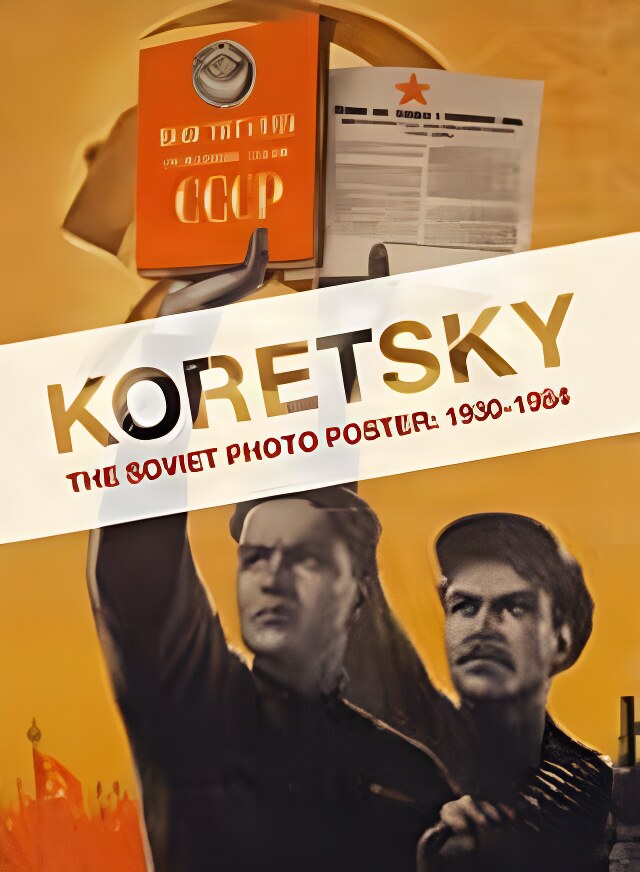
Hardcover. The New Press, 1st, 2012, Book: Very Good, Dust Jacket: Very Good, Hardcover, 448 pages. Viktor Koretsky (1909-1998) was a leading Soviet artist and the acknowledged master of the Soviet photographic poster. With a long and prolific career that spanned the early Stalin era through to the onset of Glasnost, Koretsky produced some of the most memorable images of World War II and the Cold War from the point of view of the USSR. The first comprehensive catalogue of Koretsky's work in any language, this stunning and richly illustrated album provides an essential introduction to the major examples of Koretsky's artistic output, including posters, original designs, and other political graphics. An introductory essay by noted art historian Erika Wolf provides a fascinating general overview of the Soviet political poster, situating Koretsky's work historically, politically, and artistically. The core of the volume is a series of two hundred full-color plates, each accompanied by a concise commentary that clarifies its significance; arranged chronologically, these works of political propaganda art brilliantly record the shifting political and artistic circumstances of the distinctive eras of their production&mdas;the first Five-Year Plan, World War II, Postwar Stalinism, the Thaw, the Brezhnev era, and the twilight of Soviet authoritarian culture. Richly annotated with related primary source quotations, a chronology, and a glossary of Soviet culture, Koretsky is a groundbreaking contribution to our understanding of this influential and little-understood artist.
Hardcover. USSR, Raduga Publishers, reprint, 1983, Book: Very Good, Dust Jacket: None, Hardcover, 25 pages. Translated from the Russian by Irina Zheleznova. Black & white illustrations by Ivan Bilibin. Minor soiling to covers.
Hardcover. Leningrad, Aurora Art Publishers, 1st, 1975, Book: Very Good, Dust Jacket: None, 170 pages. Brown cloth w/ color pictorial label on front. Color pictorial slipcase shows minor edgewear. Text in French, captions next to pictures also in English. Beautiful color plates throughout. Tight, clean, unmarked.
Hardcover. NY, Macmillan, 1st, 1942, Book: Very Good, Dust Jacket: None, Hardcover. Front of dust jacket is cut out and glued onto title-page. Nicely done. Blue cloth covers with mild shelf wear. Translated from Russian by Tatiana Balkoff Drowne. Nice color illustrations by Vera Bock. No markings.
Hardcover. New York , Abrams, 1st, 1991, Book: Very Good, Dust Jacket: Very Good, Hardcover, 135 pages, illustrated throughout in color. Light shelf-wear to dust jacket. Faint foxing to edges, otherwise a clean, tight copy. 100 color plates with 39 black & white illustrations.



 "History of Soviet Russia, Aby: Von Rauch, Georg")
 "History of the Communist Party of USSRby: Schlesinger, Rudolf")
 "House of Meetings (SIGNED COPY)by: Amis, Martin")
 "How The Russian Snow Maiden Helped Santa Clausby: Buyske, Gail")




 "I Write As I Pleaseby: Walter Duranty")
 "I-Know-Not-What, I-Know-Not-Where - A Russian Taleby: Kimmel / Robert Sauber, Eric A.")
 "Imagine No Possessions: The Socialist Objects of Russian Constructivismby: Kiaer, Christina")

 "Island of the Blue Foxes: Disaster and Triumph on the World's Greatest Scientific Expeditionby: Bown, Stephen R.")
 "Italics are Mine, Theby: Berberova Nina; Radley Philippe translator")
 "Journal of Charles B. Crockett, Theby: Crockett, Charles B.")
![Kandinsky by: Barnett, Vivian Endicott; Derouet, Christian; Kandinsky, Wassily; Bashkoff, Tracey [Editor]](https://www.browsingisarousing.com/shop/images/Kandinsky_by_Barnett-Vivian-Endicott-Derouet-Christian-Kandinsky-Wassily-Bashkoff-Tracey-Editor382958-429193.jpg "Kandinsky by: Barnett, Vivian Endicott; Derouet, Christian; Kandinsky, Wassily; Bashkoff, Tracey [Editor]")
 "Kazimir Malevich: Suprematismby: Gurianova, Nina/ Jean-Claude Marcade , Tatyana Mikhienko")
 "Kissinger Transcripts, The: The Top-Secret Talks with Beijing & Moscowby: Burr, William (Ed.)")
 "Lay of Tsar Ivan Vassilyevich, His Young Oprichnik and the Stouthearted Merchant Kalashnikov, Theby: Lermontov, Mikhail")
 "Les Miniatures russes du XIe au XVe siecleby: Popova, O.")


 "Liubov Popovaby: Dabrowski, Magdalena")