Hardcover. NY, Thames & Hudson;, 1st, 2009, Book: Very Good, Dust Jacket: Very Good, Hardcover in a bright, unclipped dust jacket. The best pages from the sensational photo magazine published in France in the 1920s and 1930s. Established in Paris in 1928, VU combined stunning photography with dynamic layouts and first-rate reporting, creating a revolution in journalism and setting the stage for future photo magazines like Life, Stern, and Paris Match. For a weekly magazine that only published 665 issues (21 March 1928 -- 5 June 1940) VU left behind a remarkable legacy as revealed in these pages. There are eight main chapters: Page layouts; Faces; Photo stories; Photomontages; The rise of Hitler; Sensation and spectacle; Image innovations; Covers and each is crammed with spreads and covers from the magazine and lots of them are big enough to read the stories and captions (assuming you know French). VU was created by publisher Lucien Vogel with editor Carlo Rim and art editor Alexander Liberman (who became US Vogue's art editor and later creative director of Conde Nast) as a general interest picture weekly, some years before Life and Look in the US and Picture Post in Britain. They all took advantage of developing technologies of the day like wire transmission of photos and rotogravure printing. VU was the first though to use photos in a very creative way, especially with cover montages created by Liberman, no doubt influenced by Russian magazines of the twenties designed Rodchenko, Tellingater, Lissitzky and Stepanova.
Softcover. New York , Princeton Architectural Press, 1st, 2004, Book: Very Good, Dust Jacket: None, Softcover, 144 pages, color photography. Portraits of survivalists and their bomb shelters. Clean, bright copy. Ross has documented not only the bomb shelters of the United States, but also examples from Russia; England; China; Vietnam; and Switzerland, where every citizen is required by law to have a shelter.
Softcover. Santa Monica CA, Rand Corporation, 1st, 1958, Book: Very Good, Dust Jacket: None, Softcover, 265 pages. Ivory paper wraps with toning. Light toning to pages throughout. Clean, unmarked copy. This is a first printing of this important study for the U.S. Air Force by the Rand Corporation, dated August 11, 1958, Rand Report R-326.
Hardcover. NY, Thames and Huson, 1st, 2007, Book: Very Good, Dust Jacket: Very Good, Hardcover, 256 pages. Published to accompany an exhibition at London's Imperial War Museum, this book features more than 250 superb full-color illustrations of hard-hitting propaganda and groundbreaking graphic art. It encompasses iconic images such as Alfred Leete's "Your Country Needs You" as well as additional material drawn from the world of advertising and documentary photographs of posters in situ. Through posters, the author examines the social, political, ethnic, and cultural aspirations of America, Britain, Ireland, Germany, France, the Netherlands, Belgium, Russia, Austria, Hungary, and the Czech Republic. Covering topics as diverse as advertising in World War I, the Bolshevik Revolution, the Spanish Civil War, Germany and Occupied Europe in World War II, anti-nuclear campaigns, and Vietnam, the book is comprehensive and highly analytical, yet accessible. 300 illustrations, 250 in color.
Hardcover. Boston, Mariner Books, 1st, 2022, Book: Very Good, Dust Jacket: Very Good, Hardcover in a bright dust jacket, 253 pages, b&w illustrations. From a longtime New Yorker staff cartoonist, an evocative family memoir, a love letter to New York City, and a delightful exploration of the origins of creativity--richly interleaved with the author's witty, beloved cartoons. David Sipress, a dreamer and obsessive drawer living with his Upper West Side family in the age of JFK and Sputnik, goes hazy when it comes to the ceaselessly imparted lessons-on-life from his meticulous father and the angsty expectations of his migraine-prone mother. With wry and brilliantly observed prose, Sipress paints his hapless place in the family, from the time he is tricked by his unreliable older sister into rocketing his pet turtle out his twelfth-floor bedroom window to the moment he walks away from a Harvard PhD program in Russian history to begin his life as a professional cartoonist. Sipress's cartoons appear in the story with spot-on precision, inducing delightful Aha! moments in answer to the perennial question aimed at cartoonists: Where do you get your ideas?
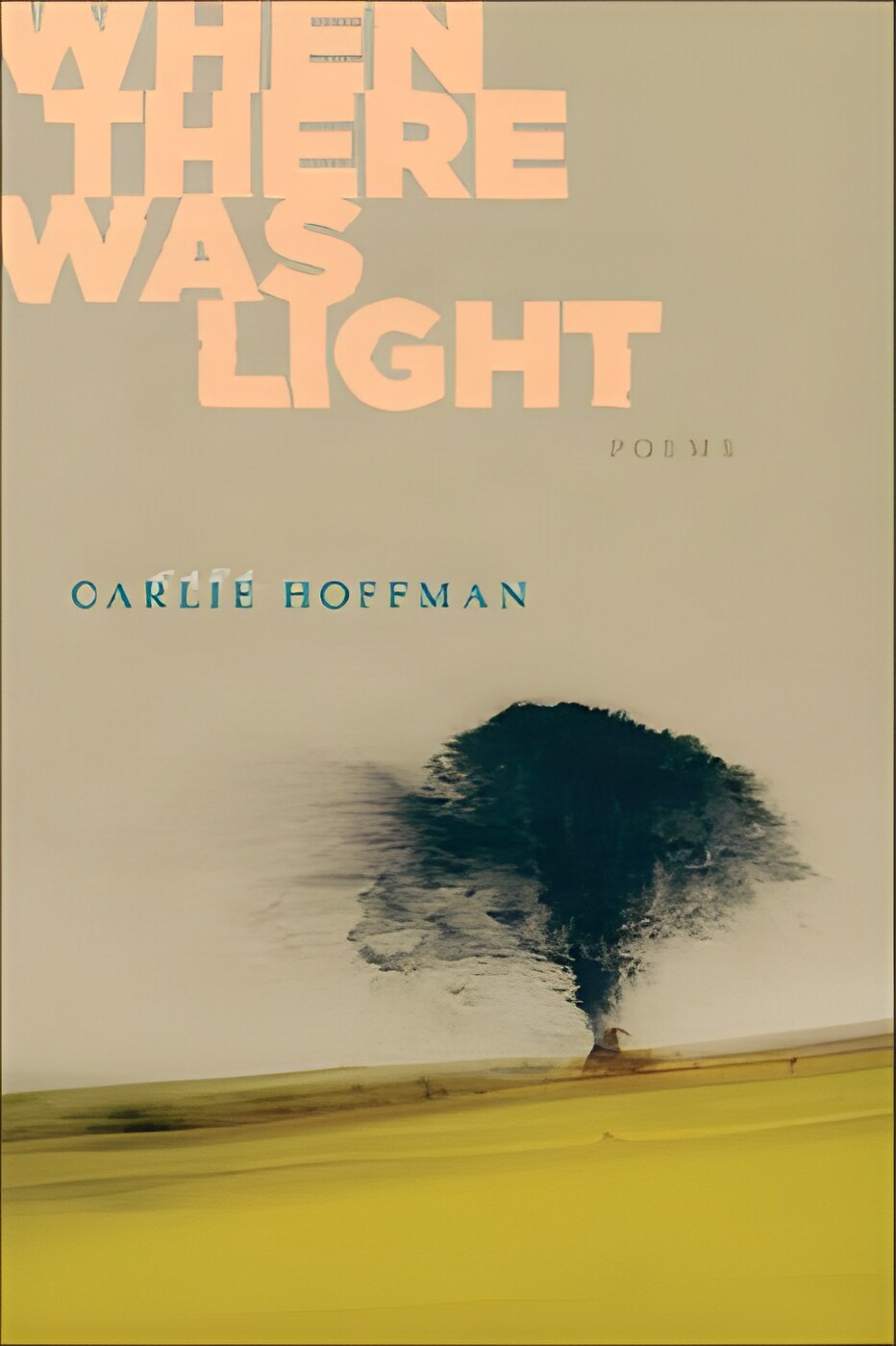
Softcover. NY, Four Way Books, 1st, 2023, Book: Very Good, Dust Jacket: None, Softcover, 66 pages. These poems map out a topography where global movements of diaspora and war live alongside personal reckonings: a house's foreclosure, parents' divorce, the indelible night spent drunk with a best friend "[lying] down inside a chronic row of corn." Here, her father's voice "is the stray dog barking / at the snow, believing the little strawberries grow wilder / against a field." In these pages, she points to Russia and Poland and Germany, saying, "It was / another time. My people / another time. The synagogues burn decades / of new snow." The brilliance of this collection illuminates the relationship between memory and language; "another time" means different, back then, gone and lost to us, and it means over and over, always, again. With this linguistic dexterity and lyrical tenderness, Hoffman's work bridges private and public histories, reminding us of the years cloaked in shadows and the years when there was light. Clean, bright copy.
Hardcover. London, George Allen & Unwin , 1st, 1926, Book: Very Good, Dust Jacket: None, Hardcover. Very good copy in the original title-blocked black cloth with red lettering. 178 pages including index. The Russian revolutionary's thesis on the economic and political decline of England. Clean copy.
Hardcover. Lawrence KS, University Press of Kansas , 1st, 2011, Book: Very Good, Dust Jacket: Very Good, Hardcover in a bright dust jacket, 386 pages, b&w illustrations. Inept leadership, inefficient campaigning, and enormous losses would seem to spell military disaster. Yet despite these factors, the Soviet Union won its war against Nazi Germany thanks to what Roger Reese calls its military effectiveness: its ability to put troops in the field even after previous forces had been decimated. Reese probes the human dimension of the Red Army in World War II through a close analysis of soldiers' experiences and attitudes concerning mobilization, motivation, and morale. In doing so, he illuminates the Soviets' remarkable ability to recruit and retain soldiers, revealing why so many were willing to fight in the service of a repressive regime--and how that service was crucial to the army's military effectiveness. He examines the various forms of voluntarism and motivations to serve-including the influences of patriotism and Soviet ideology-and shows that many fought simply out of loyalty to the idea of historic Russia and hatred for the invading Germans. He also considers the role of political officers within the ranks, the importance of commanders who could inspire their troops, the bonds of allegiance forged within small units, and persistent fears of Stalin's secret police. Clean copy.
Hardcover. London, Cambridge University Press, 1st, 2010, Book: Very Good, Dust Jacket: Very Good, Hardcover in a bright, unclipped dust jacket. This revisionist study of Allied diplomacy from 1941 to 1946 challenges Americocentric views of the period and highlights Europe's neglected role. Fraser J. Harbutt, drawing on international sources, shows that in planning for the future Churchill, Roosevelt, Stalin, and others self-consciously operated into 1945, not on "East/West" lines but within a "Europe/America" political framework characterized by the plausible prospect of Anglo-Russian collaboration and persisting American detachment. Harbutt then explains the destabilizing transformation around the time of the pivotal Yalta conference of February 1945, when a sudden series of provocative initiatives, manipulations, and miscues interacted with events to produce the breakdown of European solidarity and the Anglo-Soviet nexus, an evolving Anglo-American alignment, and new tensions that led finally to the Cold War. This fresh perspective, stressing structural, geopolitical, and traditional impulses and constraints, raises important new questions about the enduringly controversial transition from World War II to a cold war that no statesman wanted. Clean copy.
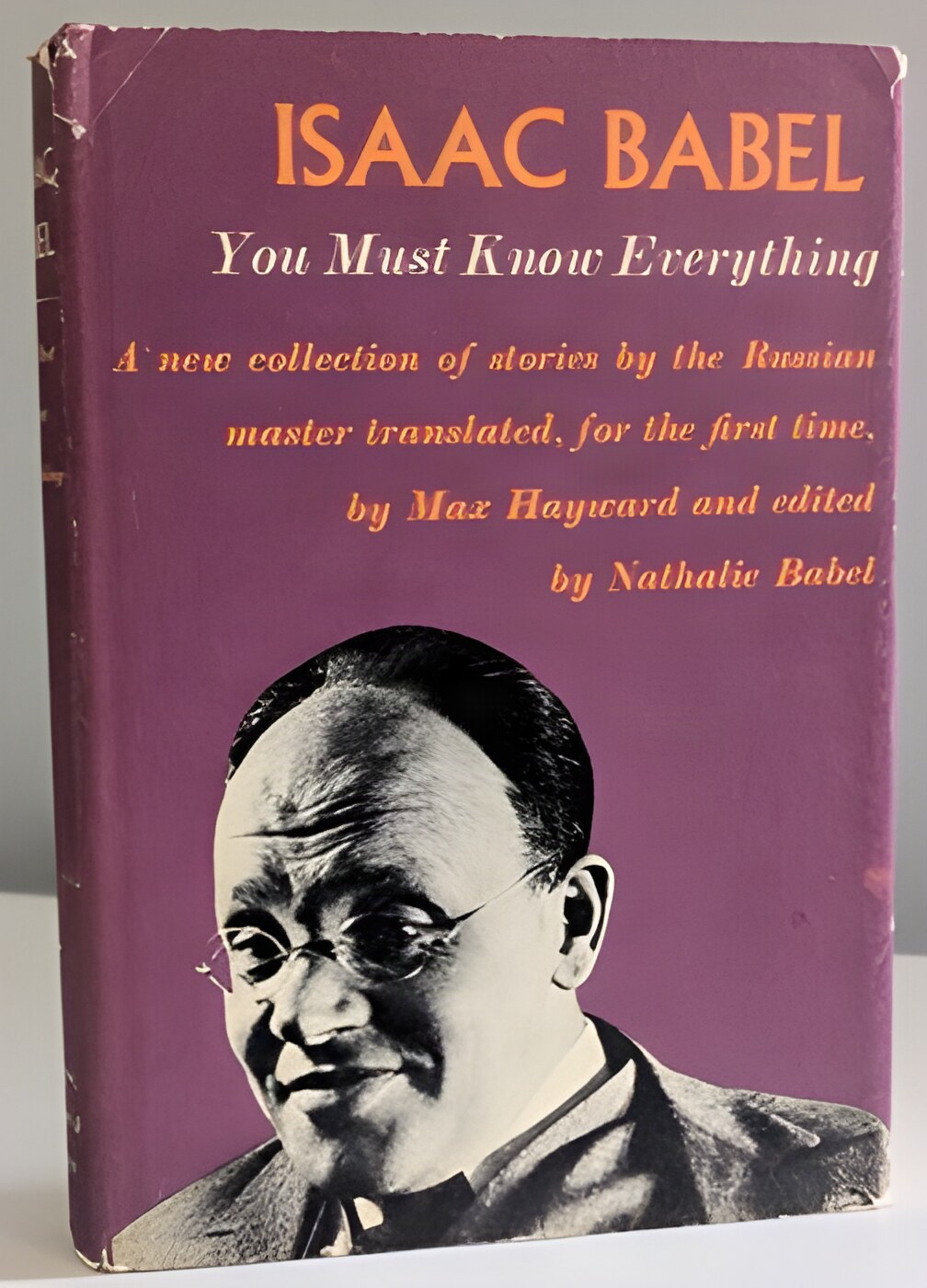
Hardcover. NY, Farrar, Straus and Giroux, 1st, 1969, Book: Very Good, Dust Jacket: Good, Hardcover in a lightly worn dust jacket with minor tape repairs in reverse side, 283 pages. A new collection of 19 stories by the Russian master, Translated for the first time. Translated by Max Hayward. Edited and with Notes by Nathalie Babel. Name on front fly leaf, otherwise clean.
Hardcover. NY, Merrell Publishing, 1st, 2008, Book: Very Good, Dust Jacket: Very Good, Hardcover, 240 pages. In the early twentieth century Zaida Ben-Yusuf (1869?1933) was one of the busiest photographers in New York City, maintaining a fashionable studio on Fifth Avenue, exhibiting her distinctly modern portraits across America, Europe and Russia, and publishing work in many magazines. Her self-portraits also challenged traditional perceptions of female identity. This striking book celebrates Ben-Yusuf ?s achievement, showcasing a significant selection of her elegant and compelling portraits featuring prominent artistic and political figures of the day, including Lincoln Steffens, Edith Wharton, Elsie de Wolfe and Robert Henri.

 "Vu: The Story of a Magazineby: C")
 "Waiting For the End Of the Worldby: Ross, Richard and Sarah Vowell")
 "War and the Soviet Union: Nuclear Weapons and the Revolution in Soviet Military and Political Thinking by: H.S. Dinerstein")
 "War Posters: Weapons of Mass Communicationby: James Aulich")

 "Where is Britain Going?by: Leon Trotsky with an Introduction by H.N. Brailsford")
 "Why Stalin's Soldiers Fought: the Red Army's Military Effectiveness in World War IIby: Roger R. Reese")
 "Yalta 1945: Europe and America at the Crossroadsby: Fraser J. Harbutt")
 "Year of Crisis, Year of Hope: Russian Jewry and the Pogroms of 1881-1882by: Berk, Stephen M.")
 "Zaida Ben-Yusuf: New York Portrait Photographer by: Goodyear, Frank H. (Author), Elizabeth O. Wiley (Contributor), Jobyl A. Boone (Contributor)")