Hardcover. Minneapolis, University of Minnesota Press, 1st thus, 2022, Book: Very Good, Dust Jacket: Very Good, Hardcover in a bright dust jacket, 92 pages illustrated in color and b&w by the author. In this book, first published as Troldskab in 1892, Kittelsen spins tales of wonder around creatures rumored to haunt the fields, forests, and waterfalls of Norway. Striding, gamboling, and slithering across these pages are witches and gnomes and sea monsters, fiery dragons waking from their stiff-winged slumber, mermaids rising from the deep, and the sly, shape-shifting nokk. But first and foremost are the trolls, hapless, horrible, or just plain silly, working their spells and making their mischief to the terror and delight of the presumably human reader. Tailoring his whimsical artistic style to each tale, Kittelsen's stories, in Tiina Nunnally's nimble translation, reveal a Nordic world of wonder, myth, and magic as real as the imagination allows. Clean copy.
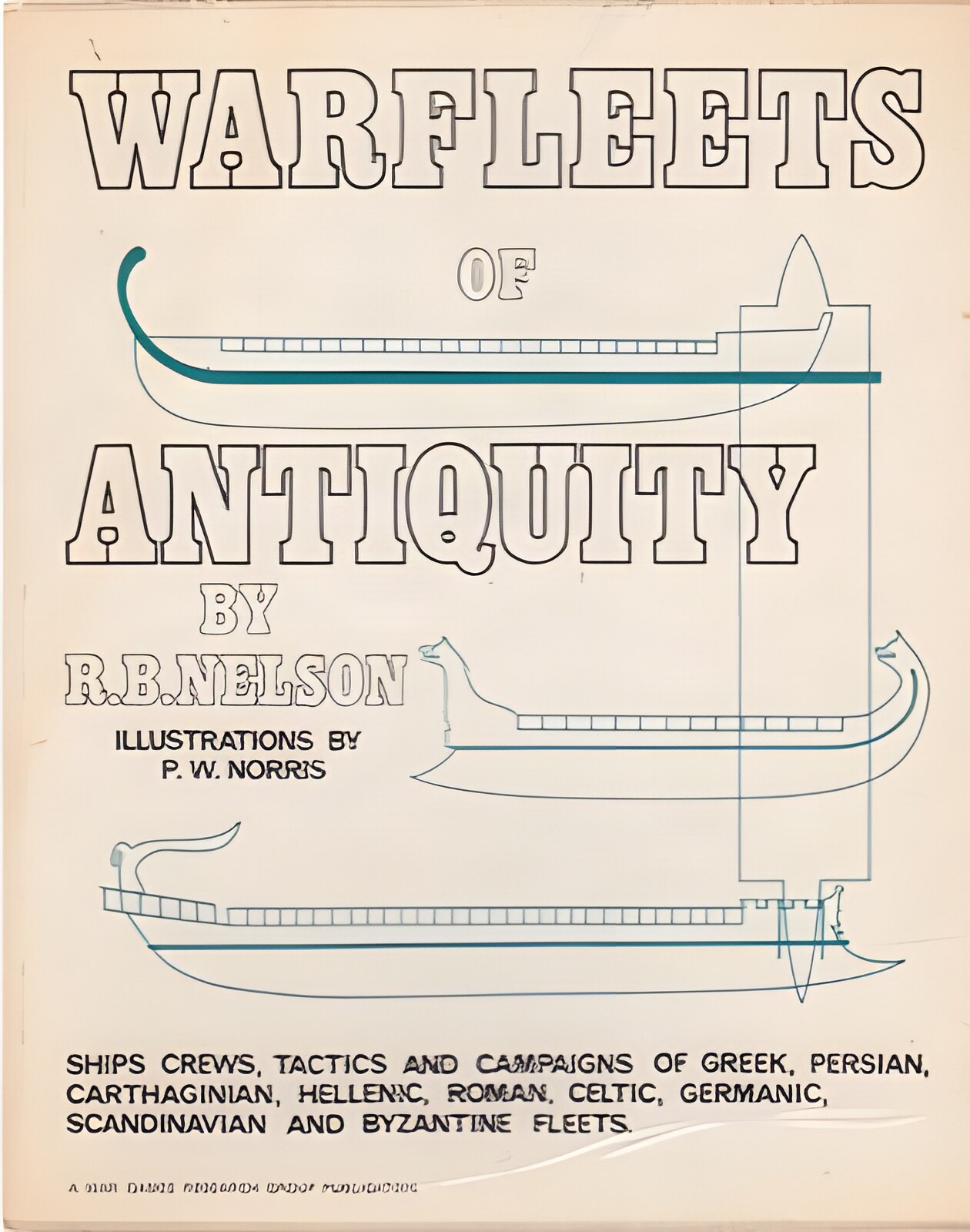
Hardcover. Sussex UK, Wargames Research Group, 1st, 1973, Book: Very Good, Dust Jacket: None, Softcover, 101 pages, b&w illustrations. This book, written in 1973, is for readers interested in the naval history of the ancient peoples of the Mediterranean. The period covered starts with Greek and Phoenician vessels of 800-700 BC and includes ships up to 800 AD. The aim of the book is to fill a gap by concentrating on the practical aspects of naval warfare in antiquity, and the battles selected for description are intended to show the development of tactics and strategy, rather than illustrate the general history of the period. It includes descriptions of the ships, crews, tactics and campaigns of Greek, Persian, Carthaginian, Hellenic, Roman, Celtic, Germanic, Scandinavian and Byzantine fleets. Clean copy.
Hardcover. Zurich, Scheidegger and Spiess, 1st, 2016, Book: Very Good, Dust Jacket: None, Hardcover in pictorial cloth, 210 pages, 164 color and 76 b/w illustrations. Le Corbusier (1887-1965) is one the most influential architects of the twentieth century. In the Scandinavian countries, his influence is arguably most pronounced in the writings and art of the Danish experimentalist Asger Jorn (1914-1973). Their collaboration on Le Corbusier's pavilion for the 1937 Paris World Exhibition sparked Jorn's lifelong fascination with the great architect and with architecture more broadly as an inherently public form of art. At the same time, Le Corbusier started working in the visual arts and began to move from a rational, technological approach to architecture towards a more poetic, materialist approach. Published in collaboration with the Museum Jorn, Silkeborg, What Moves Us? focuses specifically on the reception of Le Corbusier in Scandinavia, with the relationship between Jorn and Le Corbusier as a thematic thread. The book first highlights the architect's change of direction and subsequently takes readers through his influence on the young artist. The book's distinguished contributors explore the relationships that emerged among their artistic theories and practices, including Jorn's later critique of Le Corbusier. Essays also explore the wider influence of Le Corbusier on Scandinavian architecture and urbanization and consider Le Corbusier alongside the Danish architect Jorn Oberg Utzon and the Aarhus Brutalism movement.

 "Troll Magic: Hidden Folk from the Mountains and Forests of Norway by: Kittelsen, Theodor/ Nunnally, Tiina (Translator)")