Softcover. Cambridge MA, MIT Press, 1st, 1978, Book: Very Good, Softcover, 128 pages. INSCRIBED BY BOTH EDITORS on the front endpapers. Contributors include Dziga Vertov ('The Factory of Facts and Other Writings'), Alfred H. Barr, Jr. ('Russian Diary 1927-28', along with Jere Abbott, John E. Bowlt, and Elizabeth Jones), A. V. Lunacharsky ('Gogol-Meyerhold's "The Inspector-General"'), Paul Schmidt (on Meyerhold), Margit Rowell (on Vladimir Tatlin), and Michelson. Related ephemera laid in.
Hardcover. New York, Michael di Capua Books, 1st, 2010, Book: Very Good, Dust Jacket: Very Good, 32 pages. Hardcover with dust jacket. Color Illustrations by Jules Feiffer. SIGNED BY NORTON JUSTER. Clean, tight copy with only minor wear to dust jacket.
Hardcover. New York, Michael di Capua Books, 1st, 2010, Book: Very Good, Dust Jacket: Very Good, Hardcover, 32 pages illustrated by Feiffer. SIGNED BY BOTH JUSTER AND FEIFFER on title page. After a nearly 50-year wait, Juster's reunion with his Phantom Tollbooth collaborator Feiffer is squarely in keeping with their earlier fairy tale drollery. Feiffer's ogre, scrawled in scribbly brown outline, snores on his back in a forest of Lilliputian trees in one spread, then strides off in search of a snack in the next. (Feiffer often draws him from the boots up, the better to convey his massive size.) The ogre's victims usually cower hopelessly before him, but this time, the specimen he encounters--a slim, wide-eyed young woman in a long blue dress--undoes him with kindness. Oh, you're not really so terrible, she says sweetly. I'll bet if you brushed your teeth, combed your hair, found some new clothes, and totally changed your attitude you'd be quite nice. The ogre's mighty tantrum shakes the forest, but she remains calm. Would you consider doing that for the orphans' picnic next week? I know the children would love it. The ogre's speedy exit--he drops dead--is a bit of a throwaway, but Juster's narrative insouciance and Feiffer's pen and brush haven't lost their magic.
Hardcover. NY, Michael di Capua Books, 1st, 2010, Book: Very Good, Dust Jacket: Very Good, Hardcover, 32 pages illustrated by Feiffer. SIGNED BY BOTH JUSTER AND FEIFFER on title page. After a nearly 50-year wait, Juster's reunion with his Phantom Tollbooth collaborator Feiffer is squarely in keeping with their earlier fairy tale drollery. Feiffer's ogre, scrawled in scribbly brown outline, snores on his back in a forest of Lilliputian trees in one spread, then strides off in search of a snack in the next. (Feiffer often draws him from the boots up, the better to convey his massive size.) The ogre's victims usually cower hopelessly before him, but this time, the specimen he encounters--a slim, wide-eyed young woman in a long blue dress--undoes him with kindness. Oh, you're not really so terrible, she says sweetly. I'll bet if you brushed your teeth, combed your hair, found some new clothes, and totally changed your attitude you'd be quite nice. The ogre's mighty tantrum shakes the forest, but she remains calm. Would you consider doing that for the orphans' picnic next week? I know the children would love it. The ogre's speedy exit--he drops dead--is a bit of a throwaway, but Juster's narrative insouciance and Feiffer's pen and brush haven't lost their magic.
Softcover. Providence RI, Berg Publishers, 1st US, 1994, Book: Very Good, Dust Jacket: None, Softcover, 131 pages. Exchanges are fundamental to human societies. The authors show that the study of exchanges not only serves as a key to understanding particular societies as totalities but also helps to frame a comparative mode of analysis expressed in terms of a hierarchy of values. Starting with a comparative analysis of the different vocabularies used when dealing with exchange, the authors go on to provide a detailed account of how each society's exchanges form a genuine value-oriented system. Their conclusions shed light on important issues in anthropology such as the difference between subject and object; the construction of the person in the matrix of social relations; and the contrast between 'socio-cosmic' systems and other societies which recognize a universal term of reference beyond their community. WITH A CARD SIGNED BY ALL 3 AUTHORS LAID IN.
Hardcover. NY, Norton, 2nd pr., 1976, Book: Very Good, Dust Jacket: Very Good, Hardcover, 318 pages. SIGNED BY RICH on title page. Light soil to dust-jacket.
Hardcover. New York, Linden Press, 1st, 1986, Book: Very Good, Dust Jacket: Very Good, Hardcover, 283 pages. Light rubbing to dust jacket. SIGNED BY AUTHOR. Remainder stamp bottom edge.
Hardcover. Seattle, University of Washington Press, 1st, 1991, Book: Very Good, Dust Jacket: Very Good, 388 pages, hardcover. B&w plates. INSCRIBED BY ECKERT. Light foxing to edge and light wear to bottom edges of cover. According to conventional interpretations, the Japanese annexation of Korea in 1910 destroyed a budding native capitalist economy on the peninsula and blocked the development of a Korean capitalist class until 1945. In this expansive and provocative study, now available in paperback, Carter J. Eckert challenges the standard view and argues that Japanese imperialism, while politically oppressive, was also the catalyst and cradle of modern Korean industrial development. Ancient ties to China were replaced by new ones to Japan - ties that have continued to shape the South Korean political economy down to the present day. Eckert explores a wide range of themes, including the roots of capitalist development in Korea, the origins of the modern business elite, the nature of Japanese colonial policy and the Japanese colonial state, the relationship between the colonial government and the Korean economic elite, and the nature of Korean collaboration. He conveys a clear sense of the human complexity, archival richness, and intellectual challenge of the historical period. His documentation is thorough; his arguments are compelling and often strikingly innovative.
Hardcover. New York, Farrar, Straus and Giroux, 1st, 1989, Book: Very Good, Dust Jacket: Very Good, Hardcover in a bright, unclipped dust jacket. SIGNED BY AUTHOR AND ILLUSTRATOR on title page. Very clean and tight copy.
Hardcover. New York , Balzer + Bray, 1st, 2010, Book: Very Good, Dust Jacket: Very Good, Hardcover in a bright dust jacket. 40 pages illustrated in color by Shea. SIGNED BY SHEA. In this humorous paean to fatherhood, a hippo explains that he is so smart that he shows his dad how to do things. Shea goes through a series of scenarios in which the father gets his son to do what he wants by pretending he doesn't know how to do it correctly. When the youngster claims to be "busy getting dressed," the pictures show him watching TV in his underwear. The father proceeds to mix up his clothing and asks, "Is this how you get dressed?" prompting the child to respond, "Oh, Daddy! This is how you get dressed!" And so it goes on.
Hardcover. Long Beach CA, privately printed, 3rd pr., 1927, Book: Very Good, Dust Jacket: None, Hardcover, 527 pages followed by author's 9 page catalog of ads for his titles. Maroon cloth with black lettering. Gilt lettered spine with Upton Sinclair at foot of spine. INSCRIBED BY AUTHOR'S WIFE on front fly leaf, "With best wishes Mary Craig Sinclair, Long Beach, Calif., July 6 '28". Minor soil to covers, slight cock to spine, overall very good.
Boston , Little, Brown and Company , reprint, 1926, Book: Very Good, Dust Jacket: None, Hardcover, 303 pages. clean, tight copy. decorative tint on top edge. INSCRIBED BY AUTHOR, light foxing on edges.
Hardcover. New York , Harper and Brothers, reprint, 1929, Book: Good, Dust Jacket: None, Hardcover, 264 pages, yellow and black boards with black cloth spine, spine label. INSCRIBED ON FRONT FLY LEAF by author but not signed: "To my Ol' Man William (otherwise Little Father) from one of "his chillun" (otherwise me) with love and gratitude for a brief but happy visit. July 20/29/ Claman Towers, South Duxbury Mass" Book slightly cocked, front hinge fragile, light wear.
Softcover. Leopard Publishing Ventures, 1st, 2016, Book: Very Good, Dust Jacket: None, Softcover, 60 pages, illustrated. Built in the cottage orne style from a plan by the Regency architect John Nash (1752-1835), Old Came Rectory is the historic home of the poet philologist, William Barnes (1801-1886), Thomas Hardy's mentor. Amid gatherings of poets, writers and historical figures, how many discussions around the fire of this homely home have gone on to shape the world we know today? INSCRIBED BY AUTHOR on Dedication page.
Hardcover. Boston, Little Brown, Rep., 1926, Book: Good, Dust Jacket: None, 202 pages. Hardcover with no dust jacket. SIGNED/INSCRIBED BY BURGESS on front fly leaf and dated 1927. 7 color plates (out of 8) by Harrison Cady. Unfortunately, the frontis is missing and one plate lose with fraying on top edge.
Hardcover. New York , Viking, 1st, 2004, Book: Very Good, Dust Jacket: Very Good, Hardcover. SIGNED BY AUTHOR. 434 pages, b&w photographs. Light edge wear to dust jacket; else a very clean, tight copy.
Hardcover. Boston, Houghton Mifflin, 1st, 1996-06-20, Book: Very Good, Dust Jacket: Very Good, Hardcover, 134 pages. SIGNED BY AUTHOR on title page. Light shelf-wear to dust jacket, else a clean, tight copy.
Hardcover. New York, Henry Holt, 1st, 2007, Book: Very Good, Dust Jacket: Very Good, Non-paginated. SIGNED BY WILLIAM LOW ON TITLE PAGE. Full color illustrations. Clean, tight copy in a bright dust jacket.
Hardcover. New York , Farrar & Rinehart, 1st, 1942, Book: Very Good, Dust Jacket: Very Good, Hardcover, 276 pages, illustrated in b&w by Henry Gillette. INSCRIBED BY DEAN on half title page. Dust jacket with light edgewear, chipping. Book has a slight slant, otherwise clean, very good.
Hardcover. NY, Random House, 1st, 2019, Book: Very Good, Dust Jacket: Very Good, Hardcover in a bright, unclipped dust jacket. SIGNED "Liz" ON THE TITLE PAGE. Prickly, wry, resistant to change yet ruthlessly honest and deeply empathetic, Olive Kitteridge is "a compelling life force" (San Francisco Chronicle). The New Yorker has said that Elizabeth Strout "animates the ordinary with an astonishing force," and she has never done so more clearly than in these pages, where the iconic Olive struggles to understand not only herself and her own life but the lives of those around her in the town of Crosby, Maine.
Hardcover. San Francisco, CA, Chronicle Books, 2nd, 1997, Book: Very Good, Dust Jacket: Very Good, Unpaginated. Hardcover with dust jacket. SIGNED WITH SKETCH BY ILLUSTRATOR AND AUTHOR. Clean, tight copy with minor wear to cover boards.
Hardcover. Boston, Little Brown, 1st, 1977, Book: Very Good, Dust Jacket: Good, 47 pages. Hardcover with dust jacket. INSCRIBED BY KENNEDY on front fly leaf with a typed personal note to the inscribee, also SIGNED. Black & white illustrations by Robert Andrew Parker. Clean, tight copy.
Hardcover. New York, Bradbury Press, 1st, 1987, Book: Very Good, Dust Jacket: Very Good, Hardcover. SIGNED BY SCHWARTZ on title-page. Color illustrations by Schwartz. Dust jacket with light edgewear, minor chipping at top of spine.
Hardcover. NY, Viking , 1st, 2011, Book: Very Good, Dust Jacket: Very Good, Hardcover, 256 pages. SIGNED BY AUTHOR on title page. Light shelf-wear to dust jacket, else a clean, tight copy.


 "Odious Ogre, The (SIGNED BY JUSTER)by: Juster, Norton/Jules Feiffer")
 "Odious Ogre, The (SIGNED COPY)by: Juster, Norton and Jules Feiffer")
 "Odious Ogre, The (SIGNED COPY)by: Juster, Norton and Jules Feiffer")

 "Of Woman Born - Motherhood as Experience and Institution (SIGNED COPY)by: Rich, Adrienne")
 "Off for the Sweet Hereafter (SIGNED COPY)by: Pearson, T.R.")
 "Offspring of Empire: The Koch'ang Kims and the Colonial Origins of Korean Capitalism 1876-1945 (SIGNED COPY)by: Eckert, Carter J.")
 "Oh, Brother (SIGNED COPY)by: Egielski, Richard (Illustrator), Arthur Yorinks (author)")
 "Oh, Daddy! (SIGNED COPY)by: Shea, Bob (Author, Illustrator)")
 "Oil!by: Sinclair, Upton")
 "Oklahoma (SIGNED COPY)by: Cooper, Courtney Ryley")
 "Ol' Man Adam an' His Chillun (INSCRIBED)by: Bradford, Roark")


 "Old Came Rectoryby: Sedley Proctor")
 "Old Granny Fox (SIGNED COPY)by: Burgess, Thorton W.")


 "Old Iron Road, The: An Epic of Rails, Roads, and the Urge to Go West (SIGNED COPY)by: Bain, David Haward")
 "Old Life, The (SIGNED COPY)by: Hall, Donald")
 "Old Penn Station (SIGNED COPY)by: Low, William")
 "Old Wolf: The Story of Israel Putnam (SIGNED COPY)by: Dean, Leon W.")


 "Olive, Again: A Novel (SIGNED COPY)by: Elizabeth Strout")
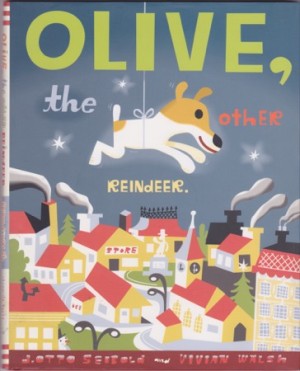


 "Oliver Hyde's Dishcloth Concert (SIGNED COPY)by: Kennedy, Richard")


 "Oma and Bobo (SIGNED COPY)by: Schwartz, Amy")


 "On Canaan's Side (SIGNED COPY)by: Barry, Sebastian")