Softcover. Washington DC, National Geographic Society, 1st, 1917, Book: Very Good, Dust Jacket: None, Original magazines July - December 1917, in a maroon pebbled hardcover binding. Magazines are dated and paged, with photographs and maps, but do not have covers, advertisements, etc. Several pages of color plates. Fold-out sepa photo of "Babes in the Woods" torn along one fold. Light chipping to spine labels otherwise a bright, clean volume.
Softcover. Washington DC, National Geographic Society, 1st, 1917, Book: Very Good, Dust Jacket: None, Softcover, illustrated with b&w photos, maps, advertisements. Original yellow and black wrappers, spine with light wear, good to very good. Articles include: The Food Armies of Liberty, The Geography of Medicines, A Few Glimpses into Russia, Conserving the Nation's Man Power.
Softcover. Washington DC, National Geographic Society, 1st, 1917, Book: Very Good, Dust Jacket: None, Mid-Winter Double Issue. Softcover, illustrated with b&w photos, maps, advertisements. Original yellow and black wrappers, spine with light wear, good to very good. Articles include: The Geographical and Historical Environment of America's 32 New Soldier Cities, Training the New Armies of Liberty, The Immediate necessity for Military Highways, From the Trenches to Versailles, others.
Softcover. Washington DC, National Geographic Society, 1st, 1919, Book: Very Good, Dust Jacket: None, Softcover, illustrated with b&w photos, maps, advertisements. Original yellow and black wrappers, spine with light wear, good to very good. Articles include: Chicago Today and Tomorrow, The League of Nations, Medicine Fakes and Fakers of All Ages.
Softcover. Washington DC, National Geographic Society, 1st, 1919, Book: Very Good, Dust Jacket: None, Softcover, illustrated with b&w photos, maps, advertisements. Original yellow and black wrappers, spine with light wear, good to very good. Articles include: The Shattered Capitals of Central America, The Isle of Capri, Shantung-China's Holy Land, America's South Sea Sailors.
Softcover. Washington DC, National Geographic Society, 1st, 1919, Book: Very Good, Dust Jacket: None, Softcover, illustrated with b&w photos, maps, advertisements. Original yellow and black wrappers, spine with light wear, good to very good. Articles include: The Rise of the New Arab Nation, The Land of the Stalking Death, Where Slav and Mongol Meet, Syria- The Land Link of History's Chain. Small chip to front cover.
Hardcover. Washington D. C, National Geographic Society, 1st, 1930, Book: Very Good, Dust Jacket: None, Original magazines January - June 1930, in a green hardcover cloth binding. Magazines are dated and paged, with photographs and maps, but do not have covers, advertisements, etc. Several pages of color plates. 784 pages, 2 color maps. Numerous articles including: 'Seeking the Mountains of Mystery' by Joseph F. Rock; 'Among the Hill Tribes of Sumatra by W. Robert Moore; 'Hunting for Plants in the Canary Islands' by David Fairchild; and 'New Light on Ancient Ur' by M.E. L. Mallowan. Clean, bright volume.
Hardcover. Evanston IL, Northwestern University Press, 1st, 1966, Book: Very Good, Dust Jacket: Good, Hardcover in a lightly worn dust jacket with mild tanning, 220 pages. Lowith is probably most known for his two books From Hegel to Nietzsche, which describes the decline of German classical philosophy, and Meaning in History, which discusses the problematic relationship between theology and history.
Softcover. Brighton UK, Sussex Academic Press, 1st, 2010, Book: Very Good, Dust Jacket: None, Softcover, 283 pages. The first book to study the history of the Nazis in Britain. In September 1930, the Nazi Party newspaper, Volkischer Beobachter, sent its first representative to London. Soon afterwards, German residents in London established an Ortsgruppe, or local Nazi group, which provided Party members with a place to congregate and support the new movement. By 1933, more than 100 members belonged to the London group. The Nazis in pre-war London created a dilemma for the Foreign Office and the Home Office, who were divided as to how best to treat residents whose allegiance was to the German Reich. Some felt that all Nazi organizations should be banned, and Party Members should not be allowed to enter the UK. Others, including MI5, argued that it would be easier to keep track of Nazis if they were in-country. Previously unpublished German documents reveal the fates of German diplomats, journalists, and professionals, many of whom were interned in Britain or deported to Nazi Germany once war broke out on September 3, 1939. Clean copy.
Softcover. US, Prestel, 1st, 2014, Book: Very Good, Dust Jacket: None, 128 pages. Softover. Clean, unmarked copy with only minor wear to wrappers. Like new in publisher's shrink-wrap. Photographer Iain McKell offers an extraordinary and breathtakingly beautiful glimpse into the lives of a real and raw group of present-day nomads whose culture is built around ideals of freedom, nature, and simplicity. Historically despised the new gypsies are there by choice, not heritage. Unrelated to the Roma, the movement began in 1986 when a group of Post-Punk Anti-Thatcher protesters headed out of London into the English countryside. McKell followed these New Age Travellers to the West Country and over the years he watched them become a hybrid tribe - the new gypsies - present-day rural anarchists, living the subversive lifestyle in elaborately decorated horse-drawn caravans. Known as 'Horse-drawn', the new gypsies share a desire for sustainability, a love of self-reliance and a disdain for the trappings of contemporary life. For more than a decade McKell has focused his lens on travellers of all ages: parents, children, couples and loners. With sensitivity and honesty he captures a way of life that seems at once romantic, strange, beautiful and simple. The result is a deeply insightful portrayal of a culture that eschews the traditional creature comforts of urban life in favour of the simplicity and freedom of the natural world.
Hardcover. New York, McGraw-Hill Professional Publishing, 1st, 1993, Book: Very Good, Dust Jacket: Very Good, Hardcover, 245 pages, b&w and color photographs and illustrations. Light edgewear to dust jacket. Else a very clean, tight copy. The move to liveable communities--ideal ``small towns'' and neighborhoods where people work, live, play, and walk from place to place--is on. Profit from what a visionary group of architects leading this movement has learned about designing new ``small towns'' in Peter Katz's The New Urbanism. You'll discover the amazing potential for this kind of work as well as case studies, site plans, project analyses, and 180 beautiful photographs. This unique reference also tackles--and answers--the critical issues of crime, health, traffic, environmental degradation, and economic vitality and opens a startling window on the look and feel of future communities.
Softcover. Amherst MA, White River Press , 1st, 2022, Book: Very Good, Dust Jacket: None, Softcover, 462 pages, b&w illustrations. A study of the impact and consequences caused by the use of inflammatory racially-related language during a police investigation conducted by the Vermont State Police. Beginning in 1968 with the Irasburg Affair when a White man fired shotgun blasts into a home occupied by a Black family, the story describes in detail the course of the investigation. Adverse publicity about the Vermont State Police's work alleging racism within its ranks ensued resulting in its managers withdrawing from public view and refusing to work with the legislature in the next years causing significant internal problems. They finally came to the forefront in 1979 when a despondent trooper committed suicide at the state house in Montpelier in an event called the Router Bit Affair that led to significant reforms beginning in1980. Includes bibliographical references and an index. Clean copy.
Hardcover. New York, Thames and Hudson, 1st, 1993, Book: Very Good, Dust Jacket: Very Good, Hardcover, 413 pages, illustrated with 450 plates, 50 in color. In a bright, unclipped dust jacket. Errata slip laid in.
Hardcover. Boston, Houghton Mifflin, 1st, 1986, Book: Very Good, Dust Jacket: Very Good, Hardcover in a bright, unclipped dust jacket, 190 pages. Explores the world of the North Sea oil installations and describes the life of the men who are engaged in this business. The offshore oil rig represents one of Earth's last frontiers; the ultimate example may be found in the North Sea, 300 miles off the coast of Scotland. What's it like to live in this hostile environment, in unnatural isolation, and to work to the point of exhaustion? Curiosity prompted Alvarez (The Savage God, The Biggest Game in Town to visit the Shell installation at Brent Fields. The people best fitted for offshore work, Alvarez found, are ex-military men. He talked at length to pilots, roustabouts, managers, divers and the chief official of the Shetland Islands. It's an amazing account of humanity triumphing over the elements.
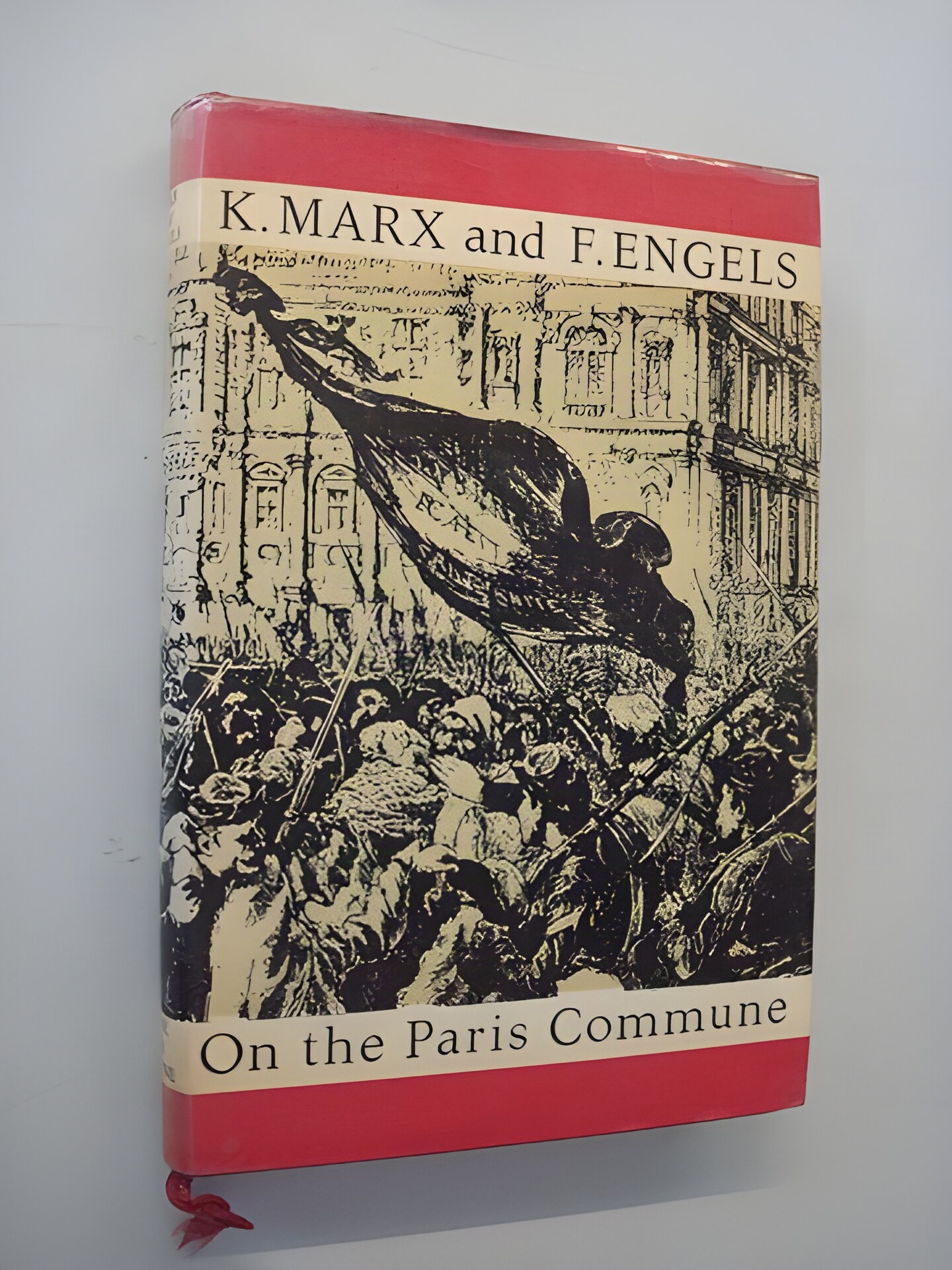
Hardcover. Moscow, Progress Publishers, 1st, 1971, Book: Very Good, Dust Jacket: Very Good, Hardcover in a bright dust jacket, 357 pages. "On March 18, 1871, the workers of Paris expelled the bourgeois rulers of the city and took power into their own hands , a shining achievement never to be forgotten. Ten days later, on March 28, they set up the Paris Commune, the world's first proletarian state. It was of an entirely new type, being governed by the people and for the people, with all its social and political measures taken in the interest of the working people, the working class above all." -from the Preface. First printing of this selection, published for the centenary of the Commune. With ribbon bookmark. Clean copy.
Softcover. Philadelphia, Temple University Press, 1st, 1999, Book: Very Good, Dust Jacket: None, Softcover, 271 pages. Confronting the cultural stereotypes that have been attached to Asian-Americans over the last 150 years, this title seizes the label Oriental and asks where it came from. It shows how the bewildering array of racialized images first proffered by music hall songsters and social commentators have evolved and become generalized to Asian-Americans. Clean copy.
Softcover. Louisiana State University, reprint, 1974, Book: Very Good, Dust Jacket: None, Softcover, 654 pages with index. After more than half a century, Origins of the New South is still recognized both as a classic in regional historiography and as the most perceptive account yet written on the period which spawned the New South. Historian Sheldon Hackney recently summed it up this way: "The pyramid still stands. Origins of the New South has survived relatively untarnished through twenty years of productive scholarship, including the eras of consensus and of the new radicalism. . . . Woodward recognizes both the likelihood of failure and the necessity of struggle. It is this profound ambiguity which makes his work so interesting. Like the myth of Sisyphus, Origins of the New South still speaks to our condition." Light rubbing to wrappers, clean copy.
Softcover. Berkeley, University of California Press, 1st, 1999, Book: Very Good, Dust Jacket: None, Softcover, 330 pages. In this analysis of three generations of women in a Chinese silk factory, Lisa Rofel brilliantly interweaves the intimate details of her observations with a broad-ranging critique of the meaning of modernity in a postmodern age.The author based her study at a silk factory in the city of Hangzhou in eastern China. She compares the lives of three generations of women workers: those who entered the factory right around the Communist revolution in 1949, those who were youths during the Cultural Revolution of the 1970s, and those who have come of age in the Deng era. Exploring attitudes toward work, marriage, society, and culture, she convincingly connects the changing meanings of the modern in official discourse to the stories women tell about themselves and what they make of their lives. Clean.
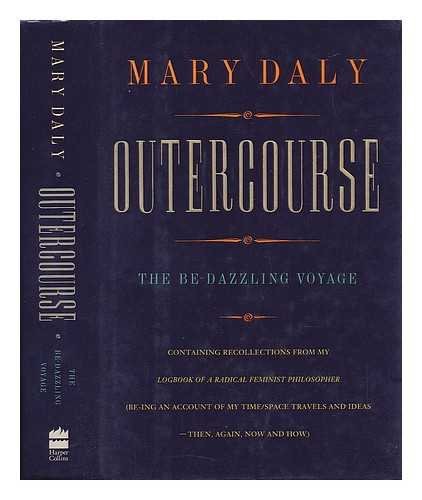
Hardcover. Harper San Francisco, 1st, 1992, Book: Very Good, Dust Jacket: Very Good, Hardcover in a bright dust jacket, 477 pages. The author of Beyond God the Father and Gyn/Ecology blends autobiography and visionary philosophy to reveal her struggles to reclaim the treasures of knowledge stolen and hidden from women. Mary Daly was an American radical feminist philosopher, academic, and theologian. Daly, who described herself as a "radical lesbian feminist", taught at Boston College, a Jesuit-run institution, for 33 years. Daly consented to retire from Boston College in 1999, after violating university policy by refusing to allow male students in her advanced women's studies classes. Clean copy.
Softcover. Minneapolis, University Of Minnesota Press, reprint, 2021, Softcover, 329 pages. Many adoptees are required to become people that they were never meant to be. While transracial adoption tends to be considered benevolent, it often exacts a heavy emotional, cultural, and economic toll on those who directly experience it. Outsiders Within is a landmark publication that carefully explores this most intimate aspect of globalization through essays, fiction, poetry, and art. Moving beyond personal narrative, transracially adopted writers from around the world tackle difficult questions about how to survive the racist and ethnocentric worlds they inhabit, what connects the countries relinquishing their children to the countries importing them, why poor families of color have their children removed rather than supported--about who, ultimately, they are. In their inquiry, the contributors unseat conventional understandings of adoption politics, reframing the controversy as a debate that encompasses human rights, peace, and reproductive justice. Clean copy.
Softcover. Prospect Heights IL, Waveland Press, reprint, 1994, Book: Very Good, Dust Jacket: None, Softcover, 113 pages. A look at the economic development of the Giriama of Kenya where traditional customs are sometimes at odds with the needs and desires of the individual, enterprising farmers. Illustrated with statistical tables, reproductions of black-&-white photographs, and a map. Appended: Bibliography, Index.
Softcover. Chicago, HAU Books, 1st, 2021, Book: Very Good, Dust Jacket: None, Softcover. 303 pages, b&w illustrations. In his 1978 Lewis Henry Morgan Lectures, unpublished until now, Gilbert Lewis takes on essential problems for medical anthropology. Has there been progress in medicine? Consider what it was like to be ill in a Gnau village in the West Sepik Province of Papua New Guinea in 1968 and compare it with the experience of illness fifteen years later, after they gained independence. The changes involved some loss of self-reliance. Or consider Bregbo, a community in the Ivory Coast whose prophet offers healing through confession and, in some cases, long-term care in a therapeutic setting. What does this offer that psychiatric approaches to healing do not? Drawing on these and other cases, Lewis conveys the importance of the ethnographic comparison of medical beliefs in dynamic spaces of knowledge to do with illness, health, and healing, especially as these change over time and intersect with others.

 "National Geographic Magazine - Vol. XXXI July - December 1917 (Six Issues)by: National Geographic Society")
 "National Geographic Magazine - Vol. XXXII No. 3 September 1917by: National Geographic Society")
 "National Geographic Magazine - Vol. XXXII No. 5 & 6 November - December 1917by: National Geographic Society")
 "National Geographic Magazine - Vol. XXXV No. 1 January 1919by: National Geographic Society")
 "National Geographic Magazine - Vol. XXXVI No. 3 September 1919by: National Geographic Society")
 "National Geographic Magazine - Vol. XXXVI No. 5 November 1919by: National Geographic Society")
 "National Geographic Magazine. January-June 1930. Six Issuesby: National Geographic Society")
![Nature, History, and Existentialismby: Karl Lowith; Arnold Levison [Editor]](https://www.browsingisarousing.com/shop/images/Nature-History-and-Existentialism_by_Karl-Lowith-Arnold-Levison-Editor400196-457823.jpg "Nature, History, and Existentialismby: Karl Lowith; Arnold Levison [Editor]")
 "Nazis in Pre War London 1930 1939: The Fate and Role of German Party Members and British Sympathizers by: James J. Barnes; Patience P. Barnes")
 "New Gypsies, Theby: McKell, Iain")

 "Night-Rider Legacy: Weaponizing Race in the Irasburg Affair of 1968 by: Gary G Shattuck")
 "Nomads of Luristan: History, Material Culture and Pastoralism in Western Iranby: Mortensen, Inge Demant")
 "Nuer Religionby: Evans-Pritchard, E. E.")
 "Offshore: A North Sea Journeyby: A. Alvarez")
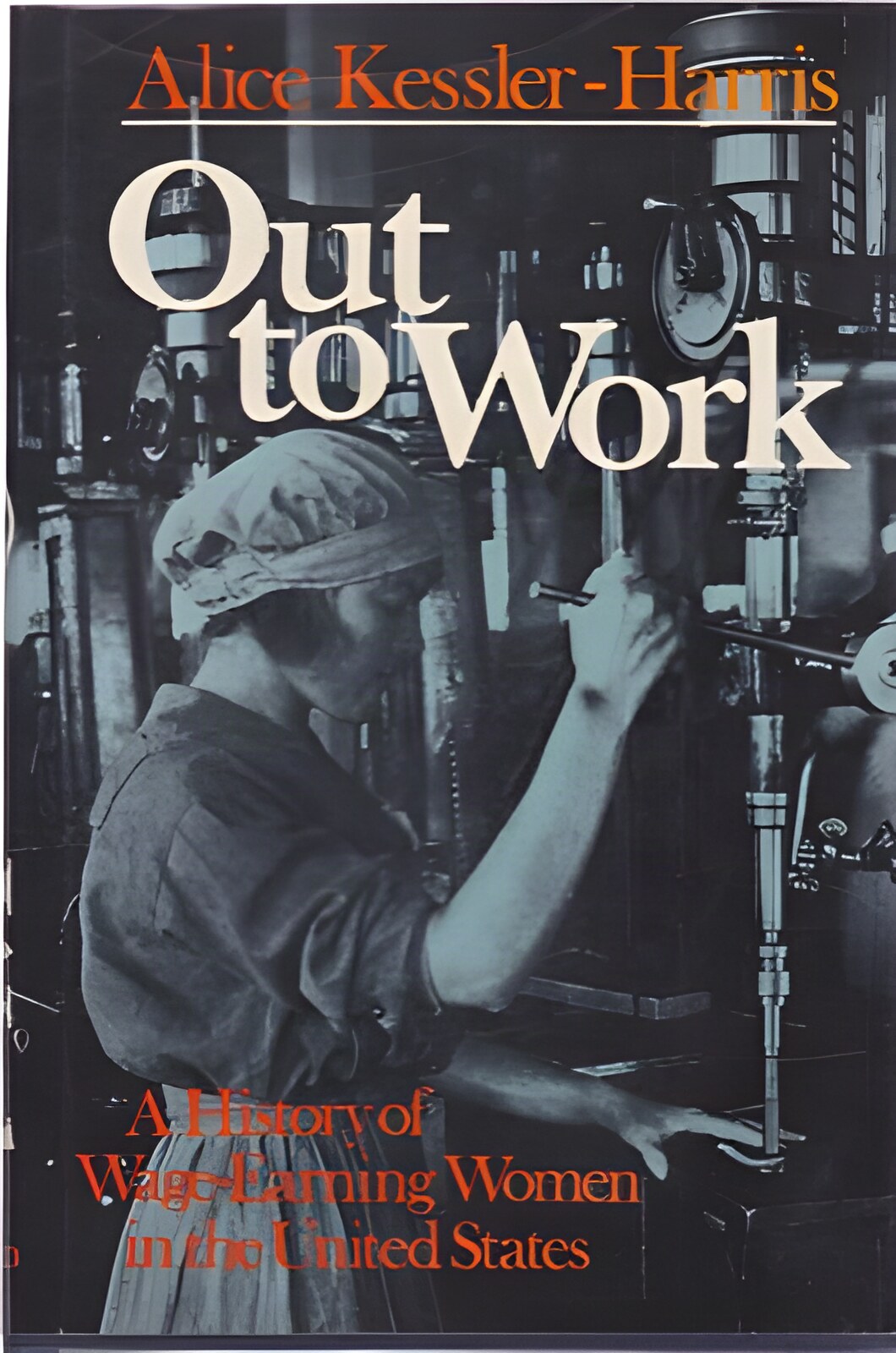
 "Orientals: Asian Americans in Popular Cultureby: Robert Lee")

 "Other Modernities: Gendered Yearnings in China after Socialismby: Rofel, Lisa")


 "Pandora's Box: Ethnography and the Comparison of Medical Beliefsby: Gilbert Lewis")