Hardcover. NY, powerHouse, 1st, 2009, Book: Very Good, Dust Jacket: Very Good, Hardcover, 112 pages. Established in 1866, the Ku Klux Klan still remains one of America's most secretive organizations. New York photojournalist Anthony Karen first transcended that secrecy several years ago when he got the opportunity to photograph a KKK cross-lighting ceremony. Since then, Karen has been documenting Klan organizations throughout the country. In The Invisible Empire: Ku Klux Klan, those photographs are compiled to form an absorbing document of one of the most notorious groups in history. Taken with unrestricted access, Karen's images bring us deep inside America's most private white nationalist organizations. Beginning with a brief introduction into the history of the Klan, the book provides detailed visual accounts of modern-day Klan life, including candid shots of rallies, individual portraits of Klansmen and women, as well as a look at the naturalization process for new members. Presented in intimate profiles are: a functioning Klan ministry, a group that has merged National Socialism with Klan ideologies, and a 58-year-old seamstress who makes custom Klan robes, among others. Accompanied by quotations from the late Dale Fox, Imperial Wizard of The Brotherhood of the Klans, The Invisible Empire: Ku Klux Klan offers an unprecedented glimpse into the shadowy society and its mysterious inner workings.
Hardcover. Hoboken NJ, Wiley Publishing, 1st, 2003, Book: Very Good, Dust Jacket: Very Good, Hardcover in a bright, unclipped dust jacket. The Last Samurai traces Saigo's life from his early days as a tax clerk in far southwestern Japan, through his rise to national prominence as a fierce imperial loyalist. Saigo was twice exiled for his political activities - sent to Japan's remote southwestern islands where he fully expected to die. But exile only increased his reputation for loyalty, and in 1864 he was brought back to the capital to help his lord fight for the restoration of the emperor.
Hardcover. Boston , Little Brown, 1st, 2019, Book: Very Good, Dust Jacket: Very Good, Hardcover in a bright dust jacket, 368 pages. On a volcanic island in the Savu Sea so remote that other Indonesians call it "The Land Left Behind" live the Lamalerans: a tribe of 1,500 hunter-gatherers who are the world's last subsistence whalers. They have survived for half a millennium by hunting whales with bamboo harpoons and handmade wooden boats powered by sails of woven palm fronds. But now, under assault from the rapacious forces of the modern era and a global economy, their way of life teeters on the brink of collapse. Award-winning journalist Doug Bock Clark, one of a handful of Westerners who speak the Lamaleran language, lived with the tribe across three years, and he brings their world and their people to vivid life in this gripping story of a vanishing culture. Jon, an orphaned apprentice whaler, toils to earn his harpoon and provide for his ailing grandparents, while Ika, his indomitable younger sister, is eager to forge a life unconstrained by tradition, and to realize a star-crossed love. Frans, an aging shaman, tries to unite the tribe in order to undo a deadly curse. And Ignatius, a legendary harpooner entering retirement, labors to hand down the Ways of the Ancestors to his son, Ben, who would secretly rather become a DJ in the distant tourist mecca of Bali.
Hardcover. NY, New York University Press, 1st, 2011, Book: Very Good, Dust Jacket: Very Good, Hardcover in a bright dust jacket, 267 pages. A compelling true story of how a maid's daughter moves from a girlhood of rage and resentment to a level of empowerment, as a grown woman. Clean copy.
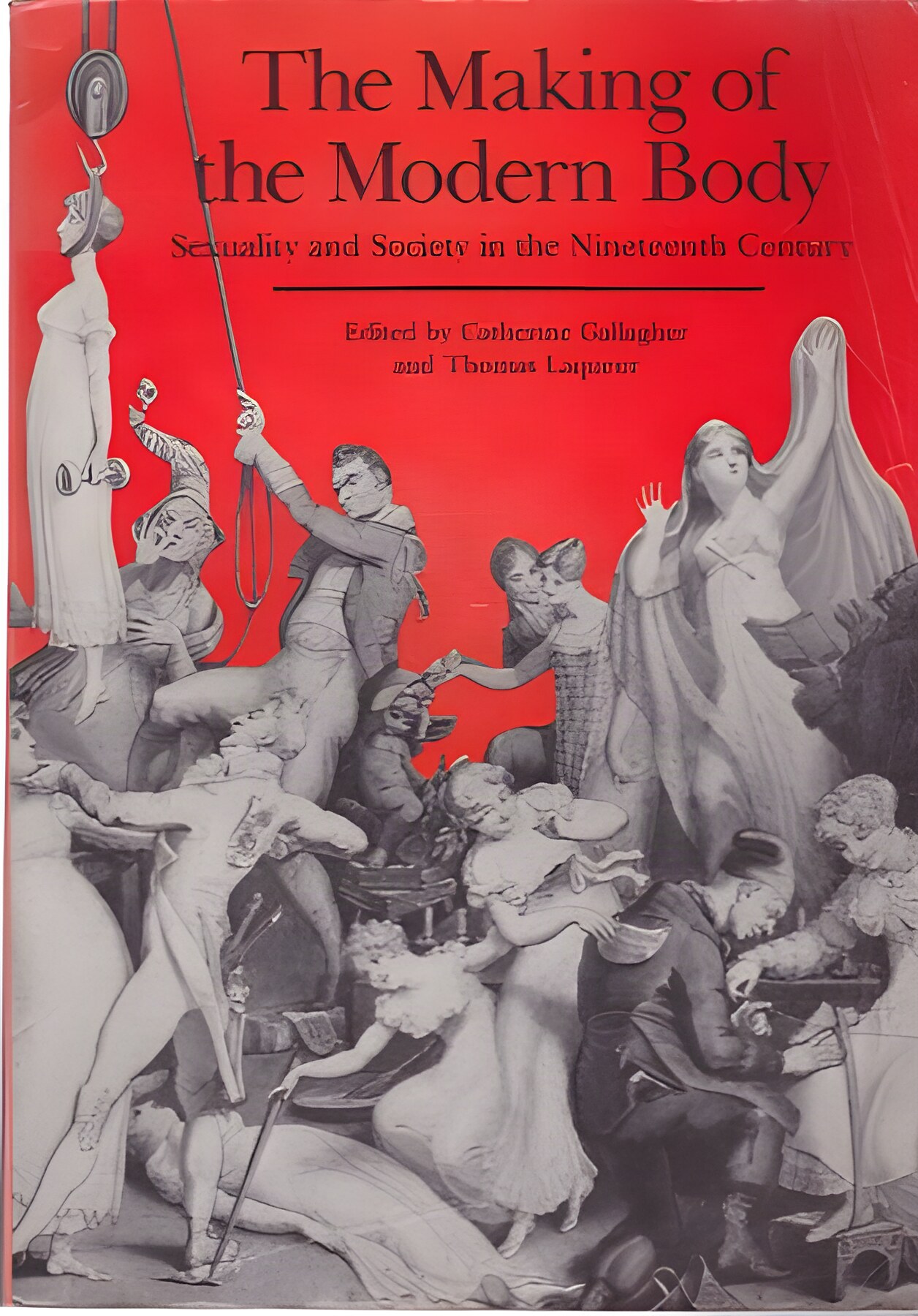
Softcover. Berkeley CA, University of California Press, reprint, 1987, Book: Good, Dust Jacket: None, Softcover, 242 pages. Scholars have only recently discovered that the human body itself has a history. Not only has it been perceived, interpreted, and represented differently in different epochs, but it has also been lived differently, brought into being within widely dissimilar material cultures, subjected to various technologies and means of control, and incorporated into different rhythms of production and consumption, pleasure and pain. The eight articles in this volume support, supplement, and explore the significance of these insights. They belong to a new historical endeavor that derives partly from the crossing of historical with anthropological investigations, partly from social historians' deepening interest in culture, partly from the thematization of the body in modern philosophy (especially phenomenology), and partly from the emphasis on gender, sexuality, and women's history that large numbers of feminist scholars have brought to all disciplines. Lightly worn copy, clean, solid binding.
Softcover. NY, Simon and Schuster, 1st, 1964, Book: Fair, Dust Jacket: None, Softcover, 96 pages, illustrated wraps. A documentation and moving tribute to the Civil Rights activists of the 1960s, many b&w photographs by Danny Lyons. Stated First Printing. Wrappers have chipping, rubbing. Lorraine Hansberry, best known for her award-winning play A Raisin in the Sun, contributed the text.
Softcover. New York, Holt, Rinehart & Winston, 1st pbk, 1981, Book: Very Good, Dust Jacket: None, Softcover, 154 pages. Michael Harrington was a political scientist and activist best known for The Other America, an examination of poverty in the midst of affluence in the U.S. Here, he reexamines the state of the U.S. twenty years after his landmark book. Bob Adelman is a respected photojournalist, b&w photos throughout; 11 x 8.5 inches. SIGNED BY ADELMAN. "Adelman has moved beyond the familiar cliches of most documentary photography into that rare sphere wherein technical ability and social vision combine to create a great work of art." Quote by Ralph Ellison.
Hardcover. Chicago, University of Chicago Press, 1st, 2017, Book: Very Good, Dust Jacket: Very Good, Hardcover in a bright dust jacket, 541 pages. b&w illustrations. As Joel Dinerstein reveals in this book, cool began as a stylish defiance of racism, a challenge to suppressed sexuality, a philosophy of individual rebellion, and a youthful search for social change. Through portraits of iconic figures, Dinerstein illuminates the cultural connections and artistic innovations among Lester Young, Humphrey Bogart, Robert Mitchum, Billie Holiday, Frank Sinatra, Jack Kerouac, Albert Camus, Marlon Brando, and James Dean, among others. We eavesdrop on conversations among John-Paul Sartre, Simone De Beauvoir, and Miles Davis, and on a forgotten debate between Lorraine Hansberry and Norman Mailer over the 'white negro' and Black cool. We come to understand how the cool worlds of Beat writers and Method actors emerged from the intersections of film noir, jazz, and existentialism. Clean copy.
Softcover. NY, Oxford University Press, reprint, 1998, Book: Very Good, Dust Jacket: None, Softcover, 425 pages, b&w illustrations. The word "prison" immediately evokes stark images: forbidding walls spiked with watchtowers; inmates confined to cramped cells for hours on end; the suspicious eyes of armed guards. They seem to be the inevitable and permanent marks of confinement, as though prisons were a timeless institution stretching from medieval stone dungeons to the current era of steel boxes. But centuries of development and debate lie behind the prison as we now know it--a rich history that reveals how our ideas of crime and practices of punishment have changed over time. Clean copy.
Hardcover. Malden MA, Blackwell , 1st, 2005, Book: Very Good, Dust Jacket: Very Good, Hardcover in a bright dust jacket, 311 pages, b&w illustrations. A succinct narrative of Iranian history from the time of Cyrus the Great in 558 BC to the present day. The book traces events from the rise of the Persian empire, through competition with Rome and conquest by the Arabs, through to the re-establishment of a Persian state in the sixteenth century, and finally the Islamic Revolution of 1979 and the establishment of the current Islamic Republic. For each period, the author utilizes the most recent scholarship in order to examine Iran's political, social, and cultural history. He presents this history within an analytical framework which focuses on rulership as the central theme of identity for Iranians. He also considers the part played in Iranian identity by land, political culture, religion, and the arts. Clean copy.
Hardcover. NY, W W Norton & Co., 1st, 1993, Book: Very Good, Dust Jacket: Very Good, Hardcover in a bright dust jacket, 281 pages, minor dust jacket edge wear and foxing on edges, otherwise, very clean and tight copy. A brilliant, daring, and utterly original book that analyzes (even as it exemplifies) the effect that the image saturation of a hundred years of moving pictures have had on human culture and consciousness.
Hardcover. London, Routledge & Kegan Paul , 1st, 1981, Book: Very Good, Dust Jacket: Very Good, Hardcover in a bright dust jacket, 366 pages. This book concerns itself with the different ways in which money is used, the relationships which then arise, and the institutions concerned in maintaining its various functions. Thomas Crump examines the emergence of institutions with familiar and distinctive monetary roles: the state, the market and the banking system. However, other uses of money - such as for gambling or the payment of fines - are also taken into account, in an exhaustive, encyclopedic treatment of the subject, which extends far beyond the range of conventional treatises on money. Clean copy.
Hardcover. UK, Oxford, at the Clarendon Press, 1st, 1971, Book: Good, Dust Jacket: Good, Hardcover in a lightly worn yellow dust jacket with sunning to spine, 201 pages. Some pencil underlining to about 20 pages. Some b&w photos.
Hardcover. Oxford UK, Clarendon Press, 1st, 1986, Book: Very Good, Dust Jacket: Very Good, Hardcover in a bright dust jacket, 412 pages including index. Dispelling the general assumption that social institutions survive because of their sophisticated adaptive advantages, this ground-breaking work asserts that the commonest customs and institutions may endure because of their very simplicity or as a result of simple human proclivity. Using religious, military, and kinship institutions to illustrate this argument, the author shows that a precise combination of these factors may lead to the emergence of new forms of social evolution. Clean copy.
Hardcover. NY, Atheneum, 3rd pr., 1974, Book: Very Good, Dust Jacket: Very Good, Hardcover in a lightly worn dust jacket, 369 pages. Evans "tells of his grandparents' debate to leave Lithuania for America, the first few years in the Baltimore slums, and their decision to gamble on the South. He writes about the family store, and describes his boyhood in Durham, in the North Carolina tobacco belt, where his father was mayor from 1950 to 1962 during the stormiest years of the Civil Rights era. " Also a history of earlier German & Sephardic Jewish communities in the South & the role of Southern Jews in the Civil War & Reconstruction. Previous owner's inscription on front fly leaf otherwise clean.
Hardcover. NY, Knopf, 1st, 1982, Book: Very Good, Dust Jacket: Very Good, Hardcover in a bright, unclipped dust jacket. Review slip laid-in. During the summer before her senior year, a Catholic girl runs away from her well-meaning but narrow-minded mother to live with a sociology professor she saw on television. But life there has complications, too. Clean copy.
Softcover. London/NY, Verso, 1st, 1990, Softcover, 397 pages. In this acclaimed historical study, Alexander Saxton establishes the centrality of white racism to American politics and culture. Examining images of race at a popular level - from blackface minstrels to the construction of the Western hero, from grassroots political culture to dime novels - as well as the philosophical constructions of the political elite, it is a powerful and comprehensive account of the ideological forces at work in the formation of modern America. Clean copy.
Hardcover. Ithaca NY, Cornell University Press, 2nd pr., 2005, Book: Very Good, Dust Jacket: Very Good, Hardcover in a bright dust jacket, 261 pages, previous owner's signature on front fly leaf. "Evil is the most serious of our moral problems. All over the world cruelty, greed, prejudice, and fanaticism ruin the lives of countless victims. Outrage provokes outrage. Millions nurture seething hatred of real or imagined enemies, revealing savage and destructive tendencies in human nature. Understanding this challenges our optimistic illusions about the effectiveness of reason and morality in bettering human lives. But abandoning these illusions is vitally important because they are obstacles to countering the threat of evil. The aim of this book is to explain why people act in these ways and what can be done about it." The first part of this book is a detailed discussion of six horrible cases of evil: the Albigensian Crusade of about 1210; Robespierre's Terror of 1793?94; Franz Stangl, who commanded a Nazi death camp in 1943?44; the 1969 murders committed by Charles Manson and his "family"; the "dirty war" conducted by the Argentinean military dictatorship of the late 1970s; and the activities of a psychopath named John Allen, who recorded reminiscences in 1975. John Kekes includes these examples not out of sensationalism, but rather to underline the need to hold vividly in our minds just what evil is. The second part shows why, in Kekes's view, explanations of evil inspired by Christianity and the Enlightenment fail to account for these cases and then provides an original explanation of evil in general and of these instances of it in particular.
Softcover. Cambridge UK, Cambridge University Press, reprint, 1991, Book: Very Good, Dust Jacket: None, Softcover, 286 pages, b&w illustrations. This book examines the sense of smell in humans, comparing it with the known functions of the same sense in other animals. Odorous cues play a role in sexual physiology and behavior in animals and there are claims that odor can play the same role in humans. The place of odors and scents in aesthetics and in psychoanalysis serves to illustrate the link between the emotional centers and the brain. The book presents arguments to explain the way in which our ancestral past has given rise to our modern day olfactory enigmas. Contains a glossary and chapter summaries. Clean copy.
Hardcover. Princeton NJ, Princeton University Press, 1st, 2006, Book: Very Good, Dust Jacket: Very Good, Hardcover in a unclipped dust jacket with fading to spine, 260 pages. This fascinating and unusual book tells the story of an arguably catastrophic German habit - that of valuing cultural achievement above all else and envisioning it as a noble substitute for politics. Lepenies examines how this tendency has affected German history from the late eighteenth century to today. He argues that the German preference for art over politics is essential to understanding the peculiar nature of Nazism, including its aesthetic appeal to many Germans (and others) and the fact that Hitler and many in his circle were failed artists and intellectuals who seem to have practiced their politics as a substitute form of art. Clean copy.
Hardcover. Cambridge MA, Harvard University Press, 1st, 1996, Book: Very Good, Dust Jacket: Very Good, Hardcover in a bright dust jacket, 335 pages. In a society where trust is in short supply and democracy weak, the Mafia sells protection, a guarantee of safe conduct for parties to commercial transactions. Drawing on the confessions of eight Mafiosi, Diego Gambetta develops an elegant analysis of the economic and political role of the Sicilian Mafia. Clean copy.
Softcover. Madras, Government Press, 1st, 1931, Book: Very Good, Dust Jacket: None, Softcover, Heavy gray paper wraps, 158 pages. 12 plates of b/w photographs. A complete survey of the origin and development of the Brahmanas as well as an authoritative exposition of their liturgical codes and an accurate account of their cultural life. This work also deals with Vaishnavism of south India. Azhvars, Acharyas, Ramanuja, Visistadvaita philosophy, cardinal principles of Sri Vaishnavism. Some interesting illustrations enhance the beauty of this volume. Light wear to wrappers, clean copy.

 "The Invisible Empire: Ku Klux Klanby: Anthony S. Karen")
 "The Last Samurai: The Life and Battles of Saigo Takamori by: Mark Ravina")
 "The Last Whalers: Three Years in the Far Pacific with a Courageous Tribe and a Vanishing Way of Lifeby: Doug Bock Clark")


 "The Movement: Documentary of a Struggle for Equalityby: Lorraine Hansberry/Dennis Stock")
 "The Next America; the decline and rise of the United States. Photographs by Bob Adelman (SIGNED BY ADELMAN)by: Harrington/Bob Adelman, Michael")






 "The Principles of Social Evolutionby: Hallpike, C. R.")

 "The Revolution of Mary Learyby: Shreve, Susan")


 "The Scented Ape: The Biology and Culture of Human Odour by: Stoddart, D. Michael")
 "The Seduction of Culture in German Historyby: Lepenies, Wolf")
 "The Sicilian Mafia: The Business of Private Protectionby: Diego Gambetta")

 "THE SRI VAISHNAVA BRAHMANS. Bulletin of the Madras Government Museum, Vol II Part 2by: Rangachari, Diwan Bahadur K.")