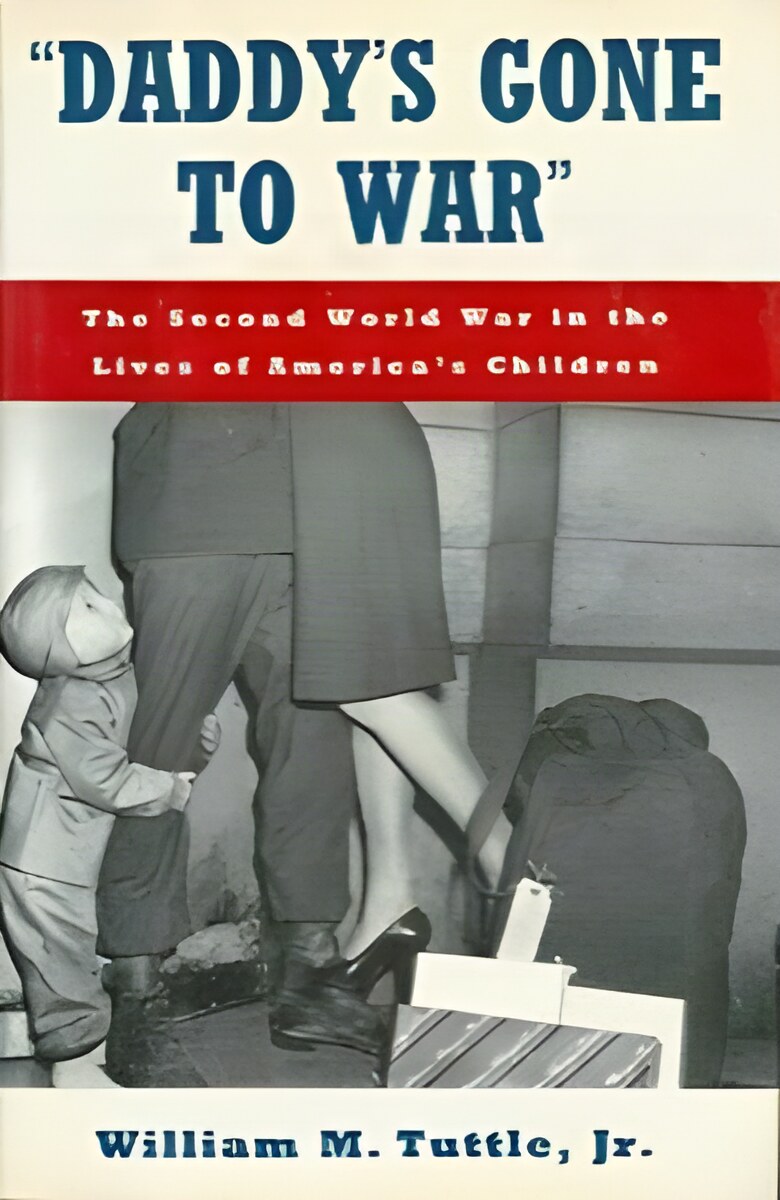
Hardcover. NY, Oxford University Press, 1st, 1993, Book: Very Good, Dust Jacket: Very Good, Hardcover in a bright dust jacket, 365 pages. A fascinating and poignant exploration of wartime America and of one generation's odyssey from childhood to middle age. The author views the experiences of ordinary children through the lens of developmental psychology and argues that WW II left an indelible imprint on the dreams and nightmares of an American generation, not only in childhood, but in adulthood as well. Clean copy.
UK, Cambridge University Press, 1st, 1980, Book: Good, Dust Jacket: Very Good, Hardcover in a bright, price-clipped dust jacket, 233 pages. Anthropologists, in studying other cultures, are often tempted to offer their own explanations of strange customs when they feel that the people involved have not given a good enough reason for these customs. The question how the anthropologist can justify interpretations of customs which go beyond those offered by the people themselves runs through this book. The book focuses on the various interpretations that have been offered by anthropologists of ritual and symbolism. It offers a critical discussion of theories in this field in general, identifying their strengths and weaknesses when applied to the particular case of puberty rituals in a West Sepik village in Papua New Guinea. It then goes on to suggest an alternative approach, which draws on aesthetic as well as anthropological theory, and pays particular attention to the emotional and aesthetic experiences of people as they perform the rites. Pencil marking to about 25 pages, name on inside front cover.
Softcover. Berkeley CA, University of California Press, reprint, 1993, Book: Very Good, Dust Jacket: None, Softcover, 614 pages, b&w illustrations. When lives are dominated by hunger, what becomes of love? When assaulted by daily acts of violence and untimely death, what happens to trust? Set in the lands of Northeast Brazil, this is an account of the everyday experience of scarcity, sickness and death that centres on the lives of the women and children of a hillside "favela". Bringing her readers to the impoverished slopes above the modern plantation town of Bom Jesus de Mata, where she has worked on and off for 25 years, Nancy Scheper-Hughes follows three generations of shantytown women as they struggle to survive through hard work, cunning and triage. It is a story of class relations told at the most basic level of bodies, emotions, desires and needs. Most disturbing - and controversial - is her finding that mother love, as conventionally understood, is something of a bourgeois myth, a luxury for those who can reasonably expect, as these women cannot, that their infants will live. Clean copy.
Softcover. NY, Continuum, reprint, 1989, Book: Very Good, Dust Jacket: None, Softcover, 258 pages. Dialectic of Enlightenment is undoubtedly the most influential publication of the Frankfurt School of Critical Theory. Written during the Second World War and circulated privately, it appeared in a printed edition in Amsterdam in 1947. "What we had set out to do," the authors write in the Preface, "was nothing less than to explain why humanity, instead of entering a truly human state, is sinking into a new kind of barbarism." Yet the work goes far beyond a mere critique of contemporary events. Historically remote developments, indeed, the birth of Western history and of subjectivity itself out of the struggle against natural forces, as represented in myths, are connected in a wide arch to the most threatening experiences of the present. The book consists in five chapters, at first glance unconnected, together with a number of shorter notes. The various analyses concern such phenomena as the detachment of science from practical life, formalized morality, the manipulative nature of entertainment culture, and a paranoid behavioral structure, expressed in aggressive anti-Semitism, that marks the limits of enlightenment. The authors perceive a common element in these phenomena, the tendency toward self-destruction of the guiding criteria inherent in enlightenment thought from the beginning. Using historical analyses to elucidate the present, they show, against the background of a prehistory of subjectivity, why the National Socialist terror was not an aberration of modern history but was rooted deeply in the fundamental characteristics of Western civilization. Spine faded, Clean copy.
Softcover. Cambridge UK, Cambridge University Press, 1st pbk, 2016, Book: Very Good, Dust Jacket: None, Softcover, 325 pages. How do dictators stay in power? When, and how, do they use repression to do so? Dictators and their Secret Police explores the role of the coercive apparatus under authoritarian rule in Asia - how these secret organizations originated, how they operated, and how their violence affected ordinary citizens. Greitens argues that autocrats face a coercive dilemma: whether to create internal security forces designed to manage popular mobilization, or defend against potential coup. Violence against civilians, she suggests, is a byproduct of their attempt to resolve this dilemma. Drawing on a wealth of new historical evidence, this book challenges conventional wisdom on dictatorship: what autocrats are threatened by, how they respond, and how this affects the lives and security of the millions under their rule. It offers an unprecedented view into the use of surveillance, coercion, and violence, and sheds new light on the institutional and social foundations of authoritarian power. ^ pages with dog earred crease, otherwise clean.
Hardcover. NY, Oxford University Press, 1st, 1992, Book: Very Good, Dust Jacket: Very Good, Hardcover in a bright dust jacket, 418 pages. The first book to show how the Civil War transformed gender roles and attitudes toward sexuality among Americans. This unique volume brings together a wide spectrum of critical viewpoints by newly emerging scholars as well as distinguished authors in the field to show how gender became a prism through which the political tensions of antebellum America were filtered and focused. Through the course of the book, many fascinating subjects are explored, from new "manly" responsibilities both black and white men had thrust upon them as soldiers, to women's roles in the guerrilla fighting, to the wartime dialogue on interracial sex. In addition, an incisive introduction by Pulitzer Prize-winning historian James McPherson helps place these various subjects within an overall historical context. Copyright page states first edition, but no price on dj says Book Club. Clean, bright copy.
Hardcover. NY, Macmillan, reprint, 1929, Book: Very Good, Dust Jacket: None, Hardcover, blue cloth with gilt letterng on spine and front cover, 242 pages. Does Civilization Need Religion? sets out from the fact that religion's inability to make its ethical and social resources available for the solution of the moral problems of modern civilization is one, and the neglected one, of the two chief causes responsible for its debilitated condition. It is convinced that if Christian idealists are to make religion socially effective they will be forced to detach themselves from the dominant secular desires of the nations as well as from the greed of economic groups. It aims to show that though neither the orthodox nor the modern wing of the Christian Church seems capable of initiating a genuine revival which will evolve a morality capable of challenging and maintaining itself against the dominant desires of modern civilization's needs, there are resources in the Christian religion which make it the inevitable basis of any spiritual regeneration of Western civilization. Does Civilization Need Religion? maintains that the task of redeeming Western society rests in a peculiar sense upon Christianity, which has reduced the eternal conflict between self-assertion and self-denial to the paradox of self-assertion through self-denial and made the Cross the symbol of life's highest achievement. It is persuaded that the idea of a potent but yet suffering divine ideal which is defeated by the world but gains its victory in the defeat must continue to remain basic in any morally creative worldview. Names on front fly leaf otherwise a clean copy.
Softcover. Chicago, University of Chicago Press, 2nd pr., 2005, Book: Very Good, Dust Jacket: None, Softcover, 288 pages. Little fascinates New Yorkers more than doormen, who know far more about tenants than tenants know about them. Doormen know what their tenants eat, what kind of movies they watch, whom they spend time with, whether they drink too much, and whether they have kinky sex. But if doormen are unusually familiar with their tenants, they are also socially very distant. In Doormen, Peter Bearman untangles this unusual dynamic to reveal the many ways that tenants and doormen negotiate their complex relationship. Combining observation, interviews, and survey information, Doormen provides a deep and enduring ethnography of the occupational role of doormen, the dynamics of the residential lobby, and the mundane features of highly consequential social exchanges between doormen and tenants. Here, Bearman explains why doormen find their jobs both boring and stressful, why tenants feel anxious about how much of a Christmas bonus their neighbors give, and how everyday transactions small and large affect tenants' professional and informal relationships with doormen. Clean, bright copy.
Hardcover. NY, McGraw-Hill, 1st, 1972, Book: Very Good, Dust Jacket: Good, Unpaginated. Hardcover with dust jacket. Clean, unmarked copy with only minor wear to dust jacket. Photographs in black-and-white portray residents in the Town of Camden and Wilcox County, Alabama in the early 1970s, with accompanying text by photographer Bob Adelman and editor Susan Hall. A remarkable document by the photographer renowned for his photographic portraits of the Civil Rights Movement.
Hardcover. London, B. T. Batsford, 1st, 1984, Book: Very Good, Dust Jacket: Very Good, Hardcover in a bright, unclipped dust jacket. Many b&w plates, some color, 216 pages. In this beautiful book, Aileen Ribeiro surveys the clothing worn by the middle and upper classes throughout Europe in the eighteenth century and discusses what this meant in terms of social definition and identity. Ribeiro, one of the world's premier historians of dress, also looks at such subjects as developments in retailing and distribution, etiquette, the rise of the dress designer and couturier, the evolution of ready-made clothes, fancy dress and the masquerade. Clean copy.
Hardcover. Princeton NJ, Princeton University Press, 1st, 1994, Book: Very Good, Dust Jacket: Very Good, Hardcover in a bright dust jacket, 268 pages. The question of what it takes "to be a man" comes under scrutiny in this sharp, often playful, cultural critique of the German duel--the deadliest type of one-on-one combat in fin-de-siecle Europe. At a time when dueling was generally restricted to swords or had been abolished altogether in other nations, the custom of fighting to the death with pistols flourished among Germany's upper-class males, who took perverse comfort in defying their country's weakly enforced laws. From initial provocation to final death agony, Kevin McAleer describes with ironic humor the complex protocol of the German duel, inviting his reader into the disturbing mindset of its practitioners and the society that valued this socially important but ultimately absurd pastime. Clean copy.
Hardcover. NY, Pantheon, 1st, 2017, Book: Very Good, Dust Jacket: Very Good, Hardcover in a bright dust jacket, 237 pages. Economism: an ideology that distorts the valid principles and tools of introductory college economics, propagated by self-styled experts, zealous lobbyists, clueless politicians, and ignorant pundits. In order to illuminate the fallacies of economism, James Kwak first offers a primer on supply and demand, market equilibrium, and social welfare: the underpinnings of most popular economic arguments. Then he provides a historical account of how economism became a prevalent mode of thought in the United States--focusing on the people who packaged Econ 101 into sound bites that were then repeated until they took on the aura of truth. He shows us how issues of moment in contemporary American society--labor markets, taxes, finance, health care, and international trade, among others--are shaped by economism, demonstrating in each case with clarity and elan how, because of its failure to reflect the complexities of our world, economism has had a deleterious influence on policies that affect hundreds of millions of Americans. Remainder mark to bottom edge, otherwise clean.
Softcover. Berkeley, University of California Press, reprint, 1978, Book: Very Good, Softcover, 640 pages. Max Weber's "Economy and Society" is the greatest sociological treatise written in this century. Published posthumously in Germany in the early 1920's, it has become a constitutive part of the modern sociological imagination. "Economy and Society" was the first strictly empirical comparison of social structures and normative orders in world-historical depth, containing the famous chapters on social action, religion, law, bureaucracy, charisma, the city, and the political community with its dimensions of class, status and power. "Economy and Society" is Weber's only major treatise for an educated general public. It was meant to be a broad introduction, but in its own way it is the most demanding textbook yet written by a sociologist. Clean copy.
Hardcover. Chapel Hill, University of North Carolina Press , 1st, 1937, Book: Very Good, Dust Jacket: None, Hardcover, 849 pages, b&w illustrations. Tan cloth covers with dark brown decoration. Previous owner's stamp on both end papers.
Hardcover. NY, Harper & Row, 1st, 1972, Book: Very Good, Dust Jacket: Very Good, Hardcover in a bright dust dacket with minor wear, unclipped. Durkheim was a turn of the century French sociologist who argued that society is largely responsible for shaping an individual's moral values. He was largely critical of laissez-faire capitalism, arguing that society needed to be morally reconstructed. Lukes' comprehensive biography tells the story of Durkheim's life: how he responded to his critics, and how he tried to make his way in the academic world of pre-WWI Europe. Lukes examines Durkheim's work in its historical context, and offers a critical examination of it as well. Clean copy.
Hardcover. London, Routledge, 1st, 1989, Book: Very Good, Dust Jacket: Very Good, Hardcover in a bright dust jacket, 210 pages, b&w illustrations. Beard examines the English country house life, its gentry, and the changes they undertook through the century in order to survive. The author shows how after World War Two, their political power had eroded and they began to run their estates as businesses, instead of paternalistic rural communities. Clean copy.
Softcover. Oxford UK, Cambridge University Press, 2nd Ed., 2000, Book: Very Good, Dust Jacket: None, Softcover, 580 pages. INSCRIBED BY AUTHOR on inside front cover. This classic work of recent historiography broke the hold of the "old guard" on this key period of English history. It has now been extensively rewritten, and in its updated form reinforces its arguments with new evidence and addresses some of the historical preoccupations of the past fifteen years.
Softcover. Cambridge MA, Harvard University Press, reprint, 1985, Book: Very Good, Dust Jacket: None, Softcover, 291 pages with index. A social history of Europe in all its aspects: economic, political, diplomatic military, colonial-expansionist. Crisply and succinctly written, it describes Europe not through a history of individual countries, but in a common context during the three quarters of a century between the death of Louis XIV and the industrial revolution in England and the social and political revolution in France. It presents the development of government, institutions, cities, economies, wars, and the circulation of ideas in terms of social pressures and needs, and stresses growth, interrelationships, and conflict of social classes as agents of historical change, paying particular attention to the role of popular, as well as upper- and middle-class, protest as a factor in that change. Clean, bright copy.
Hardcover. NY, The New Press, 1st, 2000, Book: Very Good, Dust Jacket: Very Good, Hardcover in a bright dust jacket, 402 pages. Ann Oakley came to widespread attention as part of the new school of British feminists to emerge in the 1960s, and has since earned a reputation as one of the most innovative feminist thinkers and social scientists writing today. In Experiments in Knowing, a major new work, Oakley integrates her personal and professional thinking to examine the historical development of methodology in the social and natural sciences, demonstrating how both fields have been subject to a process of "gendering." Oakley not only reconciles the long-standing opposition between the quantitative and the qualitative methods but shows that the experimental and intuitive approaches must be used in tandem to provide a full understanding of any subject of scientific inquiry. Clean copy.
Hardcover. NY, NYU Press , 1st, 2014, Book: Very Good, Dust Jacket: None, Hardcover, illustrated boards, no dust jacket issued, 272 pages. Returning Vietnam veterans had every reason to expect that the government would take care of their readjustment needs in the same way it had done for veterans of both World War II and Korea. But the Vietnam generation soon discovered that their G.I. Bills fell well short of what many of them believed they had earned. Mark Boulton's groundbreaking study provides the first analysis of the legislative debates surrounding the education benefits offered under the Vietnam-era G.I. Bills. Specifically, the book explores why legislators from both ends of the political spectrum failed to provide Vietnam veterans the same generous compensation offered to veterans of previous wars. Clean copy.
Softcover. NY, Schocken Books, reprint, 1969, Book: Very Good, Dust Jacket: None, Softcover, 222 pages, b&w illustrations. The Falashas, who are the most isolated and most ancient Jewish community extant, have preserved their own religious writings through the centuries. No one knows for certain how Judaism reached this part of Africa. They observe the Sabbath as indicated in the Torah, eat only kosher food, pray in straw-roofed synagogues, and use only unleavened bread during the seven days of Passover. This book offers a cross section of their sacred literature, translated for the first time into English from Ethiopic sources. In addition, the translator provides a detailed description of the life and mores of the Falashas, based on his personal experience and observation during a prolonged stay in their community. Clean copy.
Hardcover. New York, Rizzoli International , 1st, 1993, Book: Very Good, Dust Jacket: Very Good, Hardcover with a bright dust jacket, 224 pages illustrated in color and b&w throughout. Foreword by John Kenneth Galbraith. Folio. Brown leatherette. Like new, in original shrinkwrap.
Hardcover. Philadelphia, University of Pennsylvania Press, 1st, 1982, Book: Very Good, Dust Jacket: Good, Hardcover in a dust jacket with fading to spine, 297 pages. Focusing on the family and career of the prominent Egyptian politician Sayed Bey Marei, Robert Springborg provides in this volume a political ethnography on the changing roles of the family and other social units in Egypt's political economy. He traces the rise to power of the rural nobility from the late nineteenth century, demonstrating how members of this class used family, regional, patron-client, and small-group loyalties to maintain and enhance their powers and privileges under the regimes of Nasser and Sadat. In this context the author also investigates the complexities between provincial and national politics, and between the bureaucratic/technocratic elite and the political elite of the country. Clean copy.

 "Day of Shining Red: An Essay on Understanding Ritual by: Lewis, Gilbert")
 "Death Without Weeping: The Violence of Everyday Life in Brazilby: Nancy Scheper-Hughes")

 "Dictators and Their Secret Police:Coercive Institutions and State Violence by: Greitens, Sheena Chestnut")
![Divided Houses: Gender and the Civil Warby: Clinton, Catherine /Silber, Nina [Editors]](https://www.browsingisarousing.com/shop/images/397501.jpg "Divided Houses: Gender and the Civil Warby: Clinton, Catherine /Silber, Nina [Editors]")


 "Down Home: Camden, Alabamaby: Adelman, Bob")
 "Dress in Eighteenth Century Europe 1715-1789by: Ribeiro, Aileen")



 "Ejido, The: Mexico's Way Outby: Simpson, Eyler N.")
 "Emile Durkheim; His Life and Work: A Historical and Critical Studyby: Lukes, Steven")
 "English Judiciary in the Age of Glanvill and Bracton, c. 1176-1239, Theby: Turner, Ralph V.")
 "English Landed Society in the Twentieth Centuryby: Beard, Madeleine")
 "English Society, 1660-1832: Religion, Ideology and Politics During the Ancien Regime (INSCRIBED COPY)by: Clark, J. C. D.")


 "Failing Our Veterans: The G.I. Bill and the Vietnam Generationby: Mark Boulton")

 "Families of Fortune: Life in the Gilded Ageby: Gregory, Alexis")
 "Family, Power, and Politics in Egypt: Sayed Bey Mare--His Clan, Clients, and Cohorts by: Robert Springborg")