Softcover. Durham NC, Duke University Press, 1st pbk, 2010, Book: Very Good, Dust Jacket: None, Softcover, 443 pages. Latin America experienced an epochal cycle of revolutionary upheavals and insurgencies during the twentieth century, from the Mexican Revolution of 1910 through the mobilizations and terror in Central America, the Southern Cone, and the Andes during the 1970s and 1980s. In his introduction to A Century of Revolution, Greg Grandin argues that the dynamics of political violence and terror in Latin America are so recognizable in their enforcement of domination, their generation and maintenance of social exclusion, and their propulsion of historical change, that historians have tended to take them for granted, leaving unexamined important questions regarding their form and meaning. The essays in this groundbreaking collection take up these questions, providing a sociologically and historically nuanced view of the ideological hardening and accelerated polarization that marked Latin America's twentieth century. Clean copy.
Softcover. London/NY, Cambridge University Press, reprint, 2002, Book: Very Good, Dust Jacket: None, Softcover, 234 pages with index, b&w illustrations. Brazil once enjoyed a near monopoly in rubber when that commodity was gathered in the wild. By 1913, however, cultivated rubber from Southeast Asia swept the Brazilian gathered product from the market. In this innovative study, Warren Dean demonstrates that environmental factors have played a key role in the many failed attempts to once again produce a significant rubber crop in Brazil. Dean traces the numerous attempts to plant rubber in Brazil, including the ill-fated Ford estates, and others established by the major multinational tire companies. He also analyzes the struggles of the Brazilian government to foster rubber development, in the hope of obtaining a domestic source of supply for national industries that are now dependent on imports from Southeast Asia. Bookseller label on rear cover otherwise clean.
Softcover. Stanford CA, Stanford University Press, 3rd pr., 1999, Book: Very Good, Dust Jacket: None, Softcover, 493 pages. This book is about ending guerrilla conflicts in Latin America through political means. It is about peace processes, aimed at securing an end to military hostilities in the context of agreements that touch on some of the principal political, economic, social, and ethnic imbalances that led to conflict in the first place. The book presents a carefully structured comparative analysis of six Latin American countries--Nicaragua, El Salvador, Guatemala, Mexico, Colombia, and Peru--which experienced guerrilla warfare that outlasted the end of the Cold War. The book explores in detail the unique constellation of national and international events that allowed some wars to end in negotiated settlement, one to end in virtual defeat of the insurgents, and the others to rage on. The aim of the book is to identify the variables that contribute to the success or failure of a peace dialogue. Clean copy.
Softcover. Austin TX, University of Texas Press, 1st, 2011, Book: Very Good, Dust Jacket: None, Softcover, 288 pages. In the spring of 1983, a North American couple who were hoping to adopt a child internationally received word that if they acted quickly, they could become the parents of a boy in an orphanage in Honduras. Layers of red tape dissolved as the American Embassy there smoothed the way for the adoption. Within a few weeks, Margaret Ward and Thomas de Witt were the parents of a toddler they named Nelson-an adorable boy whose prior life seemed as mysterious as the fact that government officials in two countries had inexplicably expedited his adoption. In Missing Mila, Finding Family, Margaret Ward tells the poignant and compelling story of this international adoption and the astonishing revelations that emerged when Nelson's birth family finally relocated him in 1997. After recounting their early years together, during which she and Tom welcomed the birth of a second son, Derek, and created a family with both boys, Ward vividly recalls the upheaval that occurred when members of Nelson's birth family contacted them and sought a reunion with the boy they knew as Roberto. She describes how their sense of family expanded to include Nelson's Central American relatives, who helped her piece together the lives of her son's birth parents and their clandestine activities as guerrillas in El Salvador's civil war. In particular, Ward develops an internal dialogue with Nelson's deceased mother Mila, an elusive figure whose life and motivations she tries to understand.
Hardcover. np, self-published, 1967, Book: Good, Dust Jacket: None, Hardcover, green cloth covers with gilt title on spine, ship drawing on front cover. 280 pages. A collection of articles and a manuscript written by Julia Louisa Keyes (1828-1877). She was the daughter of novelist Caroline Lee Hentz and wife of Dr. John W. Keyes of Montgomery, Ala. The collection is a typescript of "Our Life in Brazil," a combination of diary, reminiscences, and letter copies, compiled in 1874 by Julia Louisa Hentz Keyes about her experiences in Brazil, 1867-1870. Keyes and her husband emigrated to Brazil after the Civil War. This volume was compiled by Nancy Hamlin Huber on the 100th anniversary of that first voyage. Blank prelim page gone, clean copy. Scarce.
Softcover. London, Tate Publishing, 1st, 2013, Book: Very Good, Dust Jacket: None, Softcover. Like new in publisher's shrink-wrap. 224 pages, b&w illustrations. Provides new Latin American-centric scholarship, not only about surrealism's impact on the region but also about the region's impact on surrealism. It reconsiders the relation between art and anthropology, casts new light on the aesthetics of 'primitivism,' and makes a strong case for Latin American artists and writers as the inheritors of a movement that effectively went underground after World War II.
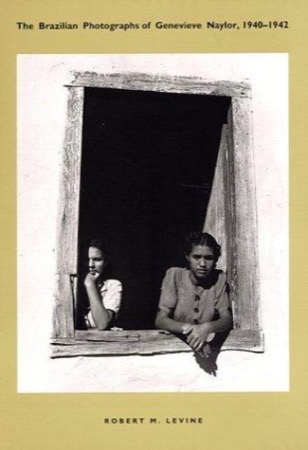
Softcover. Durham NC, Duke University Press, 1st, 1998, Book: Very Good, Dust Jacket: None, Softcover, 156 pages. In the early 1940s as the conflict between the Axis and the Allies spread worldwide, the U.S. State Department turned its attention to Axis influence in Latin America. As head of the Office of Inter-American Affairs, Nelson Rockefeller was charged with cultivating the region's support for the Allies while portraying Brazil and its neighbors as dependable wartime partners. Genevieve Naylor, a photojournalist previously employed by the Associated Press and the WPA, was sent to Brazil in 1940 by Rockefeller's agency to provide photographs that would support its need for propaganda. Often balking at her mundane assignments, an independent-minded Naylor produced something far different and far more rich--a stunning collection of over a thousand photographs that document a rarely seen period in Brazilian history. Accompanied by analysis from Robert M. Levine, this selection of Naylor's photographs offers a unique view of everyday life during one of modern Brazil's least-examined decades. Clean copy.
Hardcover. NY, Appleton-Century-Crofts, 1st, Book: Very Good, Dust Jacket: None, Hardcover, tan cloth with gilt lettering on black title blocks, 650 pages. "This is the only complete history of the Latin American Republics that takes into account the important subject of inter-American relations in the present war {World War II}. It brings Latin American history down to the conferences in which Under-Secretary of State Sumner Welles helped to cement North and South solidarity." The book presents, in separate chapters, the history of each of the twenty Latin American nations since independence. Bookplate and name on front endpapers, otherwise a clean, tight copy.

 "A Century of Revolution: Insurgent and Counterinsurgent Violence during Latin Americas Long Cold War by: Joseph, Gilbert M./Grandin, Greg")

 "Comparative Peace Processes in Latin America by: Arnson Cynthia J. (Ed.)")
 "Missing Mila, Finding Family: An International Adoption in the Shadow of the Salvadoran Civil War by: Ward, Margaret E.")
 "Our Life in Brazilby: Julia Keyes")
 "Surrealism in Latin Americaby: Eder, Graciela Speranza Dawn Ades Rita")