Hardcover. New Haven CT, Yale University Press, 1st, 2006, Book: Very Good, Dust Jacket: Very Good, Hardcover in a bright dust jacket, 546 pages. This epic history compares the empires built by Spain and Britain in the Americas, from Columbus's arrival in the New World to the end of Spanish colonial rule in the early nineteenth century. J. H. Elliott, one of the most distinguished and versatile historians working today, offers us history on a grand scale, contrasting the worlds built by Britain and by Spain on the ruins of the civilizations they encountered and destroyed in North and South America. Elliott identifies and explains both the similarities and differences in the two empires, processes of colonization, the character of their colonial societies, their distinctive styles of imperial government, and the independence movements mounted against them. Based on wide reading in the history of the two great Atlantic civilizations, the book sets the Spanish and British colonial empires in the context of their own times and offers us insights into aspects of this dual history that still influence the Americas. Color illustrations. Clean copy.
Hardcover. NY, Random House, 1st, 1969, Book: Very Good, Dust Jacket: Very Good, Hardcover in a lightly worn dust jacket, 387 pages. These essays originated in a series of lectures and seminars held by the Graduate School of Contemporary European Studies and the Centre for the Advanced Study of Italian Society of the University of Reading in 1966-1967. The countries covered include Italy, Germany, Austria, Hungary, Rumania, Poland, Finland, Norway, Great Britain, France, Spain, and Portugal. Name on front fly leaf otherwise clean.
Hardcover. Reno, Center for Basque Studies, 1st, 2012, Book: Very Good, Dust Jacket: None, 333 pages, b&w photos. Black illustrated boards, no dust jacket. Light bumping to corners, else a clean, tight copy. his story--that of the government-in-exile of Lehendakari Jose Antonio Agirre and the multitudes of other Basques who were forced by war and oppression to flee their homeland--has not been written in English before and is rather unknown to the Basque, Spanish, and French historiography. Drawing on primary sources; archival documentation; and interviews with many Basque political exiles, resistance members, and former prisoners of labor camps Professor Xabier Irujo tells a gripping story of the Basque autonomous government, conceived during the beginnings of a bloody civil war, forced to organize a mass exile and then overtaken by necessity to feed and clothe its exiled population. Following this initial period, the exiled Basques were then confronted by World War and forced again into flight, this time mainly to the Americas. Never giving up their opposition to the dictatorship of Francisco Franco, the government continued its struggle during forty long years of existence, through wars hot and cold as well as countless political developments. While tracing the history of Lehendakari Agirre, this book is more the story of all of the Basques who were forced into exile, and it serves as a testimony to their unwavering determination to return to their homeland. In addition, the book contains an extensive biographical index of many of the heretofore unknown exile activists: writers, politicians, soldiers, intellectuals, but even more so, Basque patriots.
Hardcover. Thunder Bay Press, 1st, 2007, Book: Very Good, Dust Jacket: None, Hardcover, 48 pages. For over forty years, postmodern architect Frank Gehry has changed skylines with his dramatic forms. Among several other awards, his enchanting body of work earned him the prestigious Pritzker Architecture Prize-the "Nobel Prize of architecture." Experience for yourself Gehry's captivating deconstructive designs in a new interactive book, Frank Gehry in Pop-Up. This beautiful pop-up book illustrates Frank Gehry's greatest works of architecture and their natural environments, demonstrating his gift for radically redefining structure and space. Discover the inspirations behind Gehry's light and lively designs in a three-dimensional way, and learn how he combines building elements with an innovative approach. Featured within are his most iconic works, including the titanium-clad Guggenheim Museum in Bilbao, Spain, the Walt Disney Concert Hall in Los Angeles, and the pioneering, pulled-apart structure of Gehry's Venice Beach House. Get to know the man behind the buildings with a brief yet in-depth look into Gehry's personal history and lifeworks. Compare and contrast the many different sides of Gehry, from the whimsical laid-back Californian to the closet elitist-and sometimes obsessive perfectionist.
Hardcover. New York, Abrams/Guggenheim Museum, 1st, 1997, Book: Very Good, Dust Jacket: Very Good, 209 pages, illustrated in color and b&w. Still in publisher's shrinkwrap. An account of the design and contruction of the Guggenheim Museum in Bilbao, Spain. Prefaces by Thomas Krens and Juan Ignacio Vidarte. Color illustrations throughout. 211+ 1 pages.
Hardcover. Houston, Rice University, 1st, 1991, Book: Very Good, Dust Jacket: Very Good, Hardcover, 142 pages. Illustrated with black & white photographs by George Krause. Clean, bright copy. For the past 45 years, George Krause has worked on four distinct series of photographs, each represented in this volume. "The Street" is an oblique journal of places, including Mexico, Spain, Italy, and Philadelphia, where the artist has lived and worked. The objects photographed in "Qui Riposa" are tombstones and cemetery monuments; in "Saints and Martyrs," religious statuary; and in "I Nudi," naked human models. From these common objects arise pictures of great beauty and mystery.
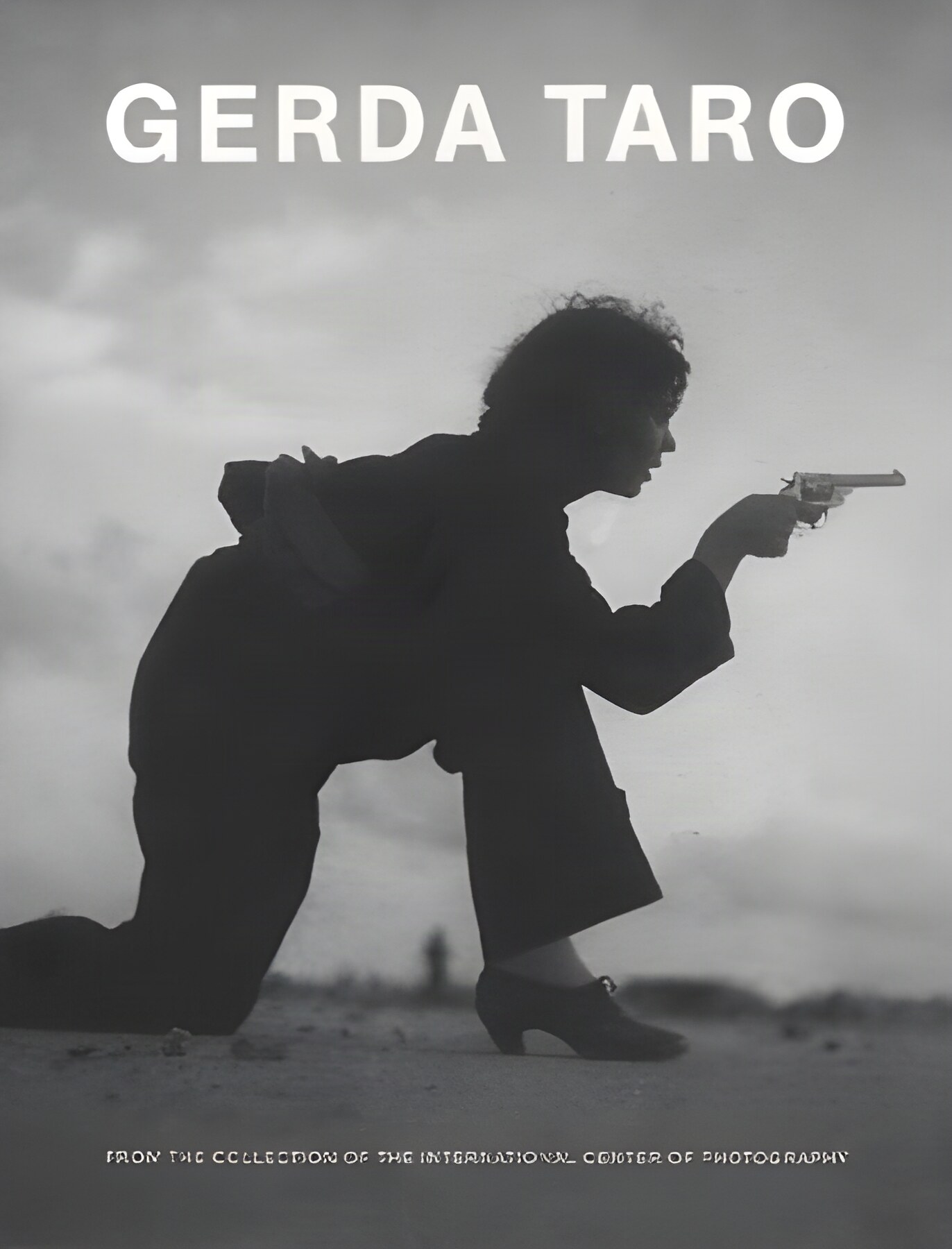
Hardcover. Gottingen, Steidl/ICP , 1st, 2007, Book: Very Good, Dust Jacket: None, Hardcover, pictorial boards, 175 pages. In 1934, after reading John Dos Passos' 1919, Gerda Taro left her home in Stuttgart for Paris. There she met the now legendary photographer Robert Capa, with whom she traveled to Spain at the start of the Civil War. As his lover and photographic partner--and as his manager--she is often credited with launching his career. She was also the first woman photojournalist to enter the heat of battle. The couple worked together until Taro was killed while photographing a crucial clash near Madrid in July 1937, just six days shy of her twenty-sixth birthday. The International Center of Photography holds by far the world's largest collection of Taro's work, including approximately 200 prints as well as original negatives. This selective survey of the ICP's holdings is organized chronologically, and set in context with the inclusion of magazine layouts; it is the first major collection of Gerda Taro's photographs ever published. Clean, bright copy.
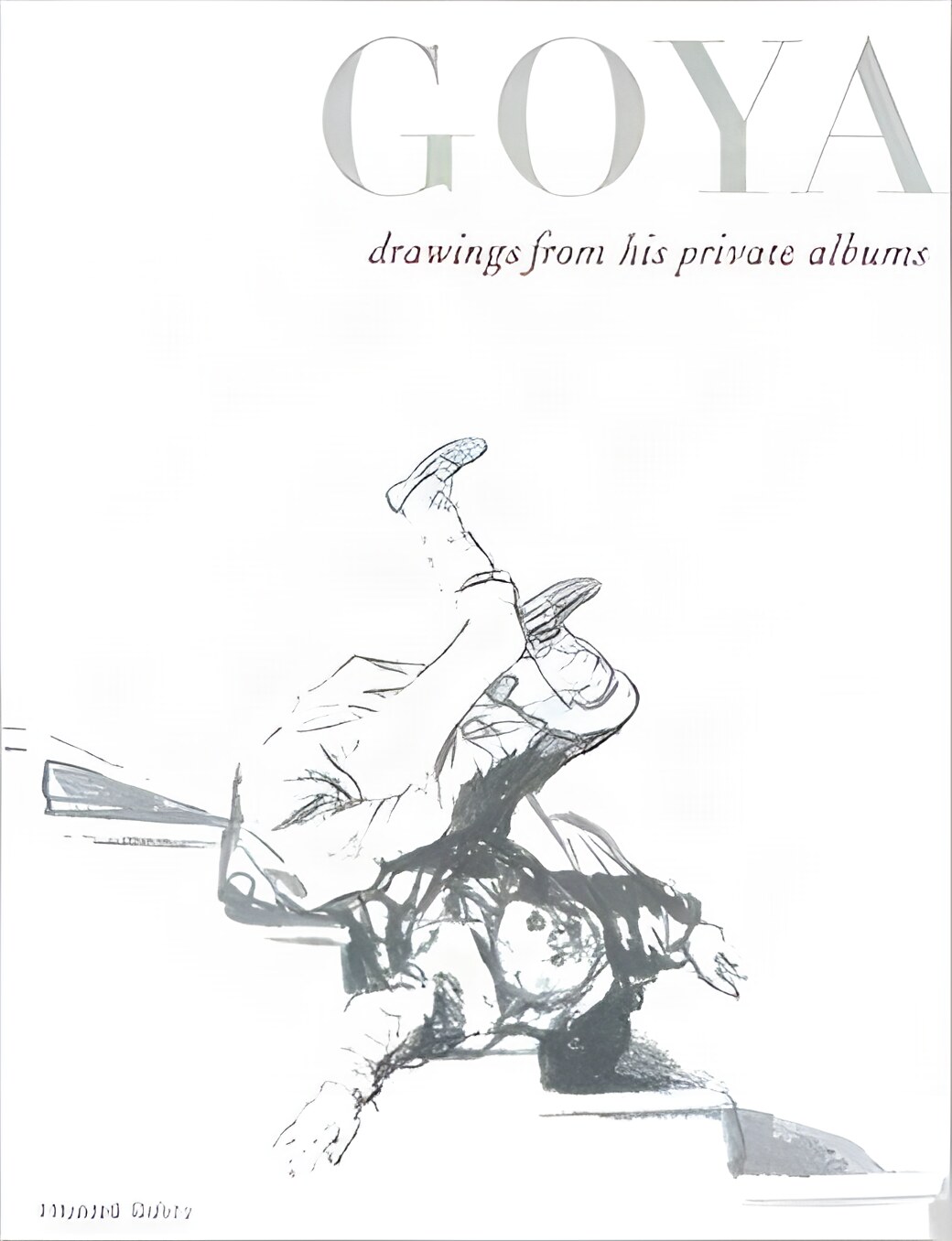
Softcover. US, Lund Humphries Publishers, 2004, Book: Very Good, Dust Jacket: None, Softcover. Like new in publisher's shrink-wrap. Over 35 years, alongside his paintings and prints, Francisco Goya expressed his creative genius in eight albums of drawings. Split up after his death, their pages scattered across various collections, the albums remain little known. This book reunites over 100 of the drawings, almost all in colour at actual size, including both sides of double-sided sheets, and there are detailed commentaries on each album and each drawing. The album drawings reveal Goya's astonishing powers of invention and observation. Essay by Tom Lubbock.
Hardcover. Spain, La Fabrica, 1st, 2011, Book: Near Fine, Dust Jacket: None, Hardcover, 63 pages. Like new in publishers shrink-wrap. Reveals the Mexican photographer`s extended explorations in (mostly) cities in the north of India--Varanasi, Delhi and Calcutta, as well as Bombay--over the past 13 years. Iturbide`s black-and-white images are strikingly at ease with their subject matter, able to locate arrangements of objects, architectural outline and urban signage without ever lapsing into visual tourism. Text in English and Spanish.
Hardcover. Spain, La Fabrica, 1st, 2011, Book: Near Fine, Dust Jacket: None, Hardcover, 63 pages. Like new in publishers shrink-wrap. Reveals the Mexican photographer's extended explorations in (mostly) cities in the north of India--Varanasi, Delhi and Calcutta, as well as Bombay--over the past 13 years. Iturbide`s black-and-white images are strikingly at ease with their subject matter, able to locate arrangements of objects, architectural outline and urban signage without ever lapsing into visual tourism. Text in English and Spanish.
Hardcover. Princeton Architectural Press, 1st, 2006, Book: Very Good, Dust Jacket: Very Good, Hardcover, 256 pages. The Breakers, the Waldorf, the Biltmore, the Sherry, the Pierre--these landmark hotels are synonymous with grand luxury and style. When they were built, in the 1920s, their refined elegance and grandeur set the bar for hotels and resorts the world over. Responsible for creating these and countless other hotels throughout the United States, were the partners of a single architectural firm: Schultze & Weaver. Together, this duo--an architect and an engineer--virtually invented the glamorous lifestyle made famous in films like Grand Hotel. Catering to the social elite of which they were themselves a part, Schultze & Weaver synthesized the Old World style of Renaissance Italy, Moorish Spain, and Georgian England with all of the modern amenities that made hotel living luxurious. This book presents portfolios of fifteen of the firm's most spectacular hotels, culminating in the Art Moderne masterpiece of the Waldorf-Astoria. Over two hundred period photographs and hand-colored architectural renderings chart the ascent of the American hotel in all its glory and glamour, before the Great Depression forever changed the lifestyles of America's rich and famous. Essays address the cultural and technological developments that underpin the creation of resort and residential hotels, including the elemental role played by Schultze & Weaver.
Hardcover. Barcelona, Spain, Syzygy, 1st, 2010, Book: Very Good, Dust Jacket: None, 95 pages. Hardcover with padded covers. Color pictures throughout of Fran Bull sculptures. Clean, tight copy with minor wear to edges.
Hardcover. Spain, Editorial Labor, 1st , 1955, Book: Very Good, Dust Jacket: None, Spanish editions. 1,080 pages. Black & white photos, drawings. Both with 3/4 leather, spine with gilt lettering. Vol I with stain to endpapers. Vol. II page 1029 with bottom corner crease. Both with browning to black leather spines, bottom edgewear.
Hardcover. New York , Charles Scribner's Sons, reprint, 1899, Book: Good, Dust Jacket: None, 416 pages. Blue cloth cover, gilt lettering, and embossed design. Some wear to corners and edges of spine. Spine is slightly cracked at rear endpage. Some faint stains on front pages, otherwise inside is bright and clean, with more than 500 b&w illustrations, maps and diagrams. A nice copy.
Hardcover. New York , Charles Scribner's Sons, reprint, 1899, Book: Good, Dust Jacket: None, 425 pages. Blue cloth cover, gilt lettering, and embossed design. Some wear to corners and edges of spine. Some faint stains on front pages, otherwise inside is bright and clean, with more than 500 b&w illustrations, maps and diagrams. A nice copy.
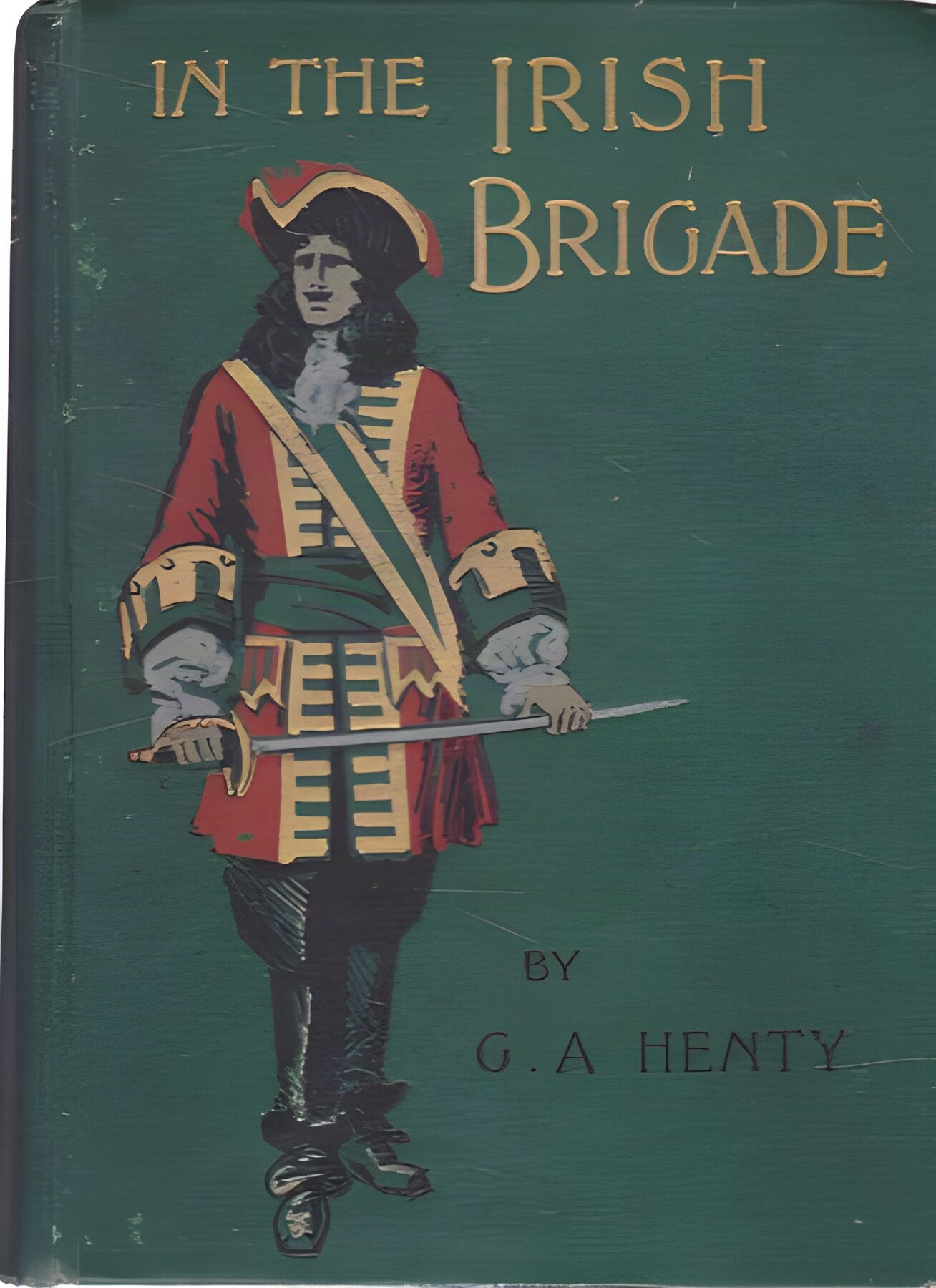
Hardcover. NY, Charles Scribner's Sons, 1st US, 1900, Book: Very Good, Dust Jacket: None, Hardcover, green cloth stamped in gilt and three colors, 384 pages plus publisher's ads in rear. 12 b&w illustrations by Charles Sheldon. Desmond Kennedy is a young Irish lad who left Ireland to join the Irish Brigade in the service of Louis XIV of France. In Paris he incurred the deadly hatred of a powerful courtier from whom he had rescued a young girl who had been kidnapped, and his perils are of absorbing interest. Captured in an attempted Jacobite invasion of Scotland, he escaped in a most extraordinary manner. As aid-de-camp to the Duke of Berwick he experienced thrilling adventures in Flanders. Transferred to the Army in Spain, he was nearly assassinated, but escaped to return, when peace was declared, to his native land, having received pardon and having recovered his estates. Previous owner's signature on a blank prelim page, otherwise clean.
Hardcover. Boston/ New York , Bulfinch Press, 1st, 1993, Book: Very Good, Dust Jacket: Very Good, Hardcover, 533 pages, 431 works reproduced in color. Small remainder mark to bottom edge, otherwise a bright, clean copy in a similar dust jacket. The most comprehensive look at Miro's art available in book form. In honor of Miro's 100th birthday, 1993 has been designated Miro Year, which is being celebrated with great fanfare in Europe and the U.S. This book features full-color reproductions of the artist's work on canvas and paper, from his earliest sketch to his mature works of the 1980s.
Hardcover. Chicago, University Of Chicago Press, 1st, 2001, Book: Very Good, Dust Jacket: Very Good, Hardcover, 227 pages. One of the leading artists of his generation, the Spanish sculptor Juan Munoz (1953-2001) was known for his diverse and highly original body of work centering on the narrative possibilities of figures in environments. Juan Munoz illustrates in full color approximately sixty works, including sculptures, drawings, and several major installations, which were included in a major exhibition presented by the Hirshhorn Museum and Sculpture Garden and the Art Institute of Chicago in October 2001.
Hardcover. NY, Doubleday & Co, 1st, 1947, Book: Good, Dust Jacket: Fair, Hardcover, dark blue cloth lettered in red, spine lettering red, leaves tanned. In a worn and chipped dust jacket, 224 pages. Tommy Habledon is both the pursued and the pursuer in this fascinating bit of international intrigue that starts in Sweden and ends on an island off the coast of Spain. No markings.
Softcover. Los Angeles, CA, Taschen, 1st, 2005, Book: Very Good, Dust Jacket: None, 192 pages. Softcover. Very clean, unmarked copy still in publishers shrink-wrap. Luis Bunuel, one of the most brilliant representatives of the surrealist movement, chose to make films and was able to make them with unflagging fidelity to his principles for fifty years. After an audacious Parisian showing of Un Chien Andalou in 1929 (Bunuel carried stones in his pockets in case he needed them to fend off the audience), Bunuel's subsequent career in Spain (Las Hurdes), Hollywood and Mexico (Los Olvidados, Robinson Crusoe, El, Nazarin) before returning to France (Diary of a Chambermaid, Belle de jour, The Discreet Charm of the Bourgeoisie, That Obscure Object of Desire), showed that the only subjects he cared to make films about were the three that are never supposed to be discussed in polite society: sex, religion, and politics.
Softcover. Washington DC, National Gallery of Art, 1st, 2009, Book: Very Good, Dust Jacket: None, Softcover, 178 pages, color illustrations. Offers a look at the life and work of Luis Melendez, one of eighteenth-century Europe's greatest still-life painters. This catalogue details thirty of Luis Melendez's wonderful still-life paintings beautifully presented with new insights about Melendez's life, the everyday objects in his paintings, and the materials and methods he used in creating these works.
Hardcover. Dynamite Entertainment, 1st, 2017, Hardcover, glossy pictorial boards, 272 pages. A celebration of the great artists who revolutionized horror comics in the 1970s with their work on Warren's Vampirella, Creepy, and Eerie horror comics. This first-ever comprehensive history of Spanish comic books and Spanish comic artists reveals their extraordinary success -- not just in Spain and America, but around the world. Containing artwork from over 80 artists, this in-depth retrospective includes profiles of such legends as Esteban Maroto, Sanjulian, Jose Gonzalez, Jordi Bernet, Enrich, Victor De La Fuente, Jose Ortiz and Luis Garcia Mozos. With 500 illustrations, over half scanned directly from the original artwork, Masters Of Spanish Comic Book Art honors the "Golden Generation" whose artwork inspired the imagination of comic book lovers everywhere. Clean copy.


 "Encontro \"Magick\" de Fertnando Pessoa e Aleister Crowleyby: Roza (Luiz Miguel Rosa Dias), Miguel")

 "Expelled from the Motherland The Government of President Jose Antonio Agirre in Exile, 1937-1960by: Irujo, Xabier")


 "Forgotten Shrines of Spainby: Byne, Mildred Stapley")
 "Frank Gehry in Pop-Upby: Jinny Johnson and Roland Lewis")
 "Frank O. Gehry: Guggenheim Museum Bilbaoby: Van Bruggen, Coosje")
 "George Krause: A Retrospectiveby: Tucker, Anne W.")
 "Graciela Iturbide: No Hay Nadie, There is No-Oneby: Iturbide, Graciela")
 "Graciela Iturbide: No Hay Nadie, There is No-Oneby: Iturbide, Graciela")
 "Grand Hotels of the Jazz Age: The Architecture of Schultze & Weaverby: Marianne Lamonaca")
 "Halleluiah Chorus '08 Tourby: Bull, Fran; Corbett, Carolyn")
 "Historia del Arte Espanol Vol. I & IIby: Pellicer, Alejandro Cirici")
 "History of Our Navy, The: From its Origin to the End of the War with Spain, 1775-1898, Vol. I of V.by: Spears, John R.")
 "History of Our Navy, The: From its Origin to the End of the War with Spain, 1775-1898, Vol. II of V.by: Spears, John R.")
 "Joan Miro: 1893 - 1993by: Miro, Joan")

 "Let the Tiger Dieby: Manning Coles")
 "Luis Bunuel: Chimera 1900-1983 (Directors)by: Krohn, Bill (Editor)")
 "Luis Melendez: Master of the Spanish Still Life by: Hirschauer Gretchen A. Catherine A. Metzger with Peter Cherry Natacha Sesena")