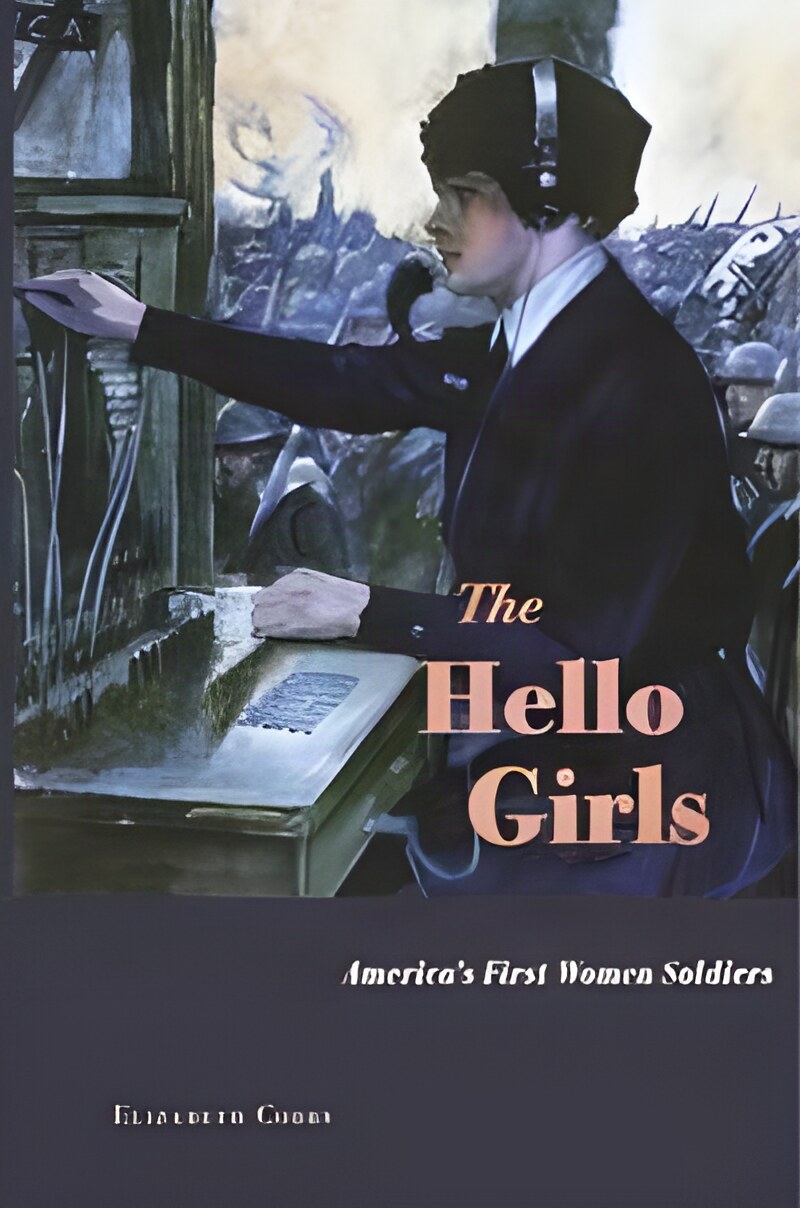
Hardcover. Cambridge MA, Harvard University Press, 3rd pr., 2017, Book: Very Good, Dust Jacket: Very Good, Hardcover in a bright dust jacket, 370 pages with index. Photographs, illustrations, notes, index. "This is the story of how America's first women soldiers helped win World War I, earned the vote, and fought the U.S. Army. In 1918, the U.S. Army Signal Corps sent 223 women to France. They were masters of the latest technology: the telephone switchboard. General John Pershing, commander of the American Expeditionary forces, demanded female 'wire experts' when he discovered that inexperienced doughboys were unable to keep him connected with troops under fire. Without communications for even an hour, the army would collapse". Clean copy.
Hardcover. London, T. Carnan and F. Newbery, 4th Ed., 1778, Book: Good, Dust Jacket: None, Hardcover, calf binding with covers detached, 262 pages, engraved frontispiece (depicting Millenium Hall). A 1762 novel by Sarah Scott. It was Scott?'s most significant novel, popular enough to go into four editions very early into its publication. Interest has revived in the 21st century among feminist literary scholars. Elizabeth Montague, Sarah Scott?s sisters, had become a leader of the bluestockings, a coterie of reform-minded individuals. Hall is a fictional embodiment of bluestockings ideals. The book was a best seller when it first appeared in 1762, running through four editions by 1778. Frontispiece detached but all text pages still firmly bound and clean. A candidate for rebinding.
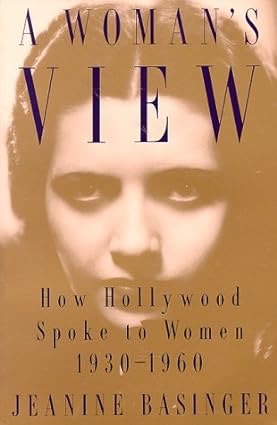
Softcover. Hanover NH, Wesleyan University Press, 1st, 1993, Book: Very Good, Dust Jacket: None, Softcover, 542 pages. Now, Voyager, Stella Dallas, Leaver Her to Heaven, Imitation of Life, Mildred Pierce, Gilda ...these are only a few of the hundreds of "women's films" that poured out of Hollywood during the thirties, forties, and fifties. The films were widely disparate in subject, sentiment, and technique, they nonetheless shared one dual to provide the audience (of women, primarily) with temporary liberation into a screen dream--of romance, sexuality, luxury, suffering, or even wickedness--and then send it home reminded of, reassured by, and resigned to the fact that no matter what else she might do, a woman's most important job was...to be a woman. Now, with boundless knowledge and infectious enthusiasm, Jeanine Basinger illuminates the various surprising and subversive ways in which women's films delivered their message. Basinger examines dozens of films, exploring the seemingly intractable contradictions at the convoluted heart of the woman's genre--among them, the dilemma of the strong and glamorous woman who cedes her power when she feels it threatening her personal happiness, and the self-abnegating woman whose selflessness is not always as "noble" as it appears. Basinger looks at the stars who played these women and helps us understand the qualities--the right off-screen personae, the right on-screen attitudes, the right faces--that made them personify the woman's film and equipped them to make believable drama or comedy out of the crackpot plots, the conflicting ideas, and the exaggerations of real behavior that characterize these movies.
Softcover. Los Angeles, Augustan Reprint Society, reprint, 1980, Book: Very Good, Dust Jacket: None, Softcover, facsimile reprint of a 1673 pamphlet. Introduction by Paula L. Babour, 56 pages. Early feminist tract. Name on front cover, otherwise a clean copy.
Hardcover. NY, Warner/Amistad, 1st, 1990, Book: Very Good, Dust Jacket: Very Good, Hardcover in a bright. unclipped dust jacket. Wonderful, inspiring stories of dozens of black women in opera and classical music. Features in-depth portrais of such notables as Sissieretta Jones, Elizabeth Taylor-Greenfield, Marie Selika, Marian Anderson, Flora Batson, Dorothy Maynor and many more. 236 pages including index. B&W photos. Inscription on front fly leaf, otherwise clean.
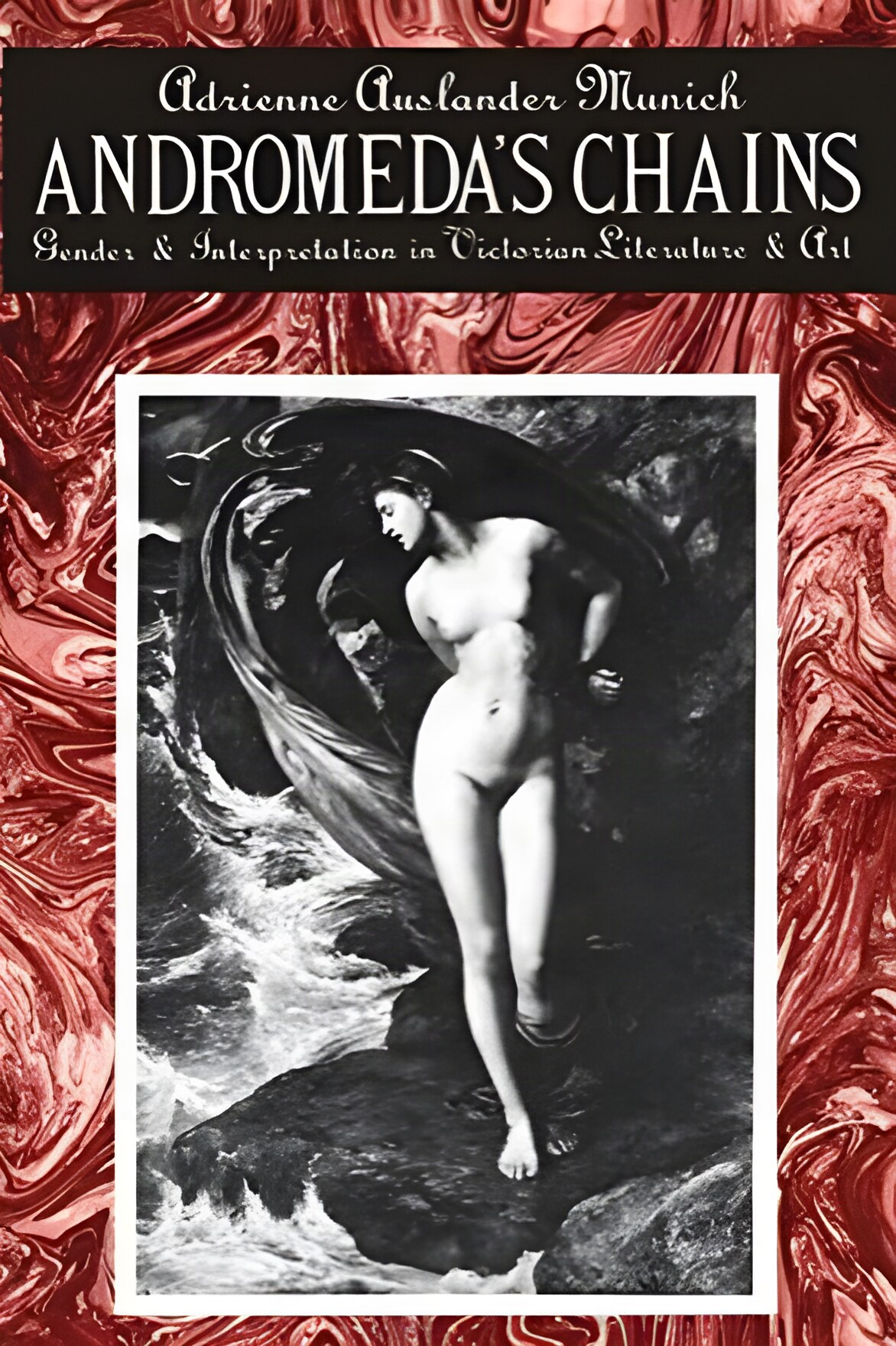
Hardcover. NY, Columbia University Press, 1st, 1993, Book: Very Good, Dust Jacket: Very Good, Hardcover in a bright dust jacket, 222 pages. Name on front fly leaf otherwise clean. Applying feminist theory to some lesser-known works by well known authors and painters, Munich (English, SUNY, Stony Brook) explores the psychological and cultural implications of the Victorian (male) treatment of the Perseus and Andromeda myth and its medieval analog, the legend of St. George and the dragon. With 31 photographs of the works discussed. A mild musty odor.
Hardcover. NY, Alfred A. Knopf, 1st, 1929, Book: Good, Dust Jacket: None, Hardcover with paper boards multicolored in vertical stripe patterns, 64 pages. In her lifetime, Wylie garnered notoriety for her unconventional private life and acclaim for her poems and novels. The collection is most renowned for the sonnet sequence "One Person," a deeply moving and technically masterful exploration of love, devotion, and the human spirit.She was considered one of the most distinguished American poets of the 1920s. Though her literary career lasted only eight years, she was recognized as an extremely adept, accomplished author. Wylie's poetry is marked by a lively inventiveness, a subtle treatment of emotion, and a detached sensibility that Louis Untermeyer has described as "a passion frozen at its source." Her last book, published after her untimely death 1n 1928. Covers with mild soil, edgewear.
Hardcover. Penland, NC, Jargon Society, 1st, 1971, Book: Very Good, Dust Jacket: Very Good, 63 pages. Hardcover with dust jacket. Clean, tight copy with only minor wear to edges. Related news clipping laid in.
Hardcover. Princeton NJ, Princeton University Press, 1st, 1995, Book: Very Good, Dust Jacket: Very Good, Hardcover in a bright dust jacket. 327 pages, clean copy. Few diseases have exercised the Western imagination as chronically as hysteria--from the wandering womb of ancient Greek medicine, to the demonically possessed witch of the Renaissance; from the "vaporous" salon women of Enlightenment Paris, through to the celebrated patients of Sigmund Freud, with their extravagant, erotically charged symptoms. In this fascinating and authoritative book, Mark Micale surveys the range of past and present readings of hysteria by intellectual historians; historians of science and medicine; scholars in gender studies, art history, and literature; and psychoanalysts, psychiatrists, clinical psychologists, and neurologists. In so doing, he explores numerous questions raised by this ever-growing body of literature: Why, in recent years, has the history of hysterical disorders carried such resonance for commentators in the sciences and humanities? What can we learn from the textual traditions of hysteria about writing the history of disease in general? What is the broader cultural meaning of the new hysteria studies? In the second half of the book, Micale discusses the many historical "cultures of hysteria." He reconstructs in detail the past usages of the hysteria concept as a powerful, descriptive trope in various nonmedical domains, including poetry, fiction, theater, social thought, political criticism, and the arts. His book is a pioneering attempt to write the historical phenomenology of disease in an age preoccupied with health, and a prescriptive remedy for writing histories of disease in the future.
Hardcover. New York, Skira Rizzoli, 1st, 2015, Book: Very Good, Dust Jacket: Very Good, 192 pages. Hardcover with dust jacket. Remainder mark on bottom of the text block. Clean, unmarked copy with only minor wear to dust jacket. Large black & white and color photographs throughout. Tight copy. Many portraits ranging throughout Audrey's life.
Hardcover. London, Faber & Faber , 3rd pr., 1965, Book: Very Good, Dust Jacket: Good, Hardcover in a bright, rubbed and edgeworn dust jacket. The autobiography of an intelligent, traditional Hausa woman. An excellent piece of ethnography. The author, the wife of social anthropologist, became Baba's friend in Nigeria. After many conversations between the two women, she agreed to dictate the story of her life. Name on inside front cover, otherwise clean.
Hardcover. New York, Rizzoli, 1st, 2015, Book: Very Good, Dust Jacket: None, 256 pages. Hardcover with no dust jacket. Very clean, like new copy, still in publishers shrink wrap, although has a slight tear in shrink wrap on bottom edge. Remainder mark on bottom edge of text block. Otherwise tight copy. Color and black & white photographs throughout. International supermodel Cindy Crawford presents her own personal visual autobiography, the first book to chronicle her life and career, featuring some of her most memorable images.
Hardcover. Guilford, CT, Lyons Press, 1st, 2018, Book: Very Good, Dust Jacket: Very Good, 144 pages. Hardcover with dust jacket. A very clean, unmarked copy with only minor wear to dust jacket edges. Hundreds of never before seen black & white photographs and private letters spanning 1949 - 2000.
Hardcover. US, Steidl; Prima edizione , 1st, 2014, Book: Very Good, Dust Jacket: None, 95 pages. Hardcover with laminated boards. Like new in publisher's shrinkwrap.
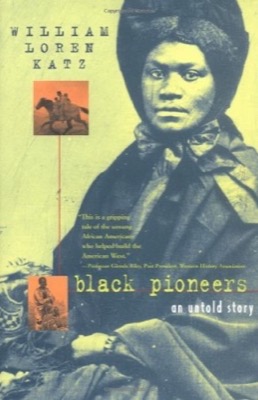
Hardcover. NY, Atheneum, 3rd pr., 1999, Book: Very Good, Dust Jacket: Very Good, Hardcover in a bright, unclipped dust jacket. In a clear, straightforward style, Katz describes the settlement of the Ohio and Mississippi Valleys (covering Ohio, Indiana, Illinois, Michigan, Wisconsin, Minnesota, Iowa, Kansas, and Missouri) by African Americans seeking freedom, including biographical sketches of men and women who formed churches, started schools, or were politically active in their region. Some of these settlers were fugitive slaves; several set up stations on the Underground Railroad with the aid of the Quakers; others were farmers, poets, and soldiers. In several states, they helped form black regiments in the Civil War. Chronologically arranged, the book introduces many lesser-known personages not found in most collective biographies and places them in a broader context of U.S. history as a whole.
Hardcover. NY, Atheneum, 3rd pr., 1999, Book: Very Good, Dust Jacket: Very Good, Hardcover in a bright, unclipped dust jacket. In a clear, straightforward style, Katz describes the settlement of the Ohio and Mississippi Valleys (covering Ohio, Indiana, Illinois, Michigan, Wisconsin, Minnesota, Iowa, Kansas, and Missouri) by African Americans seeking freedom, including biographical sketches of men and women who formed churches, started schools, or were politically active in their region. Some of these settlers were fugitive slaves; several set up stations on the Underground Railroad with the aid of the Quakers; others were farmers, poets, and soldiers. In several states, they helped form black regiments in the Civil War. Chronologically arranged, the book introduces many lesser-known personages not found in most collective biographies and places them in a broader context of U.S. history as a whole.
Softcover. Hanover NH, Hood Museum of Art, Dartmouth College , 1st, 2008, Book: Very Good, Dust Jacket: None, Softcover, 374 pages illustrated in b&w and color. Issued in connection with an exhibition held March 8 to September 7, 2008, Hood Museum of Art, Dartmouth College. Black Womanhood examines an especially charged icon - the black female body - and contemporary artists' interventions upon historical images of black women as exotic Others, erotic fantasies, and supermaternal Mammies. This book presents icons of the black female body as seen from three separate but intersecting perspectives: the traditional African, the colonial, and the contemporary global. The display and contemplation of such iconic images addresses complex and often competing forces of self-presentation and the representation of others. Clean, like new. DOMESTIC SHIPPING ONLY.
Softcover. University of Chicago Press, 2nd pr., 2011, Book: Very Good, Dust Jacket: None, Softcover, 219 pages. Both Hands Tied studies the working poor in the United States, focusing in particular on the relation between welfare and low-wage earnings among working mothers. Grounded in the experience of thirty-three women living in Milwaukee and Racine, Wisconsin, it tells the story of their struggle to balance child care and wage-earning in poorly paying and often state-funded jobs with inflexible schedules--and the moments when these jobs failed them and they turned to the state for additional aid. Clean copy.
Hardcover. Atlas, 1st, 2008, Book: Very Good, Dust Jacket: Very Good, Hardcover, 224 pages. In the spring and summer of 1961, several hundred Americans--blacks and whites, men and women--converged on Jackson, Mississippi, to challenge state segregation laws. The Freedom Riders, as they came to be known, were determined to open up the South to civil rights: it was illegal for bus and train stations to discriminate, but most did and were not interested in change. Over 300 people were arrested and convicted of the charge "breach of the peace." Collected here in a richly illustrated, large-format book featuring over seventy contemporary photographs, alongside the original mug shots, and exclusive interviews with former Freedom Riders, is that testament: a moving archive of a chapter in U.S. history that hasn't yet closed.
Softcover. Manchester University Press , 1st pbk, 2012, Book: Very Good, Dust Jacket: None, Softcover, 416 pages, b&w illustrations. During the Algerian War the French army engaged in the 'emancipation' of Muslim women as part of a strategy of subverting the nationalist movement whilst also inflicting widespread violence. First comprehensive study in English of the role of Muslim women during the Algerian war, bringing a unique interdisciplinary approach to the subject. Clean copy.
Hardcover. Berkeley CA, University of California Press, 1st, 2009, Book: Very Good, Dust Jacket: Very Good, Hardcover, 320 pages. In the voluminous scholarship that's been written on Paul Cezanne, little has been said about the twenty-four portraits in oil that Cezanne made of his wife, Hortense Fiquet Cezanne, over an extended twenty-year period. In Cezanne's Other: The Portraits of Hortense, Susan Sidlauskas breaks new ground, focusing on these paintings as a group and looking particularly at the differences that render many of them unrecognizable as the same person. She argues that Cezanne sidestepped the conventional goals of portraiture-he avoids representing a consistent, identifiable physiognomy or conventional feminine postures and does not portray the subject's inner life-making lack of fixedness itself his subject, which leads him ultimately to a radical reformulation of modern portraiture. Sidlauskas also upends the notion of Mme Cezanne as the irrelevant and absent spouse. Instead she reveals Hortense Fiquet Cezanne as a presence so crucial to the artist that she became the essential "other" to his ever-evolving "self." Coupling historical texts from philosophy, psychology, and physiology with more recent writings from women's and gender studies, cognitive psychology, and visual culture, Sidlauskas demonstrates that Mme Cezanne offered intimacy at arm's length for the painter who has been dubbed "the lone wolf of Aix."
Hardcover. NY, Farrar, Straus and Giroux, 1st, 2024, Book: Very Good, Dust Jacket: Very Good, Hardcover in a bright, unclipped dust jacket, 417 pages, color and b&w illustrations. The Warhol superstar and transgender icon Candy Darling was glamour personified, but she was without a real place in the world. Growing up on Long Island, lonely and quiet and queer, she was enchanted by Hollywood starlets like Kim Novak. She found her turn in New York's early Off-Off-Broadway theater scene, in Warhol's films Flesh and Women in Revolt, and at the famed nightclub Max's Kansas City. She inspired songs by Lou Reed and the Rolling Stones. She became friends with Jane Fonda and Lily Tomlin, borrowed a dress from Lauren Hutton, posed for Richard Avedon, and performed alongside Tennessee Williams in his own play. Yet Candy lived on the edge, relying on the kindness of strangers, friends, and her quietly devoted mother, sleeping on couches and in cheap hotel rooms, keeping a part of herself hidden. She wanted to be a star, but mostly she wanted to be loved. Her last diary entry was: "I shall try to be grateful for life . . . Cannot imagine who would want me." Candy died at twenty-nine in 1974, just as conversations about gender and identity were beginning to enter the broader culture. She never knew it, but she changed the world. Clean copy.
Hardcover. Boston, Northeastern University, 1st, 1986, Book: Very Good, Dust Jacket: Good, Hardcover. Light wear and rubbing to dust jacket, spine slightly sunned. Fowler attempts to restore to Catt her central role in the suffragist movement in the United States and in the founding of the League of Women Voters. Although the first three chapters do recount her life, the author himself notes that this is not a conventional biography. Rather, the work aims primarily at an analysis of Catt as a political leader and political visionary.
Hardcover. New York, Schiffer, 1st, 2015, Book: Very Good, Dust Jacket: Very Good, 160 pages. Hardcover with dust jacket. Color photographs throughout. Clean, tight copy.



 "And So I Sing: African-American Divas of Opera and Concert by: Story, Rosalyn M.")




 "Audrey Hepburn: Portraits of an Iconby: Pepper, Terence/Helen Trompeteler")
 "Baba of Karo: A Woman of the Muslim Hausa by: Smith, Mary")
 "Becoming By Cindy Crawford: By Cindy Crawford with Katherine O' Learyby: Crawford, Cindy")
 "Bettie Page: The Lost Yearsby: Brem, Ron")
 "Bettina Rheims: Bonkersby: Rheims, Bettina")
 "Black Pioneers: An Untold Storyby: William Loren Katz")




 "C")

 "Carrie Catt: Feminist Politicianby: Fowler, Robert Booth")
 "Chocolate Cheesecake: Celebrating the Modern Black Pin-Upby: Cox PHD, Earnest L.")