Softcover. NY, Metropolitan Museum of Art, 1st, 2016, Book: Very Good, Dust Jacket: None, Softcover, stapled wrappers, 48 pages illustrated in color and b&w.
Softcover. Flagstaff, AZ, Northland Press, 3rd pr, 1981, Book: Very Good, Dust Jacket: None, Softcover, 131 pages, b&w photographs. Light creases to front wrapper. Else a very clean, tight copy. An architect for the Santa Fe Railway and the Fred Harvey Company, Colter laid the groundwork for female architects who followed. Seven of her remarkable structures are preserved in Grand Canyon's historic district. This is her story.
Hardcover. Images Publishing Dist Ac, 1st, 2008, Book: Very Good, Dust Jacket: None, Hardcover, 228 pages, illustrated throughout in color and b&w. Die-cut cardboard cover with metal reenforced corners. Clean, unmarked copy in excellent condition.With heightened concern about the use of natural resources, materials for building are once again at the forefront of discussion. Malcolm Holzman strives to take advantage of the variety of products available, whether time-tested, tired from over-use, relegated to the scrap pile, entirely new or from allied fields. Five years ago in Stonework , Holzman illustrated the unique role that stone plays in making exceptional buildings. Materials , a companion to this previous endeavour, is a narrative collection of incidents that record the special place other materials occupy in his architecture. This publication acknowledges the spirit of adventure in researching and applying materials.
Hardcover. Germany , Steidl, 1st, 2010, Book: Very Good, Dust Jacket: None, 156 pages. Hardcover with no dust jacket. Very clean, unmarked copy with only minor edgewear. Color photographs throughout. In the early 1970s, the workers at a steel smelting factory east of Havana wrote to Fidel Castro describing their housing needs. Out of this exchange a new city called Alamar was born, conceived by the same workers who would build it and live there. Today it is abandoned; Mauro D'Agati's photographs examine its eccentric spaces.
Hardcover. Edition Stemmle, 1st, 2001, Book: Very Good, Dust Jacket: Very Good, Hardcover, 136 pages. Bauhaus photography is well served by this first monograph on Max Baur, with many of the previously unpublished photographs also serving as a new source for Bauhaus studies. Working in Germany, at first providing images for postcards, Baur expanded his efforts to encompass landscape, portrait, and architectural images. In each of these genres, his work reflects the cool, objective approach of the Bauhaus style combined with the artist's elegant handling of light and perspective. In photos of stairways and colonnades, factories, and everyday objects, Baur was able to eliminate the extraneous and offer the essential nature of his subject. The book covers a period of vast changes in the world and in the life of the artist, but throughout there is a consistency of vision. An essay by William Ewing, director of the Mus e de l'Elys e (which specializes in photography), gives a brief description of the life and career of Baur with enthusiasm and warmth, while Edelmann-Pomplitz writes movingly about her experience as his student. In a letter to her, Baur expresses his credo most eloquently: "it is with light alone that we create images." This lovely work is a fine example of excellent printing and composition in harmony with content.
Hardcover. New Haven CT, Yale University Press, 1st, 2012, Book: Very Good, Dust Jacket: Very Good, Hardcover, 288 pages. As a prolific photographer for House Beautiful, Better Homes and Gardens, Architectural Digest, and Sunset magazine, Maynard L. Parker (1900-1976) was a pioneer in documenting residential spaces and landscapes for postwar America. His extensively published, sun-kissed brand of photography made him a critical contributor to domestic design culture from the 1940s into the 1960s. Parker's lens revealed the homes and lifestyles of affluent Americans and celebrities, including Judy Garland, Clark Gable, and Bing Crosby, as well as the interiors, gardens, and built works of Samuel Marx, Frank Lloyd Wright, Thomas Church, and Cliff May, offering an alluring template for living in a new consumer age. Maynard L. Parker: Modern Photography and the American Dream is the first monograph to consider Parker and his work. Lavishly illustrated essays by leading scholars set Parker's photography against the backdrop of an unprecedented demographic shift, the Cold War, and a suburban society increasingly fixated on consumption.
Hardcover. NY, George Braziller, 1st US, 1970, Book: Very Good, Dust Jacket: Very Good, Hardcover in a bright, unclipped dust jacket. 288 pages. Chapters include Semiology and Architecture by Charles Jencks, Meaning into Architecture by Geoffrey Broadbent and 'La Dimension Amoureuse' in Architecture by George Baird, The Time House or Argument for an Existential Dwelling by Martin Pawley. Packed with black and white reproductions of unusual buildings. Mild edgewear to dust jacket, clean copy.
Hardcover. New York, Macmillan Company, 1st, 1932, Book: Good, Dust Jacket: None, Non-paginated. Hardcover. Black & white photographs by Lewis W. Hine. Previous owners inscription on front endpaper; handwritten poem on rear endpaper. Green cloth covers with light rubbing to corners. No dust jacket.
Softcover. Bowie MD, Heritage Books, reprint, 2001, Book: Very Good, Dust Jacket: None, Two softcover volumes 391 & 392 pages. Volumes 1 and 2 complete, a facsimile reprint of the 1897 edition by Lippincott. This two-volume series takes the reader on a journey through the colonies of Virginia, Massachusetts, Connecticut, Rhode Island, New Hampshire, Pennsylvania, New Jersey, New York, Maryland, Carolina, and Georgia. The charm of the journey is in its variety, as the reader passes through communities of such striking individuality that they assume the character of different nations. Each colony has a set of opinions and laws peculiar to itself, and it is not uncommon to find the laws of one in contradiction with the laws of another. This text explores the settlement and history of each colony prior to the American Revolution. Topics include development of the colonies' government, laws, religion, schools, boundaries, industries, layout of the cities, fashions, homes, social activities, slavery, architecture, interaction with the Indians, and customs. At least one prominent person from each colony is discussed, amongst them, William Penn of Pennsylvania, John Smith of Virginia, George Calvert of Maryland, and General Oglethorpe of Georgia. Light sunning ti spines.Clean copies.
Softcover. New York, Monacelli Press, 1st, 2004, Book: Very Good, Dust Jacket: None, Softcover, 183 pages, illustrated in color and b&w.Since 1988, New York-based architect Michael Bell has created a series of projects and essays that explore architectural and urban design for California, New York, and Texas -- the three most populous regions of the United States and, coincidentally, the three states in which he has lived and practiced. The first monograph on the architect, Michael Bell: Space Replaces Us; Essays and Projects on the City, includes both design work and writings.Bell has organized and designed two important installations, both of which include his work: "Endspace: Michael Bell and Hans Hofmann," at the University Art Museum, Berkeley, and "16 Houses: Owning a House in the City," at DiverseWorks in Houston, which featured his seminal Glass House @ 2 Degrees. Other projects included are an urban renewal scheme for a huge site in Far Rockaway, New York, and a series of residential projects, including the Ghent House, a modernist glass house currently under construction in upstate New York. Complementing the design projects are three major essays: "Having Heard Mathematics: The Topologies of Boxing," "Eyes in the Heat: RSE," and "New York City."
Softcover. Cincinnati OH, Contemporary Art Center, 1st, 1987, Book: Very Good, Dust Jacket: None, Softcover, 102 pages, b&w and color illustrations. Very light edge wear, else a clean, tight copy. Publication documenting renowned post-modern architect Michael Graves and the summer pavilion for the Cincinnati Symphony Orchestra. Written by architecture historian and critic Jayne Merkel, the book begins with a history of other outdoor music structures and the decision to build on the river site. Merkel discusses Graves' development as a leader of the post-modern movement and draws upon his sources in ancient amphitheaters, as well as his other structures in Portland, Louisville, and San Juan Capistrano. The book also includes an in-depth interview with Graves and a chapter on the "state of the art" acoustics and the collaboration between architect Graves and artist Ted Schmidt which resulted in the unique cut-out sculptures adorning the roof line of Riverbend.
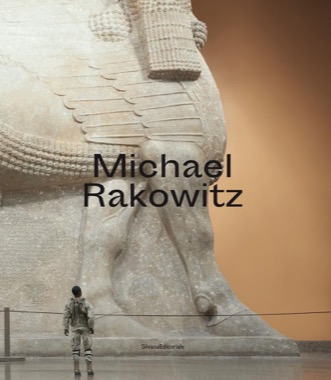
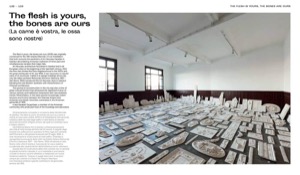
Hardcover. Milan, Silvana Editoriale, 1st, 2020, Book: Very Good, Dust Jacket: Very Good, Hardcover in a bright dust jacket. Iraqi-American artist Michael Rakowitz's (b. 1973, USA) first major European survey presents a sequence of installations drawing on architecture, cultural artifacts and cuisine to tell stories of social ritual, conflict and loss. It encompasses work considering the citizen visionaries of post Soviet Hungary, Middle Eastern Beatles fans and the stonecarvers of Afghanistan, with Rakowitz's casts of players and objects revealing the legacy of colonization, modernism and globalism. The artist's life-size replica of the gigantic lamassu, one of two monumental winged bulls that once guarded the gates of Nineveh in Iraq, currently features on Trafalgar Square's Fourth Plinth. This recreation of an ancient mythological creature is made from everyday date syrup cans and is part of an epic endeavour to recreate all 7,000 objects looted from the Iraq Museum in 2003, as well as those destroyed more recently at archaeological sites like Nimrud, also presented here. Text in English and Italian. Short closed tear to dj corner. otherwise like new. DOMESTIC SHIPPING ONLY.
Softcover. Hanover NH, Dartmouth College, 1st, 1996, Book: Very Good, Dust Jacket: None, Softcover, 24 pages illustrated with color and b&w photos. An overview of recent projects, both small scale and large architectural commissions. Clean, bright copy.
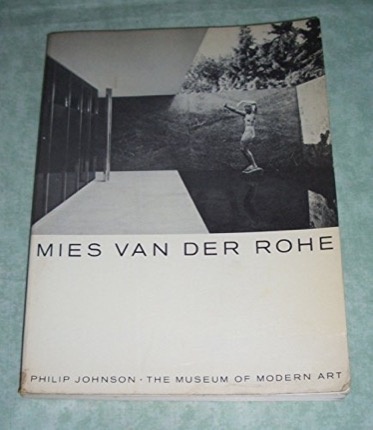
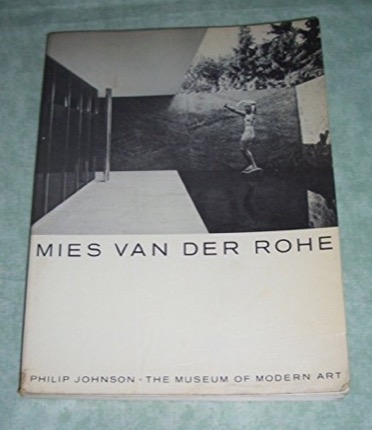
Softcover. NY, Museum of Modern Art, 3rd Ed., 1978, Book: Very Good, Dust Jacket: None, Softcover, 229 pages, illustrated with 210 photographs, drawings, and plans; bibliography. Clean copy.
Softcover. Princeton Architectural Press, 1st, 2001, Book: Very Good, Dust Jacket: None, Softcover, 234 pages, color illustrations. David Miller and Robert Hull created the Pacific Northwest style which is energy-conscious, structural expressive and uses local materials. This book has 29 projects. Miller/Hull's energy-conscious designs combine with a love of local materials and structural expressiveness to define the essence of the Pacific Northwest style. Here, where climate plays such a critical role, each Miller/Hull building responds with simple but inventive forms, straightforward plans, sensible siting, and careful detailing. Miller/Hull is the only comprehensive monograph of the architects' practice, which spans civic buildings, office and retail structures, educational and institutional projects, and their award-winning houses. Clean copy.
Hardcover. NY, Harry N. Abrams/Hood Museum of Art, 1st, 1988, Book: Very Good, Dust Jacket: Very Good, Hardcover in a bright, unclipped dust jacket. A beautiful and intimate treatment of the architecture of the early industrialization of New England. 108 pages of color plates. Essays by Noel Perrin & Kenneth Breisch. Clean copy.
Hardcover. New York, Harper Design, 2nd printing, 2010-10-26, Book: Very Good, Dust Jacket: Very Good, 220 pages, hardcover illustrated throughout in color and b&w. Clean, unmarked copy with only minor wear to dust jacket. Examines the minimalist movement in fashion while addressing its confluence with and divergence from similar currents in art, architecture, and design. Organized by decade, the text explores the evolving relationships and influences between fine art and the art of sartorial minimalism.
Softcover. Tucson, AZ, Arizona University Press , 1st paperback, 1993, Book: Very Good, Dust Jacket: None, Softcover. Black & white photos by George Alexander Grant. Some color fade to edges of cover. The Spanish missions founded by Padre Eusebio Kino in Sonora, Mexico, during the 1690s and early 1700s are historical as well as architectural marvels. Once self-supporting villages with central churches, the missions stand today as monuments to perseverance in the face of a hostile New World. These "Kino Missions" were surveyed in 1935 by the National Park Service to prepare for the restoration of the mission at Tumacacori, Arizona, then a National Historic Monument. That report, which was never published, provided insights into the missions' history and architecture that remain of lasting relevance. Perhaps more important, it documented these structures in photographs and drawings--the latter including floor plans and sketches of architectural detail--that today are of historic as well as aesthetic interest. This volume reproduces that 1935 report in its entirety, focusing on sixteen missions and including two maps, 52 drawings, and 76 photographs. With a new introduction and appendixes that place the original study in context,
Hardcover. NY/Cambridge MA, The Architectural History Foundation/The MIT Press, 1st, 1984, Book: Very Good, Dust Jacket: Very Good, Hardcover in a bright dust jacket. This is the first complete biography of the inimitable society architect Addison Mizner, whose Spanish Revival buildings created a new style of resort architecture for Palm Beach and south Florida during the boom years of the 1920s. Clean copy.
Softcover. Englewood Cliffs, Prentice-Hall, Inc., 2nd Ed., 1987, Book: Very Good, Dust Jacket: None, 431 pages. Softcover. Tight copy. Profusely illustrated with black & white photographs & architectural illustrations. One interior section includes full page, full color photographs. Clean, bright copy.
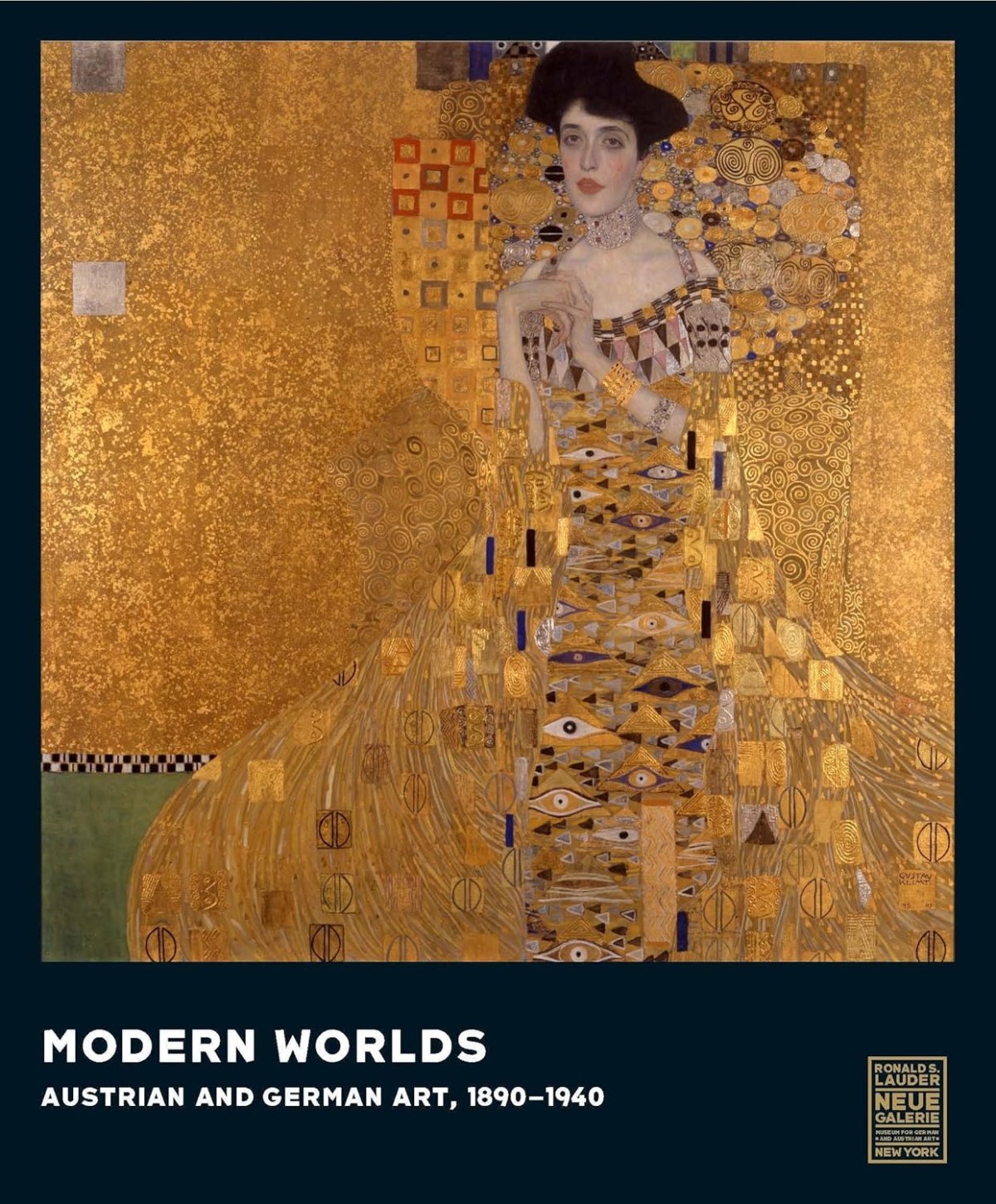
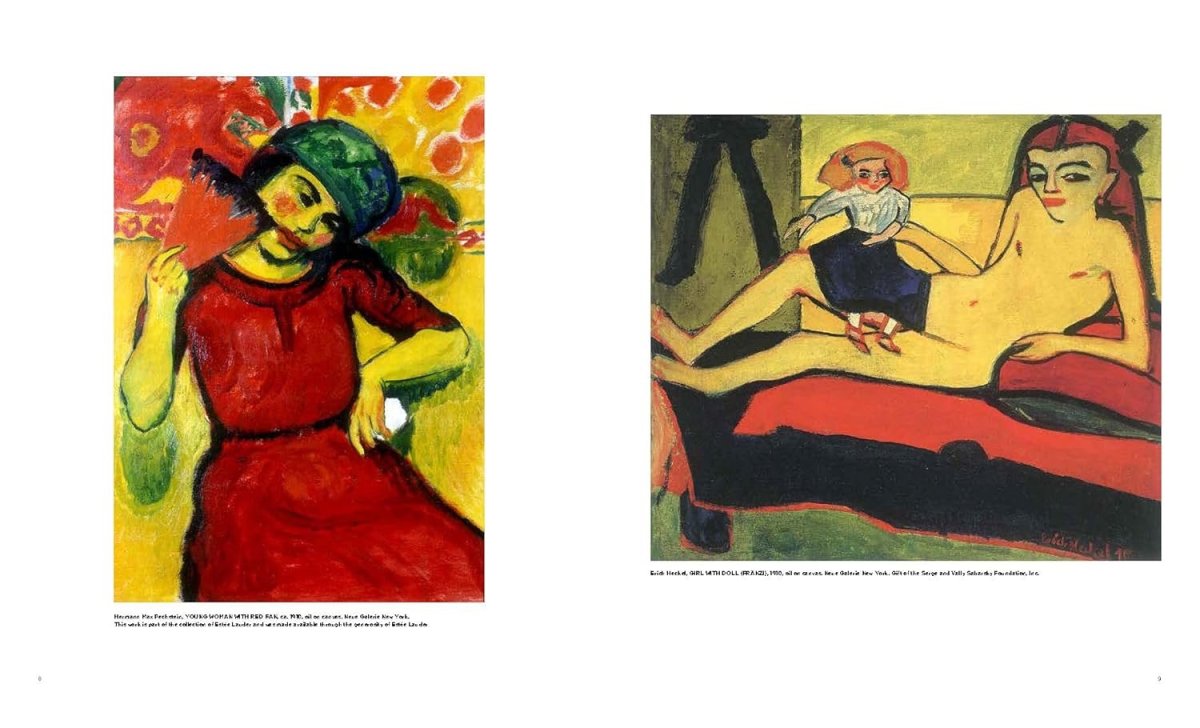
Hardcover. Munch/London/NY, Prestel, 1st, 2022, Book: Very Good, Dust Jacket: Very Good, Hardcover in a bright dust jacket. Still in publisher's shrinkwrap. 656 pages. Published on the twentieth anniversary of the founding of Neue Galerie New York, this stunning volume celebrates the varied achievements of modern art history in the German-speaking world by examining historical developments in Austria and Germany from 1890 to 1940. Illustrated throughout with exquisite reproductions of the museum's holdings, this book considers the influence of Friedrich Nietzsche and his writings on the fine arts and examines the founding of the Secessionist artists' organizations in Germany and Austria. Insightful essays trace the emergence of Expressionism and abstraction, as well as the development of such movements as Dada and New Objectivity. Evolutions in architecture and design are appraised through the legacy of the Arts and Crafts movement, as well as the establishment of the Darmstadt Artists' Colony and the Wiener Werkstatte. The book also examines the role of the German Werkbund and the founding of the Bauhaus school. Finally, the book briefly addresses the horrific impact of the National Socialists' degenerate art campaign, which resulted in incalculable damage and led to the exile and death of artists and designers of the era. From well-known artists such as Otto Dix, Josef Hoffmann, Vasily Kandinsky, Gustav Klimt, and Egon Schiele, to lesser recognized but equally important figures, including Albert Birkle, Alfred Kubin, Felix Nussbaum, and Dagobert Peche, this book offers an authoritative and kaleidoscopic look at a crucial moment in history and a portrait of radical thought that changed forever the way we experience art in our lives. DOMESTIC SHIPPING ONLY.
Hardcover. Thomas Jefferson Foundation, reprint, 2006, Book: Very Good, Dust Jacket: Very Good, Hardcover in a bright dust jacket, oblong format, 80 pages. Each year approximately 500,000 people journey up the winding, narrow road from Charlottesville, Virginia, to visit Monticello, the home of Thomas Jefferson. In 1990 a team of architects from the Historic American Buildings Survey (HABS) made this same journey to record Jefferson's residence inside and out. Monticello in Measured Drawings presents HABS' unique set of plan, elevations, sections, and details of the house as it was actually built. They expose many of Monticello's behind-the-scenes mysteries. Seeral reveal the house's complex facade, while others details the relationship of individual floors and the fascinating array of architectural elements found throughout the house.
Hardcover. Thomas Jefferson Foundation, reprint, 2006, Book: Very Good, Dust Jacket: Very Good, Hardcover in a bright dust jacket, oblong format, 80 pages. Each year approximately 500,000 people journey up the winding, narrow road from Charlottesville, Virginia, to visit Monticello, the home of Thomas Jefferson. In 1990 a team of architects from the Historic American Buildings Survey (HABS) made this same journey to record Jefferson's residence inside and out. Monticello in Measured Drawings presents HABS' unique set of plan, elevations, sections, and details of the house as it was actually built. They expose many of Monticello's behind-the-scenes mysteries. Seeral reveal the house's complex facade, while others details the relationship of individual floors and the fascinating array of architectural elements found throughout the house.
Hardcover. NY, Assouline, 1st, 2005, Book: Very Good, Dust Jacket: Very Good, Hardcover, 80 pages. Morris Lapidus, the famous mid-century architect, outraged the architectural profession and riled critics with an architecture that was popularly embraced. His Miami Beach resort hotels - the Fontainebleau, the Eden Roc, and the Bal Harbour Sheraton - are synonymous with the glamour of Miami Beach in the 50s. Lapidus hotels are infamous as the stomping grounds of the Rat Pack and their fellow movie stars. Yet, during his life he was never published in architectural magazines and was discredited by the architectural profession - before undergoing a renaissance as a prophet of postmodernism. This book establishes the importance of his work and offers private insights into a man who once said why be exotic in private?

 "Marcel Breuer: Bauhaus Tradition, Brutalist Invention by: Bergdoll, Barry / Beyer, John H.")
 "Mary Colter - Builder upon the Red Earthby: Grattan, Virginia L.")
 "Material Life: Adventures and Discoveries in Materials Researchby: Holzman, Malcolm")
 "Mauro D'Agati: Alamarby: D'Agati, Mauro (Photographer)")
 "Max Baur: In the Bauhaus Spirit: Photographs 1925-1960by: Stephan Steins")
 "Maynard L. Parker: Modern Photography and the American Dreamby: Jennifer A. Watts")
 "Meaning in Architecture by: Jencks, Charles & George Baird (Eds.)")
 "Men at Workby: Hine, Lewis W.")
 "Men, Women & Manners in Colonial Times (2 Volumes)by: Sydney Geo Fisher")


 "Michael Bell: Space Replaces Us - Essays and Projects on the Cityby: Bell, Michael")
 "Michael Graves & Riverbend Music Center: A Summer Pavillion for the Cincinnati Symphony Orchestraby: Merkel, Jayne")
 "Michael Rakowitz by: Carolyn Christov-Bakargiev")
 "Michael Singer: Artist-in-residence ; recent projectsby: Michael Singer")
 "Mies Van Der Rohe by: Philip Johnson")
 "Miller/Hull: Architects Of The Pacific Northwest by: Olson, Sheri")
 "Mills and Factories of New England by: Hambourg, Serge/Perrin Noel & Kenneth Breisch (essays)")
 "Minimalism and Fashion: Reduction in the Postmodern Eraby: Dimant, Elyssa")
 "Missions Of Northern Sonora - A 1935 Field Documentationby: Pickens, Buford")
 "Mizner's Florida: American Resort Architectureby: Curl, Donald Walter")
 "Modern Architecture Since 1900by: Curtis, William J. R.")
 "Modern Worlds: Austrian and German Art, 1890-1940by: Price, Renee / Lauder, Ronald S./Peters, Olaf/ Staggs, Janis")
 "Monticello in Measured Drawings: Drawings by the Historic American Buildings Survey / Historic American Engineering Record, Nationa Park Service by: William L. Beiswa")
 "Monticello in Measured Drawings: Drawings by the Historic American Buildings Survey / Historic American Engineering Record, Nationa Park Service by: William L. Beiswa")
 "Morris Lapidusby: Desilets, Deborah")