Hardcover. Washington DC, Structural Clay Products Institute, 1939, Book: Very Good, Dust Jacket: None, Hardcover, brown cloth with gilt lettering, 400 pages. Illustrated with b&w drawings. Mild residue on inside front cover where bookplate removed. Otherwise clean, related business cards laid in.
Softcover. NY, Columbia University Press, reprint, 1991, Book: Very Good, Dust Jacket: None, Softcover, 351 pages, profusely illustrated in b&w. Name on front fly leaf, otherwise a bright, clean copy.
Hardcover. Philadelphia , John Wanamaker, 1st, 1899, Book: Very Good, Dust Jacket: None, Hardcover, green cloth with gilt and black decoration, 147 illustrations by Joseph Pennell and others. Folded Map laid In. Covers with light edgewear and chipping. Top edge gilt.
hardcover. London, Turnberry Consulting , reprint, 2013, Book: Very Good, Dust Jacket: Very Good, 271 pages. Hardcover. Extensive color and b&w photographs throughout. Silver gilt titles on spine. Includes extensive glossary. Like new in publisher's shrink-wrap.
Hardcover. NY, Rizzoli, 1st, 2023, Book: Very Good, Dust Jacket: Very Good, Hardcover in a bright dust jacket. This special volume presents a visual timeline of Ralph Lauren's remarkable history as a lifestyle innovator. Lauren's unparalleled ability to seamlessly blend fashion and the home is illustrated with the groundbreaking designs and innovative use of materials that have distinguished the home collection since its inception in 1983: menswear-inspired Oxford Cloth bedding that required the creation of special looms and took two years to refine; the sleek RL-CF1 chair, crafted of carbon fiber and inspired by Lauren's McLaren F1 racecar; and an appreciation for a timeworn, weathered aesthetic, as exemplified in the iconic Writer's Chair with its hand-burnished leather and rich patina. Historic achievements such as the opening of his first New York City flagship on Madison Avenue - which invited guests to experience the complete World of Ralph Lauren in a residential environment - and his renowned restaurants that offer the epitome of gracious hospitality, demonstrate the magnitude of Ralph Lauren's influence on the worlds of lifestyle design and hospitality. The timeline is complete with quotes from distinguished members of the design world and prominent figures of our culture including Oprah Winfrey, Hillary Rodham Clinton, and architecture critic Paul Goldberger. Ralph Lauren's signature ability to create transportive environments begins with his private homes that inspire his iconic lifestyle collections. Ralph Lauren: A Way of Living offers an in-depth look at all the places Lauren calls home, from a sprawling ranch in Colorado and an island retreat in Jamaica, to a Fifth Avenue penthouse overlooking Manhattan's Central Park, a seaside home in Montauk and a country estate in Bedford. Lauren's homes are deeply personal expressions of his vision for living; captivating imagery is complemented by essays and descriptions written in his own words that intimately express the meaning of home and share inspiration and anecdotes for each residence. The photos of Lauren's captivating homes are followed by a celebration of Ralph Lauren Home's lifestyle collections - cinematic worlds that are brought to life with iconic imagery showcasing Lauren's pioneering lifestyle approach and all-encompassing home collection. DUE TO WEIGHT. DOMESTIC SHIPPING ONLY.
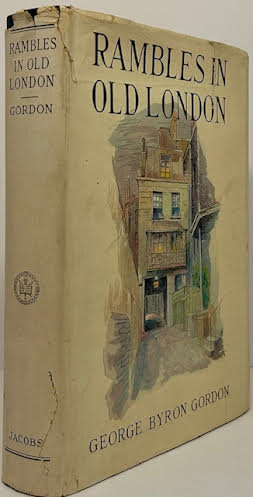
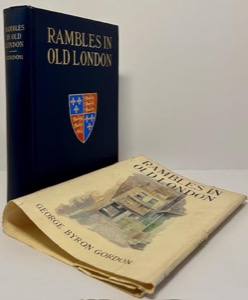
Hardcover. Philadelphia, PA, George W. Jacobs & Company, 1st Edition, 1924, Book: Very Good, Dust Jacket: Fair, 334 pages. Hardcover. Color frontispiece and b/w illustrations throughout. Previous owner's bookplate, stamp, and pencil markings on front endpapers. Some pages untrimmed. Blue leather cover boards, gilt title on spine and front cover boards with two color decoration. Boards are excellent. Dust jacket has agewear, but present. binding very good. Pages and edges have some tanning. Top edge dyed. Dr. Gordon brings an artist's eye as well as the knowledge of a historian to the beautiful city of London and her historic landmarks.
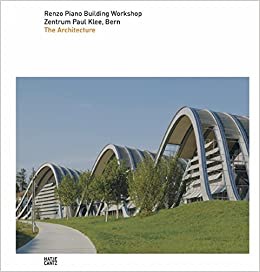
Hardcover. Germany, Hatje Cantz Publishers, 1st, 2006, Book: Very Good, Dust Jacket: Very Good, Hardcover, 159 pages. Like new in publishers shrink-wrap. The prominent Genovese architect Renzo Piano--recipient of the 1998 Pritzker Award and architect of the Whitney Museum of American Art and Morgan Library renovations, as well as the new New York Times building--has just completed a new and unusual museum building--the Zentrum Paul Klee on the outskirts of Bern. The center, says Piano, is dedicated to the "poet of silence," and thus it was fitting to consider building a museum that would speak softly. The Zentrum Paul Klee rises upward in the form of three hills connected by a 150-meter-long thoroughfare, the "Museum Street" serving as a path within the complex. The three structures make up a harmonious yet prominent landscape sculpture whose roofs are supported by innovative steel construction. Includes photographs, design sketches, plans and models--a living image of a magnificent building.
Hardcover. Germany, Hatje Cantz Publishers, 1st, 2006, Book: Very Good, Dust Jacket: Very Good, Hardcover, 159 pages. Like new in publishers shrink-wrap. The prominent Genovese architect Renzo Piano--recipient of the 1998 Pritzker Award and architect of the Whitney Museum of American Art and Morgan Library renovations, as well as the new New York Times building--has just completed a new and unusual museum building--the Zentrum Paul Klee on the outskirts of Bern. The center, says Piano, is dedicated to the "poet of silence," and thus it was fitting to consider building a museum that would speak softly. The Zentrum Paul Klee rises upward in the form of three hills connected by a 150-meter-long thoroughfare, the "Museum Street" serving as a path within the complex. The three structures make up a harmonious yet prominent landscape sculpture whose roofs are supported by innovative steel construction. Includes photographs, design sketches, plans and models--a living image of a magnificent building.
Hardcover. London, Laurence King Publishers, 1st, 2008, Book: Very Good, Dust Jacket: None, Hardcover, 192 pages. A pictorial tour of unique loos of the world. No dj issued.
Hardcover. Koln GR, Taschen, 1st, 2000, Book: Very Good, Dust Jacket: None, Hardcover, 464 pages. Original publisher's faux wood boards, lettered orange at the spine and front cover. Copiously illustrated in color and black and white throughout. Text in English, German and French. Many photographs By Julius Shulman. Originally from Vienna, Richard Neutra came to America early in his career, settling in California. His influence on post-war architecture is undisputed, the sunny climate and rich landscape being particularly suited to his cool, sleek modern style. Neutra had a keen appreciation for the relationship between people and nature; his trademark plate glass walls and ceilings which turn into deep overhangs have the effect of connecting the indoors with the outdoors. Neutra's ability to incorporate technology, aesthetic, science, and nature into his designs brought him to the forefront of Modernist architecture. For the first time, all of Neutra's works (nearly 300 private homes, schools, and public buildings) are gathered together in one volume.
Hardcover. Hatje Cantz, 1st, 2019, Book: Very Good, Dust Jacket: None, Hardcover, pictorial boards, 304 pages illustrated in b&w and color. At the first mention of his name, one can easily picture them: light-flooded bungalows that are lavishly composed into nature and that characterize the architectural style of the American West Coast surrounding Los Angeles. But it is sometime overlooked that the career of Richard Neutra (1892-1970) began in Berlin-Zehlendorf. And yet these houses in Zehlendorf represent a fascinating phase in Neutra's work. With their complex color schemes and extravagant interior design, they reveal themselves to be more than just an experimental and radically innovative design. Indeed, these lesser-known aspects already hint at elements that will be taken up again in future projects. The present publication finally provides for a rightful appreciation of Neutra's early works and, alongside historical sources, it collects countless new and unpublished documents about the houses and their first residents. Clean, still in publisher's shrink wrap.
Softcover. Cambridge MA, The MIT Press , 1st, 2021, Book: Very Good, Dust Jacket: None, Softcover, 373 pages. A history of New York subway passengers as they navigated the system's constraints while striving for individuality, or at least a smooth ride. When the subway first opened with much fanfare on October 27, 1904, New York became a city of underground passengers almost overnight. In this book, Stefan Hohne examines how the experiences of subway passengers in New York City were intertwined with cultural changes in urban mass society throughout the twentieth century. Hohne argues that underground transportation--which early passengers found both exhilarating and distressing--changed perceptions, interactions, and the organization of everyday life. Clean copy.
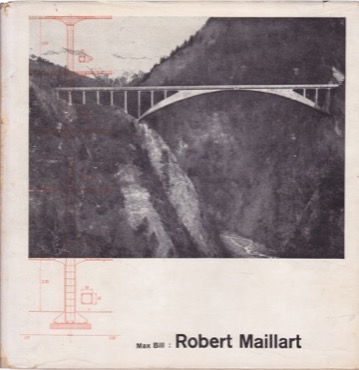
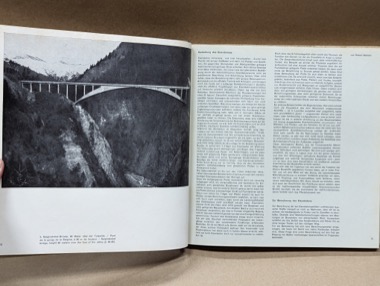
Hardcover. Zurich, Verlag fur Architektur], 1st, 1949, Book: Very Good, Dust Jacket: Fair, Hardcover in a worn, lightly soiled dust jacket with a chunk missing from the rear panel. 180 pages. Text in German, French and English, illustrated in black and white throughout. History of Robert Maillart bridges. Previous owner's signature on inside front cover, otherwise clean.
New York , Princeton Architectural Press, 2001, Book: Very Good, Dust Jacket: Very Good, Hardcover, 330 pages, color, b&w illustrations. Like-new condition. The first architect trained in America, Robert Mills is best known as the designer of many iconic buildings in our nation's capital: the Washington Monument, the Department of Treasury headquarters, the Patent Office Building (now National Portrait Gallery) , and the Post Office Headquarters.Beautifully illustrated with never-before-published watercolors and renderings and new color photography commissioned for the book.
Softcover. New Haven CT, Yale University Press, 1st, 2011, Book: Very Good, Dust Jacket: None, Softcover, 202 pages. color and b&w illustrations. Italian couturier Roberto Capucci (b. 1930) is revered by contemporary fashion designers for his innovative silhouettes and masterful use of color and materials. Capucci refers to his creations as "studies in form," and draws inspiration from a multitude of sources, including art, architecture, and nature. This beautifully illustrated book, the companion to the first exhibition of Capucci's work in the United States, examines his career from the 1950s to the present in the context of the rise of Italian fashion.
Hardcover. NY, Universe Books, 1st, 1971, Book: Very Good, Dust Jacket: None, Hardcover, red cloth with gilt titles. 196 pages, illustrated throughout in color and b&w. Discusses the history of the movement and shows examples of architecture, sculpture, metalwork, ivories, stained glass, wall paintings, and book illuminations. Clean, tight copy.
Hardcover. New York, Henry Holt & Co, 1st, 1991, Book: Very Good, Dust Jacket: Good, Hardcover, 205 pages, illustrated throughout. Minor dust jacket edge wear, otherwise, very clean and tight copy. An examination of rooftop designs for living spaces, conservatories, studios, conference rooms, tea houses, and pool rooms includes floor plans and discusses building and zoning codes
Hardcover. Paris, Zodiaque, 1st, 1984, Book: Very Good, Dust Jacket: Very Good, 334 pages plus index. Color, b&w gravure photographs, plans of churches, cathedrals, abbeys and monasteries in France. Text in French. Ribbon marker. Clean, tight copy in a bright dust jacket.
Hardcover. Paris, Zodiaque, 1st, 1982, Book: Very Good, Dust Jacket: Very Good, Hardcover, 407 pages plus index. Color and b&w gravure plates, plans of medieval churches of France. French text. A clean, tight copy in a bright dust jacket.
Hardcover. Chicago, American Planning Association, 1994, Book: Very Good, Dust Jacket: None, Hardcover, pictorial boards, 441 pages. Illustrated in b&w and color. Conventional planning techniques just aren't working in many rural and suburbanizing areas. Developments where people merely exist have replaced neighborhoods where people once thrived. Strip malls and checkerboard subdivisions prevail. Randall Arendt argues convincingly that this scenario is not inevitable. In Rural by Design he advocates creative, practical land-use planning techniques to preserve open space and community character. He shows how developments all across America have used these techniques successfully. This book examines a broad spectrum of nitty-gritty design topics in a lively, readable style. Topics range from sewage disposal and farmland preservation to greenway planning for interconnected open space and the design of rural subdivision streets. The book includes numerous case examples of residential, commercial, and mixed-use projects that have used these innovative design techniques. And it takes an in-depth look at the design elements of the traditional town--and how to reinvent those elements in today's communities. Names on front fly leaf, otherwise clean.
Hardcover. Moscow, Sovietsky Khudozhnik, 1st, 1990, Book: Very Good, Dust Jacket: Very Good, 359 pages. Hardcover with dust jacket. Russian text only. Profusely illustrated in full color and black & whiite. A survey of Russia's brief Art Nouveau movement in architecture. Bright, clean copy in a similar dust jacket. In a plain cardboard slipcase.
Softcover. Santa Barbara CA, UCSB Art Museum, 2nd pr., 1979, Book: Very Good, Dust Jacket: None, Softcover, 105 pages illustrated with b&w photos and architectural drawings. Clean, crisp copy of this exhibition catalog.
Hardcover. New Haven CT, Yale University Press, 1st, 2006, Book: Very Good, Dust Jacket: Very Good, Hardcover, 260 pages. Samuel Colt first patented his Colt revolver in 1835 and thereby redefined the architecture of handguns. This book is the first to present in detail the evolution of his most famous invention and to document the unsurpassed Colt firearms collections held by the Wadsworth Atheneum. Edited by Elizabeth Mankin Kornhauser. With essays and entries by Carolyn C. Cooper and Elizabeth Mankin Kornhauser. Index.
Hardcover. UK, Bodleian Library, University of Oxford, 1st, 2012, Book: Very Good, Dust Jacket: Very Good, 304 pages. Hardcover with dust jacket. Clean, unmarked copy with only minor wear to dust jacket. Pictures throughout. Sarah Angelina Acland (1849-1930) is one of the most important photographers of the late Victorian and early Edwardian periods. Born to a preeminent English family, Acland first gained note as a portraitist whose illustrious subjects--among them two prime ministers, the physicist Lord Kelvin, and the noted art critic John Ruskin--were visitors to her family's Oxford home. Yet it was through her work in the thenfledgling field of color photography that Acland achieved her greatest acclaim. When her color photographs were shown at the Royal Photographic Society in 1905, many considered them to be among the finest work produced in the new medium. An introduction to Acland's entire body of work, this volume contains more than two hundred previously unpublished examples of her photographs, spanning portraiture, studies of Oxford architecture, and landscape and garden photographs captured in Madeira, Portugal. Additional images include four unrecorded portraits by Lewis Carroll of Acland and her brothers--shed light on the work of her contemporaries, including acquaintances and artistic influences like Carroll and Julia Margaret Cameron. A fascinating look at the earliest days of color photography, this book also offers a glimpse into the lives of an influential English family and its circle of friends.

 "Principles of Brick Engineering: Handbook of Designby: Plummer, Harry C. / Leslie J. Reardon")
 "Public Streets for Public Useby: Anne Vernez Moudon (Editor)")
 "Quaint Corners in Philadelphia by: N.A.")
 "Racecourse Architectureby: Roberts, Paul")
 "Ralph Lauren A Way of Living: Home, Design, Inspirationby: Lauren, Ralph")
 "Rambles in Old Londonby: Gordon, George Byron")
 "Renzo Piano: Zentrum Paul Klee, Bern, The Architectureby: Piano, Renzo")
 "Renzo Piano: Zentrum Paul Klee, Bern, The Architectureby: Piano, Renzo")

 "Restroom: Contemporary Designby: Hudson, Jennifer")
 "Richard Neutra : Complete Worksby: Barbara Mac Lamprecht, (Photography) Julius Shulman, (Editor) Peter Goessel")
 "Richard Neutra: The Story of the Berlin Houses 1920-1924by: Roth, Harriet")
 "Riding the New York Subway: The Invention of the Modern Passenger by: Hohne, Stefan")
 "Robert Maillartby: Max Bill")
 "Robert Mills: America's First Architectby: Bryan, John M.")
 "Roberto Capucci: Art into Fashionby: Dilys E. Blum")

 "Rooftop Architecture: The Art of Going Through the Roofby: Busch, Akiko")
 "Routes Romanes - 2: La Route aux Solitudesby: Oursel, Raymond")
 "Routes Romanes: 1- La Route aux Saintsby: Oursel, Raymond")
 "Rural by Design: Maintaining Small Town Characterby: Arendt, Randall")
 "Russia's Art Nouveauby: Borisova, Elena and Grigory Sternin")
 "Samuel Colt: Arms, Art, and Inventionby: Houze, Herbert G.")
 "Sarah Angelina Acland: First Lady of Colour Photographyby: Hudson, Giles")