Hardcover. Baltimore, Johns Hopkins University Press, 1st, 2001, Book: Very Good, Dust Jacket: Very Good, Hardcover, 120 pages. "Vacationers of today," writes C. John Sullivan, "can only dream of what this seaside resort was like for those who visited in the early 1900s." With Old Ocean City, Sullivan brings back those long-ago summers through the words and photographs of the Walker family of Washington, D.C. Avid photographers as well as sports enthusiasts, the Walkers preserved their Ocean City summers in hundreds of snapshots. And the Walkers' son, Robert, kept a detailed record of those days in a small leather-bound journal, titled My Vacation, in which he wrote almost daily from 1912 to 1916. In Old Ocean City, Sullivan mixes his own commentary and explanatory captions with excerpts from Robert Walker's journal and more than one hundred family photographs (discovered in 1994, Sullivan notes, in a sweltering attic in Berlin, Maryland). Views of handsome beach architecture and grass-covered dunes suggest an Ocean City almost unimaginable today. Rare photographs and accounts of shorebird hunting (banned in 1918 to protect sandpipers, plover, herons, and other species) are an arresting contrast to more familiar scenes of boating, fishing, and beachcombing. We see the Walker children growing up-and Ocean City growing up around them. The result is a surprising look at a place "far different than our memories would recall." Sullivan includes a time line of Ocean City history and Walker family visits, starting with the formation of the Atlantic Hotel Company in 1868 (the company's stockholders chose the name Ocean City at their 1875 meeting in Salisbury) and ending with the Walkers' sale of their beloved cottage in 1950.
Hardcover. New Haven CT, Yale University Press, 1st, 2018, Book: Very Good, Dust Jacket: None, Hardcover, 156 pages, no dj issued. An insightful new look at two renowned photographers, their interconnected legacies, and the vital documents of urban transformation that they created. In this comprehensive study, Kevin Moore examines the relationship between Eugene Atget (1857-1927) and Berenice Abbott (1898-1991) and the nuances of their individual photographic projects. Abbott and Atget met in Man Ray's Paris studio in the early 1920s. Atget, then in his sixties, was obsessively recording the streets, gardens, and courtyards of the 19th-century city--old Paris--as modernization transformed it. Abbott acquired much of Atget's work after his death and was a tireless advocate for its value. She later relocated to New York and emulated Atget in her systematic documentation of that city, culminating in the publication of the project Changing New York.
Hardcover. New Haven CT, Yale University Press, 1st, 2018, Book: Very Good, Dust Jacket: None, Hardcover, 156 pages, no dj issued. An insightful new look at two renowned photographers, their interconnected legacies, and the vital documents of urban transformation that they created. In this comprehensive study, Kevin Moore examines the relationship between Eugene Atget (1857-1927) and Berenice Abbott (1898-1991) and the nuances of their individual photographic projects. Abbott and Atget met in Man Ray's Paris studio in the early 1920s. Atget, then in his sixties, was obsessively recording the streets, gardens, and courtyards of the 19th-century city--old Paris--as modernization transformed it. Abbott acquired much of Atget's work after his death and was a tireless advocate for its value. She later relocated to New York and emulated Atget in her systematic documentation of that city, culminating in the publication of the project Changing New York.
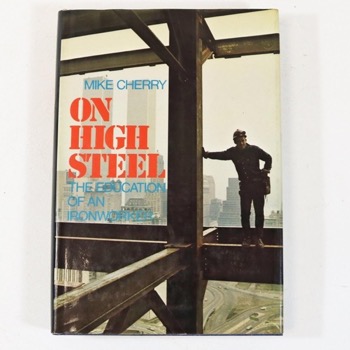
Hardcover. NY, Quadrangle/ NY Times, 1st, 1974, Book: Very Good, Dust Jacket: Very Good, Hardcover in a bright dust jacket, 206 pages. Purple top-stain. An interesting account of what it's like to work erecting multi-story high rise buildings in a city like New York. Clean copy.
Hardcover. Lawrence KS, University Press of Kansas, 1st, 1994, Book: Very Good, Dust Jacket: Very Good, Hardcover with a bright dust jacket. B&w vintage photos throughout. The Midwest's one-room schools were, Fuller observes, the most democratic in the nation. Located in small, independent school districts, these schools virtually wiped out illiteracy, promoted democratic values, and opened up new vistas beyond the borders of their students' lives. Entire communities, Fuller shows, revolved around these schools. At various times they were used as churches, polling places, sites of political caucuses, and meeting halls for local organizations. But as America urbanized and the movement to consolidate took hold in rural counties, these little centers of learning were left at the margins of the educational system. Some were torn down, some left to weather away, some sold at auction, and still others transformed into museums.
Little girl in surf, art by Maginel Wright Barney. 10 1/4 X 13 1/2", very good. Mailing label. In 1912, Maginel (Maggie-Nell) purchased a house in Nantucket. For nearly thirty years thereafter she portrayed the island's historic architecture, picturesque landscape, and quaint customs in illustrations for calendars, magazines, and books for children. She was the younger sister of architect Frank Lloyd Wright and the mother of Elizabeth Enright, children's book writer and illustrator.
Book: Very Good, Color art by Martin. 8 3/4 X 12", very good. PLEASE NOTE: The image shown is a scan of the actual product you are purchasing. What you see is what you get. The sheet may have some imperfections beyond the cropped area shown. You are buying THE COVER ONLY- not the entire magazine. Your order will be placed carefully between stiff paper in clear plastic envelope, then packed in a rigid cardboard sleeve to prevent bending.
1962, Book: Very Good, Color design of New York skyline made with newspaper apartment ads. 8 3/4 X 12", very good. Faint crease down center. PLEASE NOTE: The image shown is a scan of the actual product you are purchasing. What you see is what you get. The sheet may have some imperfections beyond the cropped area shown. You are buying THE COVER ONLY- not the entire magazine. Your order will be placed carefully between stiff paper in clear plastic envelope, then packed in a rigid cardboard sleeve to prevent bending.
1973, Book: Very Good, Color art by Davidson of hundreds of buildings with small patches of greenery. 8 3/4 X 12", very good. PLEASE NOTE: The image shown is a scan of the actual product you are purchasing. What you see is what you get. The sheet may have some imperfections beyond the cropped area shown. You are buying THE COVER ONLY- not the entire magazine. Your order will be placed carefully between stiff paper in clear plastic envelope, then packed in a rigid cardboard sleeve to prevent bending.
1971, Book: Very Good, Color art by Getz of tree shadow falling on a colonial style house. 8 3/4 X 12", very good. PLEASE NOTE: The image shown is a scan of the actual product you are purchasing. What you see is what you get. The sheet may have some imperfections beyond the cropped area shown. You are buying THE COVER ONLY- not the entire magazine. Your order will be placed carefully between stiff paper in clear plastic envelope, then packed in a rigid cardboard sleeve to prevent bending.
1963, Book: Very Good, Color art by Dunn of cars on Park Avenue with Pan Am building in background. 8 3/4 X 12", very good. Faint crease down center. PLEASE NOTE: The image shown is a scan of the actual product you are purchasing. What you see is what you get. The sheet may have some imperfections beyond the cropped area shown. You are buying THE COVER ONLY- not the entire magazine. Your order will be placed carefully between stiff paper in clear plastic envelope, then packed in a rigid cardboard sleeve to prevent bending.
1978, Book: Very Good, Color art by Getz of a warm chalet in snowy mountains. 8 3/4 X 12", very good. PLEASE NOTE: The image shown is a scan of the actual product you are purchasing. What you see is what you get. The sheet may have some imperfections beyond the cropped area shown. You are buying THE COVER ONLY- not the entire magazine. Your order will be placed carefully between stiff paper in clear plastic envelope, then packed in a rigid cardboard sleeve to prevent bending.
1974, Book: Very Good, Color art by Weber of a two-story building squeezed between skyscrapers. 8 3/4 X 12", very good. PLEASE NOTE: The image shown is a scan of the actual product you are purchasing. What you see is what you get. The sheet may have some imperfections beyond the cropped area shown. You are buying THE COVER ONLY- not the entire magazine. Your order will be placed carefully between stiff paper in clear plastic envelope, then packed in a rigid cardboard sleeve to prevent bending.
1973, Book: Very Good, Color art by Francois of water towers, skylights and spires atop city buildings. 8 3/4 X 12", very good. PLEASE NOTE: The image shown is a scan of the actual product you are purchasing. What you see is what you get. The sheet may have some imperfections beyond the cropped area shown. You are buying THE COVER ONLY- not the entire magazine. Your order will be placed carefully between stiff paper in clear plastic envelope, then packed in a rigid cardboard sleeve to prevent bending.
Softcover. NY, McGraw-Hill , 3rd pr., 1992, Book: Very Good, Dust Jacket: None, Softcover, 205 pages. 191 b&w figures. An in-depth look at the history of ornamental ironwork and ironworkers in American architecture. Well illustrated with many photos. Clean copy.
Hardcover. Boston, David R. Godine, 1st, 1978, Book: Very Good, Dust Jacket: Very Good, Hardcover, 202 pages, b&w photographs by Charles C. Withers. Very good copy in a clean, bright, unclipped dust jacket.
Hardcover. New Haven CT, Yale University Press , 1st, 2020, Book: Very Good, Dust Jacket: Very Good, Hardcover in a bright dust jacket. 438 pages, profusely illustrated in color and b&w. An intimate glimpse into the professional and romantic relationship between Harriet Pattison and the renowned architect Louis Kahn. On a winter day in 1953, a mysterious man in a sheepskin coat stood out to Harriet Pattison, then a theater student at Yale. She would later learn he was the architect Louis Kahn (1901-1974). This chance encounter served as preamble to a fifteen-year romance, with Pattison becoming the architect's closest confidante, his intellectual partner, and the mother of his only son. Here for the first time, Pattison recounts their passionate and sometimes searing relationship. Married and twenty-seven years her senior, Kahn sent her scores of letters--many from far-flung places--until his untimely death. This book weaves together Pattison's own story with letters, postcards, telegrams, drawings, and photographs that reveal Kahn's inner life and his architectural thought process, including new insight into some of his greatest works, both built and unbuilt. What emerges is at once a poignant love story and a vivid portrait of a young woman striving to raise a family while forging an artistic path in the shadow of her famous partner. Clean copy.
Softcover. Allworth Press, 1st, 2000, Book: Very Good, Dust Jacket: None, Softcover, 224 pages. Ranging from earthworks to conceptual art, this illuminating read offers an integrated view of all the significant artistic developments of one crucial decade, the extraordinary explosion that occurred between 1965 and 1975. The author, a leading art critic, focuses a new lens on this radical movement, showing the nuances that defined Minimalism in its various phases, as characterized by the inflected object, the disintegrated object, the ironic object -then the transition from the object to architecture, space, landscape, cityscape, body, performance, and conceptual art. No other account has documented in such detail the scope and impact of this artistic revolution, which the author argues spanned all mediums and pushed every aesthetic possibility of Minimalism to an extreme.
Softcover. Washington DC, Smithsonian Books, 1st, 1974, Book: Very Good, Dust Jacket: None, Softcover, 512 pages plus index, b&w photographs, map end papers. Previous price sticker on back cover. Light edge wear to wrappers. Else a clean, tight copy. A unique reference for those interested in American heritage sculpture and architecture. This book was published in both paperback and clothbound editions. Photography by David Blume.
Hardcover. Los Angeles, Getty Research Institute, 1st, 2013, Book: Very Good, Dust Jacket: None, Hardcover in pictorial boards. From 1940 to 1990, Los Angeles rapidly evolved into one of the most populous and influential industrial, economic, and creative capitals in the world. During this era, the region was transformed into a laboratory for cutting-edge architecture. Overdrive: L. A. Constructs the Future, 1940 - 1990 examines these experiments and their impact on modern design, reframes the perceptions of Los Angeles's dynamic built environment, and amplifies the exploration of the city's vibrant architectural legacy. The drawings, models, and images highlighted in the Overdrive exhibition and catalogue reveal the complex and often under-appreciated facets of Los Angeles and illustrate how the metropolis became an internationally recognized destination with a unique design vocabulary, canonical landmarks, and a coveted lifestyle. Clean copy. In publisher's shrinkwrap.
Hardcover. New York, Rizzoli, 1st, 2006, Book: Very Good, Dust Jacket: Very Good, 275 pages, color illustrations throughout. In publisher's shrinkwrap. Owen Jones was, and still remains, a highly influential force in the world of architecture and design. His prolific and impressive work--captured here in its various stages through drawings, architectural plans, and photographs--is as current, imaginative, and important now as when it first emerged more than 125 years ago. Owen Jones: Design, Ornament, Architecture & Theory in an Age in Transition fills a serious gap in the history of Victorian design. In his early career Jones was recognized as an authority on Oriental design. In the 1850s he was commissioned to decorate the interior of Joseph Paxton's magnificent World's Fair Crystal Palace in London. Other signature projects include St. James' Hall, the Crystal Palace Bazaar, Osler's Glass Shop, and Eynsham Hall at Oxford. In 1856 he completed his monumental Grammar of Ornament, which remains one of the most influential works on design ever published and is a source for many artists and designers today. More than just an architect, Jones' skills were applied to designing interiors, books, textiles, furniture, and carpet. His philosophy can most accurately be expressed in his words, "Form without color is like a body without a soul."
Hardcover. New York, Rizzoli, 1st, 2006, Book: Very Good, Dust Jacket: Very Good, 275 pages, color illustrations throughout. In publisher's shrinkwrap. Owen Jones was, and still remains, a highly influential force in the world of architecture and design. His prolific and impressive work--captured here in its various stages through drawings, architectural plans, and photographs--is as current, imaginative, and important now as when it first emerged more than 125 years ago. Owen Jones: Design, Ornament, Architecture & Theory in an Age in Transition fills a serious gap in the history of Victorian design. In his early career Jones was recognized as an authority on Oriental design. In the 1850s he was commissioned to decorate the interior of Joseph Paxton's magnificent World's Fair Crystal Palace in London. Other signature projects include St. James' Hall, the Crystal Palace Bazaar, Osler's Glass Shop, and Eynsham Hall at Oxford. In 1856 he completed his monumental Grammar of Ornament, which remains one of the most influential works on design ever published and is a source for many artists and designers today. More than just an architect, Jones' skills were applied to designing interiors, books, textiles, furniture, and carpet. His philosophy can most accurately be expressed in his words, "Form without color is like a body without a soul."
Softcover. New York, E.P. Dutton, 1st, 1978, Book: Very Good, Dust Jacket: None, 80 pages. Softcover. Color illustrations throughout. In excellent condition. Covers still very shiny, like new. Front cover has a bit of price tag residue on it. Very clean inside and out. Photographs of the colorful and eccentric Victorian architecture of San Francisco.
Softcover. New York, E.P. Dutton, 1st, 1978, Book: Very Good, Dust Jacket: None, 80 pages. Softcover. Color illustrations throughout. In excellent condition. Covers still very shiny, like new. Very clean inside and out. Photographs of the colorful and eccentric Victorian architecture of San Francisco.

 "Old Ocean City: The Journal and Photographs of Robert Craighead Walker, 1904-1916by: C. John Sullivan")
 "Old Paris and Changing New York: Photographs by Eugene Atget and Berenice Abbottby: Kevin Moore")
 "Old Paris and Changing New York: Photographs by Eugene Atget and Berenice Abbottby: Kevin Moore")
 "On High Steel: The Education of an Ironworkerby: Mike Cherry")
 "One-Room Schools of the Middle West: an Illustrated History by: Fuller, Wayne E.")
 "ORIG VINTAGE MAGAZINE COVER/ WOMAN'S HOME COMPANION - AUGUST 1929by: Barney (Illust.), Maginel Wright")
 "ORIGINAL VINTAGE MAGAZINE COVER: New Yorker Aug. 19 1967 - View of bridge from under stone arches by: Charles E. Martin (Illust.)")
 "ORIGINAL VINTAGE MAGAZINE COVER: New Yorker Sept. 8 1962 city buildings made from apartment adsby: Charles E. Martin (Illust.)")
 "ORIGINAL VINTAGE MAGAZINE COVER: New Yorker April 21 1973 - Buildingsby: R. Davidson (Illust.)")
 "ORIGINAL VINTAGE MAGAZINE COVER: New Yorker Dec. 18 1971 - Tree shadowby: Arthur Getz (Illust.)")
 "ORIGINAL VINTAGE MAGAZINE COVER: New Yorker Feb. 16 1963 - Park Avenue traffic by: Alan Dunn (Illust.)")
 "ORIGINAL VINTAGE MAGAZINE COVER: New Yorker Feb. 6 1978 - A-frame house in winter hillsby: Arthur Getz (Illust.)")
 "ORIGINAL VINTAGE MAGAZINE COVER: New Yorker Oct. 14 1974 - Two-story building squeezedby: Bernard Weber (Illust.)")
 "ORIGINAL VINTAGE MAGAZINE COVER: New Yorker Oct. 8 1973 - Rooftopsby: Andre Francois (Illust.)")
 "Ornamental Ironwork: An iLlustated Guide to its Design History and Use in American Architecture by: Southworth, Susan and Michael")
 "Ornamental Ironwork: An Illustrated Guide to Its Design, History, & Use in American Architectureby: Southworth, Susan & Michael")
 "Our Days Are Like Full Years: A Memoir with Letters from Louis Kahnby: Pattison, Harriet")
 "Out of the Box: The Reinvention of Art: 1965-1975by: Carter Ratcliff")
 "Outdoor Sculpture of Washington, D.C., The: A Comprehensive Historical Guideby: Goode, James M.")
 "Overdrive: L.A. Constructs the Future 1940-1990 by: Wim de Wit")
 "Owen Jones: Design, Ornament, Architecture, and Theory in an Age in Transitionby: Flores, Carol A. Hrvol")
 "Owen Jones: Design, Ornament, Architecture, and Theory in an Age in Transitionby: Flores, Carol A. Hrvol")
 "Painted Ladies: San Francisco's Resplendent Victoriansby: Baer (photography), Morley, Elizabeth Pomada, Michael Larsen (Text)")
 "Painted Ladies: San Francisco's Resplendent Victoriansby: Baer (photography), Morley, Elizabeth Pomada, Michael Larsen (Text)")