Softcover. NY, Thames & Hudson, 1st pbk., 1988, Book: Very Good, Dust Jacket: None, Softcover in pictorial wrappers, 304 pages. Profusely illustrated in b&w. Piranesi has a powerful appeal for our time. His brilliance as a graphic artist, his transformation of the European vision of Classical antiquity, and his themes of fantasy have been the focus of considerable study in recent years. But though these aspects are important for an appreciation of Piranesi's visual significance, they have tended to obscure other factors essential for a complete understanding of his unique achievement. In this copiously illustrated study, John Wilton-Ely - one of the world's foremost authorities on Piranesi - offers a full reappraisal of the complex personality of an astonishingly versatile artist. His book covers every aspect of Piranesi's life and work, emphasizing especially his importance as a pioneer of Roman archaeology, the high quality of his technical illustrations, and his role in the great Graeco-Roman debate of the 1760s. The author brings to life the Enlightenment world of the artist's ideas - fundamentally bound up with the birth of Neo-Classicism - and the search for an appropriately modern form of expression; and he shows the practical and influential form taken by these ideas in Piranesi's architectural projects, his designs for furniture and decorative schemes and his imaginative restoration of antiquities. Clean copy.
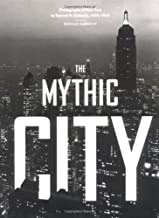
Hardcover. Princeton Architectural Press, 1st, 2005, Book: Very Good, Dust Jacket: Very Good, Hardcover, 224 pages. Daring, bold, dramatic, towering, impossibly glamorous: this is how we imagine New York in its golden age, and this is how Samuel H. Gottscho, the preeminent architectural photographer of his generation, captured it. Through his lens, New York of the 1930s became the quintessential modern metropolis, a round-the-clock city in which night was as charismatic as day. Rigorously editing out the Depression-weary city's more seamy aspects--its tenement slums, breadlines, and soup kitchens--Gottscho presented a dreamlike Gotham of skyscrapers and penthouse luxury that literally and figuratively glowed with glamour's sheen. His gimlet eye focused on the bold interplay of sun and shadow, dramatizing the chiseled forms of Manhattan's signature skyline and bridges. The Empire State and Chrysler buildings, Rockefeller Center, the Plaza, the George Washington Bridge--Gottscho brought them all to sparkling life. In this beautifully produced, landmark book, historian Donald Albrecht presents 175 of Gottscho's extraordinary images of the city, from the Battery to Harlem. An introductory essay tells the story of this legendary photographer, describing his working methods and philosophy, while placing his work in the broader context of photographic history.
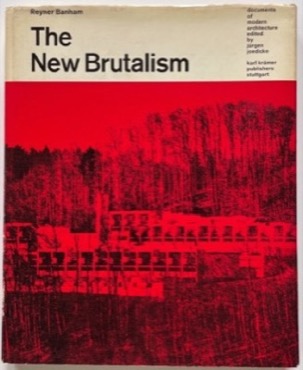
Hardcover. London, The Architectual Press, 1st, 1966, Book: Very Good, Dust Jacket: Good, Hardcover in a bright, lightly edgeworn dust jacket. First edition of Reyner Banham's foundational disquisition on Brutalist architecture presenting, per the liner notes, a scholarly history of the documentable facts on Brutalism, an eye-witness account of the period and personalities that produced it, and a comparative critique of numerous buildings regarded rightly or wrongly as examples of Brutalist architecture. Explores texts and buildings by an international roster of architects including Le Corbusier, Mies van der Rohe, James Stirling, Sir Owen Williams, Louis Kahn, Johannes van den Broke, Vladimir Bodiansky, William G. Howell, Richard Llewelyn-Davies, Denys Lasdun, Sir Basil Spence, Peter Moro, Andre Wogenscky, Atelier 5, Walter Forderer, Sverre Fehn, Oswald Mathias Ungers, Sir Leslie Martin, Vittorio Vigano, Aldo van Eyck, Paul Rudolph, Kiyonori Kikutake, Kunio Mayekawa, and not least, the architects regarded by Banham as the founders of the New Brutalism, Peter and Alison Smithson. 196 pages, illustrated throughout in black-and-white. Clean copy.
Hardcover. Periplus Editions, 1st, Hardcover in a bright, lightly worn dust jacket. 224 pages illustrated in color. The New Malaysian House is a collection of 25 contemporary houses that demonstrate a remarkable flowering of Malaysian design talent that has been germinating since the mid- 1980s. The houses range from luxury detached bungalows set in extensive tropical gardens to weekend retreats in the forest, from the gated communities springing up throughout Malaysia to extended family homes. All are distinguished by a singular quality of innovative design as the architects sought to explore new approaches for designing with the climate and in the cultural context of Malaysia. Clean copy.
Hardcover. New York, Reynal & Hitchcock, 1st, 1938, Book: Very Good, Dust Jacket: None, 2 Hardcover volumes. Volume 1 - 655 pages. Black & white illustrations. Moderate fading to spine of red cloth covers. Light wear. Clean, tight copy. Volume 2 - 640 pages. Black & white illustrations. Moderate fading to spine of red cloth covers. Light wear. Clean, tight copy.
Hardcover. Baltimore, Johns Hopkins University Press, 1st, 2007, Book: Very Good, Dust Jacket: Very Good, Hardcover in a bright dust jacket. The seventh volume of the Papers of Frederick Law Olmsted presents the record of his last years of residence in New York City. It includes reports on the design of Riverside and Morningside parks and Tompkins Square in Manhattan, as well as his comprehensive plan for the street system and rapid transit routes of the Bronx. It records his continuing work on Central Park and presents his final retrospective statement, The Spoils of the Park. In addition, volume seven contains an annotated version of the journal in which Olmsted recorded instances of political maneuvering and patronage politics in the years before his dismissal from the New York parks department in 1878. Later documents chronicle the early stages of his planning of the Boston park system--the Back Bay Fens, Arnold Arboretum, and Riverway. Other major commissions, each with its own political complications, were the grounds of the U.S. Capitol, the completion of the new state capitol in Albany, the designing of a park on Mount Royal in Montreal, and construction of the park system of Buffalo, New York. The volume also presents Olmsted's commentary on issues of the times including federal Reconstruction policy and civil-service reform.
Hardcover. NY, The Monacelli Press, 1st, 2008, Book: Very Good, Dust Jacket: None, Hardcover, 208 pages. Debate and banter between the irascible Philip Johnson and the equally articulate and opinionated Robert A. M. Stern generates a provocative combination of astute commentary and personal observation on the state of architecture in the twentieth century. Philip Johnson's multifaceted career as an architect, curator, and collector extended from the early 1920s to his death in 2005. Captivated by the work of the European modernists Gropius, Le Corbusier, and Mies van der Rohe, Johnson assembled the seminal exhibition "Modern Architecture--International Exhibition" at the Museum of Modern Art in 1932. Among his most notable achievements are the famous Glass House in Connecticut, designed for his own use, and the Seagram Building in New York, in association with Mies van der Rohe. Recognized as the dean of American architecture, Johnson had a profound influence on the next generation of architects, including Robert A. M. Stern. Stern has conducted a series of ten interviews with Johnson, each covering a decade of his life, that provide an illuminating assessment of a significant period of American architecture. No dj issued.
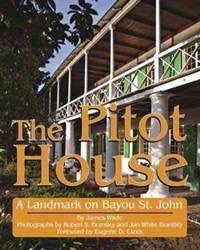
Hardcover. Gretna LA, Pelican Publishing, 1st, 2014, Book: Very Good, Dust Jacket: Very Good, Hardcover in a bright dust jacket, 128 pages, color illustrations. A study of early Creole architecture and history in New Orleans. Clean, like new.
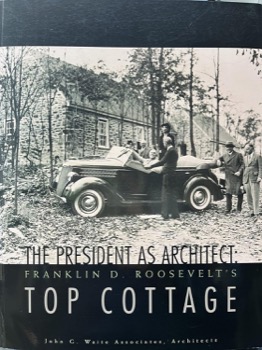
Softcover. Albany NY, Mount Ida Press, 1st, 2001, Book: Very Good, Dust Jacket: None, Softcover, B&w photos and plans; 11" - 13" tall; 160 pages. Traces the history of Roosevelt?s long-forgotten retreat near Hyde Park? from the president?'s original drawings for the modest, two-bedroom cottage to its recent preservation by the Open Space Institute, the Franklin and Eleanor Roosevelt Institute and the National Park Service. Examines Top Cottage as a symbol of Roosevelt?s love of the Hudson Valley and as one of the country?s first barrier-free buildings. Top Cottage joins Thomas Jefferson?s Monticello and Poplar Forest as the only homes designed by a U. S. President while in office. Clean copy.
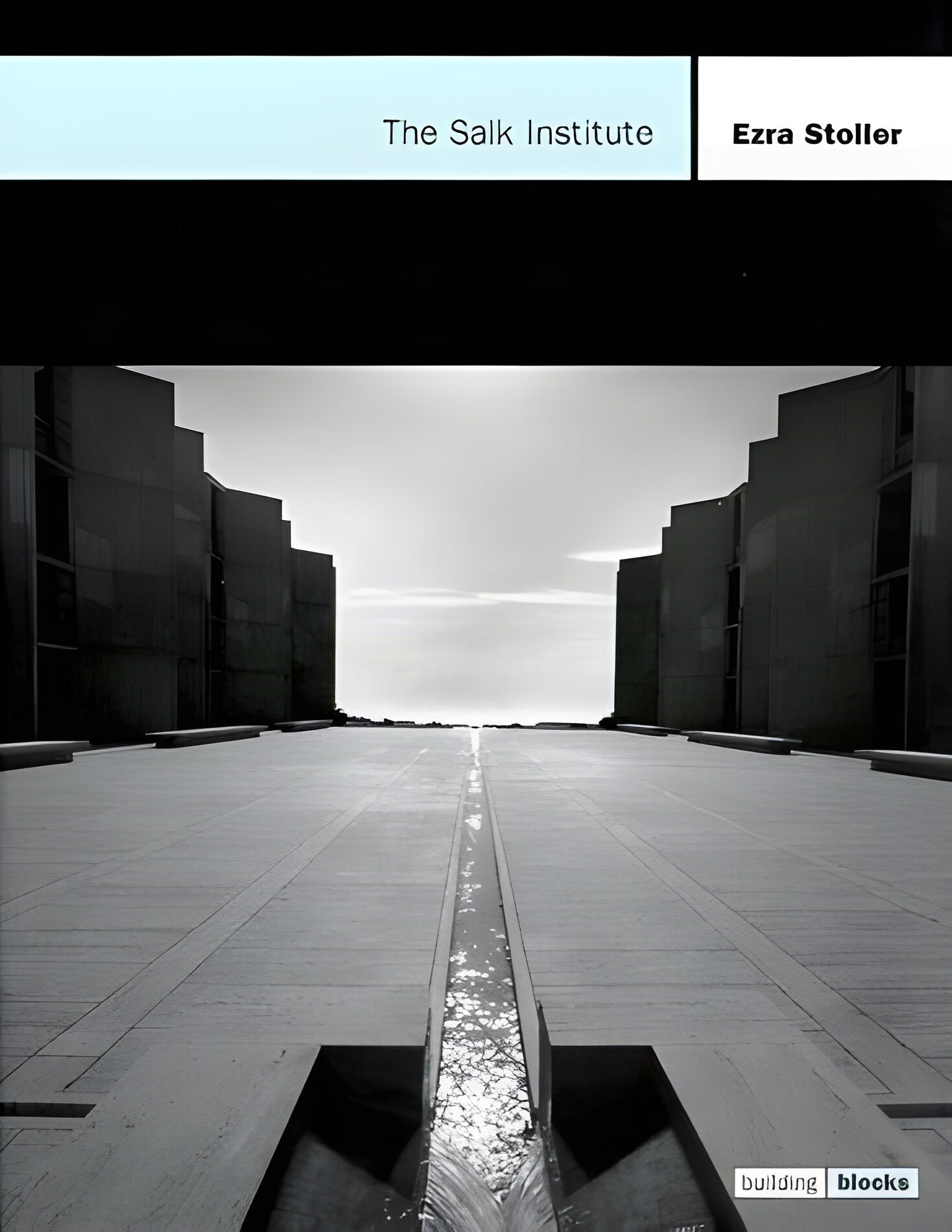
Hardcover. Princeton Architectural Press, 1st, 2000, Book: Very Good, Dust Jacket: Very Good, Hardcover in a bright dust jacket. After the introduction by D.S. Friedman, the pocket-size hardcover consists of striking b/w views of the Salk Institute, including architectural drawings. Clean copy.
Softcover. Joseph Jenkins, reprint, 1997, Book: Very Good, Softcover. Hundreds of illustrations, including color photographs. Joe Jenkins's expertise in slate roof restoration enables him to provide us with hard-to-find information about every aspect of slate roofs, from their historical beginnings to modern slate-roof-restoration trade secrets. This is an invaluable resource for slate roof owners, architects, historians, contractors, do-it-your-sellers, restoration buffs, and others interested in one of America's most overlooked treasures -- slate roofs. Clean copy.
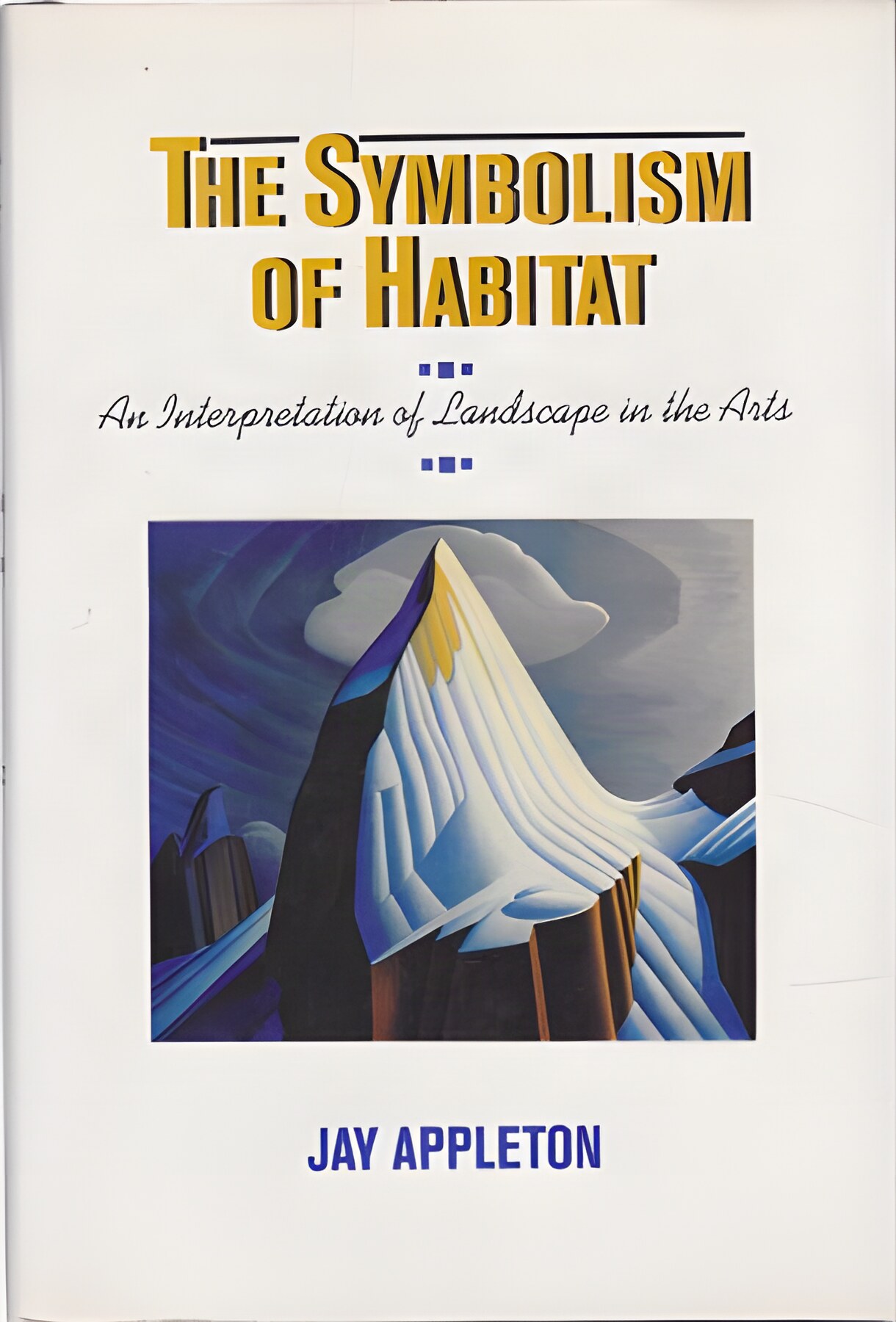
Hardcover. Seattle, University of Washington Press, 1st, 1990, Book: Very Good, Dust Jacket: Very Good, Hardcover in a bright dust jacket, 113 pages, b&w illustrations. When architects create a landscape or building, when artists depict a landscape, and when poets write of nature, they recreate certain aesthetic elements observed in nature. Jay Appleton asserts in an insightful analysis that these aesthetic values in landscape are not found in an elevated philosophy of aesthetics or in a culturally bound artistic symbolism but in the biological and behavioral needs that we share with other animals. Thus, the aesthetics of landscape may be approached through other areas of human experience and science, especially the natural and behavioral sciences. They are expressed in symbolism drawn from a primal habitat in which all animals seek survival. Clean copy.
Hardcover. Singapore, Times Editions-Marshall Cavendish, 1st, 2005, Book: Very Good, Dust Jacket: Very Good, Hardcover, 335 pages. The Temples of Lhasa is a comprehensive survey of historic Buddhist sites in the Tibetan capital of Lhasa. The study is based on the Tibetan Heritage Fund`s official five-year architectural conservation project in Tibet, during which the author and his team had unlimited access to the buildings studied. The documented sites span the entire known history of Tibetan Buddhist art and architecture from the 7th to the 21st centuries The book is divided into thirteen chapters, covering all the major and minor temples in historic Lhasa.
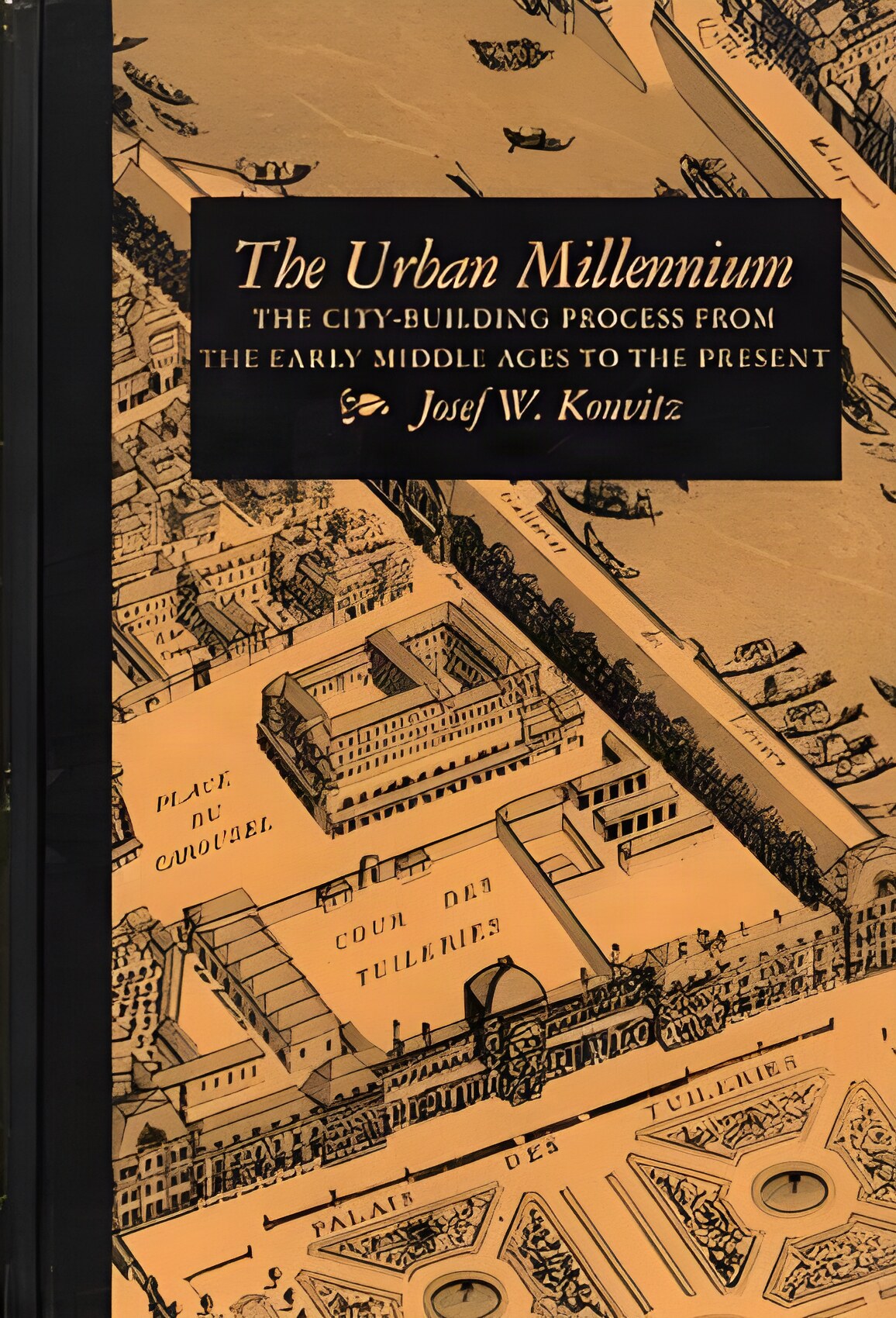
Hardcover. Carbondale IL, Southern Illinois University Press, 1st, 1985, Book: Very Good, Dust Jacket: None, Hardcover, pictorial cloth, 265 pages, b&w illustrations. The Urban Millennium focuses upon the spatial adaptation of cities as a factor in urbanization. Konvitz explores how the evolution of city building strategies has accompanied and facilitated other aspects of urban development. By taking a long historical perspective, he shows that cities were more easily adapted to changing circumstances before and dur-ing the industrialization. Konvitz also draws out the implica-tions of his analysis for contemporary urban problems. He challenges many contemporary assumptions of architec-ture and city planning and suggests that we should learn to appreciate an ap-proach to building which allows for the continual modification of individual structures and districts, and which places more control over the environ-ment in the hands of the users. Blacked out name on front fly leaf, otherwise clean.
Hardcover. NY, Chartwell, 2000, Book: N, Hardcover, 448 pages. Virtually every structure that Wright built is represented in this extensive survey of his life's work. His genius at architectural design enable him to work out extremely complex buildings in his head and translate them on to paper in a matter of hours, as the famous story of his design presentation of Falling Water illustrates. His work continues to draw great admiration and interest to this day. His often tempestuous and sometimes tragic life and career are given full coverage in this book. Hundreds of photos, both archival and recent chart his amazing work and influence on all who followed. This concise consideration of Wright's life and work not only offers new insights into the character of this complex, powerful and at all times confident personality, but also the architectural legacy he left behind and which exists to this day in the vast number of homes and public buildings photographed mainly by the author himself.
Hardcover. NY, Arco Publishing , 1st, 1978, Book: Very Good, Dust Jacket: Very Good, Hardcover. Profusely illustrated throughout, some color. 244 pages. A visual survey of much of Adam's work, provides ample material for a critical appraisal of the development of Adam as architect and designer.
Hardcover. US, Hatje Cantz, 1st, 2010, Book: Very Good, Dust Jacket: None, Hardcover, 144 pages, 81 color images. Like new in publisher's shrink-wrap. In 1999, the fashion and advertising photographer Thomas Hoeffgen (born 1968) flew to Nigeria for a story on soccer. He became so interested in the culture around the game there that he spent the next several years making unusual photographs of players and spectators in Nigeria, Namibia, Botswana, Zambia, Malawi and South Africa. Hoeffgen"s pictures record the frequently improvised playing fields alongside the stadiums.
Hardcover. US, Hatje Cantz, 1st, 2010, Book: Very Good, Dust Jacket: None, Hardcover, 144 pages, 81 color images. Like new in publisher's shrink-wrap. In 1999, the fashion and advertising photographer Thomas Hoeffgen (born 1968) flew to Nigeria for a story on soccer. He became so interested in the culture around the game there that he spent the next several years making unusual photographs of players and spectators in Nigeria, Namibia, Botswana, Zambia, Malawi and South Africa. Hoeffgen"s pictures record the frequently improvised playing fields alongside the stadiums.
Softcover. University of Virginia Press, 2nd pr., 2003, Book: Very Good, Dust Jacket: None, Softcover, 196 pages. Slight wear to wraps, previous owner's signature on front fly leaf, otherwise, clean and tight copy.
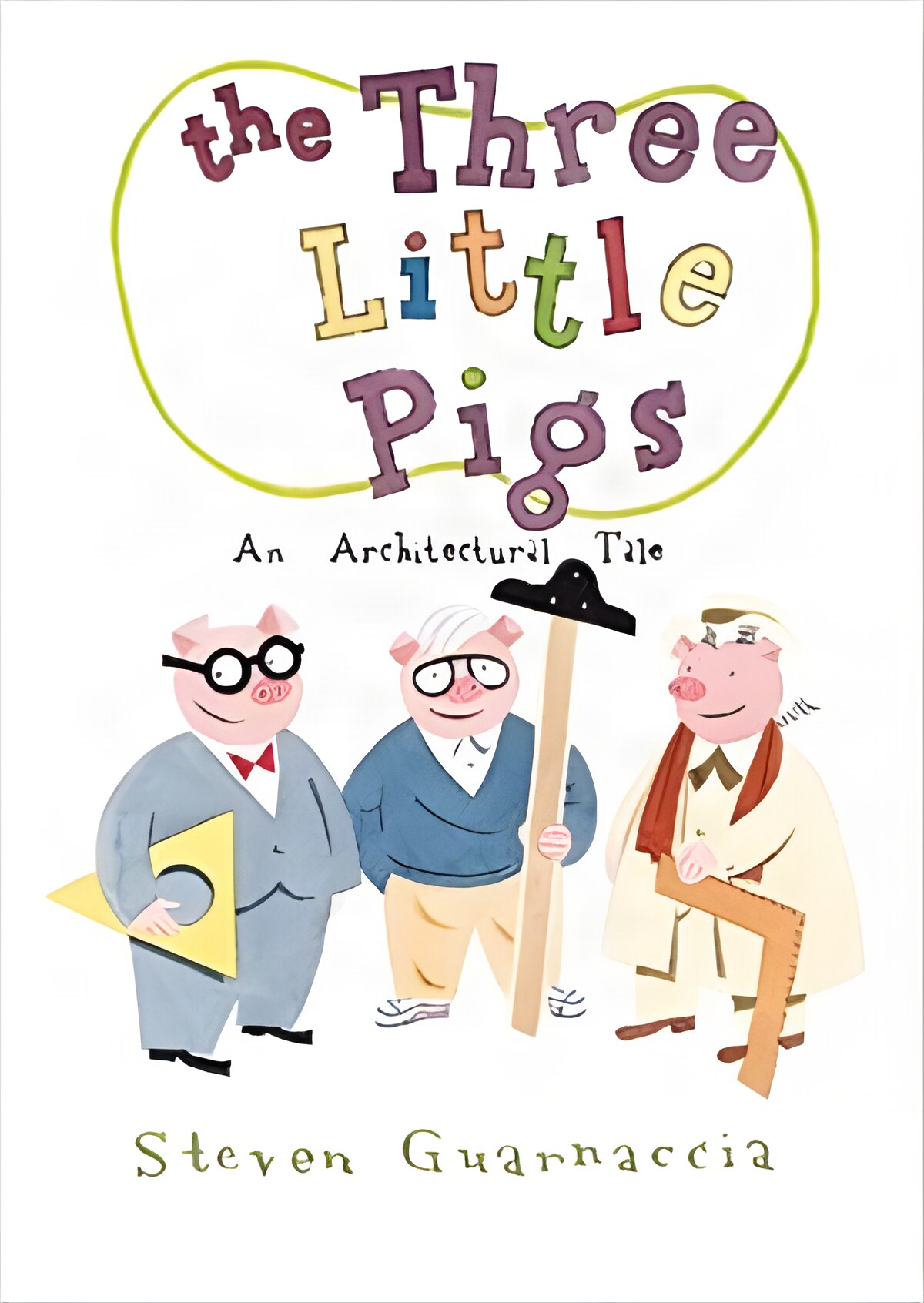
Hardcover. NY, Abrams Books for Young Readers, 1st, 2010, Book: Very Good, Dust Jacket: Very Good, Hardcover in a bright jacket. SIGNED with a little pig sketch by Guarnaccia on title page. In this quirky, artsy retelling of "The Three Little Pigs," the pigs and their homes are nods to three famous architects-Frank Gehry, Phillip Johnson, and Frank Lloyd Wright-and their signature homes. Each house is filled with clever details, including furnishings by the architects and their contemporaries. Of course, not all the houses are going to protect the pigs from the wolf's huffing and puffing. Which one will? The wolf, and readers, are in for a clever surprise ending.
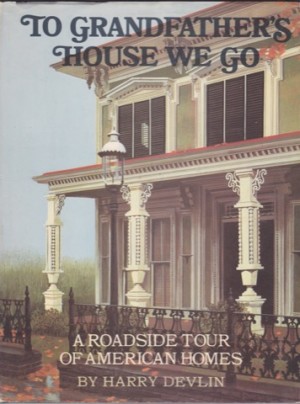
Hardcover. NY, Parents Magazine Press, 1st, 1967, Book: Very Good, Dust Jacket: Very Good, Hardcover in a bright dust jacket. Wonderful introduction to different styles of architecture. Illustrated in color by Devlin. Related notes & articles to various landmark houses laid-in. Dust jacket price clipped. Clean copy.
Hardcover. Structure/Links International, 1st, 2004, Book: Very Good, Dust Jacket: Very Good, Hardcover, color plates throughout. The best projects in the design of country houses around the world are profiled in this architectural and design book. Each project has been selected on the basis of its innovation in the field, making this a highly useful sourcebook for architects, designers, and students of architecture who are looking for creative directions in the design of contemporary country homes. All steps of the design process, from conception to construction, are exhaustively documented and include technical information and commentary contributed by the architects themselves.
Hardcover. NY, Rizzoli, 1st, 1996, Book: Very Good, Dust Jacket: Very Good, Hardcover in a bright, unclipped dust jacket, 304 pages, illustrated in color and b&w throughout. Spotless and tight copy. American architect Morris Lapidus is best known as the designer of glamorous postwar resort hotels in Florida, such as the Fontainebleau (1954) and the Eden Roc (1955) in Miami Beach, and the Americana in Bal Harbour (1956). Yet in a remarkable sixty-year career that began in 1926, he designed more than 500 retail stores, hotels, apartment complexes, and stage sets that captured the popular spirit and changing face of Main Street America in the twentieth century.
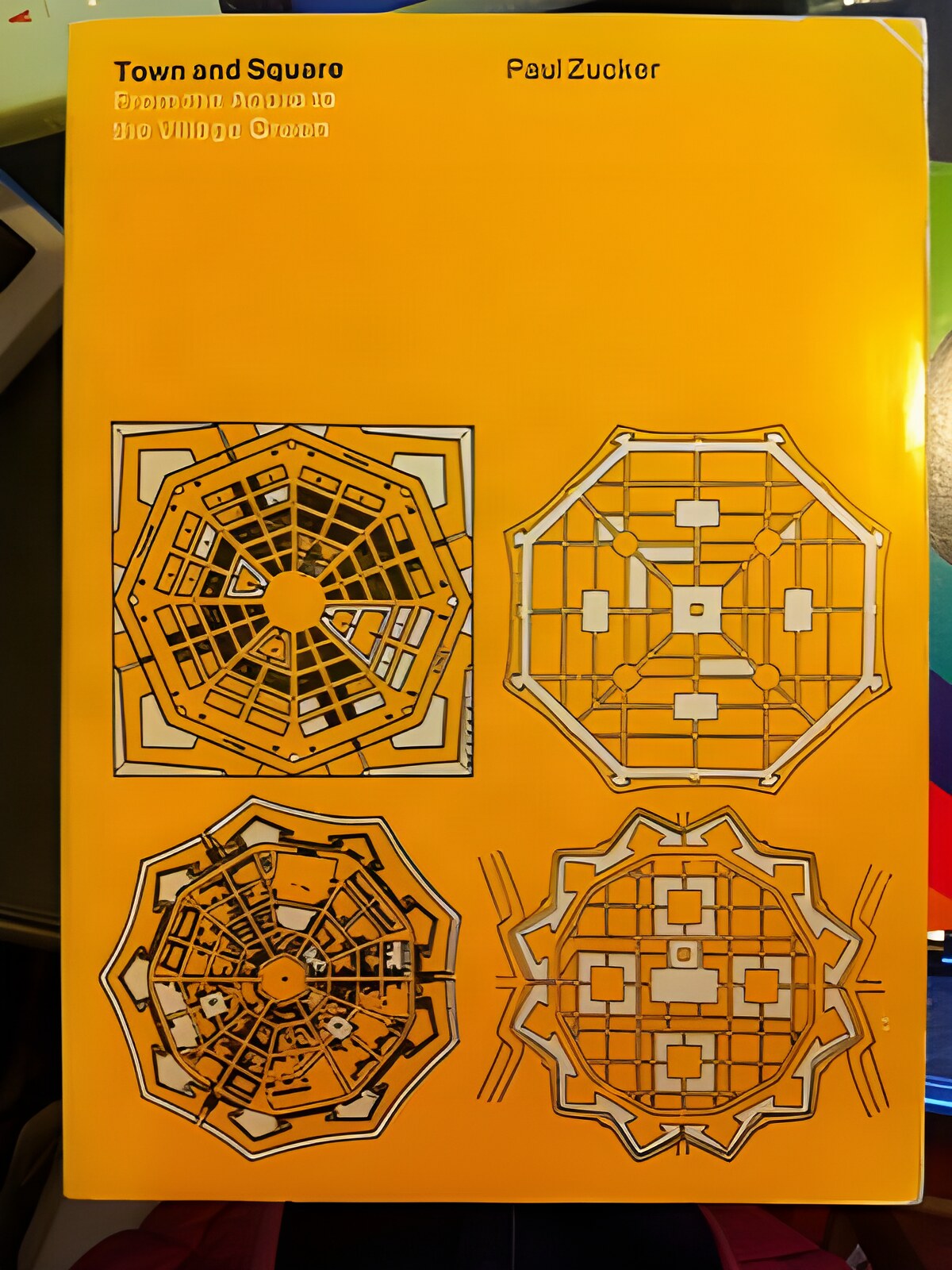
Softcover. Cambridge MA, MIT Press, 1st pbk, 1970, Book: Very Good, Dust Jacket: None, Softcover, yellow card wraps with b&w designs and black lettering. 287 pages with 55 b/w line drawings and 96 b/w plates. The first publication in English that gives a general survey of the development of the inner structure of the town from a dual point of view: that of the function of the square in the life of the community and that of its conception in purely aesthetic terms. Zucker shows a continuous development from Greece and Rome, through the Middle Ages and Renaissance, to the creative heights of the 17th and 18th centuries, periods which he considers the culmination of this development. The concluding chapter surveys the role of the square in early American life. Clean copy.

 "The Mind and Art of Giovanni Battista Piranesi by: John Wilton-Ely")




 "The Notebooks of Leonardo Da Vinci - Two Volumesby: MacCurdy (Editor), Edward")







 "Thomas Jefferson, Landscape Architectby: Nichols, Frederick Doveton")