Hardcover. Berkeley, University of California Press, 2nd pr., 1970, Book: Good, Dust Jacket: None, Hardcover, black cloth with gilt lettering on spine, 412 pages with index. Frontis. map. Ex-lib with stamping to edges and endpapers, name on front fly leaf.
Hardcover. New Haven CONNECTICUT, Yale University Press, 1st, 1978, Book: Very Good, Dust Jacket: Very Good, Hardcover, 317 pages, b&w illustrations, red cloth with gilt lettering on spine. Bright dust jacket with price-clip.
Hardcover. Seattle, University of Washington Press, 1st, 2009, Book: Very Good, Dust Jacket: Very Good, Hardcover, 210 pages, illustrated throughout in b&w. Clean, unmarked copy with only minor wear to dust jacket. Stafford worked for Commerical Press in Shanghai and his photographs capture both sides of the revolutionary struggle in China.
Hardcover. NY, WW Norton & Co,, 1st, 2018, Book: Very Good, Dust Jacket: Very Good, Hardcover in a bright, unclipped dust jacket. As World War II came to an end, General George Marshall was renowned as the architect of Allied victory. Set to retire, he instead accepted what he thought was a final mission-this time not to win a war, but to stop one. Across the Pacific, conflict between Chinese Nationalists and Communists threatened to suck in the United States and escalate into revolution. His assignment was to broker a peace, build a Chinese democracy, and prevent a Communist takeover, all while staving off World War III. In his thirteen months in China, Marshall journeyed across battle-scarred landscapes, grappled with Mao Zedong and Zhou Enlai, and plotted and argued with Generalissimo Chiang Kai-shek and his brilliant wife, often over card games or cocktails. The results at first seemed miraculous. But as they started to come apart, Marshall was faced with a wrenching choice. Its consequences would define the rest of his career, as the secretary of state who launched the Marshall Plan and set the standard for American leadership, and the shape of the Cold War and the US-China relationship for decades to come. It would also help spark one of the darkest turns in American civic life, as Marshall and the mission became a first prominent target of McCarthyism, and the question of "who lost China" roiled American politics. Remainder dot to top edge, otherwise like new.
Softcover. UK, Cambridge University Press, 1st pbk, 2008, Book: Very Good, Dust Jacket: None, Softcover in pictorial wrappers, 352 pages. A groundbreaking study of cultural life during a turbulent and formative decade in contemporary China, this book seeks to explode several myths about the Cultural Revolution (officially 1966-1976). Through national and local examination of the full range of cultural forms (film, operas, dance, other stage arts, music, fine arts, literature, and even architecture), Clark argues against characterizing this decade as one of chaos and destruction. Rather, he finds that innovation and creativity, promotion of participation in cultural production, and a vigorous promotion of the modern were all typical of the Cultural Revolution. Using a range of previously little-used materials, Clark forces us to fundamentally reassess our understanding of the Cultural Revolution, a period which he sees as the product of innovation in conflict with the effort by political leaders to enforce a top-down modernity. Clean copy.
Softcover. UK, Cambridge University Press, reprint, 2011, Book: Very Good, Dust Jacket: None, Softcover, 231 pages, b&w illustrations. The Chinese peoples' experience of war during the Second World War, as it is known in the West, was one of suffering and stoicism in the face of dreadful conditions. China's War of Resistance began in 1937 with the Japanese invasion and ended in 1945 after eight long years. Diana Lary, one of the foremost historians of the period, tells the tragic history of China's war and its consequences from the perspective of those who went through it. Using archival evidence only recently made available, interviews with survivors, and extracts from literature, she creates a vivid and highly disturbing picture of the havoc created by the war, the destruction of towns and villages, the displacement of peoples, and the accompanying economic and social disintegration. Her focus is on families torn apart, men, women, and children left homeless and struck down by disease and famine. It is also a story of courage and survival. By 1945, the fabric of China's society had been utterly transformed, and entirely new social categories had emerged. As the author suggests in a new interpretation of modern Chinese history, far from stemming the spread of communism from the USSR, which was the Japanese pretext for invasion, the horrors of the war, and the damage it created, nurtured the Chinese Communist Party and helped it to win power in 1949. Clean copy.
Hardcover. NY, Columbia University Press, 1st, 1976, Book: Very Good, Dust Jacket: Very Good, Hardcover in a bright, price-clipped dust jacket, 371 pages. Looks into the origins and activities of a foreign-policy interest group which emerged after the Korean War and exerted pressure on the federal government not to recognize the People's Republic of China. Name on front fly leaf, otherwise clean.
Hardcover. NY, Hill & Wang, 1st, 1996, Book: Very Good, Dust Jacket: Very Good, Hardcover in a bright, unclipped dust jacket, 544 pages. A bold new history of the Deng years by a leading China scholar. Unlike the former Soviet Union and the once "socialist" countries of Eastern Europe, China's current economy is now the world's second largest and most rapidly growing. Remarkably, today's problems in China are spiritual in nature-"a crisis of faith"-stemming from the clash between capitalist realities and lingering socialist values and ideas. "The Deng Xiaoping Era "is the story of that crisis and of Deng Xiaoping's promise of socialist democracy that has degenerated into bureaucratic capitalism. Maurice Meisner shows how the social contract between the Chinese Communist Party and the people was grossly violated by the Deng regime, and why capitalism has emerged as the dynamic force in today's socioeconomic and cultural life. Now, after more than a decade of capitalist reforms, he argues that Chinese spiritual malaise is deepening with the brutal suppression of the 1989 Democracy Movement and its politically repressive aftermath. This is an indispensable study of contemporary Chinese history-from the Chinese Revolution and the founding of the Maoist state to the establishment of the Deng regime and the social consequences of Deng's reforms-as well as a formidable analysis of the failure of the world's greatest socialist experiment. Clean copy.
Hardcover. NY, Charles Scribner's Sons, 1st, 1983, Book: Very Good, Dust Jacket: Very Good, Hardcover in a bright, unclipped dust jacket. Illustrated in b&w and color. Clean copy.
Hardcover. Cambridge UK, Cambridge University Press, 1st, 1990, Book: Very Good, Dust Jacket: Very Good, Hardcover in a lightly worn dust jacket, 296 pages, b&w illustrations. This is the first full scholarly study of the Great Wall of China to appear in any language, and it challenges many deeply held ideas about Chinese history. Drawing both on primary sources and on the latest archaeology, the book first demonstrates that the standard account of the Great Wall is untrue and misleading and then presents a convincing new account. It begins by tracing the various walls and systems of frontier defences that existed in early Chinese history, and shows how the greatest of these achieved a mythical symbolic stature which long survived the Wall itself. A striking concluding chapter traces how the true history of the Wall was lost in the early twentieth century as it was gradually transformed into a Chinese national symbol explained through historical myth. The book is an important contribution to the history of China's defensive policy, and her ideological attitudes, and will be of interest both to students of Chinese history and of international relations in the pre-modern world. Clean, bright copy.
Hardcover. Princeton NJ, Princeton University Press, 1st, 2021, Book: Very Good, Dust Jacket: Very Good, Hardcover in a bright dust jacket, 408 pages. A book that casts new light on the history of China and the West at the turn of the nineteenth century. George Macartney's disastrous 1793 mission to China plays a central role in the prevailing narrative of modern Sino-European relations. Summarily dismissed by the Qing court, Macartney failed in nearly all of his objectives, perhaps setting the stage for the Opium Wars of the nineteenth century and the mistrust that still marks the relationship today. But not all European encounters with China were disastrous. The Last Embassy tells the story of the Dutch mission of 1795, bringing to light a dramatic but little-known episode that transforms our understanding of the history of China and the West. Drawing on a wealth of archival material, Tonio Andrade paints a panoramic and multifaceted portrait of an age marked by intrigues and war. China was on the brink of rebellion. In Europe, French armies were invading Holland. Enduring a harrowing voyage, the Dutch mission was to be the last European diplomatic delegation ever received in the traditional Chinese court. Andrade shows how, in contrast to the British emissaries, the Dutch were men with deep knowledge of Asia who respected regional diplomatic norms and were committed to understanding China on its own terms.
Hardcover. NY, Columbia University Press, 1st, 1994, Book: Very Good, Dust Jacket: Very Good, Hardcover in a bright dust jacket with a small closed tear to front panel. 187 pages, 117 b.w. photos, index, bibliography, 187p., notes. A scholarly monograph, addressing our image of the Chinese artist, the painters' livelihood, studio & hand. A grand essay, giving us the kind of insights to really appreciate the full art of Chinese painters & paintings.
Softcover. Princeton NJ, Princeton University Press, 3rd pr., 2008, Book: Very Good, Dust Jacket: None, Softcover in pictorial wraps, 375 pages, maps. A decade after the Soviet Union and the People's Republic of China established their formidable alliance in 1950, escalating public disagreements between them broke the international communist movement apart. In The Sino-Soviet Split, Lorenz Luthi tells the story of this rupture, which became one of the defining events of the Cold War. Identifying the primary role of disputes over Marxist-Leninist ideology, Luthi traces their devastating impact in sowing conflict between the two nations in the areas of economic development, party relations, and foreign policy. The source of this estrangement was Mao Zedong's ideological radicalization at a time when Soviet leaders, mainly Nikita Khrushchev, became committed to more pragmatic domestic and foreign policies. Using a wide array of archival and documentary sources from three continents, Luthi presents a richly detailed account of Sino-Soviet political relations in the 1950s and 1960s. He explores how Sino-Soviet relations were linked to Chinese domestic politics and to Mao's struggles with internal political rivals. Furthermore, Luthi argues, the Sino-Soviet split had far-reaching consequences for the socialist camp and its connections to the nonaligned movement, the global Cold War, and the Vietnam War. Clean copy.
Hardcover. NY, Columbia University Press, 2nd pr., 1979, Book: Very Good, Dust Jacket: Very Good, Hardcover in a bright, price-clipped dust jacket, 364 pages. Tells of the Americans who came to China, openly and in secret, and their role in the ultimate U. S. decision to spurn Chinese Communist overtures of friendship and throw greater support to the sinking regime of Chiang Kai-shek. Name on front fly leaf, otherwise a clean copy.
Hardcover. Princeton NJ, Princeton University Press, 1st, 2010, Book: Very Good, Dust Jacket: Very Good, Hardcover in a bright, unclipped dust jacket, 391 pages. How Maoism captured the imagination of French intellectuals during the 1960s. Michel Foucault, Jean-Paul Sartre, Julia Kristeva, Phillipe Sollers, and Jean-Luc Godard. During the 1960s, a who's who of French thinkers, writers, and artists, spurred by China's Cultural Revolution, were seized with a fascination for Maoism. Combining a merciless expose of left-wing political folly and cross-cultural misunderstanding with a spirited defense of the 1960s, The Wind from the East tells the colorful story of this legendary period in France. Richard Wolin shows how French students and intellectuals, inspired by their perceptions of the Cultural Revolution, and motivated by utopian hopes, incited grassroots social movements and reinvigorated French civic and cultural life.
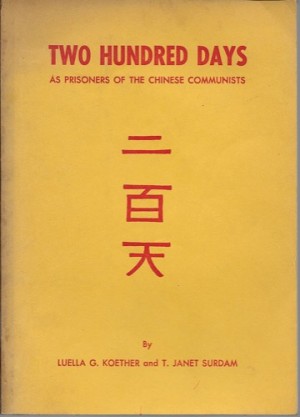
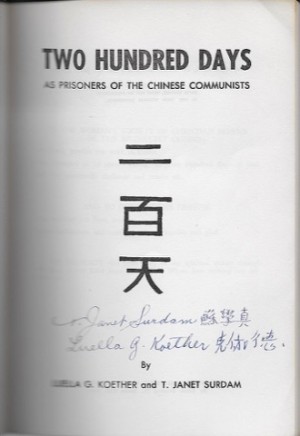
Softcover. Mason City, IA, Arrow Printing , 1st, 1956, Book: Very Good, Dust Jacket: None, 248 pages. 12mo. SIGNED BY BOTH AUTHORS on title page. Yellow wrappers wih red titles in English and Chinese. Age soil. The glue used by the printing company to attach the wrappers to the text was of poor quality; this has toned the wrappers spine to a darker yellow. Wear to top and bottom of spine.
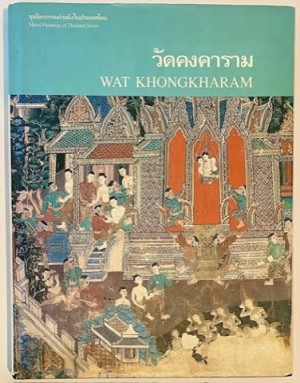
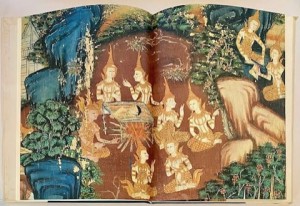
Hardcover. Bangkok, Muang Boran Publishing House, 1st, 1994, Book: Very Good, Dust Jacket: Very Good, 164 pages. Hardcover. Color illustrations throughout. Navy blue cover boards (excellent), gilt title on spine and front cover board. Pages unmarked, clean. Dust jacket unclipped, has some slight shelfwear. In very good, colorful condition. Text in Thai and English. 94 pages of color photographs and 7 pages of b/w photographs of 14th-18th century mural paintings at this revered site.
Hardcover. US, Tuttle Publishing, 1st, 2003-04-15, Book: Very Good, Dust Jacket: Very Good, Hardcover in a bright dust jacket, 178 pages, illustrated throughout in color and b&w. Three scratches to fore-edge. Light shelf-wear to dust jacket. Previous owner's stamp on front end paper. Clean, tight copy.


 "Teachings of Taoist Master Chuang, Theby: Saso, Michael")
 "The Birth of a Republic: Francis Stafford's Photographs of China's 1911 Revolution and Beyond (A China Program Book)by: Lu, Hanchao")
 "The China Mission: George Marshall's Unfinished War 1945-1947 by: Daniel Kurtz-Phelan")
 "The Chinese Cultural Revolution: A Historyby: Paul Clark")
 "The Chinese People at War: Human Suffering and Social Transformation, 1937–1945by: Diana Lary")
 "The Committee of One Million: China Lobby Politics, 1953-1971by: Bachrack, Stanley D.")
 "The Deng Xiaoping Era: An Inquiry into the Fate of Chinese Socialismby: Maurice J. Meisner")
 "The Gardens of China: History, Art, and Meanings by: Morris, Edwin T.")
 "The Great Wall of China: From History to Mythby: Waldron, Arthur")
 "The Last Embassy: The Dutch Mission of 1795 and the Forgotten History of Western Encounters with Chinaby: Tonio Andrade")
 "The Painter")
 "The Sino-Soviet Split: Cold War in the Communist Worldby: Lorenz M. Luthi")
 "The U. S. Crusade in China, 1938-1945 by: Michael Schaller")
 "The Wind from the East: French Intellectuals, the Cultural Revolution, and the Legacy of the 1960sby: Richard Wolin")
 "TWO HUNDRED DAYS AS PRISONERS OF THE CHINESE COMMUNISTS. (SIGNED COPY)by: Koether Luella G. and T. Janet Surdan")
 "Wat Khongkharam: Mural Paintings of Thailand Seriesby: n/a")
 "Yin Yu Tang: The Architecture and Daily Life of a Chinese Houseby: Berliner, Nancy")