Hardcover. New Deli, Academic Foundation, 1st, 2015, Book: Very Good, Dust Jacket: Very Good, Hardcover in a bright dust jacket, 158 pagea. Clean, bright copy.
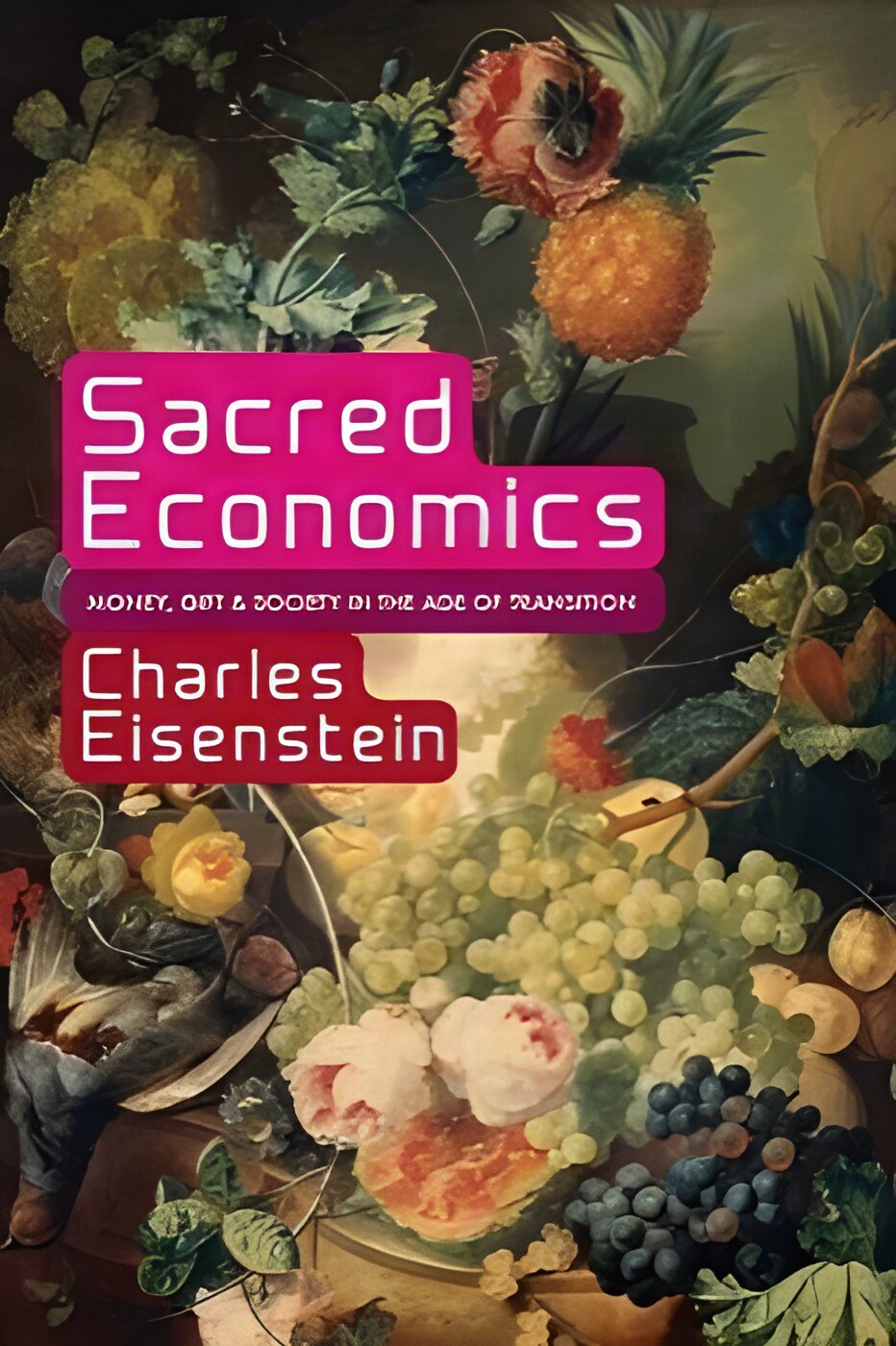
Softcover. Berkeley, Evolver Editions/North Atlantic, reprint, 2011, Book: Very Good, Dust Jacket: None, Softcover, 468 pages. Sacred Economics traces the history of money from ancient gift economies to modern capitalism, revealing how the money system has contributed to alienation, competition, and scarcity, destroyed community, and necessitated endless growth. Today, these trends have reached their extreme--but in the wake of their collapse, we may find great opportunity to transition to a more connected, ecological, and sustainable way of being. This book is about how the money system will have to change--and is already changing--to embody this transition. Clean copy.
Softcover. Cambridge MA, Belknap Press / Harvard, reprint, 1996, Book: Very Good, Dust Jacket: None, Softcover, 760 pages. Representing ten years of research into the history of the managerial business system, this book concentrates on patterns of growth and competitiveness in the United States, Germany, and Great Britain, tracing the evolution of large firms into multinational giants and orienting the late twentieth century's most important developments. Clean,bright copy.
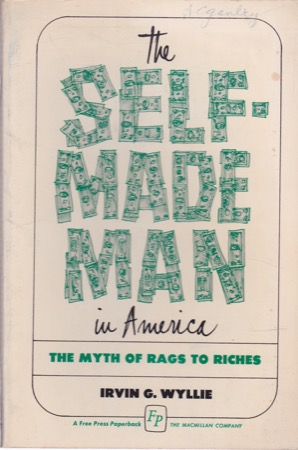
Softcover. NY, The Free Press, 1st pbk, 1966, Book: Very Good, Dust Jacket: None, Softcover, 210 pages. With scholarly detachment, clarity, and taste the author presents a history and analysis of American ideals of success. Clean copy.
Softcover. NY/London, Marion Boyars, 1st, 1981, Book: Very Good, Dust Jacket: None, Softcover, 152 pages. Essays that deal with the shadow economy. Shadow Work is all the work people do who are not paid in cash. Clean copy.
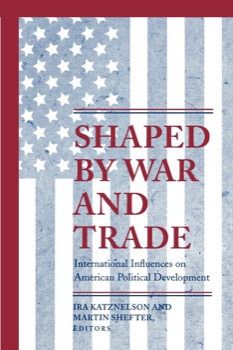
Softcover. Princeton NJ, Princeton University Press, 1st, 2002, Book: Very Good, Softcover, 372 pages. Ten leading scholars explore how, over the past two centuries, the changing positions of the United States in the world economy and in the international political order have shaped U.S. political institutions and domestic politics. Ira Katznelson, Aristide R. Zolberg, and Robert O. Keohane demonstrate the central role that efforts to contend with foreign military and economic competition played in forming the major institutions of U.S. government from the framing of the Constitution through the Civil War. Clean copy.
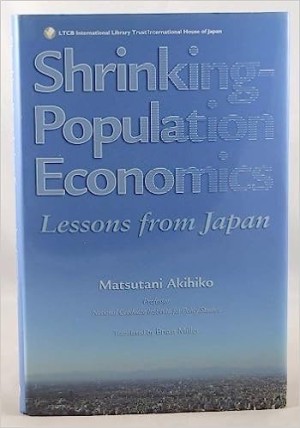
Hardcover. Tokyo, International House of Japan, 1st English Ed., 2006, Book: Very Good, Dust Jacket: Very Good, Hardcover in a bright dust jacket, 201 pages. Many of the world's major economies face shrinking populations this century. Everyone from Japan and Italy to China will have older and then shrinking populations in the foreseeable future. Japan is the first major economy to head down this path and there is a great deal to learn from their experience. Professor Masutani's book is the best text available in English. Some quick lessons - automation is not a solution, economies will shrink. The sometimes desperate acts that companies and governments take to prevent this shrinkage (like running deficits and over investment in automation and infrastructure) will make things worse, not better. Shrinking populations can lead to a healthier and happier population if the right policy steps are taken. Companies need to shift focus from growing the top-line (sales) to a focus on value generation and the bottom line. Clean copy.
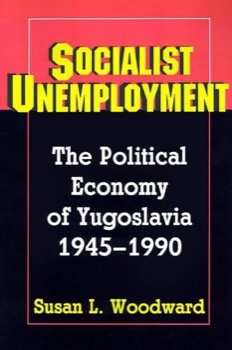
Softcover. Princeton NJ, Princeton University Press, 1st, 1995, Book: Very Good, Dust Jacket: None, Softcover, 443 pages. In the first political analysis of unemployment in a socialist country, Susan Woodward argues that the bloody conflicts that are destroying Yugoslavia stem not so much from ancient ethnic hatreds as from the political and social divisions created by a failed socialist program to prevent capitalist joblessness. Under Communism the concept of socialist unemployment was considered an oxymoron; when it appeared in postwar Yugoslavia, it was dismissed as illusory or as a transitory consequence of Yugoslavia's unorthodox experiments with worker-managed firms. In Woodward's view, however, it was only a matter of time before countries in the former Soviet bloc caught up with Yugoslavia, confronting the same unintended consequences of economic reforms required to bring socialist states into the world economy. Clean copy.
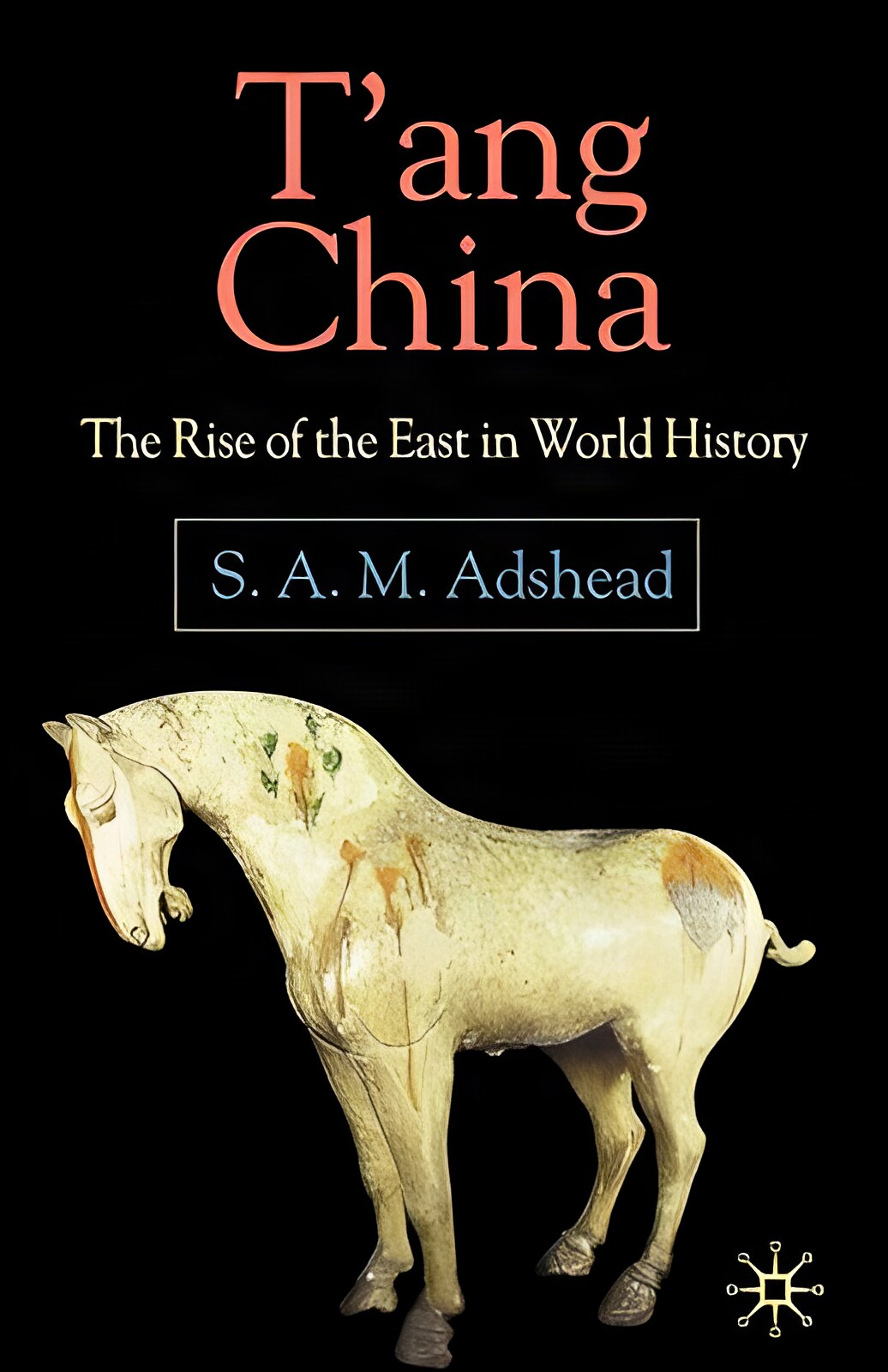
Softcover. London/NY, Palgrave Macmillan, 2nd pr., 2004, Book: Very Good, Dust Jacket: None, Softcover, 233 pages. China's role in world history has been controversial, especially as seen through an economic lens. This book presents an alternative interpretation of that role, less exclusively economic, more broadly based, and focused on the T'ang period, one of China's acknowledged golden ages. It shows how a different China, Buddhist or Taoist rather than Confucian, aristocratic as much as meritocratic, achieved, through openness to the outside world and partnership with its elites, a multiple preeminence in politics, economics, society and the intellect, not unlike that enjoyed by the United States today. Within a looser web of globalization, the T'ang period and its dynamics offers a distant mirror of our own time, casting a new light on issues in contemporary politics. Clean copy.
Hardcover. London, Transaction Publishers, 2nd Ed., 2014, Book: Very Good, Dust Jacket: Very Good, Hardcover in a bright dust jacket. The late twentieth century witnessed rapid changes not only in Taiwan's economy, but also in its identity. Both economic as well as ideological restructuring have been basic elements in the transformation of postwar Taiwan, as rapid democratization opened a Pandora's Box, and stirred a whirlwind of social discord. This volume considers such important questions as whether the old Taiwanese work ethic is a relic of the past, and whether Taiwan is likely to become a battleground of ideological wars. The book addresses Taiwanese nostalgia for Chinese culture; the rise and fall of postwar Taiwanese agrarian culture; the transformation of farmers' social consciousness in the period 1950-1970; the place of Confucianism in postwar Taiwan; and the awakening of the "self" and the development of a Taiwanese national identity in the post-World War II period. Finally, it considers whether "mutual historical understanding" may be the basis for Taiwan-Mainland relations in the twenty-first century. This second edition includes a new chapter on the history of Taiwan after World War II, incorporating additional developments in Taiwan in the past decade.
Hardcover. Philadelphia, Temple University Press, 1st, 1991, Book: Very Good, Dust Jacket: Very Good, Hardcover in a dust jacket with fading to spine, 174 pages. In this interpretation of Bolivia's political and social development, Carmenza Gallo focuses on the impact of the Bolivian tax code and its relationship to class structure. She argues that differences in state formation in primary export economies merge from variation of three main elements: class structure; the economic base and the export sector's degree of integration into the domestic economy; and the reliance of fiscal resources on export sectors. Gallo produces a more complete view of the state's responses to internal and international circumstances and a better understanding of the conditions under which officials of weak states, like Bolivia, act independently of upper classes.
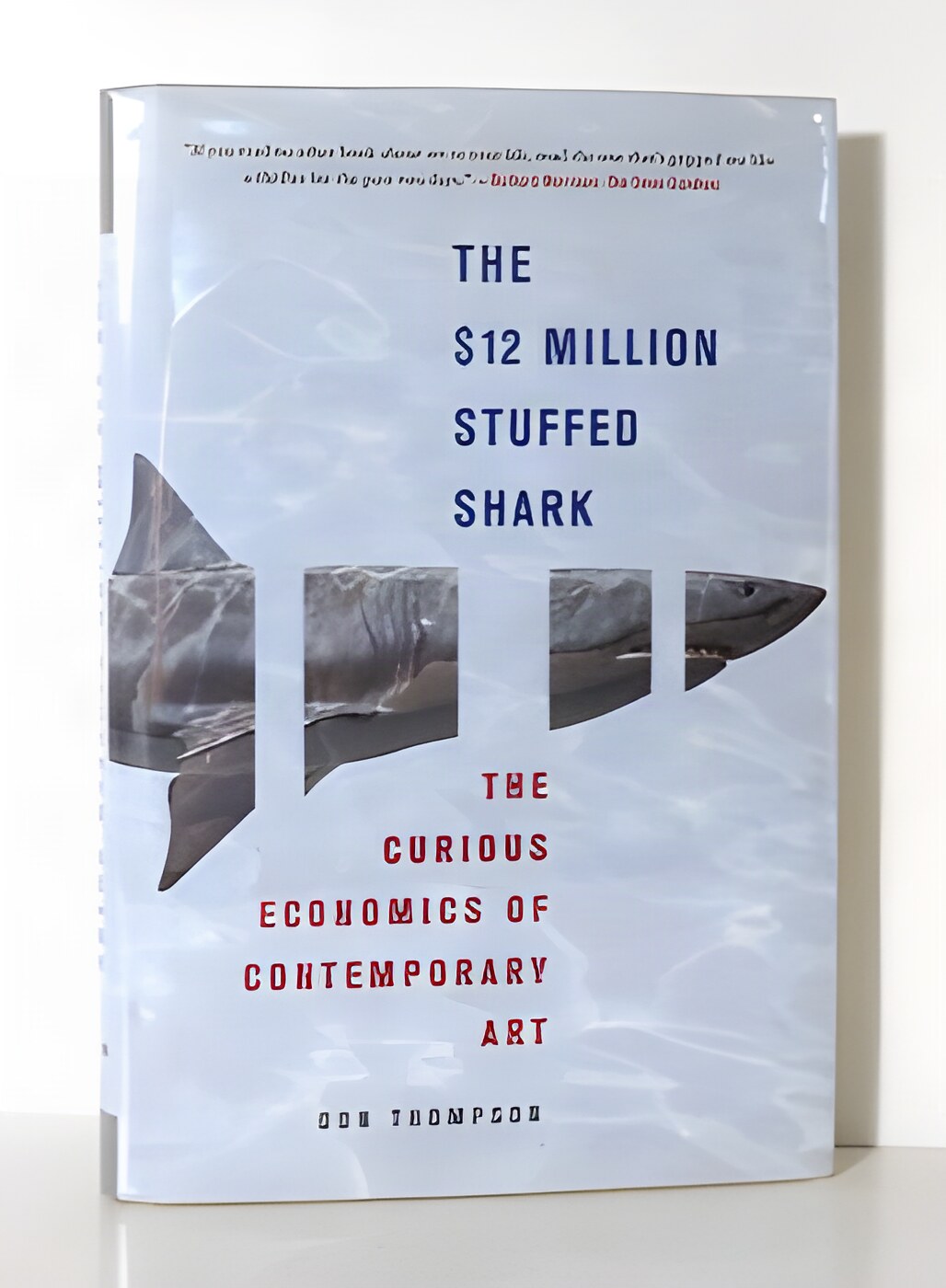
Hardcover. NY, Palgrave Macmillan , 6thpr., 2008, Book: Very Good, Dust Jacket: Very Good, Hardcover in a bright, unclipped dust jacket, 268 pages, color illustrations. Why would a smart New York investment banker pay $12 million for the decaying, stuffed carcass of a shark? By what alchemy does Jackson Pollock's drip painting No. 5, 1948 sell for $140 million? Intriguing and entertaining, The $12 Million Stuffed Shark is a Freakonomics approach to the economics and psychology of the contemporary art world. Why were record prices achieved at auction for works by 131 contemporary artists in 2006 alone, with astonishing new heights reached in 2007? Don Thompson explores the money, lust, and self-aggrandizement of the art world in an attempt to determine what makes a particular work valuable while others are ignored.
Hardcover. Lawrence KS, University Press of Kansas, 1st, 2009, Book: Very Good, Dust Jacket: Very Good, Hardcover in bright dust jacket, 375 pages. The debate over the federal budget-and the deficit spending it tends to produce-has assumed a renewed urgency for reasons that are painfully clear to all of us. Over the past thirty-two years-from the presidency of Jimmy Carter through that of George W. Bush-the U.S. government has in fact balanced its budget in only four of them, while the fiscal challenges confronting President Obama make a balanced budget anytime soon a remote possibility. Iwan Morgan's book provides a much-needed historical perspective on this perennially troubling issue. Clean copy.
Hardcover. NY, Hill & Wang , 1st, 1996, Book: Very Good, Dust Jacket: Very Good, Hardcover in a bright dust jacket, 251 pages. Completed in 1825 and enlarged between 1836 and 1862 at the initial cost of $7 million, the Erie Canal not only created an economic revolution in the region but fostered new and unique communities made up of entrepreneurs, canal workers, and farmers. Utilizing a variety of primary resources, but especially the Canal Board Papers, Sheriff (history relates the social history of those who lived, worked, and traveled the Erie Canal before the Civil War. This previously untold story is laced with accounts by businessmen who saw the canal as opportunity, immigrant laborers looking for steady work, and farmers who transported their produce by canal boat. Although all of these groups relayed their complaints, claims, and concerns to the Canal Board, we do not know the responses they received. Still, the issues raised tell a great deal about the local impact of the Erie Canal, and herein lies the strength of the book. Clean copy.
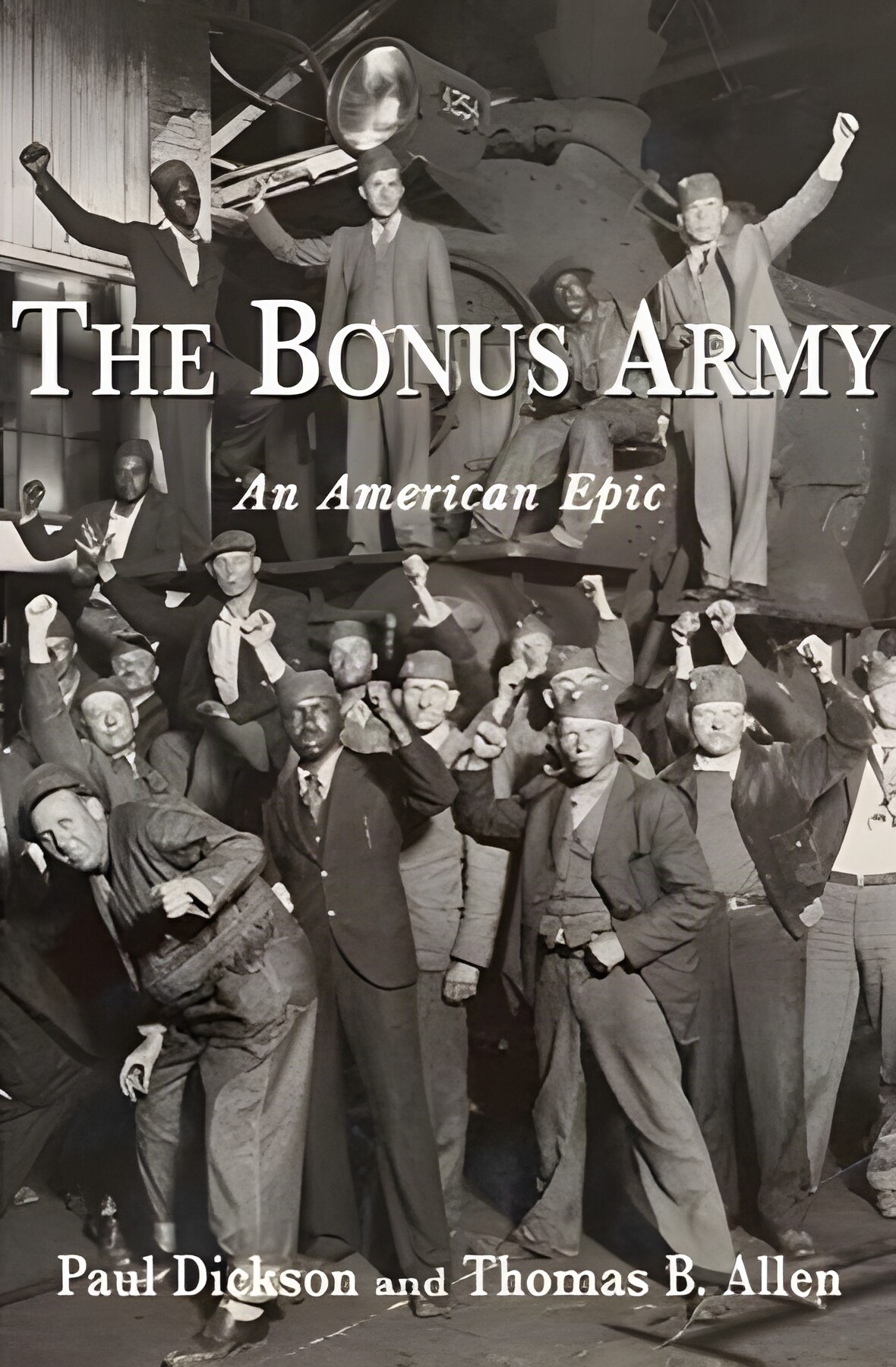
Hardcover. NY, Walker Books, 1st, 2004, Book: Very Good, Dust Jacket: Very Good, Hardcover in a bright, unclipped dust jacket. n the summer of 1932, at the height of the Depression, some forty-five thousand veterans of World War I descended on Washington, D.C., from all over the country to demand the bonus promised them eight years earlier for their wartime service. They lived in shantytowns, white and black together, and for two months they protested and rallied for their cause-an action that would have a profound effect on American history. Clean copy.
Hardcover. New Haven CT, Yale University Press, 1st, 1938, Book: Very Good, Dust Jacket: Very Good, Hardcover in a lightly worn, price-clipped dust jacket, 477 pages. Original edition of this major study of British policies toward its North American colonies by a premiere early 20th century historian of Colonial America, Charles M. Andrews. Name on front fly leaf, otherwise a clean, tight copy.
Hardcover. Walburg Pers, 1st, 2003, Book: Very Good, Dust Jacket: Very Good, Hardcover in a bright dust jacket, 192 pages illustrated in color and b&w. A study about the development of a company founded in Amsterdam in the Dutch Golden Age. The VOC, as it was called, was a joint venture company of the Dutch in controlling trade in the world. This scientific paper is one of the main references in terms of research on VOC History. Clean copy.
Hardcover. NY, St. Martin's Press, 1st, 1986, Book: Very Good, Dust Jacket: Very Good, Hardcover in a dust jacket with light fading to spine, 487 pages. In this book Ryoshin Minami studies the last hundred years of Japan's remarkable economic growth from the Meiji period up to the present day. First, he reveals the factors which account for Japan's successful economic take-off during the Meiji period. Second, he explains why Japan achieved a more rapid rate of economic growth than other developed countries. This forms the major part of the book and will interest those in the developed countries who have felt the full force of Japan's export drive and whose own industries are consequently in decline. Finally, the author evaluates the results of Japan's economic growth and makes predictions for its future. The book makes a comprehensive survey of the Japanese experience in the pre- and post-war periods and points out lessons not only for developed countries but also for developing countries. Name on front fly leaf, otherwise clean.
Softcover. NY, Cambridge University Press, reprint, 1996, Book: Very Good, Dust Jacket: None, Softcover, 434 pages. Of all the terms with which Americans define themselves as members of society, few are as elusive as "middle class." This book traces the emergence of a recognizable and self-aware "middle class" between the era of the American Revolution and the end of the nineteenth century. The author focuses on the development of the middle class in larger American cities, particularly Philadelphia and New York. He examines the middle class in all its complexity, and in its day-to-day existence--at work, in the home, and in the shops, markets, theaters, and other institutions of the big city. The book places the new language of class---in particular the new term "middle class"--in the context of the concrete, interwoven experiences of specific anonymous Americans who were neither manual workers nor members of urban upper classes. Clean copy.
Hardcover. NY, Harper & Row, Revised Ed., 1974, Book: Very Good, Dust Jacket: Very Good, Hardcover in a bright dust jacket, 282 pages. INSCRIBED BY CHAMBERLAIN on the front fly leaf. The Updated Edition of a title first published in the 1960s. Clean copy.
Hardcover. NY, Harcourt, Brace and World, reprint, 1962, Book: Very Good, Dust Jacket: Good, Hardcover in a worn, chipped dust jacket, 403 pages. Distinguished British economist John Maynard Keynes (1883-1946) set off a series of movements that drastically altered the ways in which economists view the world. In his most important work, The General Theory of Employment, Interest, and Money (first published in1936), Keynes critiqued the laissez-faire policies of his day, particularly the proposition that a normally functioning market economy would bring full employment. Keynes's forward-looking work transformed economics from merely a descriptive and analytic discipline into one that is policy oriented. For Keynes, enlightened government intervention in a nation's economic life was essential to curbing what he saw as the inherent inequalities and instabilities of unregulated capitalism. No markings.
Softcover. NY, Harper Torchbooks, reprint, 1965, Book: Very Good, Dust Jacket: None, Softcover, 357 pages. A scholarly study about life in the Old South. Clean copy.
Hardcover. NY, Farrar, Straus and Giroux, 1st, 2024, Book: Very Good, Dust Jacket: Very Good, Hardcover in a bright dust jacket, 525 pages. "Forgotten founder" no more, Alexander Hamilton has become a global celebrity. Millions know his name. Millions imagine knowing the man. But what did he really want for the country? What risks did he run in pursuing those vaulting ambitions? Who tried to stop him? How did they fight? It's ironic that the Hamilton revival has obscured the man's most dramatic battles and hardest-won achievements-as well as downplaying unsettling aspects of his legacy. Thrilling to the romance of becoming the one-man inventor of a modern nation, our first Treasury secretary fostered growth by engineering an ingenious dynamo-banking, public debt, manufacturing-for concentrating national wealth in the hands of a government-connected elite. Seeking American prosperity, he built American oligarchy. Hence his animus and mutual sense of betrayal with Jefferson and Madison-and his career-long fight to suppress a rowdy egalitarian movement little remembered today: the eighteenth-century white working class. Clean copy.


 "Scale and Scope: The Dynamics of Industrial Capitalismby: Alfred DuPont Chandler Jr.")



 "Taxes And State Power: Political Instability in Bolivia, 1900-1950by: Carmenza Gallo")






 "The Economic Development of Japan: A Quantitative Study by: Ryoshin Minami")