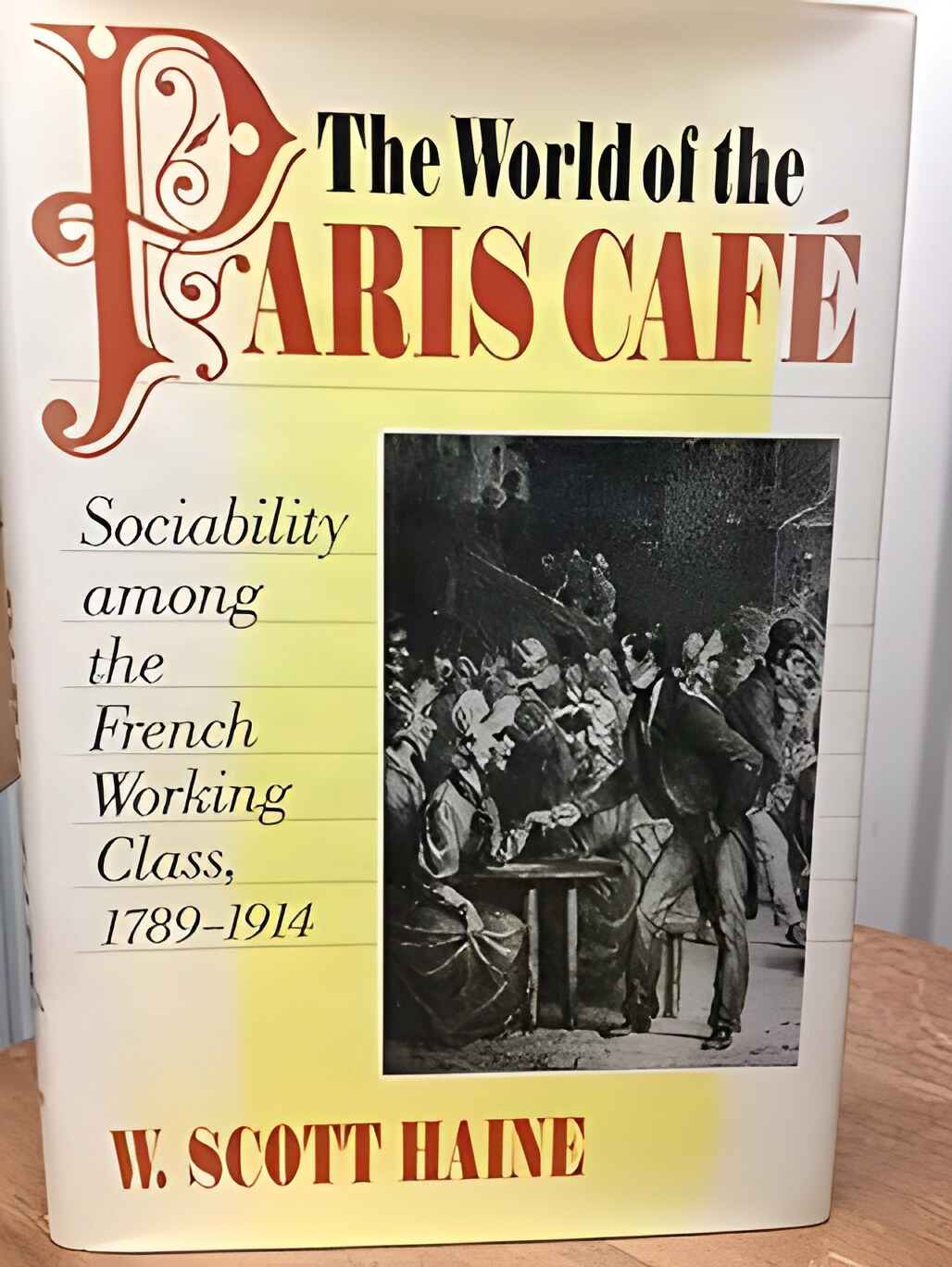
Hardcover. Baltimore, Johns Hopkins University Press, 1st, 1996, Book: Very Good, Dust Jacket: Good, Hardcover in a dust jacket with sunning to spine, 325 pages, b&w illustrations. In The World of the Paris Café, W. Scott Haine investigates what the working-class café reveals about the formation of urban life in nineteenth-century France. Café society was not the product of a small elite of intellectuals and artists, he argues, but was instead the creation of a diverse and changing working population. Making unprecedented use of primary sources -- from marriage contracts to police and bankruptcy records -- Haine investigates the café in relation to work, family life, leisure, gender roles, and political activity. This rich and provocative study offers a bold reinterpretation of the social history of the working men and women of Paris. Clean copy.
France, Michelin & Co., 1st, 1931, Book: Very Good, Dust Jacket: Very Good, Hardcover, 176 pages. Guide book to WW1 battlefield, illust. with black & white photos, maps (color two-page of Verdun). End-pages with ads. Previous owner's signature front endpaper. Dust jacket in excellent condition.
Softcover. UK, Antony Rowe, reprint, nd, Book: Very Good, Dust Jacket: None, Softcover, 112 pages, b&w illustrations. 178 b/w photos. The great German assault on Verdun opened on 21 February 1916 and the battle went on with furious attacks and counterattacks till it finally petered out on 18 December, ten months later, some two and a half months longer than the British offensives of the Somme and Third Ypres combined. After describing the origins and conduct of the battle with maps and illustrations the book takes us on a tour of the town and of various parts of the battlefield with its numerous forts. Originally published in 1919 by Michelin. Clean copy.
Hardcover. New York, Harry N. Abrams, 1st English, 1996, Book: Very Good, Dust Jacket: Very Good, Hardcover, 143 pages, b&w photographs throughout. A very clean, tight copy.
Softcover. Bloomington, IN, Indiana University Press, 1st, 2015, Book: Very Good, Dust Jacket: None, 232 pages. Softcover. A very clean, unmarked copy with only minor edgewear. Black and white photographs throughout. The center of the art world before the war, Paris fired the Nazis' greed. The discovery of more than 1,500 prized paintings and drawings in a private Munich residence, as well as a recent movie about Allied attempts to recover European works of art, have brought Nazi plundering back into the headlines, but the thievery was far from being limited to works of art. From 1942 onwards, ordinary Parisian Jews-mostly poor families and recent immigrants from Eastern Europe-were robbed, not of sculptures or paintings, but of toys, saucepans, furniture, and sheets. Witnessing the Robbing of the Jews tells how this vast enterprise of plunder was implemented in the streets of Paris by analyzing images from an album of photographs found in the Federal Archives of Koblenz. Brought from Paris in 1945, the photographs were cataloged by the staff of the Munich Central Collecting Point. Beyond bearing witness to the petty acts of larceny, these images provide crucial information on how the Germans saw their work. They enable us to grasp the "Nazi gaze" and to confront the issue of the relation between greed and mass destruction.
Hardcover. New York, W. W. Norton & Company, 1st, 2010, Book: Very Good, Dust Jacket: Good, 160 pages. Hardcover with dust jacket. Clean, unmarked copy with minor wear to dust jacket. Also small tear with piece missing from dust jacket bottom fore edge front. The photographer Pierre Yves-Petit, who called himself "Yvon," wandered the streets of Paris between the world wars looking for the moment when the shifting light and clouds would perfectly reveal the city?s ephemeral, iconic beauty. The dramatic images of the city and its people that he made during those years would become the most popular postcards in France. Yvon?s Paris reproduces more than one hundred of his loveliest images, many made from recently discovered glass negatives.

 "Verdun - Argonne (1914-1918)by: Michelin Co.")
 "Village in France: Louis Clergeau's Photographic Portrait of Daily Life in Pontlevoy, 1902-1936by: Couderc, Jean-Mary")
 "Witnessing the Robbing of the Jews: A Photographic Album, Paris, 1940-1944by: Gensburger, Sarah")
 "Yvon's Parisby: Stevens, Robert")