Hardcover. New York, Knopf, Reprint, 1991, Book: Very Good, Dust Jacket: Very Good, 129 pages. Color illustrations by James McMullan. Dust jacket unclipped with slight rubbing. Otherwise, clean and tight copy.
Hardcover. University Press of Kentucky, 1st, 1999, Book: Very Good, Dust Jacket: Very Good, Hardcover in a bright dust jacket, 338 pages. Nobel Laureate Seamus Heaney, author of nine collections of poetry and three volumes of influential essays, is regarded by many as the greatest Irish poet since Yeats. Passage to the Center is the most comprehensive critical treatment to date on Heaney's poetry and the first to study Heaney's entire body of work (including his recent volumes. It is also the first to examine the poems from the perspective of religion, one of Heaney's guiding preoccupations. According to Tobin, the growth of Heaney's poetry may be charted through the recurrent figure of "the center," a key image in the relationship that evolved over time between the poet and his inherited place, an evolution that involved the continual re-evaluation and re-vision of imaginative boundaries. In a way that previous studies have not, Tobin's work examines Heaney's poetry in the context of modernist and postmodernist concerns about the desacralizing of civilization and provides a challenging engagement with the work of a living master. Clean copy.
Hardcover. Cambridge, MA, Harvard University Press, 2nd printing, 1957, Book: Very Good, Dust Jacket: Very Good, Hardcover, 73 pages. Third book in the Poets' Theatre Series. Dark blue cloth covers, white titles to spine dust jacket with b&w illustration. Slight soiling to dust jacket, clean boards, pages crisp and unmarked; a very clean, tight copy.
Softcover. Philadelphia, Owlswick Press, 1st pbk, 1989, Book: Very Good, Dust Jacket: None, Softcover, 180 pages. Foreword by L. Sprague de Camp, with essays, bibliography and index. Four b&w plates by Tim Kirk. Clean copy.
Hardcover. NY, Liveright Publishing , 1st, 2021, Book: Very Good, Dust Jacket: Very Good, Hardcover in a bright, unclipped dust jacket. Published on the centenary of her birth, Patricia Highsmith's diaries "offer the most complete picture ever published" of the canonical author. Relegated during her lifetime to the pulpy genre of mystery, Patricia Highsmith has emerged since her death in 1995 as one of "our greatest modernist writers" (Gore Vidal). Presented for the first time, this one-volume assemblage of her diaries and notebooks -- posthumously discovered behind Highsmith's linens and culled from more than 8,000 pages by her devoted editor, Anna von Planta--traces the mesmerizing double-life of an artist who "[worked] like mad to be something." Beginning in 1941 during her junior year at Barnard, the diaries exhibit the intoxicating "atmosphere of nameless dread" (Boston Globe) that permeates classics such as Strangers on a Train and the Ripley series. In her skewering of McCarthy-era America, her prickly disparagement of contemporary art, her fixation on love and writing, and ever-percolating prejudices, the famously secretive Highsmith reveals the roots of her psychological angst and acuity. In one of the most compulsively readable literary diaries to publish in generations. Remainder dot to top edge, otherwise like new.
Hardcover. NY, Liveright Publishing , 1st, 2021, Book: Very Good, Dust Jacket: Very Good, Hardcover in a bright, unclipped dust jacket. Published on the centenary of her birth, Patricia Highsmith's diaries "offer the most complete picture ever published" of the canonical author. Relegated during her lifetime to the pulpy genre of mystery, Patricia Highsmith has emerged since her death in 1995 as one of "our greatest modernist writers" (Gore Vidal). Presented for the first time, this one-volume assemblage of her diaries and notebooks -- posthumously discovered behind Highsmith's linens and culled from more than 8,000 pages by her devoted editor, Anna von Planta -- traces the mesmerizing double-life of an artist who "[worked] like mad to be something." Beginning in 1941 during her junior year at Barnard, the diaries exhibit the intoxicating "atmosphere of nameless dread" (Boston Globe) that permeates classics such as Strangers on a Train and the Ripley series. In her skewering of McCarthy-era America, her prickly disparagement of contemporary art, her fixation on love and writing, and ever-percolating prejudices, the famously secretive Highsmith reveals the roots of her psychological angst and acuity. In one of the most compulsively readable literary diaries to publish in generations. Remainder dot to top edge, otherwise like new.
Hardcover. Syracuse University Press , 1st, 1991, Book: Very Good, Dust Jacket: Very Good, Hardcover, 493 pages. Remainder line and foxing to top edge, light edgewear to dust jacket, else a clean, tight copy.
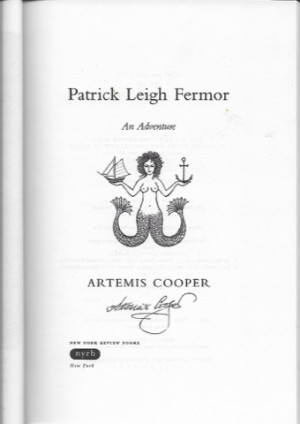
Hardcover. New York, New York Review Books, 1st, 2012, Book: Very Good, Dust Jacket: Very Good, 448 pages. Hardcover with dust jacket. SIGNED BY AUTHOR ON TITLE PAGE. Black and white photos in center. Two pages wrinkled and stuck together in the middle of picture pages. Otherwise tight.
Hardcover. Amherst MA, University of Massachusetts Press, 1st, 1969, Book: Very Good, Dust Jacket: Good, Hardcover in a lightly worn and tanned dust jacket, 215 pages. Clean copy.
Hardcover. NY, Harper Collins, 1st, 1995, Book: Very Good, Dust Jacket: Very Good, Hardcover in a bright, unclipped dust jacket. 233 pages. Authors, illustrators, and poets describe their childhoods, approaches to creating children's books, and career paths.
Hardcover. NY, Harcourt, Inc., 1st, 2007, Book: Very Good, Dust Jacket: Very Good, Hardcover in a bright, unclipped dust jacket. Nobel Prize winning author Gunter Grass' autobiography causing controversy because of his admission of volunteering for the submarine corps at the age of 15 and then being drafted into the Waffen SS, the combat force of the SS, in 1944 when he was 17. Much of the German novelist's work has dealt with the idea of morally dealing with one's past, in this case Germany's collective conscious. Clean copy.
Hardcover. NY, Knopf, 1st US, 2014, Book: Very Good, Dust Jacket: Very Good, Hardcover in a bright, unclipped dust jacket. 512 pages, b&w illustrations. Penelope Fitzgerald was a great English writer whose career didn't begin until she was nearly sixty. She would go on to win some of the most coveted awards in literature--the Booker Prize and the National Book Critics Circle Award. Now, in an impeccable match of talent between biographer and subject, Hermione Lee, a master biographer and one of Fitzgerald's greatest champions, gives us this remarkable writer's story. Lee's critical expertise is on dazzling display on every page, as it illuminates this extraordinary English life. Fitzgerald, born into an accomplished intellectual family, the granddaughter of two bishops, led a life marked by dramatic twists of fate, moving from a bishop's palace to a sinking houseboat to a last, late blaze of renown. We see Fitzgerald's very English childhood in the village of Hampstead; her Oxford years, when she was known as the "blonde bombshell"; her impoverished adulthood as a struggling wife, mother and schoolteacher, raising a family in difficult circumstances; and the long-delayed start to her literary career.
Hardcover. Cambridge MA, Harvard University Press, 1st, 1930, Book: Very Good, Dust Jacket: None, Hardcover, 338 pages, several b&w woodcut illustrations. Black cloth spine with marbled boards, top edge gilt. Author Theodore Morrison's copy with his signature on front fly leaf. Minor corner wear.
Hardcover. Cambridge MA, Harvard University Press, 1st, 1931, Book: Very Good, Dust Jacket: None, Hardcover, 352 pages, several b&w woodcut illustrations. Black cloth spine with marbled boards, top edge gilt. Minor corner wear.
Hardcover. Cambridge MA, Harvard University Press, 1st, 1931, Book: Very Good, Dust Jacket: None, Hardcover, 319 pages, several b&w woodcut illustrations. Black cloth spine with marbled boards, top edge gilt. Minor corner wear.
Softcover. NJ, Citadel Press, reprint, 1978, Book: Very Good, Dust Jacket: None, Softcover, 292 pages. Studies the distinctive personalities, problems, and cultural contributions of such women as Margaret Fuller, Lydia Maria Child, and Elizabeth Cady Stanton, examining the extent to which romanticism encouraged intellectualism among women during the three decades prior to the Civil War. Clean copy.
Hardcover. NY, Harper & Brothers , 1st, 1940, Book: Very Good, Dust Jacket: Good, Hardcover in a worn, chipped dust jacket. 303 pages. Beach was a popular writer of adventure stories. Here he tells his own tale, more colorful, humorous and adventurous than his novels. Clean copy.
Hardcover. Boston, Charles E. Goodspeed, 1st, 1901, Book: Very Good, Dust Jacket: None, Hardcover, 71 pages, number 410 of a 500. French hand-made paper, printed by D. B. Updike at the Merrymount Press. Illustrated with one plate and two facsimiles of Thoreau's journal. Gray-green boards with a beige cloth spine with a paper label. Spine and covers darkening, light shelf wear.
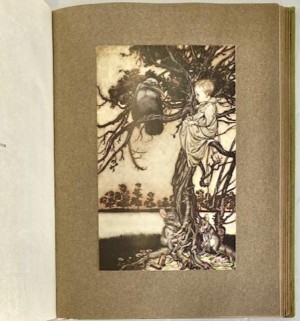
Hardcover. New York, Charles Scribner's Sons, 1st Edition, 1907, Book: Very Good, Dust Jacket: None, Hardcover. 126 pages plus 50 plates. Vivid color illustrated tipped-in plates (vibrant, excellent condition) with captioned tissue guards, as well as b/w illustrations throughout. Plates glued to brown heavy stock. Cover boards bound in green cloth, gilt title on spine, gilt title and design embossed on front cover board. Some light spotting to boards and spine, bump to front cover board's right top corner (see image). Binding tight. Spine straight. Pages quite bright and unmarked. Scarce. In Peter Pan in Kensington Gardens, J.M. Barrie first created Peter Pan as an infant, living a wild and secret life with birds and fairies in the middle of turn of the century London. This edition is beautifully illustrated by Rackham, one of the leading figures of the Golden Age of British book illustration.
Hardcover. Philadelphia, Peterson's Magazine, 1st, 1864, Book: Very Good, Dust Jacket: None, Hardcover, 12 issues bound in half leather, brown calf spine with raised bands, gilt lettering. All edges gilt. 12 monthly issues January - December 1864, 464 pages. With twelve (12) hand colored dress fashion plates, 12 color lithographed plates (some folding), numerous steel engravings and many wood engraved images throughout. Endpapers have tan spotting from aging of glue used in binding. Previous owner's name dated 1864 on blank prelim page, otherwise clean.
Hardcover. Paris, Tchou, 1st, 1966, Book: Very Good, Dust Jacket: None, 253 pages, b&w cartoon drawings by Copi. White cloth covers with black design. A collection of quotes from writers of the Surrealist movement in France. Long preface by Corvin. INSCRIBED BY BOTH AUTHOR AND ILLUSTRATOR (HIS WITH A SKETCH OF A BIRD) to Roger Shattuck, author and chronicler of the period. Publishers complimentary card laid in. Small tan stain to cloth at top of front cover, otherwise very good.
Hardcover. NY, Greenwood Press, reprint, 1969, Book: Very Good, Dust Jacket: None, Hardcover, blue cloth covers with gilt lettering on spine, 477 pages, two b&w plates. A reprint of the 1913 revised Second Edition. A selection from his correspondence with Boccaccio and other friends, designed to illustrate the beginnings of the Renaissance. Name on front fly leaf, otherwise clean
Hardcover. NY, W. W. Norton & Company, 1st, 2021, Book: Very Good, Dust Jacket: Very Good, Hardcover in a bright, unclipped dust jacket, 898 pages, b&w illustrations. Appointed by Philip Roth and granted independence and complete access, Blake Bailey spent years poring over Roth's personal archive, interviewing his friends, lovers, and colleagues, and engaging Roth himself in breathtakingly candid conversations. The result is an indelible portrait of an American master and of the postwar literary scene. Bailey shows how Roth emerged from a lower-middle-class Jewish milieu to achieve the heights of literary fame, how his career was nearly derailed by his catastrophic first marriage, and how he championed the work of dissident novelists behind the Iron Curtain. Bailey examines Roth's rivalrous friendships with Saul Bellow, John Updike, and William Styron, and reveals the truths of his florid love life, culminating in his almost-twenty-year relationship with actress Claire Bloom, who pilloried Roth in her 1996 memoir, Leaving a Doll's House. Clean copy. (After sexual assault allegations about Bailey surfaced, Norton stopped shipping the book and pulverized the remaining copies.)

 "Particularly Cats ... And Rufusby: Lessing, Doris/ James McMullan")
 "Passage to the Center: Imagination and the Sacred in the Poetry of Seamus Heaney by: Tobin, Daniel")
 "Passages from Finnegan's Wake: A Free Adaptation for the Theaterby: Joyce, James and Mary Manning (ed.)")
 "Pathways to Elfland: The Writings of Lord Dunsany by: Darrell Schweitzer")
 "Patricia Highsmith: Her Diaries and Notebooks: 1941-1995by: Highsmith, Patricia/ Editor: von Planta, Anna")
 "Patricia Highsmith: Her Diaries and Notebooks: 1941-1995by: Highsmith, Patricia/ Editor: von Planta, Anna")
 "Patrick Kavanagh: A Critical Study (Irish Studies)by: Quinn, Antoinette")
 "Patrick Leigh Fermor: An Adventureby: Cooper, Artemis")

 "Patterns of Consciousness: An Essay on Coleridgeby: Haven, Richard")
 "Pauses - Autobiographical Reflections of 101 Creators of Children's Booksby: Hopkins, Lee Bennett")
 "Peeling the Onionby: Grass, Gunter; translated by Michael Henry Heieadi")
 "Penelope Fitzgerald: A Lifeby: Lee, Hermione")
 "Pepactonby: Burroughs, John")
 "Pepys Ballads, The: Volume III - 1666-1688 Numbers 91-163by: Rollins, Hyder Edward (Ed.)")
 "Pepys Ballads, The: Volume VI - 1691-1693 Numbers 342-427by: Rollins, Hyder Edward (Ed.)")
 "Pepys Ballads, The: Volume VII - 1693-1702 Numbers 428-505by: Rollins, Hyder Edward (Ed.)")
 "Perish the Thought: Intellectual Women in Romantic America 1830-1860 by: Susan P. Conrad")
 "Personal Exposuresby: Beach, Rex")
 "Personality of Thoreau, Theby: Sanborn, F.B.")
 "Peter Pan in Kensington Gardensby: Arthur Rackham (Illustrator), J.M. Barrie")

 "Peterson's Magazine January-December 1864by: N/A")
 "Petite Folie Collectiveby: Corvin, Michel and Copi")
 "Petrarch: The First Modern Scholar and Man of Lettersby: James Harvey Robinson")
 "Philip Roth: The Biography by: Bailey, Blake")