Hardcover. Gutersloh GR, C. Bertelsmann,, 1st, 1955, Book: Very Good, Dust Jacket: Good, Hardcover, 438 pages, chipped dust jacket. GERMAN TEXT. JULIA CHILD'S COPY with her signature, address and 1956 on the front fly leaf.
Hardcover. New York, Macmillan, 1st, 1933, Book: Very Good, Dust Jacket: None, 161 pages. Blue cloth hardcover. Black & white illustrations by Marguerite Davis. Short stories selected by the Literature Committee of the Association for Childhood Education. Previous owners bookplate on inside front cover. Light foxing to foredge. Clean, tight copy.
Hardcover. NY, Charles Scribner's Sons, 1st US, 1985, Book: Very Good, Dust Jacket: Very Good, Two hardcover volumes with dust jackets in a cardboard slip case. Volume 1: 1847-1894, 396 pages. Vol. 2: 1895-1910, 397-755 pages. All bright and clean except for fading to dj spines. DOMESTIC SHIPPING ONLY.
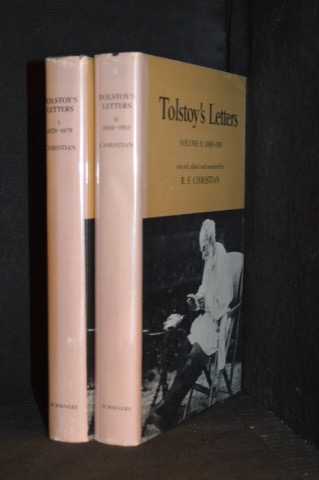
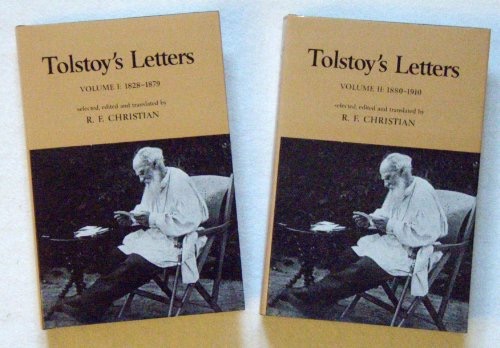
Hardcover. NY, Charles Scribner's Sons, 1st, 1978, Book: Very Good, Dust Jacket: Very Good, Two hardcovers in dust jackets. 737 pages. Index. The dust jackets are faded on the spine. Edited by R.F. Christian. Vol. 1 1828-1879. Vol. 2 1880-1910. In a cardboard slipcase. Clean, bright set.
Hardcover. NY, Crown, 1st, 1995, Book: Very Good, Dust Jacket: Very Good, Hardcover in a bright, unclipped dust jacket, 644 pages, b&w illustrations. After a protracted squabble over private papers with the playwright's estate, Leverich delivers this hefty first volume of a projected two-volume life of Tennessee Williams (1911-1983). In it, Leverich, who produced several of Williams's plays and calls himself Williams's "chosen biographer", covers the years through 1945, when The Glass Menagerie opened on Broadway. Treated are Williams's youth in Mississippi and St. Louis; the college years at the universities of Missouri and Iowa; bumming around (but always writing) in New Orleans and Greenwich Village; the disaster of his first Broadway play (it closed in Boston); script writing, or avoiding it, at MGM's Hollywood mill; and, finally, the evolution of Menagerie, a wonderfully detailed and dramatic case history in itself. Leverich's overworked conceit, which he restates at intervals, is that this is the life of Tom Williams, a "repressed puritan" poet, who in time created a more flamboyant public persona called Tennessee. A few matters are set straight. Leverich maintains his subject's active homosexual life started in his late 20s, later than Williams stated in his memoirs, and that his sister's infamous lobotomy came later than his mother claimed. Although the accumulation of information is impressive, the lower Leverich keeps his own profile and editorial commentary the better his book is, which means it is at its best when it simply reproduces Williams's sporadically kept journal. If you believe that all the details of a life are but preparation for a single event, in this case, the opening of a remarkable play, this is an impressively argued biography.
Hardcover. NY, Alfred A. Knopf, 1st, 1966, Book: Very Good, Dust Jacket: Good, Hardcover in an unclipped, lightly soiled dust jacket. Yellow cloth stamped in purple and black; 370 pages, illustrated with drawings by Leslie Saalburg. Here Gingrich, the publisher of Esquire, shares his feelings on food, automobiles, smoking pipes, violins, haberdashery and a litany of other esoteric subjects.
Hardcover. NY, G.K.Hall, reprint, 1997, Book: Very Good, Dust Jacket: Very Good, 243 pages. Hardcover with dust jacket. Reproduced from their work pub. in the 1930s. Clean, tight copy.
Softcover. DeKalb IL, Northern Illinois University Press, 1st pbk, 1996, Book: Very Good, Dust Jacket: None, Softcover, 232 pages. From the time of the first written sacred texts in the West, taboo has proscribed the act and art of translation. So argues the author of this book, exploring the age-old prohibition of translation of sacred texts. Clean copy.
Softcover. NY, Archipelago Books , 1st, 2008, Book: Very Good, Dust Jacket: None, Softcover in pictorial wrappers, 223 pages. Heinrich Heine (1797-1856), one of Germany's most revered poets, is equally well-known for his idiosyncratic prose, the vibrant voice of which feels astonishingly modern in its familiar tone and thematic acrobatics. Travel Pictures comprises the accounts of four journeys taken at different times in his life. The opening "Harz Journey," a quirky chronicle of his walking tour in the Harz Mountains, is the text that first made him famous. But in all four accounts, Heine, seasoned by the skepticism of a born outsider, does more than climb mountains, ford streams and cross borders. In this remarkable book, Heine propels German letters into the Modern mindset. Freud cites a few of Travel Pictures' most humorous passages in Jokes and Their Relation to the Unconscious. Heine's incomparable lyric vision lifts the book into the transcendent realm of great journey literature. Clean, bright copy.
Hardcover. NY, Harcourt Brace Jovanovich, 1st, 1986, Book: Very Good, Dust Jacket: Very Good, Hardcover, pages. In a bright dust jacket. Eco displays in these essays the same wit, learning, and lively intelligence that delighted readers of The Name of the Rose and Foucault's Pendulum. His range is wide, and his insights are acute, frequently ironic, and often downright funny. Translated by William Weaver.
Hardcover. NY, Random House, 1st US, 1978, Book: Very Good, Dust Jacket: Very Good, Hardcover in a bright, unclipped dust jacket, 382 pages. A biography of Ivan Turgenev, 19th-century Russian writer. The book is not a critical examination of Turgenev's literary output, but, of the man himself - enigmatic and unknown - and the world in which he lived, and the people he knew and associated with. Clean copy.
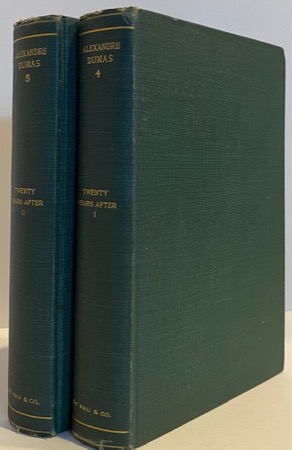
Hardcover. New York, Fred De Fau & Company, 1901, Book: Very Good, Dust Jacket: None, Two volumes, hardcovers. 798 pages total. B/w frontispieces with tissue guards. B/w illustrations throughout. Top edges gilt. Dark green cloth boards, gilt titles on spines, some light shelf wear. Tanning to pages and edges from age. Bindings good. Pages unmarked. Spines straight. A sequel to The Three Musketeers in which the four soldiers were brought together again after years of separation. They will live to repeat the glorious performances of their youth.
Hardcover. Princton NJ, Princeton University Press, 1st, 2001, Book: Very Good, Dust Jacket: Very Good, Hardcover in a bright dust jacket. Fairy tales, often said to be ''timeless'' and fundamentally ''oral,'' have a long written history. However, argues Elizabeth Wanning Harries in this provocative book, a vital part of this history has fallen by the wayside. The short, subtly didactic fairy tales of Charles Perrault and the Grimms have determined our notions about what fairy tales should be like. Harries argues that alongside these ''compact'' tales there exists another, ''complex'' tradition: tales written in France by the conteuses (storytelling women) in the 1690s and the late-twentieth-century tales by women writers that derive in part from this centuries-old tradition. Grounded firmly in social history and set in lucid prose, Twice upon a Time refocuses the lens through which we look at fairy tales.
Hardcover. NY, Henry Holt & Co., 1st, 1926, Book: Very Good, Dust Jacket: None, Hardcover, light gray boards with a black cloth spine with gilt lettering. Name and ownership stamp on front fly leaf, otherwise clean copy.
Hardcover. NY, Random House, 1st, 1991, Book: Very Good, Dust Jacket: Very Good, Hardcover in a bright dust jacket, 179 pages. The author discusses the influence of John Updike on his novels, explains what features of Updike's writings he finds most attractive, and examines the life of a writer. Clean copy.
Hardcover. Iowa City, University of Iowa Press, 1st, 1997, Book: Very Good, Dust Jacket: Very Good, Hardcover in a bright dust jacket, 200 pages. Critical essays on Charles Simic, John Ashbery, Stephen Dobyns and Charles Wright. SIGNED on title page by Stitts, also INSCRIBED on the front fly leaf by him. Personal letter from author also laid in. Clean copy.
Hardcover. Boston, Houghton Mifflin Company, 1st U.S., 1991, Book: Very Good, Dust Jacket: Very Good, 250 pages. Light blue and tan cloth cover, gilt lettering, very little wear. Dust jacket has minor wear to edges. Inside is bright and clean. A nice copy.
Softcover. Saint Paul MN, Graywolf Press, 1st, 1978, Book: Very Good, Dust Jacket: None, Softcover, 53 pages. Gallagher was born in 1943 in Washington state, and studied at the University of Washington under Theodore Roethke. She later married the poet and writer Raymond Carver.
Softcover. NY, The Feminist Press, 1ST, 1999, Book: Very Good, Dust Jacket: None, Softcover, 400 pages, b&w illustrations. The memoir of a young Catholic women's affair with a pastor in Italy. INSCRIBED BY AUTHOR on the half-title page. A few pages with light pencil underlining., otherwise clean.
Hardcover. NY, Farrar Straus Giroux, 1st, 1980, Book: Very Good, Dust Jacket: Very Good, Hardcover in a bright, unclipped dust jacket, 204 pages. This is a book of essays, including: On Paul Goodman, Approaching Artaud, Fascinating Fascism, Under the Sign of Saturn, Syberberg's Hitler, Remembering Barthes, and, Mind as Passion. This particular book was printed in a small initial run. 'Susan Sontag (January 16, 1933 - December 28, 2004) was an American writer, film-maker, teacher, and political activist. She published her first major work, the essay 'Notes on 'Camp'', in 1964. Her best-known works include On Photography, Against Interpretation, Styles of Radical Will, The Way We Live Now, Illness as Metaphor, Regarding the Pain of Others, The Volcano Lover, and In America. Remainder mark to top edge otherwise a tight, clean copy.
Hardcover. NY, Farrar Straus & Giroux, 1st, 1980, Book: Very Good, Dust Jacket: Very Good, Hardcover in a bright, unclipped dust jacket. A collection of seven essays. Clean copy.
Hardcover. NY, Viking, 1st, 2011, Book: Very Good, Dust Jacket: Very Good, Hardcover in a bright, unclipped dust jacket, 554 pages. This compilation of correspondence is aptly titled. British travel writer and novelist Chatwin traveled widely, constantly, and obsessively--everywhere under the sun, in other words. He possessed a restless soul, to be sure. And to a large degree, he was secretive; information about his homosexuality and his affliction with the AIDS virus was closely guarded. He cast a personal spell with his charm and a lasting one through his works, which are so imaginative they are pure excitement to read; at the same time, however, it can be confusing to determine whether to see them as fiction or nonfiction. Nevertheless, beginning with his first published book, In Patagonia (1977), Chatwin maintained a reputation among discerning readers for his riveting characters--invented or not is unimportant, even in his travel books--and his rigorously precise writing style. Chatwin's wife and his biographer (Bruce Chatwin, 2000) combined efforts over a two-decade period to retrieve more than 90 percent of Chatwin's correspondence from childhood to immediately before his untimely death at 48. Chatwin's many appreciators will see the compilation in its overall significance as a personal visit with one of their literary heroes, as much as that is possible now. Remainder line on bottom edge otherwise like new.
Hardcover. Athens GA, University of Georgia Press, 1st, 1995, Book: Very Good, Dust Jacket: Very Good, Hardcover, 464 pages, b&w photographs. Light edge wear to dust jacket. Else a very clean, tight copy. This biography offers the most complete and accurate portrait to date of the writer Caroline Gordon (1895-1981). Viewing Gordon's life in the context of female literary tradition, Nancylee Novell Jonza reclaims Gordon's integrity, individuality, and artistic vision from beneath a self-effacing, sometimes detractive, public image carefully fostered by the artist herself. Gordon's nine novels and three short-story collections are a major contribution in their own right to the southern literary renaissance. Despite an enduring readership, however, she still remains in the shadow of her husband, Allen Tate, the Fugitive Poet and Agrarian critic, partially due to her contrived persona of a traditional southern lady turned artist under the tutelage of a gifted, benevolent male writer. Drawing on manuscript drafts, unpublished works, letters, and a significant body of her journalistic writing, Jonza investigates fully the causes and effects of Gordon's self-mythologizing and covers substantially more ground than the thirty years during which she was closest to Tate.

 "Till Eulenspiegel (Julia Child's copy)by: Hauptmamm / Julia Child, Gerhart")
 "Told under the Blue Umbrella - New Stories for New Childrenby: Baruch, Dorothy/Katherine Reeves/Alice Dalgliesh/Alice Day Pratt/Marguerite Davis (illustrator)/and mor")

 "Tolstoy's Letters (2 Volumes)by: Tolstoy, Lev (Edited by R.F. Christian)")
 "Tom: The Unknown Tennessee Williams by: Lyle Leverich")
 "Toward the Poetics of Surrealismby: Matthews, J. H.")
 "Toys of a Lifetimeby: Gingrich, Arnold")
 "Tragedies of Life - George Sampson Brite - Case 999 A Christmas Storyby: Pitts, Gertrude and Anne Scott")
 "Translation and Taboo by: Douglas Robinson")
 "Travel Picturesby: Heinrich Heine / Peter Wortsman (Translator)")
 "Travels in Hyperreality: Essaysby: Eco, Umberto")
 "Turgenev: His Life and Times by: Leonard Schapiro")
 "Twenty Years After - Volumes 1 & 2 (Volumes 4 & 5 of Dumas collection)by: Dumas, Alexandre")
 "Twice Upon a Time: Women Writers and the History of the Fairy Taleby: Harries, Elizabeth Wanning")
 "U and I: A True Storyby: Nicholson Baker")
 "Uncertainty & Plenitude: Five Contemporary Poets (SIGNED COPY)by: Stitt, Peter")
 "Under Siege in Kuwait: A Survivor's Storyby: Porter, Jadranka")
 "Under Stars by: Gallagher, Tess")
 "Under the Rose: A Confession (INSCRIBED COPY)by: Flavia Alaya")
 "Under the Sign of Saturn by: Sontag, Susan")
 "Under the Sign of Saturnby: Sontag, Susan")
 "Under the Sun: The Letters of Bruce Chatwinby: Elizabeth Chatwin, Nicholas Shakespeare (Editor)")
 "Underground Stream, The: The Life and Art of Caroline Gordonby: Jonza, Nancylee Novell")