Hardcover. Bristol UK, Thoemmes Press, reprint, 1997, Book: Very Good, Dust Jacket: None, Hardcover, red cloth with gilt lettering on spine, 196 pages plus a 98 page addition: A Dissertation Upon the Argument a Priori For Proving the Existence of a First Cause. A facsimile reprint of the 1734 Edition. Clean copy.
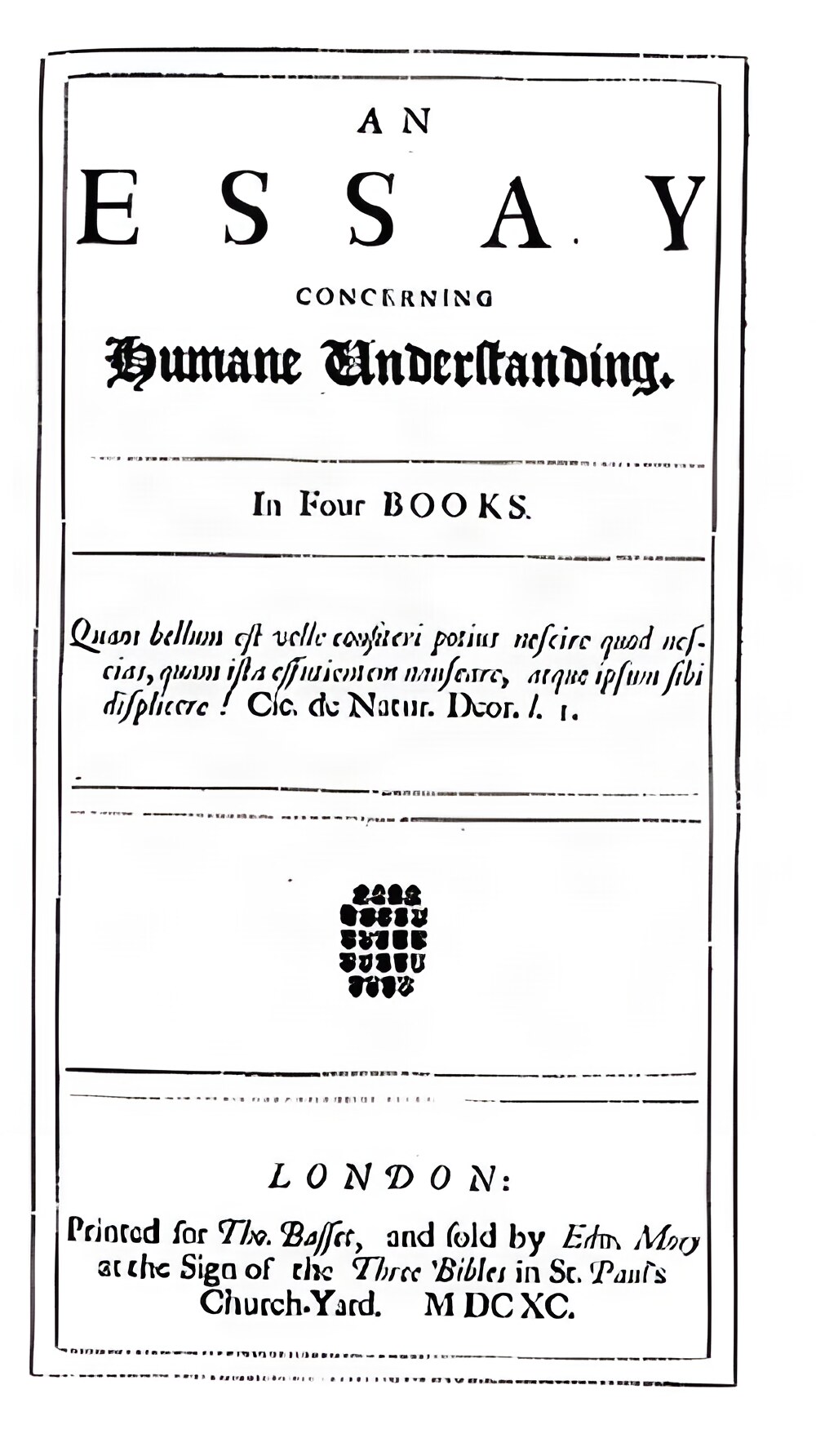
Hardcover. Bristol UK, Thoemmes Press, reprint, 2003, Book: Very Good, Dust Jacket: None, Hardcover, blue cloth with gray and gilt title, lettering on spine. A facsimile edition reprinted from the first issue of the first edition in 1690. 362 pages plus contents section in rear. Name on front fly leaf, otherwise clean, like new.
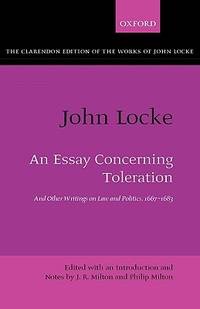
Hardcover. Oxford, Clarendon Press, 1st, 2006, Book: Very Good, Dust Jacket: Very Good, Hardcover in a bright dust jacket with light edgewear, 458 pages. J. R. and Philip Milton present the first critical edition of John Locke's Essay concerning Toleration, based on all extant manuscripts, and a number of other writings on law and politics composed between 1667 and 1683. Although Locke never published any of these works himself they are of very great interest for students of his intellectual development because they are markedly different from the early works he wrote while at Oxford and show him working out ideas that were to appear in his mature political writings, the Two Treatises of Government and the Epistola de Tolerantia. With authoritative contextual guidance from the editors, this will be an invaluable resource for all historians of early modern philosophy, of legal, political, and religious thought, and of 17th-century Britain. Name, date on front fly leaf, otherwise clean.
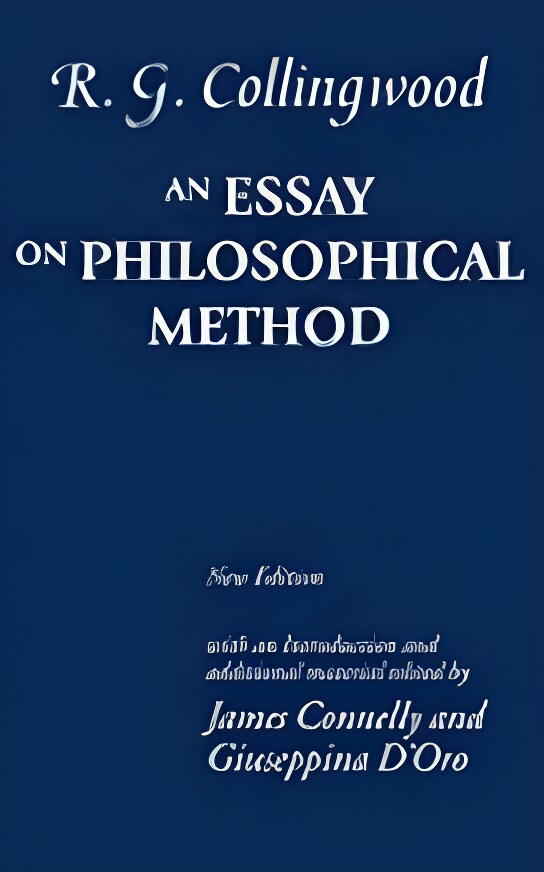
Softcover. UK, Oxford University Press, Revised Ed., 2008, Book: Very Good, Dust Jacket: None, Softcover, 492 pages. An Essay on Philosophical Method contains the most sustained discussion in the twentieth century of the subject matter and method of philosophy and an unparalleled explanation of why philosophy has a distinctive domain of enquiry that differs from that of the sciences of nature. This new edition of the Essay focuses on Collingwood's contribution to metaphilosophy and locates his argument for the autonomy of philosophy against the twentieth century trend to naturalize its subject matter. Collingwood argues that the distinctions which philosophers make, for example, between the concepts of duty and utility in moral philosophy, or between the concepts of mind and body in the philosophy of mind, are not empirical taxonomies that cut nature at the joints but semantic distinctions to which there may correspond no empirical classes. This identification of philosophical distinctions with semantic distinctions provides the basis for an argument against the naturalization of the subject matter of philosophy for it entails that not all concepts are empirical concepts and not all classifications are empirical classifications. Collingwood's explanation of why philosophy has a distinctive subject matter thus constitutes a clear challenge to the project of radical empiricism. While not losing sight of its historical context, the introduction to this new edition seeks to locate Collingwood's account of philosophical method against the background of contemporary concerns about the fate of philosophy in the age of science. This volume also contains a substantial amount of previously unpublished material: "The Metaphysics of F. H. Bradley," "Method and Metaphysics," and Collingwood's fascinating correspondence with Gilbert Ryle. The latter will prove to be a mine of information for anyone interested in the origins of analytic philosophy.
Softcover. NY, Liberal Arts Press, 1st, 1956, Book: Very Good, Softcover, 615 pages. Translated with an introduction by Merritt H. Moore. Some light fading to edges of yellow wrappers, name on front fly leaf, otherwise clean. Out of print and uncommon.
Hardcover. Bristol UK, Thoemmes Press, reprint, 1997, Book: Very Good, Dust Jacket: None, Hardcovers, red cloth with gilt stamping to spines. A reprint of the 1758 Fourth Edition. Introduction by Victor Nuovo. 555 total pages plus Index. Vol. 1 with fading to spine and part of front cover, otherwise tight and clean.
Hardcover. Bristol UK, Thoemmes Press, reprint, 1997, Book: Very Good, Dust Jacket: None, Hardcover, blue cloth with gilt lettering on spine, 570 pages. A facsimile reprint of the 1660 edition. One of 9 volumes in More's collected works. Pencil marking to 3 pages, otherwise a clean, bright copy.
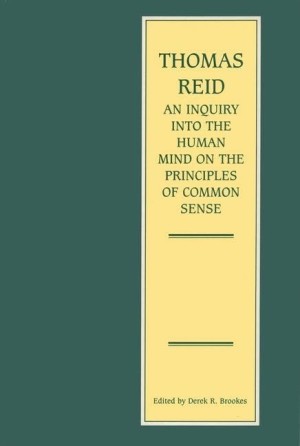
Hardcover. Edinburgh, Edinburgh University Press, 1st, 1997, Book: Very Good, Dust Jacket: Very Good, Hardcover in a bright dust jacket, 345 pages. Thomas Reid (1710-96) is increasingly being seen as a highly significant philosopher and a central figure in the Scottish Enlightenment. This edition of Reid's classic philosophical text in the philosophy of mind at long last gives scholars a complete critically edited text of the Inquiry. The critical text is based on the fourth life-time edition (1785). A selection of related documents showing the development of Reid's thought, textual notes, bibliographical details of previous editions, and a full introduction by the editor makes this an important contribution to the study of this increasingly respected philosopher.Key Features:*Complete, critically edited text of the Inquiry accompanied by a judicious selection of manuscript evidence relating to its composition.*Comprehensive Introduction providing an historical and philosophical account of the formation of the Inquiry.*Detailed textual notes which include bibliographical details and allusions, translations, references to secondary literature and selected passages from Reid's MSS. Clean copy.
Hardcover. NY, Columbia University Press, 1st, 1960, Hardcover, blue cloth covers with gilt lettering to spine, 249 pages, two b&w plates. Through criticism and analysis of ancient traditions, Kahn reconstructs the pattern of Anaximander's thought using historical methods akin to the reconstructive techniques of comparative linguists. Name on front fly leaf, light pencil marking to a dozen pages. Cloth spine faded.
Softcover. Amsterdam, North - Holland Publishing, 2nd pr., 1957, Book: Very Good, Dust Jacket: Very Good, Thin card covers in a lightly sunned dust jacket, 122 pages. Remarkable work in which the author aimed to collect some of the data available in the state of science of Bochenski's times and to arrange them in a kind of outline, which showed forth some of our indebtedness to Greek Logicians, and allowed the reader to see how their results were reached.
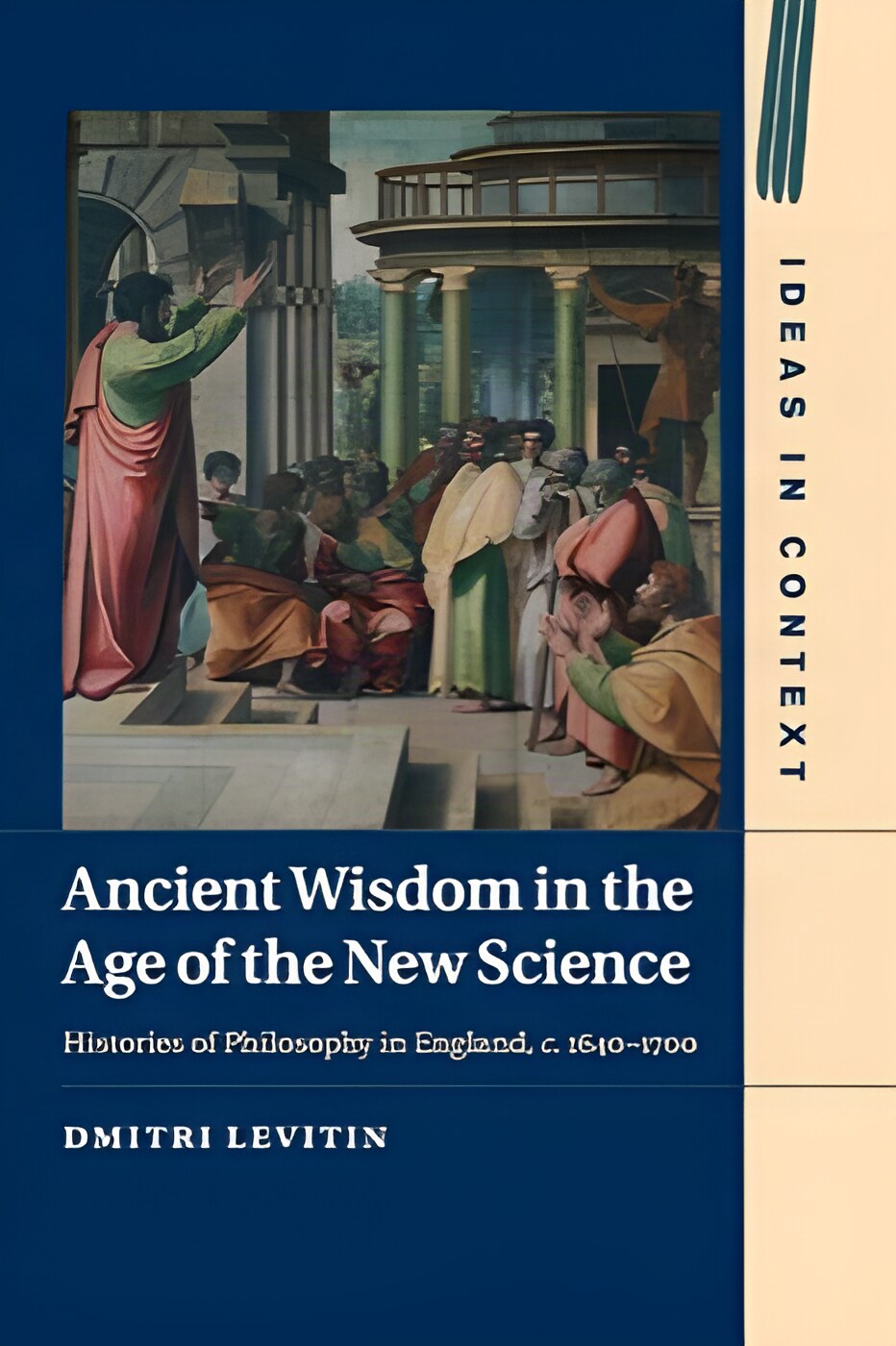
Hardcover. Cambridge UK, Cambridge University Press, 1st, 2015, Book: Very Good, Dust Jacket: Very Good, Hardcover in a bright dust jacket, pages. Seventeenth-century England has long been heralded as the birthplace of a so-called 'new' philosophy. Yet what contemporaries might have understood by 'old' philosophy has been little appreciated. In this book Dmitri Levitin examines English attitudes to ancient philosophy in unprecedented depth, demonstrating the centrality of engagement with the history of philosophy to almost all educated persons, whether scholars, clerics, or philosophers themselves, and aligning English intellectual culture closely to that of continental Europe. Drawing on a vast array of sources, Levitin challenges the assumption that interest in ancient ideas was limited to out-of-date 'ancients' or was in some sense 'pre-enlightened'; indeed, much of the intellectual justification for the new philosophy came from re-writing its history. At the same time, the deep investment of English scholars in pioneering forms of late humanist erudition led them to develop some of the most innovative narratives of ancient philosophy in early modern Europe. Name on front fly leaf, otherwise clean.
Hardcover. MA, University of Massachusetts Press , 1st, 1967, Book: Very Good, Dust Jacket: Good, 268 pages. Previous owner's signature on front fly leaf. Dust jacket with light edgewear and sunning and a small sticker-stain to front cover.
Hardcover. Boston, William White & Co, 3rd, 1862, Book: Very Good, Dust Jacket: None, 344 pages. Black boards with embossed pictorial border, gilt titles to spine. Previous owner's signature to front endpaper, light rubbing to covers, top third of outside of front hinge cracked, mild edgewear, pages crisp and unmarked; overall, a very neat, tight copy.
Softcover. London, Routledge, reprint, 2016, Book: Very Good, Dust Jacket: None, Softcover, 287 pages. St Anselm's archiepiscopal career, 1093-1109, spanned the reigns of two kings: William Rufus and the early years of Henry I. As the second archbishop of Canterbury after the Norman Conquest, Anselm strove to extend the reforms of his teacher and mentor at Bec, and his predecessor at Canterbury, Archbishop Lanfranc. Exploring Anselm's thirty years as Prior and Abbot of the large, rich, Norman monastery of Bec, and teacher in its school, this book notes the wealth of experiences which prepared Anselm for his archiepiscopal career--in particular Bec's missionary attitude toward England. Sally Vaughn examines Anselm's intellectual strengths as a teacher, philosopher and theologian: exploring his highly regarded theological texts, including his popular Prayers and Meditations, and how his statesmanship was influenced as he dealt with conflict with the antagonistic King William Rufus. Clean copy.
Hardcover. Cambridge UK, Cambridge University Press, 1st, 2000, Book: Very Good, Dust Jacket: Very Good, 170 pages, blue cloth covers with gilt lettering on spine. This book considers the relation between language and thought. Robert Wardy explores this huge topic by analyzing linguistic relativism with reference to a Chinese translation of Aristotle's Categories. He addresses some key questions, such as, do the basic structures of language shape the major thought patterns of its native speakers? Could philosophy be guided and constrained by the language in which it is done? And does Aristotle survive rendition into Chinese intact? Wardy's answers will fascinate philosophers, Sinologists, classicists, linguists and anthropologists, and make a major contribution to the scholarly literature.
Hardcover. UK, Clarendon Press, 1st, Book: Very Good, Dust Jacket: Very Good, Hardcover in a bright dust jacket, 303 pages. Aristotle, great Greek philosopher, researcher, reasoner, and writer, born at Stagirus in 384 BCE, was the son of Nicomachus, a physician, and Phaestis. He studied under Plato at Athens and taught there (367 47); subsequently he spent three years at the court of a former pupil, Hermeias, in Asia Minor and at this time married Pythias, one of Hermeias s relations. After some time at Mitylene, in 343 2 he was appointed by King Philip of Macedon to be tutor of his teen-aged son Alexander. After Philip s death in 336, Aristotle became head of his own school (of Peripatetics ), the Lyceum at Athens. Previous owner's name on front fly leaf, otherwise clean, like new.
Hardcover. Chicago, University of Chicago Press , 1st, 1987, Book: Very Good, Dust Jacket: Very Good, Hardcover in a bright dust jacket, 249 pages. A study of "Aristotle's psychology, or philosophy of mind." Name on front fly leaf, otherwise clean, tight copy.
Hardcover. Oxford UK, Clarendon Press, reprint, 2001, Book: Very Good, Dust Jacket: Very Good, Hardcover in a bright dust jacket, 690 pages, folding table. Greek & English text. biblio. index. Name on front fly leaf, otherwise clean. Originally published in 1949.
Hardcover. Cambridge MA, Harvard University Press, 1st, 1970, Book: Very Good, Dust Jacket: Very Good, Hardcover in a lightly worn dust jacket, 478 pages. Name on half-title page, otherwise clean.
Softcover. New Haven CT, Yale University Press, 2nd pr., 1987, Book: Very Good, Dust Jacket: None, Softcover, 450 pages. The rise of atheism in the modern world is a religious phenomenon unprecedented in history, both in the number of its adherents and in the security of its cultural establishment. How did so revolutionary a conviction as this arise? What can theological reflection learn from this massive shift in religious consciousness? In this book, Michael J. Buckley investigates the origins and development of modern atheism and argues convincingly that its impetus lies paradoxically in the very attempts to counter it. Although modern atheism finds its initial exponents in Denis Diderot and Paul d'Holbach in the eighteenth century, their works bring to completion a dialectical process that reaches back to the theologians and philosophers of an earlier period. During the seventeenth century, theologians such as Leonard Lessius and Marin Mersenne determined that in order to defend the existence of god, religious apologetics must become philosophy, surrendering as its primary warrant any intrinsically religious experience or evidence. The most influential philosophers of the period, Rene Descartes and Isaac Newton, and the theologians who followed them accepted this settlement, and the new sciences were enlisted to provide the foundation for religion. Clean, bright copy.
Hardcover. London, England, Messrs. Luzac & Co., 1st Edition, 1954, Book: Very Good, Dust Jacket: None, Two volume set. Hardcovers. Domestic shipping only. Previous owner's name on front flyleaf. Vol. 1: 374 pages; Vol. 2: 217 pages. Black cover boards, gilt title on spine. Volume 2 has fading to spine. Pages unmarked. Spines straight. Binding tight. An important Islamic philosophical treatise in which the author defends the use of Aristotelian philosophy within Islamic thought. DOMESTIC SHIPPING ONLY.
Softcover. Baltimore, Johns Hopkins University Press, reprint, 1978, Book: Very Good, Dust Jacket: None, Softcover, 414 pages. A work of literary criticism in which Said differentiates between the concept of "origin" and "beginning", also reflecting reflexively on the role of criticism and of the intellectual within a larger culture. Clean copy.
Hardcover. Oxford University Press, 1st thus, 2010, Book: Very Good, Dust Jacket: Very Good, Hardcover in a bright dust jacket, 426 pages. Behemoth, or The Long Parliament is essential to any reader interested in the historical context of the thought of Thomas Hobbes (1588-1679). In De Cive (1642) and Leviathan (1651), the great political philosopher had developed an analytical framework for discussing sedition, rebellion, and the breakdown of authority. Behemoth, completed around 1668 and not published until after Hobbe's death, represents the systematic application of this framework to the English Civil War. Clean, bright copy.


 "An Essay on the Foundations of Our Knowledge by: Cournot, Antoine Augustin, 1801-1877")
 "An Explanation of the Grand Mystery of Godlinessby: Henry More")


 "Annotated Catalogue of the Papers of Charles S. Peirceby: Robin, Richard S.")
 "Arcana of Nature; The History of Laws and Creationby: Tuttle, Hudson")


 "Aristotle on Coming-to-Be and Passing-Away: De Generatione Et Corruptioneby: Harold H. Joachim")


 "Averroes' Tahafut Al-Tahafut (The Incoherence of the Incoherence) Volume 1 & 2by: Van Den Bergh, Somin")


 "Bartlous of Sassoferrato: His Position in the History of Medieval Political Thoughtby: Woolf, Cecil N. Sidney")

