Hardcover. London, William Collins, 1st, 2020, Book: Very Good, Dust Jacket: Very Good, Hardcover in a bright dust jacket, 342 pages, color photos. In 1976 James Crowden left his career in the British army and travelled to Ladakh in the Northern Himalaya, one of the most remote parts of the world. The Frozen River is his extraordinary account of the time he spent there, living alongside the Zangskari people, before the arrival of roads and mass tourism. James immerses himself in the Zangskari way of life, where meditation and week-long mountain festivals go hand in hand, and silence and solitude are the hallmarks of existence. When butter traders invite James on their journey down the frozen river Leh, he soon realises that this way of living, unchanged for centuries, comes with a very human cost. In lyrical prose, James captures a crucial moment in time for this Himalayan community. A moment in which their Buddhist practices and traditions are in flux, and the economic pull of a world beyond their valley is increasingly difficult to ignore.
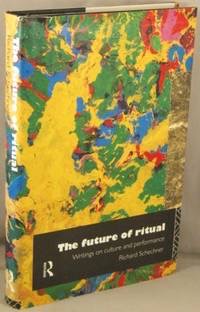
Hardcover. NY/London, Routledge, 1st, 1993, Book: Very Good, Dust Jacket: Very Good, Hardcover in a bright dust jacket, 283 pages, b&w illustrations. " Richard Schechner explores the nature of ritualised behavior and its relationship to performance and politics. A brilliant and uncontainable examination of cultural expression and communal action, THE FUTURE OF RITUAL asks pertinent questions about art, theatre and the changing meaning of 'culture' in today's intercultural world. It is richly illustrated with over 50 photos of pereformances and public events." Clean copy.
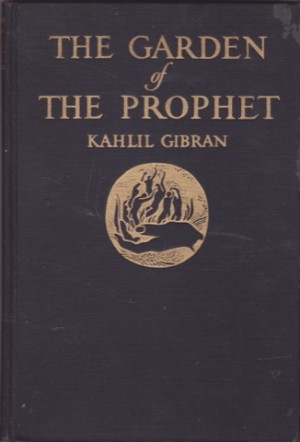
Hardcover. NY, Alfred A. Knopf, 1st, 1933, Hardcover, black cloth stamped with gilt title and design, 68 pages. Gilt lettering on spine with light fading. This is the first printing with 1933 on title page and First Edition stated on copyright page. Illustrated with seven drawings on glossy stock by Gibran and two facsimile manuscript pages, all present and intact. Previous owner's signature on front fly leaf, mild wear to covers, faint foxing to endpapers, otherwise clean.
Hardcover. Bristol UK, Thoemmes Press, reprint, 1997, Book: Very Good, Dust Jacket: None, Hardcover, blue cloth with gilt lettering on spine, 539 pages. A facsimile reprint of the 1659 edition. Name on front fly leaf, otherwise clean.
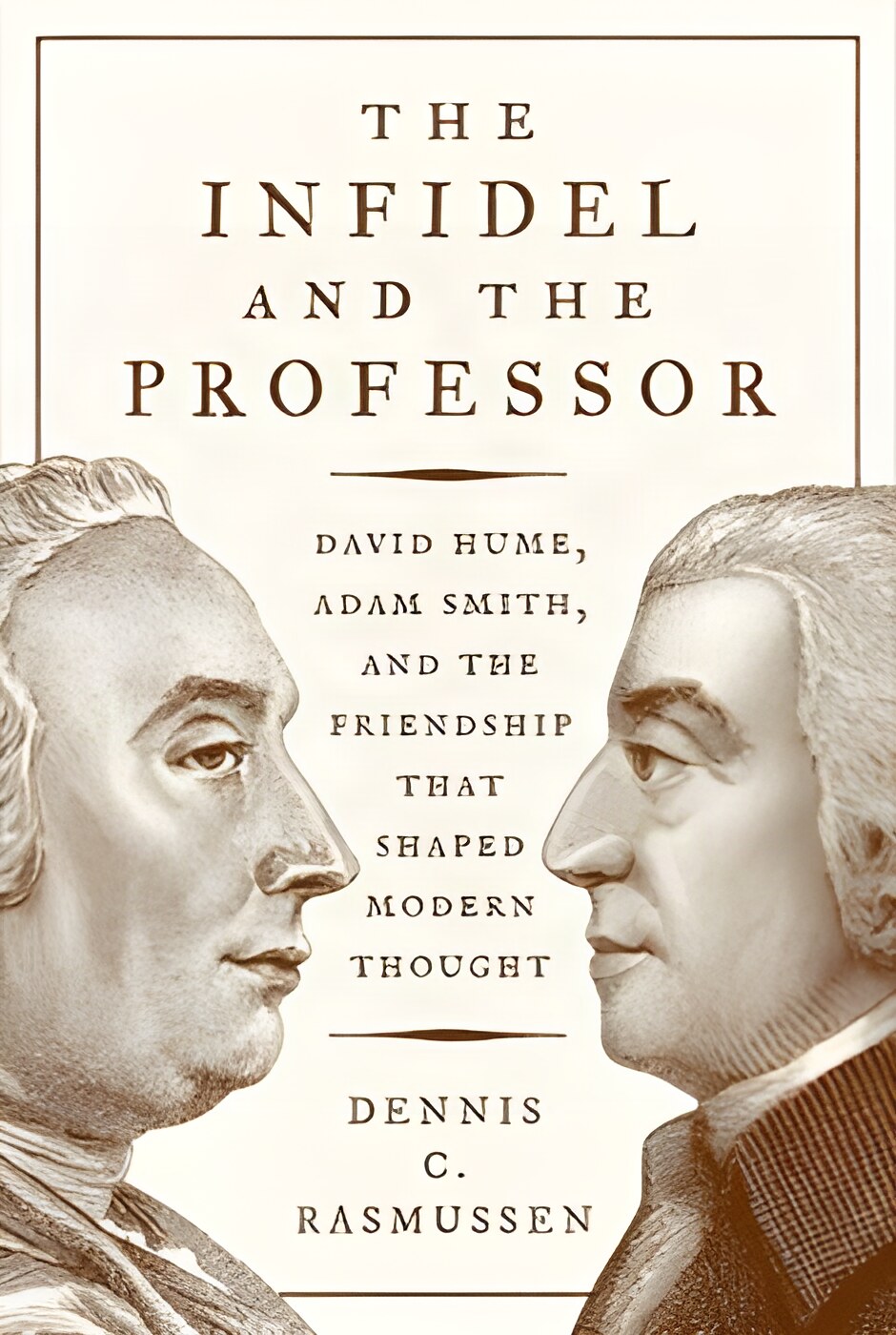
Hardcover. Princeton NJ, Princeton University Press, 3rd pr., 2017, Book: Very Good, Dust Jacket: Very Good, Hardcover in a bright dust jacket, 316 pages. David Hume is widely regarded as the most important philosopher ever to write in English, but during his lifetime he was attacked as "the Great Infidel" for his skeptical religious views and deemed unfit to teach the young. In contrast, Adam Smith was a revered professor of moral philosophy, and is now often hailed as the founding father of capitalism. Remarkably, the two were best friends for most of their adult lives, sharing what Dennis Rasmussen calls the greatest of all philosophical friendships. The Infidel and the Professor is the first book to tell the fascinating story of the friendship of these towering Enlightenment thinkers-and how it influenced their world-changing ideas. The book follows Hume and Smith's relationship from their first meeting in 1749 until Hume's death in 1776. It describes how they commented on each other's writings, supported each other's careers and literary ambitions, and advised each other on personal matters, most notably after Hume's quarrel with Jean-Jacques Rousseau. Clean copy.
Softcover. Cambridge UK, Cambridge University Press, 1st pbk., 2002, Book: Very Good, Dust Jacket: None, Softcover, 359 pages. In this major reevaluation of Isaac Newton's intellectual life, Betty Jo Teeter Dobbs shows how his pioneering work in mathematics, physics, and cosmology was intertwined with his study of alchemy. Professor Dobbs argues that to Newton those several intellectual pursuits were all ways of approaching Truth, and that Newton's primary goal was not the study of nature for its own sake but rather an attempt to establish a unified system that would have included both natural and divine principles. She also argues that Newton's methodology was much broader than modern scholars have previously supposed, and she traces the evolution of his thought on the intertwined problems of the microcosmic "vegetable spirit" of alchemy and the "cause" of the cosmic principle of gravitation. Clean, bright copy.
Hardcover. London, Hodder and Stoughton, 1st, 1938, Book: Very Good, Dust Jacket: None, Hardcover, maroon cloth with gilt stamped spine, 255 pages including index. Karl Barth (1886-1968), the Swiss Reformed professor and pastor, was once described by Pope Pius XII as the most important theologian since Thomas Aquinas. As principal author of 'The Barmen Declaration', he was the intellectual leader of the German Confessing Church -- the Protestant group that resisted the Third Reich. This volume contains The Gifford Lectures he delivered in Aberdeen in 1937 and 1938. Name on front fly leaf, pencil marking (mostly underlining) to half the pages. Sound copy.
Hardcover. NY, Frederick Ungar, 1st thus, 1974, Book: Very Good, Dust Jacket: Very Good, Hardcover in a lightly worn dust jacket, 263 pages. 1st American Edition of this Abridged Translation. This is Kraus's masterpiece, with half of Europe as its stage. It is presented here in English for the first time, in an abridged version that preserves the essence of the 800-page original. Its influence on Brecht, Ionesco, and other playwrights is acknowledged. Mingling actual quotations, news reports, and government orders with Kraus's own satiric dialogue, this immense drama (never meaning to be performed) offers a vast fresco of events at the front and at home during, as it prophesied, the last days of the Austro-Hungarian Empire. Indeed, Kraus anticipated the development of atomic warfare and its threat to all mankind. Some of Kraus is untranslatable, but, as Stanley Kauffmann wrote in his New Republic review, "Ungar has done us a benefit at least by bringing us a bit closer to this sharp-eyed, angry, prickly, lover-hater of mankind." INSCRIBED BY FREDERICK UNGAR, the editor and publisher on the half-title page. He also wrote the 14 page introduction. Clean copy.
Hardcover. Chicago, University of Chicago Press, 1st, 1970, Book: Very Good, Dust Jacket: Very Good, Hardcover in a bright dust jacket, 696 pages. Name on front fly leaf, otherwise clean.
Hardcover. UK, Oxford University at the Clarendon Press, 2nd Ed., 1980, Book: Very Good, Dust Jacket: Very Good, Hardcover in a bright dust jacket, 709 pages. B&W frontispiece portrait of Hume and folding family tree to rear. Mossner's Life of David Hume remains the standard biography of this great thinker and writer. First published in 1954, and now updated, in response to an overwhelming interest in Hume's brilliant ideas. Containing more than a simple biography, this exemplary work is also a study of intellectual reaction in the eighteenth century. In this new edition are a detailed bibliography, index, and textual supplements, making it the perfect text for scholars and advanced students of Hume, epistemology, and the history of philosophy. It is also ideal for historians and literary scholars working on the eighteenth century, and for anyone with an interest in philosophy. Name and date on front fly leaf, otherwise clean.
Hardcover. Boston, Kluwer Academic Publishers, 1st, 2000, Book: Very Good, Dust Jacket: Very Good, Hardcover in a bright dust jacket, 408 pages. The only biographical account of More by one of his contemporaries. Ward's almost hagiographical tone is testimony to the high regard in which More was held by his admirers. This account testifies to the continuing impact of More's ideas in the enlightenment. This volume prints the only modern edition of Ward's biography printed in 1710 together with the manuscript account of More's writings published here for the first time. Clean copy.
Hardcover. Bristol UK, Thoemmes, reprint , 1999, Book: Very Good, Dust Jacket: None, Hardcover, bright blue cloth with gilt lettering on spine, 488 pages. VOLUME 1 ONLY of a two volume set. Originally published in 1876. Name on front fly leaf, light pencil marking to about 25 pages.
Hardcover. NY, Charles Scribner's Sons, 2nd Ed., 1922, Book: Very Good, Dust Jacket: None, Five hardcover volumes, complete set. Matching maroon cloth covers, gilt lettering on spine faded. Titles include: Introduction and Reason in Common Sense, Reason in Society, Reason in Religion, Reason in Art, Reason in Science. Name on front fly leaf on 3 volumes, front hinge cracked on 2 volumes, light pencil marking to 20 pages. DUE TO WEIGHT, DOMESTIC SHIPPING ONLY.
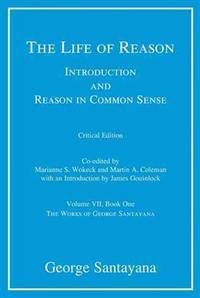
Hardcover. Cambridge MA, The MIT Press, 1st, 2011, Book: Very Good, Dust Jacket: Very Good, Hardcover in a bright blue dust jacket, 344 pages. Santayana's Life of Reason, published in five books from 1905 to 1906, ranks as one of the greatest works in modern philosophical naturalism. Acknowledging the natural material bases of human life, Santayana traces the development of the human capacity for appreciating and cultivating the ideal. It is a capacity he exhibits as he articulates a continuity running through animal impulse, practical intelligence, and ideal harmony in reason, society, art, religion, and science. The work is an exquisitely rendered vision of human life lived sanely.In this first book of the work, Santayana provides an account of how the human animal develops instinct, passion, and chaotic experience into rationality and ideal life. Inspired by Aristotle's De Anima, Darwin's evolutionary theory, and William James's The Principles of Psychology, Santayana contends that the requirements of action in a hazardous and uncertain environment are the sources of the development of mind. More specifically, instinct and imagination are crucial to the emergence of reason from chaos. Separating himself from the typical thought of the time by his recognition of the imagination, Santayana in this volume offers extensive critiques of various philosophies of mind, including those of Kant and the British empiricists. Clean copy.
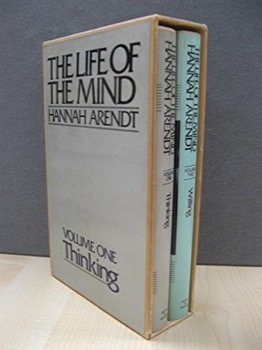
Hardcover. NY, Harcourt Brace Jovanovich, 1st, 1978, Book: Very Good, Dust Jacket: None, Two hardcover volumes in a slipcase, light gray and light green jackets over beige cloth. 258, 277 numbered pages. The Life of the Mind is the final work by the political theorist, philosopher, and feminist thinker. This fascinating book investigates thought itself as it exists in contemplative life. In a shift from Arendt's previous writings, most of which focus on the world outside the mind, this is an exploration of the mind's activities she considered to be the most fundamental. The result is a rich, challenging analysis of human mental activity in terms of thinking, willing, and judging. Stated First Editions with 2 as lowest number. Jacket spines sunned and faded. Light spotting to text block edges. Clean, no markings.
Hardcover. Bristol UK, Thoemmes Press, reprint, 1995, Book: Very Good, Dust Jacket: None, Hardcover, red cloth with gilt lettering on the spine, 535 pages. This work contains Shaftesbury's philosophical notebooks from 1698 to 1712. It includes reflections on such topics as the natural affections, good and evil, God, self, the passions, pleasure and pain, nature, life, and philosophy, as well as a brief Life of the 3rd Earl of Shaftesbury, by his son. A reprint of the 1900 edition. Name on front fly leaf, otherwise clean.
Hardcover. NY, Garland Publishing, reprint, 1977, Book: Very Good, Dust Jacket: None, Seven hardcover volumes, orange cloth covers, A reprint of the 1805 edition published in London. Name on front fly leafs, light pencil marking to many text pages. DUE TO WEIGHT, DOMESTIC SHIPPING ONLY.
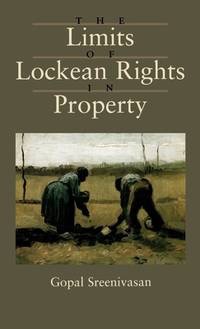
Hardcover. UK, Oxford University Press, 1st, 1995, Book: Very Good, Dust Jacket: Very Good, Hardcover in a bright dust jacket, 162 pages. In this book, Gopal Sreenivasan provides a comprehensive interpretation of Locke's theory of property, and offers a critical assessment of that theory. Locke argued that the appropriation of things as private property does not violate the rights of others, provided that everyone still has access to the materials needed to produce their subsistence. Given that, the actual appropriation of particular things is legitimated by one's labor. Holding Locke's theory to the logic of its own argument, Sreenivasan examines the extent to which it is really serviceable as a defense of private property. He contends that a purified version of this theory - one that adheres consistently to the logic of Locke's argument while excluding considerations extraneous to it - does in fact legitimate a form of private property. This purified theory is defensible in contemporary, secular terms, since nothing to which Locke gives an ineliminable theological foundation belongs to the logical structure of his argument. The resulting regime of private property is both substantially egalitarian and significantly different from the traditional liberal institution of private property. Clean copy.
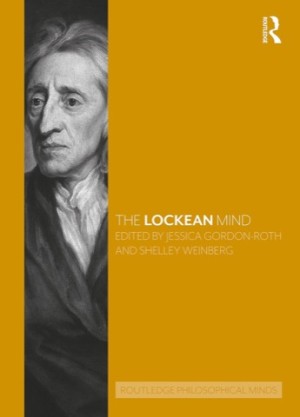
Hardcover. UK, Routledge, 1st, 2022, Book: Very Good, Dust Jacket: None, Hardcover in pictorial boards, 599 pages. John Locke (1632-1704) is considered one of the most important philosophers of the modern era and the first of what are often called 'the Great British Empiricists.' His major work, An Essay Concerning Human Understanding, was the single most widely read academic text in Britain for fifty years after its publication and set new limits to the scope and certainty of what we can claim to know about ourselves and the natural world. The Declaration of Independence and the United States Constitution were both highly influenced by Locke's libertarian philosophical ideas, and Locke continues to have an impact on political thought, both conservative and liberal. It is less commonly known that Locke was a practicing physician, an influential interpreter of the Bible, and a policy maker in the English Carolina colonies. Clean, bright copy.
Hardcover. Chicago, University of Chicago Press, 1st, 2011, Book: Very Good, Dust Jacket: Very Good, Hardcover in a bright dust jacket, 250 pages. With The Lucretian Renaissance, Gerard Passannante offers a radical rethinking of a familiar narrative: the rise of materialism in early modern Europe. Passannante begins by taking up the ancient philosophical notion that the world is composed of two fundamental opposites: atoms, as the philosopher Epicurus theorized, intrinsically unchangeable and moving about the void; and the void itself, or nothingness. Passannante considers the fact that this strain of ancient Greek philosophy survived and was transmitted to the Renaissance primarily by means of a poem that had seemingly been lost--a poem insisting that the letters of the alphabet are like the atoms that make up the universe. Name and date on front fly leaf, light pencil marginalia and a few underlinings.
Hardcover. Oxford UK, Clarendon Press, 1st, 1993, Book: Very Good, Dust Jacket: Very Good, Hardcover in a bright dust jacket, Maurice Wiles was Regius Professor of Divinity at the University of Oxford from 1970-1991. To celebrate his seventieth birthday, a group of distinguished friends and colleagues have written this important series of original and perceptive essays on the twin themes of making and remaking Christian doctrine. The topics covered in this thought-provoking collection range from the notion of divine action in Hebrew Wisdom literature to reflections on the nature of the ministry, from the concept of God and the doctrines of Christology and of the Trinity to the character of theological reflection, and from revelation and tradition to the "lex orandi," the nature of interpretation in religion and the historical basis of theological understanding. Clean copy.
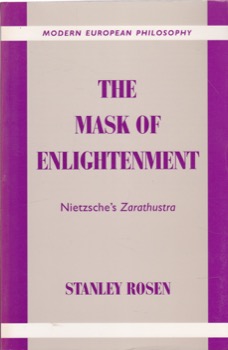
Softcover. UK/NY, Cambridge University Press, reprint, 1996, Book: Very Good, Dust Jacket: None, Softcover, 264 pages. The Mask of Enlightenment is the most detailed textual and thematic study of Nietzsche's most important but least understood works: Thus Spake Zarathustra. In this book Nietzsche was laying the groundwork for a fundamental philosophical and political revolution on a global scale. One of the difficulties that the text poses is Nietzsche's prophetic style; Stanley Rosen unweaves the complex threads that form the rhetorical voices of the work, and so explains the style in an accessible manner. He rejects recent sceptical, deconstructionist interpretations of Nietzsche, and reveals a coherence underlying the multiple and apparently incompatible intentions embedded in the text. Nietzsche is a figure whose influence on contemporary thought in the humanities and social sciences continues to be enormous. This book is sure to become the definitive study of Zarathustra, and will have a broad appeal to philosophers and students of modern philosophy, intellectual historians, political scientists, and literary theorists. Clean copy.
Hardcover. London, Humanities Press, Revised Ed., 1951, Book: Very Good, Dust Jacket: None, A Historical and Critical Essay. Analyzes the works of Copernicus, Kepler, Galileo, Descartes, Hobbes, Gilbert, Boyle, and Newton to establish the reasons for the triumph of the modern scientific perspective. Hardcover, blue cloth with bright gilt lettering on spine, 343 pages. Clean, bright copy.
Hardcover. Oxford UK, Clarendon Press, reprint, 1964, Book: Very Good, Dust Jacket: None, Hardcover, blue cloth with gilt lettering on spine. 316 pages including index. First published in 1952. Clean, bright copy.


 "The Immortality of the Soulby: Henry More")

 "The Knowledge of God and the Service of God According to the Teaching of the Reformation: Recalling the Scottish Confession of 1560 (Gifford Lectures 1937 & 1938)by:")
 "The Last Days of Mankind: A Tragedy in Five Acts by: Kraus, Karl; /Ungar, Frederick(Ed.) /Wright, E Sue (transl.)")
 "The Life of David Humeby: Mossner, Ernest Campbell")

 "The Life of John Locke: Volume 1 by: H. R. Fox Bourne")
 "The Life of Reason or the Phases of Human Progress - Five Volumesby: Santayana, George")
 "The Life, Unpublished Letters, and Philosophical Regimen of Anthony, Earl of Shaftesburyby: Rand, Benjjamin (editor)")
 "The Light Of Nature Pursued (British Philosophers and Theologians of The 17th and 18th Centuries, Vol 60) (7 Volumes)by: Tucker, Abraham")