Hardcover. New York, Rizzoli, 1st, 2004, Book: Very Good, Dust Jacket: Very Good, Hardcover, 240 pages. Like new in publishers shrink-wrap. First edition. A showcase of Groom's drawings, prints & inimitable urban sculpto-pictograms (in full-color).
Hardcover. London, Tate Publishing, 1st, 2012, Book: Very Good, Dust Jacket: Very Good, Hardcover, pictorial boards with an acetate dust wrapper, 304 pages. Warhol brought to the art world a unique awareness of the relationship that art might have with popular consumer culture and tabloid news, with celebrity, and with sexuality. Each of these themes is explored through visual dialogues between warhol and some sixty artists, among them John Baldessari, Vija Celmins, Gilbert & George, Felix Gonzalez-Torres, Robert Gober, Nan Goldin, Damien Hirst, Alfredo Jaar, Deborah Kass, Alex Katz, Jeff Koons, Barbara Kruger, Glenn Ligon, Robert Mapplethorpe, Vik Muniz, Takashi Murakami, Bruce Nauman, Cady Noland, Elizabeth Peyton, Sigmar Polke, Richard Prince, Gerhard Richter, Ed Ruscha, Cindy Sherman and Luc Tuymans. Clean copy. DOMESTIC SHIPPING ONLY.
Softcover. New York, Metropolitan Museum of Art, 1st, 2012, Book: Very Good, Dust Jacket: None, Softcover, 304 pages, color and b&w illustrations. Includes interviews, conducted by Marla Prather, with Polly Apfelbaum, John baldessari, Vija Celmins, Chuck Close, Robert Gober, Hans Haacke, Alfredo Jaar, Deborah Kass, Alex Katz, Jeff Koons, Julian Schnabel, Ryan Trecartin, and Luc Tuymans. Beginning essay, Dialogues with Warhol, by Mark Rosenthal. Clean, bright copy.
Hardcover. Cambridge MA, MIT Press, 2nd Pr., 1994, Book: Very Good, Dust Jacket: Very Good, Hardcover, 251 pages, with her photo-illustrated dust jacket. Who speaks? Who is silent? Who is seen? Who is absent? These questions focus on how cultures are constructed through pictures and words, how we are seduced into a world of appearances: into a pose of who we are and aren't. On both an emotional and an economic level, images and texts have the power to make us rich or poor. In these essays and reviews, written over the last decade, Barbara Kruger addresses that power with intelligence and wit, in the hope of engaging both our criticality and our dreams of affirmation. Barbara Kruger is an artist whose pictures and words engage issues of power, sex, money, difference, and death. Her work has appeared throughout America, Europe, and Japan in galleries, newspapers, magazines, and museums and on billboards, matchbooks, TV programs, t-shirts, postcards, and shopping bags. She has written about television, film, and cultures for Artforum, Esquire, the New York Times, and the Village Voice.
Softcover. Princeton NJ, Princeton University, 1st, 1973, Book: Very Good, Dust Jacket: None, Softcover. Scarce Motherwell catalogue, for the show at Princeton University Art Museum, January 5 - February 17 1973; introduction by Sam Hunter, texts by Harry B. Titus, Peter S. Rohowsky, and Deborah P. Strom; b&w plate illustrations throughout.
Softcover. Buffalo / NY, Albright-Knox / Abbeville Press, 1st, 1983, Book: Very Good, Dust Jacket: None, Softcover exhibition catalog. 156 pages, illustrated throughout in color and b&w. Shows nearly a hundred of the American artist's paintings, includes an interview with Motherwell, and discusses the development of his career. Red pictorial stiff wrappers. Slight wrinkle to back cover and minimal wear to edges, else like new.
Softcover. New York, New York, Gimpel & Weitzenhoffer Ltd., 1st, 1985, Book: Very Good, Dust Jacket: None, Exhibition catalog. Stiff covers with full-color illustration to front, perfect binding, gray textured endpapers, 29 full-page, full-color illustrations, essay by artist entitled "Why Hitchcock?", chronology, list of museum collections and solo-exhibitions. Mild rubbing to covers, right edge of catalog slightly bent; overall a very clean, tight copy.
Softcover. New York, Solomon R. Guggenheim Museum, reprint, 1999, Book: Very Good, Dust Jacket: None, Softcover, 629 pages. B&w and color images throughout. Slight shelf wear to covers. Otherwise, tight clean copy.
Hardcover. Berkeley CA, University of California Press/Dia Art Foundation, 1st, 2005, Book: Very Good, Dust Jacket: None, Hardcover, 208 pages, b&w and color plates. Essays and interview with the artist, bibliography, pictorial boards. In publisher's shrinkwrap.
Hardcover. Hatje Cantz, 1st, 2010, Book: Very Good, Hardcover, 208 pages. Between 1961 and 1968, at the height of the Pop art movement, Roy Lichtenstein (1923-1997) created about 50 large black-and-white drawings. Not only was their imagery, culled from consumer culture, entirely new--baked potatoes, ads for foot medication and BB Guns--but so was their treatment, which drew on the rudimentary character of cheaply printed commercial drawings. Conceived independently from Lichtenstein's paintings, these drawings recast illustrations from newspaper ads and comic books into works of keen visual intensity, curiously echoing the clean-edge aesthetic of 1960s geometric abstraction. "Drawing is the basis of my art," Lichtenstein later affirmed; "It is where my thinking takes place." Published for an exhibition at the Morgan Library in New York, this richly illustrated publication offers 120 color illustrations, plus essays on Lichtenstein's technique and on his little-known 1967 Aspen project, in which the artist transformed a room into a black-and-white cartoon drawing.
Hardcover. NY, The Museum of Modern Art, 1st, 2011, Book: Very Good, Dust Jacket: Very Good, Hardcover in a bright dust jacket. Name and date on front fly leaf, otherwise a clean and bright copy. Published in conjunction with the first solo museum exhibition of the work of Sanja Ivekovic in the United States, this volume is the most comprehensive survey on the artist available in English. A feminist, activist and video and performance pioneer, Ivekovic came of age in the early 1970s during the period known as the Croatian Spring, when artists broke free from mainstream institutional settings. This catalogue presents an overview of the artist's projects from the early 1970s to 2011 in all mediums, offering a fascinating view of gender roles, the official politics of power and the paradoxes inherent in a society's collective memory. Featured works include Ivekovic's historic single-channel videos, performances and sculptural installations as well as a selection from Double Life (1975-76), her celebrated series of 64 photocollages. Weaving together art-historical analysis and political theory, the publication offers a critical examination of the neo-avant-garde in former Yugoslavia and investigates the theme of violence in art.
Hardcover. New York, Da Capo Press, Inc. , 1st, 1972, Book: Very Good, Dust Jacket: Very Good, Hardcover with dust jacket in plastic covering in near fine condition. Short closed tear on back of dust jacket. 227 pages., featuring A Statement on Sculpture, written by the artist, an appendix listing all of the major exhibitions and collections of de Creeft's work, and the awards and honors he has received. 284 b/w photographs of the artist's work.
Hardcover. NY, Rizzoli, 1st, 2009, Book: Very Good, Dust Jacket: Very Good, Hardcover, 672 pages. Published in conjunction with the opening of the new Saatchi Gallery in London, one of today's most important institutions collecting and exhibiting contemporary art, this mammoth book is the most comprehensive volume on contemporary sculpture. The title itself refers to H. G. Wells's eponymous novel which envisioned the future and was a surprisingly accurate prophecy reflecting the author's own time. That book inspired Stanley Kubrick's film 2001: A Space Odyssey, in which a great monolith is an iconic but enigmatic sculptural presence. This new book opens with an enormous, standing monolithic Styrofoam sculpture of a videocassette of 2001 and, like the Wells book, seeks to explore how sculpture will evolve in the coming decades. Clean, bright copy.
Hardcover. New York, Congreve Publishing Co., 1st, 1979, Book: Very Good, Dust Jacket: Very Good, Hardcover in a bright dust jacket. 144 pages. Cloth boards. Illustrated with works by Jones in full color. Clean, tight copy.
Hardcover. New Haven, Yale University Press in association with the Yale University Art Gallery, 1st, 2006, Book: Very Good, Dust Jacket: Very Good, Folio. Like new in publishers shrink-wrap. 230 pages, 302 color illustrations, 62 black and white reproductions. Includes contributions by Ruth L. Bohan, Susan Greenberg, David Joselit, Elise K. Kenney, Dickran Tashjian, and Kristina Wilson. History of the "Societe Anonyme", an organization founded in the 1920's, which acted as America's first "experimental museum" for modern art.
Hardcover. London, Weidenfeld & Nicholson, 1st, 1980, Book: Very Good, Dust Jacket: Very Good, Hardcover, 240 pages. Profusely illustrated in b/w & 20 color plates of which 4 are folding. Catalog of the exhibition held at the Royal Academy with 280 works illustrated and described, chronology, bibliography, exhibition record.
Hardcover. NY, Something Else Press , 1st, 1967, Book: Very Good, Dust Jacket: Very Good, Hardcover in a bright, lightly worn dust jacket that's price-clipped. White cloth with green top edge. With the business card tucked into glassine envelope to front end paper. A selection by Odenburg and Emmett Williams of texts, graphic materials and photos from 1961-62. Includes photographs by Robert R. McElroy. Clean copy.
Hardcover. Oxford, UK, Phaidon Press, 1st, 1979, Book: Very Good, Dust Jacket: Very Good, 80 pages, 67 illustrations, including 28 plates in full color. Maroon cloth with gilt title to spine. Blue pictorial dust jacket. Light wear to covers, else a very nice, clean, tight copy.
Hardcover. Oxford UK, Phaidon Press, 1st, 1979, Book: Very Good, Dust Jacket: Very Good, 80 pages, 67 illustrations, including 28 plates in full color. Maroon cloth with gilt title to spine. Blue pictorial dust jacket. Light wear to covers, else a very nice, clean, tight copy.
Softcover. Edinburgh, National Galleries Of Scotland, 1st, 1997, Book: Very Good, Dust Jacket: None, Softcover, 208 pages, illustrated in color and b&w. Foreword by Timothy Clifford and Richard Calvocoressi. Illustrated wraps. Published on the occasion of the exhibition from the Scottish National Gallery of Modern Art, Edinburgh 5 July-9 November 1997. Includes the work of Joan Miro, Pablo Picasso, Dali, Henry Moore, Munch and Magritte.
Softcover. London, Tate Publishing, 2008, 2008, Book: Very Good, Dust Jacket: None, 123 pages. Softcover. Extensive color photographs throughout. Clean, unmarked copy with only minor wear to wrappers.
Softcover. Berkeley CA, University of California Press, 1st, 2010, Book: Very Good, Dust Jacket: None, Softcover, 118 pages, illustrations in color. Clean, unmarked copy in excellent condition. In Telling Stories, David Kaufmann focuses on Philip Guston's controversial figurative paintings of the late 1960s and 1970s. He looks at the early critical reception of these works to see what the artist was actually doing and, at another level, to investigate the odd alchemy of artists and their audiences. Grounding his historical approach in careful readings of the paintings, Kaufmann pays close attention to Guston's intense and complicated relationship to Judaism. At the same time, by situating Guston in the context of the fashions of the New York art world, Kaufmann provides unique insight into the workings of that world at the moment when the strictures of artistic modernism began to fade.
Hardcover. San Francisco, Calif., Chronicle Books, 1st, September 1, 1993, Book: Very Good, Dust Jacket: Good, 248 pages. Oversized. Blue cloth cover, embossed design, minor wear to edges and corners. Dust jackethas light edgewear, some small dents. Many color and b&w illustrations throughout. A bright and clean copy.That's the Way I See It offers a revealing look at one of our most popular artists. In this tour de force, over 350 reproductions of Hockney's paintings, graphic designs, and experimental work are closely interwoven with the artist's insightful and highly personal narrative. Accessible, articulate, and always ahead of their time, Hockney's compostions and reflections offer a fascinationg look at a uniquely talented artist.
Hardcover. Boston, New York Graphic Society, 1st, 1984, Book: Very Good, Dust Jacket: Very Good, Hardcover in a bright Surveys the work of 131 contemporary artists, lavishly illustrated. 100 color, and 297 black and white plates. Bibliography, index. Clean, bright copy.

 "Red Groomsby: Livingstone, Marco")
 "Regarding Warhol: Sixty Artists Fifty Yearsby: Rosenthal, Mark/ Prather, Marla/Alteveer, Ian /Lowery, Rebecca")
 "Regarding Warhol: Sixty Artists, Fifty Yearsby: Rosenthal, Mark and others")
 "Remote Control: Power Cultures and the World of Appearancesby: Kruger, Barbara")
 "Robert Motherwell: Recent Workby: Motherwell, Robert/Hunter, Sam (Introduction)")
 "Robert Motherwellby: Ashton, , Dore & Jack D. Flamm")
 "Robert Natkin: Recent Paintings from Hitchcock Seriesby: Natkin, Robert")
 "Robert Rauschenberg: A Retrospectiveby: Hopps, Walter & Davidson, Susan")
 "Robert Smithson: Spiral Jetty: True Fictions, False Realitiesby: Smithson, Robert with others")
 "Roy Lichtenstein: The Black-and-White Drawings, 1961-1968by: Isabelle Dervaux , Graham Bader, et al.")
 "Sanja Ivekovic: Sweet Violenceby: Artist: Ivekovic, Sanja, Contributor: Marcoci, Roxana, Contributor: Eagleton, Terry")
 "Sculpture of Jose de Creeftby: Campos, Jules")
 "Shape of Things to Come: New Sculptureby: Saatchi Gallery and Meghan Dailey")
 "Sheer Magicby: Jones/Marco Livingstone, Allen")
 "Soci")
![Stanley Spencer RAby: Spencer) Bell, Keith [Editor] (Stanley](javascript:largeIMTop('https://www.browsingisarousing.com/shop/images/Stanley-Spencer-RA_by_Spencer-Bell-Keith-Editor-Stanley10052-402053.png','https://www.browsingisarousing.com/shop/images/Stanley-Spencer-RA_by_Spencer-Bell-Keith-Editor-Stanley10052-402053.png',0,'10052',0,'') "Stanley Spencer RAby: Spencer) Bell, Keith [Editor] (Stanley")
 "Store Days by: Oldenburg, Claes /Emmett Williams (Author), Robert R. McElroy (Photographer)")
 "Super Realismby: Lucie-Smith, Edward")
 "Super Realismby: Lucie-Smith, Edward")
 "Surrealism and After: The Gabrielle Keiller Collectionby: National Galleries Of Scotland")
 "Tate Modern Artists: Ed Ruschaby: Richards, Mary")
 "Telling Stories: Philip Guston's Later Worksby: Kaufmann, David")
 "That's the Way I See Itby: Hockney, David")
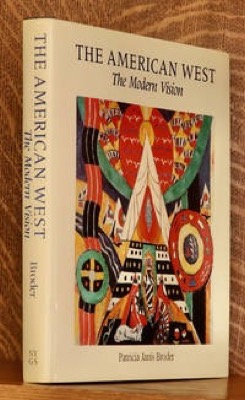
 "The American West: The Modern Vision by: Broder, Patricia Janis")