Hardcover. NY, Charles Scribner's Sons, 1st BC Ed., 1969, Book: Very Good, Dust Jacket: None, Hardcover, blue cloth covers with gilt titles, 687 pages, b&w photos. Has the A_3.69 (C), small embossed circle at bottom of rear cover indicating a book club printing. Bright, clean copy, missing the dust jacket.
Hardcover. Washington DC, Microcard Editions, 1st, 1971, Book: Very Good, Dust Jacket: None, 122 pages. Hardcover with no dust jacket. Light edgewear to cover boards, light soil to top page block. SIGNED BY BRUCCOLI on title page.
Hardcover. Lexington KY, University Press of Kentucky, 1st, 2022, Book: Very Good, Dust Jacket: Very Good, Hardcover in a bright, unclipped dust jacket. A Hollywood screenwriting and movie-making icon, Ernest Lehman penned some of the most memorable scenes to ever grace the silver screen. Hailed by Vanity Fair as "perhaps the greatest screenwriter in history," Lehman's work on films such as North by Northwest, The King and I, Sabrina, West Side Story, and The Sound of Music helped define a generation of movie making. But while his talent took center stage, the public knew little of Lehman himself, a native of Manhattan's Upper West Side and the Five Towns of Long Island devoted to his wife of 50 years. His relentless perfectionism, hypochondria and all-night writing sessions fueled by tequila and grilled cheese sandwiches were some of the quirks that made Lehman a legend in the Hollywood community.
Hardcover. London, Werner Laurie, 1st, 1955, Book: Very Good, Dust Jacket: Good, Hardcover in a worn, chipped dust jacket, 160 pages. A biography of a much-neglected genius of 20th Century physics. Clean copy.
Hardcover. New York, E. P. Dutton, 1st, 1989, Book: Very Good, Dust Jacket: Very Good, Hardcover, 240 pages illustrated throughout with 156 plates including 74 in full color. Remainder mark on bottom edge. Large folio. Light edgewear to dust jacket, else a clean, tight copy. Follows the artist from his birth in St. Petersburg, Russia in 1892, through the 1980's. Beautiful color plates include costume design, magazine covers (Harper's Bazar), sculpture, vases, mirrors, medallions, jewelry, labels, bottles, playing cards, watches.
Softcover. Cloud Books, 1st, 2011, Book: Very Good, Dust Jacket: None, Softcover, 526 pages. Based on nearly 40 hours of interviews, Escaping from Reality Without Really Trying is the memoir of a 61-year-old, life-long merchant seaman re-counting his fantastic, hilarious, and politically incorrect exploits. He's a sailor-scholar and an individualist anarchist; he's read Voltaire and The Egyptian Book of the Dead. He admits to working at his hobby, sailing, to keep up his real occupation, drinking.He's lived 40 years of adventures around the world, including an incursion into Cambodia during the Vietnam War; a prison break from a Ceylon jail; a dockside fistfight in the Philippines in 1977; a 2-week stowaway run on a British merchant ship sailing around South Africa; meeting Omar Sharif in Aqaba, Jordan; an around-the-world trip (with Greg Cousins, the third mate on the Exxon Valdez, and we learn what really happened!) that ends in Alang, India and the beaching of the ship to be cut up for scrap metal; seeing the rise and fall of communism and capitalism in Africa and the newly independent states after the Soviet Union's collapse and division; and an ammunition delivery to Kuwait on the eve of the 2003 American-led invasion of Iraq.
Hardcover. Indianapolis, Indiana, Indianapolis Museum of Art, 1st, 2013, Book: Very Good, Dust Jacket: None, 160 pages. Hardcover no dust jacket. Color pictures throughout. Clean, unmarked copy with only minor wear to boards. Decoding Robert Indiana's work for a new generation, this revelatory book explores previously unknown autobiographical elements in the work of the Pop artist and printmaker. Famously proclaiming himself to be "an American painter of signs," Robert Indiana has created an enormous body of work, much of it boldly colored abstractions. In this incisive new examination of the artist, based on ongoing conversations with Indiana, art historian Martin Krause sifts through autobiographical clues within the artist's work and finds a wealth of affecting and affectionate references to Indiana's childhood, literary heroes, and the cultural icons of his generation. In addition, a penetrating essay by Pop art scholar John Wilmerding deconstructs Indiana's use of geometric shapes, making unexpected connections that enhance Krause's thesis. Accompanied by reproductions of more than 50 prints from the period 1960-2010--and focusing specifically on series such as Decade: Autoportraits, Vinalhaven Suite, and The Hartley Elegies as well as the "Love" and "Hope" images and studies of Marilyn Monroe, Picasso, and the Brooklyn Bridge--Krause's decryption of Indiana's visual language provides telling insight into the work of this quintessentially American artist.
Hardcover. Jefferson NC, McFarland, 1st, 1999, Book: Very Good, Dust Jacket: None, Hardcover, 223 pages, b&w photos. Eugene Jackson became a child star in 1924 playing "Pineapple" in the original "Our Gang" comedy shorts. Join him as he shares his life story -- a story that preserves the history of vaudeville and early Hollywood as well as chronicles the African American experience in the entertainment business.
Hardcover. NY, Prestel, 1st, 2015, Book: Very Good, Dust Jacket: None, Hardcover, 192 pages, color and b&w images. This first volume in a major new series of illustrated biographies of Magnum photographers traces the life and achievements of Eve Arnold, who captured an incredible array of subjects with remarkable clarity and compassion. Eve Arnold (1912-2012) was born to a poor immigrant family in Philadelphia and became a photographer by chance. In 1950 Arnold was a 38-year-old Long Island housewife when she enrolled in a six-week photography course that led to her groundbreaking photo essay on black fashion models in Harlem. She went on to become the first woman to join Magnum Photos and, eventually, one of the most accomplished photojournalists of her time. Filled with reproductions of Arnold's acclaimed photographs, shot in both color and black and white, as well as previously unseen archival images, this biography relates Arnold's bold images to the fascinating story of their making. Renowned for her intimate portraits of figures such as Marilyn Monroe, Malcolm X, and Queen Elizabeth, Arnold was equally comfortable documenting the lives of the poor and dispossessed. "I don't see anybody as either ordinary or extraordinary. I see them simply as people in front of my lens." To her images of migrant workers, disabled veterans, and protesters for civil rights in the US and against apartheid in South Africa, she brought an unflinching eye and a strong sense of social justice. This highly engrossing narrative tells a compelling story of an intrepid artist whose life's purpose was to report on the lives of others.
Hardcover. Knoxville TN, University of Tennessee Press, 1st, 2001, Book: Very Good, Dust Jacket: Very Good, Hardcover in a bright dust jacket, 235 pages. Evelyn Scott was a significant literary figure in American letters of the 1920s and 1930s, an important contributor in the experimental forms and techniques of the modernist movement. She wrote and published in many genres -- the novel, short fiction, poetry, memoir, criticism, and drama. Since that time, Scott's work has been forgotten by most readers and critics, and her reputation as an important writer of her day has been obscured. This collection, which features an introduction and thirteen critical essays, is the first volume to focus on Scott's work rather than her intriguing yet troubled life and initiates a long-needed examination of Scott's innovations in fiction, memoir, and other genres. The various essays take diverse critical approaches to Scott's canon, including her best-known works -- Escapade and The Wave -- and explore her views on topics such as women, politics, religion, art, and the South. Clean copy.
Hardcover. Clarkson N. Potter, inc, 1st, 1974, Book: Very Good, Dust Jacket: Good, Hardcover, 236 pages. b&w and color illustrations and photographs. Red cloth spine. Dust jacket edgewear, otherwise in good shape. Everett Shinn (1876 - 1953) was an American realist painter and member of the Ashcan School. He also exhibited with the short-lived group known as "The Eight," who protested the restrictive exhibition policies of the powerful, conservative National Academy of Design. He is best known for his robust paintings of urban life in New York and London, a hallmark of Ashcan art, and for his theater and residential murals and interior-design projects. His style varied considerably over the years, from gritty and realistic to decorative and rococo.
Softcover. NY, Berry-Hill Galleries, 1st, 2000, Book: Very Good, Dust Jacket: None, Softcover, 176 pages. 5 b&w, 55 color plates. Issued in conjunction with an exhibition featuring the work of Ashcan artist Everett Shinn (1876-1953). A tremendous presentation of text and richly printed color illustrations. Clean copy
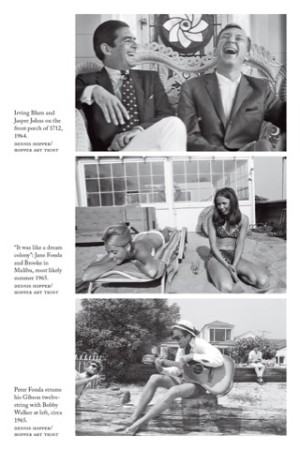
Hardcover. NY, Ecco, 1st, 2022, Book: Very Good, Dust Jacket: Very Good, Hardcover in a bright, unclipped dust jacket. 454 pages, b&w, color illustrations. Los Angeles in the 1960s: riots in Watts and on the Sunset Strip, wild weekends in Malibu, late nights at The Daisy discotheque, openings at the Ferus Gallery, and the convergence of pop art, rock and roll, and the New Hollywood. At the center of it all, one inspired, improbable, and highly combustible couple--Dennis Hopper and Brooke Hayward--lived out the emblematic love story of '60s L.A. The home these two glamorous young actors created for themselves and their family at 1712 North Crescent Heights Boulevard in the Hollywood Hills became the era's unofficial living room, a kaleidoscopic realm--"furnished like an amusement park," Andy Warhol said--that made an impact on anyone who ever stepped into it. Hopper and Hayward, vanguard collectors of contemporary art, packed the place with pop masterpieces by the likes of Roy Lichtenstein, Ed Ruscha, and Warhol, and welcomed a who's who of visitors, from Jane Fonda to Jasper Johns, Joan Didion to Tina Turner, Hells Angels to Black Panthers. In this house, everything that defined the 1960s went down: the fun, the decadence, the radical politics, and, ultimately, the danger and instability that Hopper explored in the project that made his career, became the cinematic symbol of the period, and blew their union apart--Easy Rider.
Hardcover. NY, Ecco, 1st, 2022, Book: Very Good, Dust Jacket: Very Good, Hardcover in a bright, unclipped dust jacket. 454 pages, b&w, color illustrations. Los Angeles in the 1960s: riots in Watts and on the Sunset Strip, wild weekends in Malibu, late nights at The Daisy discotheque, openings at the Ferus Gallery, and the convergence of pop art, rock and roll, and the New Hollywood. At the center of it all, one inspired, improbable, and highly combustible couple--Dennis Hopper and Brooke Hayward--lived out the emblematic love story of '60s L.A. The home these two glamorous young actors created for themselves and their family at 1712 North Crescent Heights Boulevard in the Hollywood Hills became the era's unofficial living room, a kaleidoscopic realm--"furnished like an amusement park," Andy Warhol said--that made an impact on anyone who ever stepped into it. Hopper and Hayward, vanguard collectors of contemporary art, packed the place with pop masterpieces by the likes of Roy Lichtenstein, Ed Ruscha, and Warhol, and welcomed a who's who of visitors, from Jane Fonda to Jasper Johns, Joan Didion to Tina Turner, Hells Angels to Black Panthers. In this house, everything that defined the 1960s went down: the fun, the decadence, the radical politics, and, ultimately, the danger and instability that Hopper explored in the project that made his career, became the cinematic symbol of the period, and blew their union apart--Easy Rider.
Hardcover. New York, Da Capo Press, 2nd pr., 2006, Book: Very Good, Dust Jacket: Very Good, Hardcover, 258 pages, illustrated in b&w. Recorded during the blazing summer of 1971 at Villa Nellcote, Keith Richards' seaside mansion in the south of France, Exile on Main St. has been hailed as one of the Rolling Stones' best albums-and one of the greatest rock records of all time. Yet its improbable creation was difficult, torturous...and at times nothing short of dangerous.In self-imposed exile, the Stones-along with wives, girlfriends, and a crew of hangers-on unrivaled in the history of rock-spent their days smoking, snorting, and drinking whatever they could get their hands on. At night, the band descended like miners into the villa's dank basement to lay down tracks. Out of those grueling sessions came the familiar riffs and rhythms of "Rocks Off," "Tumbling Dice," "Happy," and "Sweet Virginia."All the while, a variety of celebrities-John Lennon, Yoko Ono, and Gram Parsons among them-stumbled through the villa's neverending party, as did the local drug dealers, known to one and all as "les cowboys." Villa Nellcote became the crucible in which creative strife, outsize egos, and all the usual byproducts of the Stones' legendary hedonistic excess fused into something potent, volatile, and enduring.Here, for the first time, is the season in hell that produced Exile on Main St.
Hardcover. Austin TX, University of Texas Press, 1st, 1990, Book: Very Good, Dust Jacket: Very Good, Hardcover in a bright dust jacket. INSCRIBED AND SIGNED BY MEDINA on title page. A happy, middle-class childhood lived in the shadows of sweeping social change and oncoming revolution -- such was the experience of novelist Pablo Medina. In this memoir, Medina revisits his curious double world, recalling the pre-revolutionary Cuba of his first twelve years, 1948-1960. His recollections move easily from his childhood adventures to warm remembrances of family and friends to his growing awareness of the social conflicts that would ultimately send his family into exile in the United States. Medina also draws on the memories of his elders to extend his memoir back to the Cuban War of Independence and forward through the twentieth century to the fall of the Batista regime, the victory of the Revolution in 1959, and the family's growing disillusionment with the Castro regime. Clean copy.
Hardcover. NY, W. W. Norton & Co., 1st, 1993, Hardcover in a bright, unclipped dust jacket. 298 pages. A late-life memoir by the notable fiction writer, biographer and critic. Covers a relatively short period of her life, with deeper reflections on a life spent in reading, writing, and observing the world around her. Clean copy.
Hardcover. London, Thames and Hudson, 1st, 1999, Book: Very Good, Dust Jacket: Very Good, 384 pages. Hardcover with dust jacket. Clean, tight copy with black and white photographs throughout. Light wear ton dust jacket. The life of Erwin Blumenfeld, one of the century's best-known photographers, was by no means conventional. By turns acerbic, self-mocking, playful, even absurd, his autobiography is a compelling, virtuoso account of an extraordinary man. All his subjects--his Jewish family, the Germans, the Vichy French, his models, New York publishers--are dealt equal measures of wit, mockery, and merciless irony. He spares himself least of all. Born in turn-of-the-century Berlin, Blumenfeld was drafted to serve in the First World War, first as an ambulance driver (although he couldn't drive) and then as a bookkeeper in a field brothel, and he was awarded the Iron Cross for giving his sergeant French lessons. Between the wars he was part of an avant-garde circle that included such artists as Else Lasker-Schler, George Grosz, and members of the Dada movement. During the Second World War, Blumenfeld was interned in a series of French camps but eventually arrived in New York, where he found work with Vogue and Harper's Bazaar, producing many of their most memorable covers and becoming fashion's highest-paid photographer. From the creator of some of the most striking and influential photographs ever taken, Blumenfeld's autobiography--published here in English for the first time--is a biting and iconoclastic take on the century, and the insightful, gripping story of an exceptional life. Remainder line to bottom edge.
Hardcover. NY, Henry Holt and Co., 1st, 2017, Book: Very Good, Dust Jacket: Very Good, Hardcover in a bright dust jacket, 294 pages. Robert Capa and Gerda Taro were young Jewish refugees, idealistic and in love. As photographers in the 1930s, they set off to capture their generation's most important struggle-the fight against fascism. Among the first to depict modern warfare, Capa, Taro, and their friend Chim took powerful photographs of the Spanish Civil War that went straight from the action to news magazines. They brought a human face to war with their iconic shots of a loving couple resting, a wary orphan, and, always, more and more refugees-people driven from their homes by bombs, guns, and planes. Today, our screens are flooded with images from around the world. But Capa and Taro were pioneers, bringing home the crises and dramas of their time-and helping give birth to the idea of bearing witness through technology. With a cast of characters ranging from Langston Hughes and George Orwell to Pablo Picasso and Ernest Hemingway, and packed with dramatic photos, posters, and cinematic magazine layouts, here is Capa and Taro's riveting, tragic, and ultimately inspiring story. Clean copy.
Hardcover. NY, Oxford University Press;, 1st, 1992, Book: Very Good, Dust Jacket: Very Good, Hardcover in a bright, unclipped dust jacket, 288 pages. As an essayist and Village Voice columnist, Gary Giddins is widely known as a preeminent jazz writer. Walter Clemons, writing in Newsweek, hailed him as "the best jazz critic now at work," praising his "elegant prose" and "encyclopedic knowledge." Yet he has won a devoted audience for his reflections on popular culture, books, and movies as well--including a marvelous essay on Jack Benny that Gay Talese selected for Best American Essays of 1987. In Faces in the Crowd, Giddins once again demonstrates his graceful style and sharp wit in a brilliant collection of critiques, assessments, and profiles of major figures in the culture of our century.
Hardcover. Leicestershire, England, Matador, 1st, 2013, Book: Very Good, Dust Jacket: Very Good, 262 Pages. Hardcover with dust jacket. Light edgewear to dust jacket. Previous owner's bookplate on front fly leaf, otherwise, clean, tight copy. Black and white pictures throughout.
NY, Paddington Press, reprint, 1975, Book: Very Good, Dust Jacket: Very Good, Hardcover in a nice dust jacket, light fading to spine. Black & white illustrations, 569 pages.
Softcover. McKinleyville CA, Fithian Press/, 1st, 2014, Book: Very Good, Dust Jacket: None, Softcover, 238 pages, b&w illustrations. INSCRIBED BY COHEN on the front fly leaf. Robert Cohen is the founding Chair of Drama a the University of California, Irvine, and has written 20 book on theatre. In this memoir, he recounts the "lucky breaks" that took him from being a college student preparing for law school to a long career as a man of the theatre. The first lucky break took place in his junior year of high school when Judy Berkenbilt asked him to be in "Belles On Their Toes," a play she was directing. She wanted to cast him as a policeman but after reading the script, Cohen asked for the role as the family handyman, which she agreed to. He identifies Lucky Break #2, in the same year, as ending up in a Vocational Typing class when he transferred out of the Mechanical Drawing class to escape a creepy instructor. He became a fabulous typist and was able to earn lunch money in college by typing papers for other students. Lucky Break #3 was getting into the 12th grade Advanced English class taught by Miss Casey, which advanced his intellectual development and reading "like crazy." Lucky Break #6 was being asked to take over as coach of the swimming program at the camp where he was a counselor. When Cohen did not have the $20 needed to to get a Water Safety Instructor certification, the camp owner asked him take over the drama program instead. And so on.
Hardcover. NY, Farrar, Straus and Giroux, 1st, 2024, Book: Very Good, Dust Jacket: Very Good, Hardcover in a bright, unclipped dust jacket, 311 pages, color illustrations. Jean Strouse captures the dramas, mysteries, intrigues, and tragedies surrounding John Singer Sargent's portraits of the Wertheimer family. Her account looks at twelve portraits of one English family painted by the expatriate American artist at the height of his career...and at the intersections of all these lives with the sparkle and strife of the Edwardian age. In commissioning this grand series of paintings, Asher Wertheimer, an eminent London art dealer of German-Jewish descent, became Sargent's greatest private patron and close friend. The Wertheimers worked with Rothschilds and royals, plutocrats and dukes--as did Sargent. Asher left most of his Sargent portraits to the National Gallery in London, a gift that elicited censure as well as praise: it was a new thing for a family of Jews to appear alongside the Anglo-Saxon aristocrats and dignitaries painted by earlier masters. Strouse's account, set primarily in England around the turn of the twentieth century, takes in the declining fortunes of the British aristocracy and the dramatic rise of new power and wealth on both sides of the Atlantic. Clean, bright copy.

 "Ernest Hemingway A Life Storyby: Carlos Baker")
 "Ernest Hemingway's Apprenticeship: Oak Park, 1916-1917 (SIGNED COPY)by: Bruccoli (editor), Matthew J.")
 "Ernest Lehman: The Sweet Smell of Successby: Jon Krampner")
 "Ernest Rutherford: Atom Pioneer by: Rowland, John")
 "Erte: My Life, My Art - An Autobiographyby: Erte")
 "Escaping from Reality Without Really Trying: 40 Years of High Seas Travels and Lowbrow Talesby: Jacoby, Robert")
 "Essential Robert Indiana, Theby: Krause, Martin")
 "Eugene \"Pineapple\" Jackson - His Own Storyby: Jackson II, Eugene W. with Gwendolyn Sides St. Julian")
 "Eve Arnold: Magnum Legacyby: Janine di Giovanni, Susan Meiselas , et al.")


 "Evelyn Scott: Recovering a Lost Modernist by: Scura, Dorothy M. & Jones, Paul C.")
 "Everett Shinn, 1876-1953: A Figure in His Timeby: Shazo, Edith de")
 "Everett Shinn: The Spectacle of Life by: Wong, Janay")
 "Everybody Thought We Were Crazy: Dennis Hopper, Brooke Hayward, and 1960s Los Angeles by: Mark Rozzo")

 "Everybody Thought We Were Crazy: Dennis Hopper, Brooke Hayward, and 1960s Los Angeles by: Mark Rozzo")

 "Exile on Main St.: A Season in Hell with the Rolling Stonesby: Greenfield, Robert")
 "Exiled Memories: A Cuban Childhood (SIGNED COPY)by: Pablo Medina")
 "Extra Innings: A Memoirby: Doris Grumbach")
 "Eye to I: An Autobiography of a Photographerby: Blumenfeld, Erwin")
 "Eyes of the World: Robert Capa, Gerda Taro, & the Invention of Modern Photojournalism by: Marc Aronson / Marina Budhos")
 "Faces in the Crowd: Players and Writersby: Gary Giddins")
 "Factual Nonsense: The Art and Death of Joshua Compston. A user's guide to living fast and dying young in the contemporary art world. by: Coffield, Darren")
 "Fairy Tale of My Life, The - An Autobiographyby: Andersen, Hans Christian")
 "Falling Into Theatre. . .and Finding Myself: A Memoir (SIGNED COPY)by: Robert Cohen")
 "Family Romance: John Singer Sargent and the Wertheimers by: Strouse, Jean")