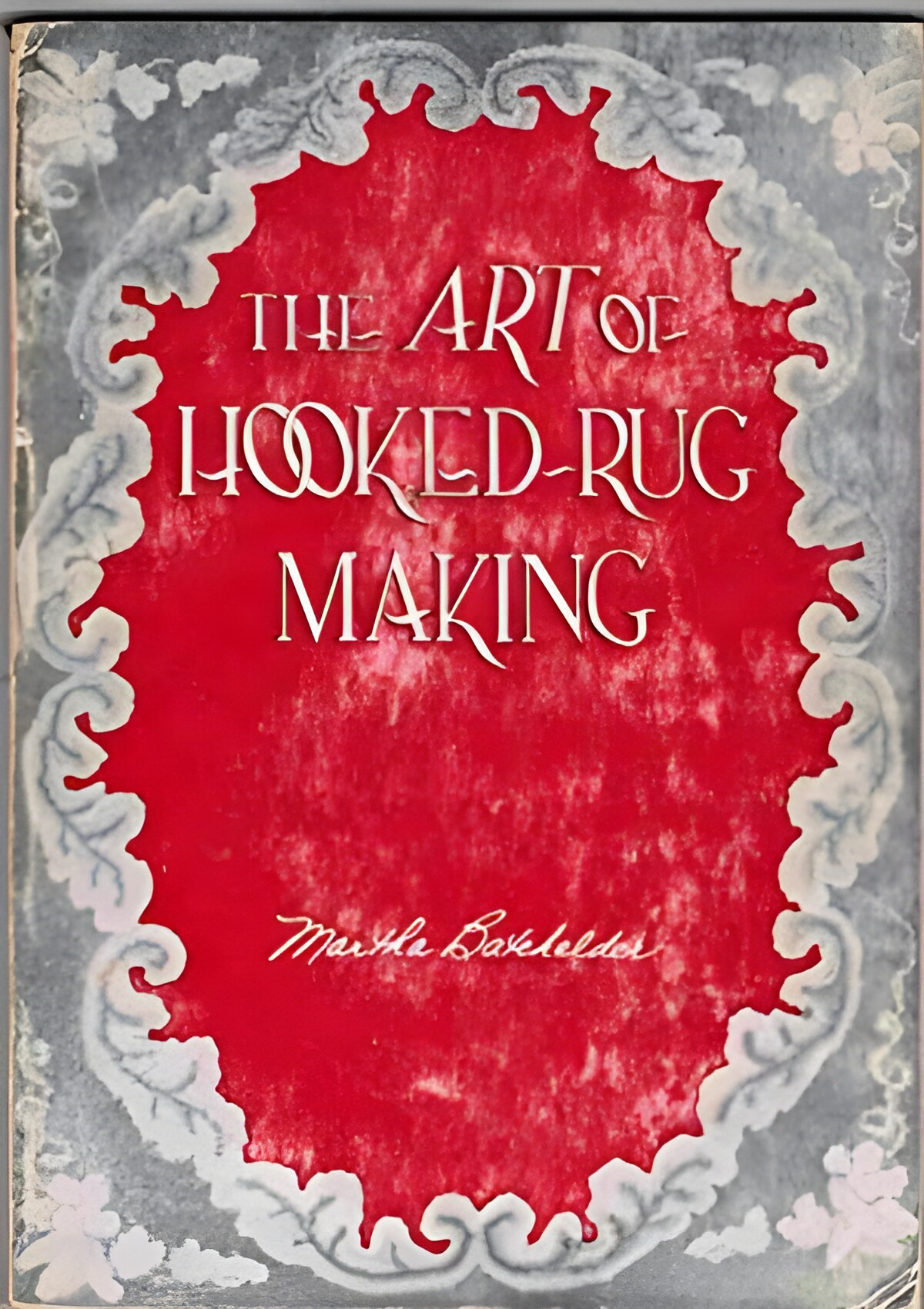
Softcover. Peroria IL, Manual Arts Press, 1st, 1947, Book: Very Good, Dust Jacket: None, Softcover, 160 pages, illustrated, index.The original edition of this step-by-step guide to crafting hook rugs. Small bump to bottom corner causing a mild crease to pages. Spine label otherwise clean, no markings.
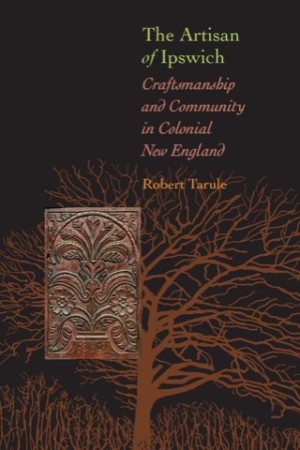
Softcover. Baltimore, Johns Hopkins University Press, 1st, 2007, Book: Very Good, Dust Jacket: None, Softcover, 155 pages. Thomas Dennis emigrated to America from England in 1663, settling in Ipswich, a Massachusetts village a long day's sail north of Boston. He had apprenticed in joinery, the most common method of making furniture in sixteenth- and seventeenth-century Britain, and he became Ipswich's second joiner, setting up shop in the heart of the village. During his lifetime, Dennis won wide renown as an artisan. Today, connoisseurs judge his elaborately carved furniture as among the best produced in seventeenth-century America. Robert Tarule, historian and accomplished craftsman, brilliantly recreates Dennis's world in recounting how he created a single oak chest. Writing as a woodworker himself, Tarule vividly portrays Dennis walking through the woods looking for the right trees; sawing and splitting the wood on site; and working in his shop on the chest-planing, joining, and carving. Dennis inherited a knowledge of wood and woodworking that dated back centuries before he was born, and Tarule traces this tradition from Old World to New. He also depicts the natural and social landscape in which Dennis operated, from the sights, sounds, and smells of colonial Ipswich and its surrounding countryside to the laws that governed his use of trees and his network of personal and professional relationships. Clean copy.
Hardcover. New York, Scribner's, Reprint, 1919, Book: Very Good, Dust Jacket: None, Hardcover, green cloth covers with gilt design, title on spine,111 pages. Full color and black & white illustrations. Clean, tight copy.
Hardcover. Simcoe, Ontario, The Norfolk Historical Society/Fanshawe College, 2nd revised, 1977, Book: Very Good, Dust Jacket: None, Hardcover, tan cloth stamped in black. Unpaginated. 16 full color reproductions of family members in Colonial costumes. Intact and very clean. No dust jacket.
Hardcover. Brattleboro VT, Stephen Daye Press, 1st, 1938, Book: Very Good, Dust Jacket: None, Hardcover, green cloth with gilt lettering on spine and front cover. 46 pages, b&w photos of candle-making. Old Ways of Working Series. Front endpapers have tape shadows and old price in crayon. Otherwise a clean, bright copy inside.
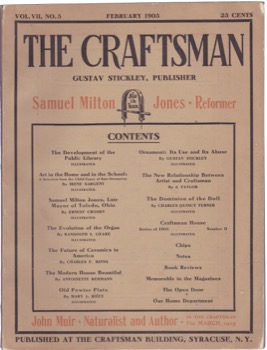
Softcover. Syracuse NY, Gustav Stickley, 1st, 1905, Book: Very Good, Dust Jacket: None, Softcover, approx. 200 pages, b&w illustrations, ads. Gustav Stickley showed his designs and ideas through his magazine The Craftsman. Published monthly between Oct 1901 and Dec 1916, The Craftsman was "the bible" of the Arts and Crafts Movement in the United States, which emphasized spare design, hand-crafting, and the importance of the individual craftsman. This issue features his article "Ornament: Its Use and Its Abuse". Also articles on The Development of the Public Library, The Future of Ceramics in America, Old Pewter Plate, The Modern House Beautiful, others. Clean, bright copy.
Softcover. Killarney IR, self-published, 1st, 2013, Book: Very Good, Dust Jacket: None, Softcover, 48 pages, illustrated in color and b&w. A snapshot survey of the main laces made in Ireland, profusely illustrated. Includes a bibliography. Clean, bright copy. Scarce.
Softcover. Santa Fe, Museum of New Mexico Press, 1st revised, 2003, Book: Very Good, Dust Jacket: None, Softcover, pages. Maria, the potter of San Ildefonso (1887-1981), is not only the most famous of Pueblo Indian potters but ranks among the best of international potters. Her work Is collected and exhibited around the world, and more than any other artist, Maria Martinez brought "signatures" to Indian art. She and other members of her family revived a dying art form and kindled a renaissance in pottery for all the Pueblos. She raised this regional art to one of international acclaim. This lavishly illustrated book draws from Spivey's 1979 classic work. Featuring entirely new photography and 120 added pots as well as a significantly expanded text, this volume considers the entirety of this artist's immense oeuvre and important works and developments in her collaboration with Julian, and after his death, with her daughter-in-law Santana, son Popovi Da, and grandson Tony Da, bringing the legacy of Maria into the bright future of Pueblo ceramics.
Hardcover. Norman OK, University of Oklahoma Press, 8th pr., 1970, Book: Very Good, Dust Jacket: Very Good, Hardcover in a lightly worn dust jacket, 220 pages with black & white illustrations. A thorough study of the art of the Indian silversmiths of the Southwest. Includes the history of the craft as well as names and localities of pioneer artisans. Bookplate on inside front cover, otherwise clean.
Softcover. NY, Owl/Henry Holt, 1st, 1993, Book: Very Good, Dust Jacket: None, Softcover, 160 pages, color illustrations. The magical qualities of three-dimensional and moving books have universal appeal. The Pop-Up Book offers a clear and practical guide to the pop-up papercrafts for all levels of artist, from home hobbyists to professional graphic designers and architects. Illustrated with specially commissioned photography, it includes specific projects with easy-to-follow steps, general techniques for greater personal experimentation and creativity, and a gallery of designs created by some of today's best pop-up artists for an inspirational finish. Clean copy.
Hardcover. NY, Garden City Books, 1st, 1954, Book: Very Good, Dust Jacket: Very Good, Hardcover in a bright dust jacket. 223 pages. B&w illustrations by author. Bright, clean copy.
Hardcover. Concord, MA, Joslin Hall Publishing, Reprint, 1992, Book: Very Good, Dust Jacket: Very Good, 50 pages. Reprint from original 1928. B/w photographs and illustrations throughout. Gilt title on spine and front board. Very clean inside and out! A comprehensive study of the Silversmiths of Little Rest (Kingston), RI, who practiced from the latter half of the 18th century into the first half of the 19th.
Softcover. Toronto CA, McClelland and Stewart, 1st, 1987, Book: Very Good, Dust Jacket: None, Softcover, 264 pages, 125 color, 135 black & white. Published in conjunction with an exhibition. "A major study of the artistic traditions of Canada's Native peoples and of their place in the cultures and belief systems in which they originated. Here, for the first time, is Native Canadian work from museums and private collections around the world. The works, and the essays that describe their contexts, bring to life the spiritual and aesthetic identity of the craftspeople and their societies. From richly ornamented costumes displaying the wealth of their owners to practical techologies that enabled the peoples to thrive in their environments, these treasures reflect Native life at the time of contact with Europeans." Clean copy.
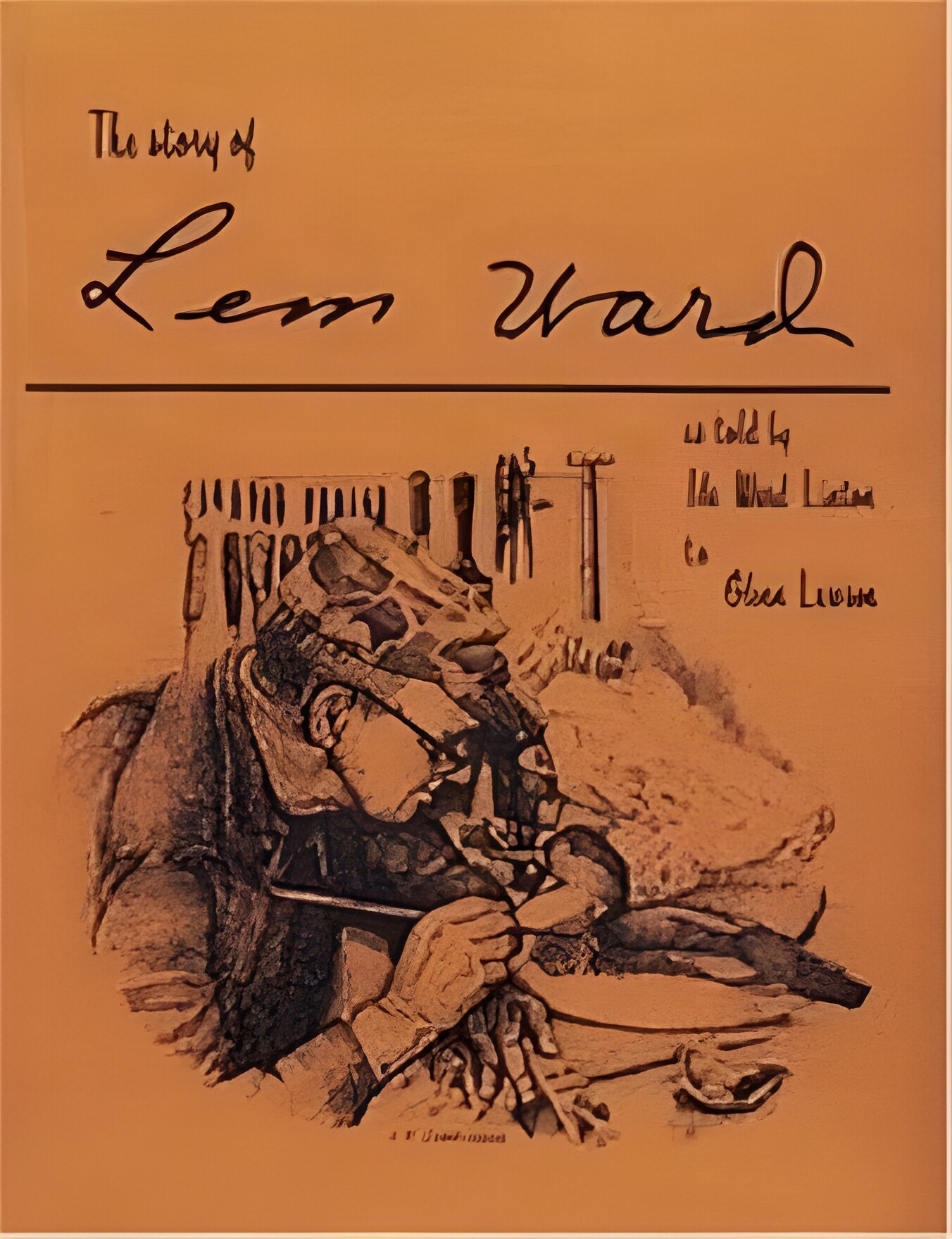
Hardcover. West Chester PA, Schiffer Publishing, 1st, 1984, Book: Very Good, Dust Jacket: Very Good, Hardcover in a bright dust jacket, 128 pages illustrated in color and b&w. The story of the life and works of an American wildfowl artist. Lem's life is a tale of courage - of a man who overcame a withered arm, lack of formal education, cultural isolation, and severe illness to become one of the founders of American Wildfowl Art. This is a close look at how he and his brother, Steve, grew up together in the marshes along the Chesapeake Bay, how they subsisted as barbers and foragers, how they retained their independent spirits to create birds that pleased them - wildfowl art - while carvers around them were creating decoys just good enough for hunting ducks. Lem's work is described in pictures, accompanied by colorful comments and interesting insights by a collector who became one of the artist's closest friends. Clean copy.
Hardcover. NY, Farrar, Straus and Giroux, 1st, 1975, Book: Very Good, Dust Jacket: Very Good, Hardcover in an unclipped dust jacket with light tanning to edges. 214 pages with a pictorial section in rear. Stated first printing on copyright page. The story of the building of birch-bark canoes and of a 150 mile trip through the Maine woods in those graceful survivors of a prehistoric technology.
Softcover. Brookville, NY, Hillwood Art Museum, 1st, 2007, Book: Very Good, Dust Jacket: None, Softcover. Side-stapled, 42 pages. Full-color catalog featuring essays and images of traditional and contemporary African textiles.
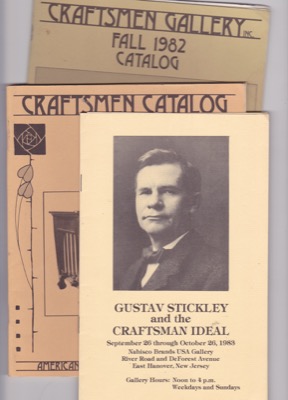
Softcover. 1982/83, Book: Very Good, Softcovers. Two stapled brochures, Fall 1982 and Spring 1983, 32 pages and 48 pages, Craftsmen Gallery, Boston. B&w photos. Back cover with stamp and written address. A small leaflet for an exhibition "Gustav Stickley and the Craftsman Ideal", eight pages, New Jersey, 1983.
Softcover. Berkeley CA, University of California Press, 1st pbk., 1990, Book: Very Good, Dust Jacket: None, Softcover, 273 pages, b&w illustrations. The first in-depth analysis of the rich spiritual and artistic traditions of the Carib-speaking Yekuana Indians of Venezuela, who live in the dense rain forest of the upper Orinoco. Within their homeland of Ihuruna, the Yekuana have succeeded in maintaining the integrity and unity of their culture, resisting the devastating effects of acculturation that have befallen so many neighboring groups. Yet their success must be attributed to more than natural barriers of rapids and waterfalls, to more than lack of "contact" with our "modern" world. The ethnographic history recounted here includes not only the Spanish discovery of the Yekuana but detailed indigenous accounts of the entire history of Yekuana contact with Western culture, revealing an adaptive technique of mythopoesis by which the symbols of a new and hostile European ideology have been consistently defused through their incorporation into traditional indigenous structures. Clean copy.
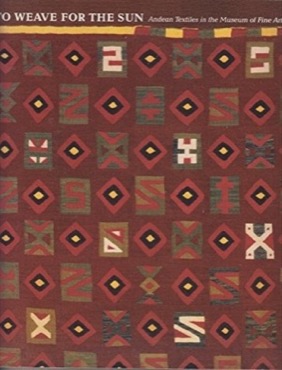
Softcover. Boston, Museum of Fine Arts, 1st, 1992, Book: Very Good, Dust Jacket: None, Softcover, 271 pages illustrated in color and b&w. Textiles were the Incas' most prized possessions. Their first gifts to European strangers were made not of gold and silver, but of camelid fibre and cotton. They believed that the highest form of weaving was created expressly for the sun, which they considered the greatest of the celestial powers. This book uses this image to symbolize Andean tradition as a whole and documents the collection of ancient and Colonial Andean textiles in the Museum of Fine Arts, Boston, which is among the most comprehensive of its kind in the world. Described and illustrated here, in many cases for the first time are the finest examples from the collection: weavings of astonishing virtuosity with striking geometric designs, elaborate carpets and covers, mantles, tunics, featherwork, woven shoes with metal decoration and intriguing figural sculptures with tapestry faces - representing the major cultures of the pre-Columbian period as well as the achievements of Spanish Colonial times. Mild wear to outer wraps, otherwise a clean, bright copy.
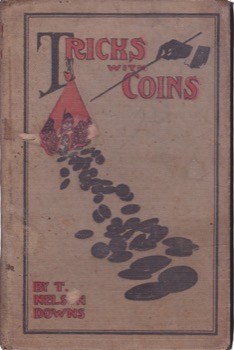
Hardcover. Chicago, Frederick J. Drake and Co., 1902, Book: Fair, Dust Jacket: None, Hardcover, pictorial cloth, 164 pages plus publisher's ads. 86 illustrations, frontis portrait of author. Only date is the copyright year 1902. Features detailed explanations and diagrams of numerous feats with coins-most prominent among them the author's world-famous original creation, "The Miser's Dream," a much-imitated act climaxing in the production of a shower of half-dollars. In this complete manual of the art of conjuring with coins, Downs shares his secrets for scores of "fakes" and sleights, including passing a coin through the bottom of a hat, the money-producing cigarette, the mysterious claret glass, the crystal coin ladder, the obedient coins, and many more. He also offers a wealth of suggestions for stage "business" involving handkerchiefs, goblets, hats and other props, as well as helpful tips on presentation, patter and other techniques. Overall fair, fragile condition with some chipping to cloth on front cover.
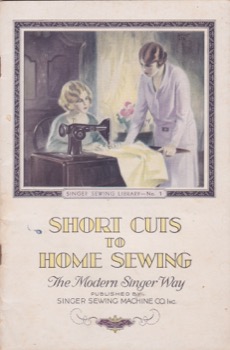
Softcover. NY, Singer Sewing Machine Co., 1930/1934, Book: Good, Dust Jacket: None, Two stapled brochures, 48, 64 pages. 5 1/2 X 8 1/4", both illustrated with b&w photos and drawings. Both clean. The draperies pages have some light wrinkling.
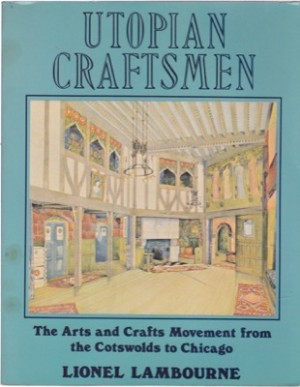
Softcover. NY, Van Nostrand Reinhold, 1st pbk., 1982, Book: Very Good, Dust Jacket: None, Softcover, 218 pages with 256 b&w illustrations. From cover: "describes the ideals that inspired an earlier generation to leave city and factory in order to practice crafts ranging from bookbinding and metalwork to furniture making." Mild curl to cover, otherwise very good, clean.
Hardcover. Salt Lake City, Peregrine Smith, Inc, 1st US, 1980, Book: Very Good, Dust Jacket: Very Good, Hardcover, 218 pages. Green cloth cover with gilt lettering to spine, color illustrated dust jacket, 256 b&w plates, some in color. Light wear to dust jacket; overall a tight, clean copy.

 "The Basketry Book - Twelve Lessons in Reed Weavingby: Blanchard, Mary Miles")
 "The Cabinet Makers of Norfolk Countyby: Yeager, Ed., William")




 "The Silversmiths of Little Restby: Miller, William Davis")





 "Utopian Craftsmen: The Arts and Crafts Movement from the Cotswolds to Chicagoby: Lambourne, Lionel")