Hardcover. Baton Rouge, Louisiana State University Press, 1st, 1977, Book: Very Good, Dust Jacket: None, Hardcover. Introduction by William Mills. French text rendered by James and Elisabeth Spohrer. Brown tweed with photo and blind stamped cover. Clear plastic cover not present. Numerous full page black & white photographs by Turner Browne, map of Louisiana highlighting the Cajun Country, text in English and French,
Hardcover. Berkeley CA, University of California Press, 1st, 1980, Book: Very Good, Dust Jacket: Very Good, Hardcover in a bright dust jacket, 270 pages, b&w illustrations. Drawing on the scholarship of folklore, historiography, and literary anthropology, this study traces the evolution of one of China's most enduring and controversial madmen, the legendary southern poet Ch'u Yuan, whose suicide by drowning is still commemorated annually in the colourful Dragon Boat festival. Light pen underlining to several pages of Intoduction, small name on front fly leaf. Otherwise clean.
Hardcover. Washington.DC, Smithsonian, 1st , 1995, Book: Very Good, Dust Jacket: Very Good, Hardcover in a bright, unclipped dust jacket. Black & white illustrations.
Hardcover. Boston/New York, Bedford/ St. Martin's, 4th pr., 2005, Book: Very Good, Dust Jacket: None, 1224 pages plus appendix, color illustrations. Pictorial boards, very heavy textbook. Clean, tight copy. Light bump to cover corner otherwise very good. DOMESTIC SHIPPING ONLY.
Hardcover. NY, William Morrow, 1st, 1970, Book: Very Good, Dust Jacket: Very Good, Hardcover, 350 pages, B&w frontispiece of Houssaye. A condensation of his six-volume Confessions. Entertaining observations of nineteenth century Parisian life, culture and government. Clean copy in a lightly worn dust jacket.
Hardcover. NY, Harper & Row, 1st, 1966, Book: Very Good, Dust Jacket: None, Hardcover, turquoise cloth with gilt lettering on the spine, 272 pages, b&w illustrations. Bibliography. Index. The author considers the paradoxical period between the social and political revolutions of 1848 and the death of optimisn in 1914. Besides presenting a revealing and fascinating account of great social contrasts, the author introduces the reader into other aspects of life during this period, the relaxations and dissipations of both the rich and poor, from the showboat and the music hall to the lavish spectacles of the Nineties and the beginnings of jazz. Clean copy. No dust jacket.
Softcover. Berkeley CA, University of California Press, 1st, 1986, Book: Very Good, Dust Jacket: None, Softcover, 282 pages, b&w illustrations. Masks are found world-wide in connection with seasonal festivals, rites of passage, and curative ceremonies. They provide a means of investigating the paradoxical problems that appearances pose in the experience of transitional states. In this far-reaching work, A. David Napier studies mask iconography and the role played by masks in the realization of change. The masks of preclassical Greece?in particular those of the Satyr and the Gorgon?provide his starting point. A comparison of Greek to Eastern and especially Indian models follows, and the book concludes with an examination of the interpretation of Hindu ideas in Bali that demonstrates the importance of ambivalence in mask iconography. Clean, bright copy.
Softcover. Philadelphia PA, Philadelphia Museum of Art , 1st, 1984, Book: Very Good, Dust Jacket: None, Softcover, 397 pages, 127 color plates, many bw plates. Issued in conjunction with a series of 1984 exhibitions. "The Dutch in the seventeenth century placed a premium on naturalistic accounts of their surroundings, be they in the form of portraits, landscapes, still lifes, or scenes of everyday life -- what we have come to call 'genre' painting. With this art, the painter recorded the look, the manners, the character of those quotidian events, which comprise day-to-day existence." This book features essays on both the artists and on life and culture during this time. The catalogue addresses 127 paintings: first, in color plates, and secondly, with lengthy annotations and small BW illus. The concluding bibliography is substantial. Clean copy.
Hardcover. Germany , Steidl, 1st, 2010, Book: Very Good, Dust Jacket: None, 156 pages. Hardcover with no dust jacket. Very clean, unmarked copy with only minor edgewear. Color photographs throughout. In the early 1970s, the workers at a steel smelting factory east of Havana wrote to Fidel Castro describing their housing needs. Out of this exchange a new city called Alamar was born, conceived by the same workers who would build it and live there. Today it is abandoned; Mauro D'Agati's photographs examine its eccentric spaces.
Hardcover. New York, Random House, reprint, 1986, Book: Very Good, Dust Jacket: Very Good, 339 pages. Hardcover with only minor wear to dust jacket. Black and white pictures throughout. Previous owner's embossed stamping on front-fly leaf and signature. Otherwise clean.
Softcover. Bowie MD, Heritage Books, reprint, 2001, Book: Very Good, Dust Jacket: None, Two softcover volumes 391 & 392 pages. Volumes 1 and 2 complete, a facsimile reprint of the 1897 edition by Lippincott. This two-volume series takes the reader on a journey through the colonies of Virginia, Massachusetts, Connecticut, Rhode Island, New Hampshire, Pennsylvania, New Jersey, New York, Maryland, Carolina, and Georgia. The charm of the journey is in its variety, as the reader passes through communities of such striking individuality that they assume the character of different nations. Each colony has a set of opinions and laws peculiar to itself, and it is not uncommon to find the laws of one in contradiction with the laws of another. This text explores the settlement and history of each colony prior to the American Revolution. Topics include development of the colonies' government, laws, religion, schools, boundaries, industries, layout of the cities, fashions, homes, social activities, slavery, architecture, interaction with the Indians, and customs. At least one prominent person from each colony is discussed, amongst them, William Penn of Pennsylvania, John Smith of Virginia, George Calvert of Maryland, and General Oglethorpe of Georgia. Light sunning ti spines.Clean copies.
Hardcover. Chicago, University of Chicago Press, First Edition, 1998, Book: Very Good, Dust Jacket: Very Good, 464 pages. Hardcover. Ivory & light grey cloth boards with gilt titles to spine. Black & white illustrations throughout. Bright dust jacket with ligh wrinkles. Clean, unmarked copy.
Hardcover. Hatje Cantz, 1st, 2011, Book: Very Good, Dust Jacket: Very Good, Hardcover, 224 pages. The years from 1945 to 1985 are often identified as the moment in which Los Angeles established itself as a leading cultural center in America. However, this conception of its history entirely excludes the very controversial presence of the Mexican muralists, as well as the work of other artists who were influenced by them and responded to their ideas. It is likewise often thought that Los Angeles' Mexican culture arrived full formed from outside it, when in fact that culture originated within the city--it was in Los Angeles and Southern California that Jose Vasconcelos, Ricardo Flores Magon, Octavio Paz and other intellectuals developed the iconography of modern Mexico, while Anglos and Chicanos were developing their own. David Alfaro Siqueiros, Clemente Orozco, Alfredo Ramos Martinez and Jean Charlot made some of their earliest murals in Los Angeles, influencing the Mexican, Mexican-American and Chicano artists of the 1970s and 80s. MEX/LA: Mexican Modernism(s) in Los Angeles 1930-1985 focuses on the construction of different notions of "Mexicanidad" within modernist and contemporary art created in Los Angeles. From the Olvera Street mural by Siqueiros, to the Golden Age of Mexican cinema and the Disney silver-screen productions, to the revitalization of the street mural, up to the performance art of Guillermo Gomez-Pena, MEX/LA explores the bi-national and hybrid forms of artistic practices, popular culture and mass-media arts that have so uniquely shaped Los Angeles' cultural panorama.
Hardcover. UK, Cambridge University Press, 1st, 2001, Book: Very Good, Dust Jacket: Very Good, 444 pages. Hardcover with dust jacket. Light fading to dust jacket front. Light edgewear to dj. Black and white pictures throughout. Clean, tight copy. In 1999 Pope John Paul II proclaimed Our Lady of Guadalupe a patron saint of the Americas. According to oral tradition and historical documents, in 1531 Mary appeared as a beautiful Aztec princess to Juan Diego, a poor Indian. Speaking to him in his own language, she asked him to tell the bishop her name was La Virgen de Guadalupe and that she wanted a church built on the mountain. During a second visit, the image of the Virgin miraculously appeared on his cape. Through the centuries, the enigmatic power of this image has aroused such fervent devotion in Mexico that it has served as the banner of the rebellion against Spanish rule and, despite skepticism and anticlericalism, still remains a potent symbol of the modern nation. In Mexican Phoenix, David Brading traces the intellectual origins, the sudden efflorescence, and the theology that has sustained the tradition of Our Lady of Guadalupe. Brading also documents the interaction of religion and patriotism, and describes how the image has served as a banner both for independence and for the Church in its struggle against the Liberal and revolutionary state.
Hardcover. NY, Norton, 1st, 2004, Book: Very Good, Dust Jacket: Very Good, Hardcover, 256 pages. Through a lively text and 250 stunning duotone images (most never previously published), Millionaires, Mansions, and Motor Yachts re-creates an era of opulence and extravagance that today seems incredible. Dominating this volume are the mansions and yachts of Alfred and Jessie du Pont. Equally larger-than-life personalities include Thomas Lawson, his expansive estate, Dreamwold, and yachts such as Dreamer; empire builder John Spreckels's 227-foot Venetia; Emily Cadwalader, who commissioned a vessel destined for world renown as a U.S. presidential yacht, before checkmating this achievement by ordering the largest private yacht ever built, the 407-foot Savarona; Eugene Tompkins, the "Napoleon of Theater Managers"; George Fabyan; Harry Darlington; and William Rands. Enfolded in this volume's fascinating pages are not only the wealthy individuals who shaped this era but also curmudgeonly writer/yachtsman Thomas Fleming Day, photographer Nathaniel Stebbins, and the designers and builders who created the splendid yachts that here return to life.
Softcover. NY, Archipelago Books, 1st English, 2021, Book: Very Good, Dust Jacket: None, Softcover in pictorial wrappers, 131 pages. With an introduction by award-winning author Alberto Manguel, Milongas is Edgardo Cozarinsky's love letter to tango, and the diverse array of people who give it life. Argentine writer and filmmaker Edgardo Cozarinsky traces [tango's] fascinating journey through time and the seedy brothels and rough Argentine and European bars where the dance could be quite mannered or could spark with theatrical violence . . . Cozarinsky takes us through the ebbs and flows of the popularity of the tango, and also through a number of its evolutionary adaptive speciations. Clean copy.
Hardcover. NY, Jonathan Cape /Harrison Smith, 1st, 1929, Book: Very Good, Dust Jacket: None, Hardcover, 295 pages. Decorated cloth with black cloth spine, bright gilt lettering on spine. A French doctor's account of Chinese life & civilization, based on his twenty years of life, work & travel there; he was Director of the Imperial School of Medicine at Chengtufu. Typically patronizing and moralistic; the author credits China with having been great in the past, but now in the grip of a profound lassitude, only to be helped by Europeans. Translated from the French by Elsie Martin Jones. Previous owner's name, date on front fly leaf otherwise a clean, bright copy.
Hardcover. Cambridge MA, Harvard University Press, 1st, 1970, Book: Very Good, Dust Jacket: Very Good, Hardcover in a bright, unclipped dust jscket, 224 pages. The influence of traditional and religious groups on modern politics. The author investigates the political role of religious organizations in the West African country of Senegal. Upon independence in 1960. Senegalese politicians adopted the pattern of cooperation established by the French. Behrman, examining the present role of the brotherhoods, analyzes their inter-relationships as well as their relations with political parties, government officials, the government reform program, and modern Muslim reform groups. She reveals that Senegalese officials often defer to the opinion of the strongest marabus and that, in times of crisis or uncertainty with in the government party, the Union Progressiste Senegalaise, they turn to the marabus for support. She also shows that, although the Muslim leaders occupy such a privileged position in Senegalese society, they do not actually control the government, which issecularand modern in form and is led by Western-educated men devoted to a program of industrialization and agricultural and social reform. Name on half-title page otherwise clean.
Hardcover. New York, Viking Studio, 1st US, 2007, Book: Very Good, Dust Jacket: Very Good, 483 pages. Hardcover. Illustrated with full color photographs. Light wear. Clean, unmarked pages.
Hardcover. Chicago, University of Chicago Press, 1st, 1935, Book: Very Good, Dust Jacket: None, 62 pages. Hardcover. Previous owners bookplate on inside front cover. Fading to spine and along left edge of front cover. Clean, tight copy.
Softcover. San Francisco, Mercury House , 1st, 2001, Book: Good, Dust Jacket: None, Softcover, pictorial wraps, 289 pages. An extraordinary story of a woman's experience among the Athabaskan Indians where she learns to see the visible and invisible world around her. Bump to top outside corner created a light wave to pages. Otherwise clean.
Hardcover. Hanover NH, UPNE, 1st, 2013, Book: Near Fine, Dust Jacket: Near Fine, Hardcover, 132 pages. Like new in publisher's shrink-wrap. In an age of specialization it is amazing to find an artist who has mastered the complexities of painting both the urban landscape and the Maine wilderness. Joel Babb achieves all this with absolute clarity, attention to detail, and meticulous realism. His vision is very much of our time a contemporary dialogue between nature and culture. This first-ever overview of Joel Babb s work offers a full complement of his major paintings created over the past several decades and a compelling account of Babb s evolution as an artist by art critic Carl Little.
Hardcover. San Francisco, Collins, 1st, 1993, Book: Very Good, Dust Jacket: Very Good, Hardcover, 157 pages. A pictorial record of farming families in northwest Illinois where the photographer lived. Extensive b/w photos throughout.

 "Louisiana Cajuns / Cajuns De La Louisianeby: Browne, Turner")
 "Madman of Ch'U: The Chinese Myth of Loyalty and Dissent by: Schneider, Laurence")
 "Main Street Amusements - Movies and Commercial Entertainment in a Southern City 1896-1930by: Waller, Gregory A.")
 "Main Street Amusements: Movies and Commercial Entertainment in a Southern City, 1896-1930by: Waller, Gregory A.")
 "Making of the West, The: Peoples and Cultures - Second Editionby: Hunt, Lynn and others")
 "Man About Paris: the Confessions of Arsene Houssaye by: Knepler, Henry (Translated And Edited by)")
 "Manners and Morals in the Age of Optimism, 1848-1914 by: Laver, James")
 "Masks, Transformation, and Paradoxby: Napier, A. David")
 "Masters of Seventeenth-Century Dutch Genre Painting.by: Peter C. Sutton")
 "Mauro D'Agati: Alamarby: D'Agati, Mauro (Photographer)")
 "Men's Lives: The Surfmen and Baymen of the South Forkby: Matthiessen, Peter")
 "Men, Women & Manners in Colonial Times (2 Volumes)by: Sydney Geo Fisher")


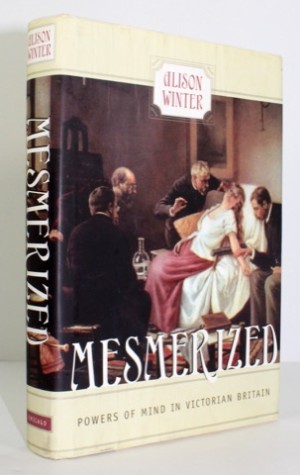
 "Mesmerized - Powers of Mind in Victorian Britainby: Winter, Alison")

 "MEX/LA: Mexican Modernisms in Los Angeles 1930-1985by: Mariana Botey, Harry Gamboa, et al.")
 "Mexican Phoenix: Our Lady of Guadalupe: Image and Tradition Across Five Centuriesby: Brading, D.A.")
 "Millionaires, Mansions, and Motor Yachts: An Era of Opulenceby: Ross MacTaggart")
 "Milongasby: Edgardo Cozarinsky /Valerie Miles (Translator), & 1 more")
 "Modern Chinese Civilization by: Legendre, Dr. A.F. with Elsie Martin Jones (Translator)")
 "Muslim Brotherhoods and Politics in Senegal by: Behrman, Lucy C.:")
 "My China - A Feast for All the Sensesby: Kwong, Kylie")
 "Narration - Four Lectures by Gertrude Steinby: Stein, Gertrude")
 "Narrow Road to the Deep North: A Journey into the Interior of Alaska by: Katherine McNamara")
 "Nature and Culture: The Art of Joel Babbby: Little, Carl")
 "Neighbors: A Forty-Year Portrait of an American Farm Communityby: Lieberman, Archie")