Hardcover. New Haven CT, Yale University Art Gallery, 1st, 2013, Book: Very Good, Dust Jacket: None, Like new in publisher's shrink-wrap. "Fifty years after Kennedy's death, this book observes the public's reaction to the president's election and assassination, featuring many photographs published here for the first time. In his travels throughout America during this period, Lee Friedlander (b. 1934) encountered these responses and photographed what he witnessed. From Washington, D.C., to Buffalo to Minneapolis to Los Angeles, Friedlander has captured a moment in American history that galvanized the nation and continues to resonate today." 48 b&w images by Friedlander.
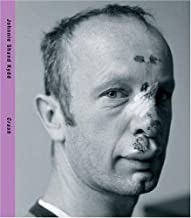
Hardcover. Bologna IT, Damiani, 1st, 2006, Book: Very Good, Dust Jacket: None, 240 pages, Foreward by Tilda Swinton. As a newly active photographer in the 1990s, Shand Kydd fell into the party and opening scene of the Young British Artists, or YBAs, and participated in that crowd's growth and success by documenting his friends, including Tracey Emin and Damien Hirst. About 200 exposures in strict black-and-white capture art-society luminaries like Gilbert and George, Sam Taylor-Wood, Nan Goldin, Richard Prince, Juergen Teller, Maurizio Cattelan and Tracey Emin. Fine copy in the original color-printed, stiff-card wrappers, no dust jacket issued.
Hardcover. Hatje Cantz, 1st, 2008-08-01, Book: Very Good, Dust Jacket: Very Good, Hardcover, pages. Like new in publisher's shrink-wrap. In the early 1950s, Berlin-born photographer Jurgen Schadeberg captured Nelson Mandela, (then a young attorney), singer Miriam Makeba and the nightlife in Sophiatown, a dynamic black neighborhood in Johannesburg. Revealing the poverty endemic to the majority of South Africa's black population became Schadeberg's chief focus. He arrived there in 1950, at the advent of apartheid, to work for Drum, the first magazine for black readers. In 1964, when Drum was banned, Schadeberg left South Africa for Europe and the United States, creating a body of portraits unique in their ability to cut across race, class and social standing. In 1994, Schadeberg created an iconic image of Nelson Mandela, by then the first black President of South Africa, standing at the window of his former prison cell on Robben Island, where he had been detained on charges of conspiracy from 1964-1982. Schadeberg, whose work has been highly influential to younger artists, now lives and works near Paris. This substantial volume collects 250 images from across his career.
Hardcover. NY, W. W. Norton & Company, 1st, 2008, Book: Very Good, Dust Jacket: Very Good, Hardcover, 320 pages. Extraordinary photographs, along with extensive captions, document the transition from a barely explored paradise to a modern nation. This stunning collection of 720 photographs, many of them drawn from family archives and scrapbooks and all carefully restored, is one of the most important visual records of Africa in the late nineteenth and early twentieth centuries ever to have been published. The early photographers captured the beauty and dangerous allure of life on this spectacular frontier: the ceremonies and traditional attire of the native people, the fantastic machinery used in construction of the Uganda Railway, the gradual development of trade on the coast and in the country's interior, the hardships of the East African Campaign during World War I, and the pioneering spirit of early European settlers and farmers. Many of the most famous names and places connected with Africa appear in these pages, including Karen Blixen's farm and Ernest Hemingway and Theodore Roosevelt on safari.
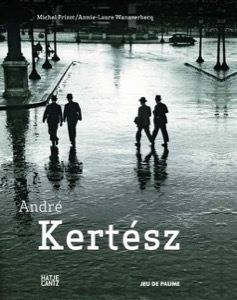
Hardcover. Paris/NY, Editions Hazan / Yale University Press, 1st, 2010, Book: Very Good, Dust Jacket: Very Good, Hardcover in a bright dust jacket. Catalogue of the exhibition 'Andre Kertesz' at Jeu de Paume, Paris (September 28, 2010-February 6, 2011). 359 pages. Profusely illustrated with black & white and color reproductions of photographs. This Hungarian photographer had a profound influence on mid 20th century artists like Brassai and H. Cartier-Bresson. A major exhibition catalogue devoted to his work in Budapest and New York. Clean copy. DOMESTIC SHIPPING ONLY.
Hardcover. NY, Abrams, 1st, 1989, Book: Very Good, Dust Jacket: Very Good, Hardcover, 264 pages, profusely illustrated with vintage photos. A great trip through time to visit the Paris of the turn of the century and see the artists and writers of the time as they entered the life of this fascinating woman, Alice Prin, better known as Kiki of Montparnasse, model to all the great artists.
Hardcover. OH, Kent State University Press, 1st, 2004, Book: Very Good, Dust Jacket: Very Good, Hardcover, 96 pages. "In 1941 Frank Kessler, a young accountant in Canton, Ohio, was drafted, assigned to an Army Signal Corps unit, and went away to photograph the war in Europe. In 1945, home again with his wife and children, he stored hundreds of those images of blood and battle in his attic. There they stayed until after his death. "Then Lee Kessler, Frank's estranged younger brother, sorted through boxes seeking to better know a brother he'd never known very well. A flier who had been shot down and held in a German POW camp, Lee saw Frank's photographs as images of a different side of war, one he never experienced. He was moved by what he saw and recognized their importance. He preserved them for all of us, carefully ordering them into albums and typing the information Frank had written on the backs of the photos. "When I saw Frank Kessler's photographs I was struck by how different they were from the movie-camera views I see on television. No public relations pictures here, intended to glorify battle and rally support. These were up-close snapshots of the dirty, damp, and disheveled men in the rifle companies and tank units. It was the war as they endured it, as they struggled through it from the beaches of France to the streets of Berlin until they finally won it."
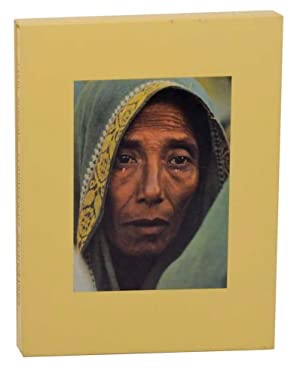
Hardcover. New York, Pantheon, 1st, 1998, Book: Very Good, Dust Jacket: Very Good, Hardcover, 120 pages, color photographs throughout. Showcases work by American photographer Robert Bergman (b. 1944), who took these photographs with "a simple 35mm camera, amateur film, no tripod, and no special lighting." The pictures are a result of months of car travel throughout the Rust Belt (Chicago, Detroit, Pittsburgh, Gary) and the East Coast, presenting "everyday people who moved him profoundly." With an introduction by Toni Morrison and an afterword by Meyer Schapiro.
Hardcover. Boston, Atlantic Little Brown, 1st US, 1983, Book: Very Good, Dust Jacket: Very Good, Hardcover, 239 pages, illustrated throughout with photos in b&w. Light shelf-wear to dust jacket. Clean, tight copy. The most photographed event in America during the 19th century. More than 10,000 images reside in public archives and private collections, depicting every aspect of what popular historian Pierre Berton has called "one of the strangest mass movements in history." For this book, Berton selected 200 photographs, some iconic, some touchingly personal, and most previously unpublished.
Hardcover. New York, powerHouse Books, 1st, 2013, Book: Very Good, Dust Jacket: Very Good, Hardcover, 168 pages color photos throughout. Benn was a National Geographic photographer for 20 years.
Hardcover. NY, Aperture, reprint, 2001, Book: Very Good, Dust Jacket: Very Good, Hardcover, 144 pages. Originally published in French by La Guilde du Livre (Lausanne, Switzerland, 1952) and here reissued by the Aperture Foundation in a first English-language edition, this a profile of life in mid-century rural France by the great American photographer Strand (1890-1976). Following World War II, Strand moved to France and documented its rural areas in photographs. These close-up, seemingly candid images of the people, the countryside, and the architectural structures contain Strand's characteristic style of realism, depth of detail, and innate sensitivity to the environment. To supplement these exquisite pictures, French poet Roy, who knew Strand personally, provides a delightfully lyrical potpourri of poems, commentary, and collages assembled from bits of small-town newspapers. The timeless spirit of the Gallic legacy captured in the photos and words will be savored by Francophiles. Strand's importance in 20th-century photography makes this a highly recommended addition for public libraries and special photography collections.
Hardcover. Paris, Hachette, 1st, 1959, Book: Very Good, Dust Jacket: None, Hardcover, 89 pages. FRENCH TEXT. A pictorial documentary on the great interior of China and it's people, color and b&w photos. Clean copy.
Hardcover. Damiani Publishing, 1st, 2006, Book: Very Good, Dust Jacket: None, Hardcover, pictorial boards, 189 pages. La Strada captures the life and drama of Italy's streets from World War II through the 1970s. Its exquisite photographs, made by some of the most deeply skilled artists of the mid-twentieth century, are imbued with the essence of Neo-Realism, the aesthetic that produced some of the most influential Italian film and literature of the same era. The American gallerist and curator Keith de Lellis's selection of more than 200 pictures, some previously unpublished, by more than 60 masters--including Mario Giacomelli, Nino Migliori, and Mario De Biasi--reveals the touching, the humorous, and the tragic in the day-to-day lives of the Italian people, liberated from the grips of Fascism. A treasure trove, and a case for the continuing recognition of this inspired group of picture-makers. Clean copy
Softcover. Daytona Beach, Southeast Museum of Photography, 1st, 1996, Book: Very Good, Dust Jacket: None, Softcover, 64 pages illustrated in color and b&w. Features the photography of Yuji Saiga, Naoya Hatakeyama, Norio Kobayashi and Toshio Yamane. Clean copy.
Hardcover. Athens GA, University of Georgia Press, 1st, 2015, Book: Very Good, Dust Jacket: Very Good, Hardcover in a bright dust jacket. 254 pages, b&w illustrations. George Alexander Grant is an unknown elder in the field of American landscape photography. Just as they did the work of his contemporaries Ansel Adams, Edward Weston, Eliot Porter, and others, millions of people viewed Grant's photographs; unlike those contemporaries, few even knew Grant's name. Landscapes for the People shares his story through his remarkable images and a compelling biography profiling patience, perseverance, dedication, and an unsurpassed love of the natural and historic places that Americans chose to preserve. A Pennsylvania native, Grant was introduced to the parks during the summer of 1922 and resolved to make parks work and photography his life. Seven years later, he received his dream job and spent the next quarter century visiting the four corners of the country to produce images in more than one hundred national parks, monuments, historic sites, battlefields, and other locations. He was there to visually document the dramatic expansion of the National Park Service during the New Deal, including the work of the Civilian Conservation Corps. Grant's images are the work of a master craftsman. His practiced eye for composition and exposure and his patience to capture subjects in their finest light are comparable to those of his more widely known contemporaries. Nearly fifty years after his death, and in concert with the 2016 centennial of the National Park Service, it is fitting that George Grant's photography be introduced to a new generation of Americans.
Hardcover. NY, Time-Life, 1st, 1972, Book: Very Good, Dust Jacket: None, Hardcover in a slipcase. Published posthumously, this volume provides an excellent survey of Larry Burrows' work for Life magazine from the late-1940s to 1971 (when he disappeared in Laos), concentrating primarily on the Vietnam War. Astonishingly powerful photojournalistic work; some of the best photographic work to emerge from the war. Photographs by Larry Burrows; introduction by Ralph Graves; reminiscences by Life editors sprinkled throughout. 160 pages; profusely illustrated with b&w and color plates; 10 x 12.5 inches. No dj issued.
Softcover. NY, Aperture, 1st, 2014, Book: Very Good, Dust Jacket: None, Softcover, 128 pages. In this book, Larry Fink--well-known for his layered pictures in social settings--explores composing photographs and improvising within a scene to create images with both feeling and meaning. Through words and photographs, he reveals insight into his own practice and discusses a wide range of creative issues, from connecting with the subject in front of the lens to shaping a vision that is authentic. Photographer Lisa Kereszi, a student of Larry Fink, provides the introduction. Clean, bright copy.
Softcover. NY, Phaidon Press, 1st, 2005, Book: Very Good, Dust Jacket: None, Softcover, 128 pages, 55 photos. Born in 1941, Larry Fink was a teenager in the 1950s in an America on the cusp of radical social change. Growing up on Long Island in New York, Larry Fink was disinterested in the consumer-driven culture of 1950s' America. A disaffected teenager, his parents transferred him to art school where his career as a photographer began to flourish. His parents were supportive of his interest in the arts, and Fink would later drop out of college to join a circle of artists living in Greenwich Village. Fink spent the 1960s watching and learning from the prominent photographers of the time: Henri Cartier- Bresson, Robert Frank, W. Eugene Smith, and in many ways, his photographic aesthetic and rebellious spirit encapsulate the dramatic lose of innocence that the US underwent after the assassination of John F. Kennedy in 1963. photographic mentor.
Hardcover. New Haver CT, Yale University , 1st, 2015, Book: Very Good, Dust Jacket: None, Hardcover, 80 pages, 59 plates in duotone, large format. Friedlander ventures into new territory, turning his eye to the rarefied world of fashion and revealing precisely what is commonplace about it: behind the glamorous spectacle of the runway are many people hard at work. The photographs, commissioned by the 'New York Times Magazine,' were taken in 2006 during New York Fashion Week, when the artist spent time backstage at the Marc Jacobs, Donna Karan, Calvin Klein, Zac Posen, Oscar de la Renta, and Proenza Schouler shows. The resulting images, many of which are published here for the first time, depict a flurry of toiling stylists, dressers, makeup artists, photographers, and models--all of them preparing, but not quite prepared, for an image to be taken.
Softcover. New York , Thames & Hudson, 1st, 2005, Book: Very Good, Dust Jacket: None, Softcover, 176 pages, b&w photographs throughout. In 1929, Lee Miller, already a legendary fashion model, left the United States to study photography in Paris. Here she became the disciple and lover of Man Ray, and she was soon taking on both portrait and fashion assignments for Vogue and running her own studio. The Second World War saw her as Vogue's war correspondent: she covered the siege of Saint Malo, the liberation of Paris, and the entry of the U.S. Army into the Dachau concentration camp. Her later years were spent in London and Sussex with her husband, the painter and writer Roland Penrose. During her extraordinary life, Miller came into contact with an astonishing range of painters, sculptors, actors, writers, musicians, fashion designers, and socialites. Many became her friends and the subjects of her penetrating portraits. The finest of these photographs are collected together here, along with a selection of portraits of Miller herself, taken by other photographers. The images include not only Miller's highly perceptive and sympathetic studies of Pablo Picasso, Igor Stravinsky, Marlene Dietrich, Fred Astaire, and others but also her pictures of unsung individuals engaged in war work and powerful photographs of victims and perpetrators of Nazi oppression. 157 duotone illustrations.
Softcover. New York , Thames & Hudson, 1st, 2005, Book: Very Good, Dust Jacket: None, Softcover, 176 pages, b&w photographs throughout. In 1929, Lee Miller, already a legendary fashion model, left the United States to study photography in Paris. Here she became the disciple and lover of Man Ray, and she was soon taking on both portrait and fashion assignments for Vogue and running her own studio. The Second World War saw her as Vogue's war correspondent: she covered the siege of Saint Malo, the liberation of Paris, and the entry of the U.S. Army into the Dachau concentration camp. Her later years were spent in London and Sussex with her husband, the painter and writer Roland Penrose. During her extraordinary life, Miller came into contact with an astonishing range of painters, sculptors, actors, writers, musicians, fashion designers, and socialites. Many became her friends and the subjects of her penetrating portraits. The finest of these photographs are collected together here, along with a selection of portraits of Miller herself, taken by other photographers. The images include not only Miller's highly perceptive and sympathetic studies of Pablo Picasso, Igor Stravinsky, Marlene Dietrich, Fred Astaire, and others but also her pictures of unsung individuals engaged in war work and powerful photographs of victims and perpetrators of Nazi oppression. 157 duotone illustrations.
Hardcover. NY, Aperture, 1st, 1985, Book: Very Good, Dust Jacket: Very Good, Hardcover in a bright dust jacket, 240 pages. An illustrated biography of Smith by Ben Maddow. Includes a wide range of Smith's images and various subject matter and includes some of his most iconic images. A clean and tight very good copy in gray cloth boards. The definitive volume on W. Eugene Smith's life and work, containing his major photo-essays, the portrait work, and spanning his career from his days aboard an aircraft carrier, through the breadth of Pittsburgh, to the human suffering explicit in his last great essay from Minamata. Clean copy. DOMESTIC SHIPPING ONLY.
Hardcover. Gottingen GR, Steidl/Howard Greenberg Library, 1st, 2018, Book: Very Good, Dust Jacket: None, Hardcover, 143 pages. Tan cloth with pictorial paste-down. In 1936, science-teacher turned photographer Lewis Hine was commissioned by the National Research Project, a division of the Works Progress Administration, to produce a visual document of the industries that the US government hoped would provide the jobs that would lift the country out of the Great Depression. Hine, already well-established as a chronicler of social conditions of his day, produced more than 700 photographs for this project, the last major work of his career.By emphasizing the inherent tension between machinery and workers, Hine imbued these compelling images with his characteristic rigor and aesthetic appeal. These photographs, and their implied message, are particularly relevant today given high unemployment rates and radical shifts in the role of the worker in the rapidly changing world economy. Included in this book is an essay by the eminent photographic historian, Judith Mara Gutman, in which she discusses the project and the photographs in the context of the economic conditions of the time and the artistic and technological innovations of the era.
NY, Walker, 1st , 1967, Book: Very Good, Dust Jacket: Very Good, Hardcover. Black & white photos by Hine. 156 pages. Related material laid-in: exhibition card and newspaper article by author on Hine. Previous owner's stamp front fly leaf, old ink price on flap. Light edgewear, soil to dust jacket otherwise VG/VG

 "JFK: A Photographic Memoirby: Friedlander, Lee")
 "Johnnie Shand Kydd: Crashby: Kydd, Johnnie (Photographer)")
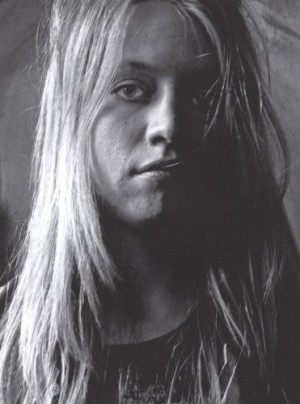
 "Jurgen Schadebergby: Schadeberg, Jurgen")
 "Kenya: A Country in the Making, 1880-1940by: Pavitt, Nigel")
 "Kertesz by: Kertesz, Andre; Michel Frizot; Annie-Laure Wanaverbecq")
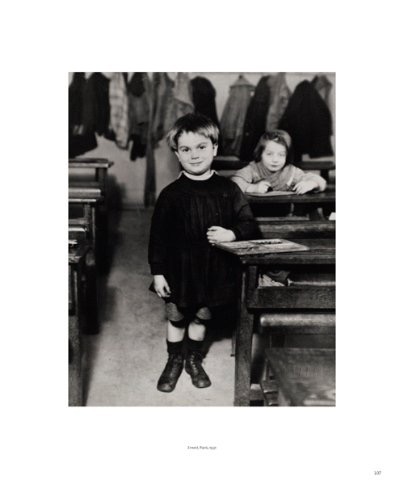
 "Kiki's Paris: Artists and Lovers 1900-1930 by: Kluver, Billy and Julie Martin")
 "Kilroy Was There: A GI's War in Photographsby: Tony Hillerman and Frank Kessler")
 "Kind of Rapture, A by: Robert Bergman, Morrison, Toni (Introduction)")
 "Klondike Quest: A Photographic Essay, 1897-1899by: Berton, Pierre")
 "Kodachrome Memory: American Pictures 1972-1990by: Benn, Nathan (Photographer), and Farber, Paul M (Contributions by), and Buckley, Richard, Dr., MD (Foreword by)")
 "La France de Profileby: Paul Strand and Claude Roy")
 "La Muraille de Chineby: Leonardo Bonzi")
 "La Strada: Italian Street Photographyby: Vicki Goldberg / Keith de Lellis /others")
 "Land of Paradoxby: Noriko Fuku (curator) Andy Grundberg (essay)")
 "Landscapes for the People: George Alexander Grant, First Chief Photographer of the National Park Serviceby: Ren Davis (Author), Helen Davis (Author), Timothy Davis (F")
 "Larry Burrows: Compassionate Photographerby: Burrows, Larry")

 "Larry Fink on Composition and Improvisation: The Photography Workshop Series by: Larry Fink")
 "Larry Finkby: Laurie Dahlberg")
 "Lee Friedlander - Dressing Up: Fashion Week NYCby: Lee Friedlander, Kathy Ryan")
 "Lee Miller: Portraits from a Lifeby: Calvocoressi, Richard")
 "Lee Miller: Portraits from a Lifeby: Calvocoressi, Richard")
 "Let Truth Be the Prejudice: W. Eugene Smith: His Life and Photographs by: Ben Maddow, William Eugene Smith")
 "Lewis Hine: When Innovation Was King: The WPA National Research Project Photographs 1936-37 by: Judith Mara Gutman/Lewis Hine")
 "Lewis W. HIne and the American Social Conscienceby: Gutman, Judith Mara")