Hardcover. Zurich, Scalo, 1st, 1996, Book: Very Good, Dust Jacket: Very Good, Hardcover in a lightly worn dust jacket, 100 pages. 54 color photograph by Richard Billingham, many double-page. Edited by Michael Collins and Julian Germain. This is Billingham's best-known book, "a British family-album so cool that I can see and hear what goes on between the frames" (Robert Frank). The photographer's portrait of his alcoholic father. Clean copy.
Hardcover. Greenwich CT, New York Graphic Society, 1st, 1974, Book: Very Good, Dust Jacket: Very Good, Hardcover, 128 pages, b&w illustrations throughout. Clean, in a bright, price clipped dust jacket. "Reality Recorded takes a look at early documentary photography and the extraordinary individuals who recorded with calotype and wetplate camera those things they felt to be important. Great changes took place in the world while the camera was in its infancy. The early photographers had open eyes and few prejudices; they were involved with the problems, advancements, and events of their times."
Hardcover. Lannoo Publishers , 1st, 2010-06-16, Book: Very Good, Dust Jacket: None, Like new in publishers shrink-wrap. 144 pages, color photography of the USSR. Text in Dutch and English.
Softcover. New London NH, Sunapee Editions, 1st, 1998, Book: Very Good, Dust Jacket: None, Softcover, oblong format. Dozens of compositions comprise this exquisite collection of black and white photographs that evoke a Manhattan that many may never see or notice: Times Square during the blizzard of 1996; pigeons in flight at 9th Street and Avenue A; an unmoored boat in a wintry Central Park; jump seats in a Checker Cab. John Rosenthal doesn't ignore the people (or the dogs) of Manhattan, however, and also captures the diversity that is New York; Hare Krishnas singing, as an unimpressed (annoyed?) man in a checked jacket walks by them; a man in beret and raincoat and an albino boxer looking at some off-camera sight at Tompkins Square; a shopkeeper and his dog on East 9th. Clean copy.
Hardcover. Kampen GR, teNeues, 1st, 2014, Book: Very Good, Dust Jacket: Very Good, Hardcover, large format, 304 pages, cloth over boards, stamped spine and cover. 300 duotone photographs by Erwitt. Photographic master Elliott Erwitt has created many noteworthy portraits of womankind over the years. In Regarding Women he presents us with an exceptional collection composed (almost) exclusively of black-and-white female portraits. This volume is Erwitt's evocative personal tribute to female strength, intelligence, and beauty. The archival material spans several generations, with many images not previously published or rarely seen before. Conveying respect, admiration, and sometimes awe, these photographs portray all the complex elements that make up the feminine nature, whether formidable and tenacious, or occasionally capricious and coy. Through capturing their many varied facets the photographer shares his insights into how all kinds of women make their way into -- not to mention their mark on -- the world. In these pages, readers will find romance and glamor, touches of sensuality, as well as much affection. Of course, there are also those disarming flashes of candid everyday humor that are so quintessentially Erwitt. Text in English, German, French, Spanish and Italian.
Hardcover. NY, Random House, 1st, 1997, Book: Very Good, Dust Jacket: Very Good, Hardcover in a lightly worn, price-clipped dust jacket, 336 pages. Illustrated with black and white photos from the war in Vietnam and Indochina from the 1950s to 1975. Listing 135 photographers ( men & women ) from all sides of this conflict are recorded as missing or having been killed. A very emotional book and one of the better memorials to the war correspondents who died and who are still missing.
Hardcover. NY, Thames & Hudson, 1st, 2006, Book: Very Good, Dust Jacket: Very Good, Hardcover, 249 pages. Marking the fiftieth anniversary of the October 1956 Hungarian revolt against Soviet domination after World War II, this imposing volume contains powerful black-and-white photographs taken during the years preceding as well as the outbreak and crushing of the uprising by a German member of the international photojournalist cooperative Magnum. Introduced by Lessing's recollections and Hungarian French historian Francois Fejto's precis of the momentous events, the pictures appear in three chapters, "Communist Hungary," "The Revolution," and "The Failure." Hungarian novelist George Konrad's intense impressions of the time, during which he carried a rifle as a revolutionary young intellectual, follow the first chapter, and French political scientist Nicolas Bauquet's assessment of the revolt's impact on Western Europe's Communist parties, the USSR, and subsequent European history follows the third. Views of the cemetery in which the uprising's martyrs are now buried conclude the book elegiacally, and brief last words by Lessing and the director of Hungary's Institute 56 indicate who may forget what happened and why the rest of us should always remember. An extraordinary document.
Hardcover. NY, Mockingbird & Maiden Lane Press, 1st, 1999, Book: Very Good, Dust Jacket: Very Good, Hardcover in a bright dust jacket, pages. Terrific color images of the city streets of Manhattan. Clean copy.
Softcover. Austin, University of Texas, 1st, 1979, Book: Very Good, Dust Jacket: None, Softcover, 176 pages, B&W photos by Winningham. Text by Al Reinert. Commentary by Don Meredith. Paperback.
Hardcover. Gent : Snoeck, 1st, 2010, Book: Very Good, Dust Jacket: Very Good, Hardcover, 176 pages. "Robert Capa, A Look Ahead" traces the extraordinary career of the famous war reporter through a wide range of duotone photos, many of which have remained unpublished. It also shows how Robert Capa unleashed a revolution in the press world as co-founder of the agency Magnum. Father of author's rights in photography, witness to the great events of his time, he never sought sensation but rather to convey his vision of the world. Capa's life, which was filled with exceptional encounters and intense moments, ended tragically when he was just forty years old. Edited and composed in close collaboration with Magnum Photos, this book is a reflection on the role of photojournalism in the media, both yesterday and today. Robert Capa was a Hungarian war photographer, photo journalist and also the companion and professional partner of photographer Gerda Taro.
Hardcover. NY, Aperture, 1st, 2005, Book: Very Good, Dust Jacket: Very Good, Hardcover, 192 pages. Robert Capa: Photographs is a major retrospective of one of the century's greatest photographers. Drawing upon hundreds of previously unseen images, this collection reveals Capa as one of the great poets of the camera. In these photographs, we see the world through the eyes of a driven humanist who was also a documentarian of the highest caliber. While previous volumes on Capa have focused on his role as a war photographer, Robert Capa: Photographs shows us the remarkable range of his work: the sufferings as well as the tenderness, humor, and wonder of his subjects. The extraordinary book includes poignant comments by Capa's close friend Henri Cartier-Bresson and by Cornell Capa (Robert's younger brother and the Founding Director of the International Center of Photography), as well as a historical essay by Robert Capa biographer Richard Whelan. The dramatic collection of images in Robert Capa: Photographs shows that he captured-through the events of history-the very heart of humanity.
Hardcover. NY, Aperture, 1st, 2005, Book: Very Good, Dust Jacket: Very Good, Hardcover, 192 pages. Robert Capa: Photographs is a major retrospective of one of the century's greatest photographers. Drawing upon hundreds of previously unseen images, this collection reveals Capa as one of the great poets of the camera. In these photographs, we see the world through the eyes of a driven humanist who was also a documentarian of the highest caliber. While previous volumes on Capa have focused on his role as a war photographer, Robert Capa: Photographs shows us the remarkable range of his work: the sufferings as well as the tenderness, humor, and wonder of his subjects. The extraordinary book includes poignant comments by Capa's close friend Henri Cartier-Bresson and by Cornell Capa (Robert's younger brother and the Founding Director of the International Center of Photography), as well as a historical essay by Robert Capa biographer Richard Whelan. The dramatic collection of images in Robert Capa: Photographs shows that he captured-through the events of history-the very heart of humanity.
Hardcover. London/NY, Merrell, 1st, 2004, Book: Very Good, Dust Jacket: Very Good, Hardcover, 208 pages. A stunning album of lyrical and nostalgic photographs by the award-winning master of mood Robert Farber, whose previous book, Natural Beauty: Farber Nudes, was an international bestseller. Photographs reflect the rich diversity of the life and landscape of America, from rural Montana to the Manhattan skyline at dawn; from a New Mexico cowboy to the abandoned lobby of a small-town mainstreet hotel; from an old-fashioned boxing ring to an old De Soto automobile in Maine ? all in Farber?s trademark painterly style. Special section offers unique insights into Farber?s working methods and techniques, with guidelines on how to achieve the ?Farber effect?.
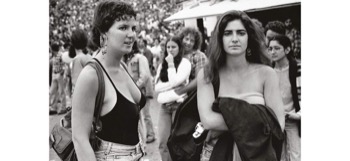
Hardcover. Bologna IT, Damiani , 1st, 2015, Book: Very Good, Dust Jacket: None, Hardcover, pictorial boards, 128 pages. In 1978 two of Joseph Szabo's high school students invited him to join them at a Rolling Stones concert at JFK Stadium in Philadelphia. Sensing a promising photo opportunity, Szabo agreed, packing three 35mm cameras and plenty of black-and-white film. Some 90,000 Rolling Stones fans converged on the stadium for the concert, where Szabo captured them drinking, kissing, smoking, dancing and hanging out. Their young subjects transported by the music, the drugs, the alcohol and the community, Szabo's Rolling Stones Fans photographs show unguarded moments of absorption and abandon in the sublimity of the rock and roll gig. Still in publisher's shrinkwrap.
Hardcover. Berkeley CA, University of California Press, 1st, 1999, Book: Very Good, Dust Jacket: Very Good, Hardcover, 156 pages. Between 1935 and 1938 the celebrated photographer Roman Vishniac explored the cities and villages of Eastern Europe, capturing life in the Jewish shtetlekh of Poland, Romania, Russia, and Hungary, communities that even then seemed threatened-not by destruction and extermination, which no one foresaw, but by change. Using a hidden camera and under difficult circumstances, Vishniac was able to take over sixteen thousand photographs; most were left with his father in a village in France for the duration of the war. With the publication of Children of a Vanished World, seventy of those photographs are available, thirty-six for the first time. The book is devoted to a subject Vishniac especially loved, and one whose mystery and spontaneity he captured with particular poignancy: children.
Hardcover. NY, Grossman Publishers, 1st, 1974, Book: Very Good, Dust Jacket: Very Good, Hardcover, 96 pages. Frontispiece of Vishniac. Illustrated with color and b/w reproductions of photographs by Vishniac of microscopic life and Eastern European Jewry prior to World War II. Clean copy in a bright dust jacket.
Hardcover. NY, powerHouse, 1st, 2001, Book: Very Good, Dust Jacket: Very Good, Hardcover, 128 pages. Acclaimed photographer Larry Fink's behind-the-scenes photographs from the fashion shows in Milan, New York, and Paris, Fink's distinctive take of the perversely unusual world of fashion teases, baits, and whets our morbid fascination with its glamour with humor and style like no other photographer possibly could. B&w photos throughout.
Softcover. Dobbs Ferry NY, Morgan & Morgan, 1978, Book: Very Good, Dust Jacket: None, Softcover, oblong format, 207 pages. Introduction by Robert Coles. Cover laminate is wrinkled otherwise clean, very good. "Many of Russell Lee's images are as familiar as a well-loved folk song, particularly those depicting the life of rural and small-town America during the Great Depression, however, the man behind them has largely remained in the shadows. This volume is the first book-length retrospective of Russell Lee's life and work as a documentary photographer of rare acuity and sensitivity."
Softcover. NY, Morgan & Morgan, Inc., 1st, 1978, Book: Good, Dust Jacket: None, 206 pages, illustrated throughout in b&w. Faint foxing to edges. Light shelf-wear and creasing to covers.
Hardcover. NY, Aperture, 1st, 1991, Book: Very Good, Dust Jacket: Very Good, Hardcover in a bright dust jacket. An acclaimed photographer's images and the words of Russia's foremost writers combine in an intimate record of the contemporary Russian experience: an intractable culture in the throes of irrevocable change. 30 color and 70 black-and-white photographs. This handsome photo album with Morath's own foreword and captions depicts a world to which many Russians in the grip of post-Soviet nostalgia long to return. Morath's Russia is devoid of Soviet excresence: no ugly concrete apartment blocks, Stalinist skyscrapers, or exhortative banners appear. Landscapes and street scenes are poetic and largely deserted. Sidetrips to Armenia, Georgia, Kyrgyzstan, Lithuania, and Uzbekistan are subsumed under "Russian culture." The people shown are mainly artists and intellectuals, and portraits of embattled dissident writers (Nadezhda Mandelstam and Joseph Brodsky) testify to the moral support Morath and her husband Arthur Miller offered them in the 1960s. The album includes fond letters from Mandelstam and poet Andrei Voznesensky, as well as Olga Andreyev Carlisle's reminiscence of her 1967 trip to the Soviet Union with Morath. Clean copy.
Hardcover. Berkeley CA, University of California Press, 1st, 2004, Book: Very Good, Dust Jacket: Very Good, Hardcover, 152 pages. n 1984 Sebastiao Salgado began what would be a fifteen-month project of photographing the drought-stricken Sahel region of Africa in the countries of Chad, Ethiopia, Mali, and Sudan, where approximately one million people died from extreme malnutrition and related causes. Working with the humanitarian organization Doctors Without Borders, Salgado documented the enormous suffering and the great dignity of the refugees. This early work became a template for his future photographic projects about other afflicted people around the world. Since then, Salgado has again and again sought to give visual voice to those millions of human beings who, because of military conflict, poverty, famine, overpopulation, pestilence, environmental degradation, and other forms of catastrophe, teeter on the edge of survival. Beautifully produced, with thoughtful supporting narratives by Orville Schell, Fred Ritchin, and Eduardo Galeano, this first U.S. edition brings some of Salgado's earliest and most important work to an American audience for the first time. Twenty years after the photographs were taken, Sahel: The End of the Road is still painfully relevant.
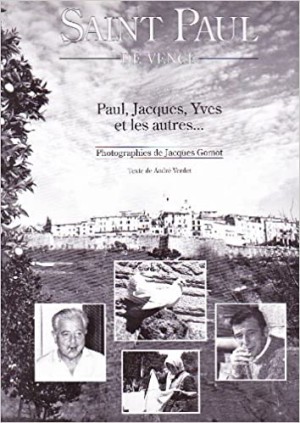
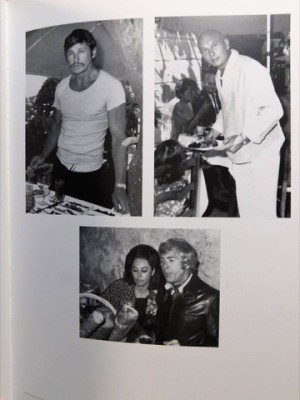
Hardcover. Editions Dromadaire, 1st, 1992, Book: Very Good, Dust Jacket: Very Good, Hardcover in a bright dust jacket, 140 pages with b&w photos. Gomot was a local photographer in the ancient and picturesque French village of Saint Paul. The town became a favored vacation spot for artists, movie personalities and other celebrities in the 1950s and 60s. Many French stars like Simone Signoret, Jean BelMondo, as well as other film stars like Sophia Loren, David Niven, Kirk Douglas and Paul Newman are pictured drinking, eating and dancing at local gathering spots.Text in French and English. Clean copy. Limited to 3000 copies.
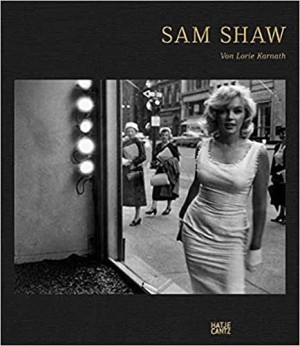
Hardcover. 1st, 2010, Book: Very Good, Dust Jacket: None, Hardcover with cover pastedown, gilt lettering. The amiably spontaneous pictures taken by Sam Shaw (1912-1999) are well known: the native and life-long New Yorker shot countless cover photographs for Life and Look in the fifties and sixties, and later also took the still images for the films he produced himself. Shaw and Marilyn Monroe were friends, and he captured her unique aura in countless unpretentious portraits. During the filming of The Seven Year Itch, he staged his probably best known picture with her: Marilyn standing over a subway grate, a waft of air blowing the skirt of her white dress above her knees. Sam Shaw also portrayed almost every major Hollywood star of his day, consistently capturing the moment in his quest for truthfulness, with enthusiasm and from a new perspective, just as if he were selecting the camera angle for a film sequence. The researcher and author Lorie Karnath, the book's editor, enhances the publication with very personal memories of her long-time friend.

 "Ray's a Laughby: Billingham, Richard")
 "Reality Recorded: Early Documentary Photography by: Buckland, Gail")
 "Red Journeyby: Hannes, Nick")
 "Regarding Manhattan by: Rosenthal, John")
 "Regarding Womenby: Erwitt, Elliott")
![Requiem: By the Photographers Who Died in Vietnam and Indochina by: Faas, Horst [Editor]; Page, Tim [Editor];](javascript:largeIMTop('https://www.browsingisarousing.com/shop/images/Requiem-By-the-Photographers-Who-Died-in-Vietnam-and-Indochina_by_Faas-Horst-Editor-Page-Tim-Editor398312-451715.jpg','https://www.browsingisarousing.com/shop/images/Requiem-By-the-Photographers-Who-Died-in-Vietnam-and-Indochina_by_Faas-Horst-Editor-Page-Tim-Editor398312-451715.jpg',0,'398312',0,'') "Requiem: By the Photographers Who Died in Vietnam and Indochina by: Faas, Horst [Editor]; Page, Tim [Editor];")
 "Revolution in Hungary: The 1956 Budapest Uprisingby: Erich Lessing")
 "Rhythm & Colors of Manhattanby: Sandra Cecchi / Rosario Bonavoglia")
 "Rites of Fall - High School Football in Texas by: Winningham, Geoff")
 "Robert Capa: A Look Aheadby: Capa, Robert")
 "Robert Capa: Photographs (Aperture Monograph)by: Richard Whelan, Robert Capa , et al.")
 "Robert Capa: Photographs (Aperture Monograph)by: Richard Whelan, Robert Capa , et al.")
 "Robert Farber: American Moodby: Robert Farber and Lee Sheridan")
 "Rolling Stones Fans by: Joseph Szabo")

 "Roman Vishniac: Children of a Vanished Worldby: Mara Vishniac Kohn/Roman Vishniac")
 "Roman Vishniacby: Vishniac, Roman")
 "Runway : Photographs by Larry Finkby: Guy Trebay, Larry Fink")
 "Russell Lee: Photographerby: Lee, Russell; Hurley, F. Jack; Coles, Robert")
 "Russell Lee: Photographerby: Lee, Russell")
 "Russian Journal 1965-1990by: Inge Morath /Yevgeny Yevtushenko (Intro.)")
 "Sahel: The End of the Roadby: Sebastiao Salgado , Orville Schell, et al.")
 "Saint Paul de Vence: Paul, Jacques, Yves et les autresby: Gomot, Jacques (photog.) Verdet, Andr")
 "Sam Shawby: Lorie Karnath/Sam Shaw")
 "San Francisco Observedby: Silverman, Ruth")