Softcover. Australia, National Gallery of Australia, 1st, 2008, Book: Very Good, Dust Jacket: None, Softcover, 88 pages. Extensive b&w photography throughout. Includes extensive notes and documentation accompanying photographs. Clean, unmarked copy with only minor wear to wrappers.
Hardcover. Bulfinch, 1st, 2006, Book: Very Good, Dust Jacket: Very Good, Hardcover, 256 pages. Haynes provides an insider's look at the remarkable photographs and stories of UPI's news photographers, providing a unique window on the second half of the 20th century. Clean copy.
Softcover. NY, The Museum of Modern Art, 1st, 2002, Book: Very Good, Dust Jacket: None, Softcover, 192 pages. Selected from 17 million prints preserved in the archives of The New York Times, the spectacular photographs in this book provide a spellbinding sample from the rich archive that is the twentieth century, as seen through the eyes of a great newspaper. Revealed is the extraordinary and omnivorous breadth of photography's gaze: vivid pictures of both World Wars; of presidents, mayors, dictators and celebrities; of Beatles fans and Halley's comet; of victims and perpetrators, riots and disasters; of Bill Bradley on the court and Willie Mays sliding into home--and a great many more. Underlying them all is the gripping immediacy that makes news photography not only an indispensable presence in the daily paper but a vital part of history. This book includes an illustrated chronology that traces the evolution of the technology and business of news photography, with special attention to the role of The New York Times and to the recent rise of digital technologies in newspaper production. Originally published to accompany an exhibition at The Museum of Modern Art, New York.
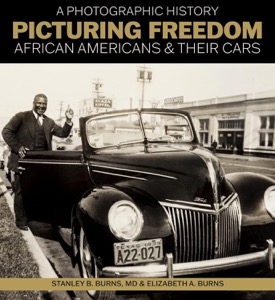
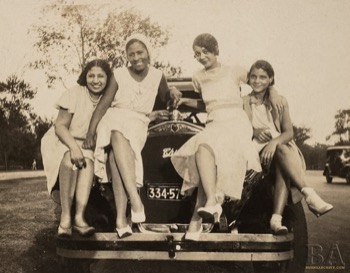
Softcover. NY, Burns Archive Press, 1st, 2022, Book: Very Good, Dust Jacket: None, Softcover, 272 pages. SIGNED BY STANLEY BURNS on title page. Picturing Freedom chronicles and celebrates the photographic history of African Americans and their cars by focusing on personal images of the pride and joy of car ownership (1900-1980+). Owning a car was a significant life-changing achievement. It offered special freedoms--the freedom to travel, the freedom to work further from home, the freedom to visit family and friends, the freedom to avoid Jim Crow laws, and the freedom to migrate. The car was unequivocal evidence of Black success and an important symbol of status in a country that had long fought their advancement in every area. Car ownership was purposely and proudly photographed. All of the photographs were taken in Black communities by a family member or a friend and reveal how African Americans represented themselves. This 2022 IPPY award-winning compilation of over 450 unique photographs is an inspiring visual narrative of American life. Clean, bright copy.
Hardcover. Washington DC, Smithsonian, 1st, 2003, Book: Very Good, Dust Jacket: Very Good, Hardcover, 260 pages. Working for the government's Farm Security Administration in the 1930s, photographers set out across the country to capture the human face of the Depression. Walker Evans' portraits of sharecroppers and Dorothea Lange's images of migrant families today stand as the most popular images from the FSA's project. Yet, in their own time, the pictures functioned as urgent, powerful reminders that one-third of the nation was in a real crisis. Focusing on these and other well-known FSA photographs, Finnegan examines how popular magazines constructed complex and often contradictory messages about poverty. Picturing Poverty also explores a moment in American history when visual images took center stage as the nation struggled with economic, political, and social strife. By striving to understand the original context of the photographs, Finnegan shines new light on the meanings of poverty, the Depression, and the various roles of the media. At once a persuasive analysis of FSA images and a balanced commentary on the role of the media, Picturing Poverty is above all a look into the difficult issue of how the mass media presents social issues to Americans.
Hardcover. NY, Harry N Abrams, 1st, 1995, Book: Very Good, Dust Jacket: Very Good, Hardcover in a bright dust jacket, 232 pages. The first photographic record of the Manhattan Project--the U.S. Government-sponsored effort to build an atomic bomb. With an introduction by Richard Rhodes. The granddaughter of Enrico Fermi, a key participant in the Manhattan Project, presents a pictorial survey of the making of the atomic bomb, containing many never-before-published photographs and snapshots of the many aspects of the Project.Illustrated with over 100 B&W photographs, some color. Clean copy. DOMESTIC SHIPPING ONLY.
Hardcover. London, Arcperiplus Publishing, 1st UK, 2002, Book: Very Good, Dust Jacket: Very Good, Hardcover in a bright dust jacket. Two major events in the Buddhist world occurred in 2002. In January, the small village of Bodhgaya in Bihar, India, was chosen by the Dalai Lama as the site for the highly important Kalachakra Initiation ceremony. Some half-million pilgrims made their way there by any means possible. In May, at the holy Mount Kailash in Tibet, the celebration of the Buddha's birth and death was particularly auspicious in this Year of the Horse, and the usual trickle of pilgrims swelled to tens of thousands. Photographer Lena Herzog, wife of film director Werner Herzog, presents this evocative album of 146 color images of the holy and the penitent.
Hardcover. New York, Aperture , 1st, 2001, Book: Very Good , Dust Jacket: Very Good, Hardcover, 144 pages, B&W photos. In original shrink wrap. For almost sixty years Pirkle Jones has chronicled the people, politics, and landscape of Northern California-a "promised land" which has long held sway in the American cultural imagination. Within the confines of that locale, he has unearthed a universe of beauty and meaning, photographing everything from flea-market finds to some of the most important American social movements of the second half of the twentieth century. Operating primarily within a social-documentary framework, Jones has made images characterized by sensitivity and acute observation. With uncanny prescience, a sense of urgency, and a sympathetic eye, Jones often plays the dual roles of artist and witness, combining portraiture, landscapes, and architectural photographs to create thorough documents of social structure and upheaval. Among the photo-essays included in Pirkle Jones: California Photographs are a compassionate and controversial piece on the Black Panther Party in the San Francisco Bay Area, Jones's portraits of the Sausalito houseboat community known as Gate 5, and a notable 1956 photo-essay done in collaboration with Dorothea Lange photographing the destruction and dislocation of the Berryessa Valley before it was flooded on completion of the Monticello Dam. Produced as a single issue of Aperture magazine in 1960 under the name "Death of a Valley", this essay remains a powerful testament to the price of progress. The book also includes Jones's work from the last few decades, in which he shifted his focus to an extended series of elegant, contemplative landscapes. A biographical essay by curator Tim B. Wride frames Jones and his work within the context of photographic history, the people he collaborated with-including Ansel Adams as well as Lange-and the great scope of Californian life.
Softcover. New York, Princeton Architectural Press, 1st, 2005, Book: Very Good, Dust Jacket: None, 160 pages, color plates throughout. The blue plate special, meatloaf, a cheeseburger deluxe, a milkshake in a frosty mixing canister, a hot cup of joe--all served by a friendly face in a well-lighted aluminum tube. Such are the special joys of the American diner. And it was just these pleasures that photographer Stephan Schacher set out to document when he left New York on a journey through North America that would test both his stomach and his resolve. Schacher's mission: to feed his hunger only at diners, and to photograph both his meal and his server every time. The result is a unique and deeply human story--quirky and nostalgic and generous--of one man's quest to discover North America's diner culture and his own place in it. Traveling from a Jersey diner to the Canadian Rockies to a shoreside clambake shack on the Pacific Ocean, Schacher's culinary adventure is documented here with a wealth of visual materials. The author's arresting photographs of succulent steaks and greasy fries, of smiling waitresses in uniforms or jeans, and brightly colored plastic dishes and table mats are supplemented by maps showing the photographer's route across the continent.
Softcover. London, Cornerhouse, 1st wraps, 1984, Book: Very Good, Dust Jacket: None, Softcover, 88 pages. Color photos of England in the 1980s by a Magnum photographer.
Hardcover. NP, University of Alaska Press, 1st, 2009, Book: Very Good, Dust Jacket: Very Good, Hardcover, 204 pages, 192 b&w plates, map. This book is a window to the daily life and the environment of the Tikigaq, the Inupiaq people of Point Hope, Alaska, as seen in photographs taken by young Norwegian artist Berit Arnestad Foote from 1959 to 1962. In Berit Foote's days in Point Hope fifty years ago, the ice covered the sea in October and did not clear until July. In recent years, however, the Arctic ice has been changing rapidly, and so are the lives of people in Point Hope and across the North. This book--a call to action as well as a work of art--provides powerful documentation of how profoundly the entire fabric of a community's life and culture is affected by the ice that surrounds it.
Hardcover. Washington D.C., Smithsonian Institution Press , reprint, Book: Very Good, Dust Jacket: Very Good, 171 pages. Hardcover with dust jacket. Extensive b&w photographs throughout. Silver gilt titles on spine. Clean, unmarked copy with only minor wear to dust jacket. In September 1939, the German invasion of Poland propelled the world into war. By the spring of 1946, Poland was beginning to recover from five years of cataclysmic destruction. Liberated from the occupation of the Third Reich, the nation celebrated a peace already overshadowed by the emerging Cold War.John Vachon was in Poland to witness this transformation of almost mythic proportions. Assigned to cover United Nations relief efforts, this American photographer documented in images and letters a nation at the crossroads of the postwar East and West. Taken with a keen yet sympathetic eye, Vachon's photographs, most of them never before published, reveal the destitution and unfounded optimism of Poles, many of them returning in boxcars from German labor camps and Siberian exile, ready to reclaim their burned-out cities and farms left fallow by war. Vachon's letters home to his wife provide a rare context for the images. He writes of the luxuries enjoyed by the foreign corps amid Warsaw's rubble, the equal measures of hospitality and anti-Semitism among ordinary Poles, and of the anti-Soviet sentiment in the countryside, where "they love Russian songs, but always apologize when they sing one." In one account of a village fire, he conveys the often conflicting emotions of the photojournalist, documenting scenes of suffering he feels powerless to assuage.
Hardcover. San Francisco, Chronicle Books, 1st, 1997, Book: Very Good, Dust Jacket: None, Hardcover, 132 pages. Illustrated with numerous b/w photos. A fascinating look at the use of photographs as a tool for gathering and preserving evidence in crime investigations. This book accompanied an exhibition at the San Francisco Museum of Modern Art on the subject. No dust jacket issued.
Hardcover. Gottingen GR, Steidl, 1st, 2006, Book: Very Good, Dust Jacket: Very Good, Non-paginated. Black & white photographs by Rosalind Solomon. Minor wear. Clean, tight copy .Rosalind Solomon made her first pictures in Poland in 1988 during a time of political change, and returned there in 2003, a time of increasing violence and inhumanity in the world. All of the images are of individuals, their relationships and environments and are observations and commentaries on Poland itself, as well as on the rest of the world.
Hardcover. Ithaca NY, Cornell University Press, 1st, 1993, Book: Very Good, Dust Jacket: Very Good, Hardcover in a bright dust jacket. 318 pages. Illustrated with black & white photographs. Documentary interviews by Michael Frisch. Clean, bright copy.
Softcover. San Francisco, Mercury House, 1st, 1987, Book: Very Good, Dust Jacket: None, Softcover, 112 pages, b&w photographs. Sanford Roth (d. 1962) quit an executive position in 1946 to pursue photography in Paris. His wife's anecdotal essay recalls their experiences photographing figures in the arts, including Colette, Picasso, Cocteau, and Stravinsky. Roth later became photographer to the film industry and made portraits of James Dean, Ava Gardner, and dozens of others. His photographs, which appeared in Life , Paris-Match , etc., are photojournalistic and new to today's audience.
Hardcover. New Haven CT, Yale University Press, 1st, 2015, Book: Very Good, Dust Jacket: None, Hardcover, 238 pages. Like new in publisher's shrink-wrap. Covering the period from the Revolution to the beginning of World War II, this book considers Soviet avant-garde photography and film in the context of political history and culture. Three essays trace this generation of artists, their experiments with new media, and their pursuit of a new political order. A wealth of stunning photographs, film stills, and film posters, as well as magazine and book designs, demonstrate that their output encompassed a spectacular range of style, content, and perspective, and an extraordinary sense of the power of the photograph to change the world.
Softcover. New York, Stewart, Tabori & Chang, 2nd printing, 1991, Book: Very Good, Dust Jacket: None, Softcover, 208 pages. Illustrated with black & white photographs by Charles Moore. Clean, tight copy.
Softcover. New York, Stewart, Tabori & Chang, 2nd printing, 1991, Book: Very Good, Dust Jacket: None, Softcover, 208 pages. Illustrated with black & white photographs by Charles Moore. Clean, tight copy.
Softcover. New York, Stewart, Tabori & Chang, 1st, 1991, Book: Very Good, Dust Jacket: None, Softcover, 208 pages. Illustrated with black & white photographs by Charles Moore. With photographs throughout at the Selma March of 1965, of the Ku Klux Klan in North Carolina, of voter registration in Mississippi and more. With text by Michael S. Durham and an introduction by Andrew Young. Clean, tight copy.
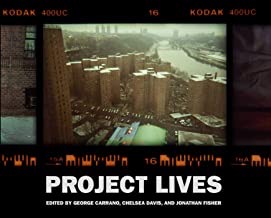
Hardcover. NY, powerHouse Books, 1st, 2015, Book: Very Good, Dust Jacket: None, Hardcover, 132 pages. To humanize the inhabitants of the "Projects" (NYC Housing Authority public housing) through their own eyes. Cameras were given out over years to hundreds of residents who then went on to take photographs of things that were important to them in their community. After all these years the resulting photographs are nothing short of breathtaking. Not only do they take you on a 'day in the life' of many of these residents, they introduce to the viewer a gentler, more intimate view of "project life" than has been disseminated throughout pop culture in the last several decades. You will not find images of gangs, drugs, guns or otherwise the criminality of these communities that we have all grown to expect. This is not on purpose. These photographs have not been curated or filtered in any way to hide such themes. The humbling fact of the matter is that all photographs came back depicting positive aspects of their lives: family, friends, pets, children, mothers, fathers.
Hardcover. Los Angeles, J. Paul Getty Museum, 1st, 2012, Book: Very Good, Dust Jacket: Very Good, 164 pages. Like new in publisher's shrink-wrap. The high school prom is an American tradition, a rite of passage, and one of the most important rituals of youth in this country. The internationally recognized documentary photographer Mary Ellen Mark took on the extraordinary challenge of working with the Polaroid 20x24 Land camera to produce this fascinating look at dozens of young people from a diverse range of backgrounds on this memorable night in their lives. Traveling across the United States to complete the project from 2006 to 2009, Mark photographed prom-goers at thirteen schools from New York City to Charlottesville, Virginia, to Houston to Los Angeles. Mark's husband, the filmmaker Martin Bell, collaborated with her on the project to produce and direct a film, also called Prom, featuring interviews with the students about their lives, dreams, and hopes for the future. A DVD of the film is packaged with the book. The 127 large-format photographs are reproduced in rich detail, and quotations from the student interviews punctuate the book. Some of the students' statements are comical, while others are deeply touching. The result is a captivating and revealing document of American youth at the beginning of the twenty-first century.
Hardcover. Zurich/NY, Edition Stemmle, 1st, 1999, Book: Very Good, Dust Jacket: Very Good, Hardcover in a bright dustjacket. 223 pages. Foreword by James H. Billington. Text by Leah Bendavid-Val. Includes images by Max Alpert, Dmitri Debakov, Georgy Lipskerov, Max Penson, Leonid Shokin, Esther Burley, Jack Delano, Walker Evans, Dorothea Lange, Russell Lee, Gordon Parks, Marion Post Wolcott, Ben Shahn, and numerous others. Afterword by Philip Brookman and with biographies of the photographers. Clean copy.
Hardcover. Piermont NH, Bunker Hill Publishing, 1st, 2007, Book: Very Good, Dust Jacket: Very Good, Hardcover in a bright dust jacket, 112 pages of working cowboys taken in the Dakotas, color and b&w.

 "Picture Paradise: Asia-Pacific Photography 1840s-1940sby: Newton, Gael")
 "Picture This!: The Inside Story and Classic Photos of UPI Newspicturesby: Gary Haynes and Walter Cronkite")
 "Pictures of the Times: A Century of Photography from The New York Timesby: Safire, William/ Peter Galassi, Susan Kismaric")
 "Picturing Freedom: African Americans & Their Cars, A Photographic History (SIGNED COPY)by: Stanley B. Burns; Elizabeth A. Burns")
 "Picturing Poverty: Print Culture and FSA Photographsby: Cara A. Finnegan")
 "Picturing the Bomb: Photographs from the Secret World of the Manhattan Project by: Fermi Rachel; Samra Esther; Rhodes Richard")
 "Pilgrims : Becoming the Path Itself by: Lena and Werner Herzog")
 "Pirkle Jones - California Photographs 1935-1982by: Jones, Pirkle")
 "Plates and Dishes: The Food and Faces of the Roadside Dinerby: Schacher, Stephan")
 "Pleasure Principle, Theby: Steele-Perkins, Chris")
 "Point Hope, Alaska: Life on Frozen Waterby: Foote, Berit Arnestad")
 "Poland, 1946: The Photographs and Letters of John Vachon by: Vachon, Ann")
 "Police Pictures: The Photograph as Evidenceby: Photography. Phillips Sandra S. Mark Haworth Booth and Carol Squiers.")
 "Polish Shadowby: Solomon, Rosalind")
 "Portraits in Steelby: Rogovin, Milton/Michael Frisch")
 "Portraits of the Fifties/The Photographs of Sanford Rothby: Roth, Sanford")
 "Power of Pictures, The: Early Soviet Photography, Early Soviet Filmby: Goodman, Susan Tumarkin")
 "Powerful Days - The Civil Rights Photography of Charles Mooreby: Moore, Charles/Michael S. Durham")
 "Powerful Days - The Civil Rights Photography of Charles Mooreby: Moore, Charles/Michael S. Durham")
 "Powerful Days - The Civil Rights Photography of Charles Mooreby: Moore, Charles/Michael S. Durham")
 "Project Lives: New York Public Housing Residents Photograph Their Worldby: George Carrano , Chelsea Davis , et al.")

 "Promby: Mark, Mary Ellen")
 "Propaganda and Dreams: Photographing the 1930s in the USSR and the US by: Bendavid-Val, Leah")
 "Rancher: Photographs of the American Westby: Corey, Carl")