Hardcover. Boston, Bulfinch, 1st, 2001, Book: Very Good, Dust Jacket: Very Good, Hardcover, 204 pages. Combines photography with the writings of a Pulitzer Prize-winning author to create a portrait of contemporary Vietnam healed from the war and replete with lush landscapes, customs, villages, traditions, and cities.
Softcover. Cambridge MA, The MIT Press, 1st, 1997, Book: N, Softcover, 119 pages. Ultimately, Viewing Olmsted is a savvy and thought-provoking, yet diminutive picture book. The collaboration of three brilliant photographers under the sponsorship of the Canadian Centre for Architecture, it guides the reader down three highly personal, present day tours of legendary parks designed by Olmsted, the patron saint of American landscape architecture. Happily, though, its readers are left to intellectually fend for themselves as to meanings or implications of Frederick Olmsted's work, genius, and lasting influence as the man who designed such famous spaces as Central Park. Academics and artists will appreciate the fresh visual perspectives offered on the man's legacy, the sometimes soothing, sometimes haunting nature-by-design retreats for the urban soul. Those with more than a passing interest in the ways in which man interacts with his `natural' surroundings will appreciate vistas evocative of place rather than time. To the authors' credit, the book raises more questions than it answers, and is of a scale to fit neatly into a travel case. Far from definitive, the book is, nevertheless, a must have for architects, landscape architects, photographers, and Olmsted aficionados.
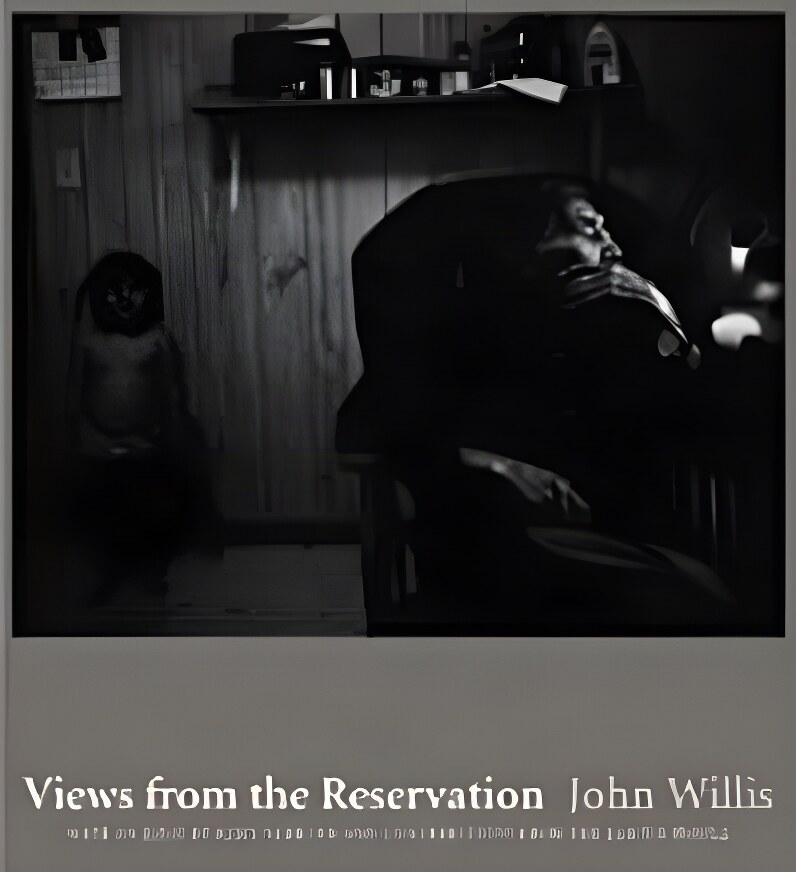
Hardcover. Center for American Places, 1st, 2010, Book: Very Good, Dust Jacket: Very Good, Hardcover, 184 pages. Professor and photographer John Willis is well aware of the exploitation that sometimes occurs when photographers enter impoverished communities for a project. So, in 1992, when he first traveled to the Pine Ridge Indian Reservation in the southwest corner of South Dakota, he assured the elders of the Oglala Lakota Sioux that he would not be exhibiting any of the images he took while there. Over time, however, Willis earned the respect and trust of the community, and the elders--hoping that the photographs might bring aid to their community--urged him to show his work. The product of several visits to the Pine Ridge Indian Reservation, Views from the Reservation is meant to open our eyes, minds, and hearts to the life, culture, and conditions of the Oglala Lakota people.
Hardcover. US, Ullmann Publishing, 1st, 2010-01-12, Book: Very Good, Dust Jacket: Very Good, Like new in publishers shrink-wrap. Over a foot square, color photographs. 320 pages. Photographer Stefan Schutz spent many months traveling through Africa in an all-terrain vehicle. During that time he passed through a variety of countries, landscapes, and seasons, diverting from the beaten track in his search for something different. He often found it in the everyday life of villages, which he experienced at close quarters among large communities of men, women, children, and animals. The result is a fascinating collection of [contemporary] images that depict people and landscapes in a different way from anything we have seen before.
Hardcover. Boston, Chapple Publishing Co., 1st, 1926, Book: Very Good, Dust Jacket: None, Hardcover, red cloth with gold lettering and design on spine and front board. Top edge gilt. Portrait frontispiece, 231 pages. Illustrated with etchings and drawings by Levon West. INSCRIBED BY AUTHOR AND ILLUSTRATOR on the front fly leaf. Also many b&w photos. An historical travel guide to Spain by Chapple, a well-known editor, publisher, and author, whose 2 Hollywood credits include writer for "Graft"(1915) and producer for" Annabelle Lee"(1921). Bright, clean copy.
Hardcover. New York, Harcourt Brace Janovich , 1st, 1987, Book: Very Good, Dust Jacket: Very Good, 28 pages. Hardcover with dust jacket. Clean, tight copy. Color illustrations by Alice and Martin Provenson. Dust jacket is protected by a mylar cover.
Hardcover. NY, Dial, 1st, 1993, Book: Very Good, Dust Jacket: Very Good, Hardcover in a bright dust jacket. SIGNED BY BOTH WELLS AND JEFFERS. This lyrical story brilliantly evokes a family's life and times in the years before World War II. Two brothers--Berty, who thinks there's no place like home, and Luke, who wants to travel the world--come of age in an America that will never be seen again. Full color.
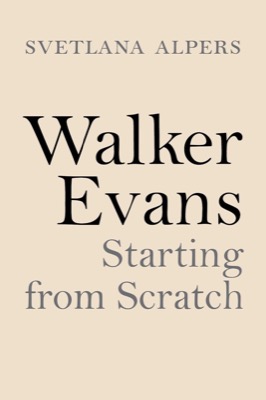
Hardcover. Princeton NJ, Princeton University Press, 1st, 2020, Book: Very Good, Dust Jacket: Very Good, Hardcocer in a bright dust jacket, 257 pages plus 143 b&w pages of photographs in the front of the book. Walker Evans (1903-75) was a great American artist photographing people and places in the United States in unforgettable ways. He is known for his work for the Farm Security Administration, addressing the Great Depression, but what he actually saw was the diversity of people and the damage of the long Civil War. In Walker Evans, renowned art historian Svetlana Alpers explores how Evans made his distinctive photographs. Delving into a lavish selection of Evans's work, Alpers uncovers rich parallels between his creative approach and those of numerous literary and cultural figures, locating Evans within the wide context of a truly international circle. Alpers demonstrates that Evans's practice relied on his camera choices and willingness to edit multiple versions of a shot, as well as his keen eye and his distant straight-on view of visual objects. Illustrating the vital role of Evans's dual love of text and images, Alpers places his writings in conversation with his photographs. She brings his techniques into dialogue with the work of a global cast of important artists--from Flaubert and Baudelaire to Elizabeth Bishop and William Faulkner--underscoring how Evans's travels abroad in such places as France and Cuba, along with his expansive literary and artistic tastes, informed his quintessentially American photographic style.
Seattle, Fantagraphics, 1st, 2023, Book: Very Good, Dust Jacket: None, Hardcover, pictorial boards, oblong format, color illustrations throughout. 1932 saw the launch of Disney's second-ever original comic strip, the full-color weekly Silly Symphonies, and with it came the debut of Bucky Bug, a daring, rhyming, mischievous squirt whose escapades took him from brutal birds of prey to the terrifying trenches of the Great Flyburg War! With his brave lady friend June and bumpkin pal Bo, Bucky even travels to a mixed-up Mother Goose Land... where a not-so-merry Old King Cole has mayhem on his mind! In this Disney reprint collection, readers can follow all of Bucky's adventures and the Symphonies Sunday sagas that followed, which also includes Donald Duck's debut as the barnyard's spoilt brat in "The Wise Little Hen"... and further tales of golden age Silly Symphony cartoon stars: egotistical Max Hare, slow-but-sure Toby Tortoise, and that awful bandit Dirty Bill (who "never took a bath, and he never will!").
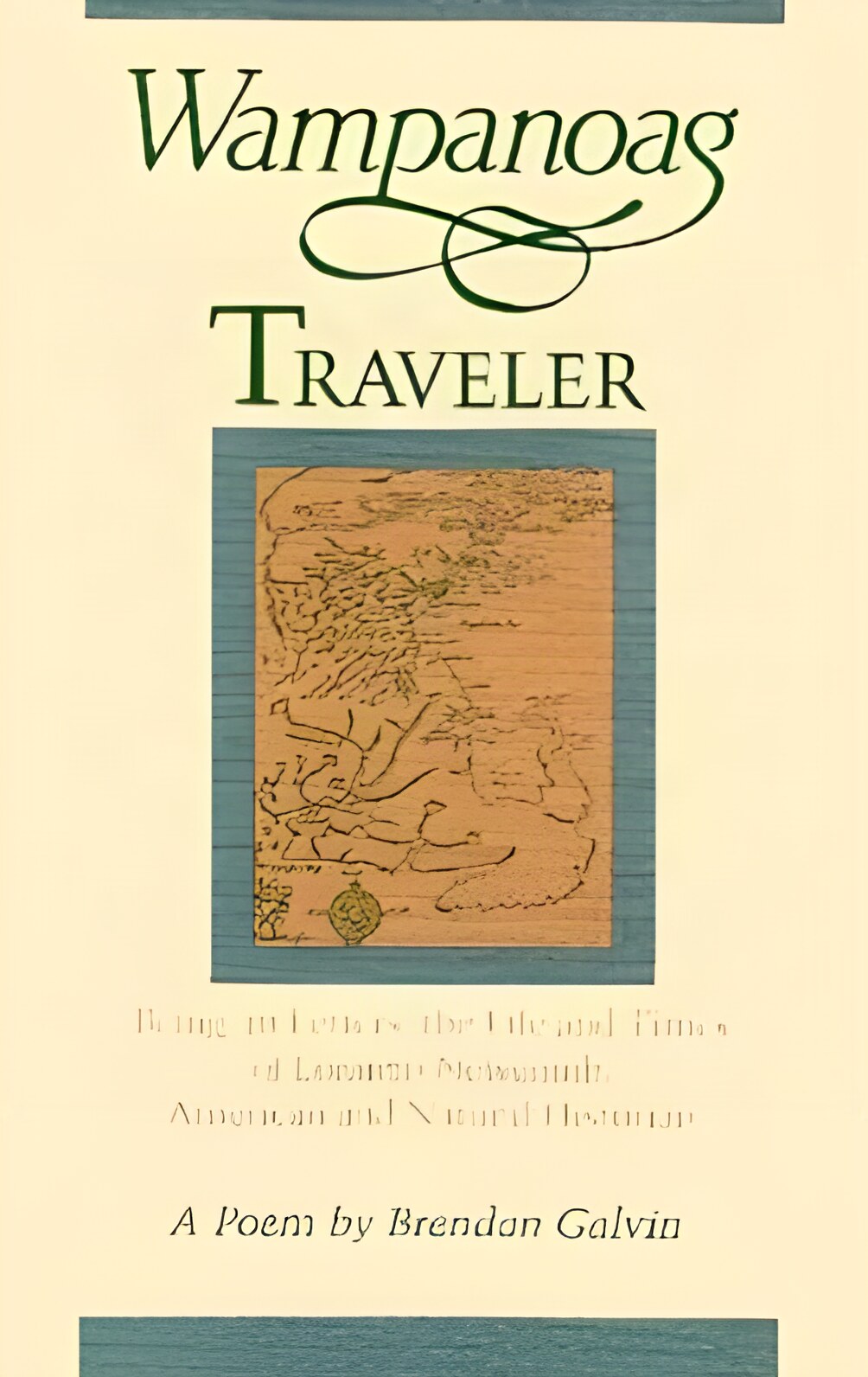
Softcover. Baton Rouge, Louisiana State University Press, 1st, 1989, Book: Very Good, Dust Jacket: None, Softcover, 43 pages. A book-length poem, Wampanoag Traveler, is told from the point of view of one Loranzo Newcomb, a fictional eighteenth - century natural historian, gardener, lone wanderer, fabulist, and failed lover. The poem is arranged in fourteen sections that deal variously with such subjects as gardening, the mystical delirium that follows a poisonous snakebite, failed love, hummingbirds and skunks, and the young Newcomb's apprenticeship to a "birdmaster" who bears a close resemblance to Audubon. Clean, like new.
Hardcover. Chapel Hill & London, The University Of North Carolina Press,, 1st, 1991, Book: Very Good, Dust Jacket: Very Good, Hardcover, 297 pages. illustrated throughout in color and b&w. Oblong folio. Light gray cloth with gilt title to spine. Pictorial dust jacket. Minor wear to covers, else like new. The 15x11.5" format accommodates 160 color and 12 b&w illustrations, many of them decidedly horizontal, and accompanying text laid out in two wide (5.5") columns. Before photography, Washington, DC was the subject of numerous engravings, aquatints, and lithographs which were published separately as well as in newspapers and magazines, souvenir booklets, and guidebooks and brochures. A selection of these illustrations depicting buildings or districts, views from public structures, and bird's-eye views is presented along with descriptions of Washington from contemporary published works by journalists, architects, travelers, politicians, and others. Nine chapters review successive periods of growth and identify events that shaped the city's character.
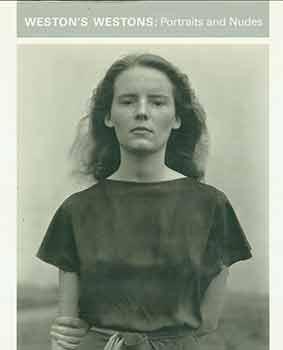
Hardcover. Boston, Bulfinch Press, 2nd pr., 1989, Book: Very Good, Dust Jacket: Very Good, Hardcover in a bright, price-clipped dust jacket. Seventy full-size plates and seventy-five smaller illustrations, all reproduced in tri-tone plus tinted varnish, convey the subtlety and power of the extraordinary figurative work of Edward Weston (1886-1958). This is the first major publication focusing solely upon his portraiture and nudes, offering new insights into the breadth and quality of Weston's considerable achievement. The book was published on the occasion of a major traveling exhibition of Weston's portraits and nudes organized by the Museum of Fine Arts, Boston. All the prints are drawn from the collection of William H. Lane, who acquired them from the heirs of Edward Weston. Clean copy.
Hardcover. London, Jonathan Cape, reprint, 1989, Book: Very Good, Dust Jacket: Very Good, Hardcover in a bright dust jacket, 367 pages. "With characteristic wit, compassion and erudition, Bruce Chatwin reveals his view of the world. In Hong Kong he discusses the properties of the 'dragon-lines'; he returns to the theme of The Songlines with his perception of life as 'a journey to be walked on foot', and in a run-down Algerian quarter of Marseilles discovers 'a notion, not lost, of all men equal before God'."
Art Intitute of Chicago/Yale University Press, 1st, 2021, Book: Very Good, Dust Jacket: None, Hardcover, pictorial cloth, 251 pages illustrated in color. The extraordinary life of a captivating American artist, beautifully illustrated with his dreamlike drawings Much of Joseph Elmer Yoakum's story comes from the artist himself--and is almost too fantastic to believe. At a young age, Yoakum (1891-1972) traveled the globe with numerous circuses; he later served in a segregated noncombat regiment during World War I before settling in Chicago. There, inspired by a dream, he began his artistic career at age seventy-one, producing some two thousand drawings over a decade. How did Yoakum gain representation in major museum collections in Chicago and New York? What fueled his process, which he described as a "spiritual unfoldment"? This volume delves into the friendships Yoakum forged with the Chicago Imagists that secured his place in art history, explores the religious outlook that may have helped him cope with a racially fractured city, and examines his complicated relationship to African American and Native American identities. With hundreds of beautiful color reproductions of his dreamlike drawings, it offers the most comprehensive study of the artist's work, illuminating his vivid and imaginative creativity and giving definition and dimension to his remarkable biography. Clean copy. NOTE: DUE TO WEIGHT, DOMESTIC SHIPPING ONLY.
Hardcover. Washington DC, Smithsonian Institution Press, 1st, 1998, Book: Very Good, Dust Jacket: Very Good, Hardcover in a bright dust jacket, 292 pages, b&w illustrations. SIGNED BY BOTH AUTHORS on the title page. Additionally INSCRIBED BY COHN on the dedication page. Kevin J. Crisman and Arthur B. Cohn show how a confluence of geographic, technological, economic, and social conditions in the United States and Canada turned an ancient idea into a practical alternative to more expensive and dangerous steamboats. Reviewing evidence from travelers' memoirs, regional histories, pictorial records, and the only horseboat ever studied by archaeologists - a wreck on the floor of Lake Champlain's Burlington Bay, in Vermont - the authors trace the evolution of horseboats from early mechanisms that forced the animals to walk in tight circles to "endless floor" treadmills that resembled modern exercise machines. In a lively narrative interspersed with quotes from passenger accounts, the book charts the rise and demise of horseboat businesses on the Hudson River, as well as in New York City, St. Louis, and Halifax, Nova Scotia. The authors also describe and record the underwater excavation of the Lake Champlain wreck, revealing a wealth of detail about the construction and operation of a typical treadwheel horseboat of the 1830s and 1840s. Clean copy.
Hardcover. NY, Stewart Tabori & Chang , 1st, 1996, Book: Very Good, Dust Jacket: Very Good, Hardcover, 232 pages. Ortner's astonishing photographs portray his love and devotion for the Asian countries he has traversed over a 20-year period. This grand tour of spiritual lands includes natural and architectural sites in Nepal, India, Cambodia, Java, and Bali. The artist's fascination with majestic mountains and remote temples is beautifully captured throughout the book. In his best work, he portrays bizarre Hindu and Buddhist statuary and the faces of disheveled religious mendicants.
Hardcover. Dubai, Taj Hotel /New Arabian Heritage, 1st, 2003, Book: Very Good, Dust Jacket: Very Good, Hardcover, 145 pages, beautifully illustrated throughout in color. Light shelf-wear/rubbing to dust jacket, else a clean, tight copy.
Hardcover. NY, New Amsterdam Book Co., 1st, 1898, Book: Very Good, Dust Jacket: None, 364 pages. Newspaper photography of author tipped-in to front end paper. Essays on the history, natural history and sociology of the South Seas and their islands, (including some whaling). Previous owner's inscription front fly leaf.
Softcover. San Francisco, Pomegranate Books, 1st, 1993, Book: Very Good, Dust Jacket: None, Softcover, 112 pages, color photos. "Art cars" are vehicles transformed by their creative owners into elaborately decorated statements of individual mobility. Blank, an independent filmmaker and art car aficionado, spent two years traveling the highways and byways of America in search of people who shared his unusual passion for artistically personalized transportation. The result was an independent documentary film (also entitled Wild Wheels ) and this book: a zany testament to the far reaches of the creative spirit enlivened by more than 100 color photographs and descriptions of 42 attention-grabbing autos with humorous names like the Beaded Bug, the Hippomobile, and the Grass Car. The book also contains brief stories about the artists who created them, providing insight into the ideas and emotions that sparked this novel pop art form.
Hardcover. New York, Alfred A. Knopf, 1st, 1956, Book: Very Good, Dust Jacket: Good, Hardcover, 178 pages. Dust jacket slightly worn and with short tears. Some foxing on endpages, top edge stained red.
Hardcover. Steidl, 1st, 2012, Book: Very Good, Dust Jacket: None, Three volumes sharing the following format: Hardcover. Fine cloth-covered boards with tipped-in four-color plate on cover; no dust jacket as issued. The three volumes are contained in a custom foil-embossed slipcase. Photographs by William Eggleston. Text by Thomas Weski. 588 pp., with 250 four-color plates. 12-1/2 x 12-1/2 inches. Between 1965 and 1974 William Eggleston and Walter Hopps traveled together in the US, Eggleston taking photographs, Hopps driving. During these travels the title Los Alamos was born. The negatives for what became known as the Los Alamos Project were made between 1965 and 1974, and were archived in two boxes labeled Box #17 and Box #83. The latter was lost for several years. The project is presented in its entirety in this three-volume set for the first time. An earlier edition of "Los Alamos" edited by Thomas Weski was published by Scalo in 2003. Weski"s original essay is included in this revised edition. "Los Alamos Revisited" has been drawn from the complete set of photographs, including the long lost negatives from Box #83. NOTE: DOMESTIC SHIPPING ONLY.
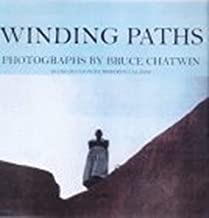
Softcover. Vintage, 1st, 1999, Book: Very Good, Dust Jacket: None, Softcover, 192 pages. Throughout his travels, writer Bruce Chatwin took thousands of photographs. They demonstrate his legendary "eye" at its best, showing a sense of color and surface, an ability to find beauty in the most mundane of objects or prosaic of places.
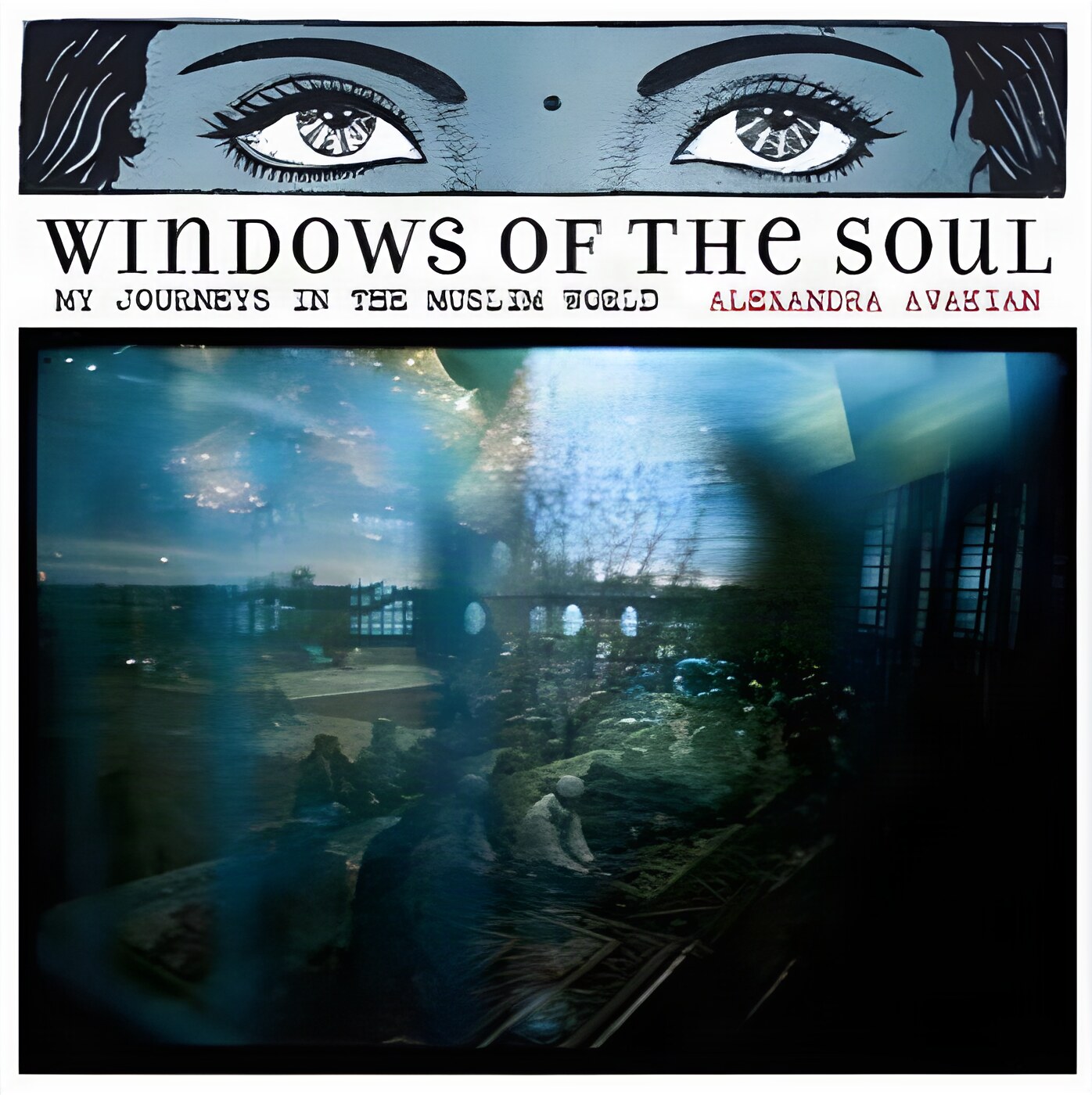
Hardcover. Washington DC, National Geographic Books, 1st, 2008, Book: Very Good, Dust Jacket: Very Good, Hardcover in a bright dust jacket, 207 pages. Recounted in gripping words and unforgettable images, Avakian's remarkable experiences will draw readers into the Muslim world to meet friends and terrorists, leaders and thieves and everyday people. She lived and worked for two years in the Gaza strip, often in Islamic dress, once beaten bloody by Hamas. For several terrifying days in Somalia she was pinned down by sniper fire on the way to her hotel. She careened across the snowy Tien-Shen Mountains with Islamic fundamentalists in an ancient Lada, only to be detained and tossed out by the Uzbek KGB. All the while, she captured some of the most important stories of our time-the famine in Sudan, the violence in Gaza and Somalia, the daily life of Hezbollah. She traveled extensively with Yasser Arafat as one of the only non-Arab photographers given such access. Small scar to front of dust jacket otherwise a clean copy.

 "Vietnam: Spirits of the Earthby: Mary Cross and Frances Fitzgerald")
 "Viewing Olmsted: Photographs by Robert Burley, Lee Friedlander, and Geoffrey Jamesby: Lambert, Phyllis")
 "Views of Africa by: Schutz, Stefan")

 "Voyage of the Ludgate Hill, The - Travels With Robert Louis Stevensonby: Willard, Nancy and The Provensons")
 "Waiting For The Evening Star (SIGNED COPY)by: Wells, Rosemary and Susan Jeffers")


 "Walt Disney's Silly Symphonies 1932-1935: Starring Bucky Bug and Donald Duckby: Ted Osborne / Merrill De Maris /Al Taliaferro (Artist), Earl Duvall (Artist)")
 "Washington On View: The Nation's Capital Since 1790by: Reps, John William")




 "When Horses Walked on Water: Horse-Powered Ferries in Nineteenth-Century America (SIGNED COPY)by: Kevin J. Crisman, Arthur B. Cohn")

 "Whispers from the Hills: A Photographic Journey into the Tribal Areas of Andhra Pradesh & Orissaby: Avezard, Claude")
 "Wild Life in Southern Seasby: Becke, Louis")

 "Willa Cather in Europe; Her Own Story of the First Journeyby: Cather, Willa")
 "William Eggleston: Los Alamos Revisitedby: Eggleston, William")