Hardcover. NY, NYR Children's Collection, reprint, 2010, Book: Very Good, Dust Jacket: None, Hardcover, pictorial boards with red cloth spine. "Once upon a time, in fact it was Tuesday," the Bear went into the woods to settle in for his long winter nap. But when he awoke what had happened? The trees were gone, the grass was gone, the flowers were gone, and in their place were buildings, cars, a fenced-off courtyard. The Bear had no idea that he was in the middle of a factory. "Get back to work!" a man yelled out of the blue. "I don't work here," said the Bear, "I'm a bear." The man laughed and laughed. "Fine excuse for a man to keep from doing any work--saying he's a bear." And so it began and so it went, with the Bear protesting his bearness all the way from the Third Vice President to the First, and no one willing to believe that he wasn't just a silly man in a fur coat who needed a shave. How the bear endured and how he finally prevailed are the subject of this delightful modern fairy tale--beautifully illustrated with the author's inventive line drawings--about sticking up for yourself, no matter how many Foremen, General Managers, Vice Presidents, or even Company Presidents stand in your way. Reprint of this classic originally published in 1946.
Softcover. Washington DC, U.S. Department of Interior, 1st, 1975, Book: Good, Dust Jacket: None, Softcover, 180 pages, b&w illustrations. Fading to red on covers, light musty odor. Name on front fly leaf, otherwise clean.
Hardcover. San Francisco, Chronicle Books, 1st, Book: Very Good, Dust Jacket: Very Good, Hardcover in a bright, unclipped dust jacket, 200 pages, large format. Profusley illustrated with color photographs of trees. Trees are vital- without them we simply wouldn't be here. Not only essential, they have been an inspiration throughout our history. In breathtaking photographs and stories we are taken on a journey from the boreal forest at the edge of the Arctic to the rainforests girdling the planet; from ancient bristlecones to fresh-leaved seedlings; from the charming and familiar to the scary and rare. An elegantly written and highly accessible text is complemented by an extraordinary collection of images created by some of the world's leading nature photographers.
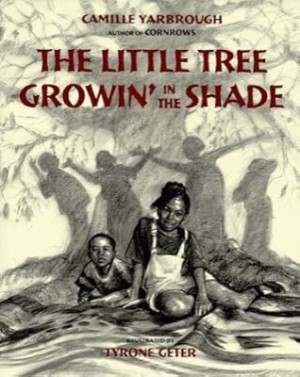
Hardcover. NY, G. P. Putnam's Sons, 1st, 1996, Book: Very Good, Dust Jacket: Very Good, Hardcover in a bright, unclipped dust jacket, 64 pages. Yarbrough weaves a beautiful story in picture-book format about the role of music in the lives of Africans and shows how it was transformed on American and Caribbean soil. The tale revolves around a "Roots of Rhythm and Blues" concert attended by a sister and brother and their parents, great grandmother, and elderly neighbor. At the park, the father tells his children about slavery and the "culture baggage" the slaves carried with them from Africa. With a compelling delivery that echoes the rhythmic chanting of the griot, the man speaks about concepts such as spirit power and the tree of life that at first are hard for his young son to grasp. The performance begins with a song of praise for the strength and endurance of a transplanted people. By the end, the youngsters understand more about their heritage and the role spirituals played and continue to play in it. Geter's pencil-and-charcoal illustrations are richly imaginative, evoking images of Africa, slavery, roots, and soaring trees. Clean copy.
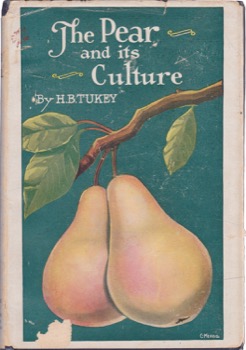
Hardcover. NY, Orange Judd Publishing, 1st, 1928, Book: Very Good, Dust Jacket: Good, Hardcover in a lightly worn dust jacket, small paper scar to front panel, chip to top of spine. 125 pages with b&w illustrations. A comprehensive and practical guide dedicated to the art and science of growing pears. Written by renowned pomologist H. B. Tukey, this classic horticultural work explores the intricate details of orchard management, offering valuable insights into the selection of varieties, soil requirements, and planting techniques essential for successful fruit production. The text provides in-depth coverage of critical topics such as pruning strategies, pollination requirements, and the management of common pests and diseases that affect pear trees. Tukey's expertise shines through as he discusses the propagation of trees and the nuances of harvesting and handling the fruit to ensure peak quality. Whether addressing the needs of the commercial orchardist or the dedicated home gardener, "The Pear and Its Culture" serves as a foundational resource for understanding the specific biological and environmental factors that contribute to a thriving pear crop. Clean copy.
Softcover. NY, Archipelago Books, 1st, 2019, Book: Very Good, Dust Jacket: None, Softcover in pictorial wrappers, 477 pages. The Scent of Buenos Aires is the first collection of Uhart's to be published in English, drawing together her best vignettes of quotidian life, stories that sneak up on you. Refreshingly approachable, they are punctuated by street talk and saturated with a cryptic wit that recalls Lydia Davis. Uhart renders moments at the zoo, the hair salon, or a homeowners association meeting with delightfully eccentric insight. These stories cast an unusual, intimate light on the inner lives of plants, animals, and humans, magnifying the minute, everyday quirks of Argentina's small towns: a cat curls around his owner to humor him, a classroom of children sway like trees when their teacher turns her back. Smiling to herself, Uhart reveals the infinite ways we show ourselves to one another. Clean copy.
Softcover. NY, Archipelago Books, 1st, 2019, Book: Very Good, Dust Jacket: None, Softcover in pictorial wrappers, 477 pages. The Scent of Buenos Aires is the first collection of Uhart's to be published in English, drawing together her best vignettes of quotidian life, stories that sneak up on you. Refreshingly approachable, they are punctuated by street talk and saturated with a cryptic wit that recalls Lydia Davis. Uhart renders moments at the zoo, the hair salon, or a homeowners association meeting with delightfully eccentric insight. These stories cast an unusual, intimate light on the inner lives of plants, animals, and humans, magnifying the minute, everyday quirks of Argentina's small towns: a cat curls around his owner to humor him, a classroom of children sway like trees when their teacher turns her back. Smiling to herself, Uhart reveals the infinite ways we show ourselves to one another. Clean copy.
Hardcover. NY, W. W. Norton & Company, 1st, 1972, Book: Very Good, Dust Jacket: Very Good, Hardcover in a bright, unclipped dust jacket. 430 pages illustrated in b&w and color by Yee. "Customs and rituals, dress and language, poetry and drama, painting and sculpture, kites and carp, trees and flowers, everything is revealed to us in Mr. Yee's inimitable text and delightful drawings. Familiar centers and out-of-the-way corners of Japan all come under the Silent Traveller's scrutiny -- Tokyo's Ginza, a Shinto dance at Ise, Kyoto's Phoenix Hall, cormorant-fishing in Gifu, Mt. Fuji, an Ainu village, the five hundred arhats, the beardless hippies of Tokyo, the perennial towel-bearing bathers at a resort hotel, the phenomenon of the marimos, red-crested cranes -- and much more. Clean copy.
Softcover. Missoula MT, Pictorial Histories Publishing Co., reprint, 1999, Book: Very Good, Dust Jacket: None, Softcover, 178 pages. Photographic essay of the men of the Civilian Conservation Corps (CCC) and their Forestry efforts during the 1930's and early '40's.
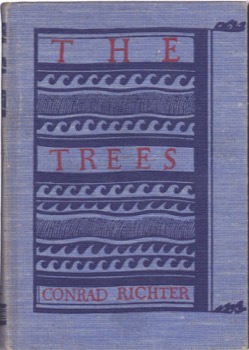
Hardcover. NY, Alfred A. Knopf, 1st, 1940, Book: Very Good, Dust Jacket: None, Hardcover, light blue cloth with red and dark blue lettering on the spine and cover, 302 pages. A moving novel of the beginning of the American trek to the west. Toward the close of the eighteenth century, the land west of the Alleghenies and north of the Ohio River was an unbroken sea of trees. Beneath them the forest trails were dark, silent, and lonely, brightened only by a few lost beams of sunlight. Here, in the first novel of Conrad Richter's Awakening Land trilogy, the Lucketts, a wild, woods-faring family, lived their roaming life, pushing ever westward as the frontier advanced and as new settlements threatened their isolation. This novel gives an excellent feel for America's lost woods culture, which was created when most of the eastern midwest was a vast hardwood forest---virtually a jungle. The Trees conveys settler life, including conflicts with Native Americans, illness, hunting, family dynamics, and marriage. INSCRIBED BY RICHTER on the front fly leaf. A bright, sharp copy missing the dust jacket. Related ephemera laid in.
NY, Harpercollins/Cliff Street , 2nd pr., 1998, Book: Very Good, Dust Jacket: Very Good, Hardcover in a bright, unclipped dust jacket. 239 pages, bibliography, appendices, maps on end-papers, illustrated with wonderful b&w line and color drawings by the author. A highly readable account of the author's 300-acre woodland in Maine, which he uses as a camp and outdoor laboratory.
Hardcover. Bologna IT, Damiani, 1st, 2006, Book: Very Good, Dust Jacket: None, Hardcover, 100 pages. Original publisher's illustrated laminated boards. Issued without dust jacket. Copiously illustrated in color and black and white throughout. Beatrice Haverich believes that "trees embody life. They show us the seasons in a city landscape, and they provide us with wood, food and shelter. Their silence demands our respect." Her subjects, for whom she has the utmost sympathy, are survivors, stalwarts: for example, the Yew trees in Kingsley Vale, UK, are 4,000 years old. Among these portraits, she observes branches molded by the wind into lopsided hairstyles, and roots exposed by the rain. Some trees survive in cement planters or remain in the bounds of their sidewalk squares, but others reclaim their habitat, taking over old greenhouses and popping the glass panes one by one as they grow. Up from sand and boulders and cliffs and pavement, Haverich's trees are shaped by their landscape, but they persist in shaping it as well.
Hardcover. Conway NH, TMC Books, 1st, 2008, Book: Very Good, Dust Jacket: Very Good, Hardcover in a bright, unclipped dust jacket. 131 pages, illustrated throughout in color. SIGNED BY AUTHORS on title page. This is the story of what happens when big people decide to be kids again and they have tools and lumber. A beautifully written tale about building an elaborate two story treehouse in the Maine woods, Treehouse Chronicles is reflective and insightful, and carries the reader along as a dream is made real. We meet the author's family, and friends, and a squirrel with an attitude, and you will be captivated by this poignant and humorous story of process, a house is hung in the sky. Packed with over 180 spectacular photographs, evocative watercolors, and line drawings. Clean, tight copy.
Hardcover. NY, Van Nostrand Reinhold, 1st, 1980, Book: Very Good, Dust Jacket: Very Good, Hardcover in a dust jacket with light edgewear, chipping. 168 pages, b&w illustrations throughout. "...provides bold, practical solutions to important problems of economics, planning, and maintenance of urban planting, and offers effective programs to raise urban tree management to its essential place in the urban megastructure." Clean copy.
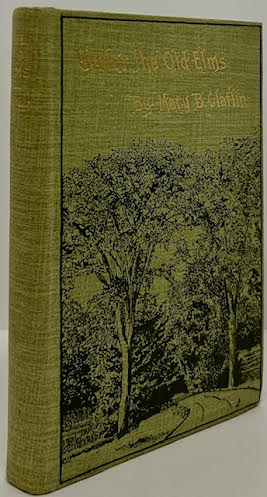
Hardcover. New York, Thomas Y. Crowell & Company, 1st Edition, 1895, Book: Very Good, Dust Jacket: None, 150 pages. Hardcover. B/w frontispiece with tissue guard. Fore and bottom edges rough cut, gilt top edge. Green decorated cover boards, gilt title on spine and front cover board. Binding very good. Spine straight. Pages have some tanning, but unmarked and clean. Tight first edition. A heartfelt reflection on life, family, and community beneath the towering elms of Newton, Massachusetts. Claflin's evocative prose paints a vivid picture of a bygone era, capturing moments of joy, sorrow, and timeless memories in the shade of ancient trees that stood as silent witnesses to generations of American history.
Hardcover. NY, Delacorte Press, 1st, 1980, Book: Very Good, Dust Jacket: Very Good, Hardcover in a bright, unclipped dust jacket.In Japan during the 16th century two unemploed samurai attempt to discover who is mutilating the cherry trees in the valley of Lord Ohmori. Clean copy.
Hardcover. Cambridge MA, The MIT Press, 1st, 2013, Book: Very Good, Dust Jacket: None, Hardcover, red cloth stamped in white. 288 pages in b&w and color. In the 1960s and 1970s, the artist Ed Ruscha created a series of small photo-conceptual artist's books, among them Twentysix Gas Stations, Various Small Fires, Every Building on the Sunset Strip, Thirtyfour Parking Lots, Real Estate Opportunities, and A Few Palm Trees. Featuring mundane subjects photographed prosaically, with idiosyncratically deadpan titles, these "small books" were sought after, collected, and loved by Ruscha's fans and fellow artists. Over the past thirty years, close to 100 other small books that appropriated or paid homage to Ruscha's have appeared throughout the world. This book collects ninety-one of these projects, showcasing the cover and sample layouts from each along with a description of the work. It also includes selections from Ruscha's books and an appendix listing all known Ruscha book tributes. These small books revisit, imitate, honor, and parody Ruscha in form, content, and title. Some rephotograph his subjects: Thirtyfour Parking Lots, Forty Years Later. Some offer a humorous variation: Various Unbaked Cookies (which concludes, as did Ruscha's Various Small Fires, with a glass of milk), Twentynine Palms (twenty-nine photographs of palm-readers' signs). Some say something different: None of the Buildings on Sunset Strip. Some reach for a connection with Ruscha himself: 17 Parked Cars in Various Parking Lots Along Pacific Coast Highway Between My House and Ed Ruscha's.
Hardcover. NY, Harcourt, 1st, 2018, Book: Very Good, Dust Jacket: Very Good, Hardcover in bright dust jacket with a short repaired tear. Color illustrations by Winter. As a young girl growing up in Kenya, Wangari was surrounded by trees. But years later when she returns home, she is shocked to see whole forests being cut down, and she knows that soon all the trees will be destroyed. So Wangari decides to do something and starts by planting nine seedlings in her own backyard. And as they grow, so do her plans. . . . This true story of Wangari Maathai, environmentalist and winner of the Nobel Peace Prize, is a shining example of how one woman's passion, vision, and determination inspired great change. Stiker on front fly leaf otherwise clean.
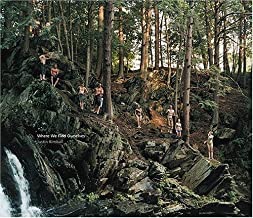
Hardcover. Center for American Places, 1st, 2006, Book: Very Good, Dust Jacket: Very Good, Hardcover, 88 pages. Clambering down slippery rocks to a swimming hole. Ducking the plume of smoke from a barbecue grill. Wishing for a breeze in a too-small dome tent. Scanning the sky for rain from a postage-stamp backyard. It is in these small moments of action--and inaction--that Justin Kimball captures our everyday attempts to relax. Indeed, one might argue that the events depicted are everyday life. Kimball's compelling photographs depict ordinary people--parents and teens, grandparents and kids--in landscapes of leisure. These are not the exclusive resorts and white sand beaches of the affluent; rather, they are the parks, campgrounds, and fishing piers where most Americans vacation. They are natural landscapes--inviting, green, and sometimes beautiful--but at the same time they are imperfect--muddy, crowded, and partially paved. There is nothing idyllic about these vacation spots; indeed, Kimball's photographs make clear that daily life can never be fully left behind. The people in his pictures, though momentarily transformed by cascading water or the shade of towering trees, remain enmeshed in ties of family and obligation, shadowed by thoughts of home.
Hardcover. NY, Beach Lane Books, 1st, Book: Very Good, Dust Jacket: Very Good, Hardcover in a bright dust jacket, 32 pages illustrated in color by Wolff. When night falls, the sweet and curious black bear cub and his mother go looking for food. Mama hunts and Baby Bear explores. "'Where, oh where, is Baby Bear?' calls Mama." Readers won't worry, because Wolff has hidden Baby Bear in the spread for them to find. "Here I am, Mama," he replies each time. The sky subtly darkens as they make their way through their world, each page featuring creatures that share the habitat with the bear family: the placid owl, a faun, raccoons, and otters. Here too are the mushrooms, ferns, and cattails of a woodland life, providing young viewers with a window into nature. The scope of their adventure is recalled at the end of the story, as Wolff shows the pair making their way back through the meadow, around the pond, across the river, between the birch trees, down the cliff, and into their den. Clean copy.




 "The Life & Love Of Treesby: Blackwell, Lewis")








 "The Whisper of a Million Leaves by: HAVERICH, Beatrice.")




 "Valley of the Broken Cherry Treesby: Namioka, Lensey")