Hardcover. Vaduz, Liechtenstein, 2nd pr., 1956, Book: Very Good, Dust Jacket: Very Good, Hardcover in a lightly worn dust jacket, 53 pages, illustrated in b&w by Franz Deak. SIGNED BY GALLICO on the front fly leaf, additionally INSCRIBED BY VIRGINIA BARONESS LUDMILA VON FALZ-FEIN just below Gallico's signature. Dated 7/6/57. This charming tale about a little Liechtenstein cow with great ambitions was the first of his works to be published in Liechtenstein. The story was first printed in the Christmas issue of The Sketch (London). Mild edgewear to dj, clean copy.
Hardcover. NY, Macmillan, 5th pr., Book: Very Good, Dust Jacket: Very Good, Hardcover in a bright, unclipped dust jacket. Winner of the Newbery Medal, the National Book Award, the Boston Globe/Horn Book Award for Fiction, and an ALA Notable Book. With an African American protagonist, this is a young adult coming of age book set in hills scarred by strip mining. Newbery Medal on front jacket. Clean copy.
Hardcover. New York, Harper & Row, 1st, 1983, Book: Very Good, Dust Jacket: Very Good, 311 pages. Hardcover with clipped dust jacket. Sticker residue on front dust jacket. Clean, tight copy with minor wear to covers.
Softcover. Chapel Hill, University of North Carolina Press, 1st pbk, 2002, Book: Very Good, Dust Jacket: None, Softcover, 411 pages, b&w illustrations. Tracing the erosion of white elite paternalism in Jim Crow Virginia, Douglas Smith reveals a surprising fluidity in southern racial politics in the decades between World War I and the Supreme Court's 1954 Brown v. Board of Education decision. Smith draws on official records, private correspondence, and letters to newspapers from otherwise anonymous Virginians to capture a wide and varied range of black and white voices. African Americans emerge as central characters in the narrative, as Smith chronicles their efforts to obtain access to public schools and libraries, protection under the law, and the equitable distribution of municipal resources. This acceleration of black resistance to white supremacy in the years before World War II precipitated a crisis of confidence among white Virginians, who, despite their overwhelming electoral dominance, felt increasingly insecure about their ability to manage the color line on their own terms. Exploring the everyday power struggles that accompanied the erosion of white authority in the political, economic, and educational arenas, Smith uncovers the seeds of white Virginians' resistance to civil rights activism in the second half of the twentieth century. Light marking to 10 pages, otherwise clean, very good.
Hardcover. NY, Knopf, 1st, 1993, Book: Very Good, Dust Jacket: Very Good, Hardcover in a bright, unclipped dust jacket. Black & white illustrations by Leo and Diane Dillon. A history of slavery in America, written for children, and focusing on those who escaped slavery and on the Underground Railroad. Includes stories of Harriet Tubman, Frederick Douglass, Josiah Henson, and others.
Hardcover. Charlottesville, University of Virginia, 1st Thus, 1977, Book: Very Good, Dust Jacket: Very Good, 106 pages. A Play with black & white illustrations by Faulkner. Clean, tight copy. Introduction by Noel Polk. In a bright yellow dust jacket.
Softcover. Flagstaff, AZ, Northland Press, 3rd pr, 1981, Book: Very Good, Dust Jacket: None, Softcover, 131 pages, b&w photographs. Light creases to front wrapper. Else a very clean, tight copy. An architect for the Santa Fe Railway and the Fred Harvey Company, Colter laid the groundwork for female architects who followed. Seven of her remarkable structures are preserved in Grand Canyon's historic district. This is her story.
Hardcover. Boston, Roberts Brothers, 1st US, 1870, Book: Good, Dust Jacket: None, Hardcover, terra-cotta cloth with embossed design, gilt lettering on spine. Translated from the French by Virginia Vaughan. Ex-lib with markings, reside to front endpapers. Mild dampstain to bottom of last 100 pages. An attractive reading copy despite faults. Mauprat is a novel by the French novelist George Sand about love and education. It was published in serial form in April and May 1837. Like many of Sand's novels, Mauprat borrows from various fictional genres- the Gothic novel, chivalric romance, the Bildungsroman, detective fiction, and the historical novel.
Softcover. Bowie MD, Heritage Books, reprint, 2001, Book: Very Good, Dust Jacket: None, Two softcover volumes 391 & 392 pages. Volumes 1 and 2 complete, a facsimile reprint of the 1897 edition by Lippincott. This two-volume series takes the reader on a journey through the colonies of Virginia, Massachusetts, Connecticut, Rhode Island, New Hampshire, Pennsylvania, New Jersey, New York, Maryland, Carolina, and Georgia. The charm of the journey is in its variety, as the reader passes through communities of such striking individuality that they assume the character of different nations. Each colony has a set of opinions and laws peculiar to itself, and it is not uncommon to find the laws of one in contradiction with the laws of another. This text explores the settlement and history of each colony prior to the American Revolution. Topics include development of the colonies' government, laws, religion, schools, boundaries, industries, layout of the cities, fashions, homes, social activities, slavery, architecture, interaction with the Indians, and customs. At least one prominent person from each colony is discussed, amongst them, William Penn of Pennsylvania, John Smith of Virginia, George Calvert of Maryland, and General Oglethorpe of Georgia. Light sunning ti spines.Clean copies.
Hardcover. New York, National Museum of American Art/W. W. Norton, 1st, 1995, Book: Near Fine, Dust Jacket: Near Fine, Hardcover, 256 pages, illustrated throughout in color and b&w. Cloth, pictorial dust jacket. Lower edges lightly sunned, else a beautiful copy. Still in shrinkwrap,
Hardcover. New York, Harper & Brothers, 1st illustrated thus, 1929, Book: Good, Dust Jacket: None, Hardcover. 365 pages. Edited by Virginia Kirkus. Black & white illustrations and color frontispiece by Henry C. Pitz. Corners bumped. Spine and corners rubbed. Spine faded. Soiling to covers. Gutter cracked on pg 177 and 272.
Hardcover. Boston, Houghton Mifflin, reprint, Book: Very Good, Dust Jacket: None, Hardcover, gray cloth with red and black design, 44 pages illustrated in color by Burton. Mike and his trusty steam shovel, Mary Anne, dig deep canals for boats to travel through, cut mountain passes for trains, and hollow out cellars for city skyscrapers -- the very symbol of industrial America. But with progress come new machines, and soon the inseparable duo are out of work. Mike believes that Mary Anne can dig as much in a day as one hundred men can dig in a week, and the two have one last chance to prove it and save Mary Anne from the scrap heap. Bright, clean reprint of this classic, lacks dust jacket.
Hardcover. NY, Clarion Books, reprint, Book: Very Good, Dust Jacket: Very Good, Hardcover in a bright dust jacket, 44 pages illustrated in color by Burton. Since it was first published in 1939, Mike Mulligan and His Steam Shovel has delighted generations of children. Mike and his trusty steam shovel, Mary Anne, dig deep canals for boats to travel through, cut mountain passes for trains, and hollow out cellars for city skyscrapers. But with progress come new machines, and soon the inseparable duo are out of work. Mike believes that Mary Anne can dig as much in a day as one hundred men can dig in a week, and the two have one last chance to prove it and save Mary Anne from the scrap heap. What happens next in the small town of Popperville is a testament to their friendship and to old-fashioned hard work and ingenuity. Clean copy.
Hardcover. Thomas Jefferson Foundation, reprint, 2006, Book: Very Good, Dust Jacket: Very Good, Hardcover in a bright dust jacket, oblong format, 80 pages. Each year approximately 500,000 people journey up the winding, narrow road from Charlottesville, Virginia, to visit Monticello, the home of Thomas Jefferson. In 1990 a team of architects from the Historic American Buildings Survey (HABS) made this same journey to record Jefferson's residence inside and out. Monticello in Measured Drawings presents HABS' unique set of plan, elevations, sections, and details of the house as it was actually built. They expose many of Monticello's behind-the-scenes mysteries. Seeral reveal the house's complex facade, while others details the relationship of individual floors and the fascinating array of architectural elements found throughout the house.
Hardcover. North Carolina, Algonquin Books of Chapel Hill, 1st, 1987, Book: Very Good, Dust Jacket: Very Good, 289 pages. Hardcover. B/w illustrations throughout. Black cover boards, gilt title on spine. Dust jacket unclipped, very good.
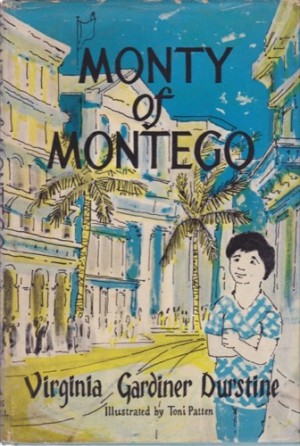
Hardcover. Indianapolis, Bobbs-Merrill, 1st, 1963, Book: Very Good, Dust Jacket: Good, Hardcover in a worn, lightly soiled dust jacket. INSCRIBED BY AUTHOR on the front fly leaf. B&w illustrations by Toni Patten. A young reader's novel set in Jamaica.
Hardcover. Syracuse NY, Syracuse University Press, 1st, 2010, Book: Very Good, Dust Jacket: Very Good, Hardcover in a bright dust jacket, 142 pages, b&w illustrations. In 1950, future Hall of Famer Earl Lloyd became the first African American to play in a National Basketball Association game. A warm and gracious man, widely loved and respected, Lloyd has lived what he describes as an 'incredible journey' and has spent eighty years gathering passionate lessons from that experience. He was born in Virginia, a state he describes as 'the cradle of segregation', only sixty-two years after the end of the Civil War. Nicknamed 'Moonfixer' in college, Lloyd led West Virginia State to two CIAA Conference and Tournament Championships and was named All-American twice. One of three African Americans to enter the NBA at that time, Lloyd played seven games for the Washington Capitals before the team folded. He joined the Syracuse Nationals for six seasons and later played for the Detroit Pistons before he retired in 1961. Throughout his career, he quietly endured the overwhelming slights and exclusions that went with being black in America. Yet he has also lived to see basketball - a demonstration of art, power, and pride - become the black national pastime and to witness the inauguration of Barack Obama. In a series of extraordinary conversations with Sean Kirst, Lloyd reveals his fierce determination to succeed, his frustration with the plight of many young black men, and his sincere desire for the nation to achieve true equality among its citizens. CLEAN COPY.
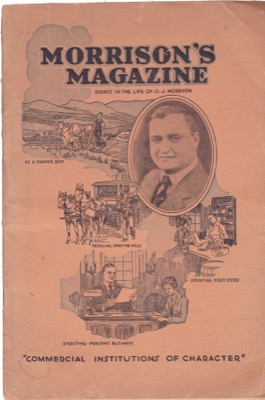
Softcover. Charleston WV, Morrison Department Store, 1928, Book: Very Good, Dust Jacket: None, Softcover, stapled tan wrappers, 72 pages. A brochure featuring the history of a line of department stores in West Virginia. The founder's philosophy laid out in boring detail. Interesting, great photos of his storefronts, store managers. Unusual.
Hardcover. NY, Time Life, reprint, 1982, Book: Very Good, Dust Jacket: None, 389 pages. Hardcover with no dust jacket. Dark blue leather bound with gilt titles to front cover and spine. Embossed decoration on front cover. Gilt text block edges, red ribbon marker. Clean, tight copy. The commander of a Georgia regiment through much of the Civil War mused later in his memoirs that the heaviest burden fell not upon the man at the front, but upon the woman who waited and prayed for victory: "While the men were carried away with the drunkenness of the war, she dwelt in the stillness of her desolate home." Sallie Brock Putnam spoke for Southern womanhood. She was a native of Madison County, Virginia, and seems to have come from a family of good social standing. The book contains an unexpectedly full history of the Civil War; the author exhibits a strong grasp of strategy and tactics. But at its heart is an incisive eyewitness account of life in a capital that was swollen to four times its normal population by the exigencies of war. Brock's descriptions of Jefferson Davis' inauguration and the Richmond Bread Riot of 1863 are dramatic, but no more so than her accounts of nameless refugees, race relations, opportunistic merchants and blockade runners. Confederate prisons and family matters. In contrast to other female Southern writers of the period, she was more sober and factual, less gossipy and speculative. She wrote with shrewdness and maturity, and with a remarkable lack of self-pity and exaggeration. Yet the reader cannot miss her courage, sacrifice and suffering. Sallie Brock Putnam died in 1911.
Hardcover. New York, Ralph Kenyan, 1st Edition, 1896, 511 pages. Hardcover. Over 200 b/w illustrations throughout. Cover boards bound in gray cloth, beveled at edges, gilt title/decoration on spine, gilt title and decoration on front cover board, designed engraved on back cover board. cover boards have some rubbing and light soil, a touch of fraying to top and bottom of spine. Previous owner's inscription on front preliminary page. Binding tight. Spine slightly cocked. "...From the Diary of a Private, Supplemented and Verified with Official Reports of Federal Officers and Also of Mosby; With Personal Reminiscences, Sketches of Skirmishes, Battles and Bivouacs, Dashing Raids and Daring Adventures, Scenes and Incidents in the History of Mosby's Command."
Hardcover. NY, Bantam Books, 1st, 1996, Book: Very Good, Dust Jacket: Very Good, Hardcover in a bright, unclipped dust jacket. SIGNED by the author on title page. A Mrs. Murphy mystery set in at the annual steeplechase races at Montpelier, the Virginia home of James and Dolly Madison. Like new.
Hardcover. NY, Aperture, 1st, 2005, Book: Very Good, Dust Jacket: Very Good, Hardcover, 107 pages, illustrated throughout in color. Introduction by Rebecca Solnit. Afterword by John McPhee. INSCRIBED BY PHOTOGRAPHER VIRGINIA BEAHAN on half title page. Light shelf-wear to dust jacket, else a clean, tight copy.
Hardcover. NY, Aperture, 1st, 2005, Book: Very Good, Dust Jacket: Very Good, Hardcover in a bright, unclipped dust jacket, 107 pages, illustrated throughout in color. Each of Beahan and McPhee's extraordinary images captures a point of collision between natural and constructed worlds. Introduction by Rebecca Solnit. Afterword by John McPhee. Light shelf-wear to dust jacket, else a clean, tight copy.

 "Ludmila: A Story of Liechtenstein (SIGNED COPY)by: Gallico, Paul")


 "M.C. Higgins, The Greatby: Hamilton, Virginia")
 "Magical Adventures of Pretty Pearl, Theby: Hamilton, Virginia")

 "Many Thousand Gone: African Americans from Slavery to Freedomby: Virginia Hamilton/Leo and Diane Dillon")
 "Marionettes, Theby: Faulkner, William")
 "Mary Colter - Builder upon the Red Earthby: Grattan, Virginia L.")




 "Metropolitan Lives: The Ashcan Artists and Their New Yorkby: Zurier, Rebecca & Robert W. Snyder & Virginia Mecklenburg")



 "Monticello in Measured Drawings: Drawings by the Historic American Buildings Survey / Historic American Engineering Record, Nationa Park Service by: William L. Beiswa")






 "Mosby's Rangers (Collector's Library of the Civil War)by: Williamson, James J.")
 "Mosby's Rangers: A Record of the Operations of the Forty-Third Battalion Virginia Cavalry, from its Organization to the Surrender...by: Williamson, James J.")


 "Murder, She Meowed (SIGNED COPY)by: Brown, Rita Mae and Sneaky Pie Brown")
 "New World, The: The First Pictures of America... With Contemporary Narratives of the French Settlements in Florida 1562 1565 and the English Colonies in Virginia 1585 1590 by:")
 "No Ordinary Land: Encounters in a Changing Environment (SIGNED COPY)by: Beahan, Virginia and Laura McPhee")