Hardcover. NY, The Macmillan Company, 1st, 1917, Book: Very Good, Dust Jacket: None, Hardcover, black cloth boards with red lettering and gilt decoration; b&w plates, frontis. by Alice Barber Stephens. Small bookplate on inside front cover. A memoir of growing up on the Wisconsin frontier, Garland recalls individuals, their relationships, and the colorful drama that made up their daily lives offers a glimpse into pioneer life in 19th-century mid-America. Clean, bright copy.
Softcover. Madison WI, University of Wisconsin Press, 2nd pr., 1995, Book: Very Good, Dust Jacket: None, Softcover, 570 pages. A scholarly study of British anthropologists and their contributions. Clean copy.
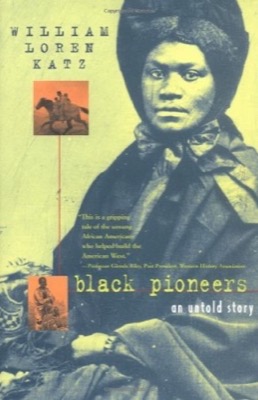
Hardcover. NY, Atheneum, 3rd pr., 1999, Book: Very Good, Dust Jacket: Very Good, Hardcover in a bright, unclipped dust jacket. In a clear, straightforward style, Katz describes the settlement of the Ohio and Mississippi Valleys (covering Ohio, Indiana, Illinois, Michigan, Wisconsin, Minnesota, Iowa, Kansas, and Missouri) by African Americans seeking freedom, including biographical sketches of men and women who formed churches, started schools, or were politically active in their region. Some of these settlers were fugitive slaves; several set up stations on the Underground Railroad with the aid of the Quakers; others were farmers, poets, and soldiers. In several states, they helped form black regiments in the Civil War. Chronologically arranged, the book introduces many lesser-known personages not found in most collective biographies and places them in a broader context of U.S. history as a whole.
Hardcover. NY, Atheneum, 3rd pr., 1999, Book: Very Good, Dust Jacket: Very Good, Hardcover in a bright, unclipped dust jacket. In a clear, straightforward style, Katz describes the settlement of the Ohio and Mississippi Valleys (covering Ohio, Indiana, Illinois, Michigan, Wisconsin, Minnesota, Iowa, Kansas, and Missouri) by African Americans seeking freedom, including biographical sketches of men and women who formed churches, started schools, or were politically active in their region. Some of these settlers were fugitive slaves; several set up stations on the Underground Railroad with the aid of the Quakers; others were farmers, poets, and soldiers. In several states, they helped form black regiments in the Civil War. Chronologically arranged, the book introduces many lesser-known personages not found in most collective biographies and places them in a broader context of U.S. history as a whole.
Softcover. University of Chicago Press, 2nd pr., 2011, Book: Very Good, Dust Jacket: None, Softcover, 219 pages. Both Hands Tied studies the working poor in the United States, focusing in particular on the relation between welfare and low-wage earnings among working mothers. Grounded in the experience of thirty-three women living in Milwaukee and Racine, Wisconsin, it tells the story of their struggle to balance child care and wage-earning in poorly paying and often state-funded jobs with inflexible schedules--and the moments when these jobs failed them and they turned to the state for additional aid. Clean copy.
Hardcover. Madison WI, University of Wisconsin Press, 1st, 2010, Book: Very Good, Dust Jacket: Very Good, Hardcover in a bright dust jacket, 203 pages. INSCRIBED BY AUTHOR on title page. Catina's Haircut: A Novel in Stories spans four generations of a peasant family in the brutal poverty of post-Unification southern Italy and in an immigrant's United States. The women in these tales dare to cross boundaries by discovering magical leaps inherent in the landscape, in themselves, and in the stories they tell and retell of family tragedy at a time of political unrest. Clean copy.
Hardcover. Exton PA, Schiffer Publishing, 1st, 1981, Book: Very Good, Dust Jacket: Very Good, Hardcover in a lightly worn dust jacket, 271 pages. Black and white and color photos throughout. A history and study of the making and use of duck decoys along the Mississippi flyway, looking at makers in regions such as Canada, Wisconsin, Minnesota, Michigan, Ohio, Indiana, Illinois, Iowa, Missouri, Mississippi and Louisiana.
Hardcover. The New Press, 1st, 1997, Book: Very Good, Dust Jacket: Very Good, Hardcover, 207 pages. Historian Michael Lesy, author of Wisconsin Death Trip, has produced another haunting volume with Dreamland. The book chronicles a day in the life of America at the turn of the 20th century, an optimistic, peaceful time. Lesy chose 208 black-and-white pictures from the archive of the Detroit Publishing Company, the hugely successful postcard business. The images depict skyscrapers under construction, bustling urban streets, farmers and dusty country roads, and the glories of the newly charted American West, with its cowboys, miners, and distant prairie towns. The atmosphere of order and calm portrayed in the photographs is deceptive, as Lesy's thoughtful essays reveal.
Hardcover. Iola, Wisconsin, Krause Publications, inc., 3rd Expanded, 1990, Book: Very Good, Dust Jacket: None, 482 pages, illustrated throughout in color and b&w. Pictorial paper boards, no dust jacket. Slight wear and rubbing along edges, else a very nice, tight copy.
Hardcover. Boulder Junction, Wisconsin, Aardvark Publications, Incorporated, 1st , 1987, Book: Very Good, Dust Jacket: None, 192 pages. Very minor wear on spine edge and cover corners. Lots of pictures, almost all in color. In excellent condition, a very clean and tight copy.
Hardcover. Madison WI, Wisconsin Historical Society Press, 1st, 2014-03-15, Book: Very Good, Dust Jacket: Very Good, 119 pages, illustrated throughout in color. Clean, unmarked copy with only minor wear to dust jacket. Carl Corey turns his camera on Wisconsin family-owned businesses in existence fifty years or longer. The businesses portrayed here--bakeries and barbecue joints, funeral homes and furniture builders, cheesemakers, fishermen, ferry boat drivers--have survived against all the odds, weathering tough economic times and big-business competition. The owners are loyal to their employees, their families, and themselves. And they are integral to their local economies and social fabric.
Racine, Wisconsin, Whitman Publishing Co., 1st, 1935, Book: Good, Dust Jacket: Fair, Hardcover, 62 pages. Black & white and color illustrations by Frances Tipton Hunter. Dust jacket with major edgewear, chipping and soil. Pieces missing from edges.
Hardcover. St. Paul MN, Webb Publishing Co., 1st, 1953, Book: Very Good, Dust Jacket: Very Good, Hardcover. Dark green pictorial cloth stamped in gilt. 124 pages with numerous photos & diagrams in text. A bright copy with a similar dust jacket. Clean copy. "A personal story of the author's experience of 33 years with nut culture in Minnesota and Wisconsin. Includes his failures as well as final successes."
Hardcover. Madison WI, University of Wisconsin Press/Terrace Books, 1st, 2007, Book: Very Good, Dust Jacket: Very Good, Hardcover in a bright dust jacket, 164 pages. Jean Feraca's road to self-fulfillment has been as quirky and demanding as the characters in her memoir. A twenty-five-year veteran of public radio broadcasting, Feraca is also a writer and a poet. She is a talk show host beloved for her unique mixture of the humanities, poetry, and journalism, and is the creator of the pioneering international cultural affairs radio program Here on Earth: Radio without Borders. In this searing memoir, Feraca traces her own emergence. She pulls back the curtain on her private life, revealing unforgettable portraits of the characters in her brawling Italian American family: Jenny, the grandmother, the devil woman who threw Casey Stengel down an excavation pit; Dolly, the mother, a cross between Long John Silver and the Wife of Bath who in battling mental illness becomes the scourge of a Lutheran nursing home; and Stephen, the brilliant but troubled older brother, an anthropologist who was adopted into a Sioux tribe. Unique, eccentric, and distinctive, I Hear Voices is a memoir that tells a universal story of a woman evolving to fully embrace her life and the world. INSCRIBED BY AUTHOR on title page. Handwritten letter also laid in.
Hardcover. NY, Literary Guild/Doubleday Doran & Co., reprint, 1938, Book: Very Good, Dust Jacket: None, Hardcover, red cloth covers with black stamping, 281 pages. Endpapers and b&w illustrations by Thomas Fogarty. The boyhood adventures of Jerry Foster set in rural Wisconsin in the 1800s. Clean copy.
Hardcover. University of Wisconsin Press, 1st, 2005, Book: Very Good, Dust Jacket: Very Good, Hardcover, 92 pages. Kings in Their Castles, a collective portrait of the gay urban community in America, offers a personal view of some of our leading artists, writers, filmmakers, composers, musicians, and designers. Among the celebrities Atwood photographs in their playful, revealing homes are Edward Albee, Todd Oldham, John Waters, Ross Bleckner, Joel Schumacher, Junior Vasquez, Michael Cunningham, Simon Doonan, Andrew Solomon, Ned Rorem, James Dale, David Del Tredici, Tommy Tune, John Ashbery, Edmund White, and John Bartlett. Atwood also documents the bohemians, beatniks, mavericks, and iconoclasts, an urban community that is slowly disappearing. Capturing whimsical, intimate moments of daily life and portraying the complexity and diversity of this loosely linked society, Atwood reveals some of the most intriguing characters and homes in gay America. These beautiful fine art prints--shifting between the pictorial and the theatrical--become both a witness and a celebration.
Softcover. NY, Available Press/Ballantine, 1st, 1986, Book: Very Good, Dust Jacket: None, Softcover, 191 pages. Last Words is the first major collection of poems by a Milwaukee poet born soon after World War II who reached maturity during the late 1960s. It contains his highly acclaimed epic "Factory,"described by Allen Ginsberg as "a definitely powerful epic by one of Whitman's 'poets and orators to come.'" Antler was born in Milwaukee and grew up in Wauwatosa, Wisconsin. He "worked his way through college" in various factories. As John Muir left the University of Wisconsin at Madison for "the University of the Wilderness" in 1863, Antler left the Milwaukee campus for the same destination in 1973. Besides factories, he has explored wildernesses in Upper Peninsula Michigan, Minnesota, Ontario, Colorado, and California. Clean copy.
Hardcover. Baltimore, The Johns Hopkins University Press, 2nd printing, 1995, Book: Very Good, Dust Jacket: Very Good, Hardcover, 348 pages, illustrated throughout in b&w. Light shelf-wear to dust jacket. Overall, a tight clean copy. "In this original and authoritative work, Vance argues that the railroad in North America is a distinct indigenous creation and not an importation from Britain and Europe. His combined familiarity with railroading, routes and cities, facilities, and North American geography is unsurpassed and the result is quite unlike anything in the historical or specialist literature."--Donald Meinig, Syracuse University "No previous book has presented the over-all picture of the development of the North American railroad network with Vance's emphasis on the reciprocal relationships among the economic and technological conditions on the one hand and the geographic aspects of development on the other. The scope of the presentation is virtually encyclopedic -- and there is no doubt that the book will quickly become a standard reference on the subject." -- Harold M. Mayer, University of Wisconsin, Milwaukee
Hardcover. Wisconsin, Whitman Publishing Company, 1st, 1932, Book: Very Good, Dust Jacket: Good, 213 pages. hardcover. Deckled edge. Pages yellowed with age, Dust jacket shows some age wear, but still intact. Pages and edges yellowed with some foxing. Adolescent/teen reader of some age and in good shape.
Hardcover. Pierre SD, South Dakota Historical Society Press, 1st, 2114, Book: Very Good, Dust Jacket: Very Good, Hardcover in a bright, unclipped dust jacket. Hidden away since the 1930s, Laura Ingalls Wilder s never-before-published autobiography reveals the true stories of her pioneering life. Some of her experiences will be familiar; some will be a surprise. Pioneer Girl re-introduces readers to the woman who defined the pioneer experience for millions of people around the world. Through her recollections, Wilder details the Ingalls family s journey from Kansas, Missouri, Wisconsin, Minnesota, Iowa, back to Minnesota, and on to Dakota Territory sixteen years of travels, unforgettable stories, and the everyday people who became immortal through her fiction. Using additional manuscripts, diaries, and letters, Pioneer Girl: The Annotated Autobiography builds on Wilder's work by adding valuable context and explores her growth as a writer. Clean copy.
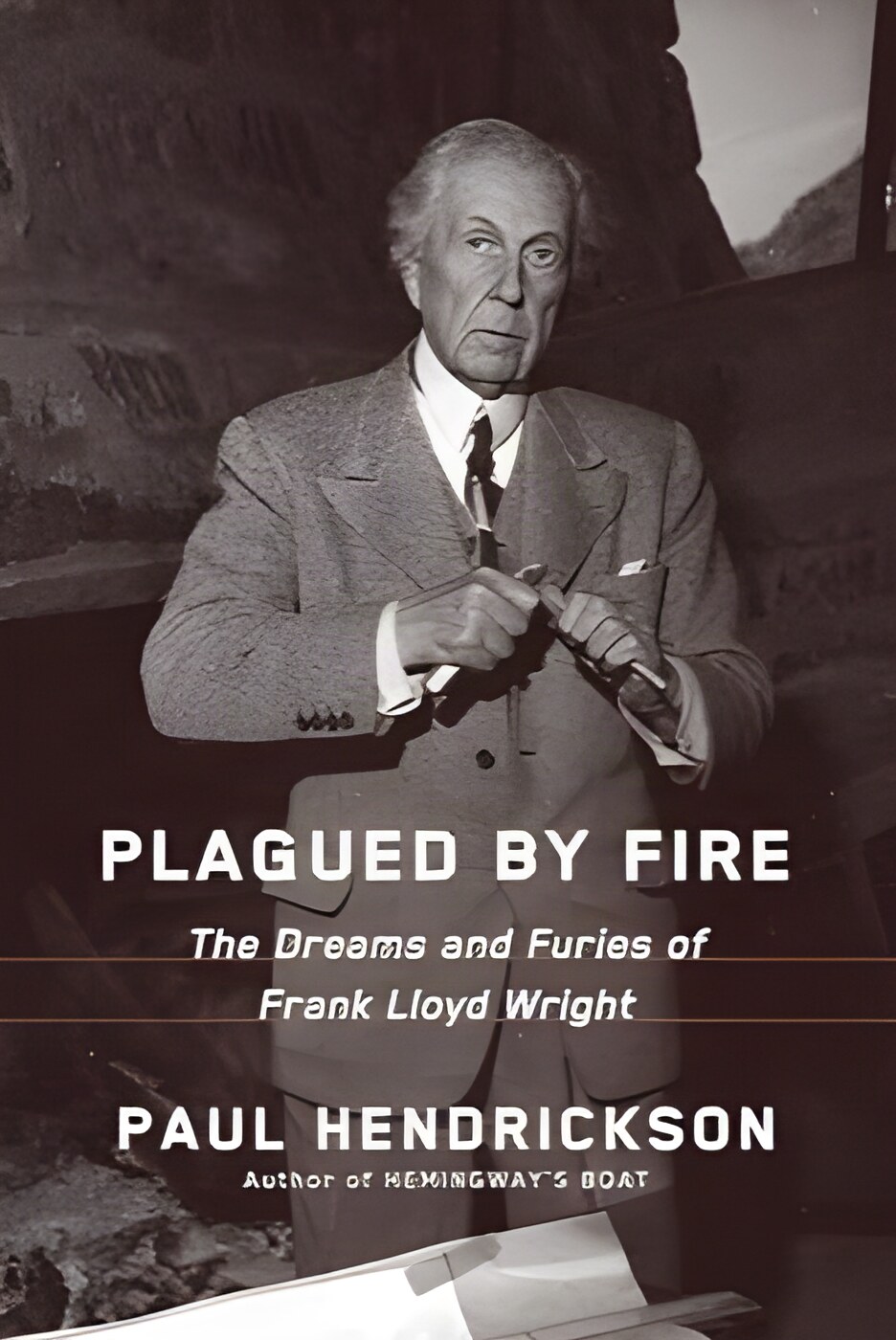
Hardcover. NY, Knopf, 1st, 2019, Book: Very Good, Dust Jacket: Very Good, Hardcover in a bright, unclipped dust jacket, 600 pages. Frank Lloyd Wright has long been known as a rank egotist who held in contempt almost everything aside from his own genius. Harder to detect, but no less real, is a Wright who fully understood, and suffered from, the choices he made. This is the Wright whom Paul Hendrickson reveals in this masterful biography: the Wright who was haunted by his father, about whom he told the greatest lie of his life. And this, we see, is the Wright of many other neglected aspects of his story: his close, and perhaps romantic, relationship with friend and early mentor Cecil Corwin; the eerie, unmistakable role of fires in his life; the connection between the 1921 Black Wall Street massacre in Tulsa, Oklahoma, and the murder of his mistress, her two children, and four others at his beloved Wisconsin home.In showing us Wright's facades along with their cracks, Hendrickson helps us form a fresh, deep, and more human understanding of the man. Clean copy.
Hardcover. New York , Hudson Hills Press , 1st, 1997, Book: Very Good, Dust Jacket: Very Good, 453 pages, cloth binding, dj, new copy still in publisher's shrinkwrap. 381 color & 107 b/w illustrations, 453 pages, 9x12. Published in conjunction with the exhibition Claes Oldenburg: Printed Stuff, held at the Madison Art Center, Madison, Wisconsin, Apr. 27-July 27, 1997, and at other places.
Hardcover. Ithaca NY, Cornell University Press, 1st, 2004, Book: Very Good, Dust Jacket: Very Good, Hardcover in a bright dust jacket, 260 pages. From the dawn of the twentieth century to the early 1960s, public-sector unions generally had no legal right to strike, bargain, or arbitrate, and government workers could be fired simply for joining a union. Public Workers is the first book to analyze why public-sector labor law evolved as it did, separate from and much more restrictive than private-sector labor law, and what effect this law had on public-sector unions, organized labor as a whole, and by extension all of American politics. Joseph E. Slater shows how public-sector unions survived, represented their members, and set the stage for the most remarkable growth of worker organization in American history. Slater examines the battles of public-sector unions in the workplace, courts, and political arena, from the infamous Boston police strike of 1919, to teachers in Seattle fighting a yellow-dog rule, to the BSEIU in the 1930s representing public-sector janitors, to the fate of the powerful Transit Workers Union after New York City purchased the subways, to the long struggle by AFSCME that produced the nation's first public-sector labor law in Wisconsin in 1959. Slater introduces readers to a determined and often-ignored segment of the union movement and expands our knowledge of working men and women, the institutions they formed, and the organizational obstacles they faced.
Hardcover. Madison WI, University of Wisconsin Press, 1st, 1989, Book: Very Good, Dust Jacket: Good, Hardcover in a lightly worn dust jacket with fading to the spine. "Cary Nelson performs an invaluable service to the reader by recovering the work of dozens of forgotten poets, especially women, blacks, and writers on the left, while making it clear that the texts we recover inevitably gain new meaning from their positioning within contemporary culture." Nicely illustrated in b&w and some color, mostly book jackets and title pages of books discussed. Some light pencil marking in margins.


 "After Tylor: British Social Anthropology 1888-1951by: Stocking Jr., George W.")
 "Black Pioneers: An Untold Storyby: William Loren Katz")


 "Decoys of the Mississippi Flyway by: Alan G. Haid")
 "Dreamland: America at the Dawn of the Twentieth Centuryby: Michael Lesy")
 "Early Paper Money of America, The by: Newman, Eric P.")

 "For Love and Money: Portraits of Wisconsin Family Businessesby: Corey, Carl")
 "Frances Tipton Hunter Picture Book, Theby: Barrows, Marjorie")
 "Growing Nuts in the North by: Carl Weschcke")



 "Jerry of Seven Mile Creekby: Ferris, Elmer E.")
 "Kings in Their Castles: Photographs of Queer Men at Homeby: Tom Atwood and Charles Kaiser")

 "North American Railroad, The : Its Origin, Evolution, and Geographyby: Vance Jr., James E.")

 "Printed Stuff: Prints, Poster, and Ephemera by Claes Oldenburg A Catalogue Raisonne 1958-1996by: Axsom, Richard H.")

 "Repression And Recovery: Modern American Poetry & Politics Of Cultural Memory 1910-1945by: Cary Nelson")