Hardcover. Germany, Taschen, 1st, 2013, Book: Very Good, Dust Jacket: Very Good, 3-vol set in slip case. Hardcovers. Like new in publisher's shrink-wrap. Editor Dian Hanson traces the fascinating development of the genre from 1900 to 1969 in three compact, informative volumes. In Volume 1 you'll learn about the first magazines that appeared around 1900 in France, Germany, and the U.S., and follow the development of the genre through the First and Second World Wars. Covered are men's magazines masquerading as movie magazines, humor magazines, art magazines, nudist magazines, and "spicy" fiction. Volume 2 documents the proliferation of pin-up magazines following World War II, most notably a little item called Playboy that debuted in December 1953 and spawned dozens of imitators. This volume also charts the emergence of English men's magazines, fetish magazines, and the top five covergirls of the 1950s. Volume 3 begins with an explosion of new American pin-up magazines following the loosening of U.S. obscenity laws, and continues with French titles in decline, England going pervy; nudists going hippy, and Germany going pervy, hippy and political.
Softcover. NY, Harper Design, reprint, 2011, Book: Very Good, Dust Jacket: None, Softcover, 308 pages. Eleanor Dwight delivers the definitive biography of Diana Vreeland, the twentieth century's most influential fashion editor. Lavishly illustrated with exclusive photographs and personal materials from the legendary style maker's private collection, and featuring a new preface from Vogue's Andre LeonTalley, Diana Vreeland is an indispensible look at a grand dame of great couture. Lavishly illustrated with more than three hundred drawings and photographs, many by the best fashion photographers of the time: Louise Dahl-Wolfe, Irving Penn, Cecil Beaton, and Brassai. Here, too, are the trendsetters, artists, models, and celebrities with whom Vreeland worked and played, including Coco Chanel, Yves Saint Laurent, Hubert de Givenchy, Oscar de la Renta, Elsie de Wolfe, Andy Warhol, Truman Capote, and Jacqueline Kennedy.
Hardcover. NY, Assouline Publishing, 1st, 2004, Book: Very Good, Dust Jacket: Very Good, Hardcover, 80 pages. Diane von Furstenberg arrived in the fashion world in 1972 with her simple knit jersey wrap dresses. By 1976, Diane had sold more than 5 million of her signature wrap dresses, which had come to symbolize female power and liberation to an entire generation. Almost 20 years later, with the nostalgia for '70s fashion at its peak, Diane re-emerged on the New York fashion scene with her signature wrap modified for a new generation of chic young women. Now with smaller collars than the original wrap, the new version has been enthusiastically adopted by today's trendsetters and celebrities. This volume looks at the history of the "wrap" phenomenon, from its revolutionary early days to its ever-popular present.
Softcover. Santa Barbara, McNally & Loftin, 1st, 1980, Book: Very Good, Dust Jacket: None, Softcover, 256 pages, b&w photos. Margaret Eaton and her husband Ira were well known to Santa Barbarans in the early part of this century as operators of the Pelican Bay Camp on Santa Cruz Island. Beginning humbly with small-scale commercial fishing, seal hunting and passenger charters, the Eatons gradually developed a unique resort that came to be popular among writers, film companies and people from all over the country. Working from her diary and her memories, Mrs. Eaton wrote this extraordinary story of her life over a period of many years, until her death in 1947. She is remembered by her daughter, Vera Eaton Amey, as a fearless and compassionate women. Mrs. Amey has done admirably well in sorting through mountains of letters, clippings and photographs to organize her mother's manuscript. She has also painstakingly consulted other sources to confirm, as much as possible, the accuracy of these recollections.
Hardcover. NY, Columbia University Press, 1st, 2010, Book: Very Good, Dust Jacket: Very Good, Hardcover in a bright dust jacket, 379 pages. As religious leaders, ministers are often assumed to embody the faith of the institution they represent. As cultural symbols, they reflect subtle changes in society and belief-specifically people's perception of God and the evolving role of the church. For more than forty years, Douglas Alan Walrath has tracked changing patterns of belief and church participation in American society, and his research has revealed a particularly fascinating trend: portrayals of ministers in American fiction mirror changing perceptions of the Protestant church and a Protestant God. From the novels of Harriet Beecher Stowe, who portrays ministers as faithful Calvinists, to the works of Herman Melville, who challenges Calvinism to its very core, Walrath considers a variety of fictional ministers, including Garrison Keillor's Lake Woebegon Lutherans and Gail Godwin's women clergy. He identifies a range of types: religious misfits, harsh Puritans, incorrigible scoundrels, secular businessmen, perpetrators of oppression, victims of belief, prudent believers, phony preachers, reactionaries, and social activists. He concludes with the modern legacy of nineteenth- and early-twentieth-century images of ministers, which highlights the ongoing challenges that skepticism, secularization, and science have brought to today's religious leaders and fictional counterparts. Clean copy.
Hardcover. NY, Oxford University Press, 1st, 1992, Book: Very Good, Dust Jacket: Very Good, Hardcover in a bright dust jacket, 418 pages. The first book to show how the Civil War transformed gender roles and attitudes toward sexuality among Americans. This unique volume brings together a wide spectrum of critical viewpoints by newly emerging scholars as well as distinguished authors in the field to show how gender became a prism through which the political tensions of antebellum America were filtered and focused. Through the course of the book, many fascinating subjects are explored, from new "manly" responsibilities both black and white men had thrust upon them as soldiers, to women's roles in the guerrilla fighting, to the wartime dialogue on interracial sex. In addition, an incisive introduction by Pulitzer Prize-winning historian James McPherson helps place these various subjects within an overall historical context. Copyright page states first edition, but no price on dj says Book Club. Clean, bright copy.
Softcover. Utica NY, North Country Books, 1st, 2000, Book: Very Good, Dust Jacket: None, Softcover, 325 pages, b&w illustrations. Mary Arakelian's biography of Dr. Orra Phelps is the story of an exceptional woman whose unselfish contribution to our knowledge of the Adirondacks is a legacy still enjoyed by lovers of the outdoors. Using letters written between Orra and her mother, the author provides an intimate portrait of Orra's life as a physician, naturalist, botanist, hiker, mountaineer, teacher, and writer. From the hardship of growing up at the turn of the century, through her difficult years as a woman in medical school, to her writing of the Adirondack Mountain Club's 1934 Guide to Adirondack Trails, Arakelian introduces us to a gifted woman. Phelps's intelligence, physical stamina, and boundless enthusiasm underscore her legacy as one of New York State's truly remarkable women of the 20th century. Clean copy.
Softcover. Dorset VT, Two Damned Yankees, 1st, 2002, Book: Very Good, Dust Jacket: None, Softcover, 148 pages, b&w cartoons by Sandy Read. SIGNED BY TYLER on the inside front cover. From the author's Introduction: "Once upon a time there was a group of towns in the North shire of Bennington County in the State of Vermont. these towns, not that many years ago, were peopled for the most part with hardy citizens who were steeped in the work ethic and spoke in the vernacular of men and women that did not mince words when expostulating their opinions, both philosophical and political. These are stories in their own language and graphic descriptions. No expletives have been deleted in the belief that any child that can read, and many that cannot have already heard them if indeed they are not allowed to use them in polite company".and, further on, "Most of the incidents recorded here occurred in the latter half of the 20th century. Many of the principals have gone to their reward, but they should be remembered as the philosophers and movers and shakers during their lives." Clean, bright copy.
Softcover. NY, St. Martin's Press, reprint, 1997, Book: Very Good, Dust Jacket: None, Softcover, 398 pages. Mystery writer Dorothy Sayers is loved and remembered, most notably, for the creation of sleuths Lord Peter Wimsey and Harriet Vane. As this biography attests, Sayers was also one of the first women to be awarded a degree from Oxford, a playwright, and an essayist--but also a woman with personal joys and tragedies. Here, Reynolds, a close friend of Sayers, presents a convincing and balanced portrait of one of the 20th century's most brilliant, creative women. 30 b&w photos. Clean, bright copy.
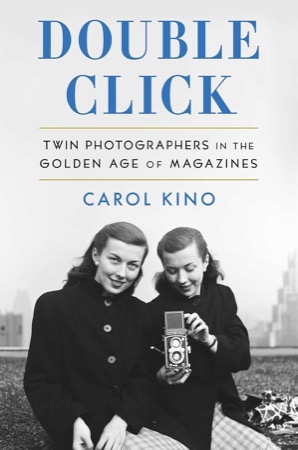
Hardcover. NY, Scribner, 1st, 2024, Book: Very Good, Dust Jacket: Very Good, Hardcover in a bright, unclipped dust jacket, 405 pages, b&w illustrations. The McLaughlin twins were trailblazing female photographers, celebrated in their time as stars in their respective fields, but have largely been forgotten since. Here, in Double Click, Carol Kino brings these two brilliant women and their remarkable accomplishments to vivid life. Frances was the only female photographer on staff in Conde Nast's photo studio, hired just after Irving Penn, and became known for streetwise, cinema verite-style work, which appeared in the pages of Glamour and Vogue. Her sister Kathryn's surrealistic portraits filled the era's new "career girl" magazines, including Charm and Mademoiselle. Both twins married Harper's Bazaar photographers and socialized with a glittering crowd that included the supermodel Lisa Fonssagrives and the photographer Richard Avedon. Kino uses their careers to illuminate the lives of young women during this time, an early 20th-century moment marked by proto-feminist thinking, excitement about photography's burgeoning creative potential, and the ferment of wartime New York.
Hardcover. NY, Metropolitan Books, 1st, 2020, Book: Very Good, Dust Jacket: None, Hardcover, pictorial boards with maroon cloth spine. WINNER OF SPECIAL JURY PRIZE AT 2021 FESTIVAL D'ANGOULEME - NAMED A BEST GRAPHIC NOVEL OF 2020 BY THE GUARDIAN From "Britain's most loved comics artist" comes a superhero epic like no other-an ordinary man gains superpowers by donning women's clothing, saving London and maybe even himself. August Crimp can fly, but only when he wears women's clothes. Soaring above a gorgeous, lush vista of London, he is Dragman, catching falling persons, lost souls, and the odd stranded cat. After he's rejected by the superhero establishment, where masked men chase endorsement deals rather than criminals, August quietly packs up his dress and cosmetics and retreats to normalcy - a wife and son who know nothing of his exploits or inclinations.
Hardcover. NY, Pointed Leaf Press, 1st, 2008, Book: Very Good, Dust Jacket: Very Good, Hardcover in a bright dust jacket. The first monograph on the work of Kenneth Paul Block, one of the most influential fashion illustrators of the twentieth century. The oversize, lavishly illustrated book chronicles Block's lifetime of drawings, watercolors, and astute observations during the artist's over 30-year career at Women's Wear Daily, powerful fashion publication. A long awaited book of astonishingly vibrant fashion and portrait drawings of swan necked beauties by a much admired fashion-insider. Mr. Block studied at The Parsons school of Design and illustrated the work of the most influential fashion designers from about the mid 20th century to the nineties before unoriginal, mediocre photography (and unskilled illustrations) completely dominated how fashion was communicated to the celebrity obsessed, style challenged, uninformed masses. With seemingly effortless ease (the energy in the art looks like it could have been sketched yesterday!), Mr. Block drew the ever changing mood of fashion from London Mod to Italian Modern, Preppy Classic to Japanese Experimental, French couture to American casual and inspired many generations of fashion enthusiasts in the process. Mr. Block's portraits showcase a few of his favorite ladies. A rare and exquisite breed who set the standard for elegance and chic for most of the 20th century. Society beauties like Mrs. Guinness, Mrs. Paley, Mrs. Guest, Mrs. Vanderbilt and Mrs. Kennedy speak of a time when grace, poise and mystery mixed with a certain sense of knowing defined a chic, stylish lady. PLEASE NOTE: The book,while clean and bright, has a mild musty smell. DOMESTIC SHIPPING ONLY due to size and weight.
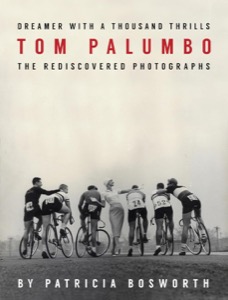
Hardcover. NY, powerHouse Books, 1st, 2018, Book: Very Good, Hardcover, 240 pages. During the 1950s and 60s, Tom Palumbo was part of an influential group of young photographers working for the best fashion magazines in America -Harper's Bazaar and Vogue. Tom perfected his craft under the guidance of legends like Alexey Brodovitch, Carmel Snow, Diana Vreeland, and Alex Liberman. Tom's serene style contrasted with Richard Avedon's jazzed-up images and Lillian Bassman's soft blurred effects. Often Tom's particular layouts provided the balance in an issue. His pictures invariably enhanced the fashions of the 50s, where women were thought of as objects of worship, and beauty was thought of as an ideal. Tom photographed every day, producing unique images like jazz legend Miles Davis laughing. He loved taking pictures of artists like next-door neighbors Comden and Green; the young Mia Farrow and Jane Fonda; novelist Jack Kerouac. Late in life, Tom worked in theatre. But to him there was never much difference in the photographs he took or the plays he directed since both contained drama. Paradox and revelation-these two elements energized Tom Palumbo's life. These rediscovered photographs, celebrated in their time but not seen in decades, are presented here in book form for the first time ever, by award-winning author and Palumbo's widow, Patricia Bosworth. Clean, still in publisher's shrinkwrap.
Hardcover. Boston/NY, Bulfinch/Little Brown, 1st, 2002, Book: Very Good, Dust Jacket: Very Good, Hardcover, 96 pages. Essay by Maria Morris Hambourg. Includes 54 tritones, 10 text illustrations and 4 gatefolds. A clean and tight near fine copy. Published in conjunction with a traveling show that ran January 14 through April 21, 2002 at The Metropolitan Museum of Art
Hardcover. NY, Rizzoli, Revised Ed., 2007, Book: Very Good, Dust Jacket: None, Hardcover, 777 pages. In the art of Edward Hopper (1882-1967), tense, unhappy men and women, in whom we recognize something of our neighbors and ourselves, play out mysterious dramas in silent, stripped-down spaces - stages raked by an unrelenting and revealing light. These paintings, and Hopper's equally evocative landscapes and houses, make us wonder: what kind of man had this haunting vision, and what kind of life engendered this art? No one is better qualified to answer these questions than the art historian Gail Levin, author of the major studies of Hopper's work (including the catalogue raisonne) and curator of many exhibitions that explored his development and cultural context. Delving deeply into his art and into a rich archive of unpublished letters and diaries, she now constructs "An Intimate Biography, " which reveals the true nature and personality of the man himself - and of the woman who shared his life and helped to shape his art. Jo Hopper's diaries permit an intimate look at the interactions of an indissolubly bonded couple, revealing for the first time the personal tensions that lie behind some of Hopper's most haunting works. Lacks dust jacket but a clean, bright copy.
Hardcover. New York, Bullfinch Press, 1st, 2005, Book: Very Good, Dust Jacket: Very Good, 128 pages. Hardcover with dust jacket. Light abrasions on bottom corners. Light edgewaer to dust jacket. Clean, tight copy.
Hardcover. NY, Scribner, 1st, 2012, Book: Very Good, Dust Jacket: Very Good, Hardcover in a bright, unclipped dust jacket. SIGNED BY OTTO on the title page. This captivating novel opens in 1917 as Cymbeline Kelley surveys the charred remains of her photography studio, destroyed in a fire started by a woman hired to help take care of the house while Cymbeline pursued her photography career. This tension-- between wanting and needing to be two places at once; between domestic duty and ambition; between public and private life; between what's seen and what's hidden from view--echoes in the stories of the other seven women in the book. Among them: Amadora Allesbury, who creates a world of color and whimsy in an attempt to recapture the joy lost to WWI; Clara Argento, who finds her voice working alongside socialist revolutionaries in Mexico; Lenny Van Pelt, a gorgeous model who feels more comfortable photographing the deserted towns of the French countryside after WWII than she does at a couture fashion shoot; and Miri Marx, who has traveled the world taking pictures, but also loves her quiet life as a wife and mother in her New York apartment. Crisscrossing the world and a century, Eight Girls Taking Pictures is an affecting meditation on the conflicts women face and the choices they make. These memorable characters seek extraordinary lives through their work, yet they also find meaning and reward in the ordinary tasks of motherhood, marriage, and domesticity. Most of all, this novel is a vivid portrait of women in love--in love with men, other women, children, their careers, beauty, and freedom.
Hardcover. US, Glitterati, 1st, 2015, Book: Very Good, Dust Jacket: Very Good, Like new in publisher's shrink-wrap. Hardcover, 272 pages. In his debut book of photography, with a foreword by one of the luminaries of NYC culture and entertainment, Adrian Buckmaster's monograph presents a staggeringly beautiful collection of portraits - a cross-section of humanity in all of its glorious diversity, from the ordinary to the extraordinary and everything in-between. Having spent his early years shooting commercial beauty and fashion, Buckmaster soon shifted focus to more personal projects, challenging conventional notions of beauty and celebrating the eccentricities of those whom society might classify as "misfits." Echoes of Buckmaster's early career remain, in the form of exquisite costuming, make-up, and scenic design. Despite an element of performance, there is an undeniable rawness to these portraits, in which subjects are both aware of the camera's gaze and sympathetically self-conscious, robing and disrobing, revealing and concealing. Buckmaster's photographic genius is encapsulated in his uncanny ability to fastidiously art direct while simultaneously stripping away layers of formality and convention. Arranged in three movements: Imposing, Revealing, and Inventing, this collection progresses from traditional portraiture to increasingly intimate portrayals, as subjects expose, create, and invent themselves. Included in this endlessly varied spectrum of characters are Burlesque performers, families, brides, lovers, and all manner of tattoos and body piercings. There are classical reclining nudes, reminiscent of Edouard Manet's Olympia or Titian's Sleeping Venus, dancers with incredible physical strength and dexterity, women costumed as peacocks and geishas, a contortionist inside a trunk, even a green-skinned man, bejewelled like an Indian deity.
Hardcover. Seattle, University of Washington Press, 1st, 2019, Book: Very Good, Dust Jacket: Very Good, Hardcover in a bright dust jacket, color illustrations; 7.2 X 0.9 X 10.3 inches; 272 pages. Tang dynasty (618-907) China hummed with cosmopolitan trends. Its capital at Chang'an was the most populous city in the world and was connected via the Silk Road with the critical markets and thriving cultures of Central Asia and the Middle East. In Empire of Style, BuYun Chen reveals a vibrant fashion system that emerged through the efforts of Tang artisans, wearers, and critics of clothing. Across the empire, elite men and women subverted regulations on dress to acquire majestic silks and au courant designs, as shifts in economic and social structures gave rise to what we now recognize as precursors of a modern fashion system: a new consciousness of time, a game of imitation and emulation, and a shift in modes of production. This first book on fashion in premodern China is informed by archaeological sources-paintings, figurines, and silk artifacts-and textual records such as dynastic annals, poetry, tax documents, economic treatises, and sumptuary laws. Tang fashion is shown to have flourished in response to a confluence of social, economic, and political changes that brought innovative weavers and chic court elites to the forefront of history. Still in publisher's shrinkwrap.
Hardcover. NY, Harper, 1st, 2012, Book: Very Good, Dust Jacket: Very Good, Hardcover, 419 pages, photos in color and b&w. Remainder mark to bottom edge, else a clean, tight copy.
Hardcover. US, Harper, 1st, 2012, Book: Very Good, Dust Jacket: Very Good, 419 pages, photos in color and b&w. Remainder mark to bottom edge, else a clean, tight copy.
Softcover. NY, Da Capo Press, reprint, 2000, Book: Very Good, Dust Jacket: None, Softcover, 307 pages, b&w illustrations. In 1978, more than 2,500 letters written over a 30 year friendship between First Lady Eleanor Roosevelt and reporter Lorena Hickok were discovered by archivists. The find created a controversy over the nature of the women's relationship. Streitmatter transcribed and annotated more than 300 of these letters, published here for the first time, and placed them within the context of these two women's extraordinary lives. Roosevelt is surprisingly sarcastic and funny, tender and vulnerable, and even, at times, judgmental and petty. Clean copy.

 "Dian Hanson's History of Pin-up Magazines Vol. 1-3by: Hanson, Dian (editor)")


 "Diana Vreelandby: Eleanor Dwight")
 "Diane Von Furstenberg: The Wrapby: Talley, Andre Leon")


![Divided Houses: Gender and the Civil Warby: Clinton, Catherine /Silber, Nina [Editors]](https://www.browsingisarousing.com/shop/images/397501.jpg "Divided Houses: Gender and the Civil Warby: Clinton, Catherine /Silber, Nina [Editors]")

 "Don't Scratch Too Deep!: The Profane History of a Vermont Valley (SIGNED COPY)by: Terry Tyler")
 "Dorothy L. Sayers: Her Life and Soulby: Barbara Reynolds")
 "Dragman: A Novel by: Steven Appleby")
 "Drawing Fashion: The Art of Kenneth Paul Blockby: Susan Mulcahy")
 "Dust in the Balance -British Women in India 1905 - 1945by: Barr, Pat")
 "Earthly Bodies: Irving Penn's Nudes, 1949-50by: Penn/Maria Morris Hambourg, Irving")


 "Edward S. Curtis: The Womenby: Cardozo, Christopher")
 "Eight Girls Taking Pictures: A Novelby: Whitney Otto")
 "Elmer Batters: From the Tip of the Toes to the Top of the Hoseby: Batters, Elmer")
 "Embarrassment of Riches, An: Photographsby: Buckmaster, Adrian/Susanne Bartsch")
 "Empire of Style: Silk and Fashion in Tang Chinaby: BuYun Chen")
 "Empress of Fashion: A Life of Diana Vreelandby: Stuart, Amanda Mackenzie")
 "Empress of Fashion: A Life of Diana Vreelandby: Stuart, Amanda Mackenzie")
 "Empty Without You The Intimate Letters of Eleanor Roosevelt and Lorena Hickok by: Streitmatter, Rodger (Ed.)")