Hardcover. US, Reel Art Press, 1st, 2014, Book: Very Good, Dust Jacket: Very Good, Like new in publisher's shrink-wrap. Beautiful photography. Clearly 50's era glamour and models. Tastefully erotic but not pornographic. The famous "red velvet series" featuring Marilyn Monroe is included, along with many many others.
Hardcover. NY, PowerHouse Book, 1st, 2018, Book: Very Good, Dust Jacket: Very Good, 240 pages. Hardcover with dust jacket. Still in publishers shrinkwrap. During the 1950s and 60s, Tom Palumbo was part of an influential group of young photographers working for the best fashion magazines in America -Harper's BazaarandVogue. Tom perfected his craft under the guidance of legends like Alexey Brodovitch, Carmel Snow, Diana Vreeland, and Alex Liberman. Tom's serene style contrasted with Richard Avedon's jazzed-up images and Lillian Bassman's soft blurred effects. Often Tom's particular layouts provided the balance in an issue. His pictures invariably enhanced the fashions of the 50s, where women were thought of as objects of worship, and beauty was thought of as an ideal. Tom photographed every day, producing unique images like jazz legend Miles Davis laughing. He loved taking pictures of artists like next-door neighbors Comden and Green; the young Mia Farrow and Jane Fonda; novelist Jack Kerouac. Late in life, Tom worked in theatre. But to him there was never much difference in the photographs he took or the plays he directed since both contained drama. Paradox and revelation-these two elements energized Tom Palumbo's life. These rediscovered photographs, celebrated in their time but not seen in decades, are presented here in book form for the first time ever, by award-winning author and Palumbo's widow, Patricia Bosworth.
Softcover. NY, Farrar, Straus and Giroux, 1st, 1970, Book: Very Good, Dust Jacket: None, Softcover. A collection of drawings by Tomi Ungerer on the themes of men, women, and sex. Unpaginated [112 pages]; 109 full-page b&w illustrations; 9.25 x 12.25 inches. Previous owner's inscription on front endpaper, otherwise clean.
Softcover. NJ, Rutgers University Press, 1st, 2003, Book: Very Good, Dust Jacket: None, Softcover, 244 pages. The story of westering Americans in the late nineteenth and early twentieth centuries has been told most notably through photographs of American Indians. Unlike this vast archive, produced primarily by male photographers, which depicted American Indians as either vanishing or domesticated, the lesser-known images by the women featured in Trading Gazes provide new ways of seeing the intersecting histories of colonial expansion and indigenous resistance. Four unconventional women-Jane Gay, who documented land allotment to the Nez Perces; Kate Cory, an artist who lived for years in a Hopi community; Grace Nicholson, who purchased cultural items from the Karuk and other northern California tribes; and Mary Schaffer, who traveled among the Stoney and Metis of Alberta, Canada-used cameras to document their cross-cultural encounters. Trading Gazes reconstructs the rich biographical and historical contexts explaining these women's presence in different Native communities of the North American West. Their photographs not only record the unprecedented opportunities available for Euro-American women eager to shed gender restrictions, but also reveal how women's newfound mobility depended on the increasing restrictions placed on Native Americans in this era.
Hardcover. NY, G.K.Hall, reprint, 1997, Book: Very Good, Dust Jacket: Very Good, 243 pages. Hardcover with dust jacket. Reproduced from their work pub. in the 1930s. Clean, tight copy.
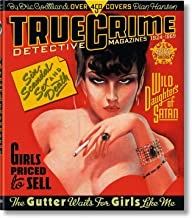
Hardcover. Taschen, 1st, 1013, Book: Very Good, Dust Jacket: Very Good, hardcover, 336 pages. At the height of the Jazz Age, when Prohibition was turning ordinary citizens into criminals and ordinary criminals into celebrities, America's true crime detective magazines were born. True Detective came first in 1924, and by 1934, when the Great Depression had produced colorful outlaws like Machine Gun Kelly, Bonnie and Clyde, Baby Face Nelson, and John Dillinger, the magazines were so popular cops and robbers alike vied to see themselves on the pages. Even FBI boss J. Edgar Hoover wrote regularly for what came to be called the "Dickbooks," referring to a popular slang term for a detective. As the decades rolled on, the magazines went through a curious metamorphosis, however. When liquor was once more legal, the Depression over and all the flashy criminals dead or imprisoned, the "detectives" turned to sin to make sales. Sexy bad girls in tight sweaters, slit skirts, and stiletto heels adorned every cover. Cover lines shouted "I Was a Girl Burglar-For Kicks," "Sex Habits of Women Killers," "Bride of Sin!," "She Played Me for a Sucker," and most succinctly, "Bad Woman."True Crime Detective Magazines follows the evolution and devolution of this distinctly American genre from 1924 to 1969. Hundreds of covers and interior images from dozens of magazine titles tell the story, not just of the "detectives," but also of America's attitudes towards sex, sin, crime, and punishment over five decades. With texts by magazine collector Eric Godtland, George Hagenauer, and True Detective editor Marc Gerald, True Crime Detective Magazines is an informative and entertaining look at one of the strangest publishing niches of all time.
Hardcover. Princton NJ, Princeton University Press, 1st, 2001, Book: Very Good, Dust Jacket: Very Good, Hardcover in a bright dust jacket. Fairy tales, often said to be ''timeless'' and fundamentally ''oral,'' have a long written history. However, argues Elizabeth Wanning Harries in this provocative book, a vital part of this history has fallen by the wayside. The short, subtly didactic fairy tales of Charles Perrault and the Grimms have determined our notions about what fairy tales should be like. Harries argues that alongside these ''compact'' tales there exists another, ''complex'' tradition: tales written in France by the conteuses (storytelling women) in the 1690s and the late-twentieth-century tales by women writers that derive in part from this centuries-old tradition. Grounded firmly in social history and set in lucid prose, Twice upon a Time refocuses the lens through which we look at fairy tales.
Hardcover. NY, Simon & Schuster, 1st, 2015, Book: Very Good, Dust Jacket: Very Good, Hardcover in a bright, unclipped dust jacket. 449 pages, b&w illustrations. Ty Cobb is baseball royalty, maybe even the greatest player who ever lived. His lifetime batting average is still the highest of all time, and when he retired in 1928, after twenty-one years with the Detroit Tigers and two with the Philadelphia Athletics, he held more than ninety records. But the numbers don't tell half of Cobb's tale. The Georgia Peach was by far the most thrilling player of the era: "Ty Cobb could cause more excitement with a base on balls than Babe Ruth could with a grand slam," one columnist wrote. When the Hall of Fame began in 1936, he was the first player voted in. But Cobb was also one of the game's most controversial characters. He got in a lot of fights, on and off the field, and was often accused of being overly aggressive. In his day, even his supporters acknowledged that he was a fierce and fiery competitor. Because his philosophy was to "create a mental hazard for the other man," he had his enemies, but he was also widely admired. After his death in 1961, however, something strange happened: his reputation morphed into that of a monster--a virulent racist who also hated children and women, and was in turn hated by his peers. Clean copy.
Softcover. Seattle, University of Washington Press, reprint, 1993, Book: Very Good, Dust Jacket: None, Softcover, 255 pages, b&w photos. A Peace Corps worker sent to the Sakel to establish a fish-farming project, the author lived with a family in a tiny Sengalese village near the Mauretania border. We share her initial feelings of dislocation as she contends not only with a primitive lifestyle, lack of creature comforts, and the overt sexism of the Moslem men she supervises, but also with her burgeoning relationships with the women in the little compound who become as much her family as her relatives in America. In a guileless narrative filled with affection and anger, Lowerre tells of the ill health and bureaucratic failings that beset her; she acknowledges the Pulaar people's love and good humor, and offers an unprettified closeup of daily life in an African village. Clean copy.
Softcover. NY, The Feminist Press, 1ST, 1999, Book: Very Good, Dust Jacket: None, Softcover, 400 pages, b&w illustrations. The memoir of a young Catholic women's affair with a pastor in Italy. INSCRIBED BY AUTHOR on the half-title page. A few pages with light pencil underlining., otherwise clean.
Hardcover. Minneapolis, Twenty-First Century Books, 1sy, Book: Very Good, Dust Jacket: Very Good, Hardcover in a bright dust jacket, 96 pages illustrated in color. For most of human history, the garments women wore under their clothes were hidden. The earliest underwear provided warmth and protection. But eventually, women's undergarments became complex structures designed to shape their bodies to fit the fashion ideals of the time. In the modern era, undergarments are out in the open, from the designer corsets Madonna wore on stage to Beyonce's pregnancy announcement on Instagram. This feminist exploration of women's underwear reveals the intimate role lingerie plays in defining women's bodies, sexuality, gender identity, and body image. It is a story of control and restraint but also female empowerment and self-expression. You will never look at underwear the same way again. Clean copy.
Hardcover. New York, Richmond, Croscup & Co., 1st Edition, 1893, Book: Very Good, Dust Jacket: None, 314 pages. Hardcover. B/w illustrations including frontispiece with tissue guard. Tan, textured cover boards, Blue title on spine and front cover board, agewear to covers (see image). Gilt top edge. Tanning to pages and edges. Binding tight. In great shape for its age.
Hardcover. Evanston IL, Northwestern University Press, 1st, 2023, Book: Very Good, Dust Jacket: Very Good, Hardcover in a bright dust jacket. A portrait of Black America in the nineteenth century. Over the course of two decades, award-winning poet Patricia Smith has amassed a collection of rare nineteenth-century photographs of Black men, women, and children who, in these pages, regard us from the staggering distance of time. Unshuttered is a vessel for the voices of their incendiary and critical era. Smiths searing stanzas and revelatory language imbue the subjects of the photos with dynamism and revived urgency while she explores how her own past of triumphs and losses is linked inextricably to their long-ago lives. Clean copy.
Hardcover. Taschen, 1st, 2010, Book: Very Good, Dust Jacket: None, Hardcover, In this sumptuous over-sized volume, Taschen celebrates a remarkably candid, confident and exuberantly sexual woman: the Latina porn star Vanessa Del Rio. Presented through Vanessa's own archive, in her own words, is a life at once shocking, titillating, amusing, and inspiring. And because paper and ink can't do justice to a personality this big, an original 140 minute DVD documentary is included. First Trade Edition. DOMESTIC SHIPPING ONLY.
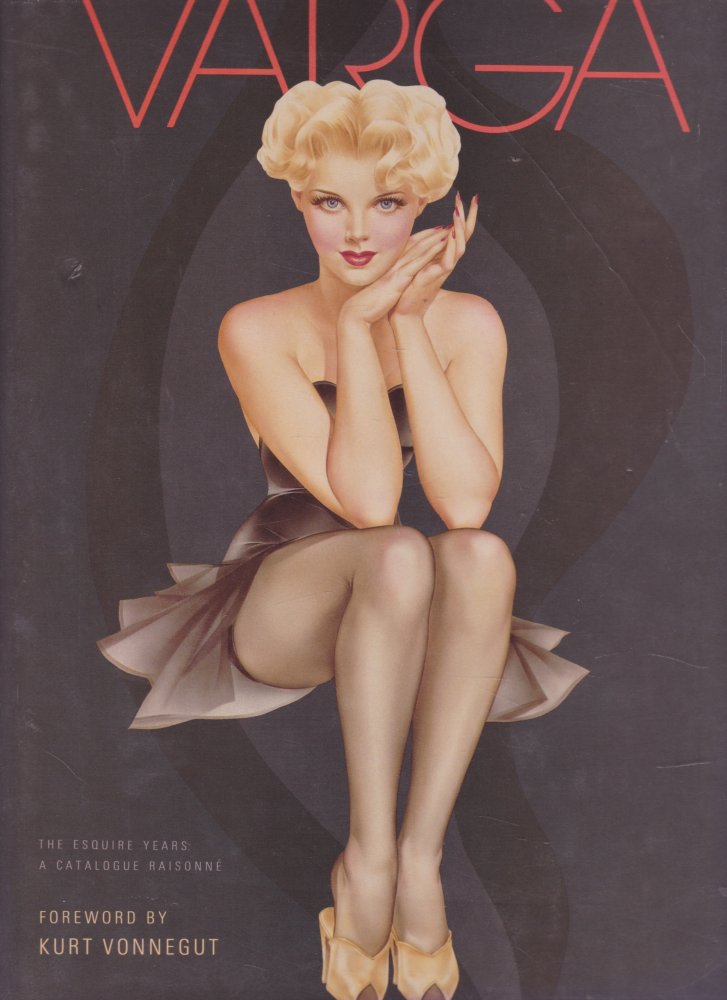
Hardcover. New York, Alfred van der Marck, 1st, 1987, Book: Very Good, Dust Jacket: Very Good, Hardcover, 176 pages. Profusely illustrated with full color reproductions (including one fold-out) of pin-up art and paintings by Alberto Vargas. Foreword by Kurt Vonnegut. Clean, tight copy.
Softcover. Berlin GR, Benedikt Taschen, 1st, Book: Very Good, Dust Jacket: None, Softcover, illustrated wrappers, 80 pages. Black laminated wraps with 'red Queen' 1954 on the front. Introductory text by Astrid Rossana Conte (grand-niece of Vargas) A monograph dedicated to the Peruvian painter and illustrator Alberto Vargas, famous for his pin-ups and portraits inspired by actresses, which examines four decades of his production, from the 1920s to the 1950s. Parallel texts in German, English and French; well illustrated with two photographs of Vargas, black and white examples of his drawings and many full colour examples of his paintings. Clean copy.
Softcover. NY, Harmony Books, 3rd pr., 1978, Book: Very Good, Dust Jacket: None, Softcover, 128 pages. Foreword by Hugh Hefner, illustrated in color and black & white. A monographic study of the art of Alberto Vargas back to his earliest known work. His draughtsmanship and technique in depicting the female nude is unsurpassed. Moreover, he was a cultural force. The work he did for Playboy is confined to a few pages at the end. Clean, bright copy.
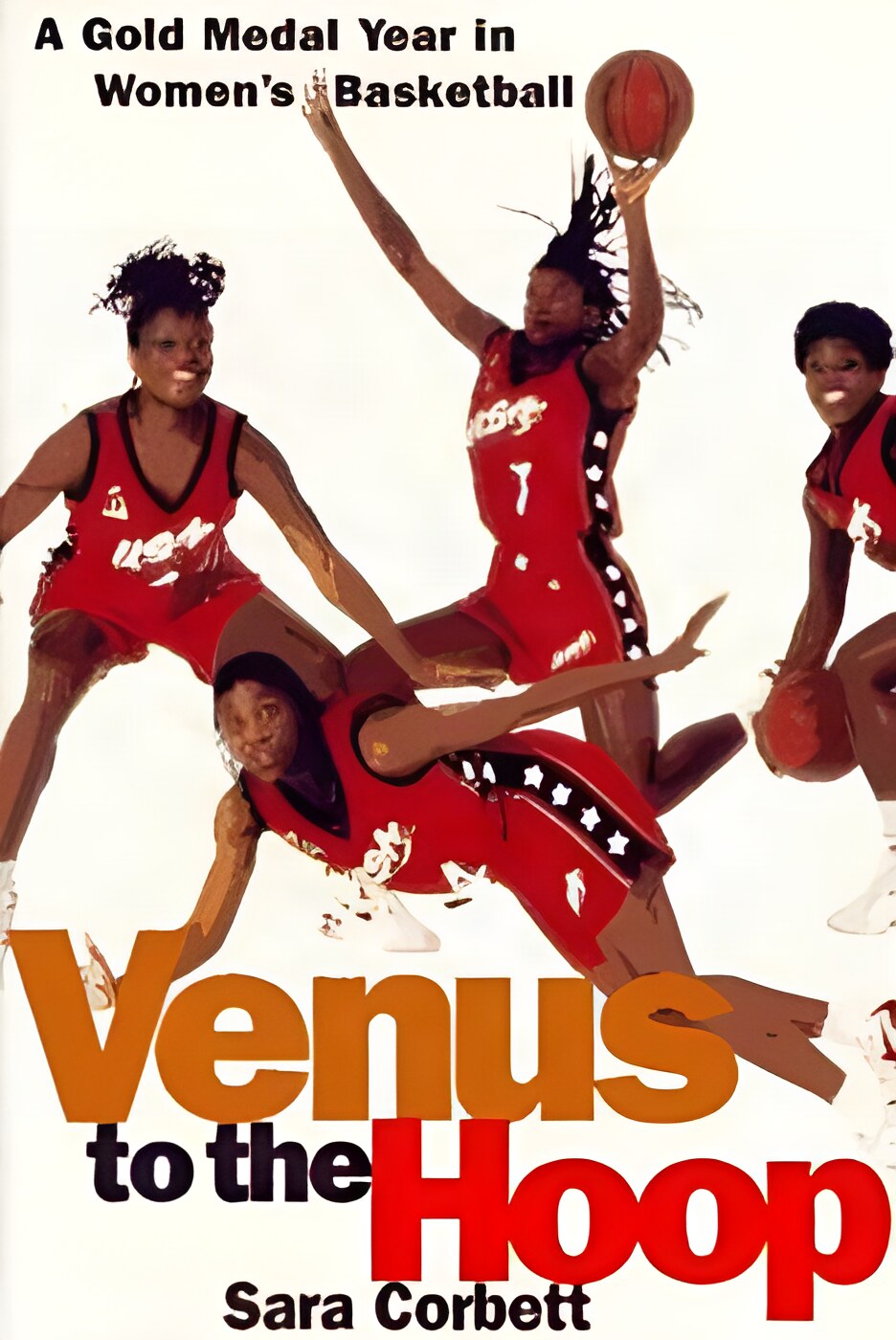
Hardcover. NY, Doubleday, 1st, 1997, Book: Very Good, Dust Jacket: Very Good, Hardcover in a bright, unclipped dust jacket, 342 pages, b&w illustrations. In the spring of 1995, twelve extraordinary basketball players were chosen to represent the United States in the yearlong march to the 1996 Olympics. For Rebecca Lobo, Sheryl Swoopes, Lisa Leslie, and their teammates, winning the gold medal was only one of many goals. Around them swirled the dreams of the millions of young girls who played organized basketball, the hopes of the fans who sent the team an average of 125 pounds of fan mail each month, the multimillion-dollar bets of Nike, Champion, and other corporate sponsors, the promise of a new women's professional league, and not least, the hopes of female athletes across the country finally to gain the respect accorded male athletes.
Hardcover. Waterbury VT, Silver Print Press, 1st, 2002, Book: Very Good, Dust Jacket: Very Good, Hardcover, 136 pages. !00 beautiful b&w portraits of farm women in Vermont. Autograph copy emblem to cover. SIGNED by the photographer and author Peter Miller on the half title page.
Hardcover. Waterbury VT, Silver Print Press, 1st, 2002, Book: Very Good, Dust Jacket: Very Good, Hardcover, 136 pages. !00 beautiful b&w portraits of farm women in Vermont. Autograph copy emblem to cover. SIGNED by the photographer and author Peter Miller on the half title page.
Hardcover. Waterbury VT, Silver Print Press, 1st, 2002, Book: Very Good, Dust Jacket: Very Good, Hardcover, 136 pages. !00 beautiful b&w portraits of farm women in Vermont. Autograph sticker on cover. SIGNED by the photographer and author Peter Miller on the half title page.
Hardcover. Colbyville VT, Silver Print Press, 1st, 2005, Book: Very Good, Dust Jacket: Very Good, Hardcover in a right dust jacket. INSCRIBED BY MILLER on the half-title page. Author and photographer Peter Miller, best known for the classics Vermont People and Vermont Farm Women, has now completed his trilogy of books with the November release of Vermont Gathering Places. The book is a collection of 38 stories that highlight the places in the state where Vermonters gather to meet, discuss their towns, and keep the small-town traditions of the state thriving. The stories in Vermont Gathering Places are as varied as the counties and towns themselves. 185 duotone photographs accompany stories that include the Brookfield Ice Harvest, the Brattleboro Farmers' Market, Moretown Town Meeting, Pawlet Community Church Supper, Fiddlers' Breakfast at the Bobbin Mill Restaurant in Westfield, Barre's Thunder Road, and the Fairbanks Museum in St. Johnsbury. In addition to individual stories, Miller has included large spreads of country stores and parades scattered throughout the state. Vermont Gathering Places is a book for all Vermonters, and it comes alive with the interviews and portraits that define Peter Miller's work and have made his books Vermont People and Vermont Farm Women so popular. Clean copy.
Softcover. NY, Writers And Readers Publishing, reprint, 1993, Book: Good, Softcover, 201 pages. Ex-lib with residue to endpapers, spine label. This photographic essay provides a fascinating historical overview of 34 black women photographers from 1839 to 1985. It is divided into five time periods and includes the general history of each period, along with the particular photographers' place in it. This volume is profusely illustrated with the work of each photographer and includes both biographical information and a critique of her work. All photographs are in black and white and are excellently reproduced. The writing is personalized and exciting. This is an upbeat, positive presentation of the role black women played in recording their history and their world. One page (179) loose, laid in.

 "Tom Kelley's Studioby: Doggett, Peter")
 "Tom Palumbo: Dreamer with a Thousand Thrills: The Redicovered Photographsby: Bosworth, Patricia")



 "Twice Upon a Time: Women Writers and the History of the Fairy Taleby: Harries, Elizabeth Wanning")
 "Ty Cobb: A Terrible Beautyby: Leerhsen, Charles")

 "Under the Rose: A Confession (INSCRIBED COPY)by: Flavia Alaya")
 "Underneath It All: A History of Women's Underwear by: Keyser, Amber J.")
 "Unknown Heroine, An: An Historical Episode of the War Between the Statesby: Chittenden, L.E.")



 "Varga Girls I (Artist Archives)by: Collins, Max Allan")



 "Vargasby: Vargas Alberto and Reid Austin")
 "Vermont Farm Women (SIGNED COPY)by: Miller, Peter")
 "Vermont Farm Women (SIGNED COPY)by: Miller, Peter")