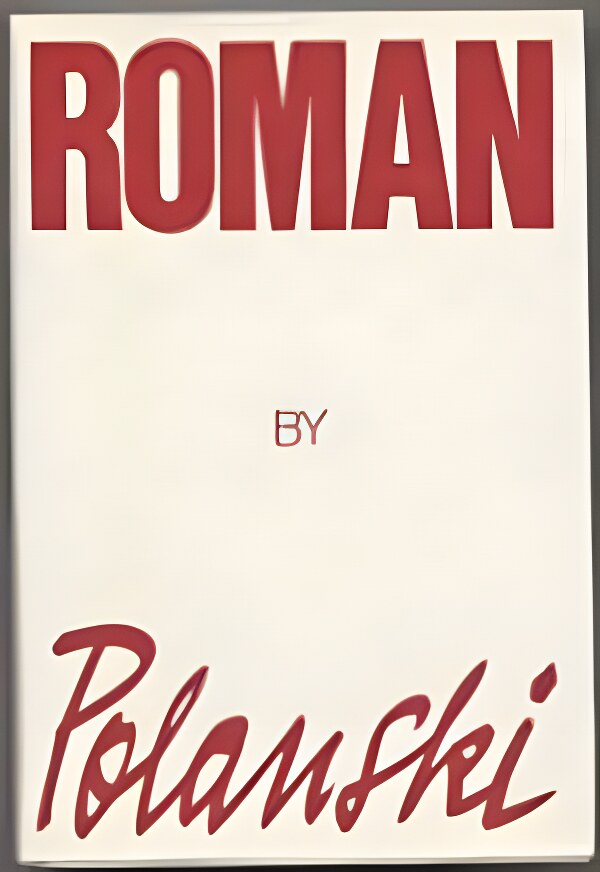
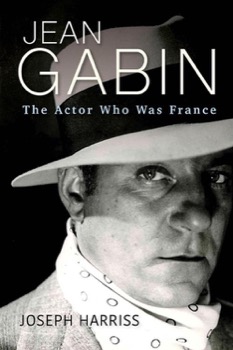
Softcover. Culver City CA, Metro-Goldwyn-Mayer / Brooksfilms, , N/A, 1981, Book: Good, Dust Jacket: None, Softcover, pale blue wrappers with die-cut window for title, 120 pages, three-hole punched pages held by 2 brads. Title page dated April 9. 1981 indicating an early version. The 1982 film, directed by Richard Benjamin, earned Peter O'Toole an Oscar nomination for his lead role as Alan Swann. Title lettered on bottom edge, otherwise clean copy.
Softcover. Berkeley, University of California, 1st, 1981, Book: Very Good, Dust Jacket: None, Softcover, 251 pages, illustrated throughout with photos in b&w. Light wear to pictorial wrappers, else a very neat, tight copy. Carl Dreyer is recognized as one of the great master stylists of the cinema whose works exhibit his rigorous, austere and powerful cinematography. David Bordwell analyses how Dreyer confronts the viewer with problems of attention, orientation and narrative comprehension.
Hardcover. New York, Warner Books, 1st, 1989, Book: Very Good, Dust Jacket: Very Good, Hardcover in a bright dust jacket, 245 pages. Illustrated with full color and black & white photographs. Clean, tight copy. A commemorative volume offers the definitive pictorial history of one of the most popular movies of all time.
Hardcover. New York, Grove Press, 1st printing, 1968, Book: Very Good, Dust Jacket: Very Good, Hardcover, 217 pages. Illustrated. Black cloth, silver titles. Pictorial dust jacket. This title is of Swedish origin by a Swedish film maker and is erotic in nature. His film was banned in the US and seized by US Customs.
Softcover. New York , Watson-Guptill, 1st, 2001, Book: Very Good, Dust Jacket: None, Softcover, 208 pages, 75 color, b&w illustrations. Terrific book that covers nearly forty animators from the U.S. and around the world. Includes in-depth profiles of their careers and work including the early pioneers of animation. Also includes synopses of films and many full color images.
Hardcover. NY, Holt, Rinehart and Winston, 1st, 1978, Book: Very Good, Dust Jacket: Very Good, Hardcover, 341 pages, b&w photos. In a nice, unclipped dust jacket. From Margaret Drabble: "[Bogarde]...is also a lively and interesting writer; his books are in a different class from the ghosted, pedestrian or anecdotal memoirs which so many stars of stage and screen produce..."
Hardcover. NY, Abrams, 1st, 2019, Book: Very Good, Dust Jacket: Very Good, Hardcover, 352 pages. Rare notes, memos, and telegrams from Humphrey Bogart, Audrey Hepburn, Frank Sinatra, Jane Fonda, and more. Letters from Hollywood reproduces in full color scores of entertaining and insightful pieces of correspondence from some of the most notable and talented film industry names of all time--from the silent era to the golden age, and up through the pre-email days of the 1970s. Culled from libraries, archives, and personal collections, the 135 letters, memos, and telegrams are organized chronologically and are annotated by the authors to provide backstories and further context. While each piece reveals a specific moment in time, taken together, the letters convey a bigger picture of Hollywood history. Contributors include celebrities like Greta Garbo, Alfred Hitchcock, Humphrey Bogart, Frank Sinatra, Katharine Hepburn, Marlon Brando, Elia Kazan, Cary Grant, Francis Ford Coppola, Tom Hanks, and Jane Fonda.
Hardcover. NY, Villard Books, 1st, 1990, Book: Very Good, Dust Jacket: Very Good, Hardcover in a bright, unclipped dust jacket, 306 pages. The author of "Adventures in the Screen Trade" provides an inside look at the Cannes Film Festivals and the Miss America Pageant from his unique perspective as a judge, offering anecdotes about the judging process. Clean copy.
Hardcover. London, Bloomsbury, 1st UK, 1994, Book: Very Good, Dust Jacket: Very Good, Hardcover in a bright, unclipped dust jacket, 441 pages. An analysis of the cinematic work of Ingmar Bergman by the director himself. Using scripts, working notes and memory, he comments on his failures as well as his successes; the themes that bind his work together; his concerns and anxieties; and on the relationship between his life and art. Clean copy.
Softcover. Austin TX, University of Texas Press, reprint, 1982, Book: Very Good, Dust Jacket: None, Softcover, 260 pages, b&w photos. There have been very few directors in the history of Hollywood who have ever had as hard a time as Sam Peckinpah did. In a career that lasted only from 1961 to his death near the end of 1984, the man known (rather errantly) as Bloody Sam made only fourteen films--not exactly a large volume work. Despite this, however, and despite (or perhaps because of) his penchant for raising hell with studio heads and producers, Peckinpah was a never-a-dull-moment director. And when he wasn't doing that, he made himself a target for critics, both inside and outside of Hollywood, with his graphic and complex approaches to violence (his 1969 Western epic THE WILD BUNCH), while at the same time also numbering among his films two, largely non-violent gems in THE BALLAD OF CABLE HOGUE and JUNIOR BONNER that prove that the man was able to show sides of the human experience that didn't involve bullets or bloodshed.
Hardcover. London, Faber and Faber, 1st, 1993, Book: Very Good, Dust Jacket: Good, Hardcover in a lightly worn dust jacket. 240 pages, b&w illustrations. "For 35 years Louis Malle has pursued a varied and successful career in cinema. In this book, he discusses his development as an artist and the controversies aroused by his films dealing with subjects like child prostitution, incest and wartime collaboration." Clean copy.
Hardcover. NY, Abradale Press, reprint, 1999, Book: Very Good, Dust Jacket: Very Good, Hardcover in a bright, unclipped dust jacket. 222 pages profusely illustrated in color and b&w. Reprint of the 1983 edition published by Abrams. A noted film historian presents an informative look at Disney's innovative animation classic, with more than 170 dazzling illustrations. Clean copy.
Munich, Schirmer Mosel, 1st, 1993, Book: Very Good, Dust Jacket: Very Good, Hardcover in a bright dust jacket, 134 pages. Mostly b&w, some color photographs. It was Colette who discovered the too tall and too thin girl with expressive eyes, then a complete unknown, and made her the lead in the 1951 Broadway production of Gigi. Her film triumphs were all the more astonishing since she didn't match the usual Hollywood cliches. Petite, almost androgynous, and with a disarming naturalness, she had a worldwide impact on fashion and beauty trends and was enthusiastically welcomed as an alternative to the sex bombs and pin-up girls of the 50s. This book, with an essay by Klaus-Jurgen Sembach, is dedicated to Audrey Hepburn who died in 1993. It includes the best film stills, portraits, and private photographs by well-known and by unknown photographers from all over the world who have provided us with an immortal image of Hollywood's most endearing star. NOTE: There is a light smoke smell to this book.
Hardcover. NY, Harcourt Brace and World, 1st US, 1969, Book: Very Good, Dust Jacket: Very Good, Hardcover in a bright, lightly worn dust jacket, 178 pages. The first biographical and critical study of the most prolific and widely read living author. Clean copy.
Hardcover. NY, Farrar, Straus and Giroux, 1st, 2017, Book: Very Good, Dust Jacket: Very Good, Hardcover in a bright dust jacket, 206 pages. Famously unabashed, W. Eugene Smith was photography's most celebrated humanist. As a photo essayist at Life magazine in the 1940s and '50s, he established himself as an intimate chronicler of human culture. His photographs of war and disaster, villages and metropolises, doctors and midwives, revolutionized the role of images in journalism, transforming photography for decades to come. When Smith died in 1978, he left behind eighteen dollars in the bank and forty-four thousand pounds of archives. He was only fifty-nine, but he was flat worn-out. His death certificate read "stroke," but, as was said of the immortal jazzman Charlie Parker, Smith died of "everything," from drug and alcohol benders to weeklong work sessions with no sleep. Lured by the intoxicating trail of people that emerged from Smith's stupefying archive, Sam Stephenson began a quest to trace his footsteps. In Gene Smith's Sink, Stephenson merges traditional biography with rhythmic digressions to revive Smith's life and legacy. Traveling across twenty-nine states, Japan, and the Pacific, Stephenson profiles a lively cast of characters, including the playwright Tennessee Williams, to whom Smith likened himself; the avant-garde filmmaker Stan Brakhage, with whom he once shared a Swiss chalet; the artist Mary Frank, who was married to his friend Robert Frank; the jazz pianists Thelonious Monk and Sonny Clark, whose music was taped by Smith in his loft; and a series of obscure caregivers who helped keep Smith on his feet. The distillation of twenty years of research, Gene Smith's Sink is an unprecedented look into the photographer's potent legacy and the subjects around him. Clean, bright copy.
Hardcover. NY, Harper, 1st, 2022, Book: Very Good, Dust Jacket: Very Good, Hardcover in a bright dust jacket, 741 pages. From the archives of the American Film Institute comes a unique picture of what it was like to work in Hollywood from its beginnings to its present day. Gleaned from nearly three thousand interviews, involving four hundred voices from the industry, Hollywood: The Oral History, lets a reader listen in on candid remarks from the biggest names in front of the camera-Bette Davis, Meryl Streep, Tom Hanks, Harold Lloyd-to the biggest behind it-Frank Capra, Steven Spielberg, Alfred Hitchcock, Jordan Peele, as well as the lesser known individuals that shaped what was heard and seen on screen: musicians, costumers, art directors, cinematographers, writers, sound men, editors, make-up artists, and even script timers, messengers, and publicists. The result is like a conversation among the gods and goddesses of film: lively, funny, insightful, historically accurate and, for the first time, authentically honest in its portrait of Hollywood. Its the insiders story.Clean, bright copy.
Hardcover. Taschen , reprint, 2020, Book: Very Good, Dust Jacket: None, Hardcover in pictorial boards. As special photographer on the sets and locations of Francis Ford Coppola's The Godfather trilogy, Steve Schapiro had the remarkable experience of witnessing legendary actors giving some of their most memorable performances. Schapiro immortalized Marlon Brando, Al Pacino, Robert De Niro, James Caan, Robert Duvall, and Diane Keaton in photos that have since become iconic images, instantly recognizable and endlessly imitated. Gathered together in this book are Schapiro's finest photographs from all three Godfather films, lovingly reproduced from the original negatives. With contextual essays and interviews covering the trilogy in its entirety, this book contains over 300 color and black-and-white images. Schapiro's images take us behind the scenes of this epic and inimitable cinematic saga, revealing the director's working process, capturing the moods and personalities involved, and providing insight into the making of movie history. This book is a smaller edition of the 2010 Taschen edition. Still in publisher's shrinkwrap.
Softcover. Chicago, Chicago Review Press , 1st, 2002, Book: Very Good, Dust Jacket: None, Softcover, 320 pages, b&w illustrations. The popularity of cartoon music, from Carl Stalling's work for Warner Bros. to Disney sound tracks and The Simpsons' song parodies, has never been greater. This lively and fascinating look at cartoon music's past and present collects contributions from well-known music critics and cartoonists, and interviews with the principal cartoon composers. Here Mark Mothersbaugh talks about his music for Rugrats, Alf Clausen about composing for The Simpsons, Carl Stalling about his work for Walt Disney and Warner Bros., Irwin Chusid about Raymond Scott's work, Will Friedwald about Casper the Friendly Ghost, Richard Stone about his music for Animaniacs, Joseph Lanza about Ren and Stimpy, and much, much more. Clean copy.
Hardcover. NY, Knopf, 1st, 1982, Book: Very Good, Dust Jacket: Very Good, Hardcover in a bright, unclipped dust jacket, 205 pages, b&w illustrations. The distinguished filmmaker chronicles his life from his birth in 1910 to the worldwide success in 1951 of his film "Rashomon" and provides a provocative account of the Japanese film industry. Much of the book focuses on his early life, and the reader empathizes greatly with the young Kurosawa. There was much tragedy in his young life, both within his family, but also with the nation of Japan during the years leading up to and including the war. Much of his early career was spent trying to work on and create good films while appeasing the Japanese censors. Remainder dot on top edge otherwise a clean copy.
Softcover. NY, Dey Street Books, reprint, 2017, Book: Very Good, Dust Jacket: None, Softcover, 594 pages, b&w illustrations. Rediscover the groundbreaking magic of Blade Runner with this revised and updated edition of the classic guide to Ridley Scott's transformative film and published in anticipation of its sequel, Blade Runner 2049, premiering October 2017 and starring Ryan Gosling, Jared Leto, Robin Wright, and Harrison Ford. Ridley Scott's 1992 "Director's Cut" confirmed the international film cognoscenti's judgment: Blade Runner, based on Philip K. Dick's brilliant and troubling science fiction masterpiece Do Androids Dream of Electric Sheep?, is the most visually dense, thematically challenging, and influential science fiction film ever made. Future Noir offers a deeper understanding of this cult phenomenon that is storytelling and visual filmmaking at its best. In this intensive, intimate and anything-but-glamorous behind-the-scenes account, film insider and cinephile Paul M. Sammon explores how Ridley Scott purposefully used his creative genius to transform the work of science fiction's most uncompromising author into a critical sensation, a commercial success, and a cult classic that would reinvent the genre. Sammon reveals how the making of the original Blade Runner was a seven-year odyssey that would test the stamina and the imagination of writers, producers, special effects wizards, and the most innovative art directors and set designers in the industry at the time it was made.
Softcover. Los Angeles, Robert Chatoff-Irwin Winkler Productions, N/A, 1975, Book: Very Good, Dust Jacket: None, Softcover, 132 leaves printed in a variety of different photomechanical methods on rectos only, plus additional revisions on different color paper, some dated as late as February, 1976. Title page is dated December 8, 1975. Bradbound unprinted red wrappers. Now bound in a binder with black boards. Nickelodeon was directed by Bogdanovich, and starred Ryan O'Neal, Burt Reynolds and Tatum O'Neal. According to Bogdanovich, the film was based on true stories told to him by silent movie directors Allan Dwan and Raoul Walsh. It was entered into the 27th Berlin International Film Festival. Although Richter name appears as co-writer, his original script called Stardust Memories was junked by Bogdanovich and completely rewritten by him.
Hardcover. Atglen PA, Schiffer, 1st, 2014, Book: Very Good, Dust Jacket: Very Good, Hardcover in a bright dust jacket, 144 pages illustrated in color. Hollywood's Golden Age was graced with thousands of breathtaking looks by a designer who was known simply as Irene. Based on unprecedented access to the records and remembrances of Irene's personal artist, Virginia Fisher, this insider's look tells the story of Irene's years at MGM studios. Marvelously illustrated with more than 150 original sketches and photography from the time period, Irene's exhilarating story, filled with memories that have a cloying edge and are, at times, chilling, comes to life in this thoroughly researched resource on her career and legacy. From her early years as a designer with a successful dress shop catering to Hollywood clientele to her ascendancy at MGM studios to the beginning of her own label, Irene, Inc., this volume captures Irene's struggles and triumphs surrounding her time at MGM. Complete with a filmography of Irene's designs and full of insightful cameos by stars like Judy Garland, Lana Turner, and others, this is the ideal book for film and costume historians, fashion designers, and fans of Hollywood's Golden Age. Clean copy.
Softcover. West Plains, MO, Bruce Hershenson, 1st, nd, Book: Very Good, Dust Jacket: None, Softcover. Color reproductions of old cowboy movie posters. Light shelfwear.
Hardcover. New York , Simon & Schuster, 1st, 1984, Book: Very Good, Dust Jacket: Very Good, Hardcover, Many B&w photos of Travolta working out. Old ink price "whited out" on front fly leaf, otherwise very good.
Hardcover. London, Titan Books, 1st, 2009, Book: Very Good, Dust Jacket: Very Good, Hardcover, 160 pages, Over fifty years ago, with the release of The Curse of Frankenstein and Christopher Lee in Dracula, Hammer ushered in a whole new era of blood and barely restrained cleavage in glorious color, mixing sex and horror with a style and panache that made the small British company world famous. Bursting at the seams with rare and previously unpublished photographs from Hammer's archive and private collections worldwide, and featuring many new interviews, Hammer Glamour is a lavish, full color celebration of Hammer's female stars, including Ingrid Pitt, Martine Beswick, Caroline Munro, Barbara Shelley, Joanna Lumley, Nastassja Kinski, and of course Raquel Welch (who can forget her fur bikini in One Million Years B. C.?).
Hardcover. New York, Grosset & Dunlap, 1st, 1927, Book: Very Good, Dust Jacket: Good, 182 pages. Hardcover with dust jacket. Illustrated with 12 photos from the Buster Keaton Silent Comedy. Dust jacket shows heavy chipping and small tears. Lightly darkened pages, otherwise tight copy.
Hardcover. NY, Doubleday, 1st, 1979, Book: Very Good, Dust Jacket: Very Good, Hardcover, 369 pages, b&w photos. In a bright, unclipped dust jacket. The author presents a memoir of her father the well-known playwright, producer, director and screenwriter of such Hollywood classics as The Desert Fox, How to Marry a Millionaire, The Man in the Gray Flannel Suit, The Three Faces of Eve, The Dirty Dozen and many others.
Hardcover. NY, Abbeville Press, 1st, 1984, Book: Very Good, Dust Jacket: Very Good, Hardcover, 252 pages, color and b&w illustrations. From the beginning in the silents to the era of computerized effects, this book covers it beautifully. Detailed sections on King Kong, Star Wars, Alien, Jaws, E. T., Close Encounters, and of course Blade Runner. In a bright, unclipped dust jacket. Clean.
Hardcover. US, The Curated Collection, 1st, 2013, Book: Very Good, Dust Jacket: None, 224 pages. Like new in publisher's shrink-wrap. A visual journey of over 300 photographs with fashion's most cutting-edge photographers, designers and stylists exposes the ominously beautiful obsession with the bad boy aesthetic and reveals what draws us into the darkness, providing a daring testament to the love affair with the gloomy, sultry side of Rock 'n' Roll. Divided into five chapters that explore the different dark sides of high fashion: Dark Angel, Vamp Glam, Tribal Nomad, Hard Rock, and Future Punk.
Hardcover. NY, Dial Press, 1st, 1976, Book: Very Good, Dust Jacket: Very Good, Hardcover in a bright, unclipped dust jacket. A view of American film-making from the author's viewpoint.
Softcover. Baltimore, Johns Hopkins University, 1st, 1998, Book: Very Good, Dust Jacket: None, Softcover, 327 pages, b&w illustrations. At least three of director Jacques Tourneur's films--Cat People, I Walked with a Zombie and The Leopard Man--are recognized as horror classics. Yet his contributions to these films are often minimized by scholars, with most of the credit going to the films' producer, Val Lewton. A detailed examination of the director's full body of work reveals that those elements most evident in the Tourneur-Lewton collaborations--the lack of monsters and the stylized use of suggested violence--are equally apparent in Tourneur's films before and after his work with Lewton. Mystery and sensuality were hallmarks of his style, and he possessed a highly artistic visual and aural style. This insightful critical study examines each of Tourneur's films, as well as his extensive work on MGM shorts (1936-1942) and in television. What emerges is evidence of a highly coherent directorial style that runs throughout Tourneur's works. Clean copy.
Hardcover. NY, Harry N. Abrams , 1st, 2021, Book: Very Good, Dust Jacket: None, Hardcover in pictorial boards, 352 pages. A visual history of 100 years of filmmaking in New York City, featuring exclusive interviews with NYC filmmakers. Fun City Cinema gives readers an in-depth look at how the rise, fall, and resurrection of New York City was captured and chronicled in ten iconic Gotham films across ten decades: The Jazz Singer (1927), King Kong (1933), The Naked City (1948), Sweet Smell of Success (1957), Midnight Cowboy (1969), Taxi Driver (1976), Wall Street (1987), Kids (1995), 25th Hour (2002), and Frances Ha (2012). A visual history of a great American city in flux, Fun City Cinema reveals how these classic films and legendary filmmakers took their inspiration from New York City's grittiness and splendor, creating what we can now view as "accidental documentaries" of the city's modes and moods.In addition to the extensively researched and reported text, the book includes both historical photographs and production materials, as well as still-frames, behind-the-scenes photos, posters, and original interviews with Noah Baumbach, Larry Clark, Greta Gerwig, Walter Hill, Jerry Schatzberg, Martin Scorsese, Susan Seidelman, Oliver Stone, and Jennifer Westfeldt. Extensive "Now Playing" sidebars spotlight a handful of each decade's additional films of note.
Hardcover. NY, Atlantic Monthly Press , 1st, 2020, Book: Very Good, Dust Jacket: Very Good, Hardcover in a bright, unclipped dust jacket. In 1911, famed cartoonist Winsor McCay debuted one of the first animated cartoons, based on his sophisticated newspaper strip "Little Nemo in Slumberland," itself inspired by Freud's recent research on dreams. McCay is largely forgotten today, but he unleashed an art form, and the creative energy of artists from Otto Messmer and Max Fleischer to Walt Disney and Warner Bros.' Chuck Jones. Their origin stories, rivalries, and sheer genius, as Reid Mitenbuler skillfully relates, were as colorful and subversive as their creations-from Felix the Cat to Bugs Bunny to feature films such as Fantasia-which became an integral part and reflection of American culture over the next five decades. Pre-television, animated cartoons were aimed squarely at adults; comic preludes to movies, they were often "little hand grenades of social and political satire." Early Betty Boop cartoons included nudity; Popeye stories contained sly references to the injustices of unchecked capitalism. "During its first half-century," Mitenbuler writes, "animation was an important part of the culture wars about free speech, censorship, the appropriate boundaries of humor, and the influence of art and media on society." During WWII it also played a significant role in propaganda. The Golden Age of animation ended with the advent of television, when cartoons were sanitized to appeal to children and help advertisers sell sugary breakfast cereals.
Hardcover. NY, Delacorte Press, 1st, 1983, Book: Very Good, Dust Jacket: Very Good, Hardcover in a bright, unclipped dust jacket wit light rubbing. 261 pages, b&w illustrations. 'She was the woman whose looks set the standard for her generation. The Sex Symbol for whom the term 'Love Goddess' was coined. And the first Hollywood star to become a real-life princess. She was adored as well by her leading men, and most especially by the five men she married...That none of these marriages endured is a matter of record, but the reasons behind these failures and the tragic true story of Rita Hayworth's gradual surrender to the mind-paralyzing terror Alzheimer's disease have never before been fully revealed and explained until now. Clean copy.
Softcover. Chicago, Chicago Review Press, 1st, 2022, Book: Very Good, Dust Jacket: None, Softcover, 322 pages, b&w illustrations. An essential piece of Disney history has been unreported for eighty years.Soon after the birth of Mickey Mouse, one animator raised the Disney Studio far beyond Walts expectations. That animator also led a union war that almost destroyed it. Art Babbitt animated for the Disney studio throughout the 1930s and through 1941, years in which he and Walt were jointly driven to elevate animation as an art form, up through Snow White, Pinocchio, and Fantasia.But as America prepared for World War II, labour unions spread across Hollywood. Disney fought the unions while Babbitt embraced them. Soon, angry Disney cartoon characters graced picket signs as hundreds of animation artists went out on strike. Adding fuel to the fire was Willie Bioff, one of Al Capones wiseguys who was seizing control of Hollywood workers and vied for the animators union.Using never-before-seen research from previously lost records, including conversation transcriptions from within the studio walls, author and historian Jake S. Friedman reveals the details behind the labour dispute that changed animation and Hollywood forever. Clean copy.
Softcover. Prima Publishing, 3rd pr., 1997, Book: Very Good, Dust Jacket: None, Softcover, 239 pages, b&w illustrations. The campy, quasi-classical, pun-intended orgy for the eyes is the top-rated action hour on syndicated TV. But did you know that Xena star Lucy Lawless is a woman of many talents in her own right? Author Nadine Crenshaw tells all about the star and the show. Xena X-Posed reveals everthing you want to know about Xena, including: Biographies of Lucy Lawless, Renee O'Connor, and others from the Xena clan - A behind-the-scenes look at the origins and production of the show - A complete episode guide to the first two seasons. Clean copy.
Hardcover. NY, William Morrow & Co. , 1st, 1989, Book: Very Good, Dust Jacket: Very Good, Hardcover in a bright, unclipped dust jacket. The movie critic for "Time" magazine explores the works and legacies of thirteen filmmaking giants, discussing how they shaped the industry and offering a revised perspective on The Hollywood Ten. Indexed. Essays on Marlon Brando, James Cagney,Harold Lloyd, Stanley Kubrick, John Ford, others. 312 pages, indexed. Clean copy.
Hardcover. Pittsburgh PA, Bissell Block Publishing, 1st, 1905, Book: Very Good, Dust Jacket: None, Hardcover in tan cloth with gilt lettering. SIGNED BY AUTHOR in pencil, dated 1913 on a prelim page. 192 pages, 29 illustrations: halftone plates of river, scenery, oil, rigs, glass-making, bridges, mills, comic drawings, few signed Syd Smith.
Hardcover. New York, Holt, Rinehart and Winston, 1st US, 1980, Book: Very Good, Dust Jacket: Very Good, Hardcover in a bright, unclipped dust jacket, 239 pages. Illustrated with full color and black & white photographs. Clean, tight copy. Important career study of the late director that was first published in France. The book covers his films through "The Shining." Includes essays, interviews 100's of b&w & color stills & photos along with filmog. & biblio.
Softcover. Durham NC, Duke University Press, 1st, 2007, Book: Very Good, Dust Jacket: None, Softcover, 340 pages, b&w illustrations. Various critics continue the film lovers' ongoing conversation about the low, the bad, and the sleazy face of cinema, this book examines the ineffable quality of "sleaze" in relation to a range of issues, including the production realities of low-budget exploitation pictures and the ever-shifting terrain of reception and taste.
Hardcover. NY, Crown, 1st, 1999, Book: Very Good, Dust Jacket: Good, Hardcover, 218 pages, b&w illustrations. SIGNED BY DUNNE on title page. Mesmerizing, revelatory text combines with more than two hundred photographs -- most of them taken by the author -- in a startling illustrated memoir that will both astonish and move you. He partied with all the stars and big shots. Each weekend he carefully arranged his snapshots along with the week's invitations, telegrams, and news-clippings into a set of scrapbooks. In a bright dust jacket with sticker on front panel.