Softcover. Lockport NY, Niagara County Historical Society, 1st, 1966, Book: Very Good, Dust Jacket: None, Softcover, blue wrappers, 377 pages, black & white line drawings. Minor wear to covers, clean copy.
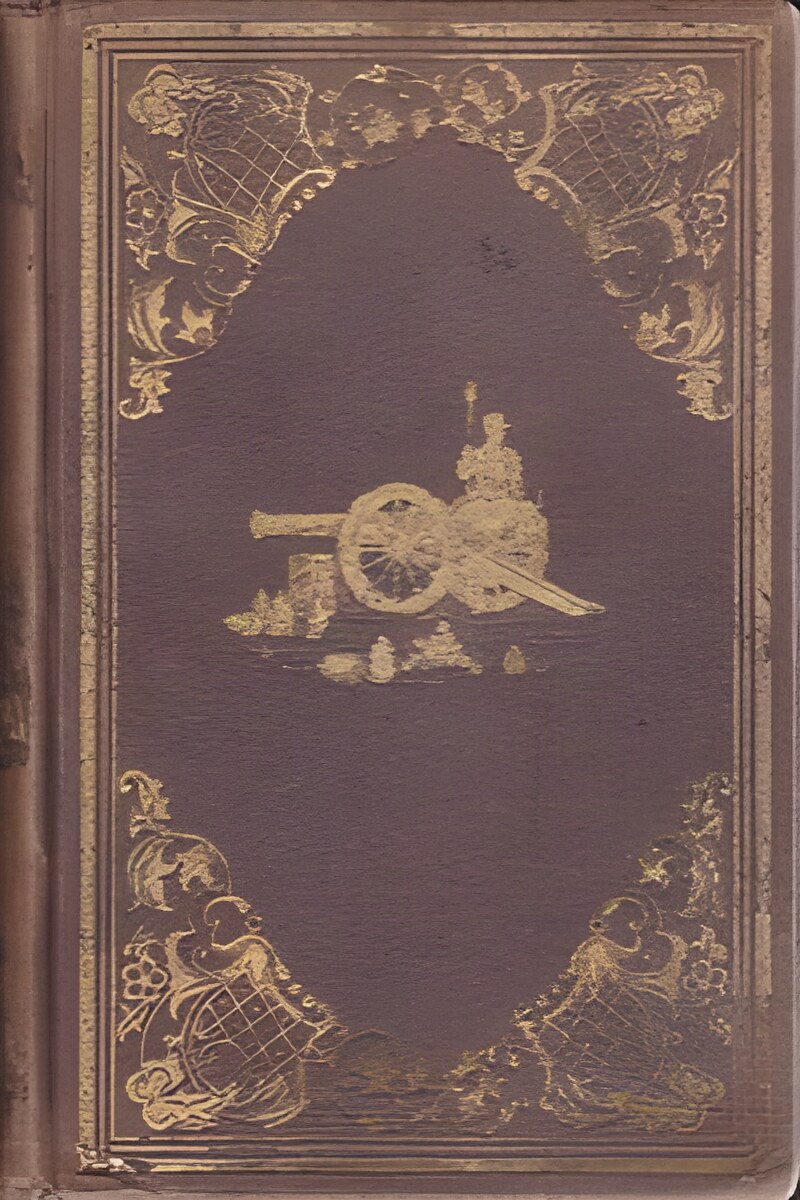
Hardcover. Auburn NY, Auburn Publishing Company, 1st, 1863, Book: Very Good, Dust Jacket: None, Hardcover, original brown cloth with gilt design on front and rear covers and spine. Marbled edges, 552 pages, 4 pages of publisher's ads in rear. Frontispiece, many b&w engravings and 7 folding maps are included, all very good. First edition of Storke's history of the American Civil War, Volume 1 only. (... with Biographical Sketches and Portraits of its Principal Actors and Thrilling Incidents of Land and Naval Heroes - Volume 1) (The second volume was published in 1865.) Rear hinge tender but holding. Clean copy, no stamps or marking. Spine gilt with some fading, covers with mild edgewear.
Softcover. Bowie MD, Heritage Books, reprint, 1994, Book: Very Good, Dust Jacket: None, Softcover, 286 pages. This is an indispensable companion to Part One of Volume Two, containing detailed historical background from the earliest Dutch and English settlement to the pre-Civil War years. Also included are transcriptions of the minutes of the Village Board Meetings, 1857-1860, which document the struggles of the board members as they wrestled with issues presented to the growing village, such as street construction, the running loose of cattle and hogs, and the problem of people bathing naked in the Hudson River. These minutes also contain the names of all the board members and many of the village residents. Light fade to spine otherwise a clean, bright copy.
Hardcover. Shippensburg PA, White Mane, 1st, 2003, Book: Very Good, Dust Jacket: Very Good, Hardcover in a bright, unclipped dust jacket, 267 pages, b&w illustrations, front endpapers map. A Melancholy Affair at the Weldon Railroad examines what occurred on a single afternoon to a brigade of Vermonters during the last year of the Civil War, and why it happened. Vermont, though a small, rural state, contributed far beyond its size and wealth to preserve the Union in the struggle of the Civil War. The worst moment and greatest sacrifice for Vermont was the disaster that befell the proud Vermont Brigade of the Army of the Potomac on June 23, 1864--forever "Black Thursday" in the Green Mountain State. Cowardliness, negligence and inept behavior by multiple officers resulted in the needless capture of more than four hundred Vermonters. The enlisted men were sent to Andersonville and later to other Confederate prisons where 60 percent of them perished. Many of the survivors came home mere wrecks of men. Exactly what occurred at the Weldon Railroad--what went wrong and who was to blame--is thoroughly examined for the first time. Previous owner's inscription on title page, small notation on rear flap of dj, otherwise clean.
Hardcover. Cambridge MA, Harvard University Press, 1st, 2007, Book: Very Good, Dust Jacket: Very Good, Hardcover in a bright, unclipped dust jacket. 457 pages, b&w illustrations. Few of us question the slips of green paper that come and go in our purses, pockets, and wallets. Yet confidence in the money supply is a recent phenomenon: prior to the Civil War, the United States did not have a single, national currency. Instead, countless banks issued paper money in a bewildering variety of denominations and designs - more than ten thousand different kinds by 1860. Counterfeiters flourished amid this anarchy, putting vast quantities of bogus bills into circulation. Their success, Stephen Mihm reveals, is more than an entertaining tale of criminal enterprise: it is the story of the rise of a country defined by a freewheeling brand of capitalism over which the federal government exercised little control. It was an era when responsibility for the country's currency remained in the hands of capitalists for whom "making money" was as much a literal as a figurative undertaking. Mihm's witty tale brims with colorful characters: shady bankers, corrupt cops, charismatic criminals, and brilliant engravers. Based on prodigious research, it ranges far and wide, from New York City's criminal underworld to the gold fields of California and the battlefields of the Civil War. Clean copy.
Softcover. Waco TX, J. S. Hill & Co., 1st, 1901, Book: Fair, Dust Jacket: None, Softcover, brown paper wraps, stapled binding, 189 pages. Covers worn and chipped, last 50 pages with top corner chipped or chewed away, not affecting text. West served in Company E., 4th Texas Regiment. "A diary kept by West from April 12 to June 13, 1863, and February 28 to April 20, 1864." Subtitled on cover: A trip of a private soldier from Texas to Gettysburg and Chickamauga in 1863. Paper tanned and fragile.
Hardcover. NY, Free Press , 1st, 1997, Book: Very Good, Dust Jacket: Very Good, Hardcover in a bright, unclipped dust jacket. 464 pages, b&w illustrations. A great but frequently overlooked figure in America during the early decades of the 19th century now gets his due. Military historian Eisenhower (son of the late president) describes a natural leader of imposing stature, overweening pride, exceptional courage, and wide learning, who possessed considerable organizational and diplomatic skills along with outstanding martial instincts. As the nation's youngest general, Scott distinguished himself in the War of 1812, and he was a hero of the Mexican War in the 1840s. After a brilliant campaign fought entirely on foreign soil, he stormed and captured Mexico City despite considerable political maneuvering on the battlefield and the homefront by a variety of influential enemies. In peacetime, he served successfully as a diplomat to the Canadians, the British, the Seminoles, and the Cherokees. Clean copy.
Hardcover. NY, St Martins Press, 1st, 1998, Book: Very Good, Dust Jacket: Very Good, Hardcover in a bright, unclipped dust jacket. 707 pages, b&w illustrations. Born in poverty, and self-educated while working in a print shop, William Lloyd Garrison was one of the United States' greatest crusading editors, putting out a weekly anti-slavery newspaper, The Liberator, for 35 years, beginning in 1831. A product of the rough and tumble political journalism of the day, Garrison wrote with extreme passion and from an uncompromising point of view. Yet the man who emerges from the pages of All on Fire is a deeply thoughtful person who, despite barely escaping lynch mobs himself, had a great sense of humor and a very polite demeanor. Historians have tended to minimize Garrison's impact on America, and some consider him a fringe character. But Henry Meyer, in this hefty biography, places Garrison at the center of his century, noting that Garrison's thought and tactics influenced not only the country's changing view of slavery, but also inspired the incipient feminist movement. The Lincoln administration noted Garrison's influence by inviting him to help raise the flag over the recaptured Fort Sumter. All on Fire goes into great detail on Garrison's life and work, providing the close and copious examination this activist's life fully deserves. Clean copy.
Hardcover. GR, Steidl, 1st, 2008, Book: Very Good, Dust Jacket: Very Good, Hardcover, 272 pages. One of the most intriguing and little studied forms of nineteenth-century photography is the tintype. Introduced in 1856 as a low-cost alternative to the daguerreotype and the albumen print, the tintype was widely marketed from the 1860s through the first decades of the twentieth century as the most popular photographic medium. The picture-making preference of the people, it was almost never used for celebrity portraiture: It was affordable, portable, unique and available almost everywhere. Because of its ubiquity, the tintype provides a startlingly candid record of the political upheavals that rocked the four decades following the American Civil War-and the personal anxieties they induced. As this book's author, Steven Kasher, argues, the tintype studio became a kind of performance space in which sitters could act out their personal identities. Sitters brought to the tintype studio not just their family and friends but also the tools of their trade, costumes, toys, stuffed animals and other such props. Often they would enact stereotypes and fantasies that reflected or challenged conventional gender, race and class roles. Surprisingly, the tintype was almost exclusively an American phenomenon, rarely used in other countries, and this book demonstrates how this modest form of photography provides extraordinary insight into the development of national attitudes and characteristics in the formative years of the early Modern era. Featured in this book are more than 200 remarkable examples of tintypes, mostly drawn from the Permanent Collection of the International Center of Photography in New York.
Hardcover. NY, W. W. Norton & Company, 1st, 2021, Book: Very Good, Dust Jacket: Very Good, Hardcover in a bright, unclipped dust jacket, 570 pages. An in-depth history of the American comic strip. From the Civil War era art of Thomas Nast, to the moral panic of the 1950's, the 'Super Hero Boom' of the 60's and 70's, to the rise of complex story telling in graphic novel format. 570 pages with Index, 6-1/2" X 9-1/2". Remainder dot on top of text block, otherwise clean.
Hardcover. Pasadena MD, Minerva Center, 1st, 1994, Book: Very Good, Dust Jacket: Very Good, Hardcover in a bright dust jacket, 110 pages, b&w illustrations. As the debate on the role of women in the military continues, an interesting historical footnote has been brought forth: the publication of the only known surviving set of letters of one of the estimated 400 women who disguised themselves as men to fight as soldiers in the Civil War. Born on a farm in New York in 1843, Wakeman was the oldest of nine children. Few details of her family life are known, nor what exactly precipitated her flight into the army, but glimpses of this strong-minded woman are provided throughout: "I am as independent as a hog on the ice. If it is God's will for me to fall in the field of battle, it is my will to go and never return home." Private Wakeman did not return home: she is buried under her masculine pseudonym. How many more women were buried as men? Civil War historian Burgess provides an intriguing introduction to what is sure to become an area of growing interest. Name on front fly leaf, otherwise clean.
Hardcover. Toledo OH, D.R. Locke, 1st, 1879, Book: Very Good, Dust Jacket: None, Hardcover, green cloth with black and gilt decoration to front cover and spine. 655 pages. 'Andersonville' is a rare, post-Civil War work that describes the horrors of prison life during the Civil War. McElroy describes prison conditions, battles and prolonged military struggles, accounts of prisoner struggles, plantation slaves, and soldier depression. Also included are depictions of various jails including those in Atlanta, Richmond, Savannah, Blackshear, and Florence. Illustrated with over 150 views of trial scenes, prisons, portraits, and battle scenes! According to Nevins,"Well written, gripping, and very detailed; but reliance on memory and bitterness." Mild wear to top and bottom of spine, Name on first blank white page, otherwise clean.
Hardcover. NY, Harper & Brothers, BC Ed., 1956, Book: Very Good, Dust Jacket: Very Good, Hardcover in a bright dust jacket. 305 pages, 16 pages of b&w illustrations. A legend in her own time, Clara Barton, comes to life in these pages. One can almost sense the death and destruction of the battlefields (American Civil War) and disasters to which Barton was the first to bring aid and comfort to the suffering. Barton's life is great testimony as to the powerful influence that one person can have on the outcome of history, and was achieved in an age when women were secondary figures. A diminutive five-foot tall, she rose as a giant among her historical peers (e.g., Susan B. Anthony and Dorothea Dix, et al.) and forever shaped the topography of American society, healthcare, and emergency relief, by founding the American Red Cross [1881] at age 59. Clean copy.
Hardcover. NY, Time Life, reprint, 1982, Book: Very Good, Dust Jacket: None, 296 pages. Hardcover with no dust jacket. Dark blue leather bound with gilt titles to front cover and spine. Embossed decoration on front cover. Gilt text block edges, red ribbon marker. Clean, tight copy. Thomas Wentworth Higginson, a Unitarian minister, was a fervent member of New England's abolitionist movement, an active participant in the Underground Railroad, and part of a group that supplied material aid to John Brown before his ill-fated raid on Harpers Ferry. When the Civil War broke out, Higginson was commissioned as a colonel of the black troops training in the Sea Islands off the coast of the Carolinas.
Softcover. NY, Penguin Books, reprint, Book: Very Good, Dust Jacket: None, Softcover. Thomas Wentworth Higginson, a Unitarian minister, was a fervent member of new England's abolitionist movement, an active participant in the Underground Railroad, and part of a group that supplied material aid to John Brown before his ill-fated raid on Harpers Ferry. When the Civil War broke out, Higginson was commissioned as a colonel of the black troops training in the Sea Islands off the coast of the Carolinas. Shaped by American Romanticism and imbued with Higginson's interest in both man and nature, Army Life in a Black Regiment ranges from detailed reports on daily life to a vivid description of the author's near escape from cannon fire, to sketches that conjure up the beauty and mystery of the Sea Islands. This edition also features a selection of Higginson's essays, including "Nat Turner's Insurrection" and "Emily Dickinson's Letters." Clean copy.
Hardcover. NY, Time Life, reprint, 1984, Book: Very Good, Dust Jacket: None, 233 pages. Hardcover with no dust jacket. Dark blue leather bound with gilt titles to front cover and spine. Embossed decoration on front cover. Gilt text block edges, red ribbon marker. Clean, tight copy.
Hardcover. New York, Morrow, 1st, 1993, Book: Very Good, Dust Jacket: Very Good, Hardcover, 160 pages. Illustrated in full color. In a clean, bright dust jacket. A commercial artist who started out sketching in the 1930s for pulp magazines, Lovell advanced to the glossier "slicks" in the 1950s and has since specialized in Old West, Plains Indian, and Civil War themes. He here presents from that long career his best canvases, among them his famed depictions of Lee's surrender and the Fifty-fourth Massachusetts' assault (in film, the climax of Glory). His spark of inspiration is usually to visualize an incident he has read of in the journals of the first white explorers and trappers, such as those of Lewis and Clark. Whether it's Clark firing his rifle or Indians encountering a cannon lost by Fremont, Native Americans are generally presented as wary but curious about the newcomers; Lovell puts the warfare outside of the frame. Themes aside, he works expertly with natural color, and though not a modern George Caitlin, his attention to the detail of Indian dress, carriage, and equipage is quite affecting, fully reflective of his respect for the cultures of Apache, Sioux, etc. A rich tribute to a captivating artist who evokes the West's vast landscape and its individual braves and traders in moods of exuberance and perseverance.
Hardcover. New York, William Morrow & Co, 1st, 1993, Book: Very Good, Dust Jacket: Very Good, 160 pages. Hardcover. Color illustrations. Clean, unmarked copy with only minor wear to dust jacket. "A commercial artist who started out sketching in the 1930s for pulp magazines, Lovell advanced to the glossier "slicks" in the 1950s and has since specialized in Old West, Plains Indian, and Civil War themes. He here presents from that long career his best canvases, among them his famed depictions of Lee's surrender". Gorgeous color plates.
Hardcover. Washington DC, Smithsonian, 1st, 2009, Book: Very Good, Dust Jacket: Very Good, Hardcover in a bright, unclipped dust jacket. Baseball, the sport that helped reunify the country in the years after the Civil War, remains the National Pastime. The Library of Congress houses the world's largest baseball collection, documenting the history of the game and providing a unique look at America since the late 1700s. Now Baseball Americana presents the best of the best from that treasure trove. From baseball's biggest stars to street urchins, from its most newsworthy stories to sandlot and Little League games, the book examines baseball's hardscrabble origins, rich cultural heritage, and uniquely American character. The more than 350 fabulous illustrations--many never before published--featured first-generation, vintage photographic and chromolithographic baseball cards; photographs of famous players and ballparks; and newspaper clippings, cartoons, New Deal photographs, and baseball advertisements.
Hardcover. Philadelphia, PA, Hubbard Brothers, 1st Edition, 1882, Book: Very Good, Dust Jacket: None, 488 pages. Hardcover. B/w illustrations (including frontispiece with tissue guard--see image). Decorated endpapers. Previous owner's stamp of ownership on two preliminary pages. Cover boards bound in brown mustard cloth, gilt title and decorations on spine and front cover board (see image). Cover boards have a touch of age wear. Pages and edges have some tanning from age. Loose gutter at top of title page (see image), otherwise binding tight. "A graphic recital of personal experiences throughout the whole period of the late war for the Union--during which the author was actively engaged in 25 Battles and Skirmishes, was three times taken prisoner..."
Softcover. Cambridge MA, Harvard University Press, reprint, 1998, Book: Very Good, Dust Jacket: None, Softcover, 310 pages, b&w illustrations. Few Americans, black or white, recognize the degree to which early African American history is a maritime history. W. Jeffrey Bolster shatters the myth that black seafaring in the age of sail was limited to the Middle Passage. Seafaring was one of the most significant occupations among both enslaved and free black men between 1740 and 1865. Tens of thousands of black seamen sailed on lofty clippers and modest coasters. They sailed in whalers, warships, and privateers. Some were slaves, forced to work at sea, but by 1800 most were free men, seeking liberty and economic opportunity aboard ship.Bolster brings an intimate understanding of the sea to this extraordinary chapter in the formation of black America. Because of their unusual mobility, sailors were the eyes and ears to worlds beyond the limited horizon of black communities ashore. Sometimes helping to smuggle slaves to freedom, they were more often a unique conduit for news and information of concern to blacks.But for all its opportunities, life at sea was difficult. Blacks actively contributed to the Atlantic maritime culture shared by all seamen, but were often outsiders within it. Capturing that tension, Black Jacks examines not only how common experiences drew black and white sailors together-even as deeply internalized prejudices drove them apart-but also how the meaning of race aboard ship changed with time. Bolster traces the story to the end of the Civil War, when emancipated blacks began to be systematically excluded from maritime work. Rescuing African American seamen from obscurity, this stirring account reveals the critical role sailors played in helping forge new identities for black people in America.
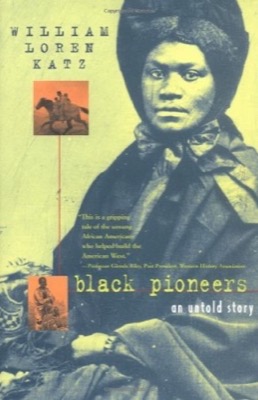
Hardcover. NY, Atheneum, 3rd pr., 1999, Book: Very Good, Dust Jacket: Very Good, Hardcover in a bright, unclipped dust jacket. In a clear, straightforward style, Katz describes the settlement of the Ohio and Mississippi Valleys (covering Ohio, Indiana, Illinois, Michigan, Wisconsin, Minnesota, Iowa, Kansas, and Missouri) by African Americans seeking freedom, including biographical sketches of men and women who formed churches, started schools, or were politically active in their region. Some of these settlers were fugitive slaves; several set up stations on the Underground Railroad with the aid of the Quakers; others were farmers, poets, and soldiers. In several states, they helped form black regiments in the Civil War. Chronologically arranged, the book introduces many lesser-known personages not found in most collective biographies and places them in a broader context of U.S. history as a whole.

 "100 Years Ago Today: Niagara County in the Civil War As Reported in the Pages of the Niagara Falls Gazetteby: Reed, Richard")





 "After the Guns Fell Silent: A Post-Appomattox Narrative April 1865-March 1866by: Hoehling, A.A.")
 "Agent Of Destiny: The Life And Times Of General Winfield Scottby: John Eisenhower")

 "America and the Tintypeby: Steven Kasher , Geoffrey Batchen, et al.")
 "American Comics: A History by: Jeremy Dauber")

 "Andersonville: Story of Rebel Military Prisons: Fifteen Months a Guest of the So Called Southern Confederacyby: McElroy, John Co. (L/16th Ill. Cav..)")


 "Army Life in a Black Regiment (Collector's Library of the Civil War)by: Higginson, Thomas Wentworth")
 "Army Life in a Black Regiment: and Other Writingsby: Higginson, Thomas Wentworth")
 "Army Memoirs (Collector's Library of the Civil War)by: Barber, Lucius W.")
 "Art of Tom Lovell, The - An Invitation to Historyby: Hedgpeth, Don/Walt Reed")
 "Art of Tom Lovell, The: An Invitation to Historyby: Hedgpeth, Don and Walt Reed")
 "Baseball Americana: Treasures from the Library of Congress by: Katz, Harry; Ceresi, Frank; Michel, Phil")
 "Battle Field and Prison Pen, or Through the War, and Thrice a Prisoner in Rebel Dungeonsby: Urban, John W.")


 "Battle Fields of the South - From Bull Run to Fredericksburgh; With Sketches of Confederate Commanders, and Gossip of the Camps (Collector's Library of the Civil War)by:")
 "Black Jacks: African American Seamen in the Age of Sailby: W. Jeffrey Bolster")