Softcover. Cambridge MA, Harvard University Press, reprint, 1998, Book: Very Good, Dust Jacket: None, Softcover, 310 pages, b&w illustrations. Few Americans, black or white, recognize the degree to which early African American history is a maritime history. W. Jeffrey Bolster shatters the myth that black seafaring in the age of sail was limited to the Middle Passage. Seafaring was one of the most significant occupations among both enslaved and free black men between 1740 and 1865. Tens of thousands of black seamen sailed on lofty clippers and modest coasters. They sailed in whalers, warships, and privateers. Some were slaves, forced to work at sea, but by 1800 most were free men, seeking liberty and economic opportunity aboard ship.Bolster brings an intimate understanding of the sea to this extraordinary chapter in the formation of black America. Because of their unusual mobility, sailors were the eyes and ears to worlds beyond the limited horizon of black communities ashore. Sometimes helping to smuggle slaves to freedom, they were more often a unique conduit for news and information of concern to blacks.But for all its opportunities, life at sea was difficult. Blacks actively contributed to the Atlantic maritime culture shared by all seamen, but were often outsiders within it. Capturing that tension, Black Jacks examines not only how common experiences drew black and white sailors together-even as deeply internalized prejudices drove them apart-but also how the meaning of race aboard ship changed with time. Bolster traces the story to the end of the Civil War, when emancipated blacks began to be systematically excluded from maritime work. Rescuing African American seamen from obscurity, this stirring account reveals the critical role sailors played in helping forge new identities for black people in America.
Softcover. Middletown CT, Wesleyan University Press, 1st, 1994, Book: Very Good, Dust Jacket: None, Softcover, 237 pages. From its beginnings in hip hop culture, the dense rhythms and aggressive lyrics of rap music have made it a provocative fixture on the American cultural landscape. In Black Noise: Rap Music and Black Culture in Contemporary America, Tricia Rose, described by the New York Times as a "hip hop theorist," takes a comprehensive look at the lyrics, music, cultures, themes, and styles of this highly rhythmic, rhymed storytelling and grapples with the most salient issues and debates that surround it. Clean copy.
Hardcover. New York, Fox Duffield & Co., 1st, 1904, Book: Good, Dust Jacket: None, 350 pages, 13 pages of b&w photographs (12 African American portraits by A.L. Coburn). Textured blue cloth covers with dark blue lettering and ruled design. Some light soiling and wear to covers and spine. Internally clean, a few dog-eared pages.
Hardcover. NY, Pantheon, 1st, 2003, Book: Very Good, Dust Jacket: Very Good, Hardcover in a bright, price-clipped dust jacket, 495 pages. Boogaloo--the synonym of choice among the cognoscenti for rhythm and blues--is a stylish and profound meditation on the art, influence, and commerce of black American popular music. At once deeply knowing and keenly observant, Arthur Kempton reveals the tensions between the sacred and the profane at the heart of "soul music," and the complex centrality of "Aframericans" in the evolution of our mass musical culture. What that culture is all about, who owns it, and who gets paid--these are issues of moment in his epic narrative. Kempton brilliantly traces the interconnections among a century's worth of signal personalities, events, and achievements: from Thomas A. Dorsey, the so-called Father of Gospel Music, whose career ("Got to Know How to Work Your Show") sheds light on Mahalia Jackson, Aretha Franklin, and James Brown, among others, to the rise of that "handsome Negro lad," Sam Cooke (perhaps the greatest of soul singers) and his definitive crossover dreams; from Berry Gordy Jr.'s infatuation with Doris Day and his sharp business plan to capture and exploit the sounds of young America through Motown ("It's What's in the Grooves That Counts") to the founding of Stax Records and Memphis Soul by a white farm kid who grew up dreaming of being a country fiddler; from the visionary funk of George Clinton to the ascendancy of hip hop ("Sharecropping in Wonderland"), the murders of Tupac Shakur and Biggie Smalls, and the story of Death Row Records. Clean copy.
Hardcover. New Haven, Yale University Press, 1st, 2007, Book: Very Good, Dust Jacket: Very Good, Hardcover in a bright dust jacket, 312 pages. Green cloth, silver title to spine, pictorial dust jacket. Allergy is the sixth leading cause of chronic illness in the United States. More than fifty million Americans suffer from allergies, and they spend an estimated $18 billion coping with them. Yet despite advances in biomedicine and enormous investment in research over the past fifty years, the burden of allergic disease continues to grow. Why have we failed to reverse this trend? Breathing Space offers an intimate portrait of how allergic disease has shaped American culture, landscape, and life. Drawing on environmental, medical, and cultural history and the life stories of people, plants, and insects, Mitman traces how America's changing environment from the late 1800s to the present day has led to the epidemic growth of allergic disease. We have seen a never-ending stream of solutions to combat allergies, from hay fever resorts, herbicides, and air-conditioned homes to numerous potions and pills. But, as Mitman shows, despite the quest for a magic bullet, none of the attempted solutions has succeeded. Until we address how our changing environment--physical, biological, social, and economic--has helped to create America's allergic landscape, that hoped-for success will continue to elude us. Clean copy.
Hardcover. NY, Russell Sage Foundation, 1st, 1994, Book: Very Good, Dust Jacket: Very Good, Hardcover, 400 pages, b&w illustrations. Little over a century ago, New York and Budapest were both flourishing cities engaging in spectacular modernization. By 1930, New York had emerged as an innovating cosmopolitan metropolis, while Budapest languished under the conditions that would foster fascism. Budapest and New York explores the increasingly divergent trajectories of these once-similar cities through the perspectives of both Hungarian and American experts in the fields of political, cultural, social and art history. Their original essays illuminate key aspects of urban life that most reveal the turn-of-the-century evolution of New York and Budapest: democratic participation, use of public space, neighborhood ethnicity, and culture high and low. What comes across most strikingly in these essays is New York's cultivation of social and political pluralism, a trend not found in Budapest. Nationalist ideology exerted tremendous pressure on Budapest's ethnic groups to assimilate to a single Hungarian language and culture. In contrast, New York's ethnic diversity was transmitted through a mass culture that celebrated ethnicity while muting distinct ethnic traditions, making them accessible to a national audience. Mild fade to spine of dust jacket, otherwise clean.
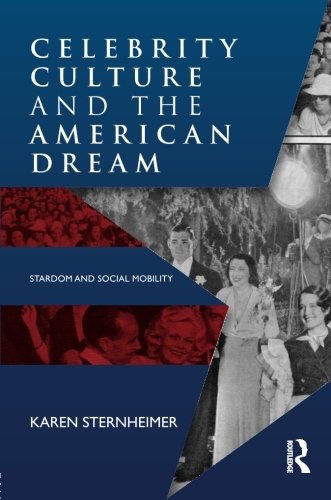
Softcover. NY, Routledge, 1st, 2011, Book: Very Good, Dust Jacket: None, Softcover, pages illustrated in b&w. Using examples from the first celebrity fan magazines of 1911 to the present, Celebrity Culture and the American Dream considers how major economic and historical factors shaped the nature of celebrity culture as we know it today. Equally important, the book explains how and why the story of Hollywood celebrities matters, sociologically speaking, to an understanding of American society, to the changing nature of the American Dream, and to the relation between class and culture. Underlining to about 20 pages.
Hardcover. NY, Overlook Press, 1st, 2012, Book: Very Good, Dust Jacket: Very Good, Hardcover in a bright dust jacket, 317 pages. For seventy-five years, the kidnapping and murder of Charles Lindbergh's infant son has gone unsolved. Evidence, opinion, and logic have discredited the notion that Bruno Richard Hauptmann --electrocuted in 1936 --acted alone. In this meticulous and authoritative account of the crime, the trial, and the times of the Lindbergh kidnapping, Robert Zorn clears away decades of ungrounded speculation surrounding the case. Inspired by his father's relationship with the actual accomplices --including the mastermind --he presents the clearest ever picture of a criminal partnership, which would shake every class and culture of American society. Using personal possessions and documents, never-before seen photographs, new forensic evidence, and extensive research, Robert Zorn has written a shocking and captivating account of the crime and the original "Trial of the Century." Thin black remainder line on bottom edge otherwise a clean, bright copy.
Hardcover. Seoul, Royal Asiatic Society, 1st, 2003, Book: Very Good, Dust Jacket: Very Good, Hardcover in a bright dust jacket, 328 pages, b&w illustrations. Five decades of North American missionary work in Korea are revealed in this book, giving readers a glimpse into the profound struggle for cultural and spiritual identity that often accompanied the Christian missionaries' foray into unbaptized territory. Most could not make the necessary leap from their own backgrounds to their new home culture; a few did, and came away from the experience with a sharper perception of self, society, and the sometimes problematic nature of their work. Clean copy.
Hardcover. Chicago, University of Chicago Press, 1st, 2016, Book: Very Good, Dust Jacket: Very Good, Hardcover 192 pages. On September 25, 1890, the Mormon prophet Wilford Woodruff publicly instructed his followers to abandon polygamy. In doing so, he initiated a process that would fundamentally alter the Latter-day Saints and their faith. Trading the most integral elements of their belief system for national acceptance, the Mormons recreated themselves as model Americans. Mary Campbell tells the story of this remarkable religious transformation in Charles Ellis Johnson and the Erotic Mormon Image. One of the church's favorite photographers, Johnson (1857-1926) spent the 1890s and early 1900s taking pictures of Mormonism's most revered figures and sacred sites. At the same time, he did a brisk business in mail-order erotica, creating and selling stereoviews that he referred to as his "spicy pictures of girls." Situating these images within the religious, artistic, and legal culture of turn-of-the-century America, Campbell reveals the unexpected ways in which they worked to bring the Saints into the nation's mainstream after the scandal of polygamy.
Hardcover. Norman, OK, University of Oklahoma Press (, 1st, 1989, Book: Very Good, Dust Jacket: Very Good, Hardcover, 415 pages, b&w illustrations. Light edge wear to dust jacket, creases to front flap. Light soiling to edges. Else a clean, tight copy. The first major battle between the U.S. Army and the Cheyenne Indians took place on the south fork of the Solomon River in present-day northwest Kansas. In this stirring account, William Y. Chalfant recreates the human dimensions of what was probably the only large-unit sabre charge against the Plains tribes, in a battle that was as much a clash of cultures as of cavalry and Cheyenne warriors.
Softcover. NY, Rizzoli, 1st, 2005, Book: Very Good, Dust Jacket: None, Softcover, large oblong format, 304 pages. Described as "the closest thing to a rock star" in graphic design today (USA Today), Chip Kidd is universally recognized as an American master of contemporary book design. At the forefront of a revolution in publishing, Kidd's iconic covers, with their inventive marriage of type and found images, have influenced an entire generation of design practitioners in many fields.Chip Kidd: Book One collects all of his book covers and designs for the first time, as well as hundreds of developmental sketches and concepts-annotated by Kidd and by many of the best-selling authors he's worked with over the years. The result is an important contribution to the design canon today as well as a visually dazzling (and often hilarious) insider's look at the design and publishing process.The book also showcases Kidd's work with comics and graphic novels, including his collaborations with leading artists and writers in the field. Featured are projects for DC Comics, including Batman and Superman, as well as Kidd's award-winning exploration of the art of Charles M. Schulz. Chip Kidd: Book One is sure to enthrall design aficionados, book lovers, pop-culture fanatics, comics fans, and design students. DUE TO SIZE AND WEIGHT, DOMESTIC SHIPPING ONLY.
Hardcover. Hoberman Collection, 1st, 2009, Book: Very Good, Dust Jacket: Very Good, Hardcover, 288 pages. A cook book containing 100 recipes and 260 full color photographs. It features menus with a chocolate twist that are inspired from cultures around the world, including Italian, French, Asian, Moroccan, Spanish and American.
Softcover. Lanham MD, Scarecrow Press, reprint, 2006, Book: Very Good, Dust Jacket: None, Softcover, 203 pages. Using over 90 original interviews, as well as his extensive research in a variety of New Orleans' archives, Dr. Kennedy deftly explores the role public school teachers had in the formative years of jazz, as well as the influence they continue to have on the musical life of one of America's foremost musical cities. As jazz and music mentors, these teachers employed creativity, innovation, and dedication in propelling some of the world's finest musicians forward into brilliant careers. Chord Changes on the Chalkboard includes a foreword by jazz legend Ellis Marsalis, Jr. and is a must for jazz fans and historians, music libraries, and for collections supporting the study of popular culture and African-American history. Bright, clean copy.
Hardcover. NY, Hachette, 1st, 2022, Book: Very Good, Dust Jacket: Very Good, Hardcover in a bright, unclipped dust jacket, 415 pages, b&w illustrations. In Chuck Berry, biographer RJ Smith crafts a comprehensive portrait of one of the great American entertainers, guitarists, and lyricists of the 20th century, bringing Chuck Berry to life in vivid detail. Based on interviews, archival research, legal documents, and a deep understanding of Berry's St. Louis (his birthplace, and the place where he died in March 2017), Smith sheds new light on a man few have ever really understood. By placing his life within the context of the American culture he made and eventually withdrew from, we understand how Berry became such a groundbreaking figure in music, erasing racial boundaries, crafting subtle political commentary, and paying a great price for his success. While celebrating his accomplishments, the book also does not shy away from troubling aspects of his public and private life, asking profound questions about how and why we separate the art from the artist. Clean copy.
Softcover. NY, Thames & Hudson, reprint, 1997, Book: Very Good, Dust Jacket: None, Softcover, 220 pages. This comprehensive catalogue traces the career of Cindy Sherman, examining her achievements as one of the leading American artists of our time. By exploring the myriad constructions of female identity and the body in our culture, Sherman imitates and confronts assorted representational stereotypes, becoming for many an icon of the contemporary concerns of feminism and postmodernism. Essayists Amada Cruz, Elizabeth A. T. Smith, and Amelia Jones offer keen insight and observations from several distinct vantage points, demonstrating that Sherman's work is a lens through which to view contemporary art and its ongoing concern with the profound issues of the structures of the self. More than 200 images show the breadth of Sherman's body of work, from the Untitled Film Stills of the 1970s to series such as Centerfolds, Fashion, Disasters, Fairy Tales, and History Portraits, as well as photographs influenced by surrealist artists. Also included are intriguing excerpts from Sherman's notebooks, selections from her contact sheets, and numerous Polaroid studies, all of which shed light on the artist's process.
Princeton University Art Museum, 1st, 2017, Book: Very Good, Dust Jacket: Very Good, Hardcover, 408 pages. Clarence H. White (1871-1925) was one of the most influential art photographers and teachers of the early 20th century and a founding member of the Photo-Secession. This beautiful publication offers a new appraisal of White's contributions, including his groundbreaking aesthetic experiments, his commitment to the ideals of American socialism, and his embrace of the expanding fields of photographic book and fashion illustration, celebrity portraiture, and advertising. Based on extensive archival research, the book challenges the idea of an abrupt rupture between prewar, soft-focus idealizing photography and postwar "modernism" to paint a more nuanced picture of American culture in the Progressive era. The illustrations are well reproduced and comprehensive.
Hardcover. NY, Viking Press, 1st, 1961, Book: Very Good, Dust Jacket: Good, 280 pages. Hardcover. Illustrated with black & white photographs. Dust jacket with rubbing, short tears along edges - jacket now protected with clear plastic cover. Clean, tight copy.
Hardcover. Seattle, Salisbury Press, 1st, 1970, Book: Very Good, Dust Jacket: None, 64 pages. Hardcover. Illustrated in full color and black & white. Book with original wrap around band on cover. A nice copy.
Hardcover. New York, Assouline, 1st, 2013, Book: Very Good, Dust Jacket: Very Good, 3 volumes in slipcase. Very clean, like new in publishers shrink-wrap. For over a century Coca-Cola has been a touchstone of modern culture and a global icon. First sipped at an Atlanta soda fountain, the beverage has become an instantly recognizable symbol around the world, woven into people's lives and memories. This newest addition to Assouline's best-selling Memoire collection, Coca-Cola: Film, Music, Sports celebrates the iconic brand's broad-reaching influence in the domains of film, music, and athletics. With imagery of some of these industries' most revered names, and forewords penned by Ridley Scott, Quincy Jones, and LeBron James, these volumes explore the beverage's prominence in some of the greatest films of all time, its inspiration for legendary musicians of all genres, and its motivational support of athletes from the Olympics to professional sports.This slipcase set is a must-have accessory not only for collectors of Coca-Cola memorabilia but also for lovers of American culture everywhere.
Hardcover. New York, Assouline, 1st, 2013, Book: Very Good, Dust Jacket: Very Good, 3 volumes in slipcase. Very clean, like new in publishers shrink-wrap. For over a century Coca-Cola has been a touchstone of modern culture and a global icon. First sipped at an Atlanta soda fountain, the beverage has become an instantly recognizable symbol around the world, woven into people's lives and memories. This newest addition to Assouline's best-selling Memoire collection, Coca-Cola: Film, Music, Sports celebrates the iconic brand's broad-reaching influence in the domains of film, music, and athletics. With imagery of some of these industries' most revered names, and forewords penned by Ridley Scott, Quincy Jones, and LeBron James, these volumes explore the beverage's prominence in some of the greatest films of all time, its inspiration for legendary musicians of all genres, and its motivational support of athletes from the Olympics to professional sports.This slipcase set is a must-have accessory not only for collectors of Coca-Cola memorabilia but also for lovers of American culture everywhere.
Hardcover. Atglen PA, Schiffer Publishing, 1st, 2025, Book: Very Good, Dust Jacket: None, Hardcover, pictorial boards, 255 pages. illustrated in color. Explore the rise and fall of pre-Code comics with 500 covers revealing America's cultural shifts, censorship, and controversy. From 1940 to 1955, American society and culture underwent dramatic changes, including the introduction of the Comics Code in October 1954, which heavily impacted comic books. The Code aimed to moderate comic content in response to public opinion, including such topics as juvenile delinquency, wartime sentiment, teenage sex, drugs, violent crime, and more. While compliance was technically voluntary, most publishers followed its strict rules. Those who didn't faced ruin when wholesalers and distributors refused to handle noncompliant comics, returning them unopened to publishers, who soon self-destructed. Comic Book Apocalypse! explores this downfall through 500 examples of pre-Code cover art, highlighting why some deemed the Code necessary. The book also examines who decided what content was acceptable, demonstrating how pre-Code comics reflect the larger story of 1950s America. DOMESTIC SHIPPING ONLY.
Softcover. Jackson MS, University Press of Mississippi, 1st, 1995, Book: Very Good, Dust Jacket: None, Softcover. Still in shrink-wrap. Spine faded. Else very good. As the acclaimed author of The Autobiography of Miss Jane Pittman and A Lesson Before Dying, Ernest J. Gaines (b. 1933) has been publishing stories and novels for more than sixty years. His brilliant portrayals of race, community, and culture in rural south Louisiana have made him one of the most respected and beloved living American writers. Ernest J. Gaines: Conversations brings together the author's own thoughts and words in interviews that range from 1994 to 2017, discussing his life, his work, and his literary legacy. The interviews cover all of Gaines's works, including his two latest books, Mozart and Leadbelly: Stories and Essays (2005) and The Tragedy of Brady Sims (2017). The book provides a retrospective of his work from the viewpoint of a senior writer, now eighty-five years old, and gives an important international perspective on Gaines and his work.
Softcover. US, ILR Press, 1st, 2009-08-06, Book: Very Good, Dust Jacket: None, Softcover, 142 pages, illustrated throughout in color. Clean, unmarked copy with only minor wear to wrappers. Since 2001, Candacy A. Taylor (a former waitress herself) has traveled more than 26,000 miles throughout the United States collecting stories of these "lifers," as many waitresses aged fifty or over playfully call themselves. She interviewed fifty-seven waitresses in thirty-eight towns and cities. Their compelling stories are complemented and enhanced by Taylor's striking color photographs of the waitresses at work.Taylor expected that the waitresses she'd meet would feel overworked and underappreciated, but was surprised and delighted to find that the opposite was true. The proud, capable waitresses Taylor interviewed loved their jobs and, even if given the opportunity, "wouldn't do anything else." Nearly all the waitresses said that the physical labor of waitressing helped them to age more gracefully and that the daily contact with customers and coworkers kept them socially engaged. Lifers generally make more money from serving regular customers with whom they forge bonds over decades and their seniority earns them respect from their coworkers and managers. Taylor's sensitive and respectful portrayal of career waitresses who have turned their jobs into a rewarding lifetime pursuit turns Counter Culture into an invaluable portrait of the continued importance of community in our changing society.

 "Black Jacks: African American Seamen in the Age of Sailby: W. Jeffrey Bolster")
 "Black Noise: Rap Music and Black Culture in Contemporary America by: Rose, Tricia")
 "Blue Grass Cook Book, Theby: Fox, Minnie C.")





 "Charles Ellis Johnson and the Erotic Mormon Imageby: Mary Campbell")
 "Cheyennes and Horse Soldiers: The 1857 Expedition and the Battle of Solomon's Forkby: Chalfant, William Y.")

 "Chocolate for Breakfast: Entertaining Menus to Start the Day with a Celebration From Napa Valley's Oak Knoll Innby: Barbara Passino and Marc Hoberman")


 "Cindy Sherman Retrospectiveby: Amanda Cruz, Amelia Jones, et al.")
 "Clarence H. White and His World: The Art and Craft of Photography, 1895-1925by: McCauley, Anne")
 "Cloud Forest - A Chronicle of the South American Wilderness, Theby: Matthiessen, Peter")
 "CMR (Charles M. Russell) Book, Theby: Willard, John")
 "Coca Cola Slipcase Set of 3: Film, Music, Sportsby: N/A")
 "Coca Cola Slipcase Set of 3: Film, Music, Sportsby: N/A")



 "Conversations with Ernest Gainesby: Lowe, John (Editor)")
 "Counter Culture: The American Coffee Shop Waitressby: Taylor, Candacy A.")