Hardcover. Victor, Pollux Press, 1st, 1983, Book: Very Good, Dust Jacket: None, 160 pages. Hardcover. SIGNED BY BOTH AUTHORS beneath hand numbered #338 of a limited edition of 500. Illustrated with black & white photographs. Clean, tight copy.
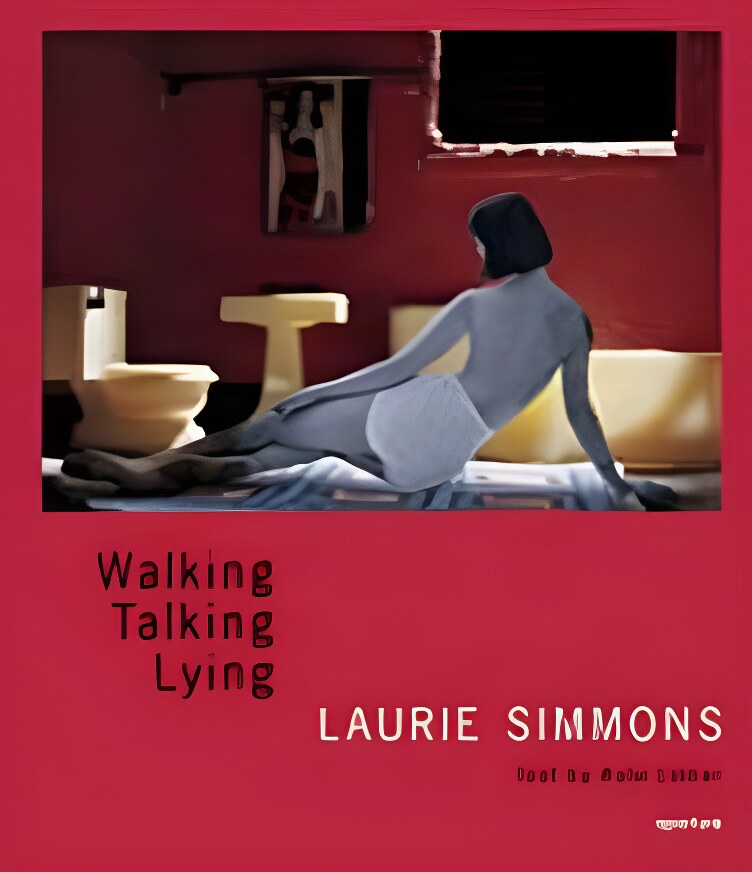
Hardcover. NY, Aperture, 1st, 2005, Hardcover, 156 pages, 104 color plates. The intimate ache of the dollhouse and its air of manipulation (whether as consumer object or ventriloquist dummy) has become as identified with pioneering photographer Laurie Simmons as with Ibsen. She's even designed a dollhouse for a toy company. Mostly self-taught, Simmons began working in the 1970s, when color and staged tableaux were first being explored by fine-art photographers, and has since mapped out a world all her own, mostly in haunting miniature. Over the past 25 years, her photographs have conveyed a bittersweet nostalgia for the 1950s, while edgily commenting on consumerism, feminism and other fraught aspects of postwar American culture. The accompanying essay by Kate Linker concentrates on selected series that cover the artist's entire oeuvre--from "Ventriloquism," "Walking Objects" and "Lying Objects" to the 1997 "Self-Portraits" and "Cafe of the Inner Mind"--and so is essential reading for any photography aficionado.
Hardcover. NY, Powerhouse Books, 1st, 2012, Book: Very Good, Dust Jacket: None, Hardcover, 240 pages, color illustrations. The history of American comics through the stories of comics' most important and influential creators -- tracing the medium's journey all the way from its beginnings as junk culture for kids to its current status as legitimate literature and pop culture. Featuring artists such as Jerry Siegel, Will Eisner, Jerry Robinson, Al Jaffee, Neal Adams, Peter Kuper, Stan Lee and many more.
Softcover. UK, Cambridge University Press, 2nd pr., 2018, Book: Very Good, Dust Jacket: None, Softcover, 512 pages. Learn Latin from the Romans is the only introductory Latin textbook to feature texts written by ancient Romans for Latin learners. These texts, the 'colloquia', consist of dialogues and narratives about daily life similar to those found in modern-language textbooks today, introducing learners to Roman culture as well as to Latin in an engaging, accessible, and enjoyable way. Students and instructors will find everything they need in one complete volume, including clear explanations of grammatical concepts and how Latin works, both British and American orders for all noun and adjective paradigms, 5,000 easy practice sentences, and over 150 longer passages (from the colloquia and a diverse range of other sources including inscriptions, graffiti, and Christian texts as well as Catullus, Cicero, and Virgil). Written by a leading Latin linguist with decades of language teaching experience, this textbook is suitable for introductory Latin courses worldwide. Clean copy.
Hardcover. London, George Allen & Unwin Ltd., 2nd pr., 1947, Book: Good, Dust Jacket: None, Hardcover in light tan cloth with red lettering to the spine, 361 pages. Although the life of London runs like a thread through the whole fabric of this book, it is not essentially a book about London. Life in Bloomsbury is but the center of a large circle, the point around which the rest of the book revolves, the origin of a disarming commentary on an infinite variety of topics - on Bloomsbury's squares, on the picturesqueness of London a generation ago, on what is true Cockney, on the differences of English and American humor, on the decay of English wit, on books and authors and publishers and the Press, on the literary lions of the past, on the religion of speed, on the charm of Americans, on how the Victorian age was neither so repressed nor so hidebound as most people today like to believe - and so on, one thing leading to another, like good conversation at a good luncheon overlooking the mellow squares of Bloomsbury. The book is full, too, of good stories and reminiscences, both humorous and pathetic, but there is shrewd comment besides on the deficiencies of contemporary society, not the less effective because the author knows how to soften the blow. Mild soil, sunning to covers, clean copy.
Hardcover. Loa Angeles, J. Paul Getty Museum, 1st, 2016, Book: Very Good, Dust Jacket: None, Hardcover, 136 pages. Offering a fresh account of developments that have since characterized postwar British painting, this catalogue focuses on Michael Andrews, Frank Auerbach, Francis Bacon, Lucian Freud, R. B. Kitaj, and Leon Kossoff-- artists who worked in close proximity as they were developing new forms of realism. If for many years their efforts seemed to clash with dominant tendencies, reassessment in recent decades has afforded their work a central position in a richer and more complex understanding of postwar British art and culture. Rigorous and gorgeously illustrated, the essays reflect on the parallel yet diverse trajectories of these artists, their friendships and mutual admiration, and the divergence of their practice from the discourse of high modernism. The authors seek to dispel the notion of their work as a uniquely British endeavor by highlighting the artists' international outlook and ongoing dialogue with contemporary European and American painters as well as masters from previous generations.
Hardcover. Baton Rouge, Louisiana State University Press, 1st, 2011, Book: Very Good, Dust Jacket: Very Good, Hardcover in a bright dust jacket, 175 pages, b&w illustrations. Vermont-native Twitchell sets out from his current home in Florida on the inauguration day of America's first black president to find the "real" South and to try to understand the truth about his illustrious ancestor. He travels in an RV from Georgia's Okefenokee Swamp across Alabama and Mississippi to Coushatta, Louisiana. As he drives through the heart of Dixie, Twitchell sorts through the prejudices he learned from his northern rearing. In searching for the culture he had held at arm's length for so long, he tours small-town southern life -- in campgrounds, cotton gins, churches, country fairs, and squirrel dog kennels -- and uncovers some fundamental truths along the way. Notably, he discovers that prejudices of race, class, and ideology are not limited by geography. As one man from Georgia mockingly summed up North versus South stereotypes, "Y'all are rude and we're stupid." Unexpectedly, Twitchell also uncovers facts about his great-grandfather and sheds new light on his family's past. An enlightening, humorous, and refreshingly honest search, Look Away, Dixieland reveals some of the differences and similarities that ultimately define us as a nation. Clean copy.
Hardcover. NY, W. W. Norton & Company, 1st, 2017, Book: Very Good, Dust Jacket: Very Good, Hardcover in a bright dust jacket, 295 pages. A transporting work of photographic history that offers a haunting vision of how Americans viewed the world at the dawn of the twentieth century. In 1900 the stereograph was king. Its three-dimensional optics created a virtual presence for the viewer. Millions of Americans, especially schoolchildren, absorbed ideas about race, class, and gender from such 3D images, the embodiment of the notion that "seeing is believing." Drawing on an enormous, rarely seen collection of some 300,000 stereographic views spanning the first decade of the twentieth century, Michael Lesy presents nearly 250 images displaying a riot of peoples and cultures, stark class divisions, and unsettling glimpses of daily life a century ago. Clean copy.
Hardcover. London, Dewi Lewis, 1st, 2004, Book: Very Good, Dust Jacket: None, Hardcover, 160 pages. These photographs--rejects found at a commercial photolab in the States--were taken at the time of the Vietnam War--a pivotal period in American history. Here is the intimacy that danced in the eyes of family photographers as they framed everyday life--as it was in the fall of 1968. The images, predominantly prints from early 126mm point-and-shoot cameras, are an uninterpreted presentation of everyday life. Reflecting both private and public spheres of consciousness, they convey unmediated perspectives of mores, values and icons through what was intended to be personal visual documentation in its most direct form. No dj issued.
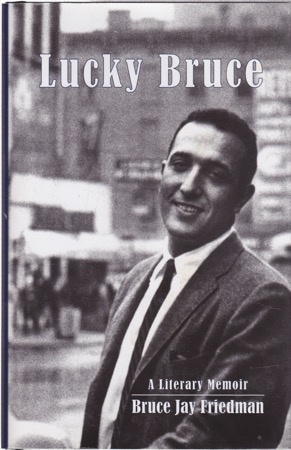
Hardcover. NY, Biblioasis, 1st, 2011, Book: Very Good, Dust Jacket: Very Good, Hardcover in a bright dust jacket, 290 pages. Bruce Jay Friedman has done it all, charming the glitziest industries of American golden-age culture for more than half a century. Lucky Bruce is his long-awaited memoir, and it's everything we'd expect and more: here is Friedman at his best, waltzing from Madison Avenue to Hollywood and back again, and reilluminating with brilliant clarity the dazzle of post-war American life. Cameos by Joseph Heller, Philip Roth, Mario Puzo, Lillian Hellman, Warren Beatty, Marlene Dietrich, Brian Grazer, Candida Donadio, Crazy Joe Gallo, Joyce Carol Oates, Jack Richardson, Isaac Bashevis Singer, Kurt Vonnegut, and the irreplaceable Elaine. Clean copy.
Hardcover. Washington.DC, Smithsonian, 1st , 1995, Book: Very Good, Dust Jacket: Very Good, Hardcover in a bright, unclipped dust jacket. Black & white illustrations.
Hardcover. London, Faber and Faber, 1st, 2013, Book: Very Good, Dust Jacket: Very Good, Unpaginated. Hardcover no dusk jacket issued. Color boards with black and white comics throughout. Light rubbing to rear board. Marble Season is the semiautobiographical novel by the acclaimed cartoonist Gilbert Hernandez, author of the epic masterpiece Palomar and cocreator, with his brothers, Jaime and Mario, of the groundbreaking Love and Rockets comic book series. Marble Season is his first book with Drawn & Quarterly, and one of the most anticipated books of 2013. It tells the untold stories from the early years of these American comics legends, but also portrays the reality of life in a large family in suburban 1960s California. Pop-culture references-TV shows, comic books, and music-saturate this evocative story of a young family navigating cultural and neighborhood norms set against the golden age of the American dream and the silver age of comics. Middle child Huey stages Captain America plays and treasures his older brother's comic book collection almost as much as his approval. Marble Season subtly and deftly details how the innocent, joyfully creative play that children engage in (shooting marbles, backyard performances, and organizing treasure hunts) changes as they grow older and encounter name-calling naysayers, abusive bullies, and the value judgments of other kids. An all-ages story, Marble Season masterfully explores the redemptive and timeless power of storytelling and role play in childhood, making it a coming-of-age story that is as resonant with the children of today as with the children of the sixties.
Hardcover. New York, D.A.P.//La Fabrica , 1st, 2013, Book: Very Good, Dust Jacket: Very Good, Hardcover, 192 pages. Like new in publisher's shrink-wrap. America's first female war correspondent, Margaret Bourke-White was also something of a media star, with the portrait of her decked out in flying gear, camera in hand, about to set off on a bombing raid, being a favorite pin-up among U.S. forces. Focusing on the work Bourke-White made in the 1930s and 40s in Czechoslovakia, Germany, Italy, the Soviet Union and the U.K., Moments in History presents 150 classic photographs alongside revelatory extracts from letters and publications in periodicals. Bourke-White traveled to the USSR when the first Five-Year Plan was being implemented; she documented the German invasion of the Soviet Union in 1941, and the Allied bombing of Germany. In the summer of 1945 she was commissioned by Life to make a photographic record of the destroyed German cities. She was present at the liberation of the Buchenwald concentration camp and the Leipzig-Thekla forced labor camp. She recorded the partition of India and the Korean War, and one of her most famous pictures of this period is "Gandhi," which shows the subject at his spinning wheel. Also included in the catalogue are some of the word-picture sequences Bourke-White did for Fortune and Life, as well as extracts from her correspondence with personalities from the worlds of politics and culture, such as Winston Churchill and Georgia O'Keeffe. Bourke-White wanted to be the "eyes of the age," and her pictures testify to (as she put it) her "unquenchable desire to be present when history is being made."
Hardcover. New York, Kluwer Academic/Plenum , 1st, 2000, Book: Very Good, Dust Jacket: None, 237 pages. Hardcover with laminated boards. Previous owner's stamp in front fly leaf, otherwise, clean, tight copy with minor wear to covers. Black and white pictures throughout.
Hardcover. New Haven CT, Yale University Press, 1st, 2004, Book: Very Good, Dust Jacket: Very Good, Hardcover in a bright, unclipped dust jacket, 398 pages. From colonial times to the present, American composers have lived on the fringes of society and defined themselves in large part as outsiders. In this stimulating book Michael Broyles considers the tradition of maverick composers and explores what these mavericks reveal about American attitudes toward the arts and about American society itself. Broyles starts by examining the careers of three notably unconventional composers: William Billings in the eighteenth century, Anthony Philip Heinrich in the nineteenth, and Charles Ives in the twentieth. All three had unusual lives, wrote music that many considered incomprehensible, and are now recognized as key figures in the development of American music. Broyles goes on to investigate the proliferation of eccentric individualism in all types of American music-classical, popular, and jazz-and how it has come to dominate the image of diverse creative artists from John Cage to Frank Zappa. The history of the maverick tradition, Broyles shows, has much to tell us about the role of music in American culture and the tension between individualism and community in the American consciousness. Leer menos
Hardcover. New Haven CT, Yale University Press, 1st, 2012, Book: Very Good, Dust Jacket: Very Good, Hardcover, 288 pages. As a prolific photographer for House Beautiful, Better Homes and Gardens, Architectural Digest, and Sunset magazine, Maynard L. Parker (1900-1976) was a pioneer in documenting residential spaces and landscapes for postwar America. His extensively published, sun-kissed brand of photography made him a critical contributor to domestic design culture from the 1940s into the 1960s. Parker's lens revealed the homes and lifestyles of affluent Americans and celebrities, including Judy Garland, Clark Gable, and Bing Crosby, as well as the interiors, gardens, and built works of Samuel Marx, Frank Lloyd Wright, Thomas Church, and Cliff May, offering an alluring template for living in a new consumer age. Maynard L. Parker: Modern Photography and the American Dream is the first monograph to consider Parker and his work. Lavishly illustrated essays by leading scholars set Parker's photography against the backdrop of an unprecedented demographic shift, the Cold War, and a suburban society increasingly fixated on consumption.
Softcover. Tuscaloosa, University of Alabama Press, 1st, 1999, Book: Very Good, Dust Jacket: None, Softcover. This collection of Ford's works focuses on the development of ceramic chronology-a key tool in Americanist archaeology. When James Ford began archaeological fieldwork in 1927, scholars divided time simply into prehistory and history. Though certainly influenced by his colleagues, Ford devoted his life to establishing a chronology for prehistory based on ceramic types, and today he deserves credit for bringing chronological order to the vast archaeological record of the Mississippi Valley. This book collects Ford's seminal writings showing the importance of pottery styles in dating sites, population movements, and cultures. These works defined the development of ceramic chronology that culminated in the major volume Archaeological Survey in the Lower Mississippi Alluvial Valley, 1940-1947, which Ford wrote with Philip Phillips and James B. Griffin. In addition to Ford's early writings, the collection includes articles written with Griffin and Gordon Willey, as well as other key papers by Henry Collins and Fred Kniffen. Clean copy in publisher's shrinkwrap.
Softcover. Bowie MD, Heritage Books, reprint, 2001, Book: Very Good, Dust Jacket: None, Two softcover volumes 391 & 392 pages. Volumes 1 and 2 complete, a facsimile reprint of the 1897 edition by Lippincott. This two-volume series takes the reader on a journey through the colonies of Virginia, Massachusetts, Connecticut, Rhode Island, New Hampshire, Pennsylvania, New Jersey, New York, Maryland, Carolina, and Georgia. The charm of the journey is in its variety, as the reader passes through communities of such striking individuality that they assume the character of different nations. Each colony has a set of opinions and laws peculiar to itself, and it is not uncommon to find the laws of one in contradiction with the laws of another. This text explores the settlement and history of each colony prior to the American Revolution. Topics include development of the colonies' government, laws, religion, schools, boundaries, industries, layout of the cities, fashions, homes, social activities, slavery, architecture, interaction with the Indians, and customs. At least one prominent person from each colony is discussed, amongst them, William Penn of Pennsylvania, John Smith of Virginia, George Calvert of Maryland, and General Oglethorpe of Georgia. Light sunning ti spines.Clean copies.
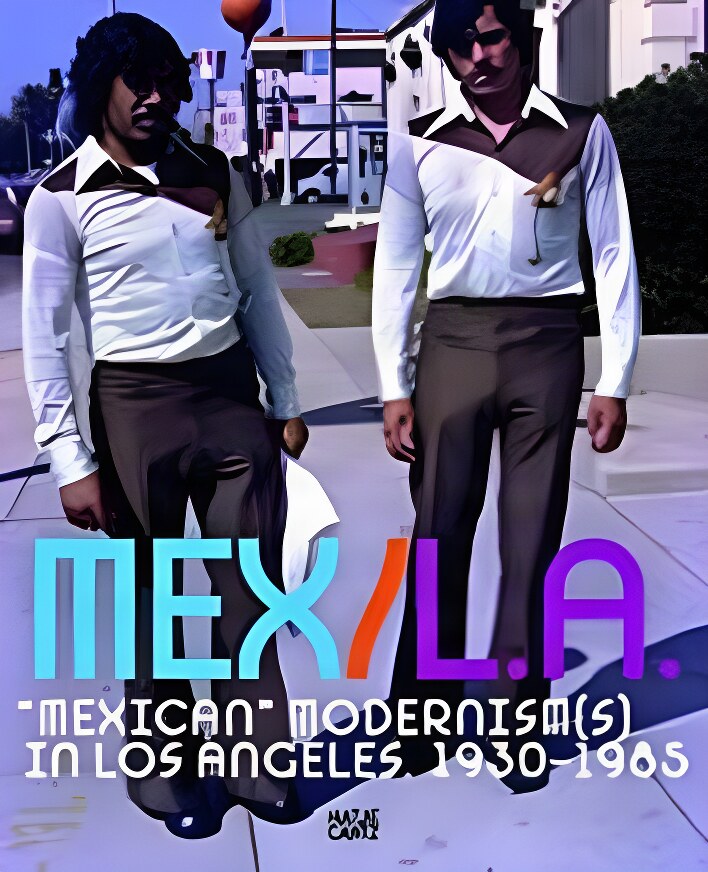
Hardcover. Hatje Cantz, 1st, 2011, Book: Very Good, Dust Jacket: Very Good, Hardcover, 224 pages. The years from 1945 to 1985 are often identified as the moment in which Los Angeles established itself as a leading cultural center in America. However, this conception of its history entirely excludes the very controversial presence of the Mexican muralists, as well as the work of other artists who were influenced by them and responded to their ideas. It is likewise often thought that Los Angeles' Mexican culture arrived full formed from outside it, when in fact that culture originated within the city--it was in Los Angeles and Southern California that Jose Vasconcelos, Ricardo Flores Magon, Octavio Paz and other intellectuals developed the iconography of modern Mexico, while Anglos and Chicanos were developing their own. David Alfaro Siqueiros, Clemente Orozco, Alfredo Ramos Martinez and Jean Charlot made some of their earliest murals in Los Angeles, influencing the Mexican, Mexican-American and Chicano artists of the 1970s and 80s. MEX/LA: Mexican Modernism(s) in Los Angeles 1930-1985 focuses on the construction of different notions of "Mexicanidad" within modernist and contemporary art created in Los Angeles. From the Olvera Street mural by Siqueiros, to the Golden Age of Mexican cinema and the Disney silver-screen productions, to the revitalization of the street mural, up to the performance art of Guillermo Gomez-Pena, MEX/LA explores the bi-national and hybrid forms of artistic practices, popular culture and mass-media arts that have so uniquely shaped Los Angeles' cultural panorama.
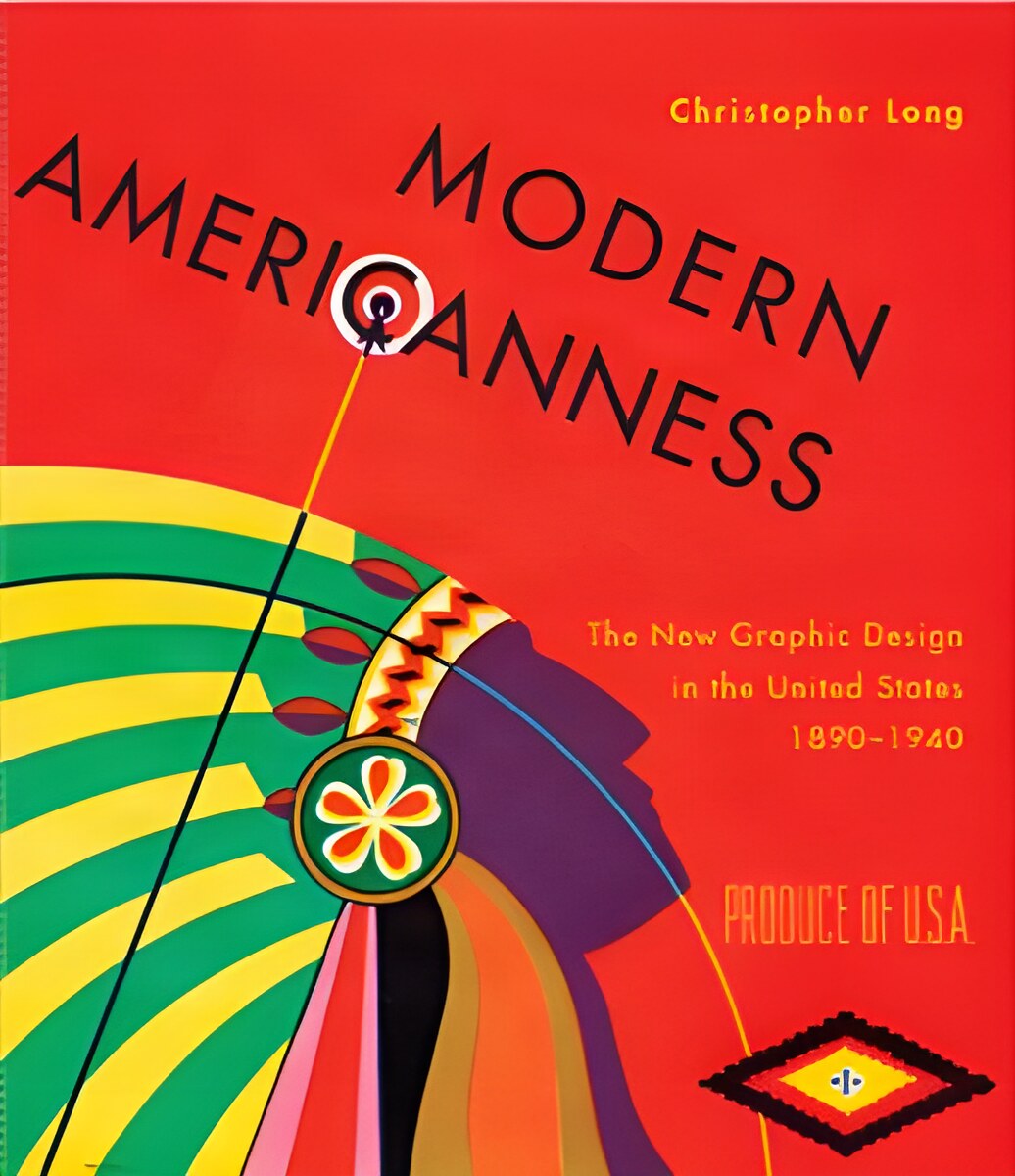
Hardcover. Czech Republic, Kant, 1st, 2025, Book: Very Good, Dust Jacket: None, Hardcover, pictorial boards, 264 pages. Venturing across five decades of American culture, this landmark book explores how modern graphic design emerged in the United States and how it became an intrinsic feature of the country's identity. Author and design professor Christopher Long tells this story in a wholly new way, exposing many long-forgotten figures and movements and resurrecting the debates and conceptions that were integral to the new art. In a series of deeply involving portraits of American artists and innovators who helped shape the very look of the modern age, Modern Americanness offers a sweeping story of the country's visual culture and its distinctiveness across a variety of designed objects: magazine covers, food labels, event posters, chapbooks, advertisements, propaganda and much more. Still in publisher's shrinkwrap.
Hardcover. New Haven CT, Yale University Press, 1st, 2020, Book: Very Good, Dust Jacket: None, Hardcover, Original black lettered cloth quarter laid on pictorial boards, 184 pages. A fascinating exploration of how photography, graphic design, and popular magazines converged to transform American visual culture at mid-century. This dynamic study examines the intersection of modernist photography and American commercial graphic design between 1930 and 1960. Avant-garde strategies in photography and design reached the United States via European emigres, including Bauhaus artists forced out of Nazi Germany. The unmistakable aesthetic made popular by such magazines as Harper's Bazaar and Vogue--whose art directors, Alexey Brodovitch and Alexander Liberman, were both immigrants and accomplished photographers--emerged from a distinctly American combination of innovation, inclusiveness, and pragmatism. Beautifully illustrated with more than 150 revolutionary photographs, layouts, and cover designs, Modern Look considers the connections and mutual influences of such designers and photographers as Richard Avedon, Lillian Bassman, Herbert Bayer, Robert Frank, Lisette Model, Gordon Parks, Irving Penn, Cipe Pineles, and Paul Rand. Essays draw a lineage from European experimental design to innovative work in American magazine design at mid-century and offer insights into the role of gender in fashion photography and political activism in the mass media.
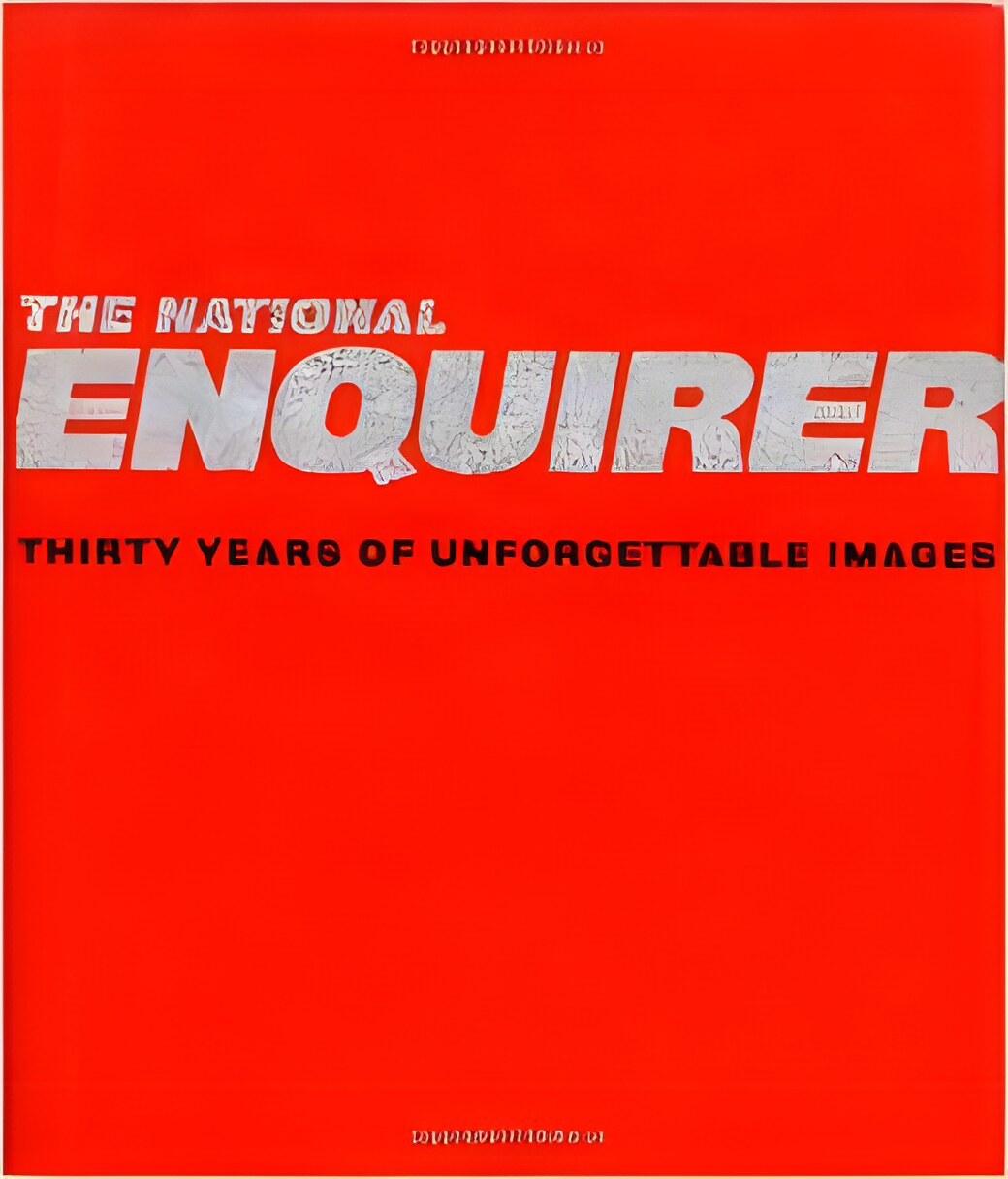
Hardcover. US, Miramax Books, 1st, 2001, Book: Very Good, Dust Jacket: Very Good, 254 pages. Clean, unmarked copy with only minor wear to dust jacket. Color photographs. The splashy photo spreads in The National Enquirer: Thirty Years of Unforgettable Images prove that the Enquirer has become what Life magazine was in its day: the image bank of American pop culture. They're all here, big as life--or, in the cases of Elvis, Ted Bundy, John Lennon, Grace Kelly, and River Phoenix, big news in their coffin close-ups. The photos are haunting: Columbine High killer Eric Harris at age 6 in a skeleton-with-bloody-skull-mask Halloween costume; Eric Clapton and his son just hours before the boy's window plunge. The book has lots of laughs, too: Bryant Gumbel and Matt Lauer getting a lap dance from three transsexual waitresses; Van Damme with his third and fourth wives on either arm (in identical dresses). Witty layouts predominate: weirdly well preserved Michelle Phillips and a mummy pose opposite a little girl and Michael Jackson (whose nose is disintegrating). The glimmer of glamour vies with the shock of decay--often in images of the same celeb. Watch Liza morph from tot to sot! A feast for inquiring minds.
Hardcover. San Francisco, Collins, 1st, 1993, Book: Very Good, Dust Jacket: Very Good, Hardcover, 157 pages. A pictorial record of farming families in northwest Illinois where the photographer lived. Extensive b/w photos throughout.

 "Last Gold Rush - A Pictorial History of the Cripple Creek & Victor Gold Mining District, The (SIGNED COPY)by: Grimstad, Bill/Raymond L. Drake")


 "Leaping Tall Buildings: The Secret Origins of American Comics by: Irving Christopher Kushner Seth Photographer")

 "Life's Pleasures - The Ashcan Artists' Brush with Leisure, 1895-1925by: Tottis, james W.")
 "Living in Bloomsbury by: Burke, Thomas")



 "Lost and Found in Americaby: Lenny Gottlieb")
 "Main Street Amusements - Movies and Commercial Entertainment in a Southern City 1896-1930by: Waller, Gregory A.")
 "Marble Seasonby: Hernandez, Gilbert")
 "Margaret Bourke- White: moments in historyby: Quimby, Sean")

 "Mavericks and Other Traditions in American Musicby: Michael Broyles")
 "Maynard L. Parker: Modern Photography and the American Dreamby: Jennifer A. Watts")
 "Measuring the Flow of Time: The Works of James A. Ford, 1935-1941by: Ford, James A., Foreword: Willey, Gordon R./ Editor: Lyman, R. Lee/ Editor: O'Brien, Professor Mi")


 "Modern Look: Photography and the American Magazine by: Klein, Mason")